

Quartz 20mm Standard Cuvette, 8ml, Sintered 83, Four-Way Light, 1pc/ea, C204CR2
10%
USD$157.00 USD$142.00
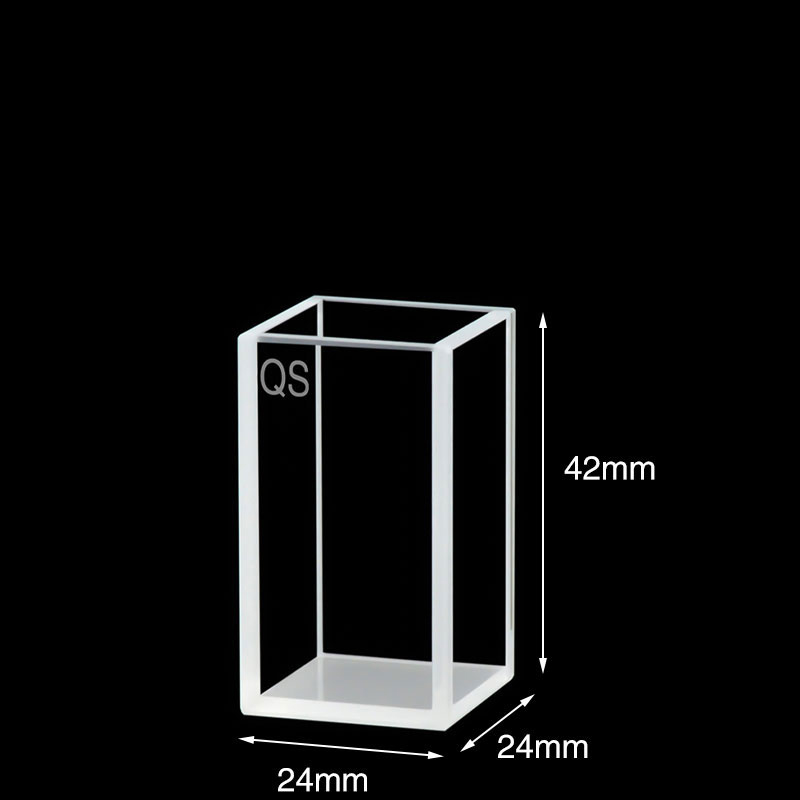
Quartz 20 mm four-way light fluorescence cuvette, 8 ml, Sintered 83 (>83% transmittance). Open top (no cover). 190–2500 nm. SKU: C204CR2.
Add to Wishlist
Add to Wishlist
Description
The C204CR2 is a premium quartz fluorescence cuvette with 20 mm path length and four-way light optical configuration — all four vertical faces are polished to optical grade, providing the standard 90° fluorescence geometry plus additional optical access. With a standard 8 ml internal volume (20 × 20 × 20 mm chamber), the cell is compatible with most commercial fluorimeters and UV-Vis spectrophotometers. Fabricated using Sintered 83 (>83% transmittance) — assembled by sintering quartz panels at approximately 600 °C, producing fused joints with no adhesive. This cuvette has an open top (no cover included).
| Technical Specifications | |||
|---|---|---|---|
| Material | Quartz (Fused Silica) | SKU | C204CR2 |
| Path Length | 20 mm | Internal Volume | 8 ml |
| Optical Windows | 4 (Four-Way Light) | Fabrication | Sintered 83 |
| Transmittance | >83% | Wavelength | 190–2500 nm |
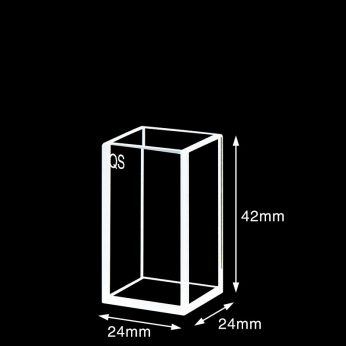
| Exterior Dimensions | 24 × 24 × 22 mm | Interior Dimensions | 20 × 20 × 20 mm |
| Cap | None (Open Top) | Package | 1 pc/ea |
Fluorescence Applications
◆ Steady-state & time-resolved fluorescence
◆ Fluorescence polarization & anisotropy
◆ Standard 90° fluorescence spectroscopy
◆ Fluorescence quenching & titration
◆ Förster resonance energy transfer (FRET)
◆ Quantum yield determination
◆ UV-Vis absorbance (190–2500 nm)
◆ Phosphorescence & luminescence studies
Why Four-Way Light?
The four-way configuration polishes all four vertical faces to optical grade — the standard geometry for fluorescence spectroscopy. The excitation beam enters through one face and emission is collected at 90° through an adjacent face, minimizing excitation light contamination in the emission signal. The additional two polished faces allow the cuvette to be rotated for alternative measurement geometries or simultaneous absorbance monitoring during fluorescence experiments.
Why Sintered 83 Construction?
Sintered 83 cuvettes are assembled by fusing quartz panels at approximately 600 °C, producing joints that are integral to the quartz body with no adhesive. This thermal fusion process yields transmittance >83% and eliminates adhesive-related degradation pathways. The fused joints are compatible with strong acids, bases, and most organic solvents (excluding HF and aggressive organics such as toluene and acetone). For fluorescence work, the absence of adhesive also removes a potential source of background fluorescence that can contaminate emission spectra.
Usage Tips: Handle by non-optical surfaces only — fingerprints on polished faces cause scattering artifacts that raise fluorescence background. Rinse immediately after use. Sintered 83 construction is compatible with strong acids, bases, and most organic solvents (excluding HF and aggressive organics such as toluene and acetone). For fluorescence work, ensure the excitation beam enters through a polished window and the detector views at 90° through an adjacent polished face. Compatible with Shimadzu, Agilent, PerkinElmer, Thermo Fisher, JASCO, Hitachi, Horiba, Edinburgh Instruments, and most commercial fluorimeters.
Custom Orders & Academic Purchasing: Need a custom size, path length, or window configuration? We offer made-to-order cuvettes tailored to your specifications. Academic institutions: we accept Purchase Orders (POs) with pay-after-delivery terms. Contact us for quotes and custom requests.
Disclaimer: This product is intended for laboratory and research use only. It is not designed, approved, or intended for use in medical diagnostics, therapeutic procedures, or any clinical application involving human or animal subjects. The buyer assumes all responsibility for determining the suitability of this product for their specific application.
Additional information
| Weight | 100 g |
|---|
You must be logged in to post a review.


Reviews
There are no reviews yet.