
Custom 50 mm Quartz Flow Cell: Connections and Fit (MQQFC121)
Custom Design Guides · Quartz flow cells · MQQFC121
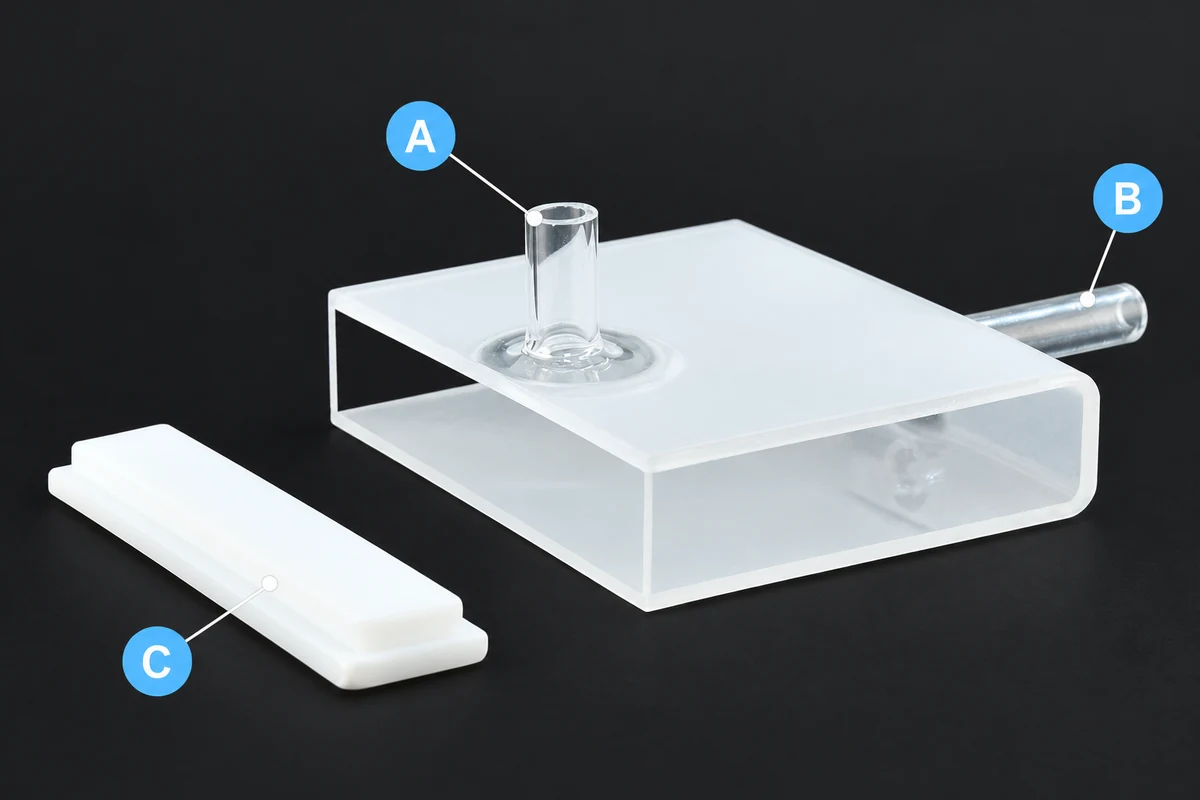
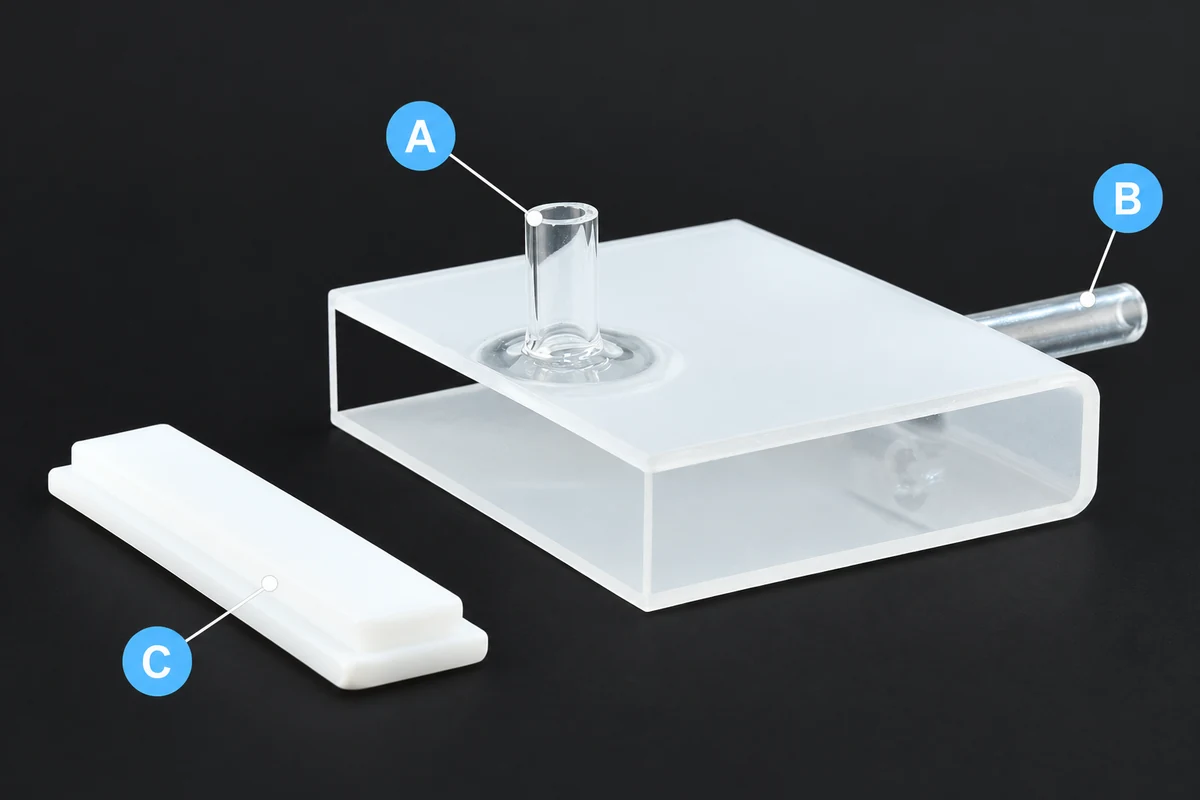
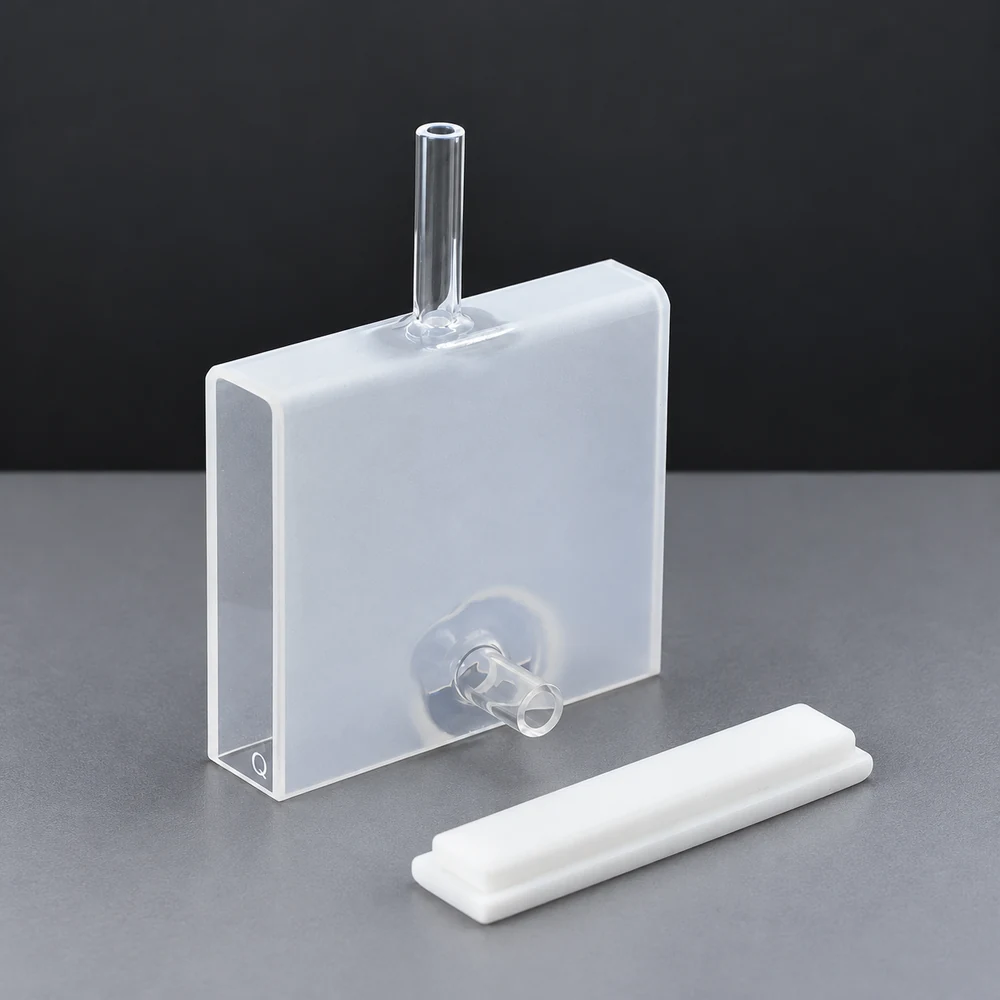
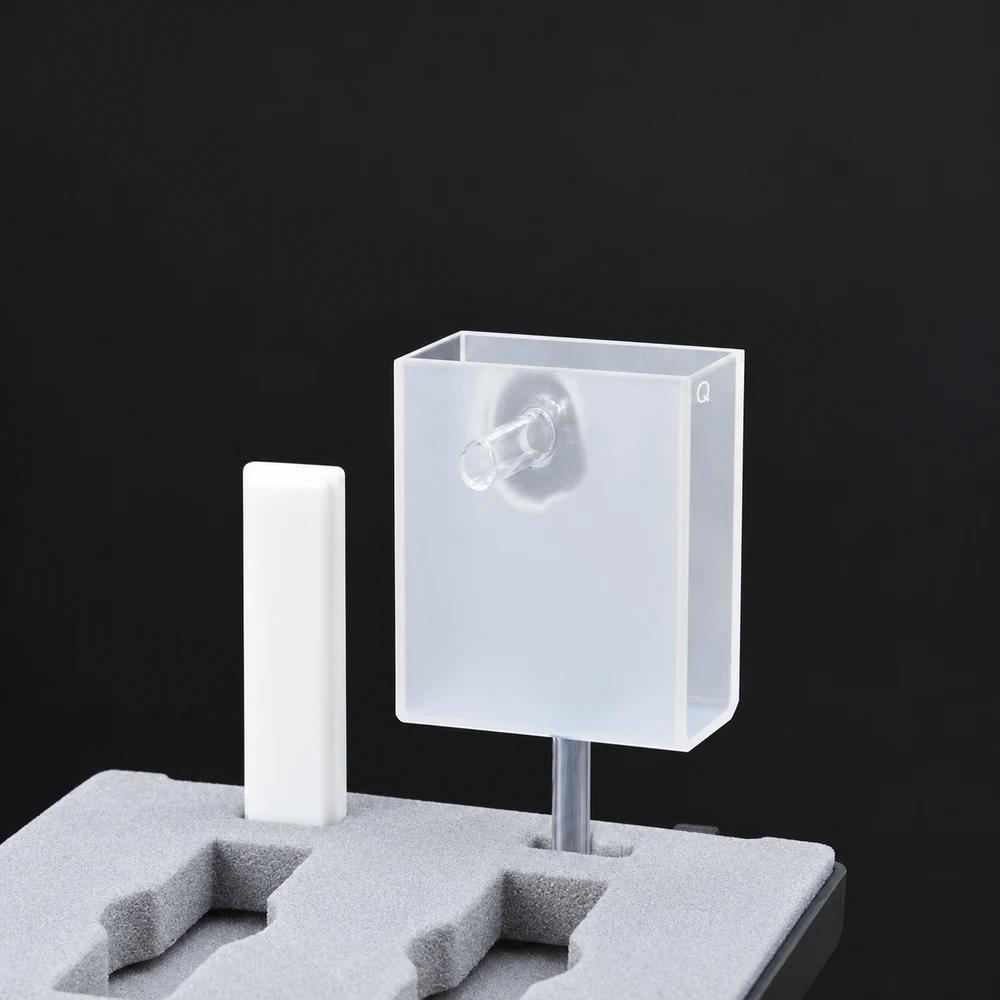
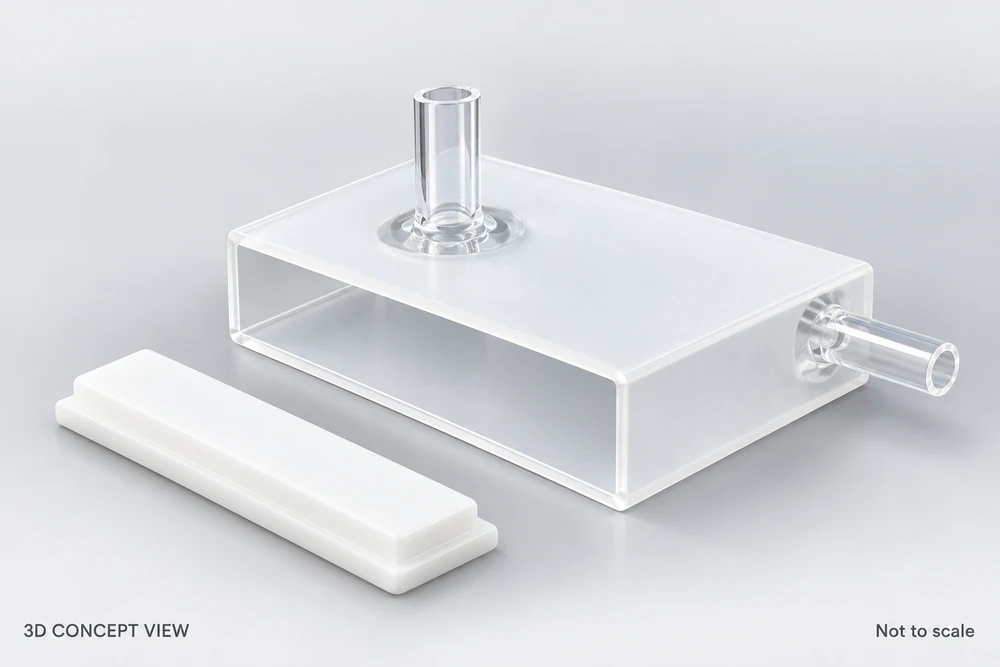
MQQFC121 is a JGS1 quartz flow cell with a nominal 50 mm optical path and top and side tubes. The two tubes have different diameters, so each connection needs its own specification.
View MQQFC121 and current price · Ask about a custom version
In this guide: From cuvette to flow cell · Specifications · 50 mm path · Tube sizes · Fit · Ordering
What changes when a cuvette needs tube connections?
With a standard rectangular absorption cuvette, you fill the sample chamber directly; 10 mm is a common path length. [3] If you want to deliver, replace or flush the sample through tubing, the connections become part of the design. MQQFC121 has one top tube and one side tube.
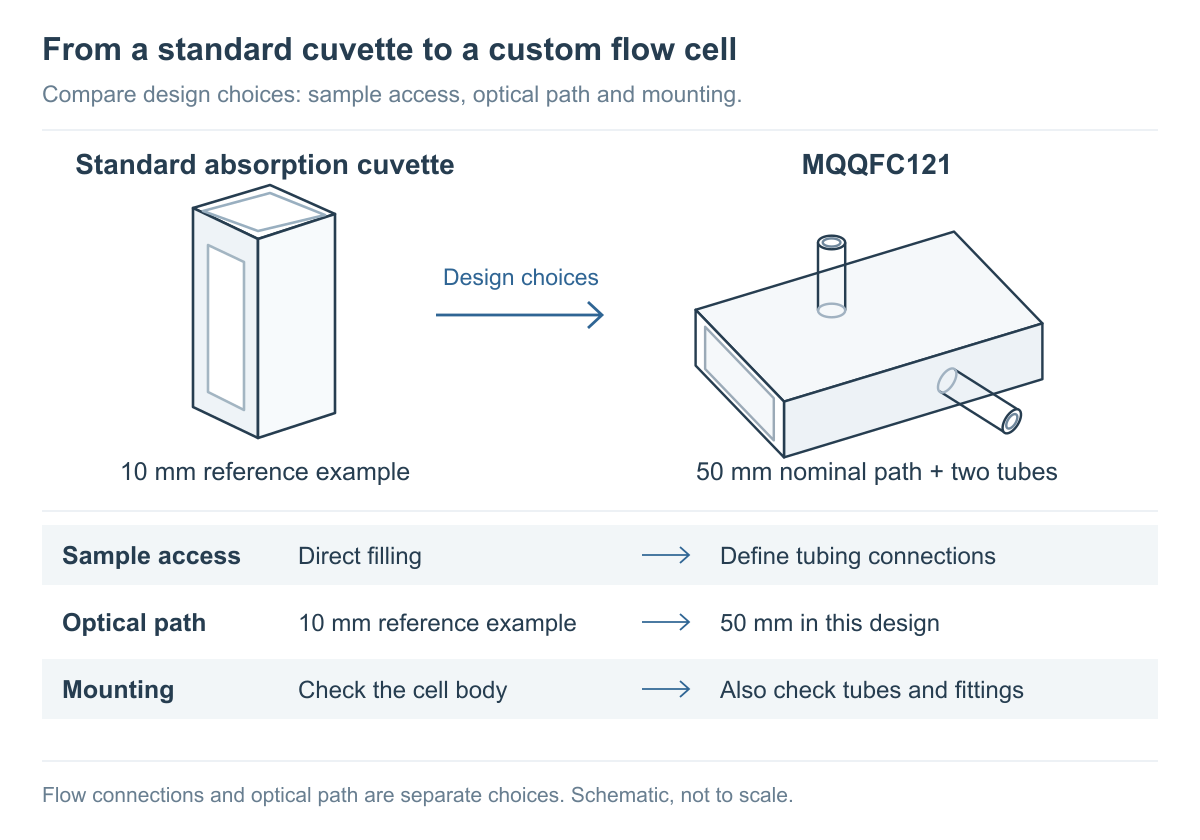
When you ask for a custom version, tell us what needs to change on your current cuvette: how you fill it, its optical path or the space around it.
MQQFC121 specifications
- Material: JGS1 quartz.
- Nominal optical path: 50 mm.
- Transmitting faces: Two.
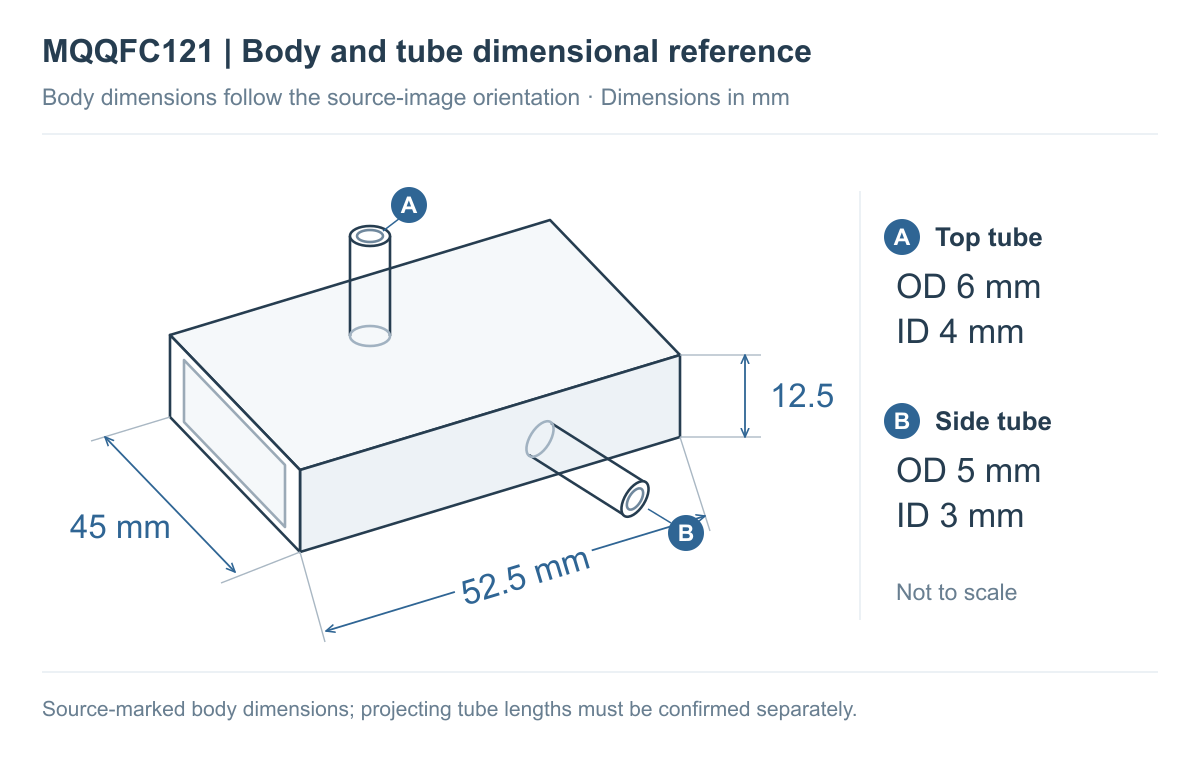
- Top tube: 6 mm outer diameter (OD), 4 mm inner diameter (ID).
- Side tube: 5 mm OD, 3 mm ID.
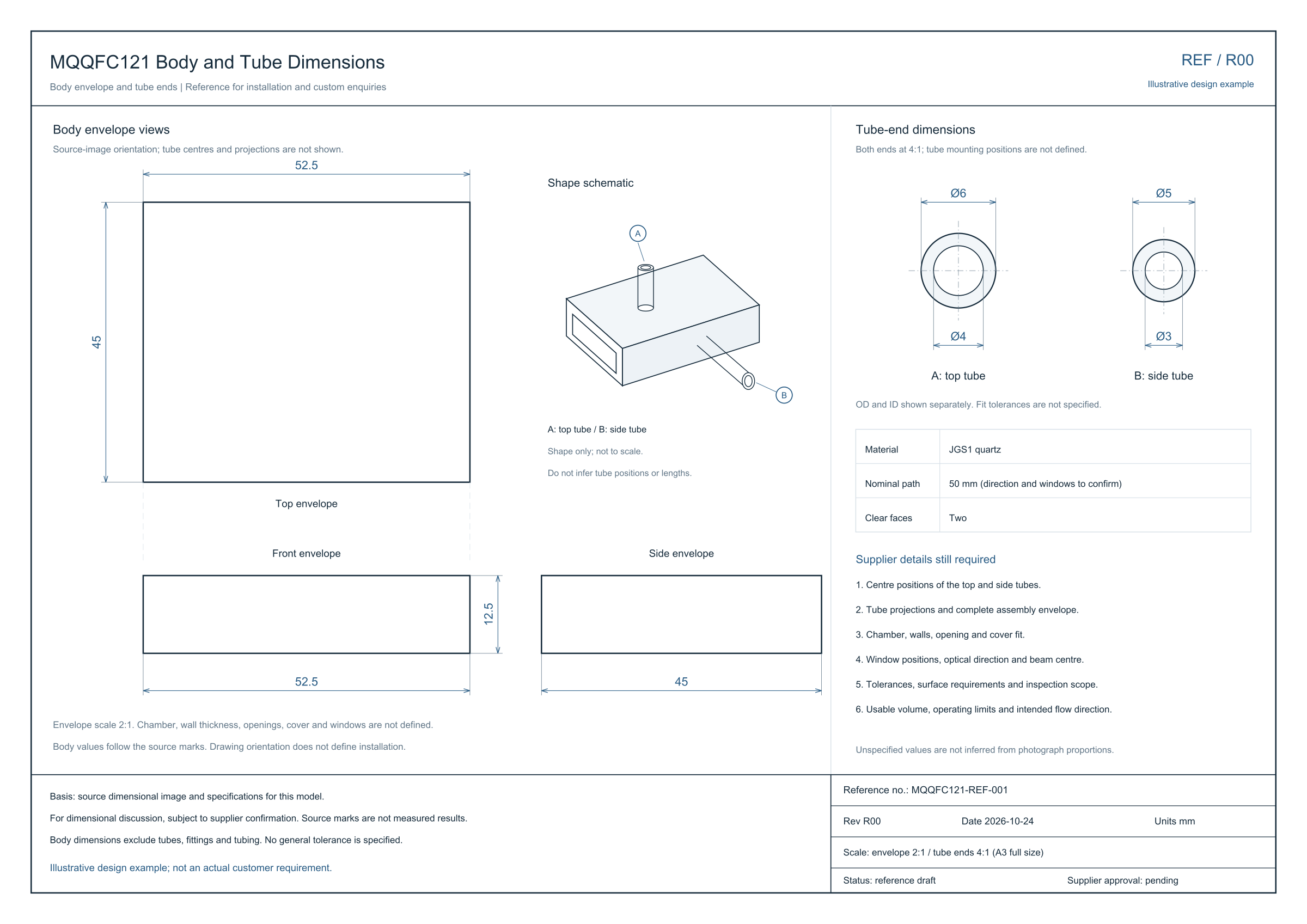
The supplier’s image marks 52.5, 45 and 12.5 mm in the orientation shown below. These are body dimensions; the projecting tubes and fittings need additional space.
View the engineering reference drawing (R00)
Use this sheet to discuss the body dimensions and the two tube sizes. Tube positions, projection lengths, internal dimensions and tolerances still need supplier confirmation.
If you only need to change one tube
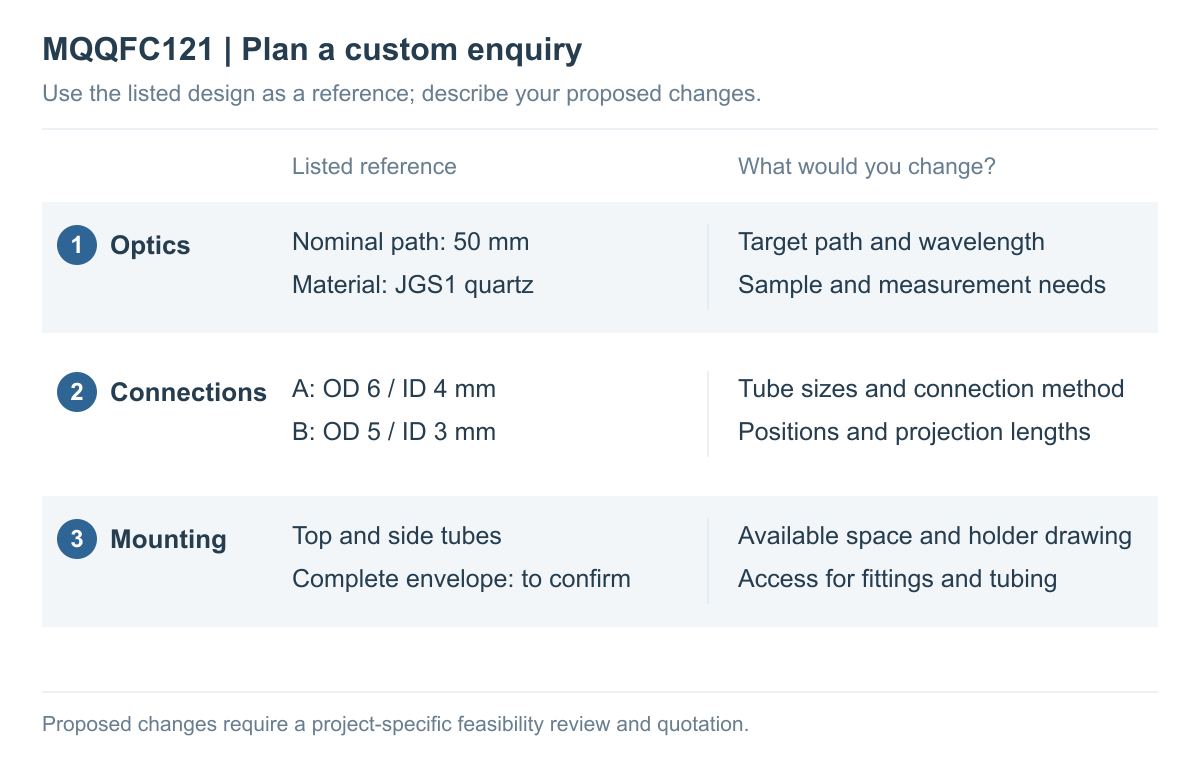
For example, the 50 mm path may suit your measurement while one tube needs a different diameter for your fitting. Mark that tube on a sketch and note the dimensions you want to retain. Add any required tube position or projection length to the same sketch.
When is a 50 mm path useful?
A longer path is worth considering when sample absorbance is low. Where the Beer–Lambert law applies, absorbance increases in proportion to path length for the same homogeneous sample at the same wavelength. [1]
For example, an absorbance of 0.10 at 10 mm would be 0.50 at 50 mm under those conditions. This is a theoretical example, not a test result for MQQFC121; it does not mean a fivefold improvement in detection limit or accuracy.
Choose the path with your sample, solvent background and instrument range in mind. Tube connections and path length are separate choices—a flow cell can also have a shorter path.
A “6 mm connection” leaves an important detail out
Is 6 mm the outside diameter or the bore? For this cell, the top tube is OD 6 mm / ID 4 mm, while the side tube is OD 5 mm / ID 3 mm. Specify both ends when choosing fittings.
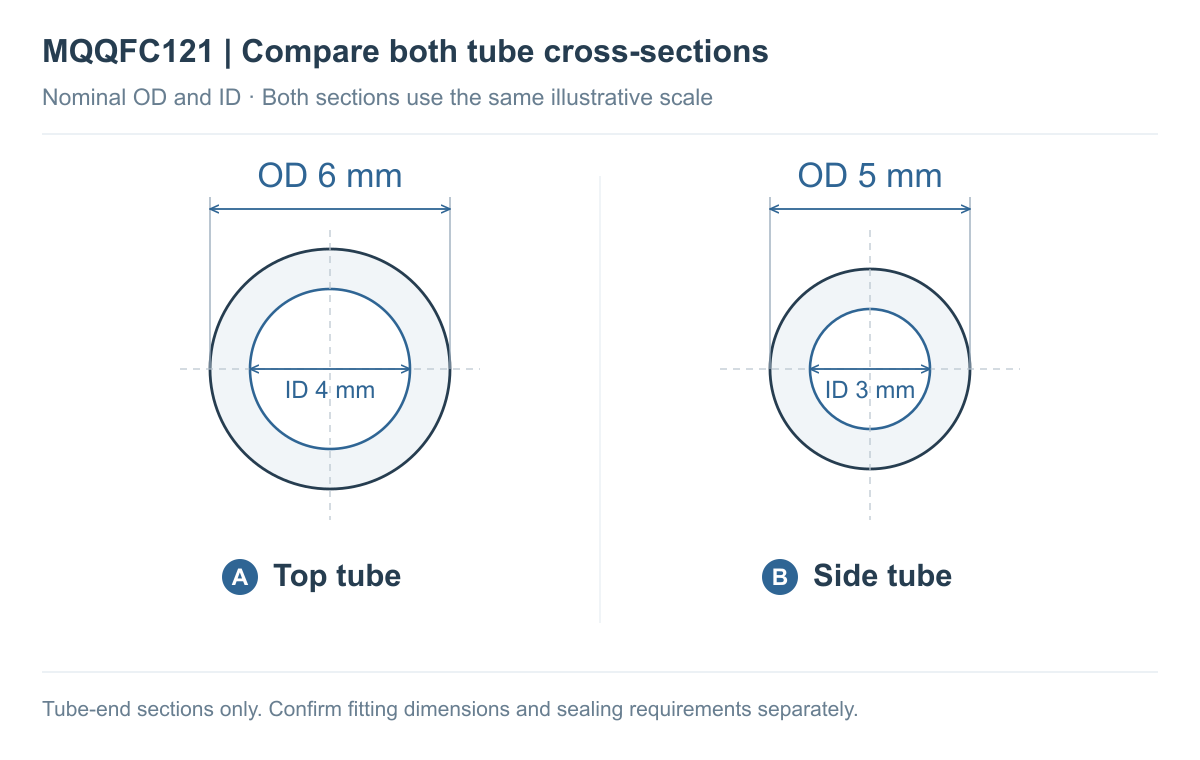
Include the fitting dimensions, tolerances and seal requirements in your enquiry. Mark your intended inlet and outlet on the sketch; tube size does not determine flow direction.
Also give the flow rate and pressure you plan to use. Tubing back pressure depends on its length, bore, liquid viscosity and flow rate, not just the nominal connection size. [2]
Will it fit your instrument or holder?
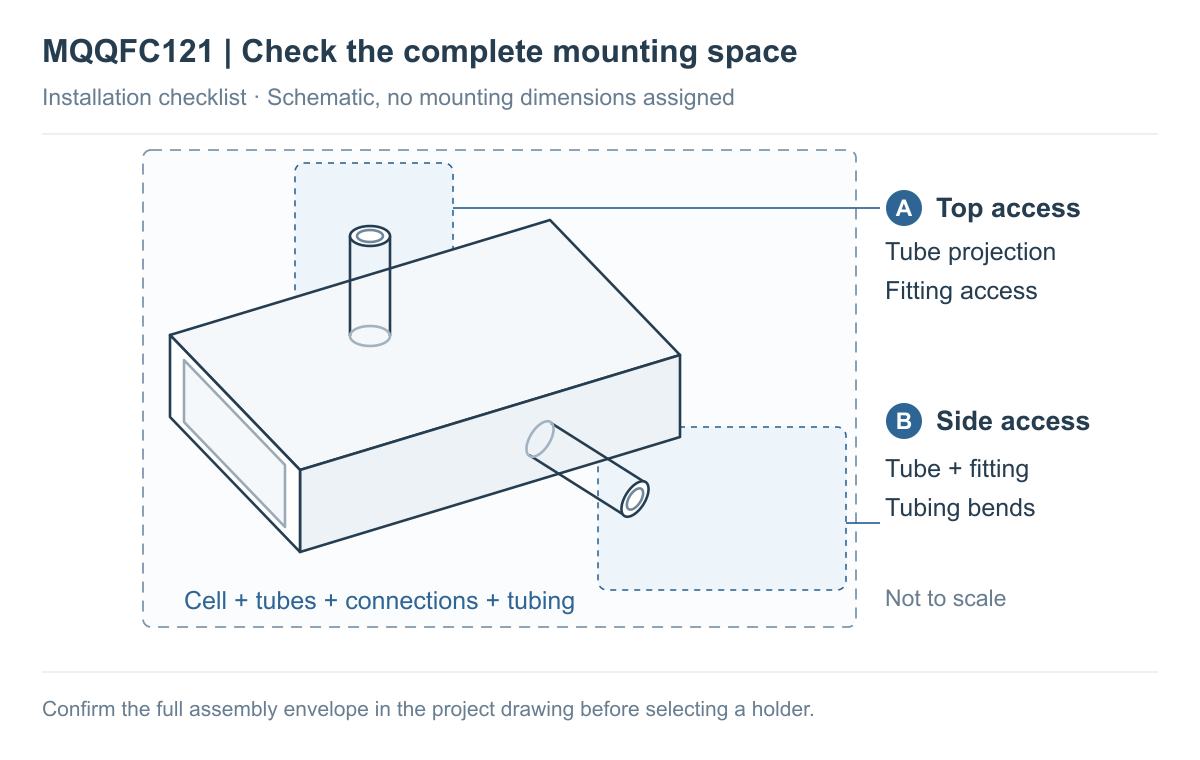
Start with the holder drawing or a photograph of your setup. The body needs to fit, the beam needs a clear path through the windows, and both tubes need room for their connections.
- Optical clearance: Beam direction, beam center, window position and any obstruction from the holder.
- Tube access: Room to attach and remove fittings at the top and side.
- Connected size: Space for both projecting tubes, fittings and tubing bends.
A 50 mm path alone does not establish instrument compatibility. Tube projection lengths, window positions and the full assembly envelope need to be settled in the project drawing.
View the 3D concept
Order this configuration or send a sketch
View the current price and order MQQFC121. If you need it by a particular date, ask about availability and preparation or production time first.
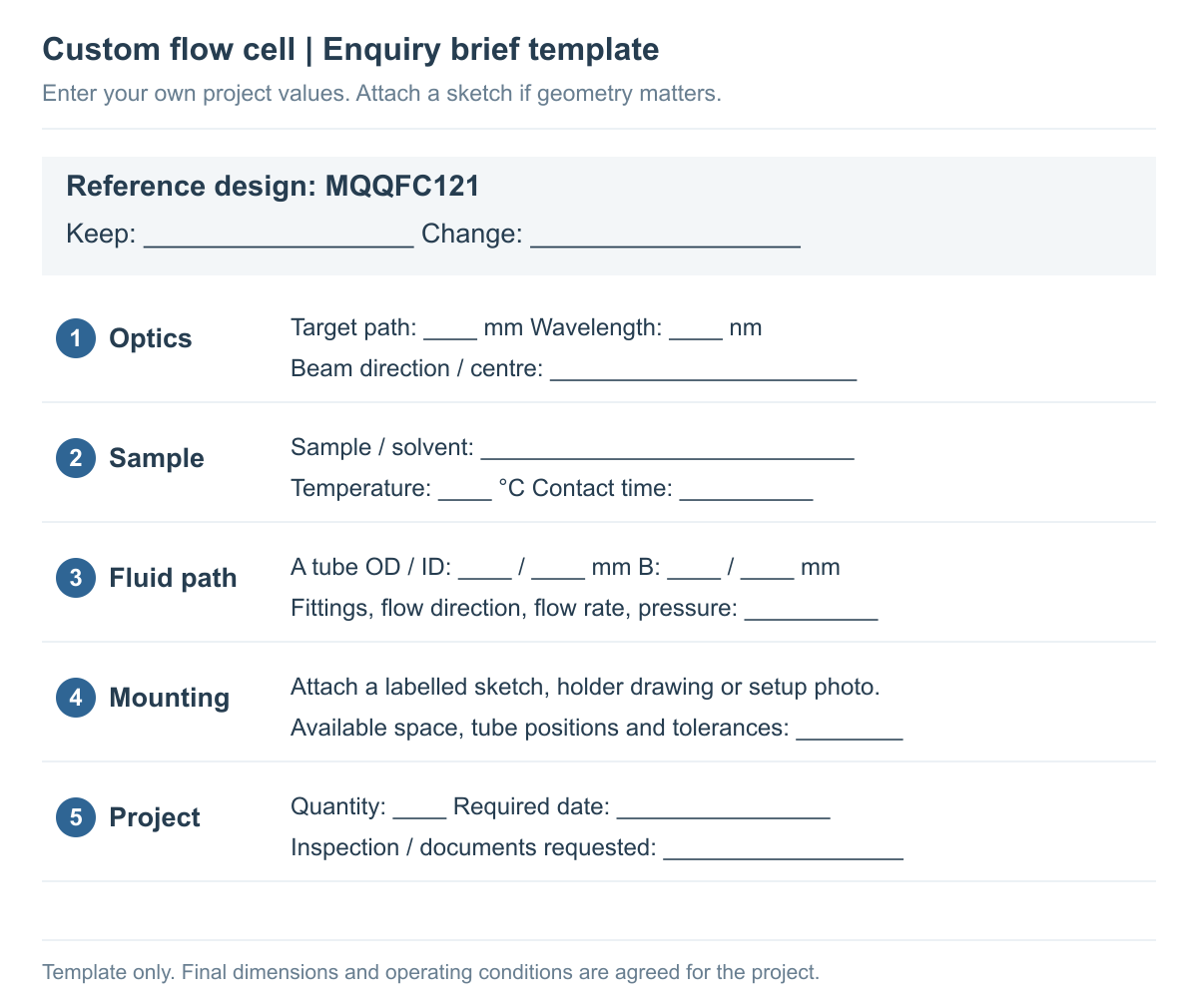
For a custom version, send a dimensioned drawing or a labelled sketch. A photo of the fitting or holder helps explain where the change is needed. Include:
- Measurement: Wavelength, target optical path and beam direction or center position.
- Sample: Sample and solvent, concentration, temperature and contact time.
- Fluid connections: Fittings, intended flow direction, flow rate, pressure and flushing method.
- Installation: Available space, tube positions, projection lengths and critical tolerances.
- Order details: Quantity, required date, inspection and documentation needs.
View an enquiry brief template
MQ coordinates the design review with external suppliers in China. Modified designs are quoted separately, with the drawing, quantity, inspection scope, price and production time agreed for the project.
The usable capacity and allowable operating conditions for this cell still need confirmation. Before ordering, agree which parts are included and whether any requested material, dimensional or optical test documents can be supplied.
Send your custom flow cell requirements. For other layouts, browse quartz flow cell designs.


Recent Comments