
How to Tell Glass from Quartz: 5 Quick Visual & Lab Tests (2026 Guide)
To tell glass from quartz, use 5 quick tests: (1) UV transmission — quartz transmits UV-C down to 185 nm, glass blocks below 320 nm; (2) thermal shock — quartz survives 1,100 °C → ice water; glass shatters above 200 °C ΔT; (3) Mohs scratch — quartz scratches glass (7 vs 6); (4) thermal expansion — quartz expands 17× less than soda-lime; (5) refractive index measurement — quartz n=1.458, borosilicate n=1.474. In a lab setting, the UV transmission test on a spectrophotometer is the single most diagnostic — quartz cuvettes show >85% transmission at 200 nm, borosilicate <1%. Last updated: June 2026.
🔍
Why trust this guide? Cross-referenced against ASTM C162 (glass terminology), ISO 4793 (porosity classes), NIST optical property database, and Heraeus/Schott/Corning technical handbooks.
On this page
Why distinguish glass from quartz?
Quartz costs 5-10× more than borosilicate glass. Knowing whether a piece is actually quartz matters for: incoming QC of expensive supplies, validating that legacy lab equipment is the material the label claims, deciding whether a vessel is rated for high-T or UV photochemistry, and avoiding counterfeit “quartz” cuvettes that are actually polished glass.
This guide gives you 5 progressively more rigorous tests — from a 10-second visual check to a quantitative UV-Vis measurement — so you can confirm material identity at the level of certainty your application requires.
5 quick tests at a glance
| Test | Equipment Needed | Time | Diagnostic Power |
|---|---|---|---|
| UV transmission | UV-Vis spectrophotometer | 2 min | ★★★★★ (definitive) |
| Thermal shock | Bunsen burner + ice water | 30 sec | ★★★★ (destructive) |
| Mohs scratch | Mohs pick set or quartz crystal | 1 min | ★★★ (some risk to surface) |
| Thermal expansion | Reference data (no test) | — | ★★ (knowing the source) |
| Refractive index | Abbe refractometer | 5 min | ★★★★ (precise non-destructive) |
UV Transmission
Quartz: transparent 185-2500 nm. Glass: blocks below 320 nm. Most diagnostic.
Thermal Shock
Quartz survives 1,100°C → 0°C plunge. Glass cracks above 200°C ΔT.
Mohs Hardness
Quartz (Mohs 7) scratches glass (Mohs 6). Not reverse.
Test 1: UV transmission — most diagnostic
How to perform
Put the test sample in a UV-Vis spectrophotometer beam path. Scan from 200 nm to 800 nm with air as reference. Quartz shows >85% transmission from 200 nm to 2,500 nm — flat across UV-A, UV-B, and UV-C. Borosilicate glass shows a sharp cutoff at 320 nm where transmission drops to <1%. Soda-lime glass cuts off at 340 nm.
This single measurement is definitive — no other common material has quartz’s deep-UV transparency. Even synthetic fused silica (which is essentially quartz) shows the same pattern. The test takes 2 minutes and requires only a UV-Vis spectrophotometer that most labs already own.
Test 2: Thermal shock — destructive but fast
How to perform
Heat the sample to red heat (~900 °C) with a Bunsen burner or in a muffle furnace, then immediately quench in ice water (0 °C). Fused quartz survives because its thermal expansion coefficient is only 0.55 × 10⁻⁶ /K — the stress from differential expansion is below the fracture limit. Borosilicate glass cracks because its expansion (3.3 × 10⁻⁶ /K) is 6× higher. Soda-lime shatters violently (expansion 9 × 10⁻⁶ /K).
Safety: wear safety glasses, leather gloves, and conduct in a fume hood with a tongs. Do not perform on a piece you need to keep.
Test 3: Mohs scratch hardness
How to perform
Use a genuine quartz crystal point (Mohs 7) to scratch the sample. Apply firm pressure at 45° across an inconspicuous area. If the quartz crystal scratches the sample, the sample is softer than quartz — likely glass (Mohs 5.5-6). If the sample resists scratching, it is either quartz or harder (e.g., sapphire at Mohs 9).
For more nuance, use a Mohs pick set (Mohs 5, 6, 7, 8, 9) and find the threshold. Soda-lime fails at 6; borosilicate fails at 7; quartz fails at 8. For the difference between fused silica and fused quartz, see our fused silica vs fused quartz guide.
Test 4: Thermal expansion (reference data)
| Material | Thermal Expansion (× 10⁻⁶ /K) | Practical Implication |
|---|---|---|
| Fused quartz / fused silica | 0.55 | Negligible thermal expansion — survives any ΔT |
| Borosilicate (Pyrex/Duran) | 3.3 | Tolerates 200 °C ΔT |
| Aluminosilicate | 5.0 | Tolerates 150 °C ΔT |
| Soda-lime glass | 9.0 | Tolerates 75 °C ΔT |
If you know the supplier and the material it claims, the expansion coefficient is the most rigorous quantitative differentiator — but requires a dilatometer or DTA setup, not a routine test.
Test 5: Refractive index
How to perform
Use an Abbe refractometer at 589 nm (sodium D-line). Fused quartz/silica: n = 1.458 ± 0.001. Borosilicate: n = 1.474. Soda-lime: n = 1.515. Aluminosilicate: n = 1.530. The 0.016 gap between quartz and borosilicate is easily resolved on a Class A Abbe refractometer (precision ±0.0001).
This is the highest-precision non-destructive test. Requires the part to have a flat polished surface for the prism contact — works well for cuvettes, windows, and tubes; harder for round-bottom flasks.
Visual cues for naked-eye ID
Without instruments, you can sometimes tell quartz from glass by:
- Color cast in thick sections: borosilicate has a faint blue-green tint; quartz is colorless or has a faint orange tint from iron impurities (JGS2) or is perfectly water-white (JGS1).
- Edge appearance: a fresh fracture surface on quartz looks conchoidal (smooth curved) like obsidian; glass fractures are similar but with subtle differences in “feel” under hand inspection.
- Density: quartz is 2.20 g/cm³; borosilicate is 2.23 g/cm³; soda-lime is 2.50 g/cm³. Suspending in liquids of known density (Cargille calibration oils) can separate but requires destructive sectioning.
- Branded markings: legitimate quartz is usually etched with grade (JGS1, JGS2, JGS3) or supplier mark (Heraeus HSQ, Corning HPFS).
None of the naked-eye methods are conclusive — always confirm with at least one quantitative test before high-stakes use.


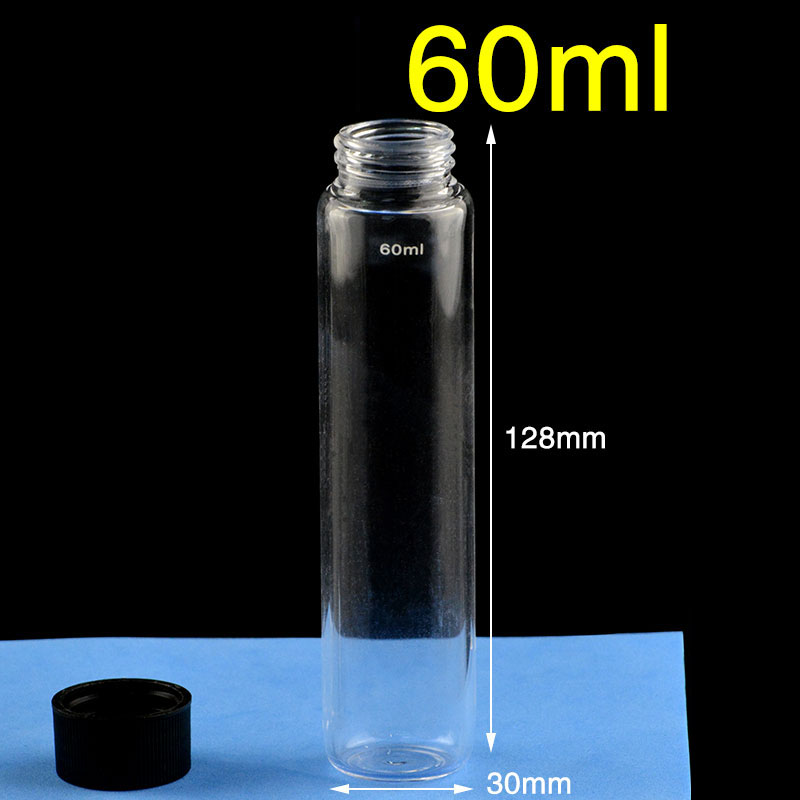
Need to verify your “quartz” supplier is shipping real quartz?
We supply lab QC samples, JGS1/JGS2/JGS3 reference grades, and certification documentation. ISO 9001.
Request a QC Reference SampleFrequently asked questions
What’s the fastest test to distinguish quartz from glass?
Put the sample in a UV-Vis spectrophotometer and scan from 200 to 400 nm. Quartz transmits >85% at 200 nm; glass shows <1% transmission below 320 nm. This 2-minute test is definitive and uses equipment most labs already own.
Can I tell quartz from glass just by looking?
Sometimes. Quartz is usually colorless or slightly orange (JGS2); borosilicate has a faint blue-green cast in thick sections. Legitimate quartz parts often have grade markings (JGS1/JGS2/JGS3) or supplier marks (Heraeus, Corning). Naked-eye inspection is suggestive but not conclusive — always confirm with UV transmission or scratch test.
Will heating “test” cuvettes break them?
Yes — destructive testing. Heating to red heat then quenching in ice water will crack any borosilicate or soda-lime piece. Reserve thermal shock for sacrificial samples; for cuvettes you need to keep, use UV transmission or scratch testing instead.
Is “quartz glass” the same as fused quartz?
Yes — “quartz glass” is the common name for fused quartz (amorphous SiO₂ made by melting natural crystalline quartz). It differs from synthetic “fused silica” (made from SiCl₄) only in OH content and trace impurities. See our fused silica vs fused quartz comparison.
Why does borosilicate glass block UV light?
Borosilicate contains 12-15% boron oxide (B₂O₃) plus alkali oxides (Na₂O, K₂O). These dopants introduce electronic absorption bands in the UV-B and UV-C, cutting transmission below 320 nm. Pure SiO₂ (quartz/fused silica) has no such bands and remains transparent down to ~185 nm.
Can I use a steel knife to scratch-test glass?
Steel is approximately Mohs 5.5. It scratches soda-lime glass (Mohs 5.5) marginally and does not scratch borosilicate (Mohs 6) or quartz (Mohs 7). For routine ID, use a Mohs pick set (specifically Mohs 6 and 7 picks) or a genuine quartz crystal.
What’s the cheapest “quartz QC kit” I can buy?
A Mohs pick set (Mohs 5, 6, 7, 8, 9) costs US$30-60 and lets you do destructive ID. A UV-Vis spectrophotometer (US$5,000-15,000) gives you non-destructive UV transmission ID. For a non-destructive “field” test, an Abbe refractometer (US$300-800) measures refractive index to ±0.001, easily separating quartz (1.458) from borosilicate (1.474).


Recent Comments