

Laboratory Flasks: 14 Types, Uses, Materials & When to Use Quartz (2026)
Laboratory flasks are specialized glass vessels with narrow necks and wider bases, used for mixing, heating, distilling, titrating, and storing liquids in chemistry, biology, and analytical labs. The 14 most common types include the Erlenmeyer flask (mixing without splashing), Florence flask (even heating), round-bottom flask (distillation and reflux), volumetric flask (precise dilution to ±0.05%), Büchner flask (vacuum filtration), distillation flask (with side arm), Schlenk flask (air-free chemistry), Kjeldahl flask (nitrogen digestion), and several specialty geometries. Most lab flasks are made from borosilicate glass (Pyrex/Duran) for thermal shock resistance; fused quartz is used when work requires UV transparency below 320 nm or sustained temperatures above 600 °C. Last updated: June 2026.
🧪
Why trust this guide? MachinedQuartz LLC has supplied quartz labware to research labs since 2026. This guide cross-references ASTM E542 (volumetric glassware), ISO 1042 (volumetric flasks), and the published catalogs of Pyrex, Duran, Kimax, and our own quartz fabrication standards.
On this page
- What is a laboratory flask?
- Material: borosilicate vs quartz vs soda-lime
- Quick comparison — 14 flask types
- Mixing & reaction flasks (Erlenmeyer, Florence)
- Distillation flasks (round-bottom, distillation, Claisen)
- Volumetric & measuring flasks
- Filtration & vacuum flasks (Büchner)
- Air-free & specialty flasks (Schlenk, Kjeldahl)
- When you need quartz instead of glass
- FAQ
What is a laboratory flask?
A laboratory flask is a glass vessel with a wider body and a narrower neck — the narrow neck reduces evaporation, controls splashing during swirling, and provides a standardized joint for connecting to other equipment. The combination of body shape, neck geometry, base profile, and side-arm features defines what each flask type does best. Some are designed for precise volume measurement (volumetric, graduated); others for even heating (round-bottom), low-loss mixing (Erlenmeyer), filtration under vacuum (Büchner), or air-sensitive chemistry (Schlenk).
Choosing the wrong flask is one of the most common errors in entry-level lab work. Using an Erlenmeyer for distillation, or a volumetric for heating, will either ruin the result (wrong volume after thermal distortion) or simply fail (insufficient surface area for boiling). This guide walks through every common flask type, what it actually does, and where each one fits in modern lab workflows.
Material: borosilicate vs quartz vs soda-lime
Before discussing geometry, the flask material matters more than most people realize. Different glasses have very different thermal, optical, and chemical tolerances:
| Material | Max Temp | UV Cutoff | Chemical Resistance | Use Case | Cost |
|---|---|---|---|---|---|
| Soda-lime | 120 °C | 340 nm | Low (alkali leaching) | Storage only, disposable | 0.1× |
| Borosilicate (Pyrex/Duran) | 500 °C | 320 nm | Resists all common acids except HF | ~95% of all lab flasks | 1× |
| Quartz / fused silica (JGS1) | 1,100 °C | 185 nm | Inert to all acids except HF | UV photochemistry, high-T, trace metal | 5–10× |
| Sapphire | 1,800 °C | 140 nm | Inert | Extreme T & P only | 30–50× |
Most laboratory flasks discussed in this article are borosilicate glass — the working horse of modern labs. We will flag explicitly where a quartz alternative is the better choice. For a deeper material comparison, see our cuvette material guide.
Quick comparison — 14 flask types
| Flask | Base Shape | Primary Use | Volume Range | Quartz Available? |
|---|---|---|---|---|
| Erlenmeyer (E-flask) | Conical, flat | Mixing, titration | 50 mL – 4 L | Yes — UV photochem |
| Florence flask | Spherical, flat | Even heating of liquids | 250 mL – 2 L | Yes — high-T work |
| Round-bottom flask | Spherical, rounded | Distillation, reflux, rotovap | 10 mL – 5 L | Yes — UV reactions |
| Volumetric flask | Pear, flat | Precise dilution to a mark | 1 mL – 5 L | Rarely (impractical for calibration) |
| Büchner flask | Conical, side-arm | Vacuum filtration | 250 mL – 2 L | Sometimes — trace metal prep |
| Distillation flask | Pear or round, side-arm | Simple distillation | 50 mL – 1 L | Yes — high boiling-point work |
| Schlenk flask | Pear or round, sidearm + tap | Air-free chemistry | 10 mL – 500 mL | Yes — high-T inert atmosphere |
| Kjeldahl flask | Long-neck pear | Nitrogen digestion | 100 mL – 800 mL | Often — trace metal Kjeldahl |
| Two-neck / three-neck | Round, multi-neck | Reflux with addition | 25 mL – 5 L | Yes — UV photochem |
| Pear-shaped flask | Pear, rounded | Small-volume rotovap | 5 mL – 250 mL | Rare |
| Claisen flask | Round with twin necks | Reduced-pressure distillation | 50 mL – 500 mL | Yes — special |
| Retort | Spherical with bent neck | Historical distillation, demonstrations | 250 mL – 2 L | Rare |
| Centrifuge cone | Conical, graduated | Volume measurement of precipitate | 1 mL – 100 mL | No (plastic) |
| Iodine flask | Conical, ground stopper + collar | Iodometric titration (volatile I₂) | 100 mL – 500 mL | Rare |
Conical body
Wide flat base + narrow neck. Swirling without splashing. Most-used flask.
Spherical body
Even heat distribution for distillation, reflux, rotovap. Needs stand.
Pear body, calibrated
Single mark on long neck = exact volume at 20°C. Class A: ±0.05%.
Mixing & reaction flasks
Erlenmeyer flask (E-flask, conical flask)
Volumes: 25 mL – 4 L Material: borosilicate or quartzThe Erlenmeyer is the most-used flask in every chemistry lab. Its conical body and flat bottom make it ideal for swirling without splashing, titrations, and crystallization. The narrow neck reduces evaporation during heating and provides a natural stopper interface for parafilm or rubber stoppers. Use it for: titrations, crystallization, dissolving solutes, simple reactions, and culture work in microbiology.
Limitations: Volume markings on an Erlenmeyer are only accurate to ±10%. Never use one as a quantitative volumetric vessel. For accurate dilution, transfer to a volumetric flask.
💡 Quartz Erlenmeyer: needed for UV-induced photochemistry (sunscreen photolysis, photocatalyst studies) where UV light must penetrate the flask wall. Available custom from MQ.
Florence flask
Volumes: 250 mL – 2 L Material: borosilicateA Florence flask has a spherical body and a flat bottom — designed for heating liquids over a Bunsen burner or heating mantle. The spherical body distributes heat evenly across the surface, preventing local hot spots, and the flat bottom lets it sit upright on a surface (unlike a round-bottom flask, which needs a stand or cork ring). Use it for: boiling pure water for distillation, generating gases, traditional heating demonstrations.
Limitations: Modern labs have largely replaced Florence flasks with round-bottom flasks on heating mantles, which give better temperature uniformity. The Florence flask now appears mostly in teaching labs and historical chemistry settings.
Distillation flasks
Round-bottom flask (RBF)
Volumes: 10 mL – 5 L Material: borosilicate or quartzThe round-bottom flask is the heart of organic and inorganic synthesis. Its spherical shape distributes heat evenly and tolerates the increased internal pressure of refluxing solvents. Used with a heating mantle on a stand or cork ring (it cannot stand upright on its own), it is the standard flask for: distillation, reflux reactions, rotary evaporation (rotovap), boiling, and any reaction that generates significant gas or vapor.
Round-bottom flasks come in single-neck, two-neck, and three-neck variants — each additional neck allows simultaneous attachment of a reflux condenser, addition funnel, thermometer, or gas inlet without compromising the seal.
💡 Quartz round-bottom: used for sustained reactions above 600 °C (where borosilicate softens), trace-metal extraction (where Pyrex alkali leaching would contaminate ppm-level analytes), and UV-driven photochemistry.
Distillation flask (with side arm)
Volumes: 50 mL – 1 L Material: borosilicate or quartzA distillation flask is a pear- or round-shaped flask with a side arm that connects directly to a condenser. The side arm enters the flask near the top, so vapor — but not boiling liquid — flows into the condenser for cooling. Use it for: simple atmospheric-pressure distillation of pure compounds, fraction collection in petroleum analysis, separation of water-immiscible solvents.
The Claisen flask is a variant with twin parallel necks — one for an addition funnel or thermometer, one for the still head — used in reduced-pressure distillation where the second neck breaks bumping under vacuum.
Volumetric & measuring flasks
Volumetric flask
Volumes: 1 mL – 5 L Tolerance: ±0.05% at 20 °CA volumetric flask is a pear-shaped or round flask with a single graduation line on the long, narrow neck. The mark is calibrated to contain (TC) a specific volume — for example, a 250 mL “Class A” volumetric flask contains exactly 250.00 ± 0.12 mL at 20 °C when the meniscus touches the mark. Use it for: preparing standard solutions of precise concentration, making serial dilutions for calibration curves, and any analytical work requiring quantitative volume.
Critical rules: Never heat a volumetric flask — heating distorts the calibration permanently. Never store solutions long-term in a volumetric (use a storage bottle). Always read the meniscus at eye level. Volumetric flasks are sold in Class A (±0.05%, traceable to NIST) and Class B (±0.1%, routine work) grades.
Filtration & vacuum flasks
Büchner flask (filter flask, vacuum flask)
Volumes: 250 mL – 2 L Wall thickness: 2-3× heavier than ErlenmeyerA Büchner flask is a heavy-walled Erlenmeyer flask with a glass side arm for connection to a vacuum source (aspirator or vacuum pump). It is used together with a Büchner funnel for accelerated filtration of solid precipitates from liquids — vacuum below pulls the liquid through filter paper at the bottom of the funnel. Use it for: collecting recrystallized products, removing drying agents from organic solutions, filtering biological cultures.
The heavy wall is critical: a thin-walled Erlenmeyer will implode under vacuum. Never use a regular Erlenmeyer as a substitute. Connect to the vacuum source with thick-walled vacuum tubing; thin tubing collapses.
Air-free & specialty flasks
Schlenk flask
Volumes: 10 mL – 500 mL Material: borosilicate or quartzA Schlenk flask is a pear- or round-bottom flask with a side arm fitted with a high-vacuum stopcock — typically a glass tap or PTFE valve. The stopcock allows the flask to be evacuated, refilled with inert gas (N₂ or Ar), and connected to a Schlenk line for reproducible air-free chemistry. Use it for: organometallic synthesis (Grignard, palladium catalysis), air-sensitive ligand work, polymerization, anhydrous extraction.
Modern labs use PTFE-keyed Schlenk taps in place of glass stopcocks — they don’t seize, don’t leak, and don’t require regreasing.
💡 Quartz Schlenk: required for sustained heating above 600 °C under vacuum (e.g., CVD precursor synthesis, ALD chemistry).
Kjeldahl flask
Volumes: 100 mL – 800 mL Material: borosilicate or quartzA Kjeldahl flask has a pear-shaped body and a long, thick neck — designed for the Kjeldahl nitrogen digestion procedure, where samples are boiled in concentrated sulfuric acid for hours. The long neck prevents losses by reflux while the heavy thick neck resists thermal stress from prolonged heating. Use it for: protein nitrogen content (food chemistry, agriculture), total Kjeldahl nitrogen in water analysis.
Quartz Kjeldahl flasks are required for trace-metal digestion (ICP-MS sample preparation), where borosilicate’s alkali leaching contaminates ppb-level analytes. We supply trace-metal sample prep quartz tailored to ICP-MS workflows.
When you need quartz instead of glass
The five situations where a quartz flask is genuinely required (and the extra cost is justified):
| Situation | Why borosilicate fails | Quartz solution |
|---|---|---|
| Sustained heating above 600 °C | Borosilicate softens at 820 °C; deforms during long-term use above 500 °C | Quartz tolerates 1,100 °C continuous |
| UV photochemistry below 320 nm | Borosilicate blocks UV-C; photolysis won’t happen | JGS1 quartz transmits down to 185 nm |
| Trace metal analysis (ppb levels) | Borosilicate alkali leaches Na, K, B into solution | Quartz leach rate <1 ppb under standard acid digestion |
| HF-free strong-acid work above 200 °C | Borosilicate slowly etches in hot HClO₄ or hot H₂SO₄ | Quartz inert to all acids except HF |
| UV transmission requirements (general) | Borosilicate UV cutoff at 320 nm blocks UV-A/UV-B/UV-C | Quartz UV transparent — also enables UV light in photochemistry |
If your work does not require any of the above, borosilicate (Pyrex, Duran, Kimax) is the correct material — more durable than quartz against mechanical shock, dramatically cheaper, and easier to source. Save quartz spend for the cases where it genuinely matters.
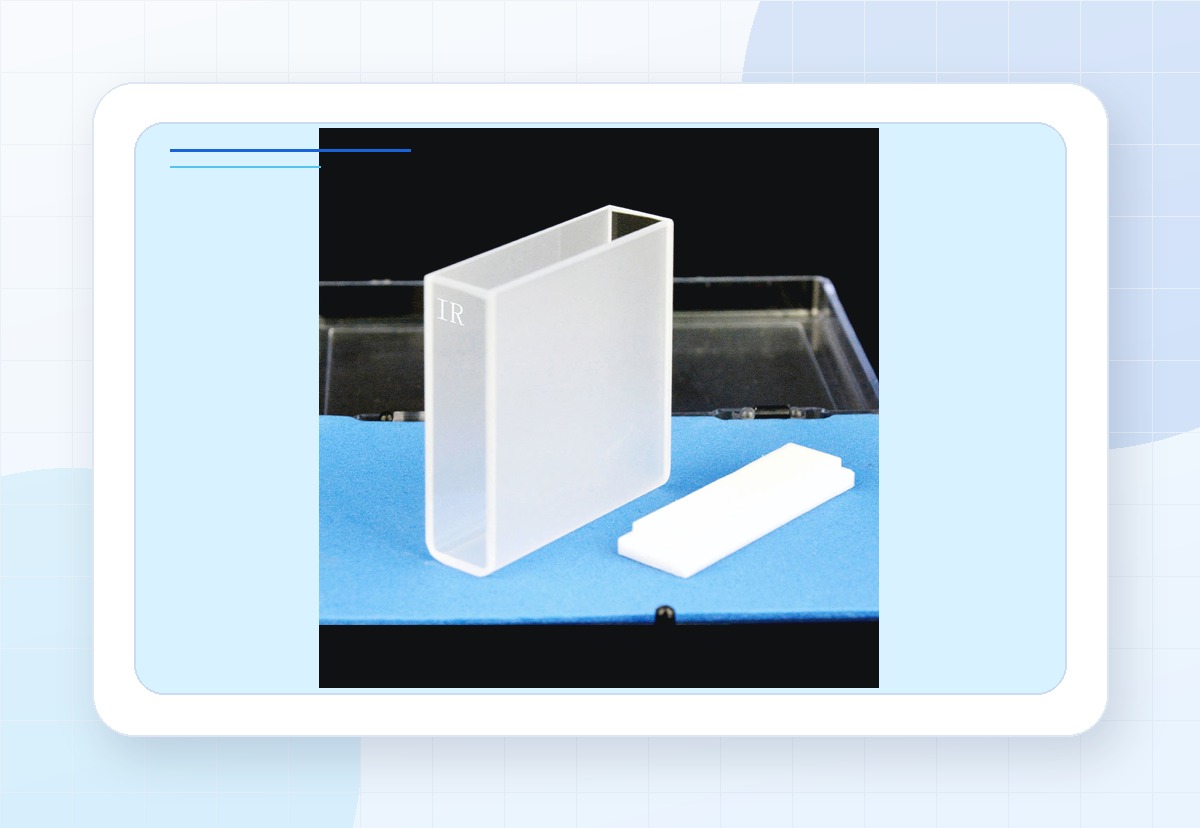
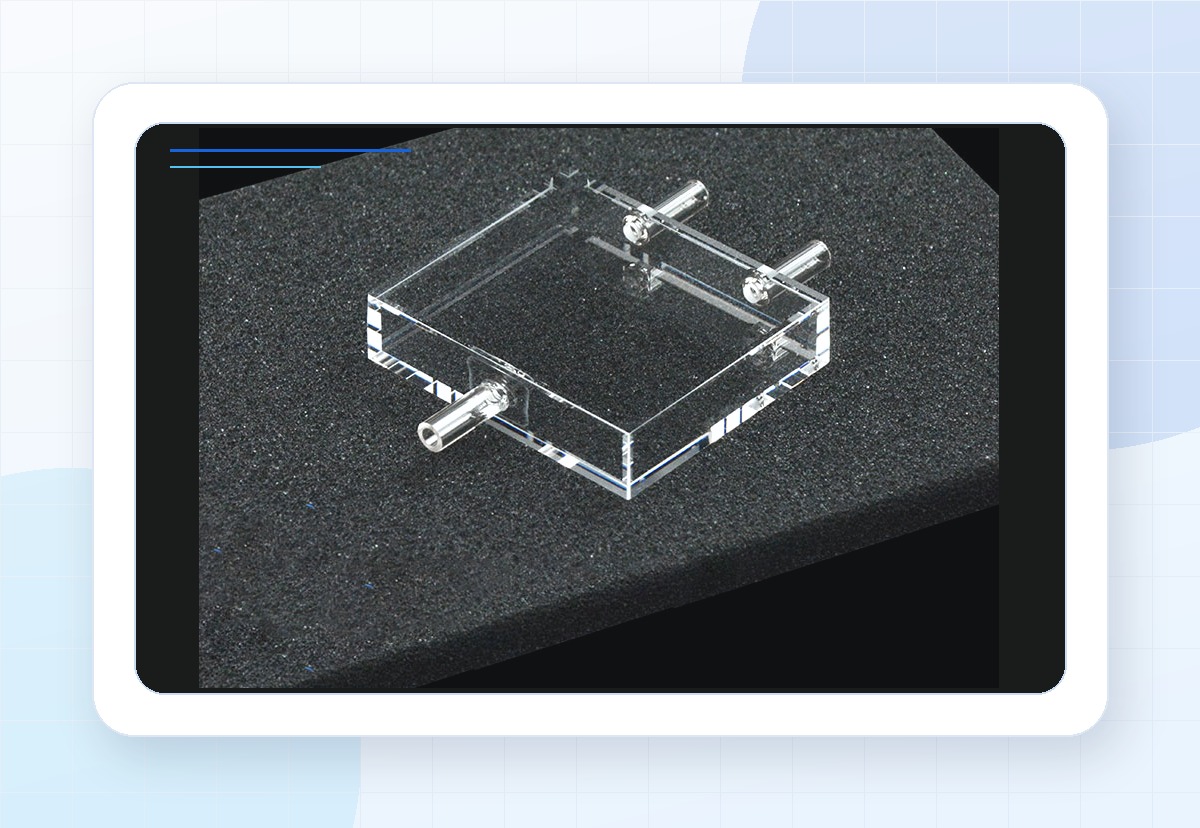
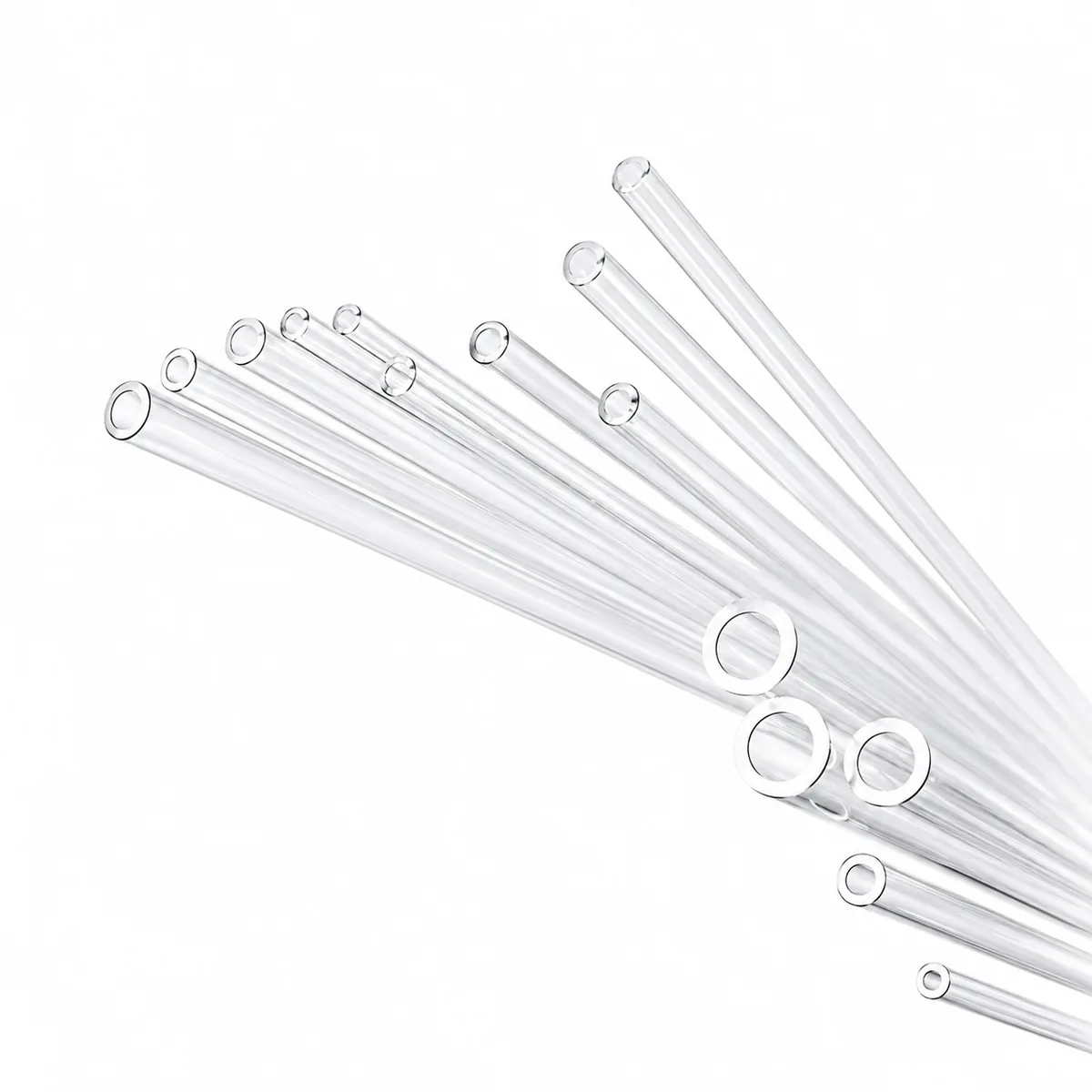
Need custom quartz flasks or sample-prep vessels?
MachinedQuartz fabricates custom quartz Erlenmeyer, round-bottom, Schlenk, and Kjeldahl flasks for trace metal, high-T, and UV photochemistry work. JGS1 + JGS3 grades. No MOQ.
Request Custom QuoteFrequently asked questions
What is the most common flask in a chemistry lab?
The Erlenmeyer flask. Its conical body and flat bottom make it ideal for nearly any mixing or titration task without splashing, and it stacks easily for storage. Most labs stock multiple sizes from 50 mL to 2 L.
Why does a round-bottom flask have a round bottom instead of a flat one?
The spherical shape distributes heat evenly across the surface, preventing local hot spots and bumping during boiling. A flat bottom would heat unevenly and could crack from thermal stress. The trade-off is that round-bottom flasks cannot stand alone — they need a heating mantle, stand, or cork ring.
Can I use an Erlenmeyer flask for distillation?
No. An Erlenmeyer flask does not have a side arm to direct vapor to a condenser, and its flat bottom heats unevenly. Use a round-bottom flask with a distillation head, or a dedicated distillation flask with a built-in side arm. Forcing an Erlenmeyer into a distillation setup typically leads to bumping, vapor escape, and uneven product collection.
Why can’t I heat a volumetric flask?
The calibration mark on a volumetric flask is etched at the precise volume the flask contains at 20 °C. Heating expands the glass; cooling contracts it. Heating a volumetric flask beyond 40 °C permanently distorts the calibration — the “250 mL” mark may now correspond to 251.2 mL or some other inaccurate value. For any operation requiring heat, transfer the contents to a round-bottom or Erlenmeyer flask first, then transfer back to the volumetric only after cooling.
What’s the difference between a Schlenk flask and a regular round-bottom?
A Schlenk flask has a high-vacuum stopcock (glass tap or PTFE valve) on its side arm. This allows the flask to be evacuated, refilled with inert gas, and isolated from atmosphere without disconnecting from the manifold — essential for air- and moisture-sensitive chemistry. A regular round-bottom flask has no side arm and cannot be sealed against atmosphere.
Why is the Büchner flask wall so thick?
Because it operates under vacuum. A standard Erlenmeyer flask wall (1-2 mm) would implode under 20-30 mmHg internal pressure during vacuum filtration. The Büchner’s heavier wall (3-5 mm) safely resists atmospheric pressure crushing it. Never substitute a thin-walled Erlenmeyer for a Büchner — the implosion can scatter broken glass and contents at high velocity.
When do I need a quartz flask instead of borosilicate?
Five situations: (1) sustained temperatures above 600 °C; (2) UV photochemistry below 320 nm; (3) trace-metal analysis at ppb levels where alkali leaching from borosilicate would contaminate samples; (4) sustained strong-acid digestion above 200 °C; (5) any application where the flask wall must transmit UV light. For visible-only chemistry below 500 °C, borosilicate is the correct (and cheaper) choice.
What is the difference between Class A and Class B volumetric flasks?
Class A volumetric flasks meet stricter tolerances (±0.05% for a 250 mL flask) and are individually serial-numbered with a NIST-traceable calibration certificate. They are required for regulated work (USP, EP, FDA validation, ISO 17025 labs). Class B flasks have looser tolerances (±0.1%), no serial number, and cost roughly 30% less. Class B is fine for routine teaching, research, and non-regulated work.


Recent Comments