
Wider-Body Quartz Screw Vial: Specifying the Bottle Shape
Custom Design Guides · Wider-Body Quartz Screw Vial
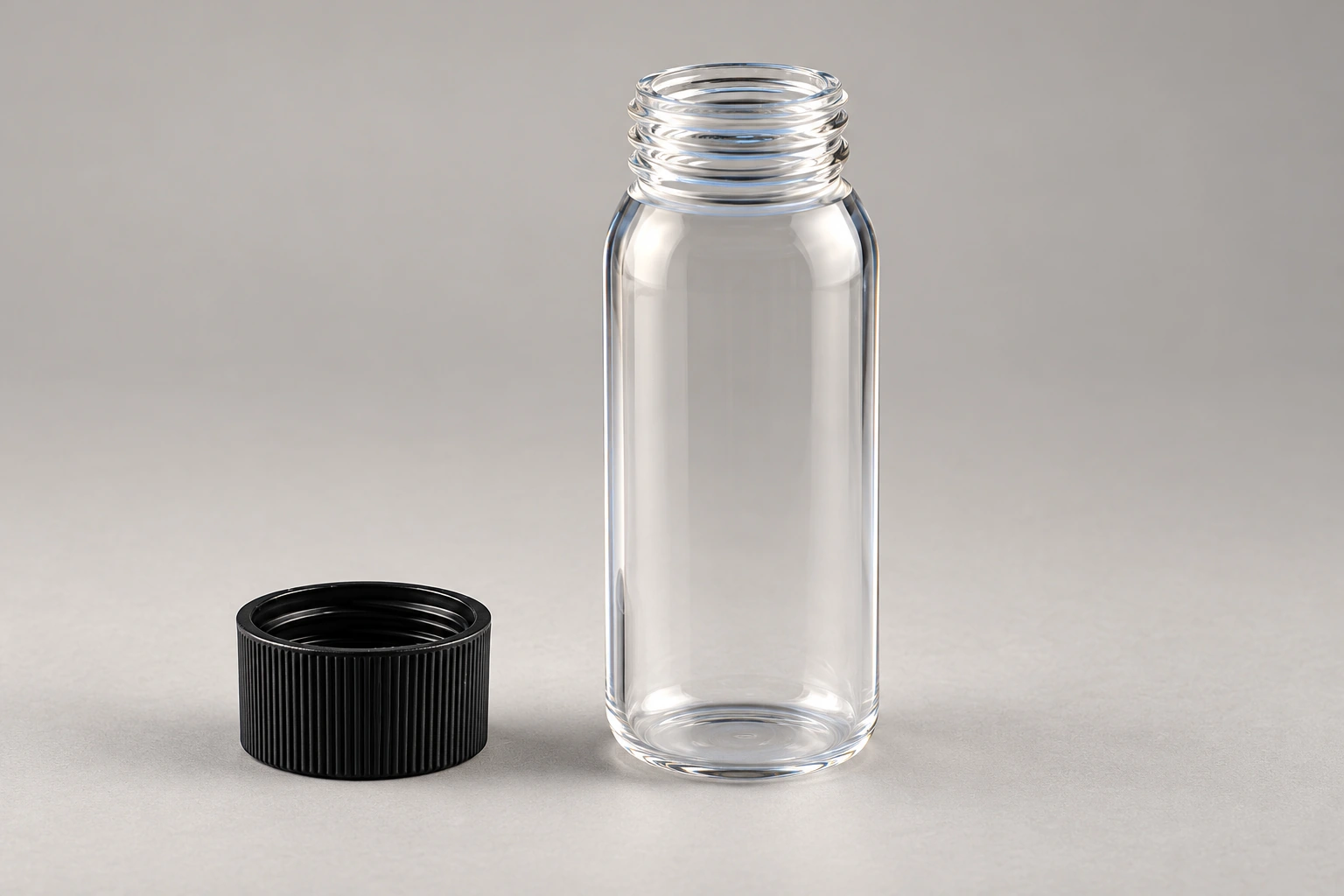
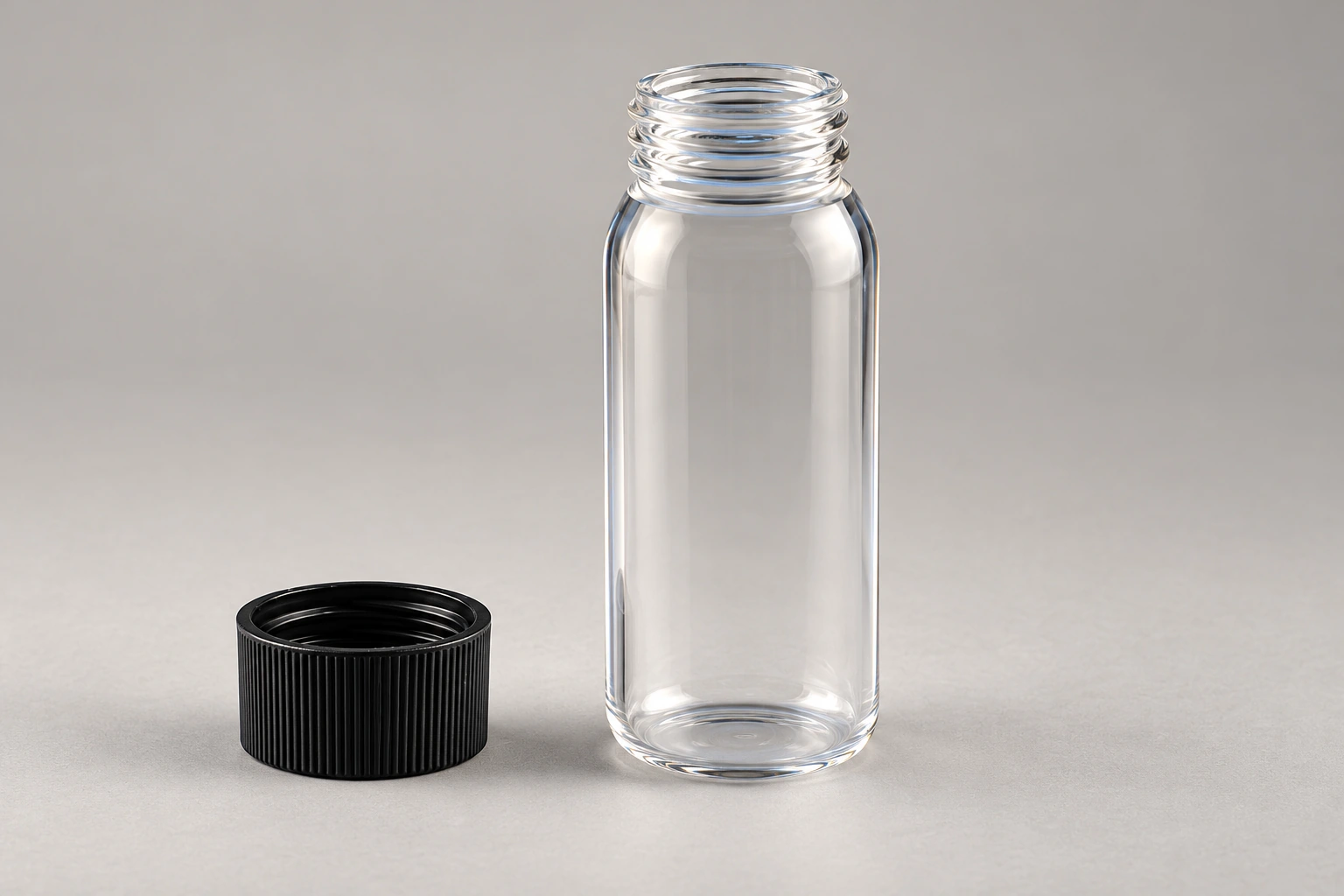
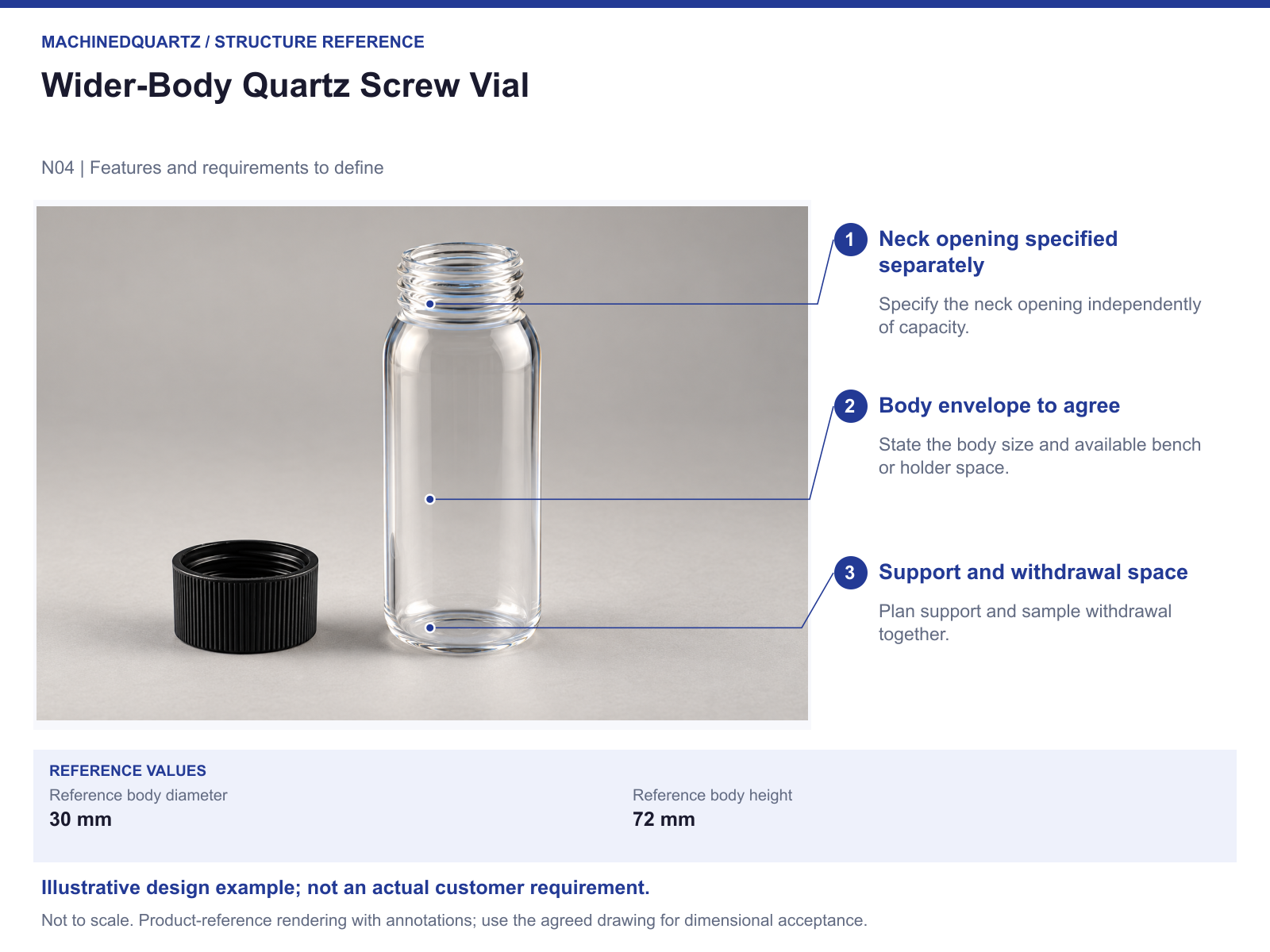
Sometimes the required sample capacity is already decided, but the usual bottle shape does not suit the available space. This wider-body 30 mL quartz screw-vial reference is marked approximately 30 mm in diameter and 72 mm in body height. The body shape, rather than a new measurement principle, is the reason to consider it.
Specify the available diameter and height together. Calling a vial wide does not define its mouth opening, its complete height with a cap or the space needed to remove that cap.
In this guide: Configuration · Design comparison · Turn the available space into an envelope · Keep the mouth separate from the body · Compare shapes at the same nominal volume · Include the filled bottle in the handling brief · Enquiry
The configuration discussed here
What changes from the simpler form?
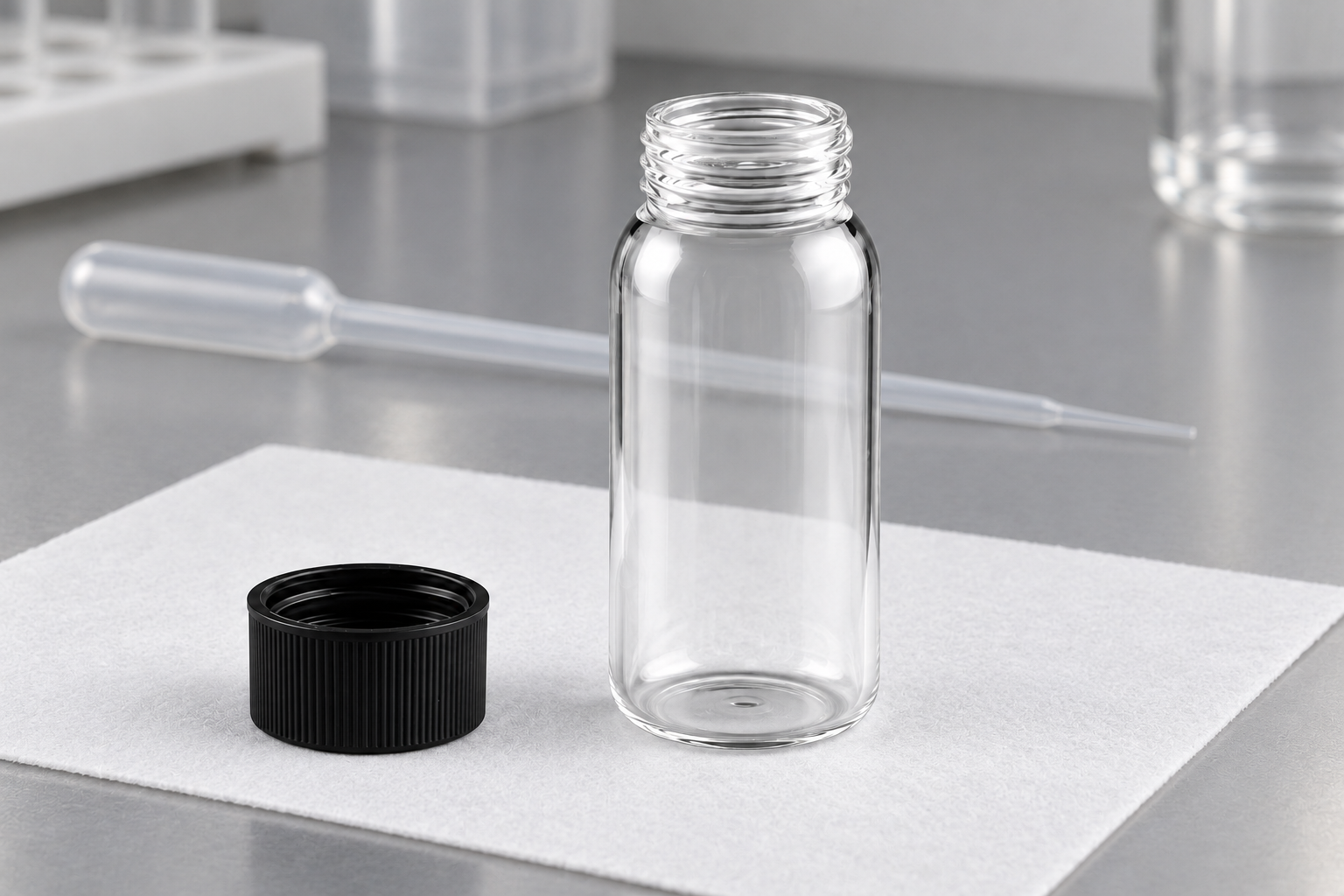
A wider vial retains the familiar bottle-and-cap arrangement but changes its footprint and the space around the neck. The useful comparison is with the current holder and sampling tool, not an assumption that more capacity solves an access problem.
Turn the available space into an envelope
A possible application is a sample support that allows a broader bottle but limits height above the bench. Give MQ the clear opening, support depth and overhead restriction. Show whether the vial must be removed vertically or can leave through a side opening.
Use the current bottle as a reference if it is part of an established procedure. Record its actual envelope and the problem to solve. Without that comparison, a request for a wider version leaves the intended change undefined.
Keep the mouth separate from the body
A broader sample chamber need not have a broader neck. The drawing should identify both the body diameter and the clear opening needed for filling, withdrawal or cleaning. If a tool must reach a particular part of the chamber, include its approach and reach.
The cap in a reference image also does not define every supplied closure detail. State the preferred contact materials, whether a liner is intended and which existing mating parts must be retained. A bottle and cap should be reviewed as a pair.

Compare shapes at the same nominal volume
Comparing two actual 30 mL configurations can reveal a useful trade between outside diameter and height. It does not follow that all internal dimensions, wall thicknesses or working fills remain the same. Those details need their own definition in the revised design.
For a shape change, mark the capacity class to retain and the outside limits to change. MQ can review the proposed envelope and neck arrangement before a project drawing and quotation are agreed.
Include the filled bottle in the handling brief
The support needs to work with the intended contents and operating sequence. Describe where it contacts the bottle, how the bottle is taken out and where a removed cap is placed. Do not infer stability or permissible handling loads from the wider appearance.
If a trial fit or dimensional record is required, identify the actual holder and critical surfaces in the enquiry. Such checks are proposed acceptance items, not completed test results for the reference vial.
Structure reference and specification points
Download the structure reference (PDF)
Does the wider-body version also have a larger mouth?
That is not established by the body dimensions. Specify the minimum clear opening separately and provide the cap or neck interface that needs to fit. A wider body is not a substitute for a mouth-diameter requirement.
Send a drawing or the mating-part details
If the capacity is right but the shape is inconvenient, send the present bottle and available-space dimensions together. That gives MQ a concrete basis for reviewing a different envelope.
- Nominal capacity and usable fill range
- Maximum body diameter, body height and closed assembly height
- Current bottle dimensions or a sample for comparison
- Required mouth access, cap materials and liner arrangement
- Support drawing, contact conditions, quantity and required checks
Modified designs are reviewed for the project. The drawing, supplied parts, quantity, inspection scope, price and preparation or production time are agreed in the quotation.
Details to settle for the ordered configuration
The conventional 30 mL comparison envelope, clear mouth, bottom support dimensions and final cap arrangement remain to be confirmed.



Recent Comments