
PTFE Screw Caps for Quartz Vials: Defining the Complete Closure
Custom Design Guides · PTFE Screw Caps for Quartz Vials
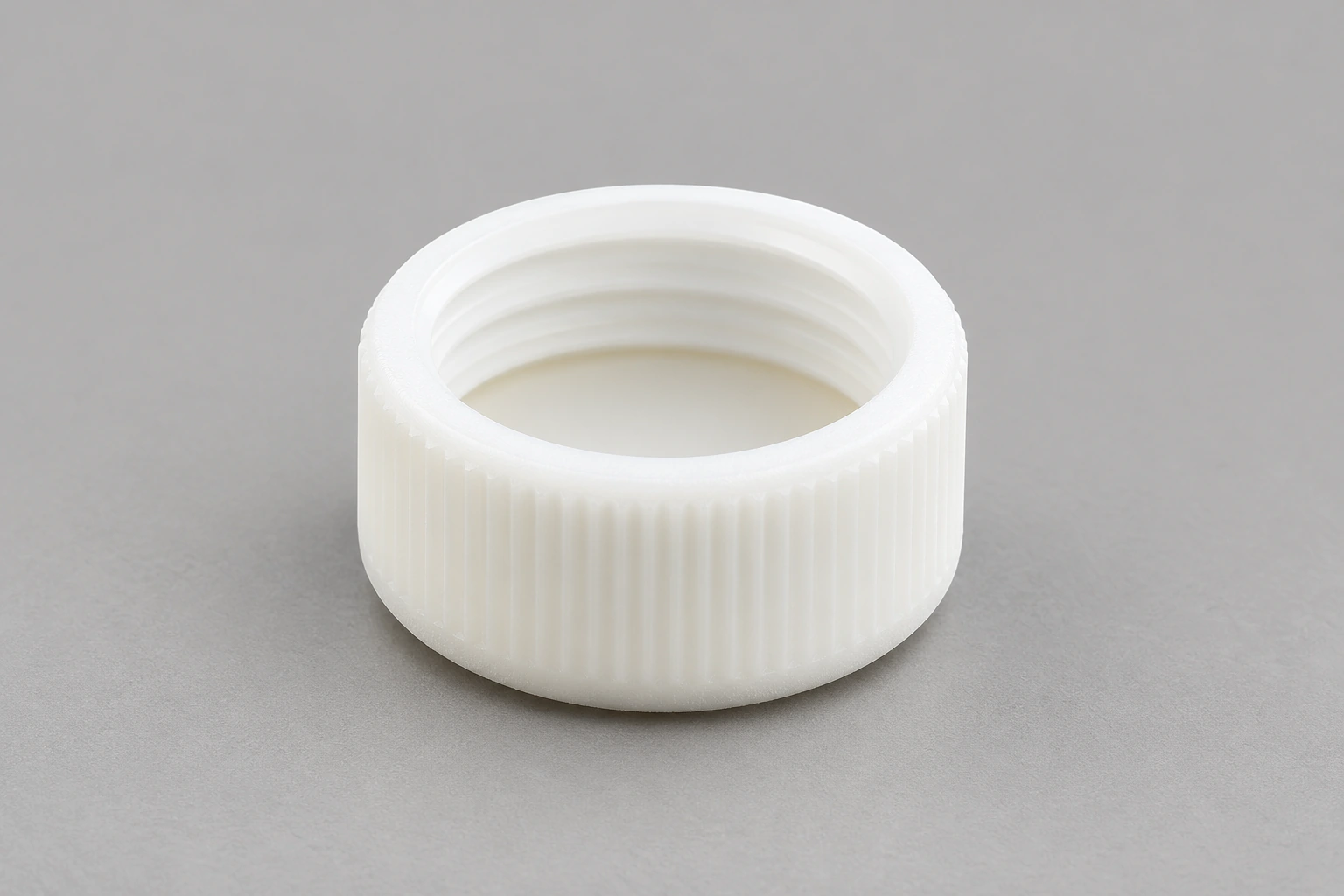
A quartz bottle can use a closure made from a different material. The PTFE screw-cap option shown here is listed for the 20 mL-and-larger vial family. It is a separate component to specify with the bottle and any liner.
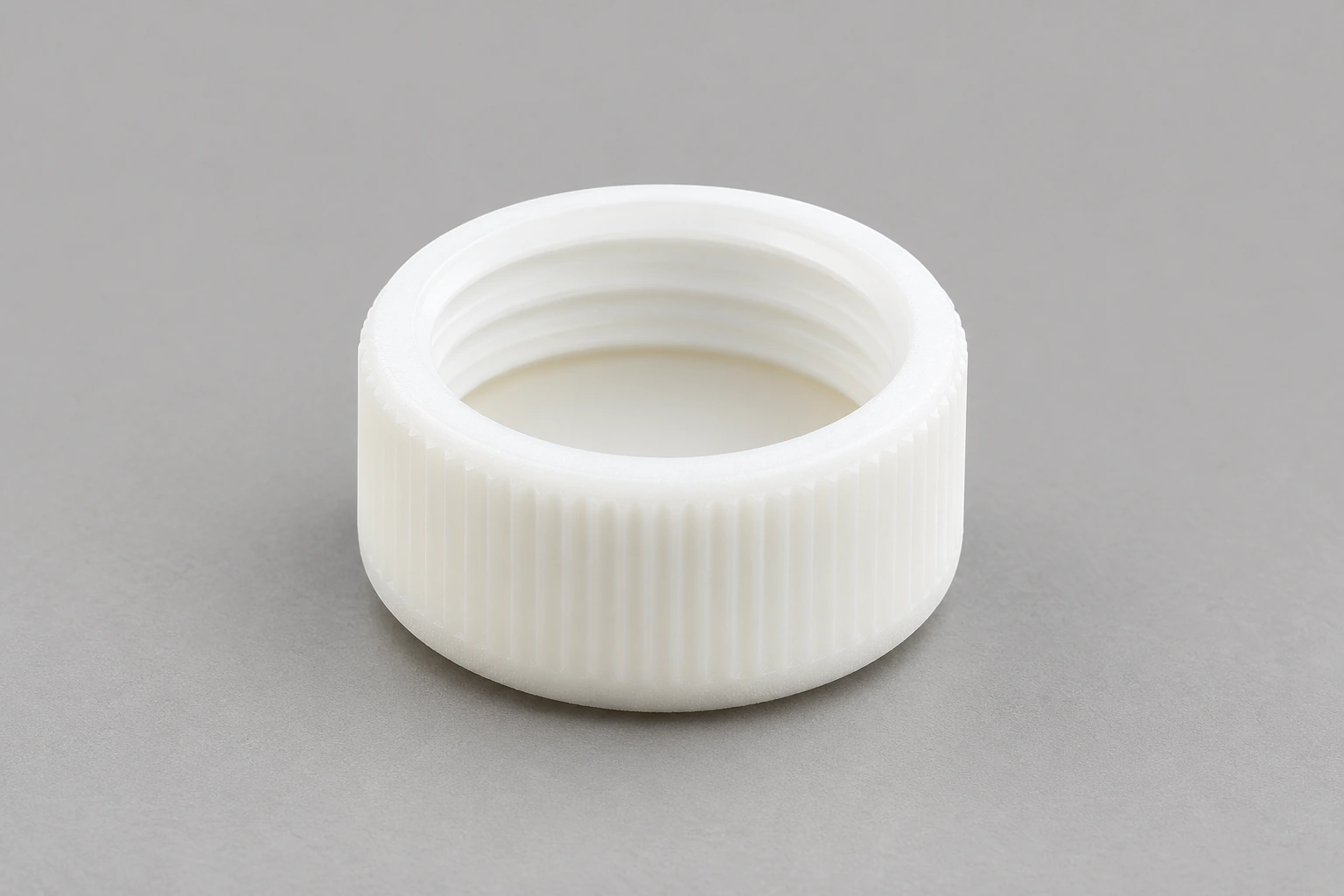
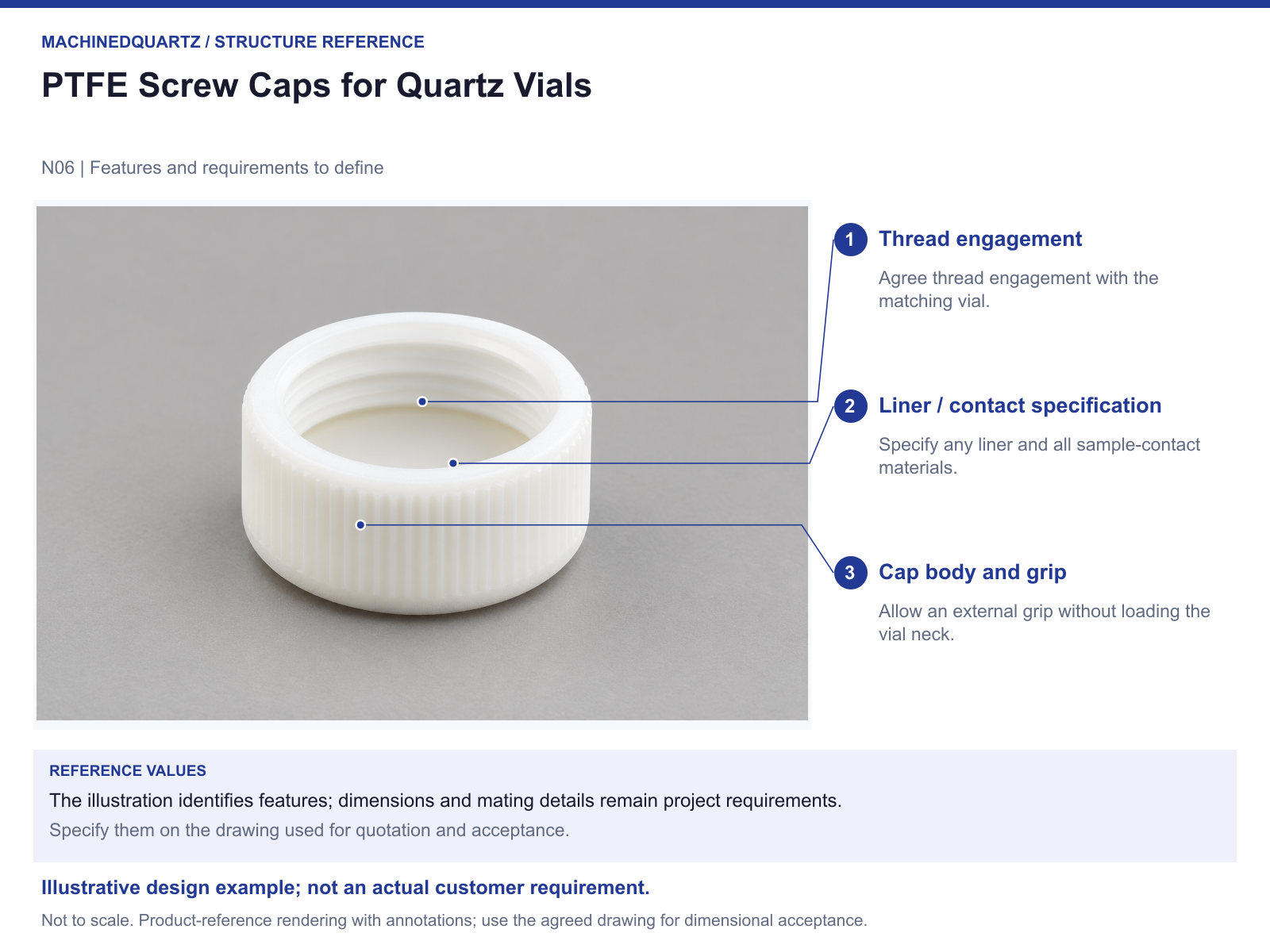
The white cap appearance does not establish the material of every piece in a closure. Identify the threaded cap, contact face and any insert separately when comparing it with a quartz-cap arrangement.
In this guide: Configuration · Design comparison · Map the parts that the sample may reach · Check the neck before comparing cap materials · A liner is not automatically part of the cap · Define the conditions of use before requesting a rating · Enquiry
The configuration discussed here
What changes from the simpler form?
The same quartz bottle concept can be paired with a PTFE cap instead of a quartz cap. That changes the closure material and its contact conditions; the bottle neck, cap seat and any liner still need to form a specified set.
Map the parts that the sample may reach
Begin with the sample position during filling, mixing and transport. The cap may be above the normal liquid level but become exposed when the bottle is tilted. List the materials of the surfaces that can then contact the contents.
If the method excludes a material or requires a particular extractables or blank assessment, put that requirement in the enquiry. A cap labelled PTFE is not, by itself, evidence that the complete assembly meets a particular analytical or chemical requirement.
Check the neck before comparing cap materials
Changing from a quartz cap to a PTFE cap does not remove the need to define the mating interface. Provide the bottle neck, the thread and the surface against which the closure should act. The clear opening and the outside cap diameter are different dimensions.
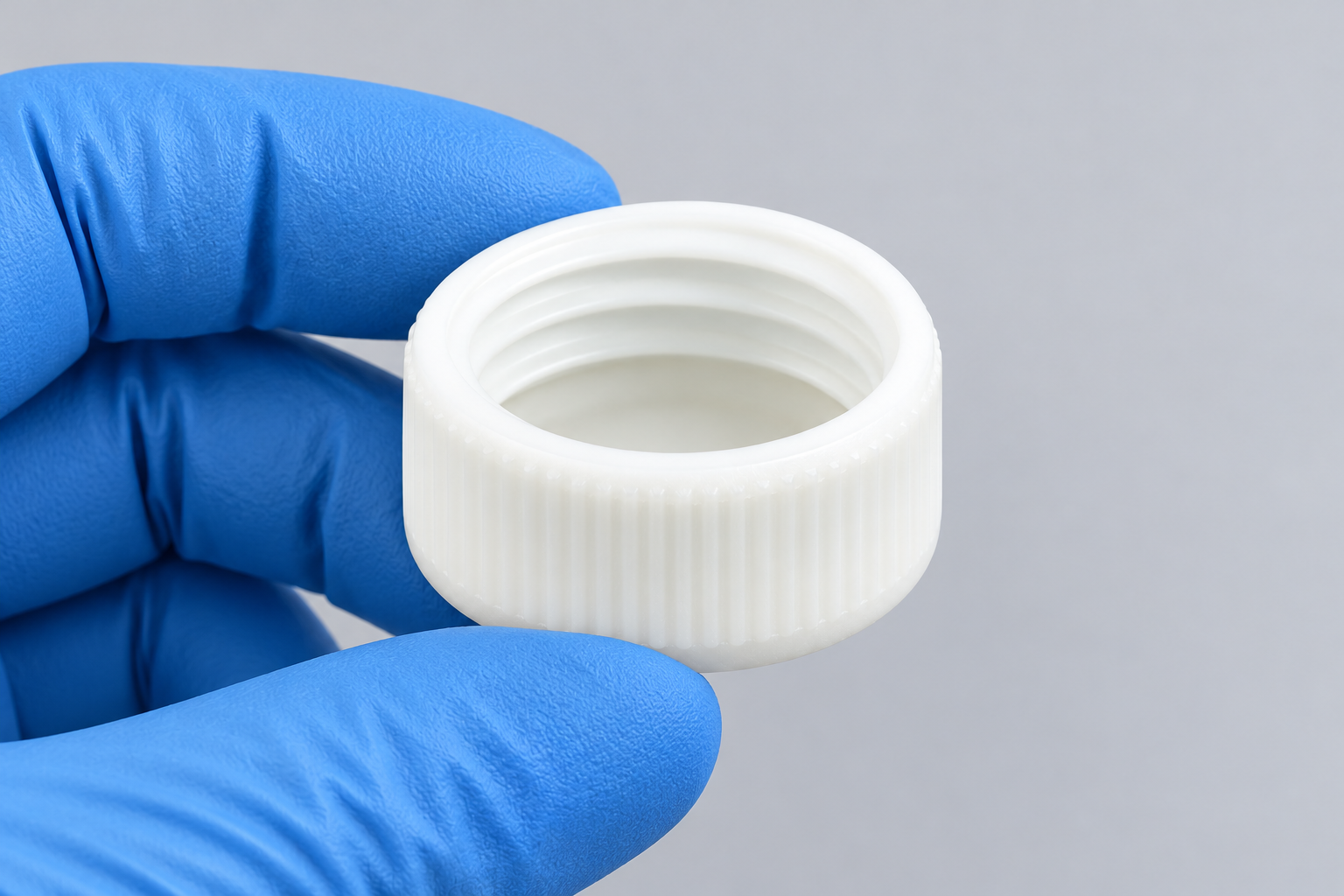
A sample cap can help explain a replacement request, especially when no drawing is available. Record which dimensions and contact surfaces are critical rather than relying on colour or a shared nominal bottle capacity.
A liner is not automatically part of the cap
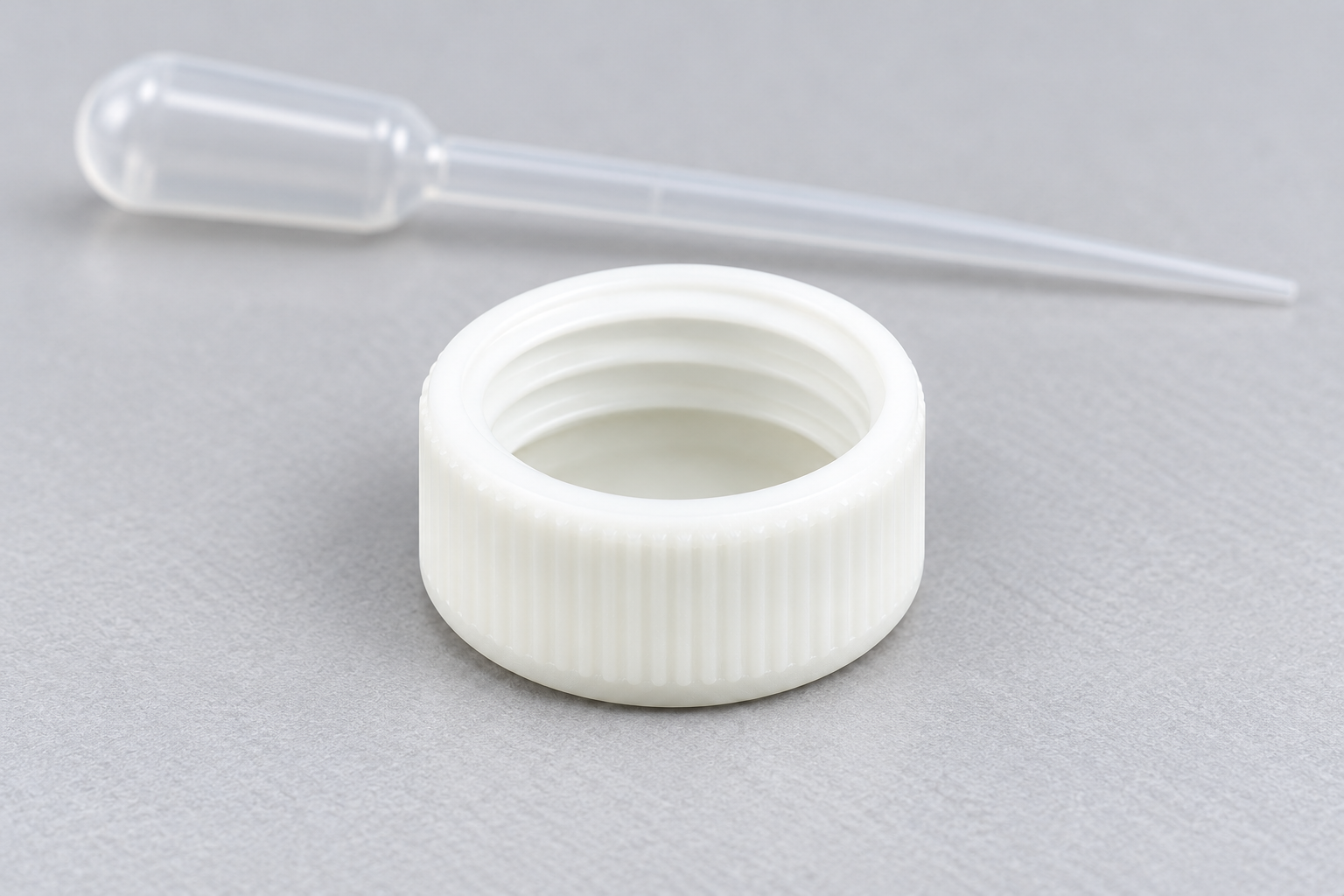
The vial family also has separate liner options. Specify whether a liner is intended, its material and the area it should contact. A photograph showing the cap alone does not establish that every order includes a particular seal stack.
If a new liner changes the assembled contact position, review it with the neck and cap together. A replacement disc with a similar outside diameter should not be treated as an independent fix for an undefined closure.
Define the conditions of use before requesting a rating
Give MQ the sample, contact time, temperature and any pressure or transport requirement. Those conditions apply to the actual part and assembly; they should not be replaced by a number taken from a general PTFE material chart.
For a custom version, separate the changes: external grip envelope, thread pairing, contact geometry and liner arrangement. The proposed design and any checks are reviewed for the project, with the supplied parts stated in the quotation.
Structure reference and specification points
Download the structure reference (PDF)
Can I use a generic PTFE temperature limit for the capped quartz bottle?
No. A general material figure does not define the limits of this cap, its thread contact, a liner or the filled assembly. State the intended conditions and agree the acceptable configuration with MQ.
Send a drawing or the mating-part details
Send the bottle and closure details as one request. MQ can then review the PTFE cap option without leaving the mating surface or liner unspecified.
- Bottle reference and complete neck interface
- Cap contact face and required grip envelope
- Liner material, dimensions and inclusion, if applicable
- Sample and actual operating or transport conditions
- Quantity, requested date and assembly checks
Modified designs are reviewed for the project. The drawing, supplied parts, quantity, inspection scope, price and preparation or production time are agreed in the quotation.
Details to settle for the ordered configuration
The exact neck dimensions, supplied seal components, chemical suitability and operating limits remain product-and-order requirements.



Recent Comments