
PTFE Vial-Cap Liners: Measuring the Seal Contact Area
Custom Design Guides · PTFE Vial-Cap Liners
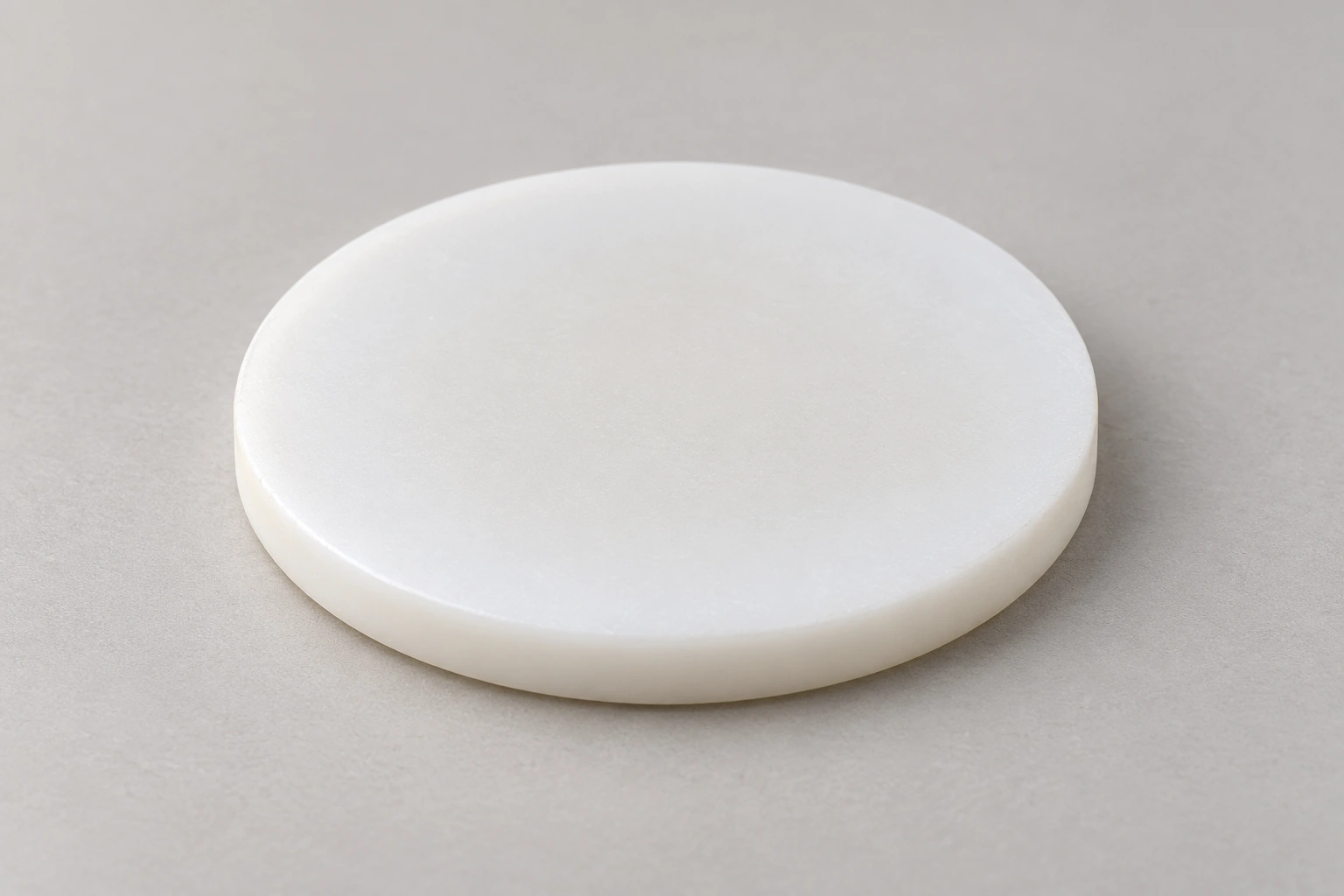
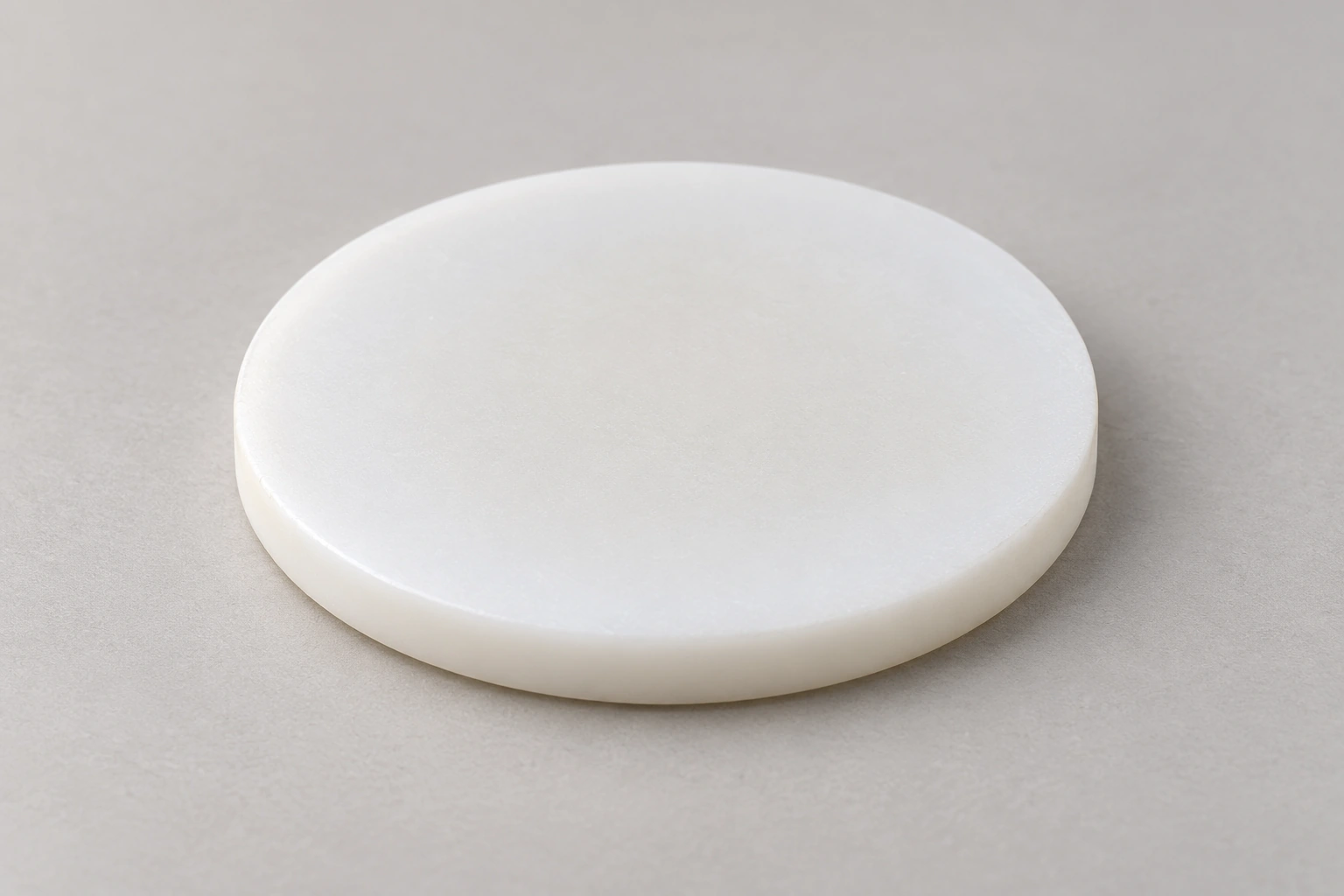
A vial-cap liner is a contact component, not another cap. The option shown here is a separate PTFE disc listed for the 20 mL-and-larger vial-cap family. Its fit depends on the bottle and cap around it.
The important dimensions are not supplied by the nominal capacity label. To review a replacement, MQ needs the liner diameter, thickness and intended contact surfaces, together with the mating closure.
In this guide: Configuration · Design comparison · Show both faces of the contact · Thickness changes belong in the complete assembly · Separate the material requirement from sealing performance · Record replacement parts so they can be reordered · Enquiry
The configuration discussed here
What changes from the simpler form?
Adding or replacing a liner changes the contact stack between a cap and bottle. The disc remains a separate part: its diameter, thickness and seating must fit the assembly rather than being inferred from the bottle's nominal capacity.
Show both faces of the contact
A closure section should show the bottle end, the liner and the cap face that acts on it. This makes it possible to discuss where the disc is supported and where it is expected to contact the neck. An isolated outside diameter does not describe that relationship.
Do not add a centre hole, recess or second material unless it is part of the specified design. The available reference shows a flat disc. A different gasket shape is a proposed modification, not the supplied configuration.
Thickness changes belong in the complete assembly
A request for a thicker liner changes more than the replacement part's appearance. Its position relative to the cap and neck must still suit the intended closure. Give MQ the mating dimensions and identify why the current liner needs to change.
For example, a customer might need to retain the existing bottle while replacing a worn or unsuitable contact disc. Provide the original part or a measured drawing and describe the observed issue. Do not ask for an assumed extra thickness as though that alone establishes a solution.

Separate the material requirement from sealing performance
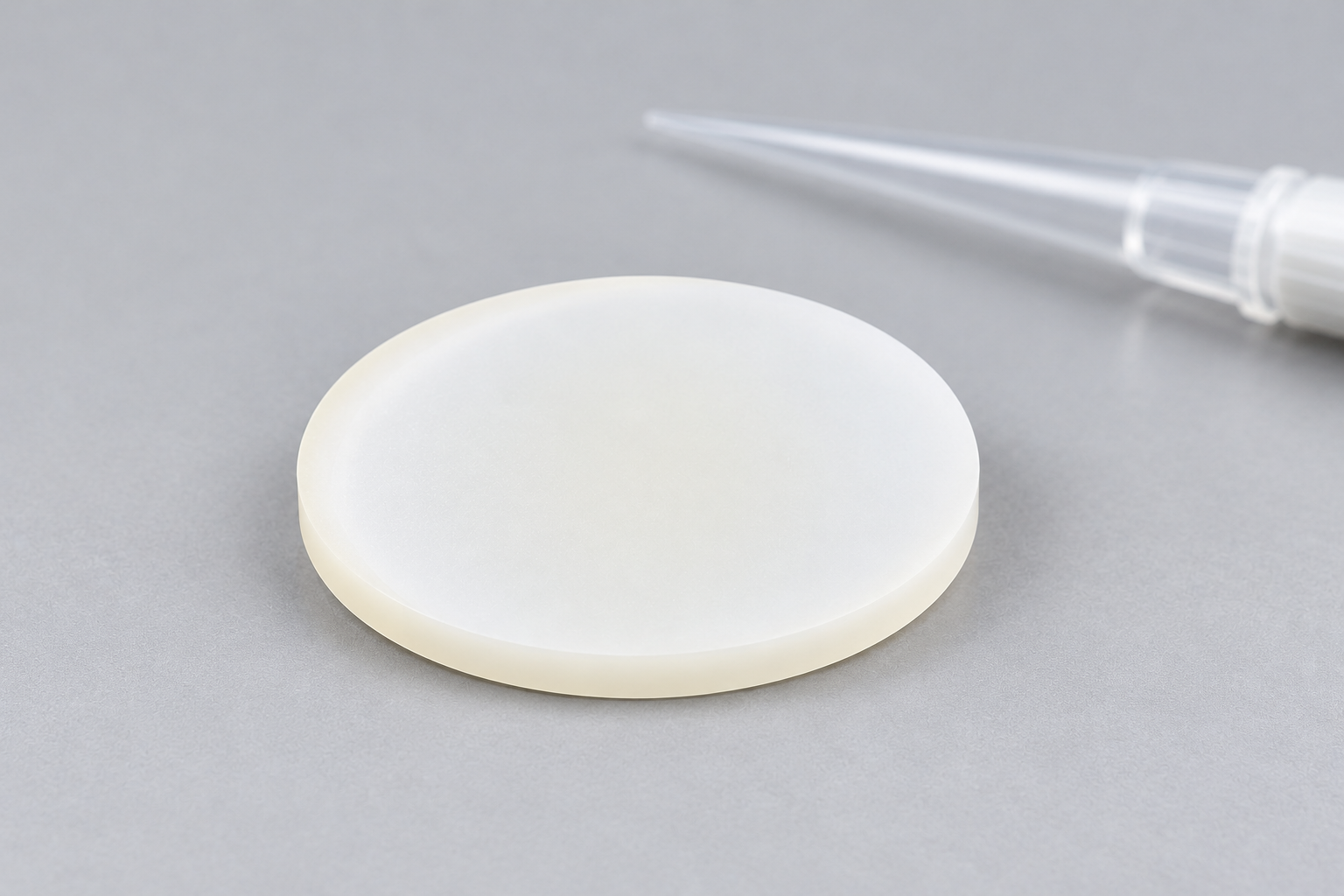
PTFE is the material stated for this option. Suitability for a particular sample or cleaning method still depends on the actual conditions and any required analytical checks. If the method has a blank or contamination limit, describe the method and required evidence.
Likewise, the presence of a liner does not prove a leakage result. A closure requirement should specify the assembled bottle, medium, orientation and test conditions. Any requested verification needs to be agreed before supply.
Record replacement parts so they can be reordered
Once a pairing is agreed, keep the liner drawing or part reference with the bottle and cap records. Include the dimension tolerances that matter and the required package quantity. This helps avoid substituting a visually similar disc from a different cap family.
If reuse is part of the intended procedure, discuss the inspection and replacement criteria for that process. No reuse cycle count or sterilisation qualification is established by the available disc image.
Structure reference and specification points
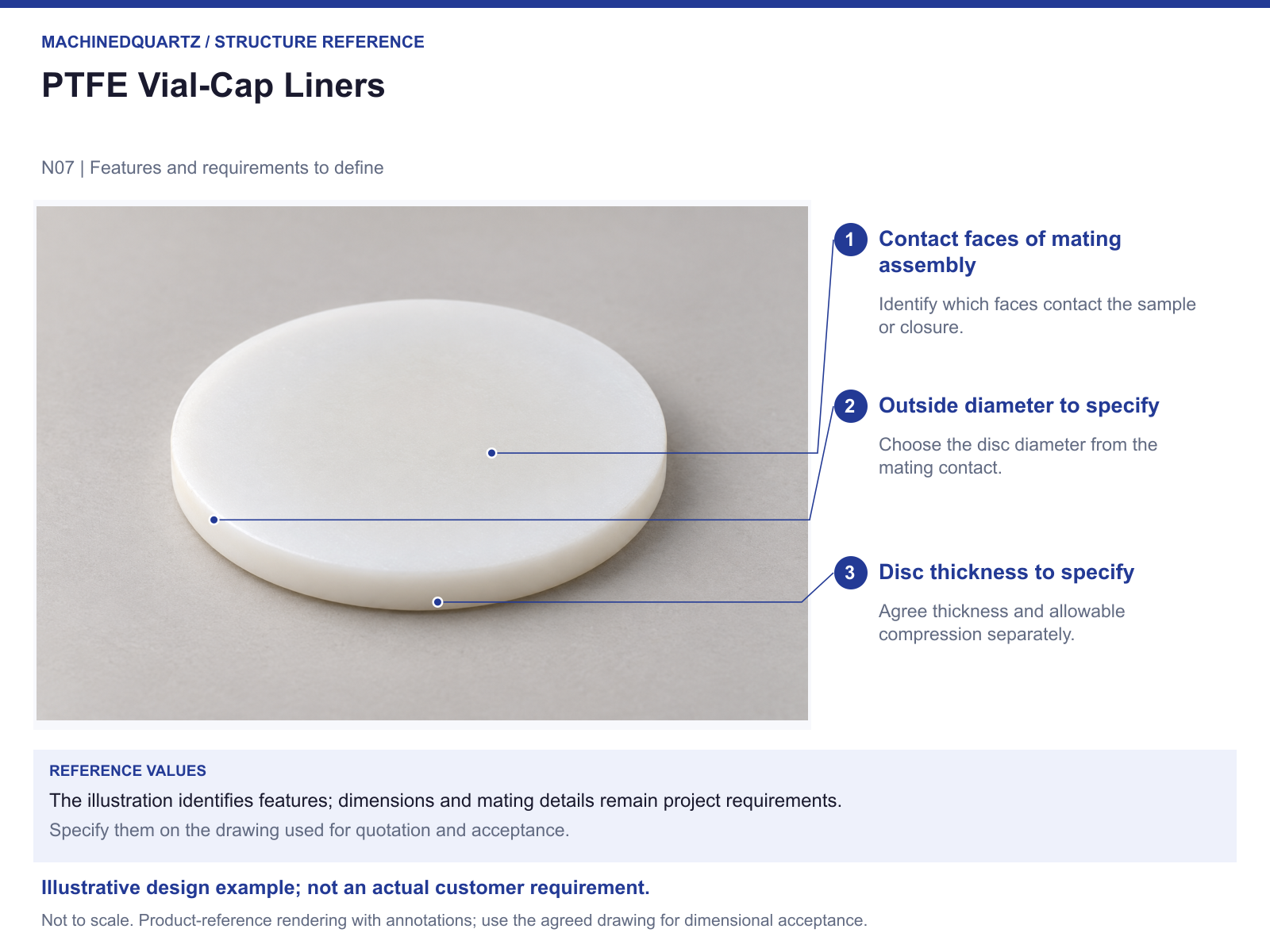
Download the structure reference (PDF)
Will replacing the liner make the vial leak-tight?
That cannot be concluded from the liner alone. The bottle end, cap, contact geometry, assembly and use conditions all matter. Describe the required closure behaviour and agree how it will be checked.
Send a drawing or the mating-part details
Request the liner with the bottle and cap interface information. MQ can then review the disc as part of a defined closure rather than an isolated circular part.
- Bottle and cap references or a complete mating sample
- Liner diameter, thickness and contact-area drawing
- Material requirement and sample exposure conditions
- Reason for replacement and any observed fit issue
- Required quantity, tolerances and agreed verification
Modified designs are reviewed for the project. The drawing, supplied parts, quantity, inspection scope, price and preparation or production time are agreed in the quotation.
Details to settle for the ordered configuration
Disc dimensions, tolerances, compression arrangement, compatibility and reuse conditions remain to be confirmed.


Recent Comments