
5 mm Thin-Wall Quartz Cuvette: Choosing the Sample Gap and Window
CUSTOM DESIGN GUIDE · MQQCU013
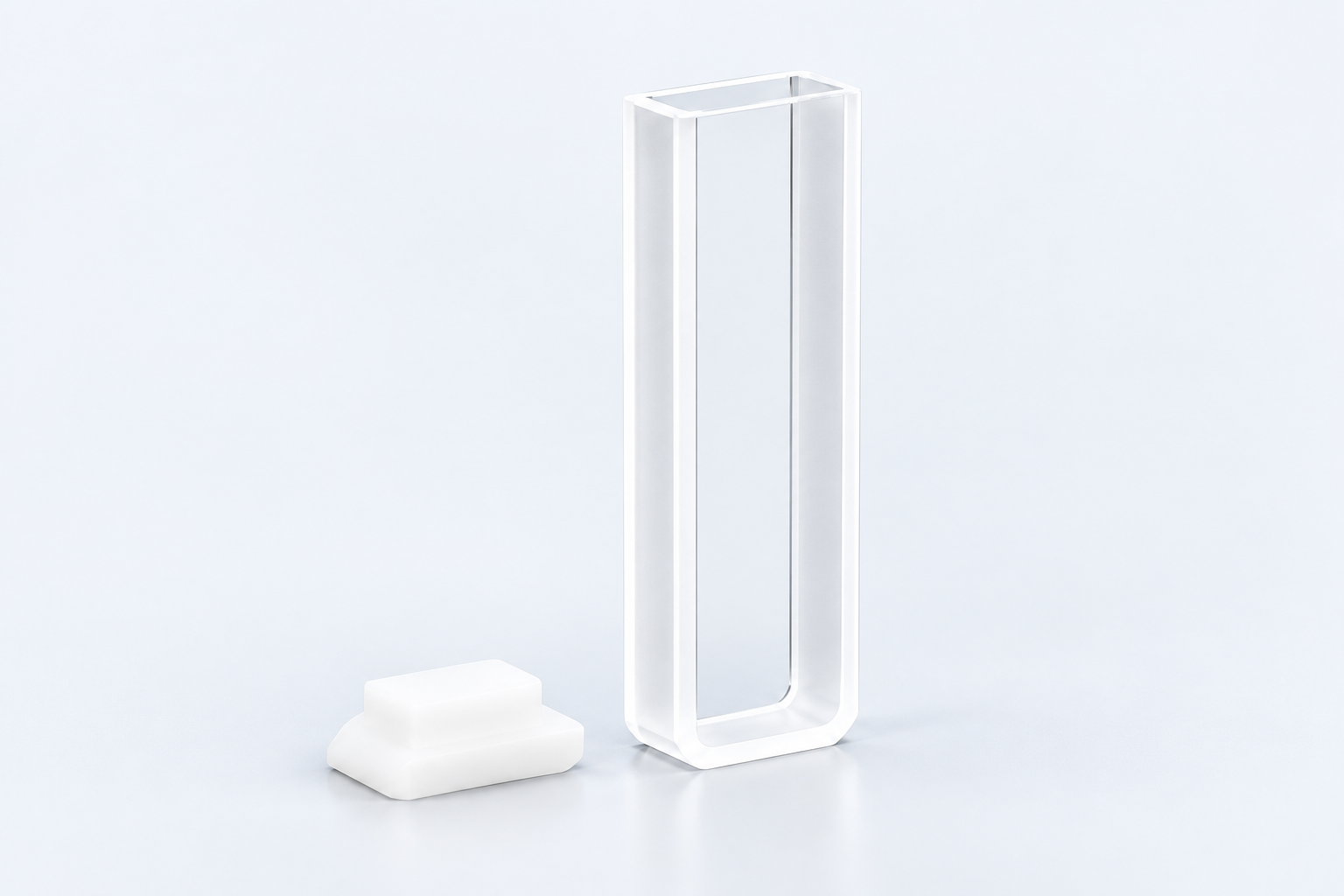
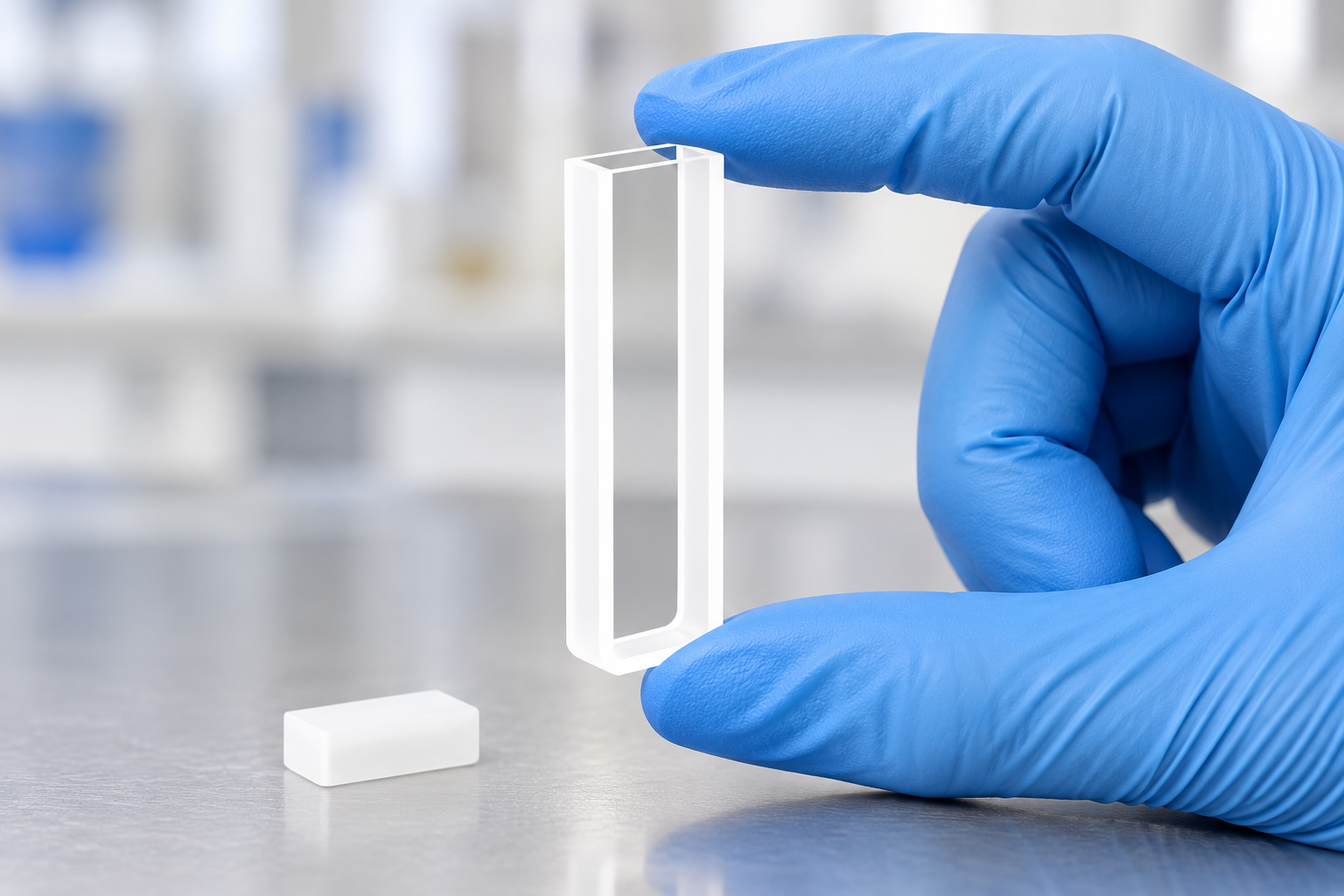
MQQCU013 is a 5 mm-path quartz cuvette with 0.5 mm optical walls. It is a useful starting point when a cell design needs to control both the liquid layer and the quartz in front of it. Those two dimensions affect different parts of the measurement and mounting arrangement.
Use and purpose · Specifications · In practice · Custom example · Buy or enquire
Why specify the wall as well as the path?
Light passes through a quartz wall, the sample and the opposite wall. The optical path describes the distance through the sample; it does not describe how much quartz surrounds it. In this cell, the 5 mm gap and the 0.5 mm optical walls are deliberately separate specifications.
For absorption work, shortening the sample path can be useful when the method needs a lower absorbance without changing sample concentration. That is a path-length choice. A request concerning the window thickness addresses another part of the optical stack and should keep the sample gap explicit. [1]
MQQCU013 configuration
Let the holder support the body around the viewing area
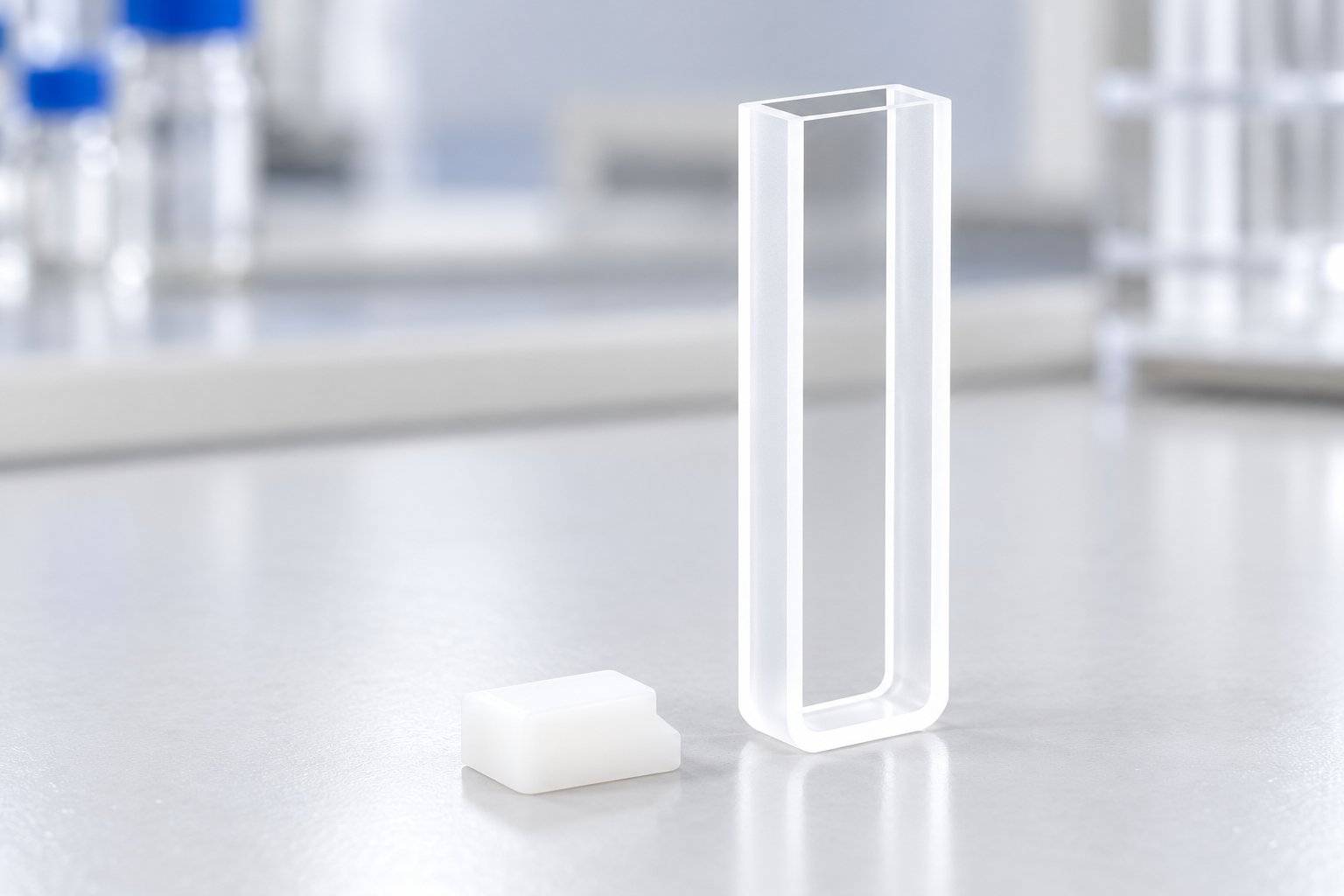
The recorded outside body is 12.5 × 6 × 45 mm, with nominal 1.75 mL capacity. A holder locates that outside envelope, while the beam needs to cross the sample-filled region between the viewing faces. A cell can meet the outside width and still place a clip across the useful window.
A practical holder sketch therefore shows the beam and the contact points together. The 0.5 mm wall is not a clamping-load specification: a custom design can place retaining contacts around the chosen optical area rather than treating every face as an interchangeable gripping surface.
Keep filling access in the same design
The open top and separate flat lid allow access from above. The useful working amount depends on the liquid level needed at the beam, as well as the filling and retrieval method. Nominal capacity alone does not describe that sequence.
For a holder inside a compartment, imagine the complete operation: insert the cell, add the sample, place the lid and remove it again. This often reveals a needed change to a retaining arm or top clearance before any change to the chamber itself is worthwhile.
A custom example: keep the path, change the holder interface
ILLUSTRATIVE DESIGN EXAMPLE
Suppose the 5 mm sample gap and 0.5 mm walls suit the optical design, but a retaining clip meets the viewing face. The starting request can keep those two dimensions and move the contact to a defined region outside the beam. The drawing then describes a specific mounting change, rather than an unspecified “thin-wall custom cuvette”.
Order the listed configuration or discuss a change
View MQQCU013 and current pricing. For a custom version, send a labelled sketch that separates the features to retain from the changes you want.
For a version based on MQQCU013, send a holder sketch with the beam area and retaining contacts marked. Identify the path and window thickness to keep, the outside dimension to change, and the sample and cleaning conditions. Add quantity, destination and the date needed.


Recent Comments