
(C0.22CE1) Quartz Standard Cuvette, 0.2 mm Path, 70 µL
10%
Original price was: $289.00.$261.00Current price is: $261.00.
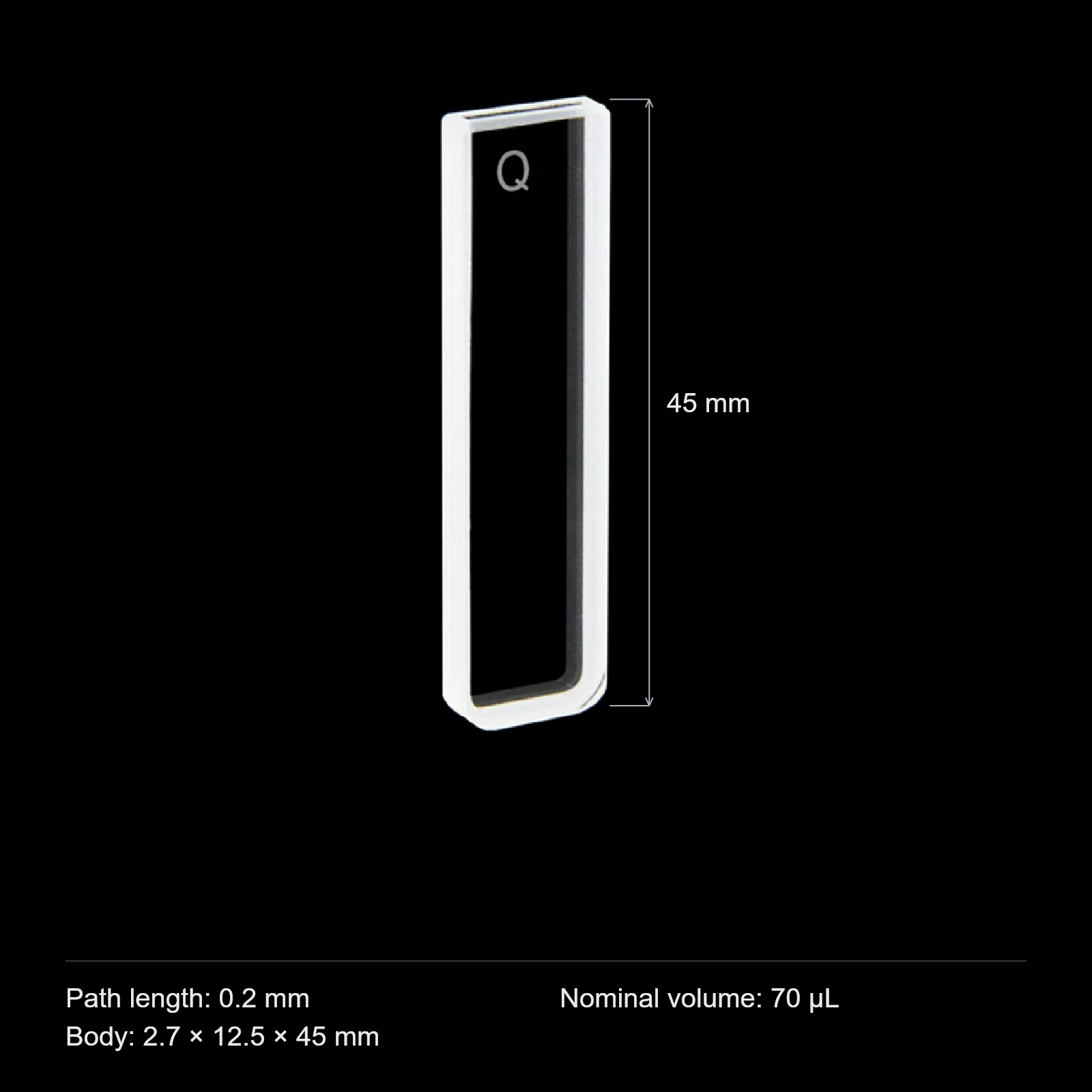
Quartz standard cuvette for UV/Vis spectroscopy with a 0.2 mm optical path and 70 µL nominal capacity. This open-top cell has a slim 2.7 × 12.5 × 45 mm body and is supplied without a closure.
In Stock
Description
C0.22CE1 is a quartz standard cuvette for UV/Vis work where a 0.2 mm fixed optical path is the main requirement. Its 70 µL nominal capacity and narrow open-top body suit direct pipetting into a very short-path cell, while the no-cap format leaves the sample chamber fully accessible during filling and inspection.
- Path Length
- 0.2 mm
- Sample Volume (Nominal)
- 70 µL
- Opening Configuration
- Open Top (Cell Body)
Selection Specifications
| Product Kind | Cuvette |
|---|---|
| Cell Type | Standard Cuvette |
| Measurement Mode | UV/Vis Spectroscopy |
| Pack Quantity | 1 Piece |
| Path Length | 0.2 mm |
| Sample Volume (Nominal) | 70 µL |
| External Dimensions | 2.7 × 12.5 × 45 mm |
| Cell Body Dimensions | 2.7 × 12.5 × 45 mm |
| External Dimensions Scope | Body Only |
| Material | Quartz |
| Closure Type | No Closure |
| Closure Included | No |
| Fabrication Method | Molded 83 |
| Opening Configuration | Open Top (Cell Body) |
Choose this option
Choose this cuvette when your method is written for a 0.2 mm path and you want an open cell body rather than a covered assembly. The combination of a short path, compact body and direct top access is the practical reason to select this version. It is useful when you need to load small volumes carefully and keep visual access to the sample area before measurement.
What makes this option different
- 0.2 mm optical path for methods that require a very short fixed transmission path.
- 70 µL nominal capacity in a compact quartz cell body.
- Open top with no closure included for direct pipetting and visual access to the sample chamber.
- Molded 83 quartz fabrication in a slim standard-cuvette format for UV/Vis use.
Using this cell
Load the sample from the top and make sure the liquid covers the part of the cell crossed by your instrument beam. Remove bubbles before measurement and keep the same orientation for blank and sample if your procedure depends on consistent handling.
Because this version has no closure, it is best used where open filling is acceptable and your procedure already controls splashing, evaporation or airborne contamination. Hold the cell by the non-optical surfaces where possible to keep the optical faces clean.
First-use check
- Inspect the optical faces and top opening for chips, scratches or residue.
- Place the empty cell in your holder and confirm that it seats properly.
- Rinse with a suitable liquid for your method, then run a blank before sample measurements.
Fit and optical alignment
The listed 2.7 × 12.5 × 45 mm dimensions apply to the cell body only. That slim profile can be helpful where side clearance matters, but it should be checked against your holder rather than assumed from a general standard-cuvette format.
Z Height is not established for this SKU, so body size alone should not be used as a beam-height match. The 70 µL figure is a nominal cell capacity, not a minimum working volume.
Solvents and cleaning
This cuvette is listed in Molded 83 quartz. That construction is often chosen for methods that may involve organic solvents, but your actual sample and cleaning conditions should still be checked against the complete wetted setup you plan to use.
Do not use hydrofluoric acid with quartz. Avoid hot strong alkalis and abrasive cleaning, and wipe the optical faces gently with non-abrasive optical tissue or another non-scratching lab wipe.
Included with this option
No closure is included with this configuration. Confirm the cell quantity and any separately specified accessories covered by your order.
Availability and ordering
Order this specification directly, or contact us to check current availability and dispatch timing. If temporarily unavailable, additional preparation or production time may be needed. For a required delivery date, contact us before checkout; preparation or production is separate from carrier transit and customs clearance.
Discuss a custom version
We coordinate custom JGS1 quartz production for changes to dimensions, optical path length, sample volume, openings and fabrication. Send a dimensioned drawing or labelled sketch and identify the dimensions and tolerances that matter for your holder and method. Prototype batches typically involve 2–4 cells; feasibility, final specifications, price and production time are confirmed in the project quotation. Discuss your requirements
Additional information
| Weight | 30 g |
|---|
You must be logged in to post a review.
You may also like…
10%
(C0.12CE1) Quartz Open-Top Cuvette, 0.1 mm Path, 30 µL Nominal Capacity
Original price was: $561.00.$505.00Current price is: $505.00.10%
Quartz 50mm Standard Cuvette, 17.5ml, Two-way Light, PTFE Cap, Pack of Two, C502CE2
Original price was: $409.00.$369.00Current price is: $369.00.10%
(C502CE) Quartz Standard Cuvette, 50 mm Path, 17.5 mL
Original price was: $409.00.$369.00Current price is: $369.00.10%
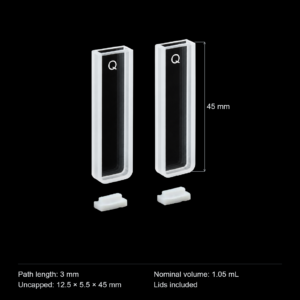
(C032CF2) Quartz Standard Cuvette, 3 mm Path, 1.05 mL, Pack of 2
Original price was: $293.00.$264.00Current price is: $264.00.Related products
15%
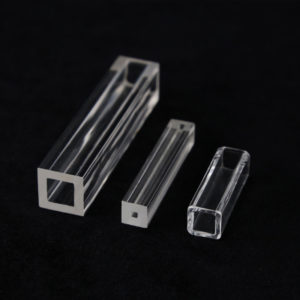
(MQC368) Quartz Capillary Tubes (Square), Outer Dim.: 0.9×0.9mm, Inner Dim.: 0.7×0.7mm, Length: 50mm
Original price was: $28.00.$24.00Current price is: $24.00.14%
(MQC383) Quartz Capillary Tubes (Square), Outer Dim.: 1x1mm, Inner Dim.: 0.6×0.6mm, Length: 100mm
Original price was: $38.00.$33.00Current price is: $33.00.14%
(MQC384) Quartz Capillary Tubes (Square), Outer Dim.: 1x1mm, Inner Dim.: 0.3×0.3mm, Length: 100mm
Original price was: $38.00.$33.00Current price is: $33.00.15%
Reviews
There are no reviews yet.