
10 mm Quartz Flow Cell: Why One Straight and One Bent Tube?
CUSTOM DESIGN GUIDES · MQQFC139
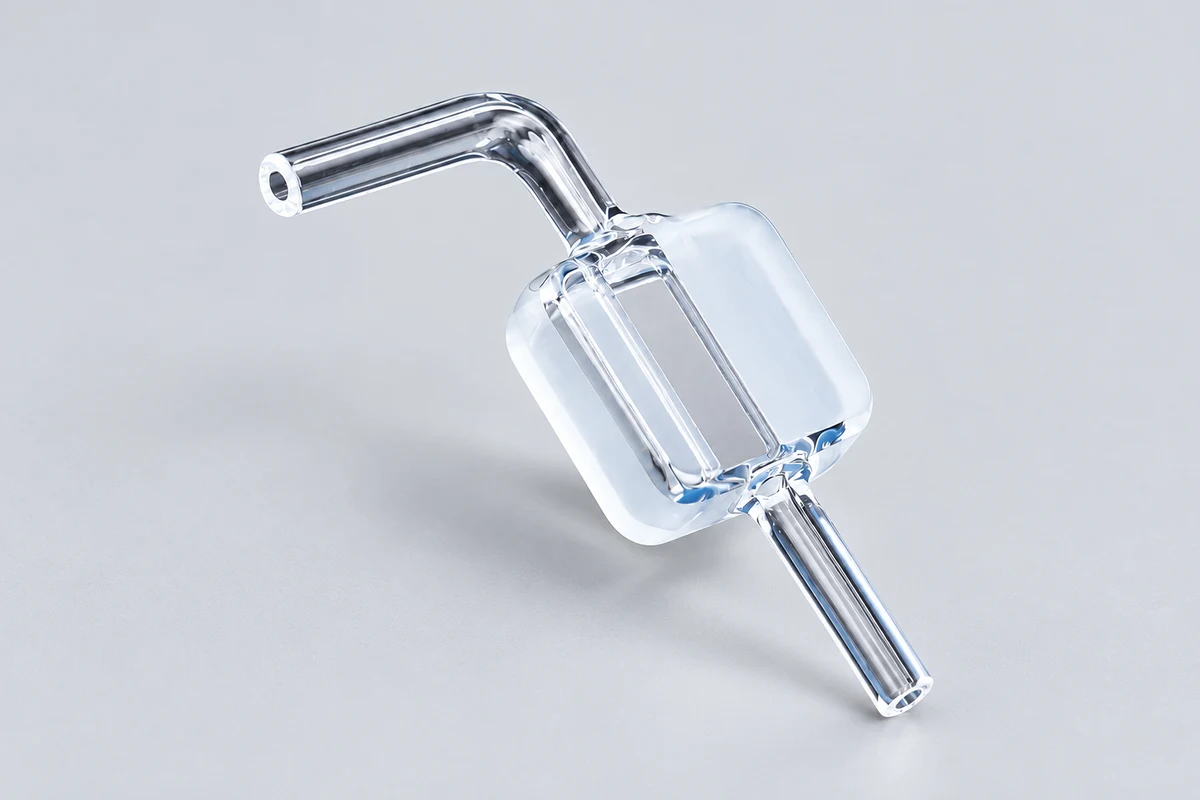
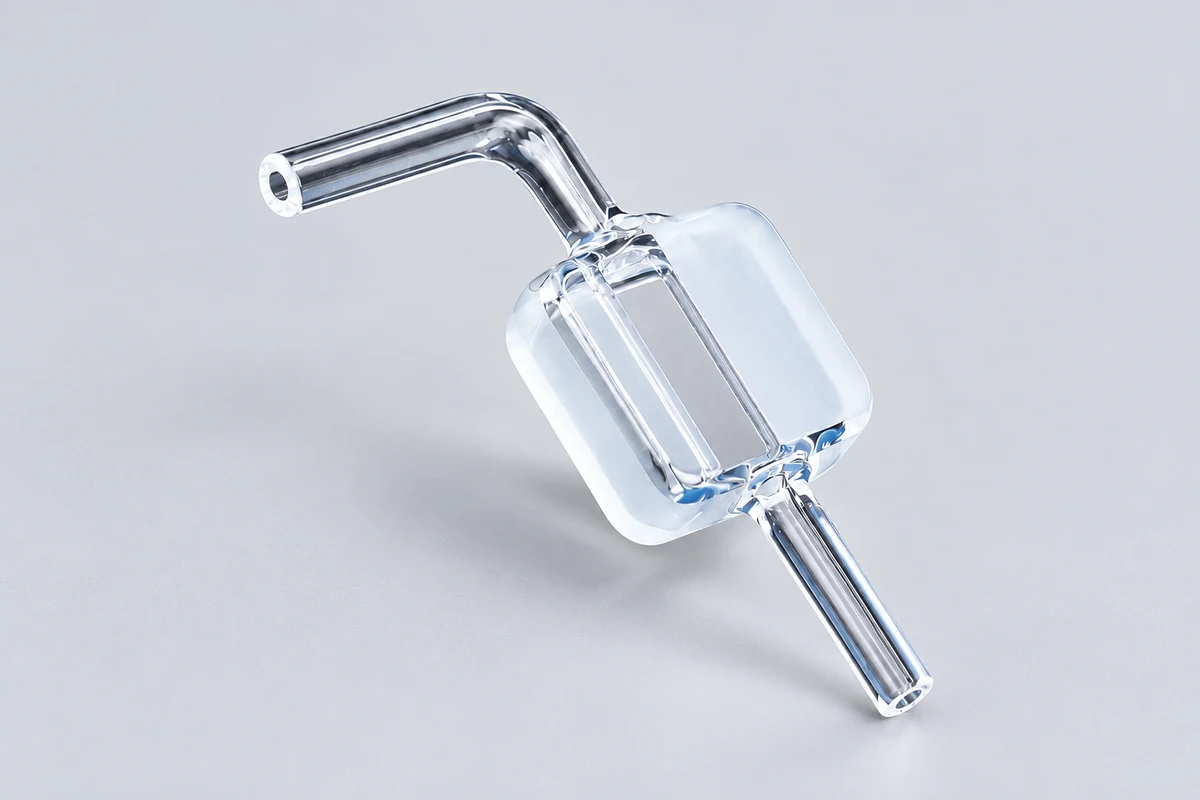
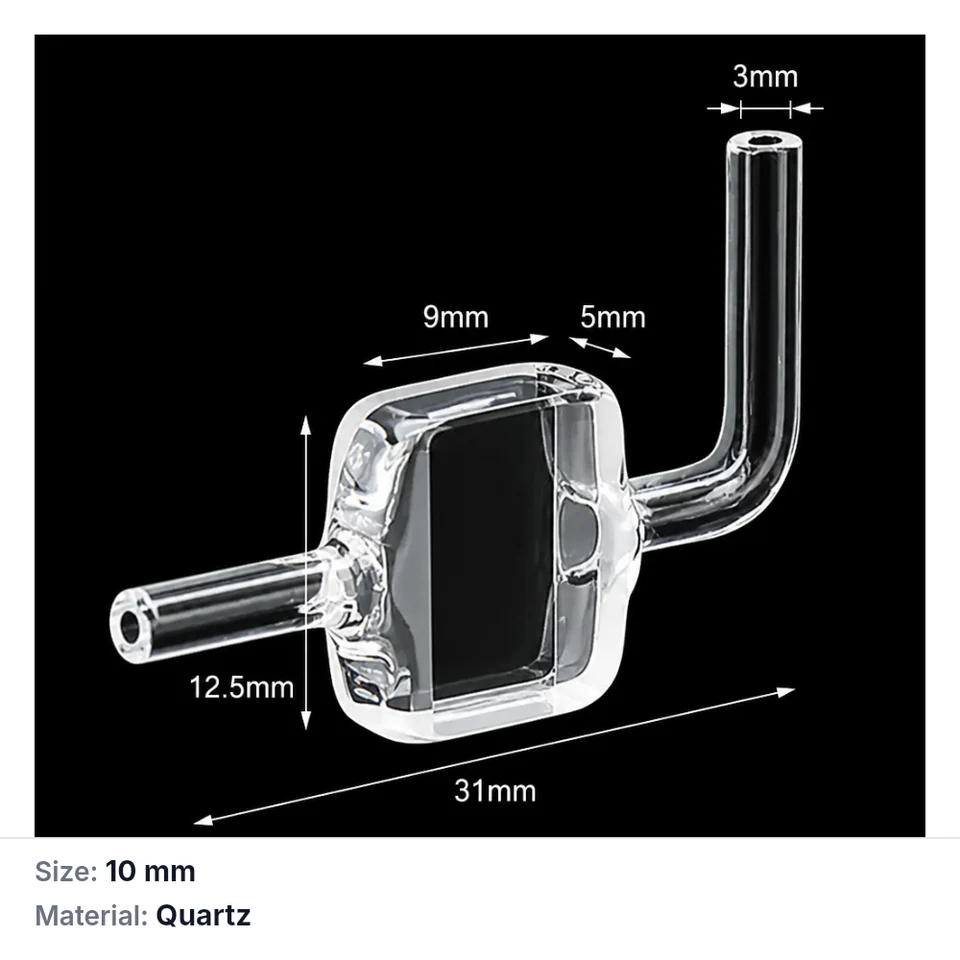
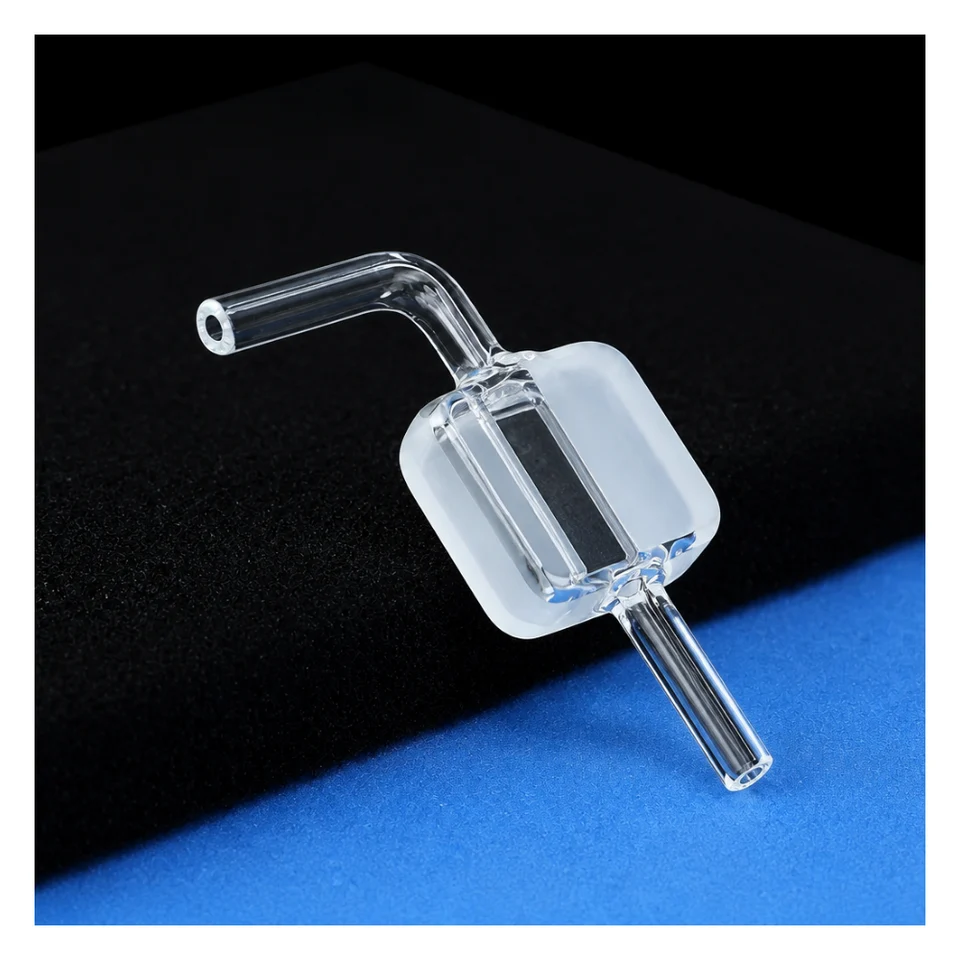
A cell can fit inside a sample compartment and still leave no room to close the lid once tubing is attached. MQQFC139 pairs one straight quartz tube with one upward bend. This JGS1 quartz cell has a nominal 10 mm path and 200 µL capacity. Its connection layout is a starting point when the available compartment space matters as much as the optical path.
View MQQFC139 and current pricing · Discuss a custom version
Adding a fluid path changes what has to fit · 3 mm OD and 1 mm ID describe different things · If the lid meets the bend, define the available space first · 200 µL describes the cell, not the whole experiment · Project checks · Order or enquire
Adding a fluid path changes what has to fit
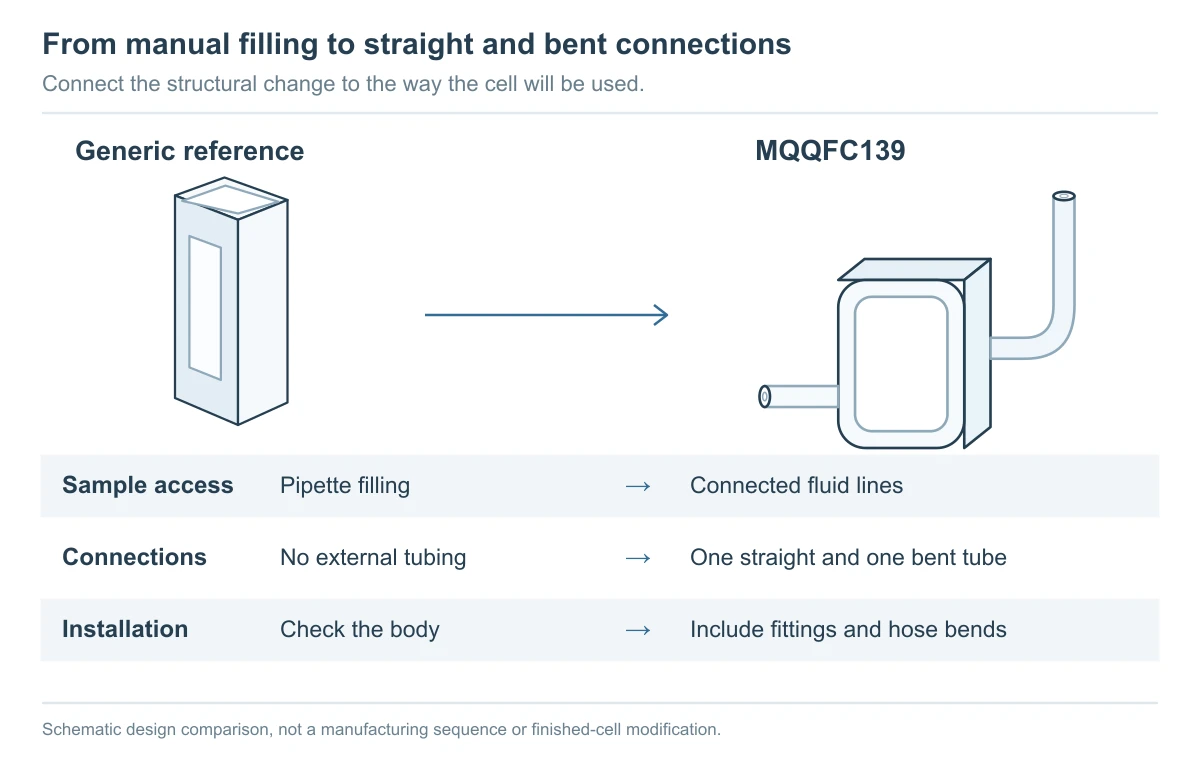
An open cuvette is commonly filled with a pipette and removed for exchange or cleaning. A flow cell brings sample through connected lines, adding quartz ports, fittings and hoses to the installation.
The straight and bent tubes principally change where the connected lines leave the body. An upward route is worth considering when side clearance is limited but space remains above. A low lid may call for a different bend. The lid, holder and fittings determine the useful arrangement.
3 mm OD and 1 mm ID describe different things
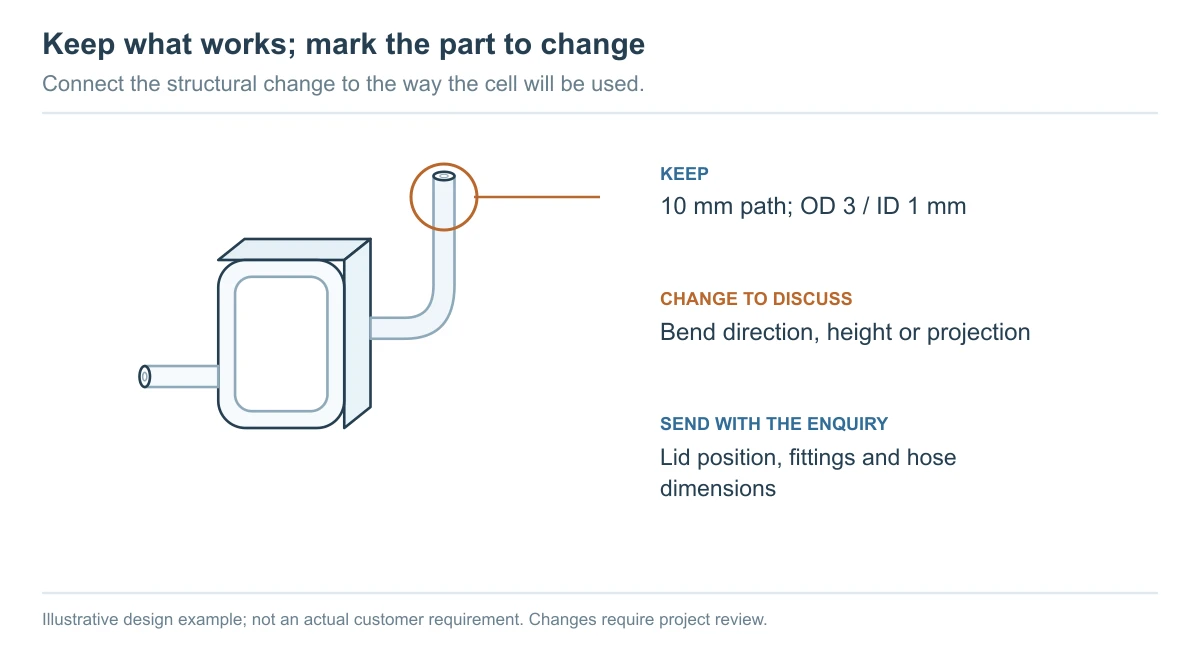
Both quartz tubes have a 3 mm outside diameter and a 1 mm bore. The outside diameter concerns the external connection; the bore describes the passage inside. A request for a “3 mm connection” alone leaves that distinction unclear.
Connection choice also depends on hose material, fitting design and assembly. Leave access to work on the fitting and space for the hose to bend; the quartz tube should not serve as a handle or load-bearing point. A fitting specification is often more useful than a distant photograph of the apparatus.
If the lid meets the bend, define the available space first
Suppose the method needs the 10 mm path, but the connected fitting meets the lid. Put the cell, holder, fitting and hose on one installation sketch and mark the actual collision. The constraint may be the quartz bend, the fitting height or the direction in which the hose leaves.
The straight and upward-bent tubes route the two lines differently. The useful layout must also leave room to assemble fittings and bend the hoses. Clearance for the quartz tube alone may leave too little working space. Define the available height from the holder datum to the underside of the lid, then include the fitting and hose envelope.
A useful brief would retain the nominal 10 mm path and OD 3 / ID 1 mm tubes, with the desired bend direction and permitted projection marked on the sketch. The project drawing then needs to establish bend radius, port position and the complete envelope. If sample consumption also needs reducing, state the whole fluid-path requirement separately from the routing change.
200 µL describes the cell, not the whole experiment
Upstream tubing, fittings and downstream lines contain additional volume. With limited sample, exchange and flushing can matter more than the cell capacity alone. Drawing the whole fluid path helps establish consumption before focusing only on a smaller cell.
Assign inlet and outlet for the actual orientation; the bent tube is not automatically the outlet. Bubble handling depends on the sample, flow and flushing sequence. A trial can examine the blank, visible bubbles and settling after exchange. No pressure rating is established for this cell, and tube diameter cannot supply one.
MQQFC139 · Current product specifications
| Item | Current configuration |
|---|---|
| Material | JGS1 quartz |
| Nominal optical path | 10 mm |
| Nominal capacity | 200 µL |
| Optical faces | Two transmitting faces |
| Connections | One straight tube and one upward-bent tube |
| Each tube | 3 mm OD / 1 mm ID |
Open engineering reference R01 and PDF
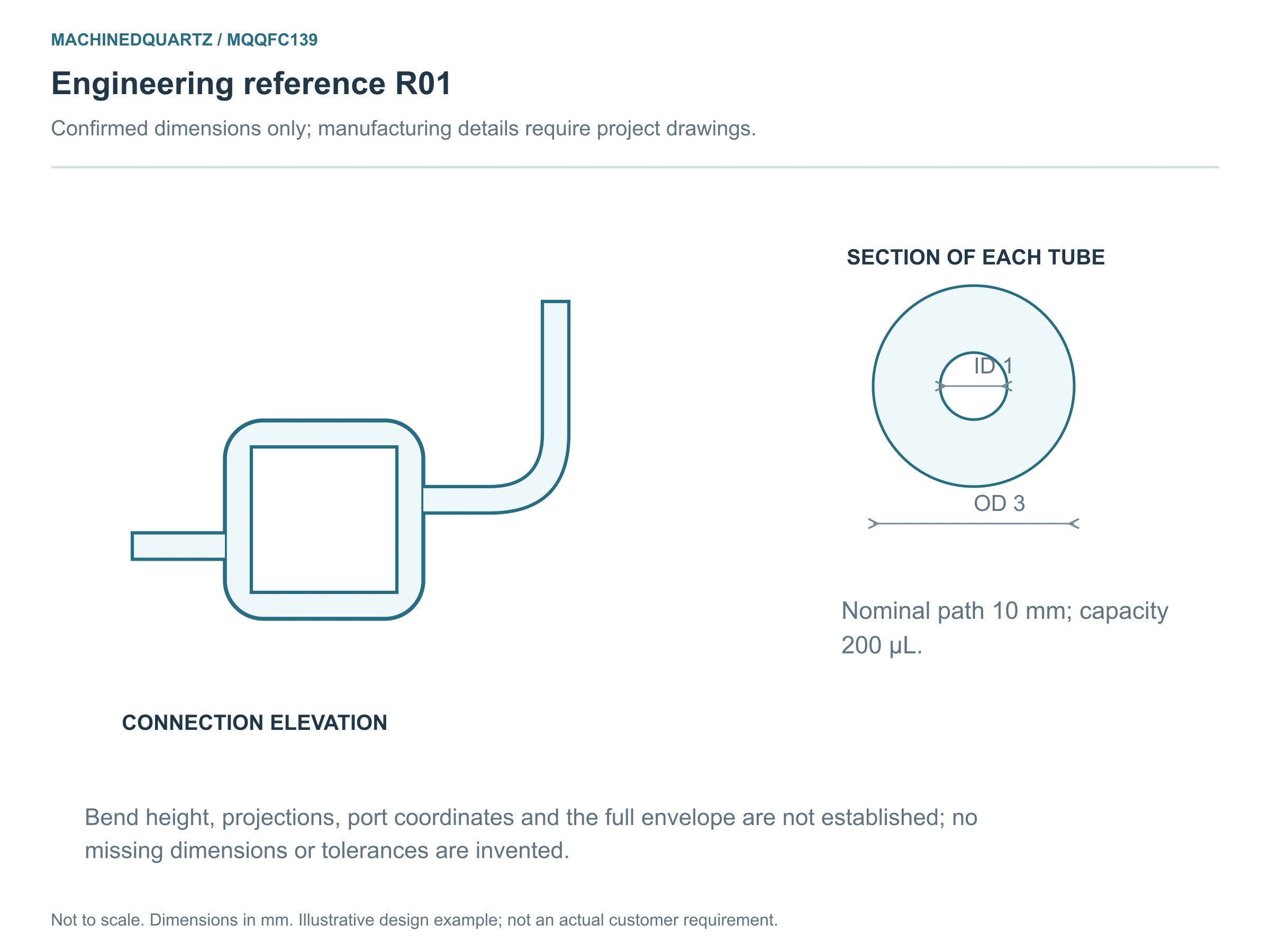
View full-size reference · Download engineering reference PDF
Check connected clearance as well as the bare cell
Before ordering, distinguish dimensional inspection, connection fit and a fluid-path trial, and agree the scope needed for the project. These are discussion items; they do not establish a pressure rating or completed tests for this cell.
- Optics: Mark the retained nominal 10 mm path, required window and beam position separately on the drawing.
- Ports: Define OD/ID for both tubes and the port direction and position, using the actual fitting and hose specifications.
- Fit: Agree the holder, lid or dimensional fixture used to check the connected envelope and access for assembly and removal.
- Flow trial: Agree medium, temperature, flow, pressure and observations such as connections, bubbles and sample exchange. Establish permitted conditions separately.
Use conditions and details to settle before ordering
The available information does not establish the full bend height, radius, connected envelope or pressure rating. Provide planned flow, pressure, temperature, sample and cleaning media so appropriate conditions can be reviewed before operation.
Order this configuration or mark the change you need
View MQQFC139 and purchasing options
Please retain the MQQFC139 nominal 10 mm path and OD 3 / ID 1 mm tubes. The required bend direction is …, permitted height … and straight-end clearance … . Hose, holder and lid drawings are attached. Please review the connection layout, assembly sequence and use conditions.
Open and copy the custom enquiry checklist
Reference: MQQFC139
Retain: Dimensions, paths or parts: ______
Change: Part, target value and reason: ______
Sample and conditions: Specimen, media, temperature, cleaning and contact time: ______
Fluid path: Hoses/fittings, intended direction, flow and pressure: ______
Connection clearance: Bend height/direction, projection, lid and removal clearance: ______
Optics and installation: Wavelength, beam direction/height, windows and holder drawing: ______
Quantity and acceptance: Quantity, date, critical tolerances and inspection documents: ______
Attach a dimensioned sketch and the relevant holder or fitting specification to start the discussion. MQ works with external suppliers in China to review feasibility. Revised drawings, inspection scope, pricing and production arrangements are agreed for the project.
Send a custom enquiry for MQQFC139 · Browse other Custom Design Guides
Technical references
References explain general principles; other manufacturers’ paths, angles and performance are not specifications for this product.


Recent Comments