
40 / 5 mm Quartz Flow Cell: Two Paths Through One Sample
CUSTOM DESIGN GUIDES · MQQFC119
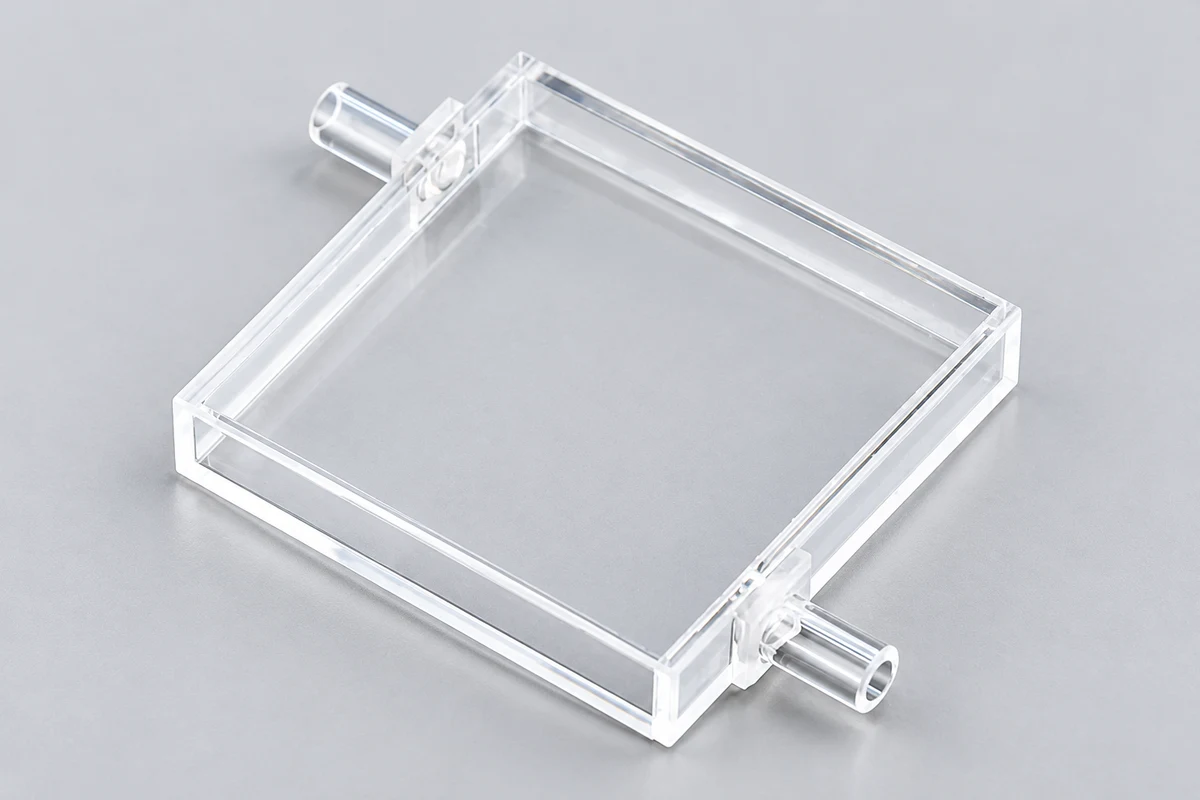
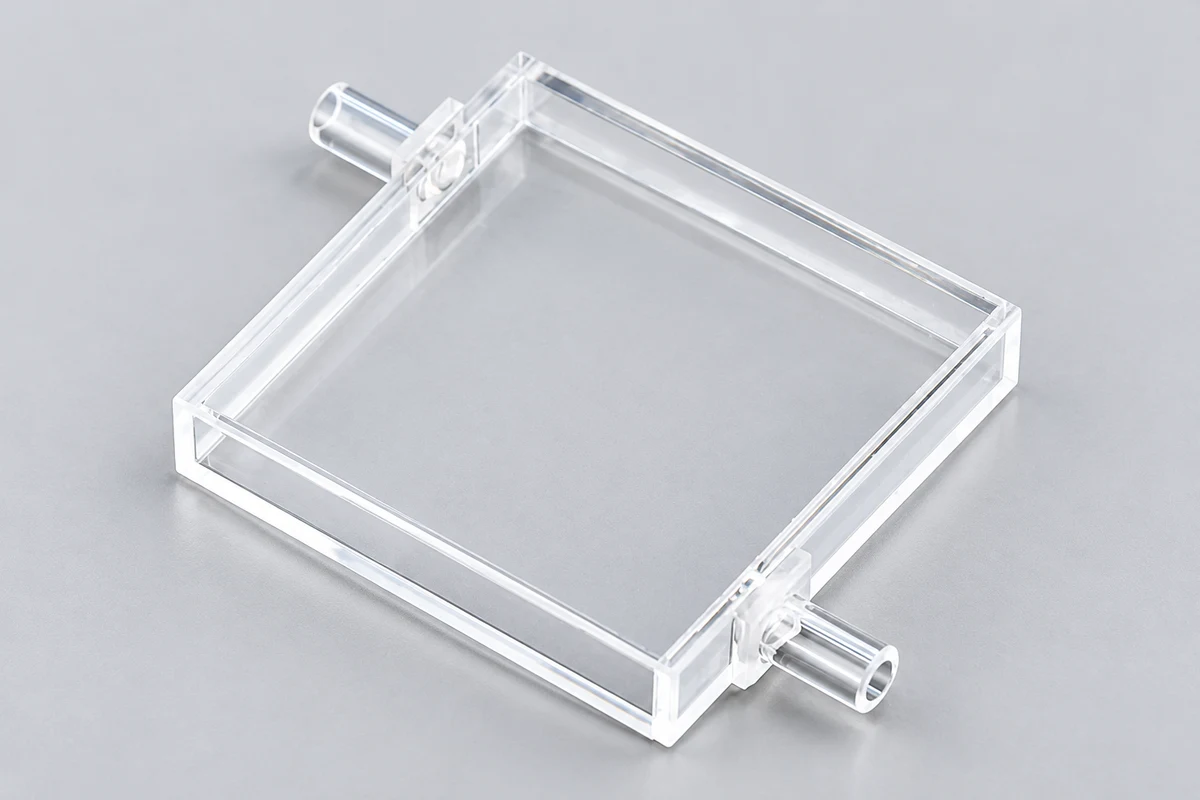
A longer path may help when absorption is weak; a shorter one may be preferable when it is too strong. MQQFC119 provides nominal 40 mm and 5 mm paths in one JGS1 quartz body, with four transmitting faces, two side connections and a nominal 6 mL capacity. The first selection question is whether the instrument can access the required measurement directions.
View MQQFC119 and current pricing · Discuss a custom version
From one measurement direction to a longer and shorter path · What changes between 40 mm and 5 mm? · 43 × 8 × 43 mm measures the body · Plan both optical directions alongside the connections · Project checks · Order or enquire
From one measurement direction to a longer and shorter path
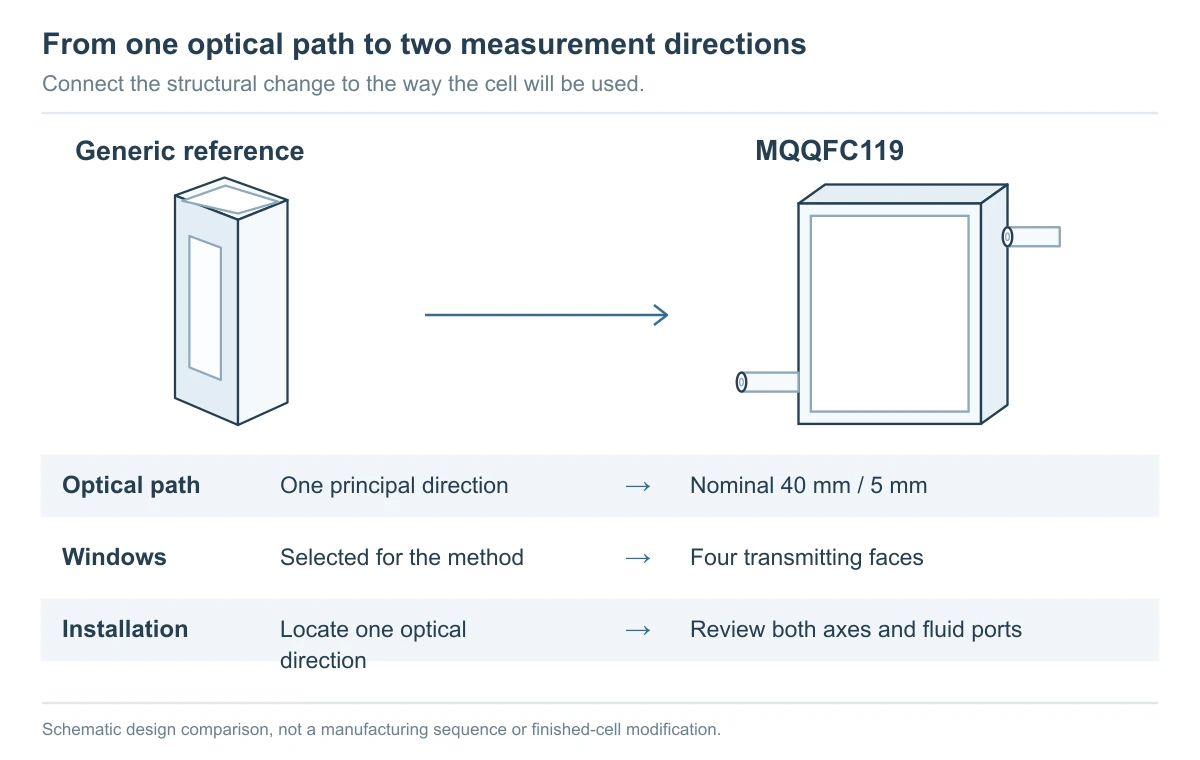
A single-path cell is arranged around one principal measurement direction. A dual-path design makes the sample distance in another direction part of the specification. Selection involves access to the second optical direction as well as fitting the body.
Four transmitting faces describe optical surfaces, not four fluid channels. The two tubes provide the fluid connections. The instrument and holder determine which optical direction is used and how it can be changed.
What changes between 40 mm and 5 mm?
For the same homogeneous sample and wavelength under Beer–Lambert conditions, the theoretical absorbance ratio is 40 ÷ 5 = 8. An absorbance of 0.10 at 5 mm would therefore correspond to a theoretical 0.80 at 40 mm.
This illustrates the paths; it is not a test result or an eightfold sensitivity claim. Each direction needs suitable windows, a blank and calibration. If the body must be turned, check whether the side ports collide with the holder or twist the hoses.
Technical reference: Shimadzu, path length and absorbance
43 × 8 × 43 mm measures the body
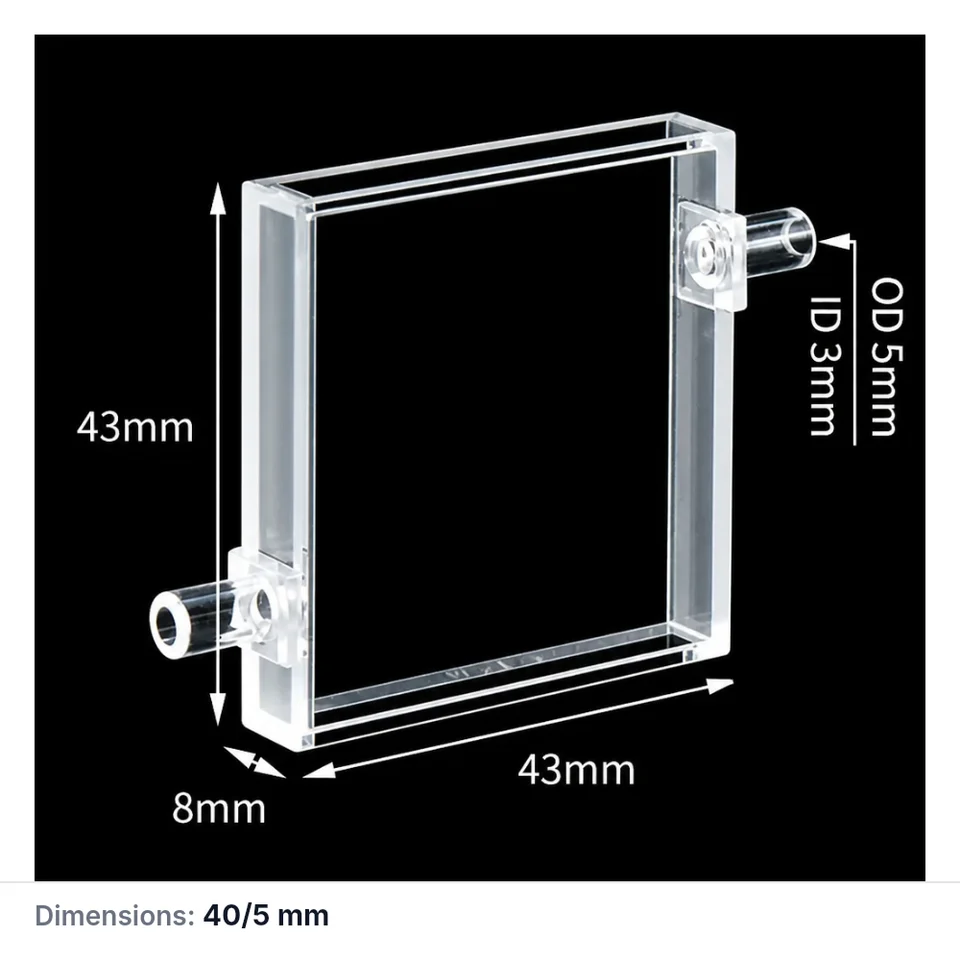
Those dimensions exclude projecting tubes, fittings and hose bends. The tubes are 5 mm OD and 3 mm ID. Add these parts to the installation drawing and mark both optical directions and holder openings.
The 5 mm path does not make this a microvolume cell. Its nominal capacity is 6 mL. When little sample is available, include tubing and flushing in the volume assessment rather than judging consumption from the short path.
MQQFC119 · Current product specifications
| Item | Current configuration |
|---|---|
| Material | JGS1 quartz |
| Nominal optical paths | 40 mm and 5 mm |
| Nominal capacity | 6 mL |
| Optical faces | Four transmitting faces |
| Body only | 43 × 8 × 43 mm; projecting tubes excluded |
| Tube diameters | 5 mm OD / 3 mm ID |
| Construction | Adhesive-bonded |
Open engineering reference R01 and PDF
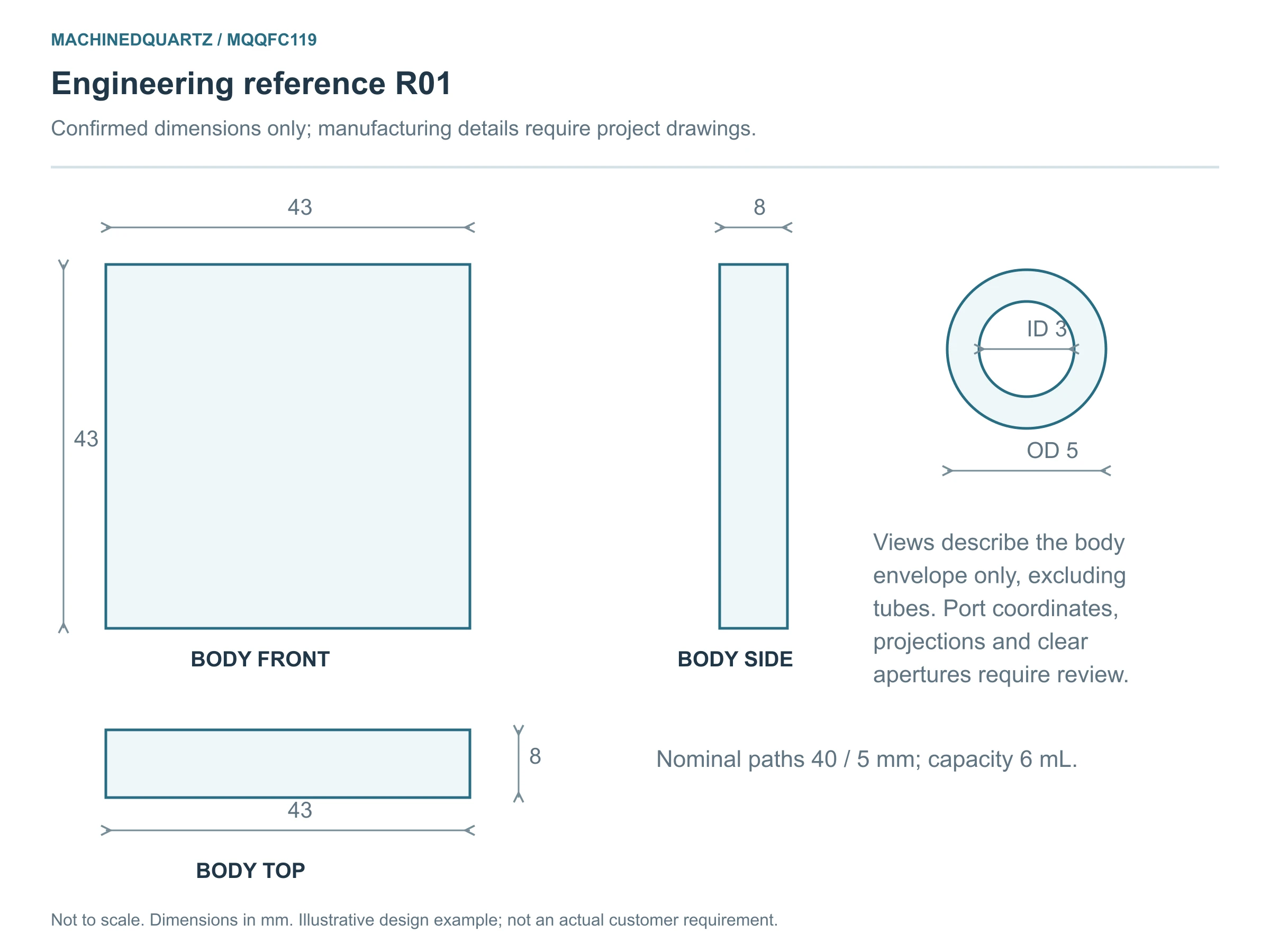
View full-size reference · Download engineering reference PDF
Plan both optical directions alongside the connections
Suppose a method calls for evaluating a longer and shorter path through the same sample. Sketch both measurement states: the face presented to the source, connection locations and whether the body must turn. This shows how the instrument could access the 40 mm and 5 mm directions without assuming compatibility with a particular instrument.
The two nominal paths share one body, while changing direction also involves holder openings, beam position and hose clearance. If the body must turn, show the port envelope before and after reorientation. If turning is impractical, explain how the second direction is intended to be used.
If both paths are suitable and a connection needs to clear the holder, retain 40 mm, 5 mm and the required optical regions, then circle the side port to review and specify its position and fitting clearance. Include the 43 × 8 × 43 mm body if that envelope must stay. The supplier can then assess the requirements together rather than work from a request to move a port alone.
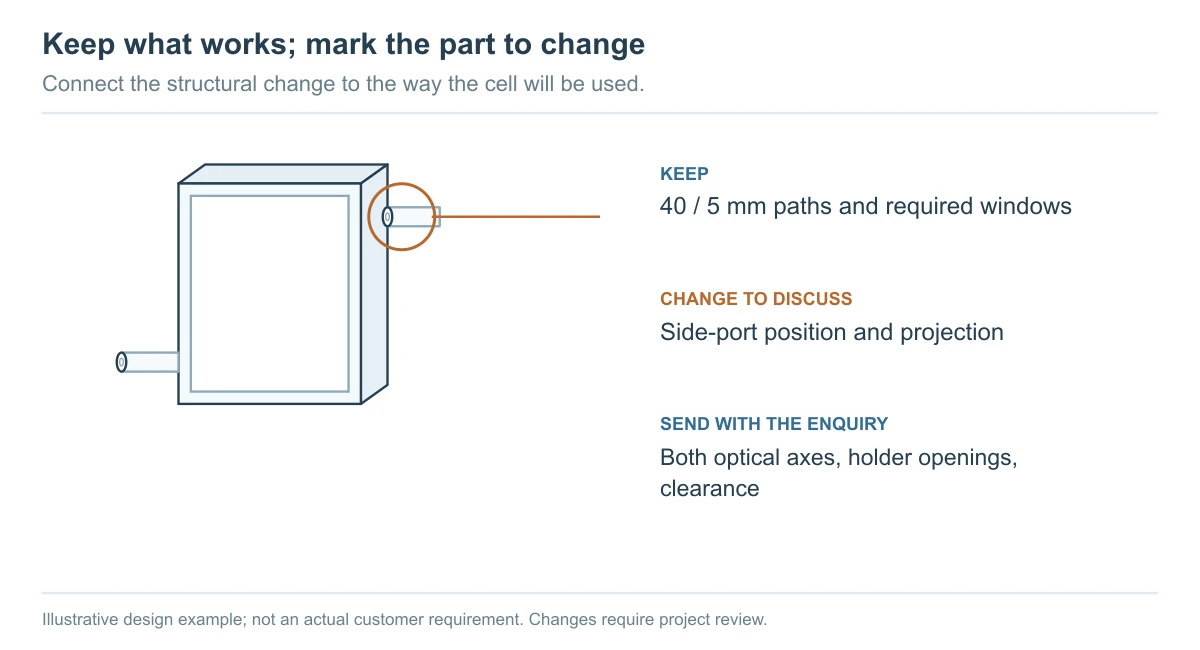
Review each optical direction separately
List the longer path, shorter path and connected installation as separate project requirements. Dimensional checks address geometry; absorbance or other optical data need separately agreed conditions and an established scope of supply.
- Paths: Agree the dimensional basis, critical tolerance and inspection method for each nominal path.
- Faces: Mark the window, beam height and holder opening needed for each direction, and review these alongside the port locations.
- Fit: Check assembly and reorientation space using OD 5 / ID 3 mm tubes and the agreed port positions and projections.
- Data: Agree blanks, specimen, wavelength and calibration for the two directions. The theoretical eightfold ratio is not a measured acceptance result for this cell.
Use conditions and details to settle before ordering
The adhesive-bonded construction maps to MQ Standard 80; begin with room-temperature aqueous conditions. Organic media, strong acids or bases, heating and pressurised circulation need separate compatibility review. Include clear apertures, optical centre, path tolerances and inspection in the project drawing.
Order this configuration or mark the change you need
View MQQFC119 and purchasing options
We would like to evaluate 40 / 5 mm paths, retain … and review … at the side connections. The drawing identifies both optical directions, beam height, holder openings and port clearance. Our sample and conditions are … . Please review windows, mounting and optical-path inspection.
Open and copy the custom enquiry checklist
Reference: MQQFC119
Retain: Dimensions, paths or parts: ______
Change: Part, target value and reason: ______
Sample and conditions: Specimen, media, temperature, cleaning and contact time: ______
Both optical directions: Beam height/size and holder opening for each direction: ______
Fluid path and reorientation: Fittings/hoses, flow/pressure, whether the cell will be reoriented: ______
Optics and installation: Wavelength, beam direction/height, windows and holder drawing: ______
Quantity and acceptance: Quantity, date, critical tolerances and inspection documents: ______
Attach a dimensioned sketch and the relevant holder or fitting specification to start the discussion. MQ works with external suppliers in China to review feasibility. Revised drawings, inspection scope, pricing and production arrangements are agreed for the project.
Send a custom enquiry for MQQFC119 · Browse other Custom Design Guides
Technical references
References explain general principles; other manufacturers’ paths, angles and performance are not specifications for this product.


Recent Comments