
Triangular Quartz Cuvette: Choosing a Different Viewing Geometry
CUSTOM DESIGN GUIDES · C033SS
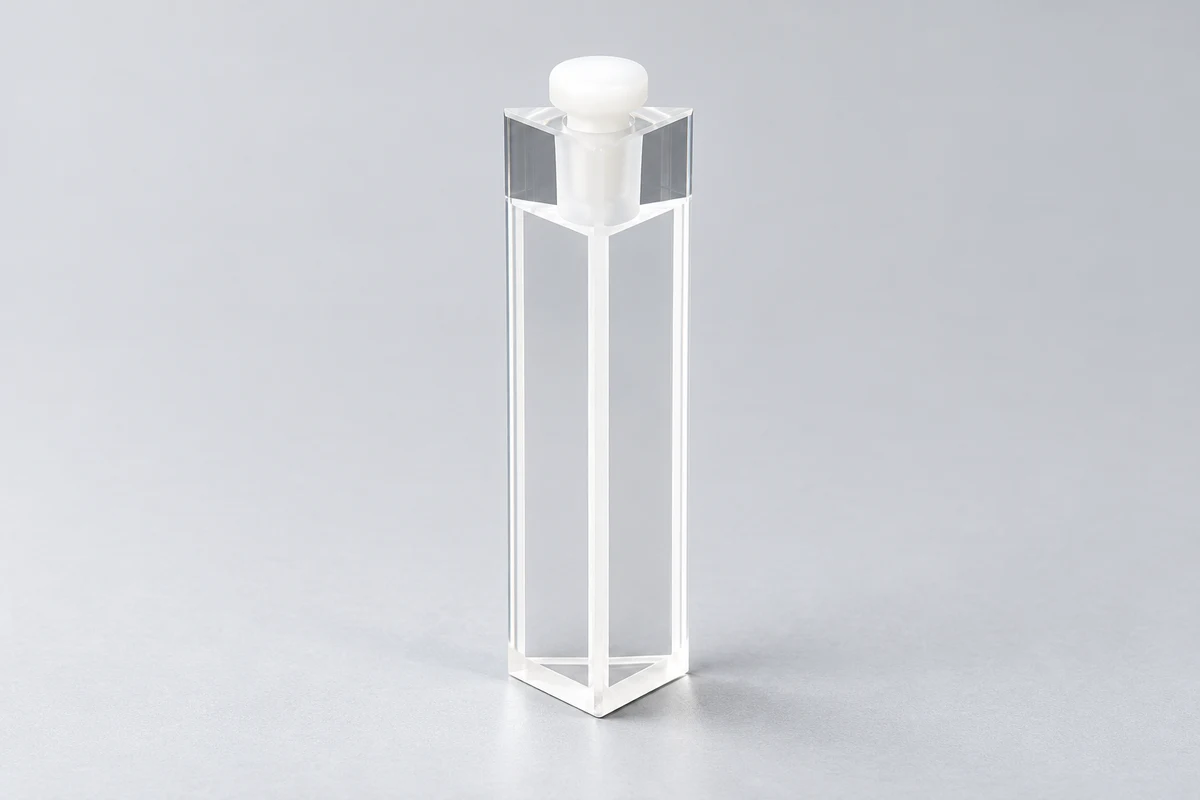
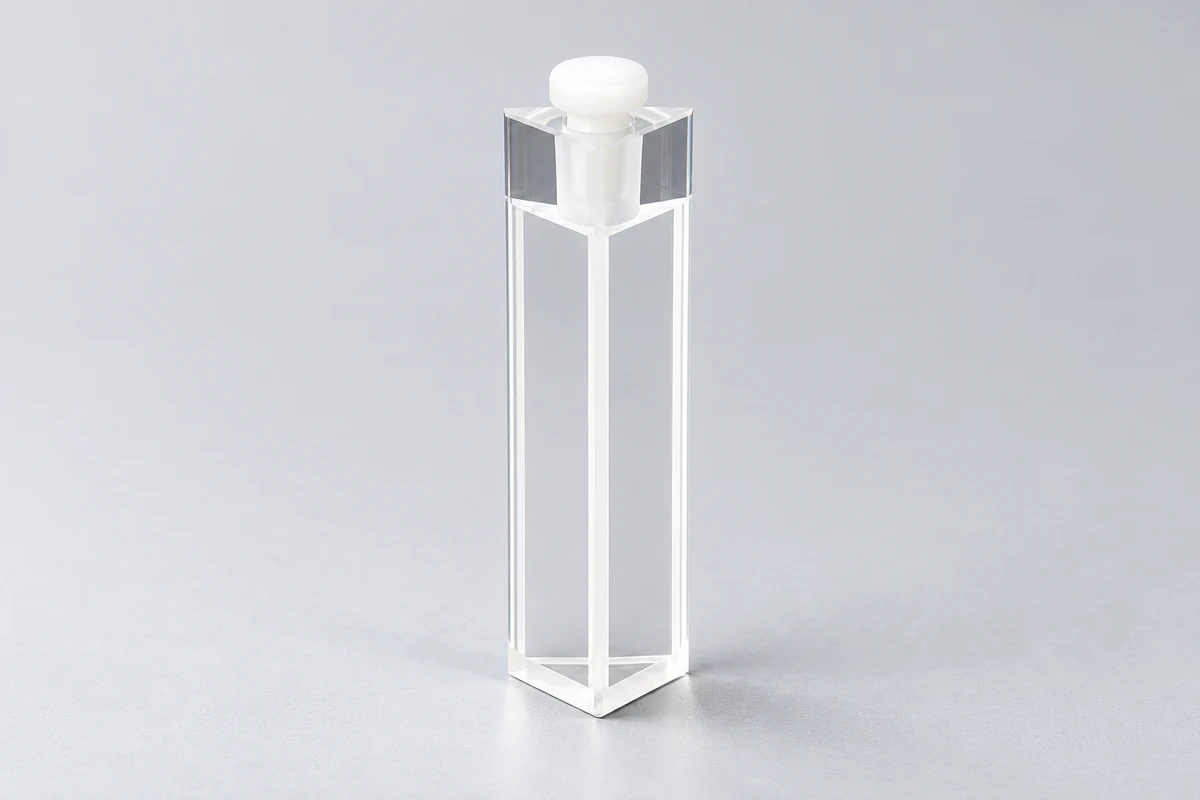
A cuvette’s shape affects more than the holder fit. The face orientations also influence how illumination and observation are arranged. C033SS has a triangular section, three transmitting faces, JGS1 quartz construction, a nominal 1.75 mL capacity and a supplied PTFE stopper. Start with the illumination and collection directions when considering this geometry.
View C033SS and current pricing · Discuss a custom version
What changes when the section becomes triangular? · Where do 11.5, 11.5, 15 and 45 mm belong? · Once the view is chosen, make cell location repeatable · Leave access for the stopper and sample loading · Project checks · Order or enquire
What changes when the section becomes triangular?
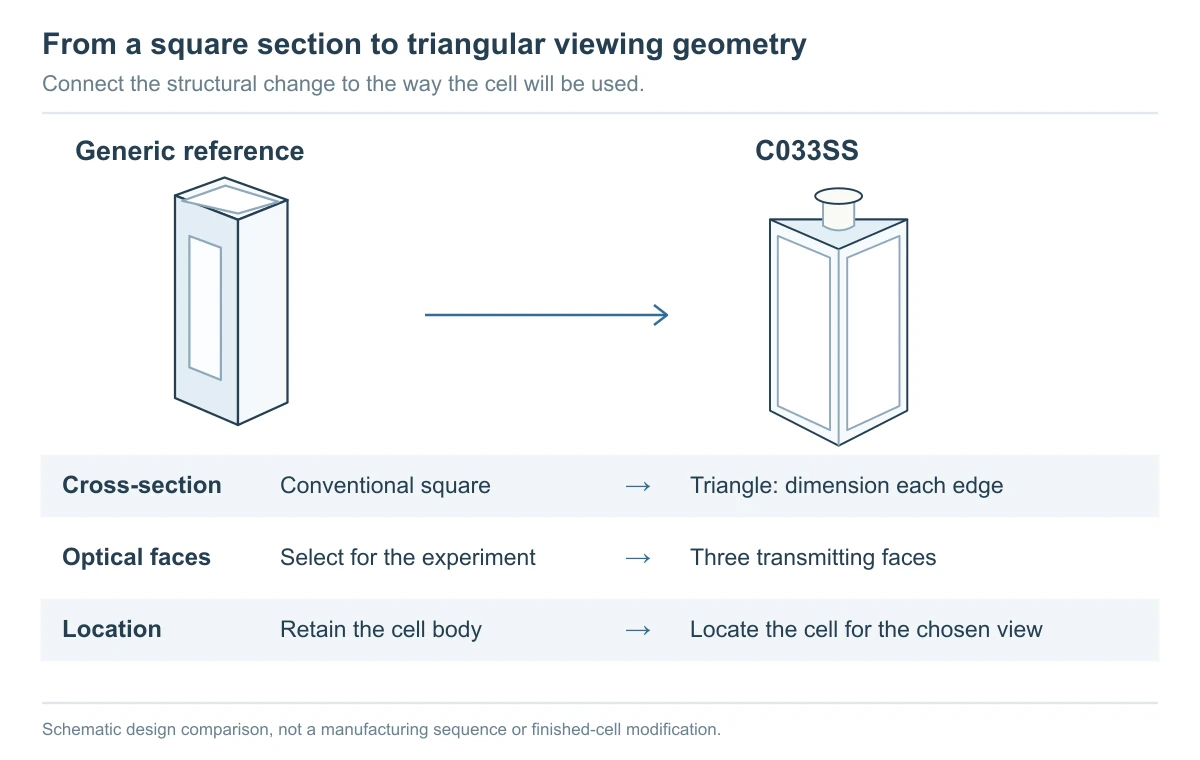
Opposing faces of a conventional square cell give a straightforward starting point for transmission. A triangular section offers a different relationship between the faces. Starna’s triangular fluorometer-cell catalogue describes this geometry as one option for front-surface measurement, giving context for considering another section.
That context does not specify C033SS angles, optical paths or fluorescence performance. Three transmitting faces do not automatically establish a 90-degree fluorescence arrangement. Draw the experiment’s actual illumination and collection directions before selecting it.
Where do 11.5, 11.5, 15 and 45 mm belong?
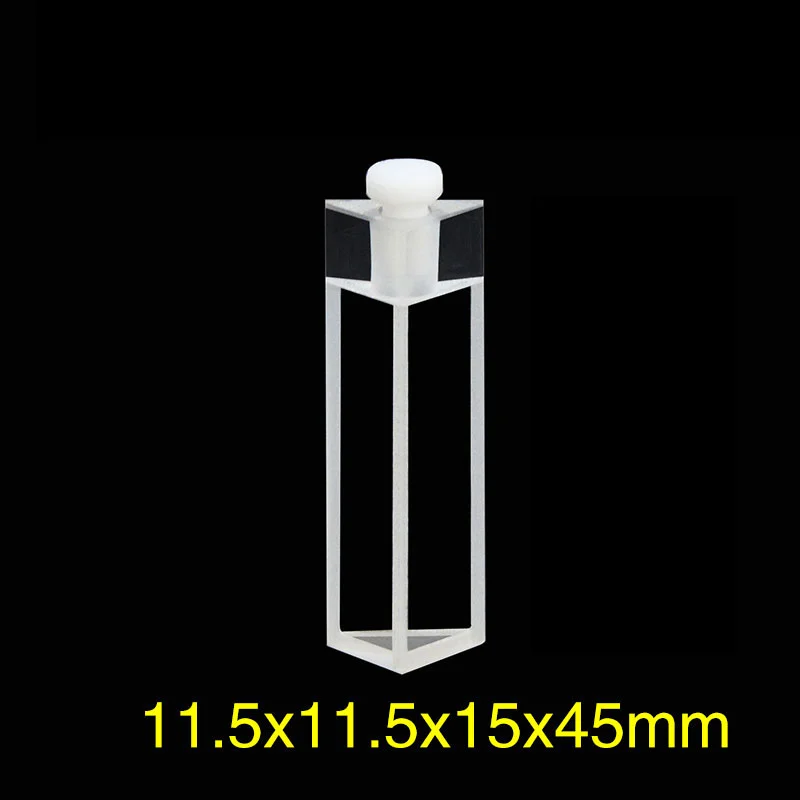
The 11.5, 11.5 and 15 mm values are the three outside edges of the triangular section. The 45 mm value is body height. These are not a rectangular length–width–height set or optical paths. Nor does 45 mm establish the overall height with the stopper fitted.
The holder must accommodate the section while leaving access for illumination, collection and stopper removal. The engineering reference separates supported dimensions from unresolved details and can be reviewed alongside the apparatus sketch.
C033SS · Current product specifications
| Item | Current configuration |
|---|---|
| Material | JGS1 quartz |
| Nominal capacity | 1.75 mL |
| Optical faces | Three transmitting faces |
| Cross-section edges | 11.5 mm, 11.5 mm and 15 mm |
| Body height | 45 mm |
| Closure supplied | PTFE stopper |
| Construction | Fused integrated construction, supplier description |
Open engineering reference R01 and PDF
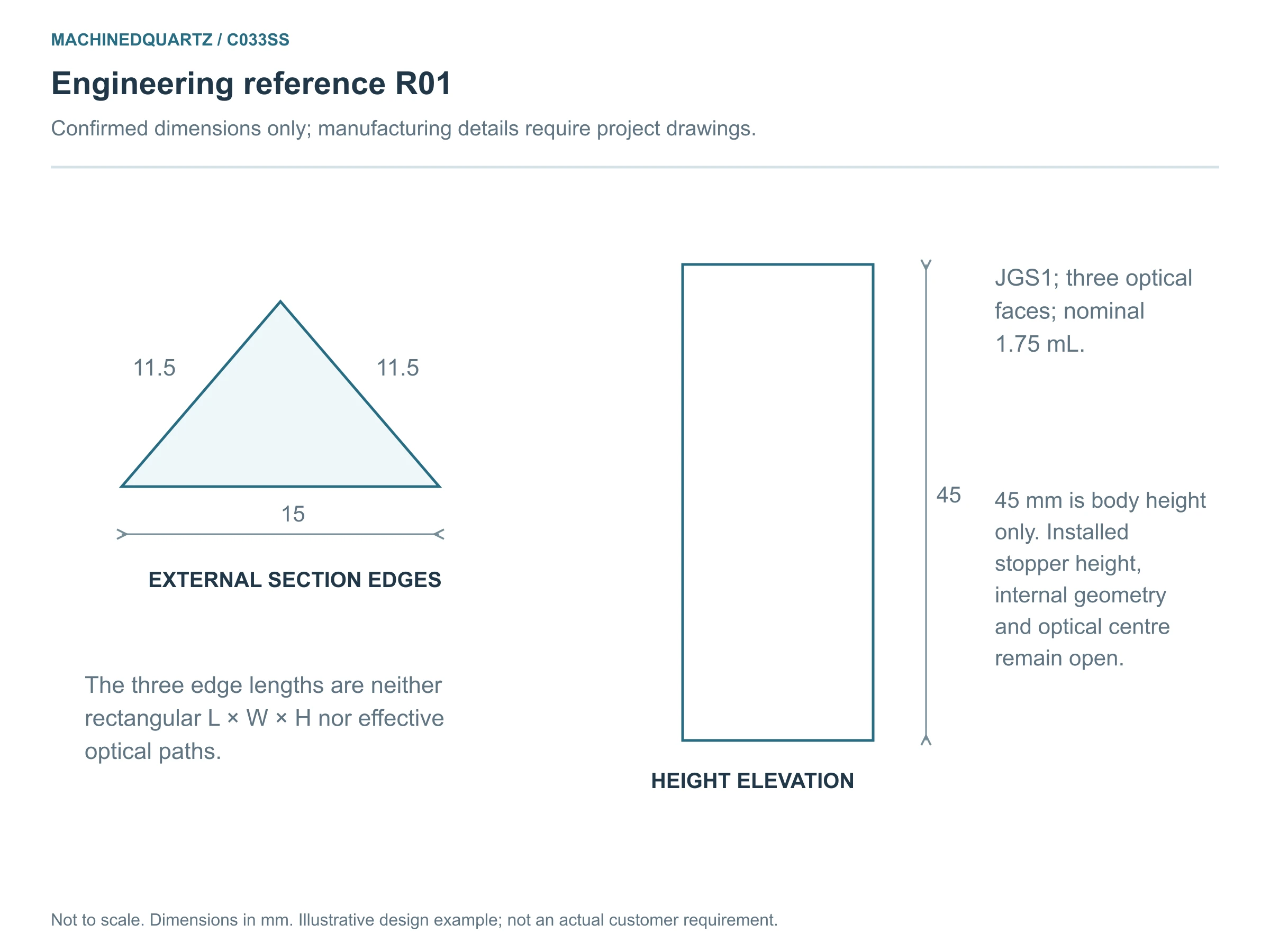
View full-size reference · Download engineering reference PDF
Once the view is chosen, make cell location repeatable
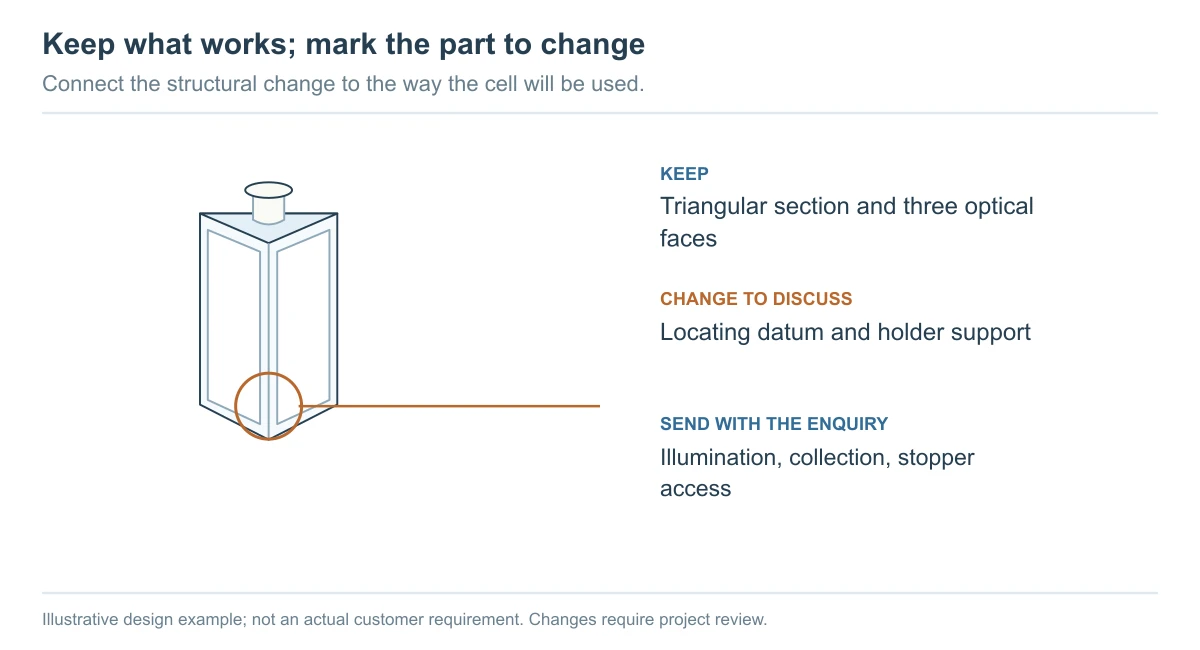
Suppose illumination and collection directions are already chosen, but the cell must be removed for cleaning and replaced. The triangular section is a starting point; the holder must also locate the intended orientation. Number the three faces on the apparatus sketch and mark illumination, collection and support so the discussion has a common reference.
The triangular section changes the face relationships and calls for location suited to the apparatus. Support needs to establish the intended position while leaving illumination, collection and stopper access clear. Section shape and the 45 mm body height alone do not describe those handling requirements.
If the existing three outside edges and optical faces are suitable, retain them and specify the locating datum, permissible support edges and stopper access. If the section must change, dimension its three edges separately and review viewing geometry and capacity again. Establish optical angles and effective paths for the project rather than infer them from a photograph.
Leave access for the stopper and sample loading
A PTFE stopper is supplied. Loading, closure and cleaning all need access above the cell. The installation should allow for overall height with the stopper fitted and for removing it by hand or with the intended tool. If evaporation control or closed operation matters, specify the medium, temperature and sealing conditions for a separate closure review.
If weak fluorescence makes the empty-cell background important, request the relevant test information. Such performance has not been established for this product and cannot be inferred from the quartz material or number of transmitting faces.
Put the viewing geometry into the drawing and fit check
For an apparatus that depends on viewing direction, discuss the following before ordering. Treat geometric fit, optical testing and closure requirements separately from the material and supplied stopper configuration.
- Section: Review the 11.5, 11.5 and 15 mm outside edges and 45 mm body height separately; agree required tolerances and overall height with the stopper.
- Datum: Relate the nominated face or edge to the holder datum and review orientation after replacement and clearance for illumination and collection.
- Optical data: If needed, specify wavelength, measurement geometry, specimen or empty-cell condition and required records, then establish availability.
- Stopper: Review loading and stopper removal in the intended apparatus. For sealing performance, separately agree medium, temperature, target and check method.
Use conditions and details to settle before ordering
The source describes fused integrated construction. Internal geometry, effective path, optical centre, finished-cell background and stopper sealing still need review for the experiment. Provide sample and cleaning media, temperature and contact time alongside the optical requirements.
Order this configuration or mark the change you need
View C033SS and purchasing options
We would like to evaluate the C033SS triangular configuration. Illumination and collection are shown in the drawing. Please retain … and review location against face … . Approximate loading is … . Please review observation regions, holder openings, stopper clearance and available empty-cell background information.
Open and copy the custom enquiry checklist
Reference: C033SS
Retain: Dimensions, paths or parts: ______
Change: Part, target value and reason: ______
Sample and conditions: Specimen, media, temperature, cleaning and contact time: ______
Viewing geometry: Illuminated face, collection direction, wavelength and beam height: ______
Location and closure: Locating datum, stopper access and required sealing conditions: ______
Optics and installation: Wavelength, beam direction/height, windows and holder drawing: ______
Quantity and acceptance: Quantity, date, critical tolerances and inspection documents: ______
Attach a dimensioned sketch and the relevant holder or fitting specification to start the discussion. MQ works with external suppliers in China to review feasibility. Revised drawings, inspection scope, pricing and production arrangements are agreed for the project.
Send a custom enquiry for C033SS · Browse other Custom Design Guides
Technical references
References explain general principles; other manufacturers’ paths, angles and performance are not specifications for this product.


Recent Comments