
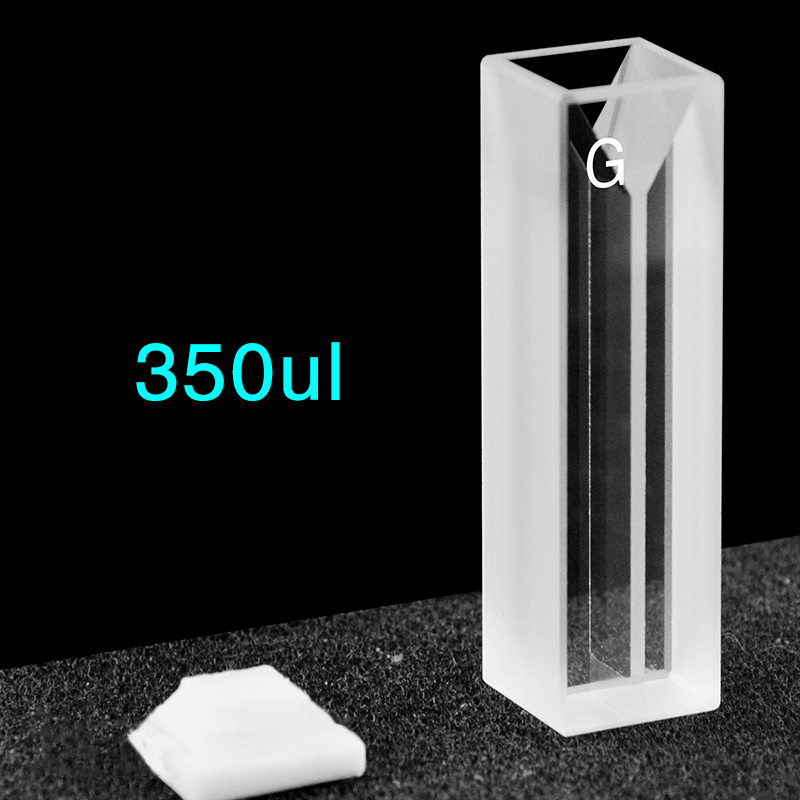
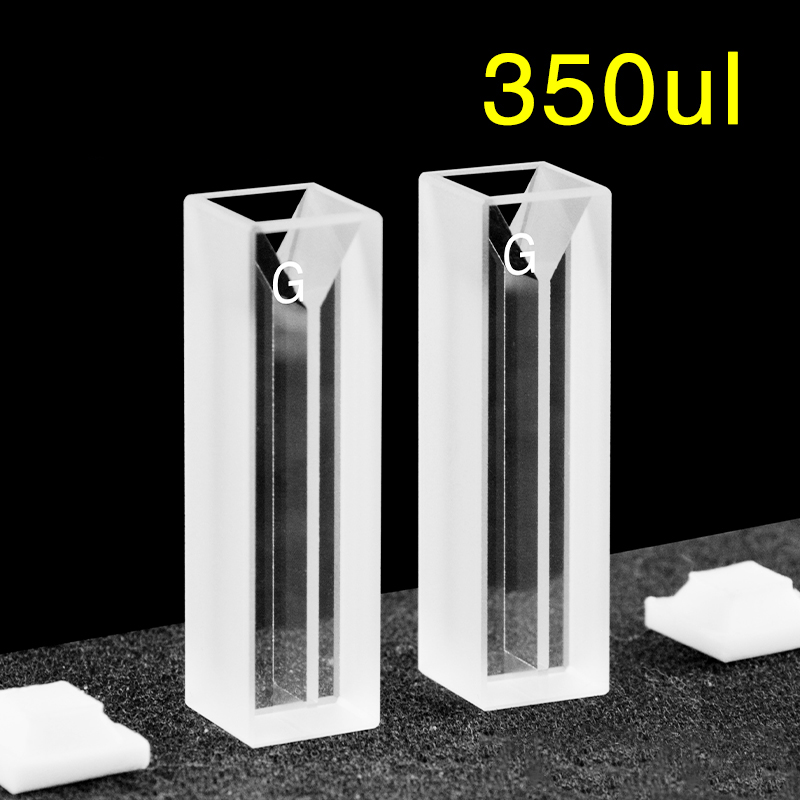
Glass 10mm Glass Micro Cuvette, 0.35ml, Standard 80, Two-way Light, PTFE Cap, 1pc/ea, C102CS41
6%
Original price was: $18.00.$17.00Current price is: $17.00.
Glass 10 mm micro cuvette, 0.35 ml (1 mm slit), Standard 80 (>80%). Two-Way Light. 340–2500 nm. PTFE Cap. 1 pc/ea. SKU: C102CS41. In Stock.
In Stock
Description
The C102CS41 is an optical glass micro cuvette with the narrowest available slit width of 1 mm and a 10 mm optical path length. Holding just 0.35 ml, it is the most sample-efficient cell in the glass micro range — ideal for precious biological specimens, rare reagents, and applications where every microliter counts. The ultra-narrow 1 mm aperture minimizes the light beam cross-section, enabling accurate absorbance measurements on highly concentrated solutions.
| Specifications — C102CS41 | |||
|---|---|---|---|
| Material | Optical Glass (Standard 80) | SKU | C102CS41 |
| Type | Micro Cell (Two-Way Light) | Path Length | 10 mm |
| Volume | 0.35 ml | Slit Width | 1 mm |
| Optical Windows | 2 (frosted sides) | Fabrication | Standard 80 |
| Transmittance | > 80% (340–2500 nm) | Wavelength Range | 340 – 2500 nm |
| Exterior Dimensions | 12.5 × 12.5 × 45 mm | Interior Dimensions | 1 × 10 × 43 mm |
| Cap Type | PTFE Cap | Package | 1 pc/ea |
Spectroscopy Applications
🔬UV-Vis Absorbance
Standard spectrophotometric measurements across 340–2500 nm wavelength range🏥Clinical Chemistry
Blood serum, plasma, and urine analysis in diagnostic laboratories💊Pharmaceutical QC
Drug purity testing, dissolution studies, and concentration verification🌊Environmental Water Testing
Pollutant detection, nutrient analysis, and water quality monitoring🍷Food & Beverage QC
Color measurement, additive quantification, and contamination screening🎓Teaching Labs
Undergraduate spectroscopy experiments with affordable, durable cells⚗️Enzyme Kinetics
Real-time reaction rate monitoring with minimal enzyme and substrate usage🧪Colorimetric Assays
Bradford, BCA, and Lowry protein quantification assays
Standard spectrophotometric measurements across 340–2500 nm wavelength range🏥Clinical Chemistry
Blood serum, plasma, and urine analysis in diagnostic laboratories💊Pharmaceutical QC
Drug purity testing, dissolution studies, and concentration verification🌊Environmental Water Testing
Pollutant detection, nutrient analysis, and water quality monitoring🍷Food & Beverage QC
Color measurement, additive quantification, and contamination screening🎓Teaching Labs
Undergraduate spectroscopy experiments with affordable, durable cells⚗️Enzyme Kinetics
Real-time reaction rate monitoring with minimal enzyme and substrate usage🧪Colorimetric Assays
Bradford, BCA, and Lowry protein quantification assays
Why a 1 mm Slit Micro Cuvette?
A 1 mm slit width provides the ultimate sample conservation for 10 mm path length cuvettes. With just 0.35 ml required, it is the go-to choice when working with limited or expensive samples such as purified proteins, nucleic acid extracts, or rare pharmaceutical compounds. The narrow beam cross-section also reduces stray light and minimizes inner-filter effects in concentrated solutions, delivering cleaner absorbance data.
Why Optical Glass?
Optical glass (Standard 80) transmits reliably across 340–2500 nm, covering the full visible spectrum and extending into the near-UV and near-IR regions. It is more economical than quartz while delivering excellent clarity and chemical resistance for most routine spectroscopy applications. For deep-UV work below 340 nm, consider upgrading to a quartz micro cuvette.
💡 Usage Tips
Filling: Use a fine-tip pipette to dispense 0.35 ml into the cell. Avoid air bubbles in the light path.
Cleaning: Rinse with distilled water, then ethanol or acetone. Avoid abrasive tools on polished optical faces.
Orientation: Align the two clear (polished) windows with the instrument beam path; frosted sides face left and right.
Filling: Use a fine-tip pipette to dispense 0.35 ml into the cell. Avoid air bubbles in the light path.
Cleaning: Rinse with distilled water, then ethanol or acetone. Avoid abrasive tools on polished optical faces.
Orientation: Align the two clear (polished) windows with the instrument beam path; frosted sides face left and right.
🛠 Custom Orders
Need a different slit width, volume, or material? We offer custom fabrication for micro cuvettes. Contact us with your specifications.
Need a different slit width, volume, or material? We offer custom fabrication for micro cuvettes. Contact us with your specifications.
Specifications are nominal and may vary slightly due to manufacturing tolerances. Images are for reference only; actual product appearance may differ.
Additional information
| Weight | 30 g |
|---|
You must be logged in to post a review.
You may also like…
9%
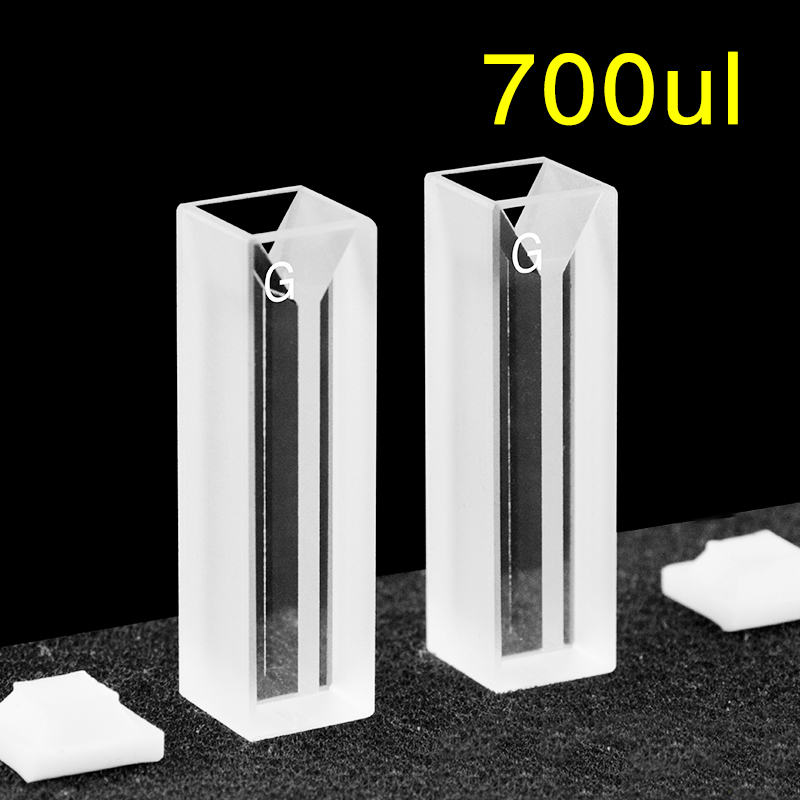
Glass 10mm Glass Micro Cuvette, 0.7ml, Standard 80, Two-way Light, PTFE Cap, Pack of Two, C102CS44
Original price was: $34.00.$31.00Current price is: $31.00.9%
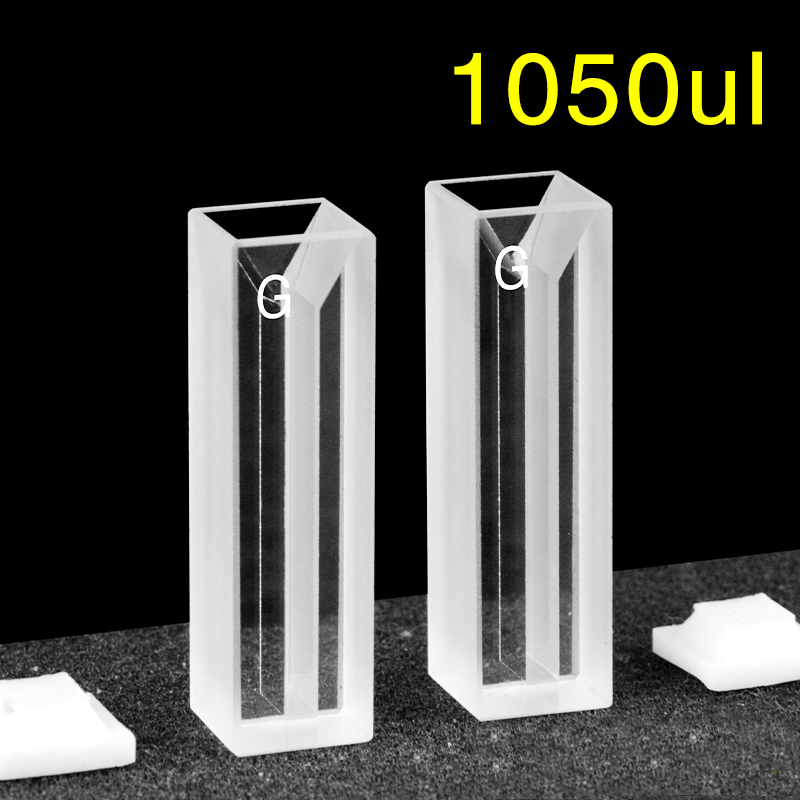
Glass 10mm Glass Micro Cuvette, 1.05ml, Standard 80, Two-way Light, PTFE Cap, Pack of Two, C102CS46
Original price was: $34.00.$31.00Current price is: $31.00.9%
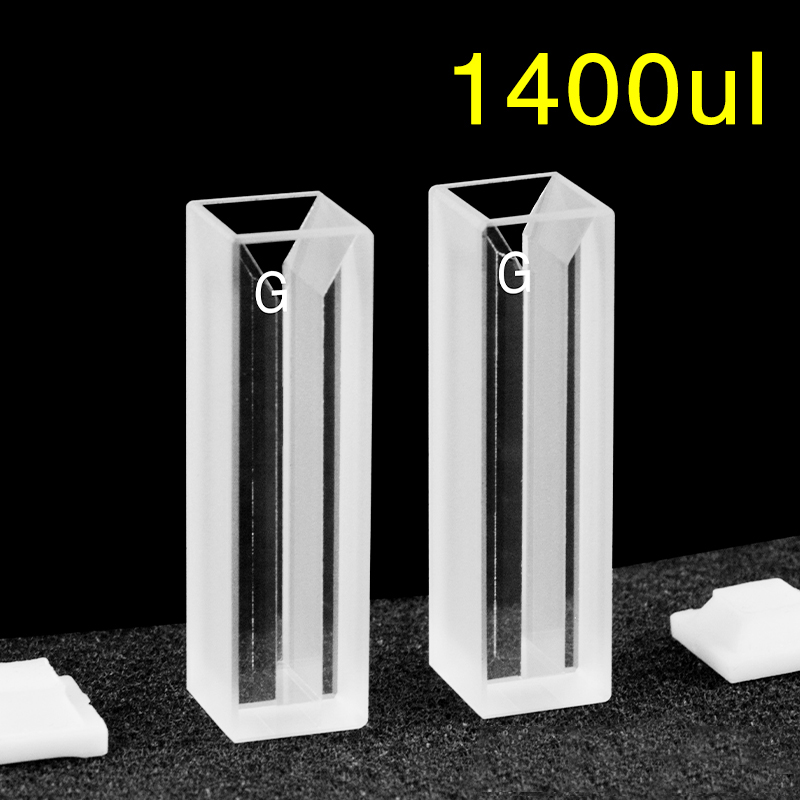
Glass 10mm Glass Micro Cuvette, 1.4ml, Standard 80, Two-way Light, PTFE Cap, Pack of Two, C102CS48
Original price was: $34.00.$31.00Current price is: $31.00.9%
Glass 10mm Glass Micro Cuvette, 0.35ml, Standard 80, Two-way Light, PTFE Cap, Pack of Two, C102CS42
Original price was: $34.00.$31.00Current price is: $31.00.Related products
14%
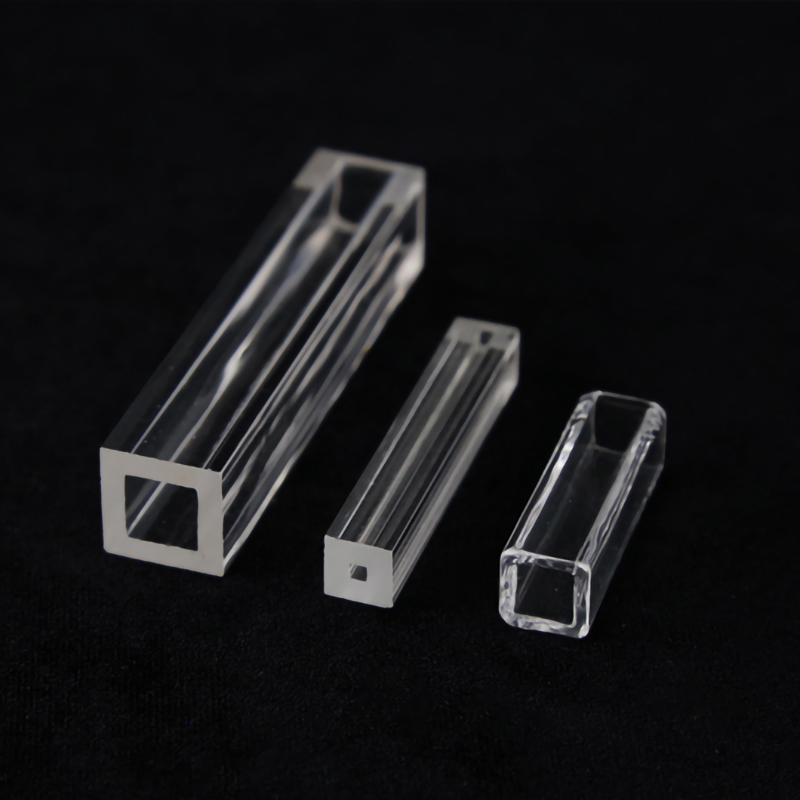
(MQC382) Quartz Capillary Tubes (Square), Outer Dim.: 1x1mm, Inner Dim.: 0.2×0.2mm, Length: 100mm
Original price was: $38.00.$33.00Current price is: $33.00.15%
(MQC362) Quartz Capillary Tubes (Square), Outer Dim.: 0.5×0.5mm, Inner Dim.: 0.3×0.3mm, Length: 50mm
Original price was: $28.00.$24.00Current price is: $24.00.15%
(MQC379) Quartz Capillary Tubes (Square), Outer Dim.: 1x1mm, Inner Dim.: 0.2×0.2mm, Length: 50mm
Original price was: $28.00.$24.00Current price is: $24.00.14%
Reviews
There are no reviews yet.