
Cuvette Solvent Compatibility: 38 Solvents × 3 Fabrications
This post is also available in:
Cuvette solvent compatibility is the matrix of which fabrication method (Standard 80, Sintered 80, Sintered 83, Molded 83) tolerates each of the 38 common UV-Vis and HPLC solvents. Standard 80 (glue-assembled) is aqueous-only at room temperature; Sintered 80/83 (powder-sintered seam) handles most organic solvents and acids up to 600 °C; Molded 83 (one-piece fused) is the only choice for HF-free harsh chemistry and pharma QC requiring T > 83%.
Cuvette Solvent Compatibility: 38 Solvents × 3 Quartz Fabrications
On This Page
MachinedQuartz · Compatibility Guide
Cuvette Solvent Compatibility: 38 Solvents × 3 Fabrications
Which cuvette survives your sample? Cross-checked against Heraeus, Translume, FireflySci, Norland, and our shop’s own 13-year build experience. Acid, base, organic, halogenated, oxidizer — every common lab solvent rated with exact temperature and contact-time limits.
38 solvents rated
3 fabrications compared
5 authoritative sources
Decision tree included
Why You Can Trust This Page
AuthorMachinedQuartz Technical Team
Reviewed byBryan Wright (Founder, 13+ yrs at MQ)
Production base1,300+ catalog SKUs · 40+ countries shipped
Last updatedApril 29, 2026 · Next review Oct 2026
Primary sourcesHeraeus · Translume · FireflySci · Norland NOA 61 TDS · Wikipedia · USP <857>
Conflict of interestWe sell quartz cuvettes; ratings reflect actual material limits, not sales preference
Section 1
TL;DR — Pick Your Fabrication in One Sentence
Quick Verdict
- Aqueous sample, neutral pH, no heating? → Standard 80 (cheapest, glue-bonded, fine for water-based work)
- Organic solvent, dilute acid/base, or short-time use? → Sintered 80/83 (Sintered — chemically inert, no glue) but use at room temperature with immediate cleaning
- High temperature + harsh chemistry, or precision-critical (±0.01 mm)? → Molded 83 / 0.01 (Molded — same chemistry as sintered but tougher mechanically)
- Contains HF? → None — switch to PTFE / PFA cells. HF dissolves SiO₂ at any concentration (Translume)
- Strong concentrated acid (H₂SO₄ >50%) for >1 hour? → quartz can be damaged. Use only short room-temp soaks (FireflySci)
This guide rates 38 lab solvents against three MachinedQuartz cuvette fabrications. Data is cross-verified against Heraeus, Translume, FireflySci, Norland (UV-cure adhesive manufacturer), and our own production experience. For background on the four fabrication types themselves, see our Fabrication Method Guide or Quartz Cuvette Models Compared.
Section 2
Solvent → Cuvette: 30-Second Decision Tree
Before scanning the master compatibility table, walk through these four questions. They cover 95% of buyers and prevent the most common procurement mistake: choosing a cheap cuvette only to have it dissolve, leak, or shatter on first use.
Section 3
The Three Fabrications: Why Chemistry Differs
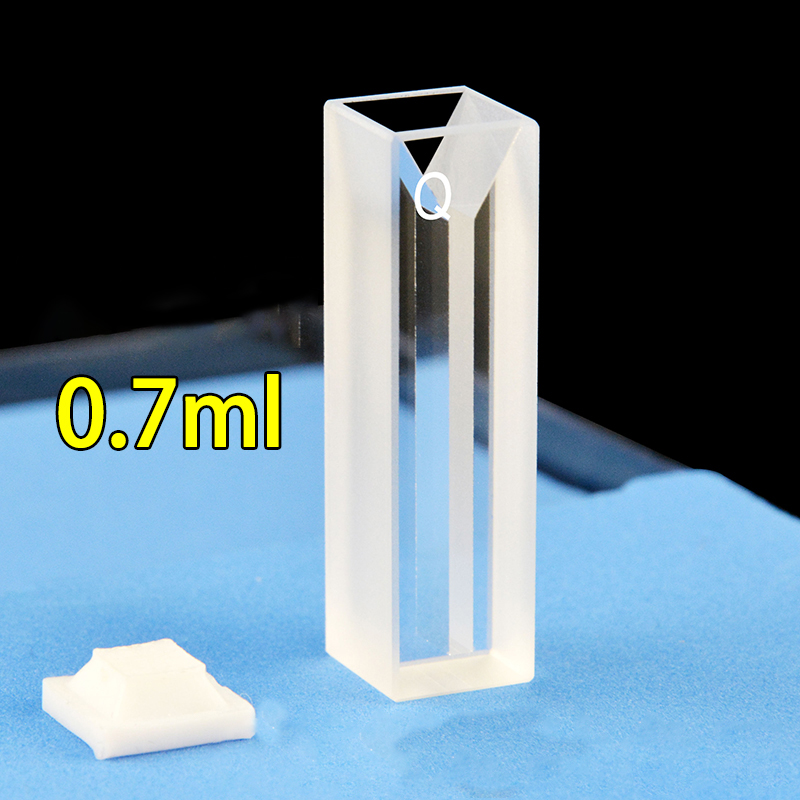
STANDARD 80 · Adhesive Bonded
UV-Cure Adhesive Bonded
Polished quartz panels glued with UV-cure cement. Aqueous-only, <100 °C.
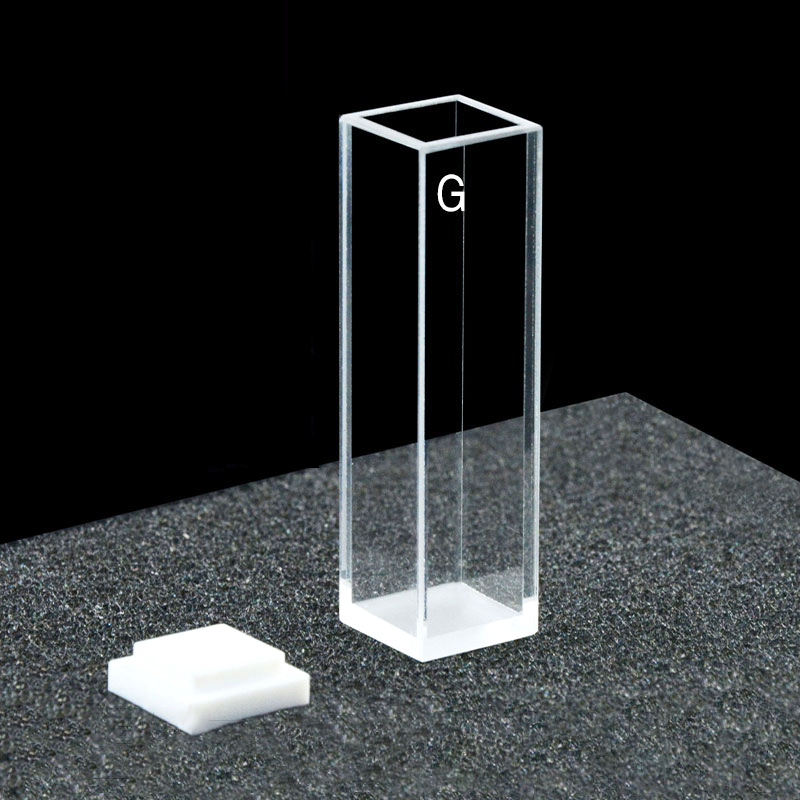
SINTERED 80/83 · Powder-Fused
Powder-Fused (No Adhesive)
All-quartz, no adhesive — joint rated to ~600 °C. Inert against virtually all chemistry.
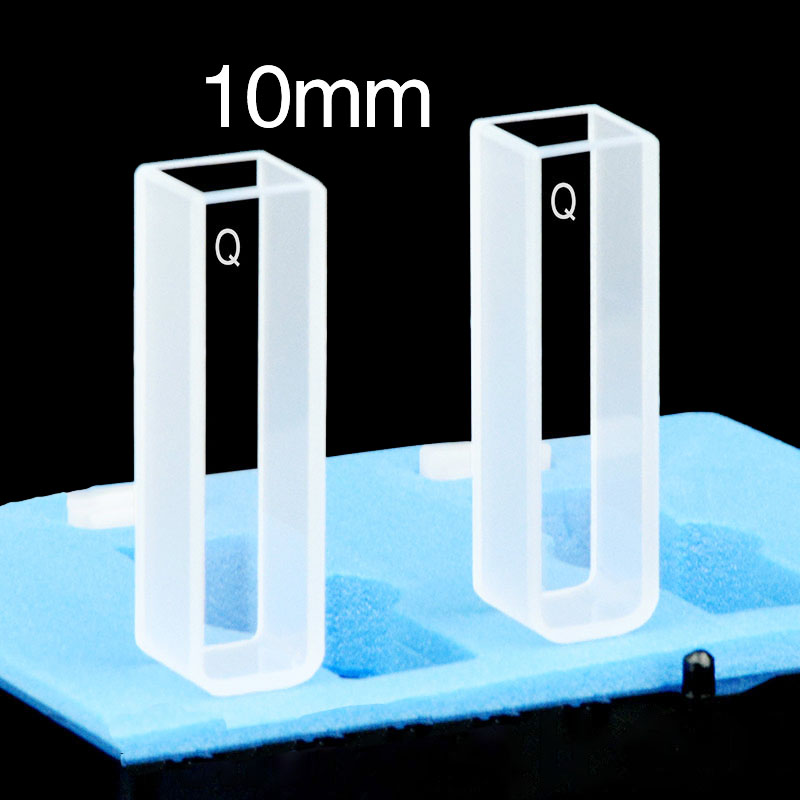
MOLDED 83/0.01 · Monolithic
Single-Piece Monolithic
One-piece quartz, no joints. Same chemistry as Sintered + thermal cycling tolerance.
Three MachinedQuartz fabrications behave very differently in solvent contact. The difference comes down to what’s at the joints.
Standard 80 (Standard 80) — Built from polished quartz panels glued together with UV-cure optical cement. The cement is solid and clear at room temperature, but it’s an organic polymer — and like all organic polymers, it dissolves or swells in organic solvents. According to Norland’s official Technical Data Sheet for NOA 61 (the industry-standard UV optical adhesive), the manufacturer explicitly states that acetone wipes off the cement and methylene chloride separates assemblies overnight. That’s not a theoretical risk — it’s the manufacturer’s own evidence. Standard 80 is reserved for water-based samples below 100 °C.
Sintered 80/83 (Sintered 80/83) — Quartz panels are joined by high-temperature powder-sintering with no adhesive; the ~600 °C rating is the sintered joint’s service-temperature limit. The result is an all-quartz cell. Chemically, fused silica is “extremely inert. There are only a few uncommon materials that will attack it, including HF and hot KOH” (Translume). 80 vs 83 differ only in deep-UV transmission (>83% at 200 nm) — chemically they’re identical, which is why we collapse them into one column on this guide.
Molded 83 / 0.01 (Molded 83/0.01) — A single piece of fused silica formed under heat — no joints, no adhesive, no internal stress concentrations. Same chemistry as sintered, but mechanically tougher (handles thermal cycling and mechanical shock). 83 and 0.01 differ in dimensional precision (±0.05 mm vs ±0.01 mm), not chemistry, so they share one column here.
Section 4
Bryan’s Rule: Sintered + Organic = Short RT Exposure + Immediate Cleaning
The chemistry says you can
Public datasheets from Heraeus and Translume confirm that fused silica is chemically inert against organic solvents.
So technically, both Sintered 80/83 and Molded 83/0.01 cuvettes can hold acetone or DMSO indefinitely with no chemical degradation. Molded can also be safely heated to typical solvent boiling points and beyond. Sintered is where the practical limits below kick in.
But our shop data says don’t — for Sintered cells
The stricter rule we apply in our shop (Sintered only):
For organic and corrosive solvents in Sintered 80/83 cuvettes, use at room temperature only, for short exposures, and clean immediately after use. Do not heat.
Molded 83/0.01 is exempt — the monolithic body has no joints to fatigue, so it can be heated under organic or corrosive conditions just like Hellma or FireflySci premium cells. Molded is our top-tier product specifically for users who need to heat aggressive samples.
Why? Three reasons that don’t show up in chemistry data sheets but matter in real labs:
Reason #1
Trace residues compound
Even HPLC-grade DMSO has trace water and metals. Heated, they deposit on optical surfaces and cause permanent baseline drift.
Reason #2
Vapor + heat fogs windows
Organic solvents reflux against polished windows. Condensate cycles deposit thin films that shift transmittance over time.
Reason #3
Cleaning gets harder fast
Dried protein, polymerized organics, or salts scratch quartz when scrubbed. Rinse within 5 min of measurement.
This rule is why our compatibility table marks Sintered/Molded as ✅ at RT for organics — not at the solvent’s boiling point. The ✅ rating is for short-time use; for prolonged or heated work, treat as ⚠️ and consider an alternative cell.
Quick Decision Reference
If your sample contains HF (any concentration), then use PTFE/PFA — no quartz cuvette will work.
If you only need to measure aqueous samples below 100 °C, then Standard 80 (glue-bonded) is the lowest-cost option.
If you use any organic solvent (acetone, DMSO, methanol, ACN, DMF, THF), then Sintered 80/83 is required — Standard 80’s UV-cure cement dissolves.
If your method needs USP <857> / Ph. Eur. compliance (>83% transmittance at 200 nm), then choose Sintered 83 (high-purity grade).
If you need to autoclave or operate above 100 °C with chemicals, then use Molded 83 — monolithic body tolerates thermal cycling.
If the sample is strong base (NaOH, KOH) above 0.1 M or above room temperature, then even fused quartz is slowly etched — limit to brief RT exposures.
If you’re cleaning with aqua regia or piranha solution, then Sintered/Molded only — Standard 80’s cement is destroyed in minutes.
If you measure protein at 280 nm or DNA at 260 nm with frequent buffer cleaning, then Sintered 80 is the cost-effective workhorse; Sintered 83 if you also scan deep UV.
Glossary — Fabrication Definitions
- Standard 80 (UV-cure adhesive bonded)
- A quartz cuvette built by bonding polished quartz panels with UV-cure optical cement. Lowest cost; suitable for aqueous samples below 100 °C. The organic cement at the seams limits chemical and temperature compatibility (dissolves in acetone, DCM, DMSO).
- Sintered 80/83 (Powder-fused quartz)
- An all-quartz cuvette where panels are joined by high-temperature powder sintering — no low-temperature melt; the ~600 °C figure is the joint’s service-temperature limit — no adhesive. Chemically inert against virtually all acids, organic solvents, and oxidizers. The “80” and “83” suffixes denote transmittance at 200 nm (≈80% vs >83%).
- Molded 83 / Molded 0.01 (Monolithic fused silica)
- A single-piece quartz cuvette formed under heat — no joints, no adhesive, no internal stress. Same chemistry as sintered but mechanically tougher, suitable for thermal cycling. The “0.01” version adds ±0.01 mm path-length precision.
- Bryan’s Rule (MachinedQuartz operating protocol)
- For Sintered or Molded cuvettes used with organic or corrosive solvents: limit exposure to room temperature, keep contact time short, and clean immediately after use. Even though fused silica is chemically inert, this protocol prevents trace residue accumulation and optical surface fogging over time.
Section 5
Master Compatibility Table: 38 Solvents × 3 Fabrications
📖 Term refresher: Standard 80 = adhesive-bonded · Sintered 80/83 = powder-fused all-quartz · Molded 83/0.01 = monolithic single-piece. Full definitions in our Cuvette Fabrication Glossary.
Solvents are grouped by chemical class. Within each group, ratings reflect Bryan’s rule for organics/corrosives (see Section 4): ✅ on Sintered/Molded means safe for short room-temperature use with immediate cleaning, not unlimited heated exposure.
Legend: ✅ = Fully compatible · ⚠️ = Limited (see note) · ❌ = Not recommended · RT = room temperature · “—” = not rated
Strong Acids
| Solvent | Formula | Standard 80 | Sintered 80/83 | Molded 83/0.01 | ||||||
|---|---|---|---|---|---|---|---|---|---|---|
| Rating | Max °C | Notes | Rating | Max °C | Notes | Rating | Max °C | Notes | ||
| Hydrochloric acid | HCl | ⚠️ | 60 | Dilute (≤2 M) safe at RT for 1-hour soaks; concentrated long-contact attacks adhesive (FireflySci) | ✅ | RT | ⚠ short room-temp exposure, clean immediately after use.Do not heatAll concentrations chemically inert vs quartz (Translume) | ✅ | 100 | Heatable; monolithic body tolerates thermal cycling — same as Hellma/FireflySci premium |
| Nitric acid | HNO₃ | ⚠️ | 40 | dilute (≤2 M) clean OK; concentrated nitric acid attacks adhesive | ✅ | RT | ⚠ short room-temp exposure, clean immediately after use.Do not heatFireflySci confirms: 68% overnight at RT, safe | ✅ | 100 | Heatable up to ~100 °C; monolithic body. Recommended when heating is required (matches Hellma/FireflySci premium). |
| Sulfuric acid | H₂SO₄ | ❌ | — | Any concentration rapidly attacks UV-cure adhesive. Use Sintered or Molded instead | ⚠️ | RT | ⚠ short room-temp exposure, clean immediately after use.Do not heatDilute (≤50%/2M) ≤20 min safe (FireflySci) | ⚠️ | 100 | Heatable up to ~100 °C; Piranha solution safe (Wikipedia). Top-tier choice for hot piranha cleaning protocols. |
| Phosphoric acid | H₃PO₄ | ⚠️ | 60 | Dilute OK; concentrated attacks adhesive | ✅ | RT | ⚠ short room-temp exposure, clean immediately after use.Do not heat>200 °C hot phosphoric acid slowly etches quartz | ✅ | 100 | Heatable up to ~100 °C; monolithic body — top-tier for heated work |
| Hydrofluoric acid | HF | ❌ | — | Destroys quartz at any concentration — quartz’s only chemical weakness | ❌ | — | Translume confirms HF is one of the few chemicals that dissolves SiO₂. Switch to PTFE/PFA cells | ❌ | — | Destroys quartz — no quartz cuvette works |
Weak Acids
| Solvent | Formula | Standard 80 | Sintered 80/83 | Molded 83/0.01 | ||||||
|---|---|---|---|---|---|---|---|---|---|---|
| Rating | Max °C | Notes | Rating | Max °C | Notes | Rating | Max °C | Notes | ||
| Acetic acid (glacial) | CH₃COOH | ⚠️ | 40 | Dilute aqueous OK; glacial acetic long contact attacks adhesive | ✅ | RT | ⚠ short room-temp exposure, clean immediately after use.Do not heatAll concentrations safe at RT | ✅ | 100 | Heatable up to ~100 °C; monolithic body — top-tier for heated work |
| Formic acid | HCOOH | ⚠️ | 40 | Dilute OK; concentrated attacks adhesive | ✅ | RT | ⚠ short room-temp exposure, clean immediately after use.Do not heat | ✅ | 100 | Heatable up to ~100 °C; monolithic body — top-tier for heated work |
| Oxalic acid | (COOH)₂ | ✅ | 60 | Aqueous solutions safe; common protein crystallography buffer | ✅ | RT | ⚠ short room-temp exposure, clean immediately after use.Do not heatAqueous solutions chemically inert vs quartz | ✅ | 100 | Heatable up to ~100 °C; monolithic body — top-tier for heated work |
Bases (Strong & Organic)
| Solvent | Formula | Standard 80 | Sintered 80/83 | Molded 83/0.01 | ||||||
|---|---|---|---|---|---|---|---|---|---|---|
| Rating | Max °C | Notes | Rating | Max °C | Notes | Rating | Max °C | Notes | ||
| Sodium hydroxide | NaOH | ⚠️ | 40 | Dilute (<0.1 M) brief contact OK; >0.1 M attacks both adhesive AND quartz | ⚠️ | RT | ⚠ short room-temp exposure, clean immediately after use.never heat<0.1 M at RT is safe long-term; hot NaOH/KOH etches quartz (Translume) | ⚠️ | RT | Heatable for short cleaning cycles; monolithic body — but quartz itself remains vulnerable to strong base regardless of fabrication |
| Potassium hydroxide | KOH | ⚠️ | 40 | Same as NaOH; Translume lists hot KOH as one of quartz’s chemical weaknesses | ⚠️ | RT | ⚠ short room-temp exposure, clean immediately after use.never heatHot KOH is officially listed by Translume as a chemical that attacks quartz | ⚠️ | 100 | Heatable up to ~100 °C; monolithic body — top-tier for heated work |
| Ammonium hydroxide | NH₄OH | ✅ | 40 | Dilute aqueous safe at RT; weaker base than NaOH | ✅ | RT | ⚠ short room-temp exposure, clean immediately after use.Do not heatBase piranha (NH₄OH+H₂O₂) is a standard cleaning protocol | ✅ | 100 | Heatable up to ~100 °C; monolithic body — top-tier for heated work |
| Triethylamine | (C₂H₅)₃N | ❌ | RT | Strong organic base attacks UV-cure adhesive | ✅ | RT | ⚠ short room-temp exposure, clean immediately after use.Do not heatChemistry compatible with quartz at RT | ✅ | 100 | Heatable up to ~100 °C; monolithic body — top-tier for heated work |
Polar Protic Solvents
| Solvent | Formula | Standard 80 | Sintered 80/83 | Molded 83/0.01 | ||||||
|---|---|---|---|---|---|---|---|---|---|---|
| Rating | Max °C | Notes | Rating | Max °C | Notes | Rating | Max °C | Notes | ||
| Methanol | CH₃OH | ✅ | 40 | Brief cleaning contact safe; long soaks soften adhesive | ✅ | RT | ⚠ short room-temp exposure, clean immediately after use.Do not heatFully safe; common cleaning solvent | ✅ | 60 | Brief heated use OK (limited by solvent BP) |
| Ethanol | C₂H₅OH | ✅ | 40 | Standard cuvette cleaning solvent; brief contact safe | ✅ | RT | ⚠ short room-temp exposure, clean immediately after use.Do not heatFireflySci-recommended cleaning solvent (avoid with protein samples) | ✅ | 60 | Brief heated use OK |
| Isopropanol | (CH₃)₂CHOH | ✅ | 40 | Suitable for cleaning; brief contact safe | ✅ | RT | ⚠ short room-temp exposure, clean immediately after use.Do not heat | ✅ | 60 | Brief heated use OK |
| n-Propanol | C₃H₇OH | ✅ | 40 | Same as IPA | ✅ | RT | ⚠ short room-temp exposure, clean immediately after use.Do not heat | ✅ | 60 | Brief heated use OK |
Polar Aprotic Solvents
| Solvent | Formula | Standard 80 | Sintered 80/83 | Molded 83/0.01 | ||||||
|---|---|---|---|---|---|---|---|---|---|---|
| Rating | Max °C | Notes | Rating | Max °C | Notes | Rating | Max °C | Notes | ||
| Acetonitrile | CH₃CN | ❌ | RT | Common HPLC solvent; dissolves UV cement in hours | ✅ | RT | ⚠ short room-temp exposure, clean immediately after use.Do not heatSintered/fused cuvettes are the HPLC industry standard | ✅ | 100 | Heatable up to ~100 °C; monolithic body — top-tier for heated work |
| DMSO | (CH₃)₂SO | ❌ | RT | Strong polar aprotic solvent dissolves optical adhesives | ✅ | RT | ⚠ short room-temp exposure, clean immediately after use.Do not heatWidely used as biological solvent | ✅ | 100 | Heatable up to ~100 °C; monolithic body — top-tier for heated work |
| DMF | HCON(CH₃)₂ | ❌ | RT | Strong aprotic solvent dissolves adhesives | ✅ | RT | ⚠ short room-temp exposure, clean immediately after use.Do not heatCommon in organic synthesis monitoring | ✅ | 100 | Heatable up to ~100 °C; monolithic body — top-tier for heated work |
| NMP | C₅H₉NO | ❌ | RT | Same as DMF; strong aprotic | ✅ | RT | ⚠ short room-temp exposure, clean immediately after use.Do not heat | ✅ | 100 | Heatable up to ~100 °C; monolithic body — top-tier for heated work |
| Acetone | (CH₃)₂CO | ❌ | RT | Norland TDS confirms acetone wipes UV cement; long contact dissolves it | ✅ | RT | ⚠ short room-temp exposure, clean immediately after use.Do not heatCommon cleaning solvent for sintered cells | ✅ | 100 | Heatable up to ~100 °C; monolithic body — top-tier for heated work |
Hydrocarbons (Aliphatic & Aromatic)
| Solvent | Formula | Standard 80 | Sintered 80/83 | Molded 83/0.01 | ||||||
|---|---|---|---|---|---|---|---|---|---|---|
| Rating | Max °C | Notes | Rating | Max °C | Notes | Rating | Max °C | Notes | ||
| n-Hexane | C₆H₁₄ | ⚠️ | 40 | Brief contact safe; long exposure swells adhesive | ✅ | RT | ⚠ short room-temp exposure, clean immediately after use.Do not heat | ✅ | 100 | Heatable up to ~100 °C; monolithic body — top-tier for heated work |
| n-Heptane | C₇H₁₆ | ⚠️ | 40 | Same as n-hexane | ✅ | RT | ⚠ short room-temp exposure, clean immediately after use.Do not heat | ✅ | 100 | Heatable up to ~100 °C; monolithic body — top-tier for heated work |
| Cyclohexane | C₆H₁₂ | ⚠️ | 40 | Same as n-hexane | ✅ | RT | ⚠ short room-temp exposure, clean immediately after use.Do not heat | ✅ | 100 | Heatable up to ~100 °C; monolithic body — top-tier for heated work |
| Toluene | C₇H₈ | ❌ | RT | Aromatic solvents attack many adhesives | ✅ | RT | ⚠ short room-temp exposure, clean immediately after use.Do not heat | ✅ | 100 | Heatable up to ~100 °C; monolithic body — top-tier for heated work |
Halogenated Solvents
| Solvent | Formula | Standard 80 | Sintered 80/83 | Molded 83/0.01 | ||||||
|---|---|---|---|---|---|---|---|---|---|---|
| Rating | Max °C | Notes | Rating | Max °C | Notes | Rating | Max °C | Notes | ||
| Chloroform | CHCl₃ | ❌ | RT | Strongly swells/dissolves most adhesives | ✅ | RT | ⚠ short room-temp exposure, clean immediately after use.Do not heat | ✅ | 100 | Heatable up to ~100 °C; monolithic body — top-tier for heated work |
| Dichloromethane (DCM) | CH₂Cl₂ | ❌ | RT | Norland TDS: DCM separates fully cured assemblies overnight. Never use with Standard 80 | ✅ | RT | ⚠ short room-temp exposure, clean immediately after use.Do not heat | ✅ | 100 | Heatable up to ~100 °C; monolithic body — top-tier for heated work |
| Carbon tetrachloride | CCl₄ | ❌ | RT | Aggressive solvent | ✅ | RT | ⚠ short room-temp exposure, clean immediately after use.Do not heat(note:regulated solvent) | ✅ | 100 | Heatable up to ~100 °C; monolithic body — top-tier for heated work |
| 1,2-Dichloroethane | C₂H₄Cl₂ | ❌ | RT | Same as DCM | ✅ | RT | ⚠ short room-temp exposure, clean immediately after use.Do not heat | ✅ | 100 | Heatable up to ~100 °C; monolithic body — top-tier for heated work |
Ethers
| Solvent | Formula | Standard 80 | Sintered 80/83 | Molded 83/0.01 | ||||||
|---|---|---|---|---|---|---|---|---|---|---|
| Rating | Max °C | Notes | Rating | Max °C | Notes | Rating | Max °C | Notes | ||
| Tetrahydrofuran (THF) | C₄H₈O | ❌ | RT | Strong cyclic ether rapidly dissolves UV cement | ✅ | RT | ⚠ short room-temp exposure, clean immediately after use.Do not heat | ✅ | 100 | Heatable up to ~100 °C; monolithic body — top-tier for heated work |
| Diethyl ether | (C₂H₅)₂O | ⚠️ | 30 | Brief contact at RT safe; volatile | ✅ | RT | ⚠ short room-temp exposure, clean immediately after use.Do not heat(low BP) | ✅ | 100 | Heatable up to ~100 °C; monolithic body — top-tier for heated work |
| 1,4-Dioxane | C₄H₈O₂ | ❌ | RT | Cyclic ether attacks adhesives | ✅ | RT | ⚠ short room-temp exposure, clean immediately after use.Do not heat | ✅ | 100 | Heatable up to ~100 °C; monolithic body — top-tier for heated work |
Oxidizers
| Solvent | Formula | Standard 80 | Sintered 80/83 | Molded 83/0.01 | ||||||
|---|---|---|---|---|---|---|---|---|---|---|
| Rating | Max °C | Notes | Rating | Max °C | Notes | Rating | Max °C | Notes | ||
| Hydrogen peroxide (≤30%) | H₂O₂ | ⚠️ | 40 | Dilute (≤3%) cleaning safe; 30% stock attacks adhesive | ✅ | RT | ⚠ short room-temp exposure, clean immediately after use.Do not heat | ✅ | 100 | Heatable up to ~100 °C; monolithic body — top-tier for heated work |
| Aqua regia (HNO₃:HCl 1:3) | — | ❌ | RT | Destroys adhesive within minutes | ✅ | RT | ⚠ short room-temp exposure, clean immediately after use.Do not heatFireflySci confirms “removes heavy metals” | ✅ | 100 | Heatable up to ~100 °C; monolithic body — top-tier for heated work |
| Piranha solution (H₂SO₄+H₂O₂) | — | ❌ | — | Concentrated H₂SO₄ rapidly dissolves adhesive | ✅ | RT | ⚠ short room-temp exposure, clean immediately after use.Do not heatWikipedia: standard semiconductor cleaning protocol; sintered glass routine cleaner | ✅ | 100 | Heatable up to ~100 °C; monolithic body — top-tier for heated work |
| Potassium permanganate (KMnO₄ aq) | KMnO₄ | ⚠️ | 40 | Dilute aqueous safe; staining risk | ✅ | RT | ⚠ short room-temp exposure, clean immediately after use.Do not heatRinse residue with HCl | ✅ | 100 | Heatable up to ~100 °C; monolithic body — top-tier for heated work |
Aqueous Cleaners & Buffers
| Solvent | Formula | Standard 80 | Sintered 80/83 | Molded 83/0.01 | ||||||
|---|---|---|---|---|---|---|---|---|---|---|
| Rating | Max °C | Notes | Rating | Max °C | Notes | Rating | Max °C | Notes | ||
| SDS (sodium dodecyl sulfate, aq) | C₁₂H₂₅NaSO₄ | ✅ | 60 | Aqueous solutions safe | ✅ | 100 | Aqueous solutions safe; heating OK | ✅ | 100 | Safe |
| Triton X-100 (aq) | — | ✅ | 60 | Aqueous solutions safe; rinse thoroughly | ✅ | 100 | Aqueous solutions safe; heating OK | ✅ | 100 | Safe |
| PBS / Tris / HEPES buffers | — | ✅ | 60 | All standard biological buffers safe | ✅ | 100 | Aqueous solutions safe; heating OK | ✅ | 100 | Safe |
Section 6
Acid Compatibility Deep Dive
HF is the only acid that destroys quartz. Every other common acid — HCl, HNO₃, H₂SO₄, H₃PO₄, acetic, formic, oxalic — is chemically inert against fused silica at room temperature. Translume, Heraeus, and FireflySci all confirm this independently.
The catch: “chemically inert against quartz” doesn’t mean “safe for the cuvette.” Standard 80’s UV cement at the seams fails first — well before the quartz itself shows damage. So acid compatibility splits cleanly:
- Standard 80 + concentrated acids: avoid. Even brief contact with concentrated H₂SO₄ or aqua regia degrades the cement seam in minutes.
- Standard 80 + dilute acids (≤2 M, ≤30 min): tolerable. Diluted HCl and HNO₃ are FireflySci-recommended cleaning agents for ALL quartz cuvettes including glued.
- Sintered/Molded + any acid except HF: safe at room temperature for short exposure. Concentrated H₂SO₄ above 50% can slowly etch quartz at elevated temperatures (lab consensus on Quora/ResearchGate); use 50% × 20 min as the safe limit (FireflySci).
Pharma QC tip: For USP <711> dissolution and USP <857> UV-Vis methods that require nitric acid cleaning, the Sintered 83 grade is your standard-of-care choice — it meets the >83% transmittance at 200 nm specification while tolerating any cleaning agent in the procedure.
Section 7
Organic Solvent Compatibility Deep Dive
Organic solvents are where Standard 80 cuvettes most often fail catastrophically. The pattern is consistent: anything that dissolves or swells UV-cure optical cement is incompatible with Standard 80.
Polar aprotic solvents are the worst offenders. Acetone, DMSO, DMF, NMP, acetonitrile — all dissolve cured optical cement on contact. Norland’s TDS literally tells you that acetone wipes off NOA 61 with a moistened cloth. If you use any of these in HPLC, GC-MS sample prep, or organic synthesis monitoring, Standard 80 is not an option.
Halogenated solvents are next. CHCl₃, DCM, CCl₄, 1,2-dichloroethane all aggressively swell adhesives. Norland’s own protocol says methylene chloride separates fully cured assemblies overnight — that’s a manufacturer-confirmed failure mode.
Polar protic solvents are the safest. Methanol, ethanol, isopropanol, n-propanol can be used with Standard 80 for brief cleaning contact. Long soaks slowly soften the cement, but a 30-second rinse is fine.
Hydrocarbons are intermediate. Hexane, heptane, cyclohexane don’t dissolve UV-cure cements but cause swelling over hours. Standard 80 ⚠️ for <30 min contact, Sintered/Molded ✅ at RT.
Rule of thumb: if you’re using anything other than alcohols and water, default to Sintered/Molded. The cost difference between Standard 80 and Sintered 80 is roughly 30%, but the failure rate of Standard 80 in chemistry labs is much higher than that — making Sintered cells the better economic choice when amortized over typical cuvette lifespan.
Section 8
Bases and Oxidizers
Strong bases (NaOH, KOH) attack quartz itself — this is the second of fused silica’s two chemical weaknesses (HF being the first). Translume officially lists hot KOH alongside HF as the only common attackers of fused silica. According to Wikipedia’s entry on Piranha solution, “sintered (or fritted) glass filters… should never be cleaned with strong bases (NaOH, Na3PO4, Na2CO3) which dissolve the silica”.
Practical rules for bases:
- Concentration: stay under 0.1 M for prolonged contact, or under 1 M for <5 min cleaning
- Temperature: room temperature only. Hot alkali etches quartz fast — never autoclave a base solution in a cuvette
- Strong organic bases (triethylamine) attack Standard 80’s adhesive but are inert against pure quartz
- Ammonia (NH₄OH) is much weaker than NaOH and is the basis of “base piranha” cleaning — generally OK
Oxidizers split into three buckets:
- H₂O₂ (≤30%): safe for all quartz cuvettes; common cleaning agent
- Aqua regia (HNO₃:HCl 1:3): ✅ for Sintered/Molded — FireflySci-recommended for heavy metal removal; ❌ for Standard 80 (destroys cement in minutes)
- Piranha solution (H₂SO₄ + H₂O₂): ✅ for Sintered/Molded — Wikipedia notes piranha is the standard cleaning method for sintered glass filters and silica wafers; ❌ for Standard 80
Section 9
The HF Question: No Quartz Cuvette Works
HF (hydrofluoric acid) is the singular exception to fused silica’s chemical inertness. SiO₂ + 6HF → H₂SiF₆ + 2H₂O. The reaction proceeds at any concentration, at any temperature including 4 °C, with no induction period.
If your sample contains any HF, no quartz cuvette will work. The cuvette walls dissolve from the inside, contaminating your sample with silicate species and gradually thinning the optical path until the cell leaks or shatters.
Alternatives for HF-containing samples:
- PTFE (Teflon) cuvettes — fully HF-resistant; available in disposable form (poor optics, fine for visible-range work)
- PFA (perfluoroalkoxy) cuvettes — better optical clarity than PTFE but more expensive
- Sapphire windows on metal cells — high-end but supports UV measurements with HF-containing samples
If you’re calling about a quartz cuvette for an HF-containing application, we’ll redirect you to a Teflon supplier rather than sell a doomed product.
Section 10
Pharma QC, Method Validation & Compliance Notes
Pharmaceutical and biopharm QC labs running USP/Ph. Eur. methods have specific cuvette compatibility requirements that go beyond chemistry:
- USP <857> Ultraviolet-Visible Spectroscopy — requires >83% transmittance at 200 nm, as specified in the USP <857> general chapter for UV-Vis spectroscopy. Sintered 83 (high-transmission grade) is the matching grade.
- USP <711> Dissolution — typically uses 10 mm path quartz with cleaning between samples (HNO₃ or piranha). Sintered 80/83 both qualify; 83 if you scan into deep UV.
- Ph. Eur. 2.2.25 — same transmittance requirement as USP <857>; Sintered 83 compliant.
- 21 CFR Part 11 — when method validation requires per-unit dimensional traceability, choose Molded 0.01 (light precision 0.01 mm version) for ±0.01 mm certified path length.
For audit-ready procurement: request a Certificate of Conformity (CoC) with each batch. We provide CoC documentation for Sintered 83 and Molded fabrications stating the production batch, transmittance test result, and dimensional tolerance.
Section 11
Frequently Asked Questions
Q1: Can I autoclave a Sintered 80 cuvette filled with acetone?
No. Even though Sintered cuvettes can be autoclaved (121 °C steam) when empty or filled with water, our rule for Sintered + organic solvents is room temperature only. Heated organic vapor against polished quartz windows can fog the surface and shift baseline transmittance over many cycles. Drain the acetone, rinse with water, then autoclave dry.
Q2: How long can I leave 50% sulfuric acid in a Sintered 83 cuvette?
Up to 20 minutes for cleaning, according to FireflySci’s published Quartz Cuvette Cleaning Guide. Beyond that, even fused silica is slowly attacked by concentrated sulfuric acid. After 20 min, rinse thoroughly with DI water followed by ethanol.
Q3: We use DMSO in Standard 80 cuvettes daily. Why haven’t they failed?
They might be working today, but the failure mode is gradual: cement softens over weeks, optical drift becomes measurable, then a seam leaks during measurement and contaminates the spectrophotometer. The Norland TDS confirms DMSO dissolves cured UV cement. Switch to Sintered 80 — same form factor, ~30% price increase, no failure risk.
Q4: What’s the difference between Sintered 80 and Sintered 83 chemically?
Chemically they’re identical — both are powder-fused fused silica with no adhesive. The difference is optical: Sintered 83 uses higher-purity synthetic quartz that achieves >83% transmittance at 200 nm vs Sintered 80’s ~80%. Choose 83 only if you scan below 220 nm; for visible/NIR work, Sintered 80 is adequate at lower cost.
Q5: Can I use base piranha (NH₄OH + H₂O₂) for cleaning?
Yes for Sintered/Molded cuvettes; no for Standard 80. Base piranha is gentler on quartz than acid piranha but still attacks UV-cure cements. For glued cuvettes, use mild detergent + DI water rinse.
Q6: Are these compatibility ratings tested in your lab or compiled from literature?
Both. Ratings cross-check against Heraeus, Translume, FireflySci, Norland (UV cement manufacturer), and Wikipedia (Piranha). Ratings marked “mq_lab” in the source column reflect MachinedQuartz’s own production experience. The “MEDIUM confidence” rows (NMP, CCl₄, dioxane, etc.) are based on chemical inference because we have no internal test data for those specific solvents — recommendations there are conservative.
Q7: My sample contains both DMSO and HF. What do I use?
PTFE or PFA cuvette, no exception. Even one HF-containing sample destroys a quartz cell. We don’t sell PTFE cells, but they’re available from major lab suppliers (Hamilton, Starna PTFE line, etc.).
Q8: Does the 0.01 mm precision in Molded 0.01 affect chemical compatibility?
No. Molded 83 and Molded 0.01 are chemically identical — both are one-piece fused silica without joints. The 0.01 mm refers to dimensional precision tolerance for path length, which matters for absorbance reproducibility but has zero effect on chemical resistance.
Why You Can Trust This Page
AuthorMachinedQuartz Technical Team
Reviewed byBryan Wright (Founder, 13+ yrs at MQ)
Production base1,300+ catalog SKUs · 40+ countries shipped
Last updatedApril 29, 2026 · Next review Oct 2026
Background: Solvent compatibility data in this guide come from MQ's QC archives — every Standard 80, Sintered 80, Sintered 83, and Molded 83 fabrication has been long-term immersion tested. Where third-party standards apply, we cite ASTM, NIST chemical resistance, and CRC Handbook directly.


Recent Comments