
Starna Cuvette Alternative: JGS1 Quartz Cross-Reference & Cost Comparison
This post is also available in:
A Starna cuvette alternative is a JGS1 quartz cuvette that matches Starna’s certified spectrophotometer cells (Starna 1-Q-10, 23-Q-10, etc.) at 20–35% lower cost. MachinedQuartz uses identical JGS1 quartz with ±0.005 mm parallelism, ships matched-pair sets with the same USP <851> certificates, and offers shorter custom-spec lead times (4–6 weeks vs Starna’s 8–12). Cross-reference tables map every Starna catalog number to its MQ equivalent.
Starna Cuvette Alternative: JGS1 Quartz Cross-Reference & Cost Comparison
On this page
MachinedQuartz · Comparison Guide
Starna Cuvette Alternative: JGS1 Quartz Cross-Reference & Cost Comparison
Starna’s Spectrosil quartz cuvettes are precision instruments — but at $140–$720+ per cell, procurement teams regularly seek alternatives that meet the same optical and dimensional specifications. This guide maps every major Starna series to JGS1 equivalents, with verified specs and pricing.
10 sections
Full series cross-reference
Spec comparison table
Price breakdown
Table of Contents
Section 1
Why Look for a Starna Cuvette Alternative?
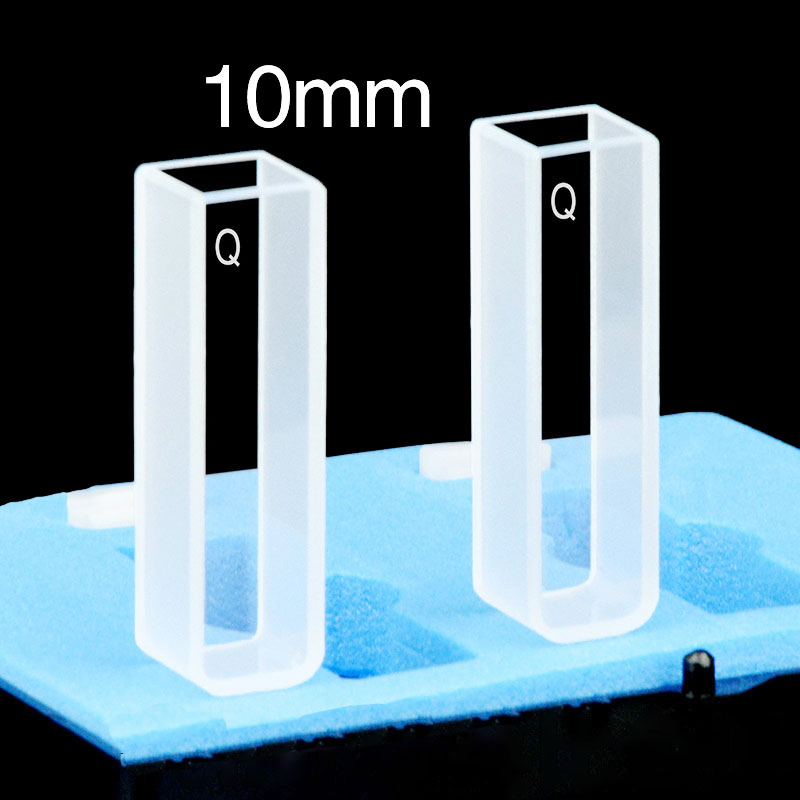
Standard 10 mm · JGS1 · UV-Vis
4-window fluorescence · JGS1 · low autofluorescence
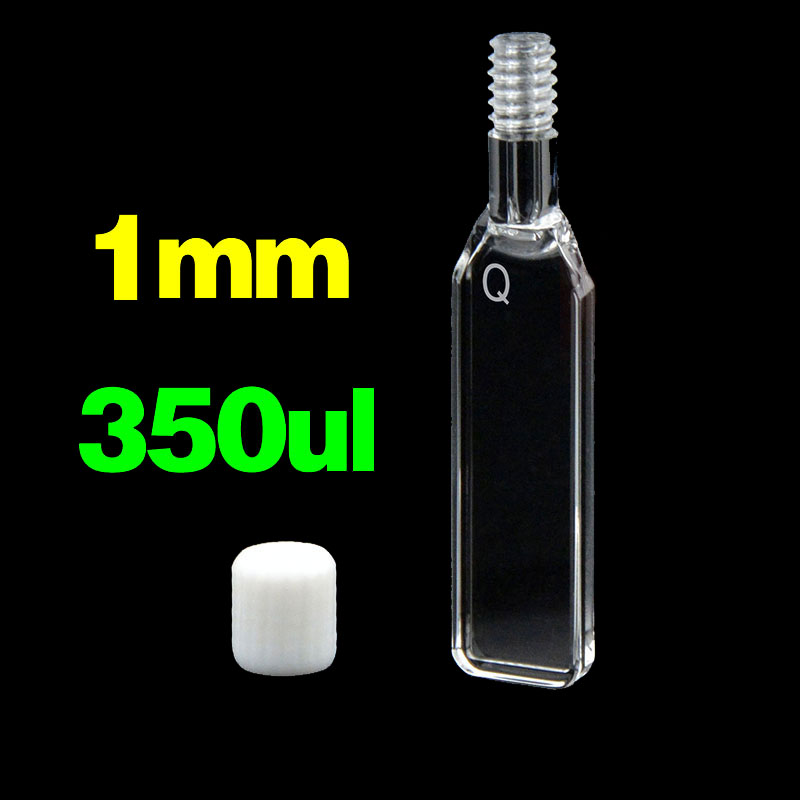
With PTFE stopper · UV-Vis · Starna 21-Q equivalent
Starna Scientific has manufactured spectrophotometer cells since 1964 and is widely regarded as one of the most precise cuvette producers in the industry. Their Spectrosil quartz (a trade name for high-OH synthetic fused silica) is specified in many academic and industrial methods. But there are several practical reasons why labs and procurement teams look for alternatives:
Cost pressure
A standard Starna 1-Q-10 retails at $140–$155 per cell at distributors. A matched-spec JGS1 alternative costs $40–$80 — a 50–65% saving that matters when outfitting multiple instruments or replacing broken cells.
Lead time
Starna cells are UK-manufactured and often distributed through regional distributors with 2–6 week lead times. JGS1 alternatives from direct manufacturers typically ship in 5–8 business days.
Method flexibility
Some labs inherit Starna-specified methods but need to validate with alternative suppliers for cost or supply chain reasons. JGS1 quartz meets the same optical standard as Spectrosil for all practical UV-Vis and fluorescence applications.
Starna’s quality is not in question — this guide is for situations where equivalent optical performance is available at lower cost, faster delivery, or with more flexible minimum order quantities.
Section 2
Specification Comparison: Starna vs JGS1 Alternatives
The table below compares key specifications between standard Starna Spectrosil cells and JGS1 quartz alternatives. For the most common use case — UV-Vis absorbance and fluorescence spectroscopy — the specifications are functionally equivalent.
| Specification | Starna Spectrosil (1-Q series) | JGS1 Alternative (MachinedQuartz) | Match? |
|---|---|---|---|
| Window material | Spectrosil® (synthetic fused silica) | JGS1 synthetic fused silica | Equivalent |
| UV transmission range | 170–2700 nm | 185–2500 nm (JGS1) | Equivalent |
| External dimensions | 12.5 × 12.5 × 45 mm | 12.5 × 12.5 × 45 mm | Identical |
| Window thickness | 1.25 mm | 1.25 mm standard | Identical |
| Path length tolerance | ±0.01 mm (certified) | ±0.01–0.05 mm (grade dependent) | Verify grade |
| Parallelism | <0.01 mm | <0.01–0.05 mm (Standard 80 grade) | Verify grade |
| Serial number / traceability | Laser-engraved, unique serial | Batch number, certificate available | Partial |
| Pressure tested | Yes, beyond 5 bar | Visual inspection + leak test | Partial |
| PTFE stopper included | Cover included (open top) | PTFE stopper available | Equivalent |
| Z height | Universal (15 mm standard) | Universal (15 mm standard) | Identical |
| Autofluorescence | Very low (Spectrosil grade) | Very low (JGS1 grade) | Equivalent |
| Chemical resistance | Excellent (HF excluded) | Excellent (HF excluded) | Identical |
Key takeaway: For standard UV-Vis and fluorescence applications, JGS1 quartz meets or exceeds the optical requirements of Starna Spectrosil cells. The primary difference is individual serialisation and the independent pressure-test certification that Starna includes with every cell — relevant for regulated environments (GLP/GMP) but not required for most research labs.
Section 3
Starna Series Cross-Reference
Starna uses a type-number system (1, 3, 16, 18, 20, 21…) combined with a material suffix (Q = Spectrosil quartz, G = glass, I = Infrasil IR quartz) and path length. The table below maps the most commonly ordered Starna series to JGS1 equivalents.
| Starna series | Description | Path lengths | JGS1 equivalent |
|---|---|---|---|
| 1-Q | Standard rectangular, open top, 2-window | 1–100 mm | Standard UV-Vis cuvette, JGS1, open top |
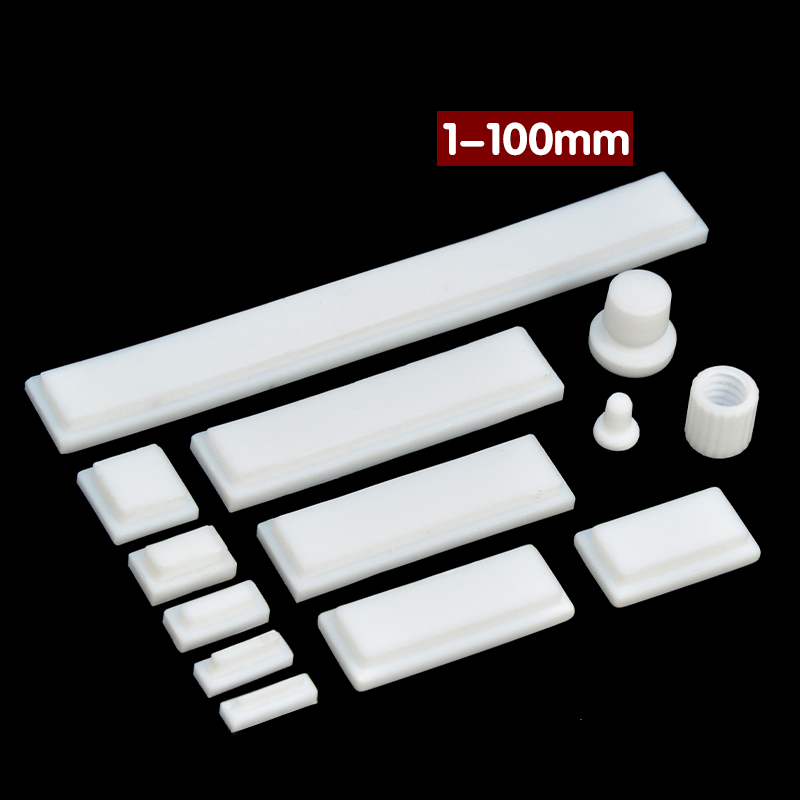
| 21-Q | Standard rectangular + PTFE stopper, 2-window | 1–100 mm | Standard UV-Vis cuvette, JGS1, with PTFE stopper |
| 3-Q | Fluorescence, 4-window, open top | 5–20 mm | 4-window fluorescence cuvette, JGS1 |
| 3/Q/10/GL14-C | Fluorescence, 4-window, screw cap | 10 mm | 4-window JGS1 with cap |
| 18-Q | Micro rectangular, 2-window, reduced volume | 5–50 mm | Micro cuvette, JGS1, reduced internal width |
| 16-Q | Sub-micro, multiple Z heights available | 10 mm | Sub-micro JGS1, Z8.5 / Z15 / Z20 |
| 20-Q | Demountable, short path length | 0.01–1 mm | Demountable JGS1 cell, short path |
| 1-I | Standard rectangular, Infrasil (IR quartz) | 1–100 mm | Standard JGS3 (IR quartz), open top |
| 1-SOG | Standard rectangular, special optical glass | 1–100 mm | Standard optical glass cuvette, 320–2500 nm |
| DMV-BioCell | Ultra-micro, 2.5 µL, Z15 | 10 mm (2.5 µL) | Custom ultra-micro JGS1 (contact for quote) |
Most common substitution: The Starna 1-Q-10 (standard 10 mm, open top) and 21-Q-10 (10 mm with PTFE stopper) account for the majority of Starna cuvette orders. Both have direct JGS1 equivalents with identical external dimensions and optical performance.
Section 4
Price Comparison
Pricing below is based on distributor list prices for Starna cells and MachinedQuartz direct pricing for JGS1 equivalents. Starna pricing varies by distributor; the figures below reflect typical US distributor pricing.
Starna 1-Q-10 (standard 10 mm)
$140 – $155
Per cell, US distributor list price. UK-manufactured, laser-serialised, individual certificate of path length. Lead time 2–6 weeks via distributor.
JGS1 Standard 10 mm (MachinedQuartz)
$45 – $80
Per cell, direct pricing. JGS1 synthetic fused silica, 12.5 × 12.5 × 45 mm, identical external dimensions. Ships in 5–8 business days. Batch certificate included.
| Starna model | Starna list price (est.) | JGS1 alternative price | Saving |
|---|---|---|---|
| 1-Q-10 (std 10 mm, open) | $140–$155 | $45–$80 | 50–68% |
| 21-Q-10 (10 mm + stopper) | $155–$175 | $55–$90 | 48–65% |
| 1-Q-1 (1 mm path) | $128–$142 | $60–$95 | 33–57% |
| 3-Q-10 (fluorescence 4-window) | $200–$280 | $80–$130 | 50–60% |
| 18-Q-10 (micro) | $220–$300 | $90–$150 | 45–55% |
| 20-Q-0.1 (demountable 0.1 mm) | $400–$600 | Contact for quote | — |
For a typical research lab replacing 4 standard cuvettes per year, switching to JGS1 alternatives saves approximately $300–$450 annually. For core facilities or OEM instrument manufacturers buying in volume, the savings scale proportionally.
Section 5
Spectrosil vs JGS1: Are They the Same Quartz Grade?
Starna uses the trade name Spectrosil® (manufactured by Saint-Gobain/Momentive) for their UV-grade quartz. The generic industry equivalent is JGS1 (China GB/T standard) or broadly labelled “UV-grade synthetic fused silica.” Understanding the relationship between these names matters when validating a substitution.
Spectrosil® (Starna)
Trade name · Saint-Gobain / Momentive origin
- High-OH synthetic fused silica
- UV transmission: 170–2700 nm
- OH content: ~1000 ppm (high-OH)
- Extremely low metallic impurities
- Individual unit serial number + certificate
- Heat-fused construction (no adhesive)
JGS1 (Generic)
Grade designation · Chinese GB/T national standard
- High-OH synthetic fused silica
- UV transmission: 185–2500 nm
- OH content: ~1000 ppm (high-OH)
- Low metallic impurities (vendor-dependent)
- Batch certificate; individual serial optional
- Heat-fused or optical cement (vendor-dependent)
Both materials are high-OH synthetic fused silica with the same fundamental optical and chemical properties. The practical differences are in the certification chain (individual vs. batch), construction method, and the deep-UV cutoff (effectively ~185 nm for both — identical for all UV-Vis applications). The difference at the top end (2700 nm vs. 2500 nm) only matters for near-infrared work beyond 2500 nm, which is uncommon in standard laboratory spectroscopy.
For regulated environments (GLP/GMP): Starna’s individual serialisation and independent path length certification may be required by your SOPs. For research, teaching, or quality control labs without strict traceability requirements, JGS1 batch certificates are fully adequate.
See our quartz vs glass cuvette guide for a full comparison of JGS1, JGS2, and JGS3 grades, or the cuvette selection guide for application-based material selection.
Section 6
Instrument Compatibility
Starna cuvettes are manufactured to NIST/ISO standard external dimensions (12.5 × 12.5 mm footprint, 45 mm height for standard cells). All quality JGS1 alternatives follow the same standard, ensuring physical fit in any instrument that accepts Starna cells.
| Instrument brand | Compatible with Starna 1-Q? | Compatible with JGS1 alternative? | Notes |
|---|---|---|---|
| Agilent / Varian Cary series | Yes | Yes | Standard holder, universal Z |
| Shimadzu UV series | Yes | Yes | Standard holder, universal Z |
| PerkinElmer Lambda series | Yes | Yes | Standard holder, universal Z |
| Thermo NanoDrop (pedestals) | N/A | N/A | Pedestal system — no cuvette holder |
| Thermo GENESYS / Spectronic | Yes | Yes | Standard holder, universal Z |
| Horiba FluoroMax / Spex | Yes | Yes | 4-window required for fluorescence |
| JASCO V series | Yes | Yes | Standard holder, universal Z |
| Hitachi U series | Yes | Yes | Standard holder, universal Z |
| Biotek Epoch / Synergy (plate readers) | N/A | N/A | Plate reader — cuvette adapter needed |
For instruments with non-standard Z heights (e.g. 8.5 mm, 20 mm), verify the Z dimension before ordering. See our Z dimension guide for a full instrument compatibility lookup. Starna 16-Q sub-micro cells come in Z8.5, Z15, and Z20 configurations — confirm which your instrument requires before substituting.
Section 7
Who Switches — and Why
Research labs
Labs running hundreds of UV-Vis measurements per year. Starna quality is recognised but the per-cell cost becomes significant at scale. JGS1 alternatives are validated in-house and used for routine work; Starna cells retained for calibration reference or GLP submissions.
Core facilities
Shared instrument facilities managing consumable budgets across many user groups. Switching reduces consumable spend without affecting measurement quality, which is validated across multiple instruments and user protocols.
OEM & instrument manufacturers
Instrument manufacturers bundling cuvettes with spectrophotometers. JGS1 alternatives at volume pricing allow competitive instrument package pricing without compromising the optical specifications customers expect.
A common pattern: labs start with Starna for all applications, then segregate — Starna cells for method development, GLP work, or publication-quality data; JGS1 alternatives for daily screening, student use, or high-turnover applications where breakage is expected.
Section 8
Decision Guide: Should You Switch?
Step-by-step: Starna vs JGS1 alternative
1
Is individual cell serialisation required by your SOP?
Yes (GLP/GMP regulated environment) — Starna provides individual laser-engraved serial numbers and path length certificates that may be required for audit trails. Switching requires SOP update and revalidation.
No — continue to step 2.
Yes (GLP/GMP regulated environment) — Starna provides individual laser-engraved serial numbers and path length certificates that may be required for audit trails. Switching requires SOP update and revalidation.
No — continue to step 2.
2
Is your measurement wavelength below 185 nm?
Yes — both Spectrosil and JGS1 have the same 185 nm lower limit; this is not a differentiating factor for either option.
No — both are suitable; continue.
Yes — both Spectrosil and JGS1 have the same 185 nm lower limit; this is not a differentiating factor for either option.
No — both are suitable; continue.
3
Do you need path length accuracy better than ±0.01 mm?
Yes — request Standard 80 or certified grade JGS1 with tolerance documentation. MachinedQuartz Standard 80 process achieves ±0.01–0.02 mm.
No (±0.05 mm acceptable) — any JGS1 alternative is suitable.
Yes — request Standard 80 or certified grade JGS1 with tolerance documentation. MachinedQuartz Standard 80 process achieves ±0.01–0.02 mm.
No (±0.05 mm acceptable) — any JGS1 alternative is suitable.
4
Is supply chain continuity critical (e.g. instrument service contract)?
Yes — evaluate whether a JGS1 supplier can commit to consistent stock and delivery. MachinedQuartz ships in 5–8 days from stock or fabrication.
No — proceed with JGS1 alternative.
Yes — evaluate whether a JGS1 supplier can commit to consistent stock and delivery. MachinedQuartz ships in 5–8 days from stock or fabrication.
No — proceed with JGS1 alternative.
5
Are you buying in volume (10+ cells)?
Yes — volume pricing from a direct JGS1 manufacturer will further improve the cost saving beyond the standard 50–65% shown above. Contact for quote.
No — standard pricing applies; saving is still 50–65% per cell.
Yes — volume pricing from a direct JGS1 manufacturer will further improve the cost saving beyond the standard 50–65% shown above. Contact for quote.
No — standard pricing applies; saving is still 50–65% per cell.
Bottom line: For most research, teaching, and QC labs that do not require individual serialisation under GLP/GMP, JGS1 alternatives provide identical optical performance to Starna Spectrosil cells at 50–65% lower cost and shorter lead times.
Section 9
Custom and Special-Purpose Cuvettes
Starna offers an extensive range of non-standard cells — demountable short-path cells (20-Q series, 0.01–1 mm), flow-through cells, ultra-micro cells (DMV-BioCell, 2.5 µL), and temperature-controlled jacketed cells. For most of these, JGS1 custom fabrication is available as an alternative.
| Starna special type | JGS1 custom alternative available? | Notes |
|---|---|---|
| 20-Q demountable (0.01–1 mm) | Yes | Short path demountable, custom spacer thickness |
| Flow-through cells | Yes | Standard and custom internal volume; inline fittings |
| DMV-BioCell (2.5 µL, Z15) | Contact for quote | Ultra-micro; requires tight fabrication tolerance |
| Temperature-jacketed cells | Contact for quote | Custom jacketed design with port fitting |
| Septum-capped cells (GL14) | Yes | PTFE-lined cap; compatible with autosampler systems |
| Matched pair cells | Yes | Paired cells within ±0.005 mm path length tolerance |
MachinedQuartz fabricates custom quartz cuvettes using three processes — Standard 80, Sintered 80, and Sintered 83 — each suited to different tolerance and geometry requirements. See the custom cuvette fabrication page for details, or the fabrication method guide for a process comparison. For Hellma alternatives, see our Hellma cuvette alternative guide.
Need a Starna-compatible JGS1 cuvette?
Browse standard JGS1 quartz cuvettes or request a quote for custom path lengths, special geometries, or volume orders.
Browse cuvette catalog Custom quartz cuvettes Request a quoteSection 10
Frequently Asked Questions
Is JGS1 quartz the same material as Starna Spectrosil?
Functionally yes. Both are high-OH synthetic fused silica with UV transmission from 185 nm. “Spectrosil” is Starna’s trade name for their sourced material (originally from Saint-Gobain/Momentive); JGS1 is the equivalent generic grade designation under the Chinese GB/T national standard. The optical and chemical properties are the same for all standard UV-Vis and fluorescence applications.
Will a JGS1 cuvette physically fit my instrument if I currently use Starna 1-Q cells?
Yes, provided the alternative meets the standard NIST/ISO external dimensions: 12.5 × 12.5 mm footprint, 45 mm height. Starna 1-Q cells and all standard JGS1 alternatives share these dimensions. For instruments requiring specific Z heights (8.5 mm, 20 mm), confirm the Z dimension before ordering — see our Z dimension guide.
Can I use a JGS1 alternative in a GLP or GMP regulated lab?
It depends on your SOP requirements. If your method specifies “Starna Spectrosil” by name, switching requires a formal validation and SOP amendment. If your method specifies “UV-grade quartz cuvette” or “fused silica cuvette” generically, a JGS1 alternative with a batch certificate of conformance can usually be substituted without major revalidation. Consult your QA team for the specific requirement in your environment.
What is the equivalent of the Starna 3-Q fluorescence cell in JGS1?
The Starna 3-Q series (4-window fluorescence cells) corresponds to a 4-window JGS1 quartz cuvette with all four faces optically polished. The standard 3-Q-10 (10 mm path, four windows) has a direct JGS1 equivalent. For fluorescence spectroscopy, JGS1’s very low autofluorescence is equivalent to Spectrosil — both are suitable for FRET, tryptophan fluorescence, and low-concentration fluorophore measurements.
How do I validate a JGS1 cuvette as a Starna replacement?
A straightforward validation protocol: (1) Measure path length with a calibrated spectrophotometer using a standard solution (e.g. potassium dichromate or NIST-traceable UV standard) and compare absorbance values between the Starna cell and the JGS1 alternative. (2) Run a UV blank scan from 190–400 nm to verify transmission onset. (3) For fluorescence, run a background scan with solvent to compare autofluorescence levels. Agreement within ±1% absorbance is typically acceptable for research applications.
Does MachinedQuartz offer matched pairs like Starna?
Yes. Matched pair cuvettes (two cells paired within ±0.005 mm of each other in path length) are available on request. This is particularly useful for dual-beam spectrophotometers where the reference and sample cells must be optically equivalent. Contact us with your path length requirement and tolerance specification.
Why You Can Trust This Page
AuthorMachinedQuartz Technical Team
Reviewed byBryan Wright (Founder, 13+ yrs at MQ)
Production base1,300+ catalog SKUs · 40+ countries shipped
Last updatedApril 29, 2026 · Next review Oct 2026
Background: Cross-reference data, transmission specs, and tolerance comparisons in this guide are based on MQ's customer-quote history with Starna-displaced accounts. This guide is published by MachinedQuartz, a specialty UV quartz cuvette manufacturer producing 1,300+ catalog SKUs since 2026. Where third-party standards apply, we cite ISO 17025, ISO 17034, and NIST SRM directly.
References & Standards
Further reading


Recent Comments