
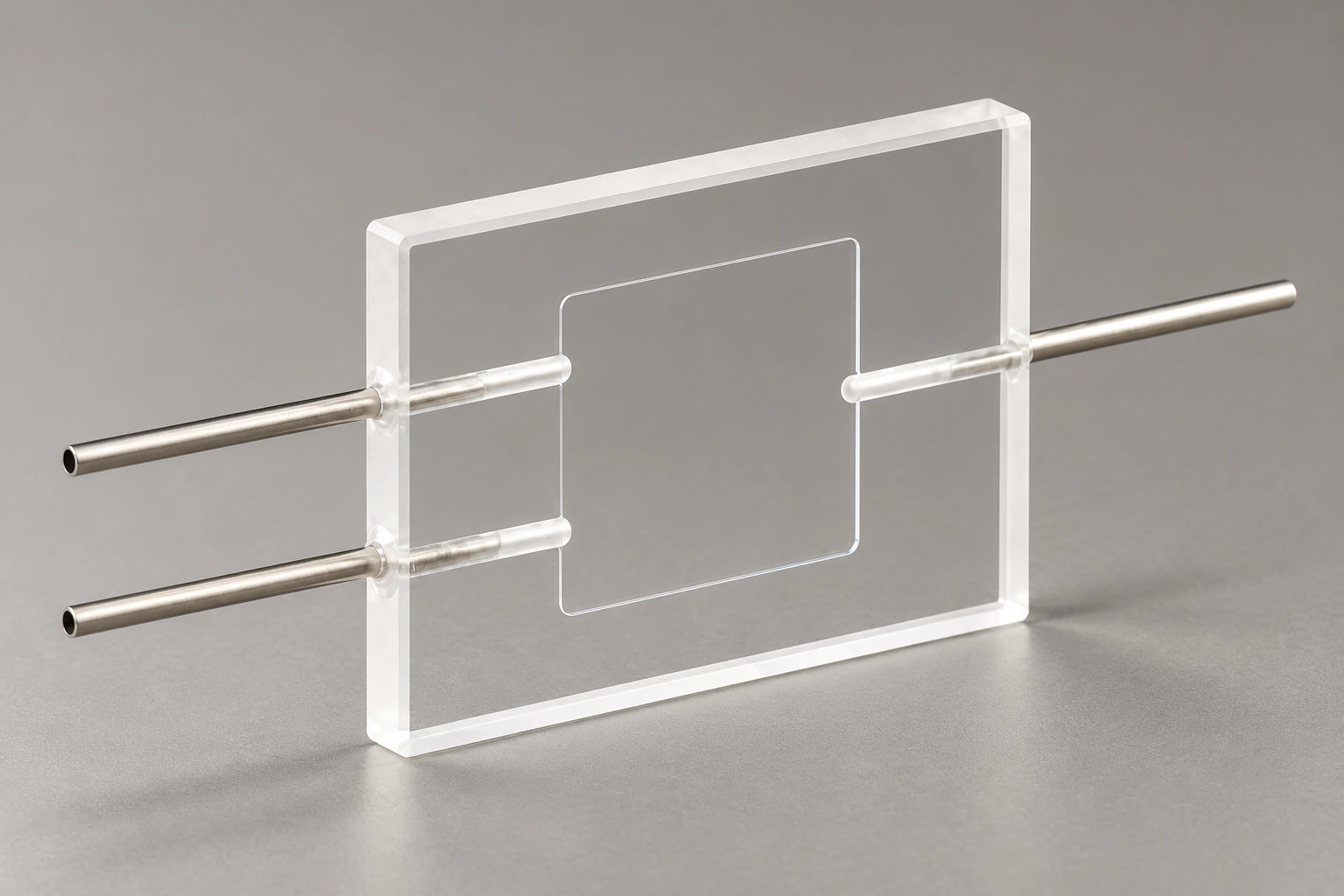
Asymmetric Three-Tube Quartz Counting Cell: Assigning the Tube Roles
Custom Design Guides · MQQFC102
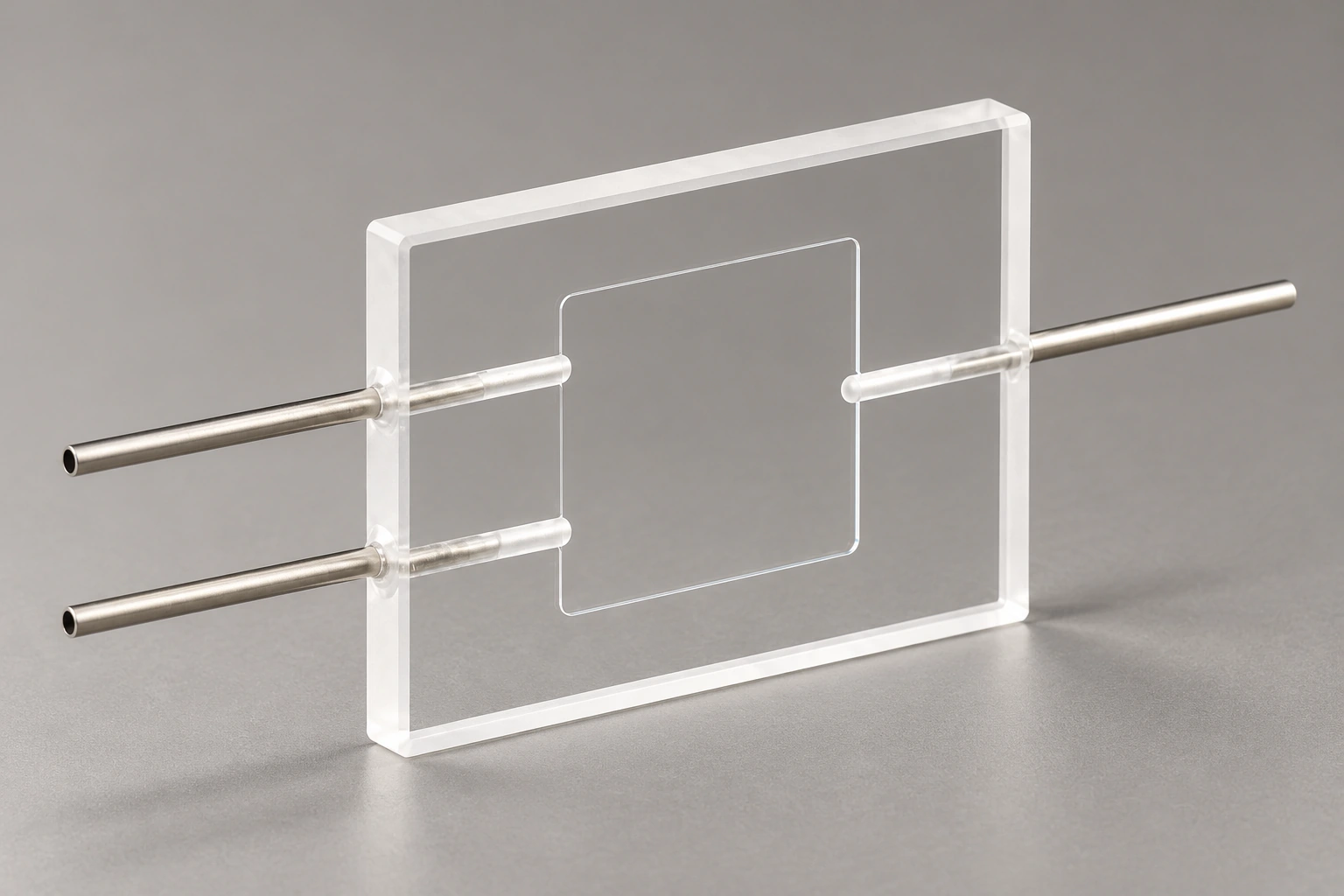
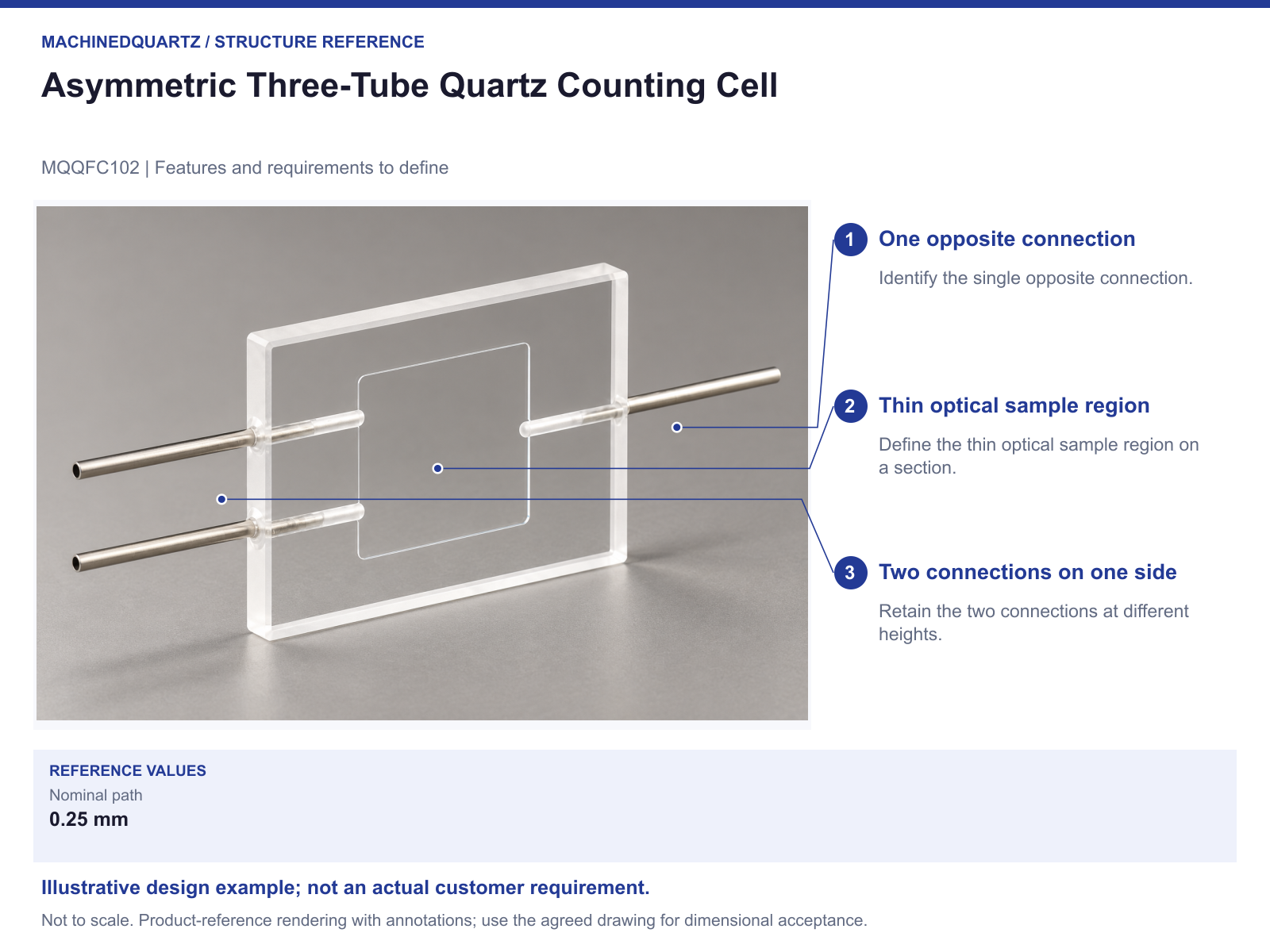
MQQFC102 is the nominal 0.25 mm path quartz-cell reference with three tubes: two on one side and one on the other. Two viewing window directions are described for the reference.
The asymmetric connections are the reason to start with a labelled circuit. They do not, by themselves, establish a three-channel or sheath-flow design.
In this guide: Configuration · Design comparison · Number the two-plus-one connections · Keep the thin optical gap separate from the outside body · Review the line approach on both sides · Define the fluid-handling requirement for the full circuit · Enquiry
The configuration discussed here
What changes from the simpler form?
The two-plus-one tube arrangement adds asymmetric line access around a thin sample-gap concept. The outside layout needs a labelled circuit; it does not establish sheath flow or separate channels.
Number the two-plus-one connections
Give each tube an identifier and draw its external destination. Identify any proposed shared or separate route explicitly rather than assigning inlet and outlet functions from the visible arrangement.
If the method depends on isolation or a particular interaction between streams, supply the required route and result. The reference does not establish those internal features.
Keep the thin optical gap separate from the outside body
The 0.25 mm designation describes the nominal sample path, not the outside thickness or a documented path tolerance. Show the clear optical region and its position relative to the holder.
If path accuracy matters, specify its acceptance requirement. A dimension label and a product rendering do not constitute an inspection result.
Review the line approach on both sides
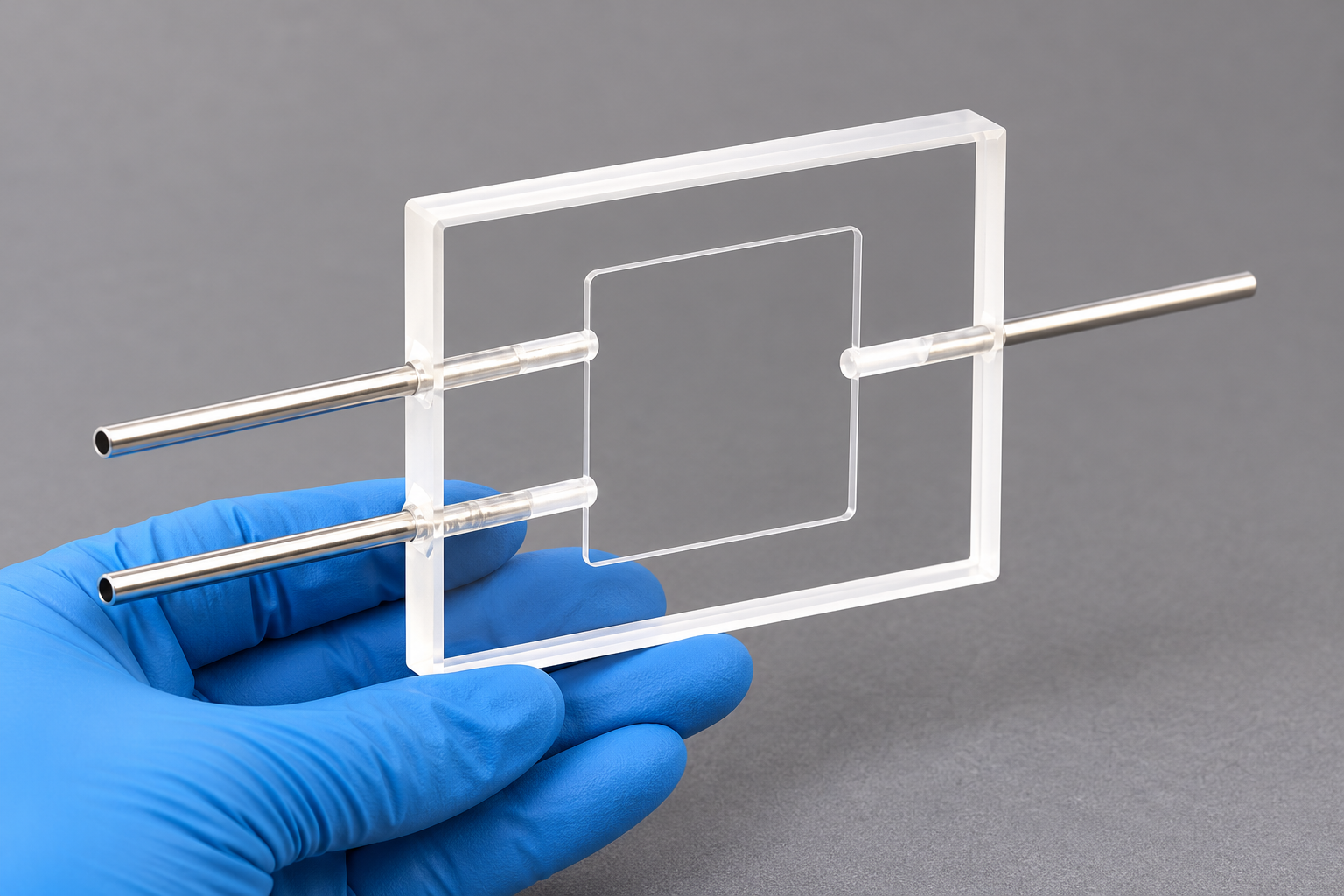
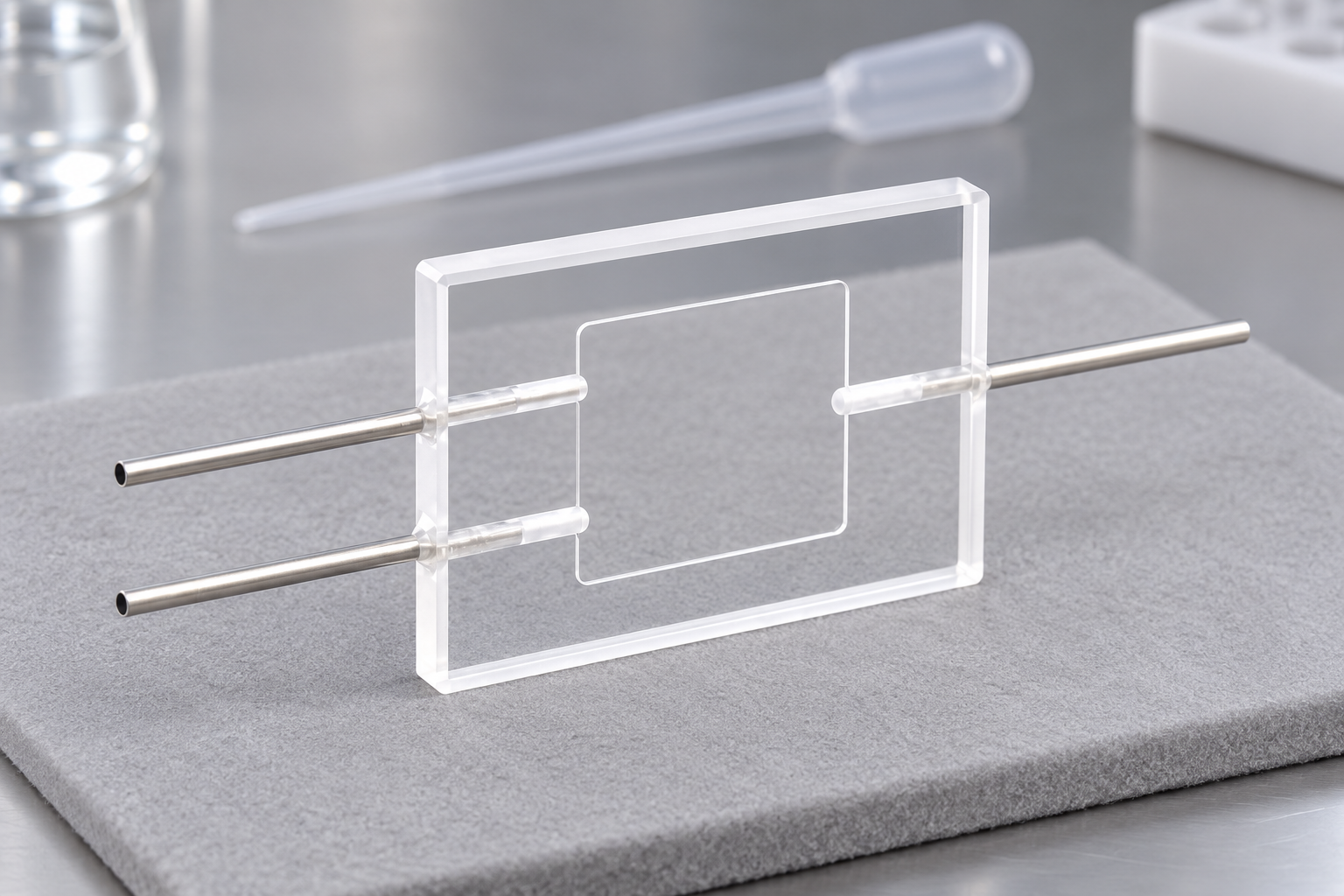
The two-tube side needs space for two connections and their line bends. Show the attached lines, service space and support contacts in the installed envelope.
For example, a connection-spacing change could be considered where a thin-path body suits the method but its lines conflict with a fixture. The body, window and route requirements should remain explicit during that review.
Define the fluid-handling requirement for the full circuit
State the sample conditions and the filling, exchange or other outcome the setup needs. Tube count does not provide a flow rate, pressure limit, dead volume or bubble-control result.
MQ can review the route, nominal gap and connected geometry with an agreed inspection scope. The useful acceptance drawing identifies each opening and the optical references without inventing hidden channels.
Structure reference and specification points
Download the structure reference (PDF)
Is the two-plus-one arrangement a sheath-flow cell?
That function is not established. A route drawing and method-specific requirements are needed before describing sheath flow, isolated channels or stream behaviour.
Send a drawing or the mating-part details
Send the labelled circuit beside the holder section. MQ can then review the asymmetric three-tube arrangement around the thin sample gap.
- Three numbered connections and complete external circuit
- Required internal route and stream relationship
- Path and clear-window acceptance requirements
- Holder contacts and line service envelopes
- Sample conditions and fluid-handling verification
Modified designs are reviewed for the project. The drawing, supplied parts, quantity, inspection scope, price and preparation or production time are agreed in the quotation.
Details to settle for the ordered configuration
Internal routes, path accuracy, operating limits and stream or optical performance require configuration-specific agreement.


Recent Comments