
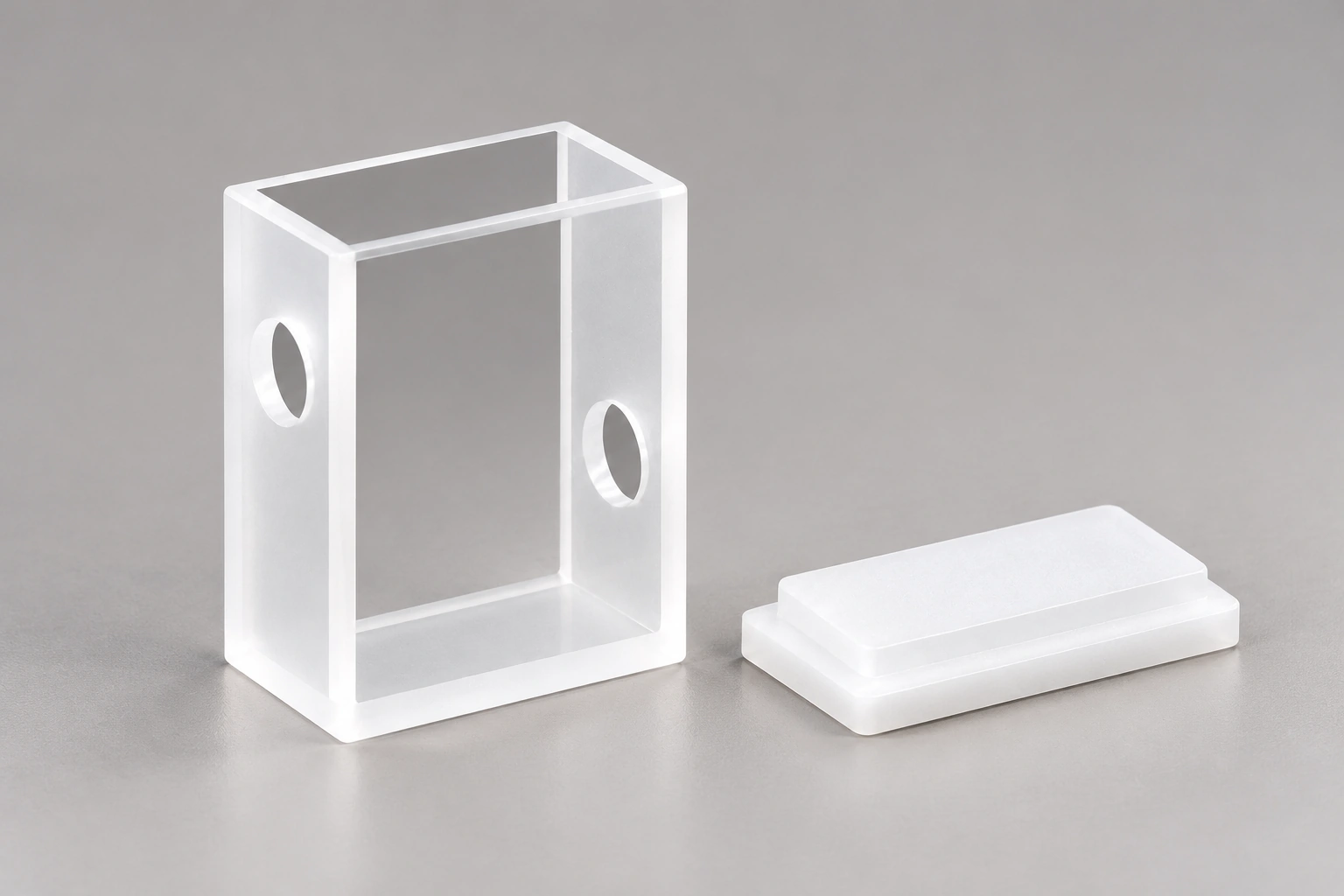
Quartz Cuvette with an Offset Hole: Locating the Opening from a Datum
MQQCU003 has opposed wall apertures and a separate lid. Hole positions, opening roles and optical access need to be specified together.
MQQCU003 has opposed wall apertures and a separate lid. Hole positions, opening roles and optical access need to be specified together.
Which cuvette survives your sample? 38 lab solvents rated against Standard 80, Sintered 80/83, and Molded 83 / 0.01 — cross-checked against Heraeus, Translume, FireflySci, and Norland.
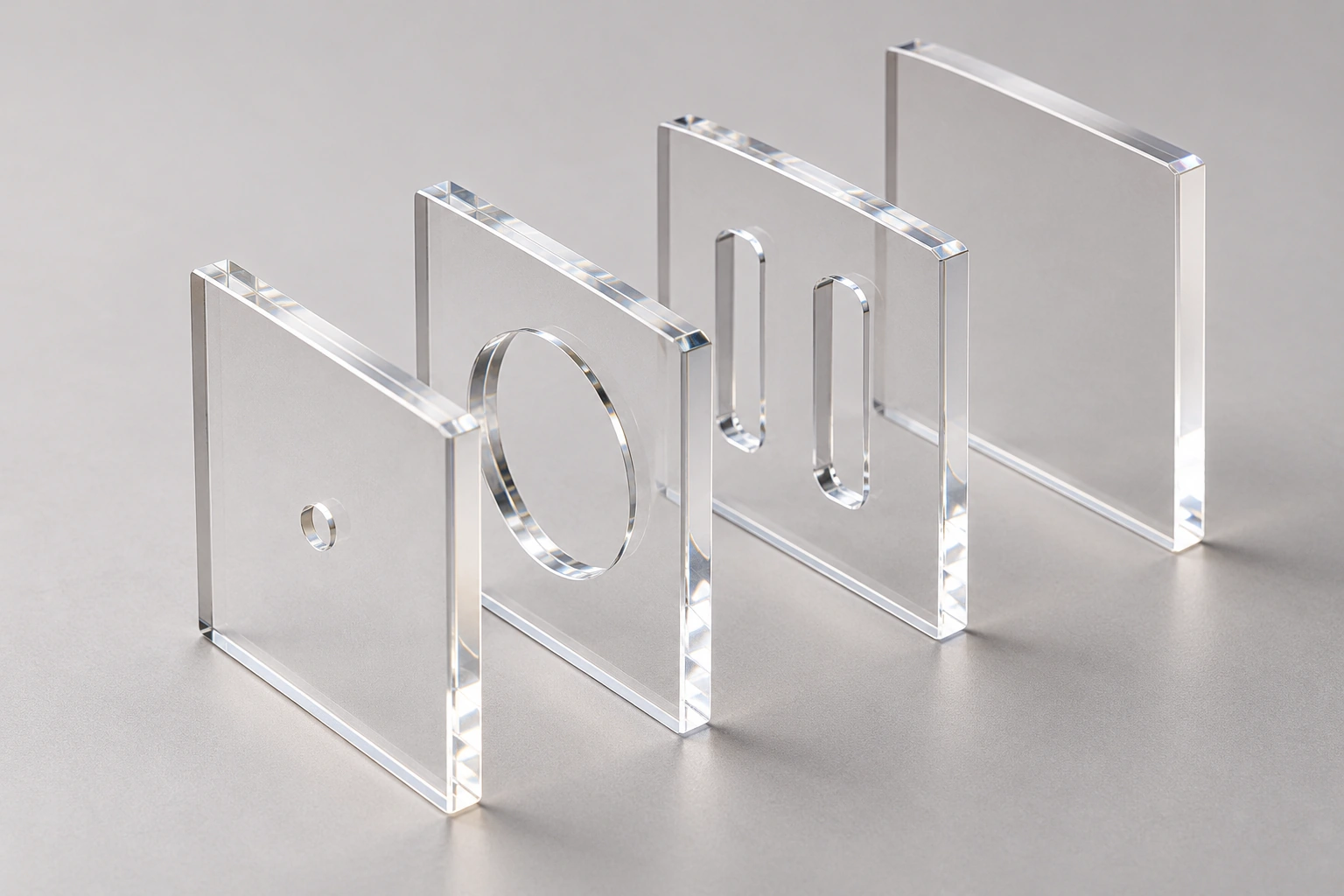
MQQCU008 illustrates quartz plates with different openings. A useful enquiry gives each part a name and locates every hole or slot before defining an assembly.
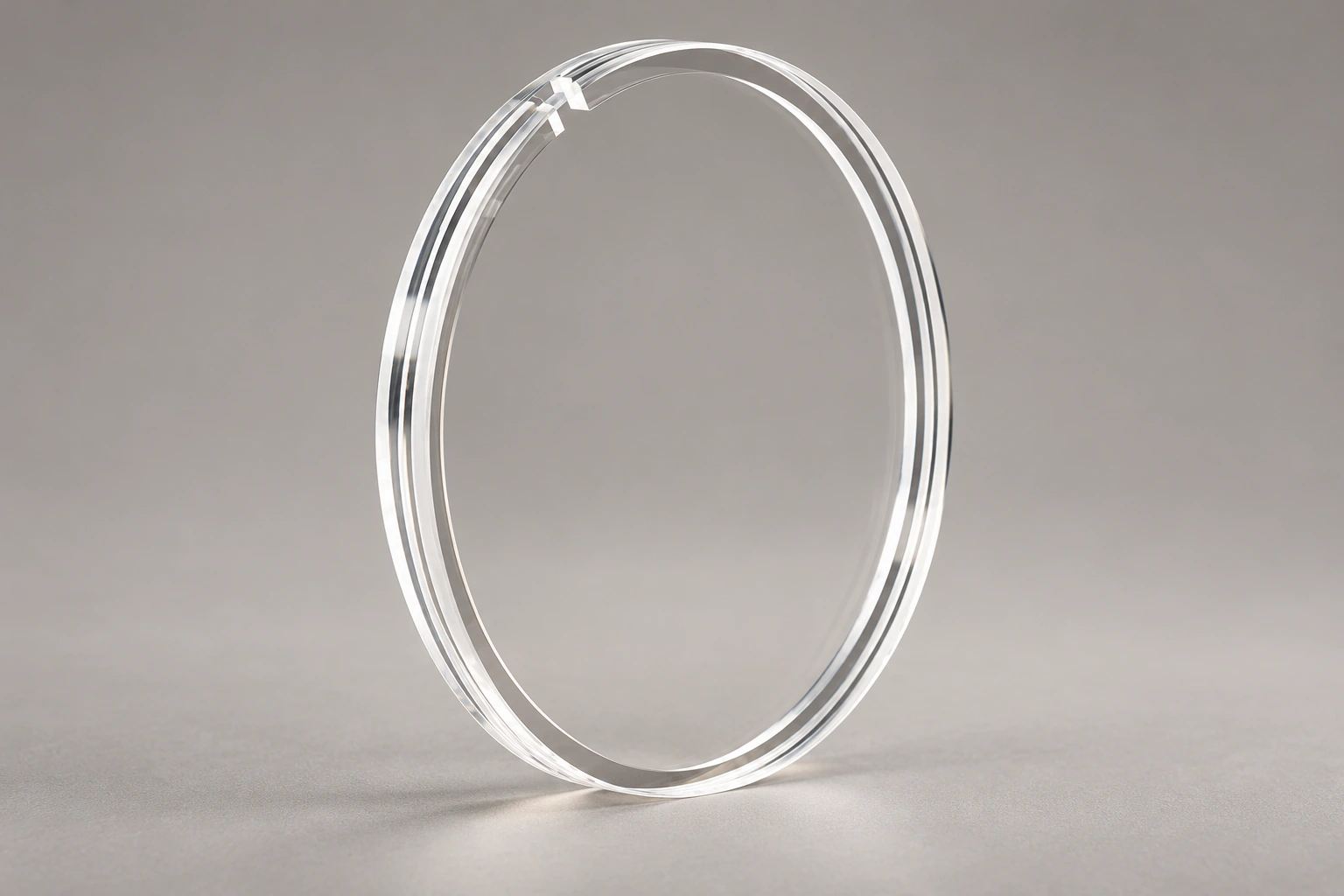
MQQCU019 has a small square opening at the edge of a thin circular body. Tool access and the proposed preparation route need review before assigning a filling result.
A Starna cuvette alternative is a JGS1 quartz cuvette that matches Starna’s certified spectrophotometer cells (Starna 1-Q-10, 23-Q-10, etc.) at 20–35% lower cost. MachinedQuartz uses identical JGS1 quartz with ±0.005 mm parallelism, ships matched-pair sets with the same USP certificates, and offers shorter custom-spec lead times (4–6 weeks vs Starna’s 8–12). Cross-reference tables map every
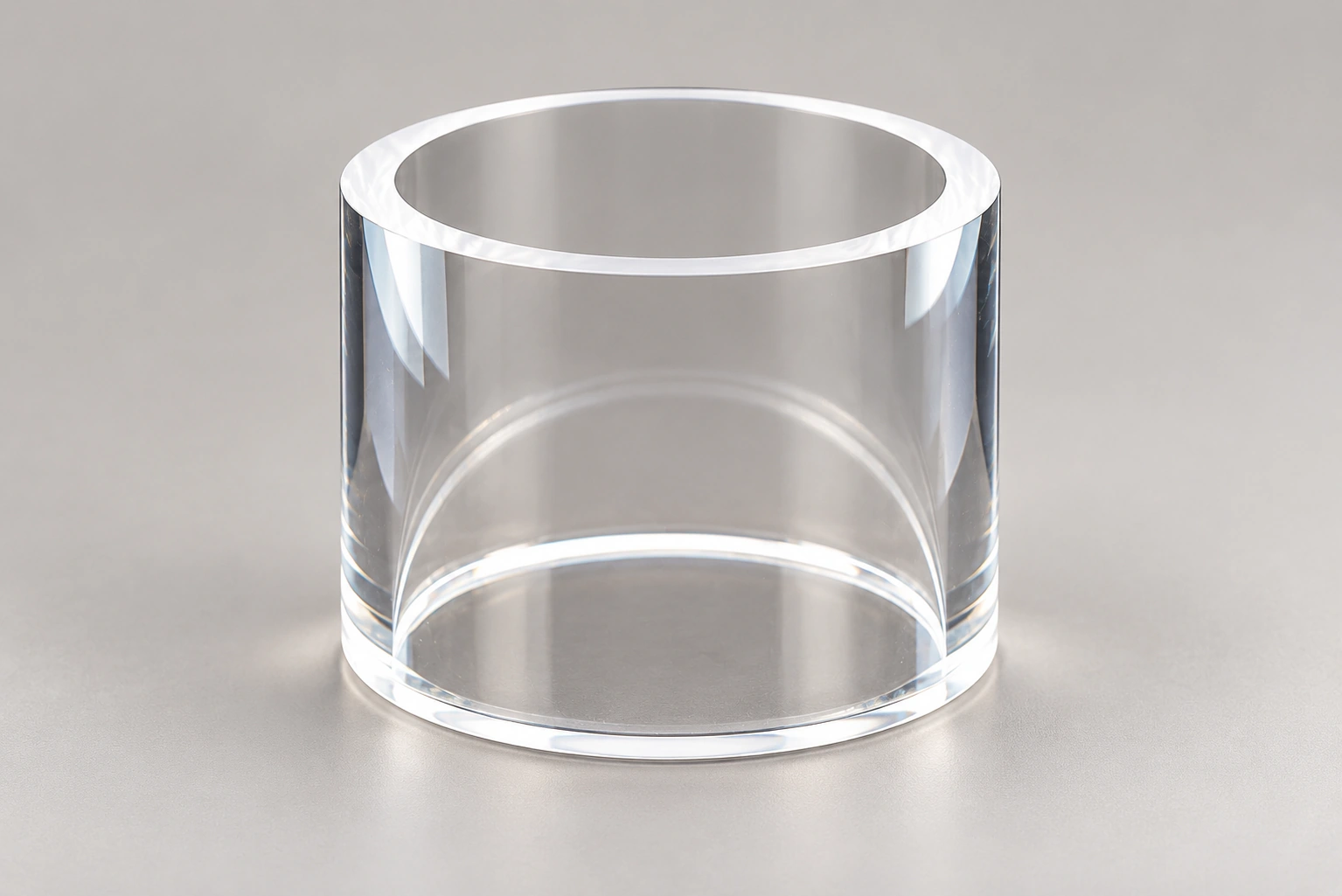
MQQIR003 is a quartz reflectance-cup reference. The sample surface and its position in the fixture matter separately from the container’s nominal capacity.
Compare Hellma QS cuvettes vs JGS1 quartz alternatives. Spec table, 100-QS / 104-QS cross-reference, pricing & instrument compatibility. Ships in 5-8 days.
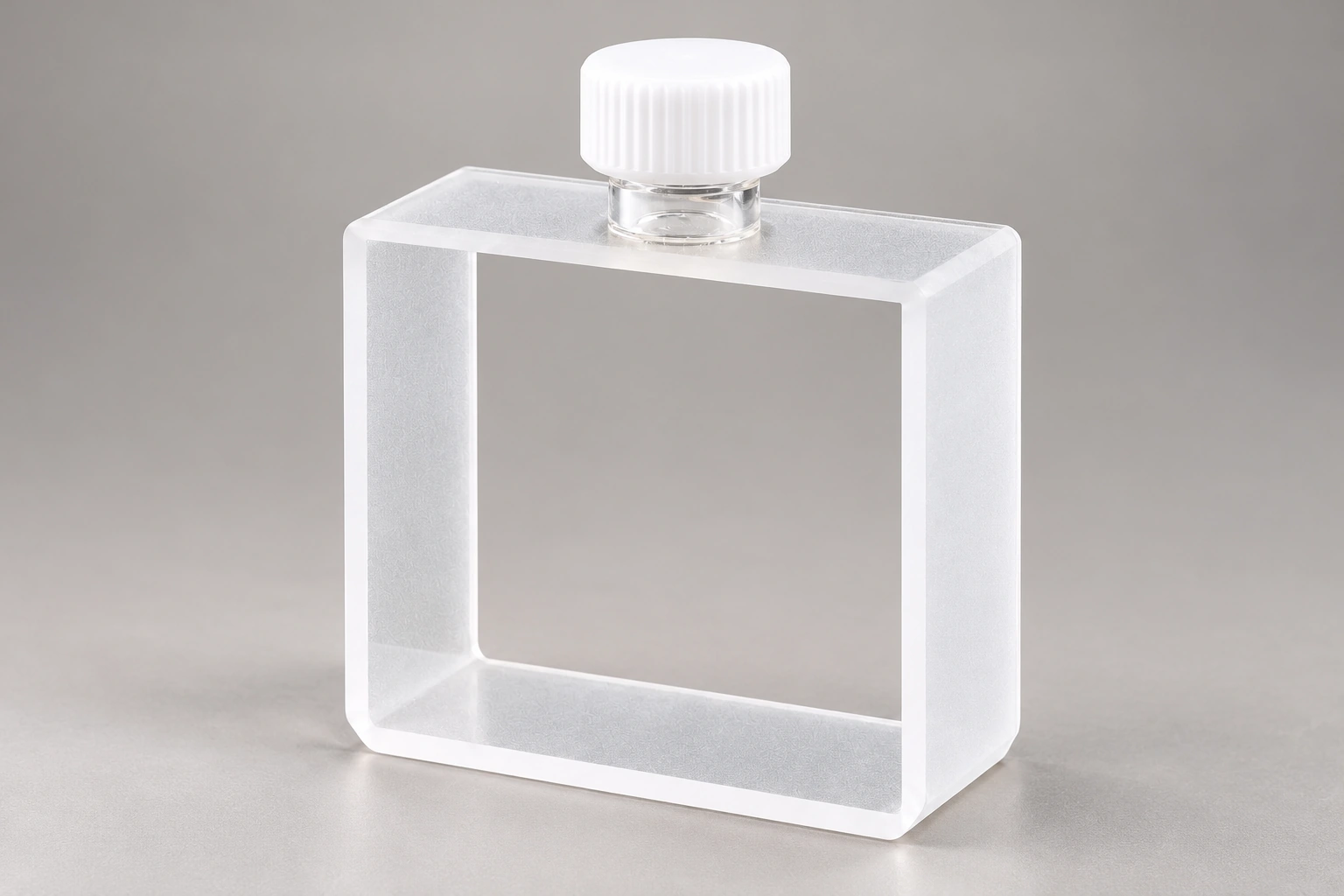
MQQSC015 combines a larger rectangular sample body with a narrower screw-neck opening. Capacity and neck access should be considered together.
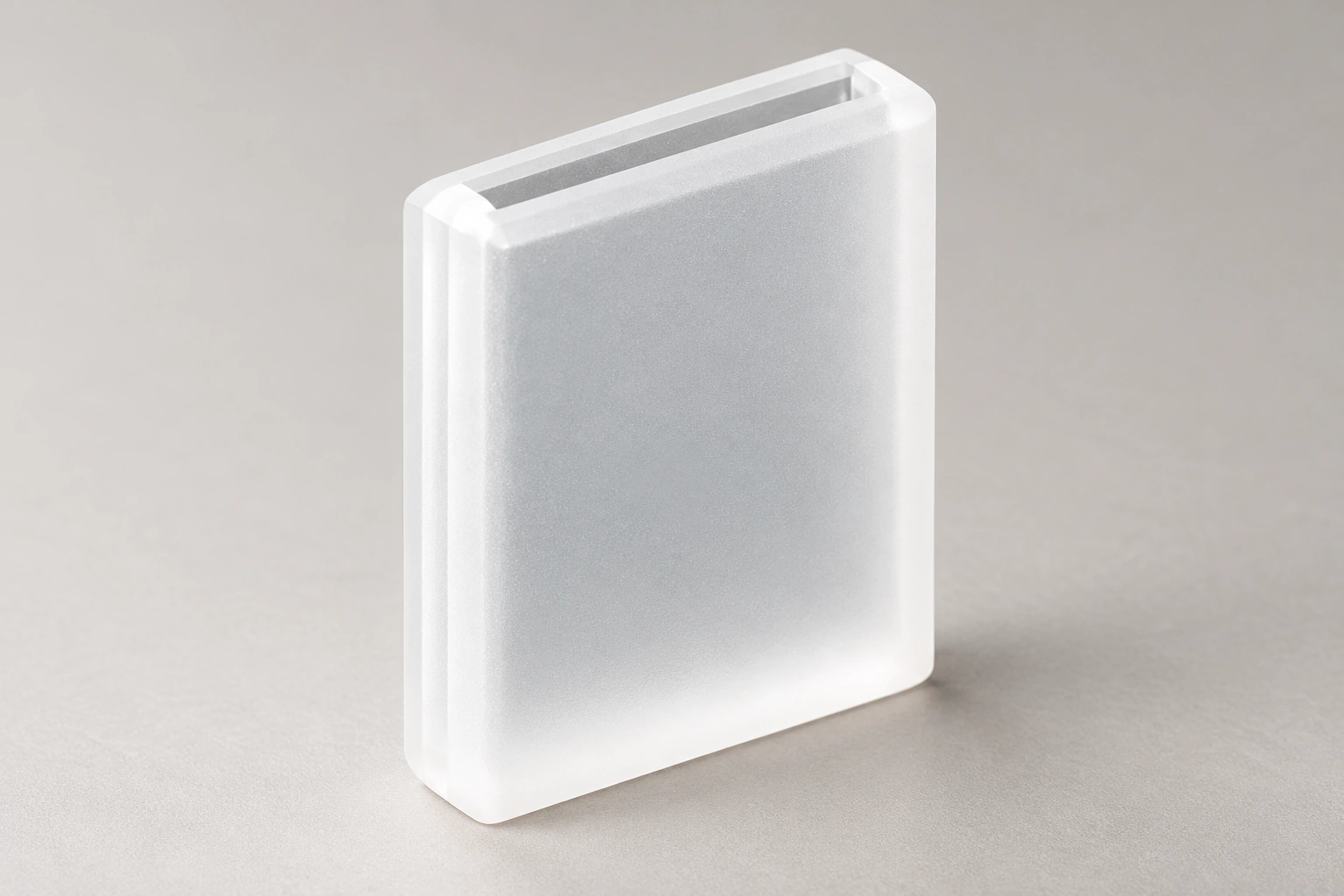
MQQCU005 is a small nominal 100 µL quartz pocket with five frosted faces. Its surface finish should be treated as a real selection feature, not described as black masking or clear windows.
The quartz-vs-glass cuvette decision is primarily a wavelength question: quartz transmits 185–3,500 nm and is mandatory for any measurement below 320 nm (the UV cutoff of optical glass); optical glass transmits 350–2,000 nm and is cheaper for visible-only work. A secondary factor is chemical compatibility — quartz handles concentrated acids and 1,000 °C+ thermal shock


Recent Comments