

Lab Equipment Used for Liquids: 15 Essential Vessels Explained (2026)
Lab equipment used for liquids includes 15 essential vessels grouped by function: containers (beakers, bottles, flasks), measuring vessels (graduated cylinders, burets, volumetric flasks, pipets, micropipets), heating & reaction vessels (round-bottom flasks, retorts, condensers, distillation flasks), and specialty handling (separatory funnels, filter funnels, watch glasses, dropping bottles). Each category has a distinct precision class — graduated cylinders deliver ±1% volume, Class A volumetric flasks deliver ±0.05%, and micropipets deliver ±0.5%. Material choice (borosilicate, soda-lime, polypropylene, or quartz) depends on temperature, optical, and chemical requirements. Most labs use borosilicate glass; quartz is reserved for UV photochemistry below 320 nm, sustained temperatures above 600 °C, and trace-metal analysis at ppb levels. Last updated: June 2026.
⚗️
Why trust this guide? MachinedQuartz has supplied custom quartz labware to academic and industrial labs since 2026. This guide is cross-referenced against ASTM E542 (volumetric glassware), ISO 1042 (volumetric flasks), ISO 8655 (piston pipets), and the published specifications of Pyrex, Duran, Kimax, and Eppendorf.
On this page
- What is “lab equipment for liquids”?
- 4 functional categories at a glance
- Containers (beakers, bottles, flasks)
- Measuring vessels (cylinders, burets, pipets)
- Heating & reaction (RBF, condenser, distillation)
- Specialty handling (separatory, filter funnel)
- Material selection: borosilicate vs quartz vs plastic
- Precision class summary
- FAQ
What is “lab equipment for liquids”?
Lab equipment used for liquids refers to the glass, plastic, or quartz vessels that hold, measure, transfer, heat, mix, or separate liquid samples in a chemistry, biology, or analytical lab. Each vessel is engineered for one job: a beaker mixes, a volumetric flask measures, a buret titrates, a round-bottom flask refluxes, a separatory funnel separates phases. Using the wrong vessel for a job is the most common entry-level lab mistake — and the most easily avoided.
This guide categorizes the 15 most common pieces of liquid-handling labware, explains what each does, gives realistic precision specs, and flags the small number of cases where quartz is genuinely required instead of borosilicate glass.
4 functional categories at a glance
| Category | Function | Examples | Typical Precision |
|---|---|---|---|
| Containers | Hold, store, mix | Beakers, bottles, Erlenmeyer flasks | ±5–10% (not measuring vessels) |
| Measuring vessels | Quantify volume | Graduated cylinder, buret, volumetric flask, pipet, micropipet | ±0.05% (Class A volumetric) to ±1% (cylinder) |
| Heating & reaction | Boil, distill, reflux | Round-bottom flask, condenser, distillation flask, retort | Volume not the goal |
| Specialty handling | Separate, filter, dispense, observe | Separatory funnel, filter funnel, watch glass, dropping bottle | Task-specific |
Container
Cylindrical with spout. Mix & heat. Volume marks ±5% only.
Measuring
Tall, fine grad lines. Volume ±1%. Read meniscus at eye level.
Specialty
Two immiscible phases. Drain bottom via stopcock. Liquid-liquid extraction.
Containers — beakers, bottles, flasks
Beakers
Volume: 10 mL – 4 L Material: borosilicate, soda-lime, polypropyleneCylindrical vessels with a flat bottom and a small spout for pouring. Used to hold, mix, stir, and heat liquids. Volume markings (etched or printed) are accurate to about ±5% — beakers are NOT measuring vessels. Use them for: dissolving solids, transferring liquids during preparation, pre-mixing reagents, and as a “catch basin” under burets or funnels.
Standard beakers come in three shapes: low-form Griffin beakers (height = 1.4× diameter, the default), tall-form Berzelius beakers (height = 2× diameter, for taller reagent volumes), and flat beakers (crystallizing dishes) for evaporative crystallization.
Bottles
Volume: 30 mL – 20 L Material: glass (amber for light-sensitive), HDPE, PTFEUsed for storing reagents and samples short or long term. Choose by what’s inside: amber glass bottles block UV light (essential for photosensitive reagents like silver nitrate, sodium thiosulfate, many organics), HDPE plastic bottles for aqueous solutions and dilute acids/bases, PTFE bottles for HF and strong oxidizers that attack glass, and boston-round amber bottles are the standard for most organic-solvent storage.
Closure matters: PTFE-lined caps for solvent-resistant sealing; rubber septa for syringe access; ground-glass stoppers for highest seal quality but require greasing.
Erlenmeyer flask
Volume: 25 mL – 4 L Material: borosilicate or quartzConical body with a flat bottom and a narrow neck — designed for swirling and mixing without splashing. The narrow neck reduces evaporation and lets you stopper the flask easily. Used for: titration (where the analyst swirls the flask while adding titrant from a buret), crystallization, dissolution of solids, and simple non-precision storage. Volume marks accurate to ±10%; not a measuring vessel.
For a deep dive on the 14 lab flask types, see our laboratory flasks guide.
Measuring vessels
Graduated cylinder
Volume: 5 mL – 2 L Tolerance: ±1% (Class A) or ±2% (Class B)Tall, narrow cylinder with fine graduation lines along the body. Used for routine volume measurement when ±1% precision is sufficient — the standard tool for transferring known volumes of solvent into reactions, diluting concentrated reagents to approximate concentration, or measuring volumes that don’t need to be exact.
Read at eye level: position your eye at the meniscus to avoid parallax error. For water-based solutions the meniscus is concave (read from the bottom); for mercury it’s convex (read from the top). For higher precision, use a volumetric flask or buret instead.
Buret (burette)
Volume: 10 mL – 100 mL Tolerance: ±0.05 mL (Class A 50 mL)A long, vertical glass tube with fine graduation marks and a stopcock at the bottom — used for adding titrant dropwise into an Erlenmeyer flask during titration. The stopcock controls flow precisely; reading the meniscus before and after gives the volume delivered to within 0.05 mL on a Class A 50 mL buret.
Modern automatic burets use a piston-driven syringe and digital readout for ±0.01 mL precision and elimination of meniscus-reading error. Use them for: acid-base titration, redox titration, Karl Fischer water determination, complexometric titration (EDTA).
Volumetric flask
Volume: 1 mL – 5 L Tolerance: ±0.05% (Class A at 20 °C)Pear-shaped flask with a single calibration mark on a long, narrow neck. Calibrated to contain (TC) an exact volume at 20 °C — a 250 mL Class A volumetric contains 250.00 ± 0.12 mL when the meniscus touches the mark. Use it for: preparing standard solutions of precise concentration, serial dilutions for calibration curves, any analytical work where ±0.1% volume accuracy matters.
Never heat a volumetric flask: heating distorts the calibration permanently. Class A meets stricter ISO 1042 tolerances and includes a NIST-traceable certificate; Class B has ~2× wider tolerance and costs ~30% less.
Volumetric pipet
Volume: 0.5 mL – 100 mL Tolerance: ±0.06% (Class A 25 mL)A glass pipet with a bulb in the middle and a single calibration mark above the bulb. Calibrated to deliver (TD) one exact volume. Used together with a pipet bulb (never mouth-pipet) to transfer precise aliquots of solution — for example, drawing exactly 25.00 mL of unknown into a titration flask, or dispensing 10.00 mL of standard into a colorimetric assay.
Graduated pipets (Mohr, serological) have fine grad marks along the entire length and are used for non-critical volume transfer — less precise than volumetric pipets, more flexible in volume choice.
Micropipet (piston pipet)
Volume: 0.1 µL – 10 mL Tolerance: ±0.5% (typical) per ISO 8655Air-displacement plastic piston pipet (Eppendorf-style) with adjustable volume and a disposable plastic tip. The de-facto standard for biology, biochemistry, and any work with microliter volumes. Adjust volume via a dial, attach a tip, depress the plunger to the first stop to aspirate, depress to the second stop to dispense.
Used for: PCR setup, ELISA, cell-culture buffer addition, sample preparation for HPLC/MS, any time you need to deliver microliter volumes accurately. Annual calibration against ISO 8655 is required in regulated labs (GLP, GMP, ISO 17025).
Heating & reaction vessels
Round-bottom flask (RBF)
Volume: 10 mL – 5 L Material: borosilicate or quartzSpherical body with a single neck (or two/three necks). The spherical shape distributes heat evenly over the surface, prevents bumping during boiling, and tolerates high internal pressure during reflux. Used for: distillation, reflux reactions, rotary evaporation (rotovap), boiling, and any reaction that generates significant vapor. Cannot stand upright — needs a heating mantle, stand, or cork ring.
💡 Quartz RBF: needed for reactions sustained above 600 °C (where borosilicate softens), trace-metal extraction where Pyrex alkali leaching contaminates ppb-level analyses, and UV photochemistry (TiO₂ photocatalysis, sunscreen photolysis).
Distillation flask & condenser
Volume: 50 mL – 1 L Material: borosilicate or quartzA pear-shaped distillation flask with a built-in side arm connects directly to a condenser (Liebig, Allihn, or Graham type). Vapor flows from flask through condenser, where cooling water in the outer jacket condenses vapor back to liquid that drips into a receiving flask. Standard equipment for separating volatile solvents from non-volatile residues, purifying chemicals by boiling-point separation, and isolating reaction products.
Variants: Claisen flask for reduced-pressure distillation (twin necks); Vigreux column for fractional distillation of close-boiling mixtures; retort (historical, mostly demo use now).
Specialty handling — separatory, filter funnel
Separatory funnel
Volume: 60 mL – 2 L Material: borosilicate, PTFE stopcockA pear-shaped funnel with a stopper at the top and a stopcock at the bottom. Used for liquid-liquid extraction: two immiscible solvents are mixed and shaken in the funnel, then allowed to separate into two layers. The bottom layer drains through the stopcock; the top layer is poured off the top. The standard tool for moving a solute between aqueous and organic phases in synthesis workup.
Critical handling: vent the funnel by inverting and opening the stopcock to release gas pressure (especially during acid/base partitions where CO₂ evolves), keep one hand on the stopper and one on the stopcock at all times.
Filter funnel
Variants: gravity, Büchner, Hirsch, fritted-glassUsed with filter paper (gravity, Büchner, Hirsch) or built-in glass frit (Type 1-5 by porosity) to separate solids from liquids. Gravity filtration uses a long-stem funnel and folded filter paper for routine separation; Büchner filtration uses vacuum to pull liquid through faster for collecting recrystallized products; fritted-glass funnels integrate the filter directly into the glass for highest cleanliness.
Watch glass & dropping bottle
Watch glass: a shallow round dish used as a cover for beakers (to reduce evaporation while still allowing some venting), as a weighing surface, or as a small evaporating dish for crystal observation. Dropping bottle: a small bottle with an integrated dropper tip, used to dispense single drops of indicator or low-volume reagent during titration.
Material selection: borosilicate vs quartz vs plastic
| Material | Max Temp | UV Cutoff | Best for | Avoid for | Cost |
|---|---|---|---|---|---|
| Soda-lime glass | 120 °C | 340 nm | Single-use storage | Heating, accurate measurement | 0.1× |
| Borosilicate (Pyrex/Duran) | 500 °C | 320 nm | ~95% of all glassware | UV-C work, trace metal at ppb | 1× |
| Quartz (JGS1) | 1,100 °C | 185 nm | UV photochem, high-T, trace metal, hot strong acid | Mechanical shock environments | 5–10× |
| Polypropylene / HDPE | 121 °C (autoclavable) | Opaque | Aqueous, dilute acid/base, autoclaving | Organic solvents, heat above 121 °C | 0.5× |
| PTFE (Teflon) | 260 °C | Opaque | HF, strong oxidizers, all acids/bases | Volume measurement (deforms) | 3× |
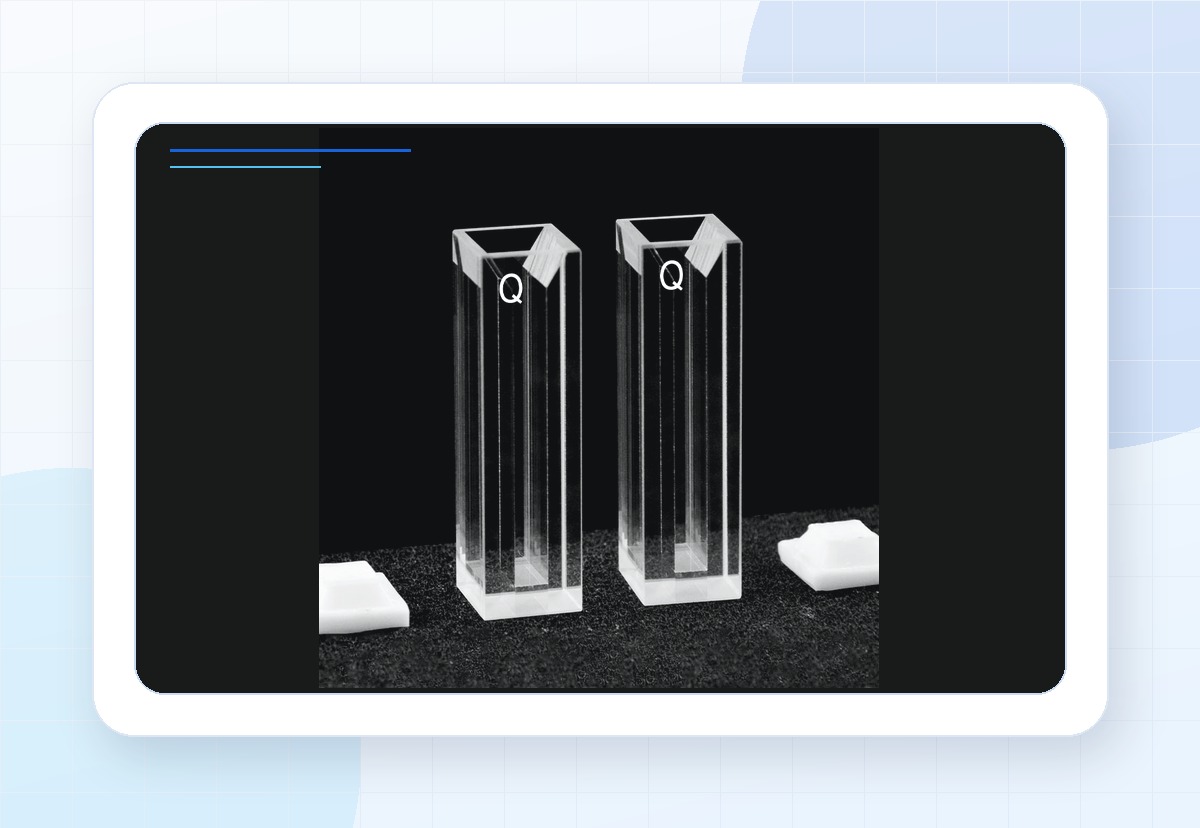
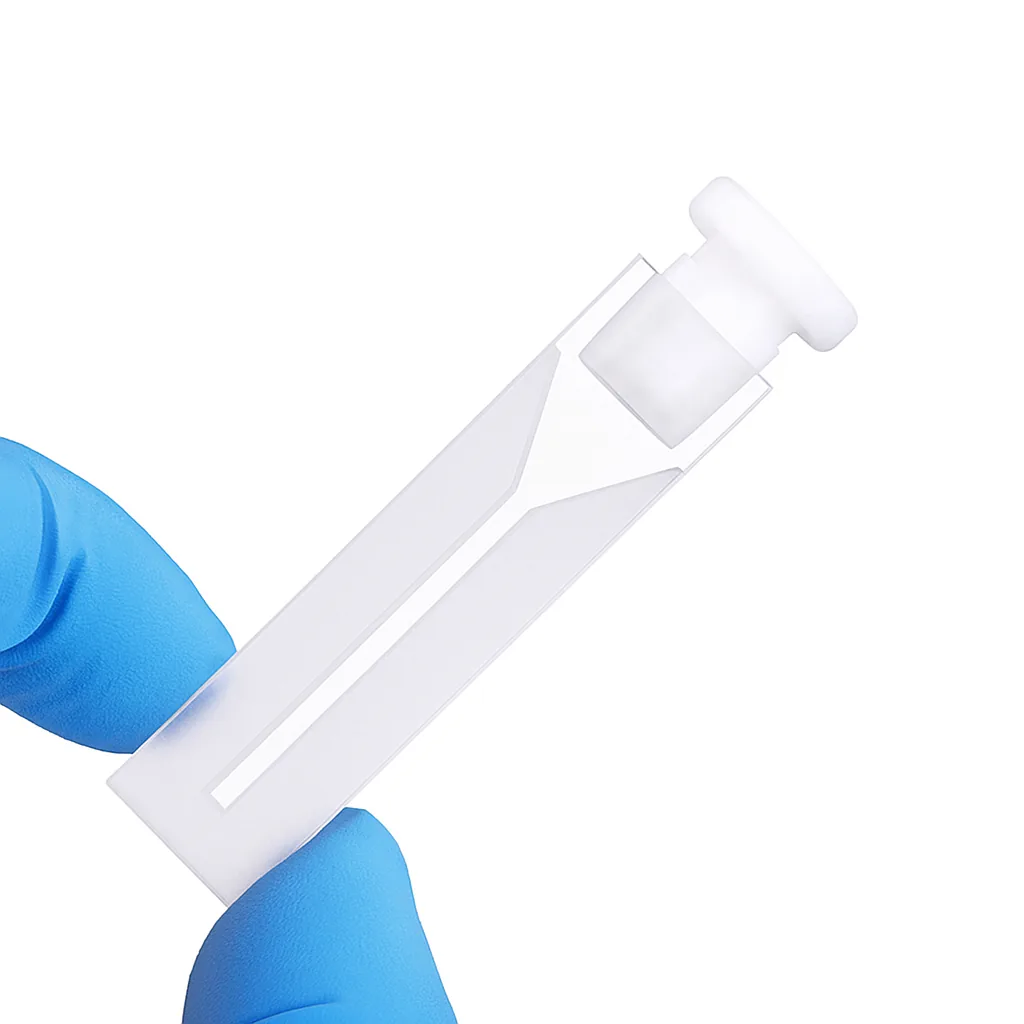
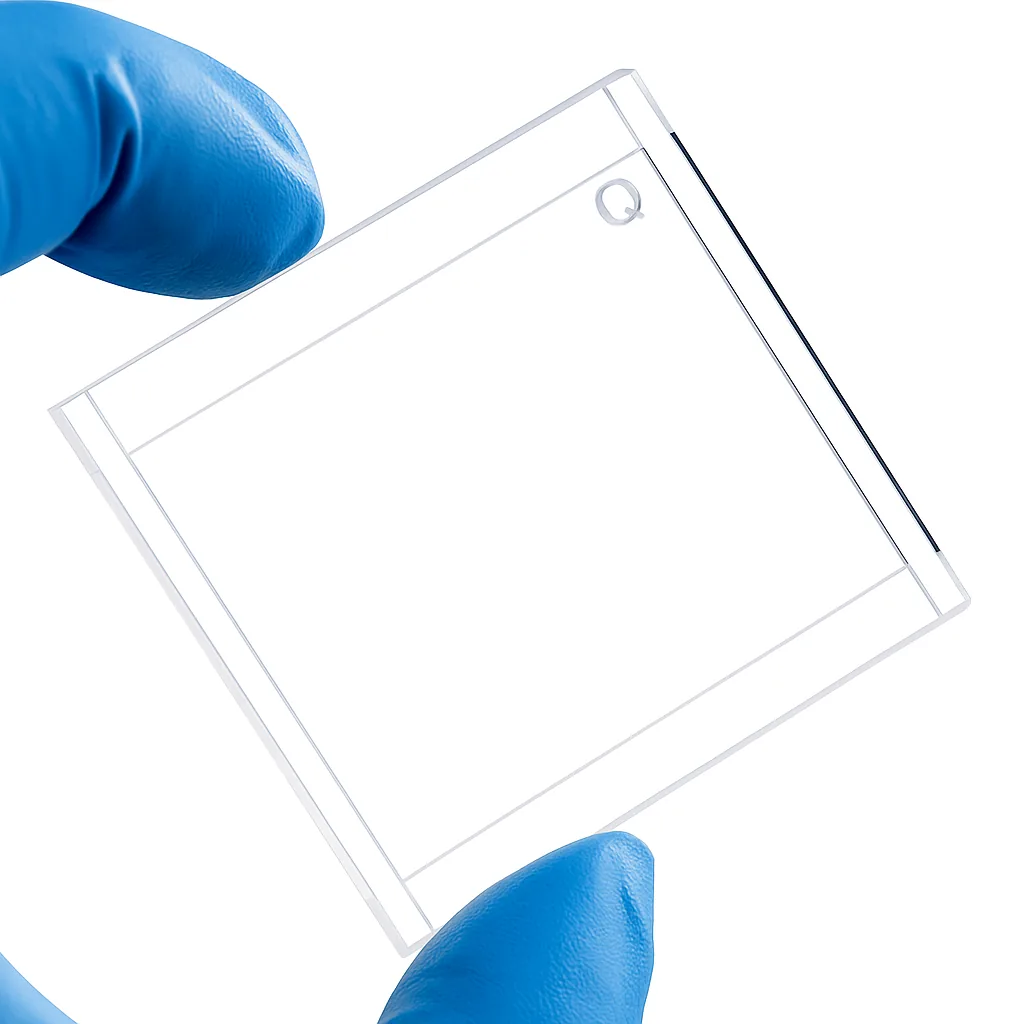
💡 When you need quartz: (1) sustained heating above 600 °C; (2) UV photochemistry below 320 nm; (3) trace-metal analysis at ppb levels where borosilicate’s alkali leaching contaminates samples; (4) sustained strong-acid digestion above 200 °C; (5) UV-transparent reactor vessels for photochemistry. For everything else, borosilicate is the right choice — more durable against mechanical shock, dramatically cheaper, and easier to source.
Precision class summary
| Vessel | Class A Tolerance | Typical Use |
|---|---|---|
| Beaker, Erlenmeyer flask | ±5–10% (not a measuring vessel) | Hold, mix, heat |
| Graduated cylinder (50 mL) | ±0.5 mL (±1%) | Routine volume transfer |
| Buret (50 mL) | ±0.05 mL (±0.1%) | Titration |
| Volumetric flask (250 mL) | ±0.12 mL (±0.05%) | Standard solution prep |
| Volumetric pipet (25 mL) | ±0.03 mL (±0.12%) | Precise aliquot transfer |
| Micropipet (1 mL, Class A) | ±5 µL (±0.5%) per ISO 8655 | Microliter biology |
Need custom quartz labware for UV, high-T, or trace metal work?
MachinedQuartz fabricates custom quartz containers, reactors, flow cells, and digestion tubes. JGS1 + JGS3 grades. No MOQ, ships worldwide.
Request Custom QuoteFrequently asked questions
What is the most accurate way to measure liquid volume in a lab?
For volumes 1–1000 mL, the most accurate tool is a Class A volumetric flask (±0.05%) for solution preparation and a Class A volumetric pipet (±0.12%) for transfer. For variable-volume dispensing, a calibrated buret reaches ±0.1%. For microliter volumes, a calibrated micropipet hits ±0.5% per ISO 8655. Avoid graduated cylinders (±1–2%) when high precision matters.
Why can’t I use a beaker to measure exact volumes?
Beaker volume marks are accurate only to ±5%, sometimes worse. The marks are intended as rough approximations during mixing — not as quantitative measurements. A 250 mL beaker may actually contain 235–265 mL when “filled to the line.” For any measurement that matters analytically, transfer to a graduated cylinder (±1%) or volumetric flask (±0.05%).
Why are some lab bottles amber?
Amber glass blocks UV light (below ~400 nm) that decomposes photosensitive chemicals. Silver nitrate, sodium thiosulfate, many organic peroxides, certain pharmaceuticals, and most antibiotic stock solutions degrade in clear bottles within days under fluorescent lights — but last months in amber. Use amber for any UV-sensitive reagent; check the SDS or supplier catalog for the specific recommendation.
What is the difference between TC and TD on a pipet or flask?
TC = “to contain” (e.g., volumetric flasks): the flask contains exactly 250.00 mL when filled to the line — but pouring it out leaves residual liquid wetting the walls, so the delivered volume is less. TD = “to deliver” (e.g., volumetric pipets, burets): the vessel delivers exactly the marked volume when drained naturally, accounting for the wetting layer left behind. Mixing them up causes ~1% volume error. Always check the etched designation.
Should I use plastic or glass for liquid handling?
Use plastic (HDPE, polypropylene) for: aqueous solutions, dilute acids/bases, biological buffers, and any work where shock resistance matters. Use glass (borosilicate) for: heating, organic solvents (HDPE softens in many), accurate volumetric measurement (plastic deforms), and storage of light-sensitive chemicals (amber glass). Use PTFE for hydrofluoric acid (HF eats glass) and concentrated strong oxidizers. Use quartz only when UV transparency, high-T, or trace metal cleanliness is required.
When do I need a separatory funnel instead of a regular funnel?
A regular (filter) funnel is for one-direction transfer — pouring liquid through filter paper or down a small opening. A separatory funnel is specifically for separating two immiscible liquid phases: typically aqueous + organic during synthesis workup. The stopcock at the bottom drains one phase off; the second phase is poured off the top after the stopper is removed. If you’re separating phases, use a sep funnel; if you’re just transferring or filtering, a regular funnel is fine.
What temperature can borosilicate glass handle?
Borosilicate glass (Pyrex 7740, Duran) has a softening point of about 820 °C and a maximum continuous service temperature of about 500 °C. It tolerates rapid heating and cooling much better than soda-lime glass because its thermal expansion coefficient is roughly 3× lower (3.3 vs 9 × 10⁻⁶ /K). For sustained temperatures above 500 °C or temperatures up to 1,100 °C, use quartz instead.
Why is mouth-pipetting forbidden?
OSHA, ACS Chemical Health & Safety guidance, and every modern lab safety manual prohibit mouth-pipetting because (a) toxic, corrosive, or pathogen-containing liquids can be aspirated into the operator’s mouth or lungs; (b) saliva contaminates the sample. Always use a pipet bulb, pipet pump (Pipump), or piston-driven micropipet. The reflex to “just suck up a few mL” by mouth is responsible for documented chemical and pathogen exposures across the 20th century.


Recent Comments