
10mm Glass Micro Cuvette, 1.75ml, Standard 80, Two-way Light, PTFE Cap, 1pc/ea, C102CS49
6%

Original price was: $18.00.$17.00Current price is: $17.00.
Glass 10 mm micro cuvette, 1.75 ml (5 mm slit), Standard 80 (>80%). Two-Way Light. 340–2500 nm. PTFE Cap. 1 pc/ea. SKU: C102CS49. In Stock.
In Stock
Description
The C102CS49 is a glass 10 mm micro cuvette with the widest 5 mm slit in the micro-volume series and 1.75 ml capacity. It provides the highest light throughput and easiest sample filling among micro cells, making it ideal for routine absorbance measurements where moderate sample savings are desired without compromising signal quality. Standard 80 (>80%, 340–2500 nm) with PTFE cap.
Technical Specifications
| Specifications – C102CS49 Glass Micro Cuvette | |||
|---|---|---|---|
| Material | Optical Glass | SKU | C102CS49 |
| Type | Glass Micro Cuvette | Path Length | 10 mm |
| Internal Volume | 1.75 ml | Slit Width | 5 mm |
| Optical Windows | Two-Way Light | Fabrication | Standard 80 |
| Transmittance | >80% | Wavelength | 340–2500 nm |
| Exterior Dimensions | 12.5 × 12.5 × 45 mm | Interior Dimensions | 5 × 10 × 43 mm |
| Cap Type | PTFE Cap | Package | 1 pc/ea |
Spectroscopy Applications
◆ UV–Vis Absorbance (340–2500 nm)◆ Clinical Chemistry & Diagnostics◆ Pharmaceutical QC & Drug Analysis◆ Environmental Water Testing◆ Food & Beverage Quality Control◆ Teaching & Student Laboratories◆ Enzyme Kinetics (micro-volume)◆ Colorimetric Assays (Bradford, BCA, Lowry)
Why a 5 mm Slit Micro Cuvette?
Micro cuvettes use a reduced internal width (slit) to lower the required sample volume while maintaining the standard 10 mm optical path length for direct comparison with Beer–Lambert calculations. The 5 mm slit in this cell requires only 1.75 ml to fill the beam path — the widest micro option, offering the best balance of sample savings and signal quality. Choose a narrower slit when sample is scarce; choose a wider slit when signal intensity matters most.
Why Optical Glass?
Optical glass cuvettes transmit reliably from 340 nm into the near-IR, covering the vast majority of visible-light and near-UV assays at a fraction of the cost of quartz. For applications that do not require deep-UV measurements below 340 nm, glass micro cuvettes deliver excellent price-performance and are the standard choice in clinical, educational, and industrial QC settings.
Usage Tips
Filling: Use a pipette or syringe to introduce sample slowly from the top, avoiding air bubbles trapped against the narrow slit walls.
Cleaning: Rinse immediately with deionized water or an appropriate solvent. For protein residue, soak briefly in dilute detergent or 1% SDS, then rinse thoroughly.
Orientation: Ensure the two polished optical faces are aligned with the light beam. The frosted sides should face the cuvette holder walls.
Custom Orders: Need a different slit width, volume, or material (quartz for deep-UV)? We offer custom micro cuvette fabrication. Contact us with your specifications.
Specifications are nominal values measured under standard conditions. Actual transmittance may vary slightly by wavelength. Images are representative; minor cosmetic variations do not affect optical performance.
Additional information
| Weight | 30 g |
|---|
You must be logged in to post a review.
You may also like…
9%
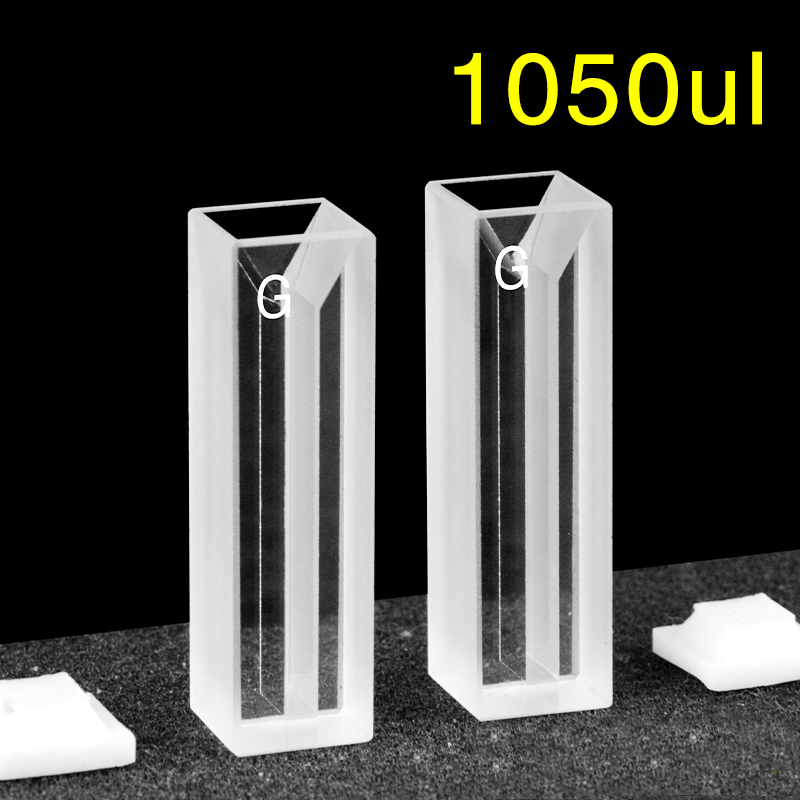
Glass 10mm Glass Micro Cuvette, 1.05ml, Standard 80, Two-way Light, PTFE Cap, Pack of Two, C102CS46
Original price was: $34.00.$31.00Current price is: $31.00.9%
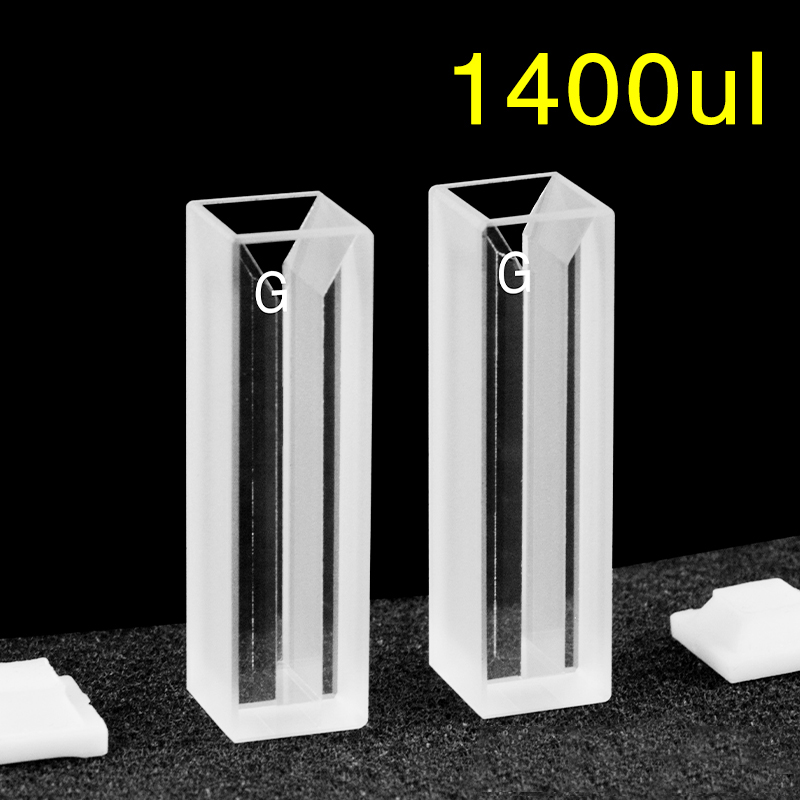
Glass 10mm Glass Micro Cuvette, 1.4ml, Standard 80, Two-way Light, PTFE Cap, Pack of Two, C102CS48
Original price was: $34.00.$31.00Current price is: $31.00.9%

10mm Glass Micro Cuvette, 1.75ml, Standard 80, Two-way Light, PTFE Cap, Pack of Two, C102CS50
Original price was: $34.00.$31.00Current price is: $31.00.9%
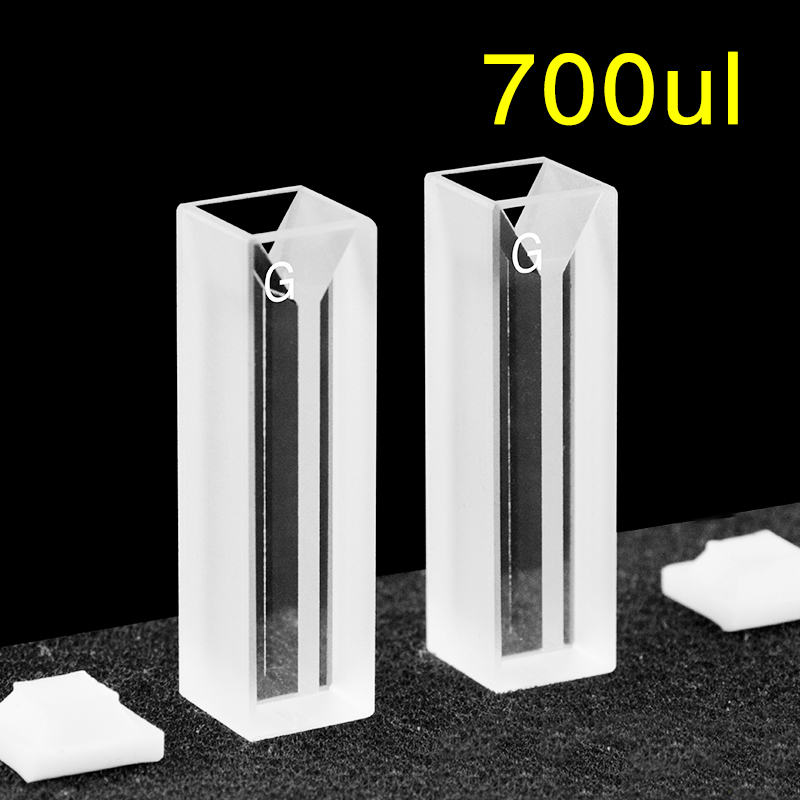
Glass 10mm Glass Micro Cuvette, 0.7ml, Standard 80, Two-way Light, PTFE Cap, Pack of Two, C102CS44
Original price was: $34.00.$31.00Current price is: $31.00.Related products
11%
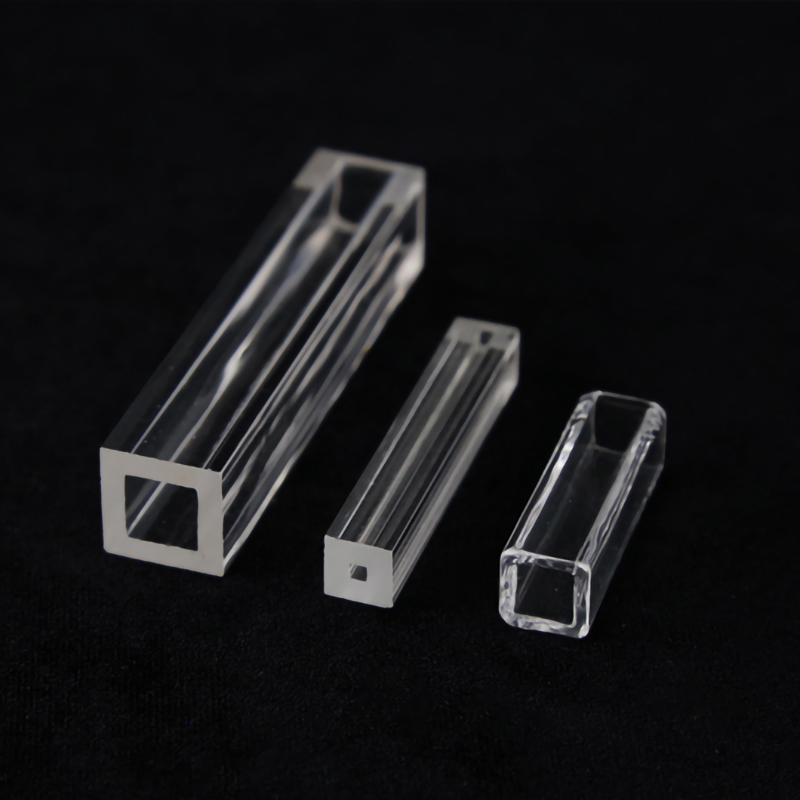
(MQC370) Quartz Capillary Tubes (Square), Outer Dim.: 1.4×1.4mm, Inner Dim.: 1.1×1.1mm, Length: 25mm
Original price was: $19.00.$17.00Current price is: $17.00.15%
(MQC371) Quartz Capillary Tubes (Square), Outer Dim.: 1.4×1.4mm, Inner Dim.: 1.1×1.1mm, Length: 50mm
Original price was: $28.00.$24.00Current price is: $24.00.15%
(MQC365) Quartz Capillary Tubes (Square), Outer Dim.: 0.95×0.95mm, Inner Dim.: 0.35×0.35mm, Length: 50mm
Original price was: $28.00.$24.00Current price is: $24.00.11%
Reviews
There are no reviews yet.