
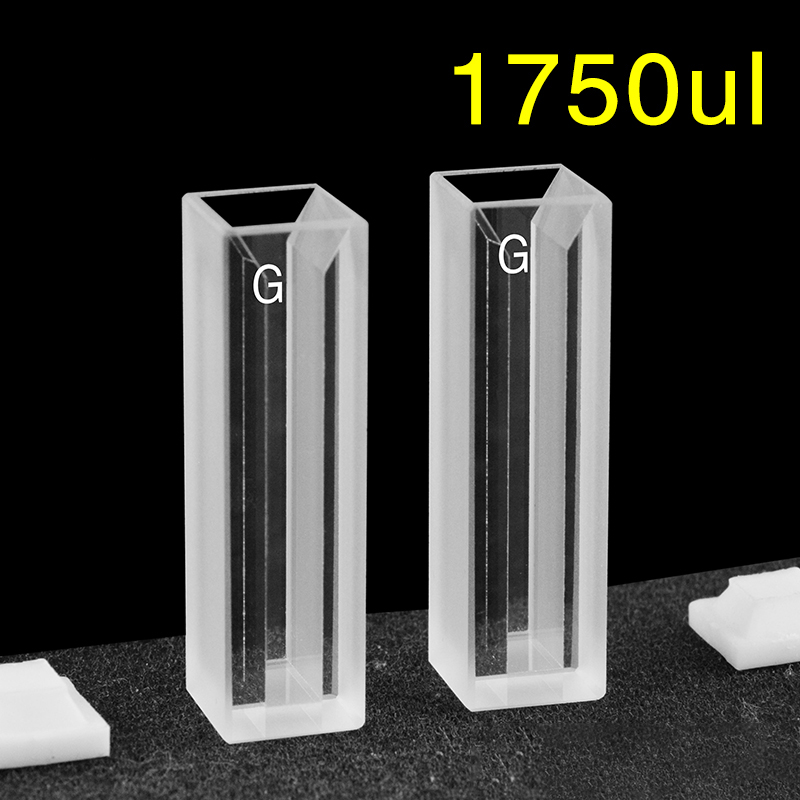
Quartz 10mm Micro Volume Cuvette, 1.75 ml, Molded 83, Two-Way Light, PTFE Cap, 1pc/ea, C102CE5
9%
Original price was: $34.00.$31.00Current price is: $31.00.
Quartz 10 mm micro volume black-walled cuvette with 1.75 ml capacity. Molded 83 fabrication (>83% transmittance, monolithic). Two-way light for stray light rejection. PTFE Cap. 190–2500 nm. Compatible with all standard spectrophotometers. SKU: C102CE5.
In Stock
Description
| Technical Specifications | |||
|---|---|---|---|
| Material | Quartz (Fused Silica) | SKU | C102CE5 |
| Type | Micro Volume Cuvette | Path Length | 10 mm |
| Volume | 1.75 ml | Wavelength | 190–2500 nm |
| Optical Windows | 2 (two-way light / black-walled) | Fabrication | Molded 83 |
| Transmittance | >83% | Wall Thickness | 1.25 mm per side |
| Exterior Dimensions | 12.5 × 12.5 × 45 mm | Interior Dimensions | 10 × 3.5 × 43 mm (narrowed by internal masking walls) |
| Cap | PTFE Cap | Package | 1 pc/ea |
✓ Universal Beam Height Compatibility: Unlike ultra-micro cuvettes that use raised platforms and require specific Z dimensions (beam center heights), this micro volume cuvette uses internal masking walls that narrow the chamber while maintaining the full height of the sample column. The light beam passes through at the standard height regardless of your instrument’s beam position (8.5 mm, 15 mm, or 20 mm), making this cuvette compatible with all standard spectrophotometers without any beam height verification. Simply fill, insert, and measure.
The C102CE5 is a quartz micro volume cuvette with 10 mm path length and two-way light (black-walled) optical configuration, designed for UV-Vis absorbance spectrophotometry across the full 190–2500 nm wavelength range. This cuvette reduces the required sample volume to 1.75 ml (1.75 ml)—saving 60% of sample compared to a standard 3.5 ml cell—by using internal quartz masking walls that narrow the measurement chamber from 10 mm to approximately 3.5 mm width while maintaining the full 10 mm optical path length.
Unlike ultra-micro cuvettes that use raised platforms (which require specific Z dimensions/beam center heights), the micro volume design keeps the sample column at full height, ensuring compatibility with all standard spectrophotometers regardless of beam position (8.5 mm, 15 mm, or 20 mm). The standard 12.5 × 12.5 × 45 mm exterior fits all major spectrophotometer holders. Manufactured using Molded 83 fabrication—the entire cuvette body formed from a single quartz blank at approximately 1200 °C and precision-ground to ±0.02 mm tolerances—delivering >83% transmittance with zero adhesive joints for maximum chemical resistance and optical purity. Includes a PTFE cap to prevent evaporation during measurements.
Why Choose the C102CE5?
The 1.75 ml volume strikes an excellent balance between sample conservation and ease of use. With 60% less sample required than a standard 3.5 ml cuvette, you conserve valuable reagents and precious biological samples while the 3.5 mm internal channel remains wide enough for easy filling with standard pipettes and straightforward cleaning between samples. This volume is particularly well-suited for laboratories working with sample aliquots in the 1–2 ml range—common in clinical chemistry, pharmaceutical QC, and environmental monitoring—where you want to minimize waste without resorting to the very narrow channels of sub-milliliter micro volume cuvettes.
The two-way light (black-walled) design blocks stray light from non-optical paths, delivering more accurate absorbance readings—particularly at high optical densities (OD > 2) where stray light contributes the most measurement error. The 3.5 mm channel width is also significantly easier to clean than the 1–2 mm channels found in lower-volume micro cuvettes, reducing carryover between samples and simplifying your workflow. The PTFE cap prevents evaporation during standard measurement cycles, maintaining concentration accuracy throughout your analysis. The Molded 83 monolithic construction eliminates adhesive joints entirely, providing the highest chemical resistance and ensuring no bonding materials leach into your sample or contribute background fluorescence—critical for trace analysis and high-sensitivity measurements.
How the 1.75 ml Volume Is Achieved
A standard 10 mm cuvette with a 10 × 10 mm interior cross-section holds approximately 3.5 ml when filled to the standard height. This micro volume cuvette reduces the required fill to 1.75 ml through internal quartz masking walls—precision-machined quartz dividers positioned inside the chamber that narrow the effective width from 10 mm to approximately 3.5 mm while maintaining the full 10 mm path length and full sample column height. The light beam passes through 10 mm of sample (path length) but the sample occupies only the 3.5 mm channel between the masking walls, reducing the total volume by 60%.
The 3.5 mm channel width provides a practical balance: narrow enough to achieve significant volume savings, yet wide enough that standard laboratory pipettes can easily reach the bottom of the channel for filling and the channel can be rinsed clean without special micro-cleaning tools. Because the sample fills the entire height of the channel, the Z dimension (beam center height) is irrelevant—the beam passes through sample regardless of its vertical position. This means no beam height verification is needed and the cuvette works in any standard spectrophotometer including Shimadzu UV-1900/UV-2600, Agilent Cary 60/3500, Thermo Evolution, PerkinElmer Lambda, JASCO V-series, and Hitachi U-series.
Molded 83 Fabrication — Superior Chemical Resistance & Optical Quality
Molded 83 is the highest grade of cuvette fabrication available. Unlike Standard 80 (glued) or Sintered 80/83 (fused at 600 °C), the Molded 83 process forms the entire cuvette body from a single quartz blank at approximately 1200 °C, then precision-grinds the exterior and interior to ±0.02 mm dimensional tolerances. The “83” indicates >83% transmittance across the full 190–2500 nm wavelength range—noticeably higher than Standard 80 (>80%), especially important when measuring weakly absorbing samples or when cumulative optical losses must be minimized. The monolithic construction eliminates adhesive joints entirely, meaning there are no bonding materials to leach, fluoresce, or degrade. This makes Molded 83 cuvettes the preferred choice for aggressive solvent work (concentrated HF, HNO3, organic solvents), high-temperature experiments, and applications where even trace contamination from adhesive residues is unacceptable.
Black-Walled Design — Stray Light Rejection for Accurate Absorbance
The two-way light configuration uses black or frosted side walls to eliminate stray light that would otherwise enter the detector from non-optical paths. In a four-way (all-clear) cuvette, ambient light or fluorescence from the sample can reach the detector through the side walls, artificially lowering measured absorbance values and degrading the signal-to-noise ratio. The black-walled design blocks these parasitic light paths, providing more accurate absorbance readings—especially important at high optical densities (OD > 2) or when working with fluorescent samples where emission could interfere with transmission measurements. For pure absorbance spectroscopy, two-way light cuvettes consistently outperform four-way cells in measurement accuracy.
Practical Applications
- Nucleic acid quantification: Measure DNA, RNA, and oligonucleotide concentrations at 260/280 nm with only 1.75 ml of sample. The full 10 mm path length provides optimal sensitivity for concentrations in the 5–500 ng/µl range without the path length corrections required by nanodrop-style instruments.
- Protein characterization: Determine protein concentration via direct A280, Bradford (595 nm), BCA (562 nm), or Lowry assays. The black-walled design eliminates fluorescence interference that can affect protein measurements with tryptophan-rich samples.
- Enzyme kinetics: Monitor reaction progress in real time with continuous absorbance measurements. The internal masking walls ensure the beam passes through only your sample—no light leaks around the edges—for clean kinetic curves and accurate rate determinations.
- Pharmaceutical quality control: Identity, purity, and dissolution testing of drug substances and intermediates. The 10 mm path length is the pharmacopeial standard (USP, EP, JP), allowing direct comparison with reference spectra and published molar absorptivity values without mathematical path length corrections.
- Environmental & water analysis: Measure contaminant concentrations in water samples following EPA and ISO methods. The reduced volume conserves field-collected samples while the quartz transparency enables measurements deep into the UV (190 nm) for nitrate, sulfate, and organic pollutant determinations.
Care & Handling
Rinse immediately after each use with an appropriate solvent (deionized water for aqueous samples, ethanol or acetone for organic residues), then dry with filtered compressed air or nitrogen. Avoid mechanical contact with the optical windows—use lint-free lens tissue if wiping is necessary. The Molded 83 monolithic construction tolerates aggressive cleaning protocols: soaking in concentrated nitric acid, piranha solution (H2SO4/H2O2), or aqua regia for up to 30 minutes is safe for the quartz body. Rinse thoroughly with deionized water after acid cleaning. The PTFE cap should be rinsed and dried separately. Store the cuvette upright in its original packaging or a padded cuvette rack to prevent chipping of the optical windows.
Disclaimer: This product is intended for laboratory and research use only. It is not designed, approved, or intended for use in medical diagnostics, therapeutic procedures, or any clinical application involving human or animal subjects. The buyer assumes all responsibility for determining the suitability of this product for their specific application.
Additional information
| Weight | 30 g |
|---|
You must be logged in to post a review.
You may also like…
10%
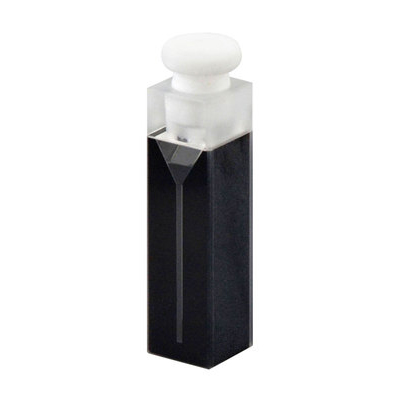
Quartz 10mm Micro Volume Cuvette, 1.4 ml, Standard 80, Two-Way Light, PTFE Cap, 1pc/ea, C102CS91
Original price was: $86.00.$78.00Current price is: $78.00.10%
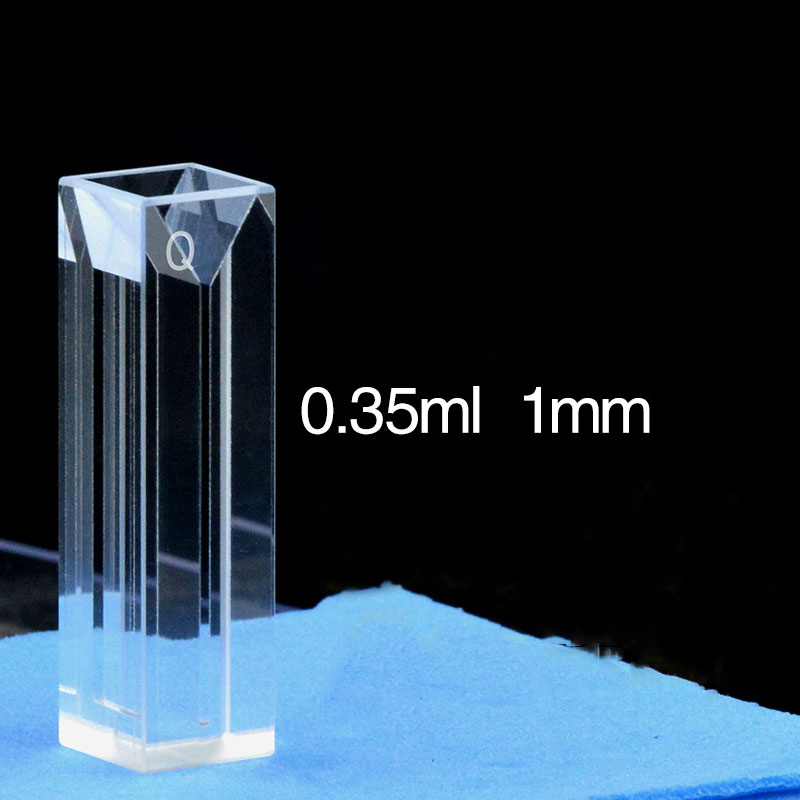
Quartz 10mm Micro Volume Cuvette, 0.35ml, Standard 80, Four-Way Light, PTFE Cap, 1pc/ea, C104CS52
Original price was: $72.00.$65.00Current price is: $65.00.10%

Quartz 10mm Micro Volume Cuvette, 50 µl, Standard 80, Two-Way Light, PTFE Cap, 1pc/ea, C102CS32
Original price was: $76.00.$69.00Current price is: $69.00.10%

Quartz 10mm Micro Volume Cuvette, 100 µl, Standard 80, Two-Way Light, PTFE Cap, 1pc/ea, C102CS33
Original price was: $76.00.$69.00Current price is: $69.00.Related products
14%
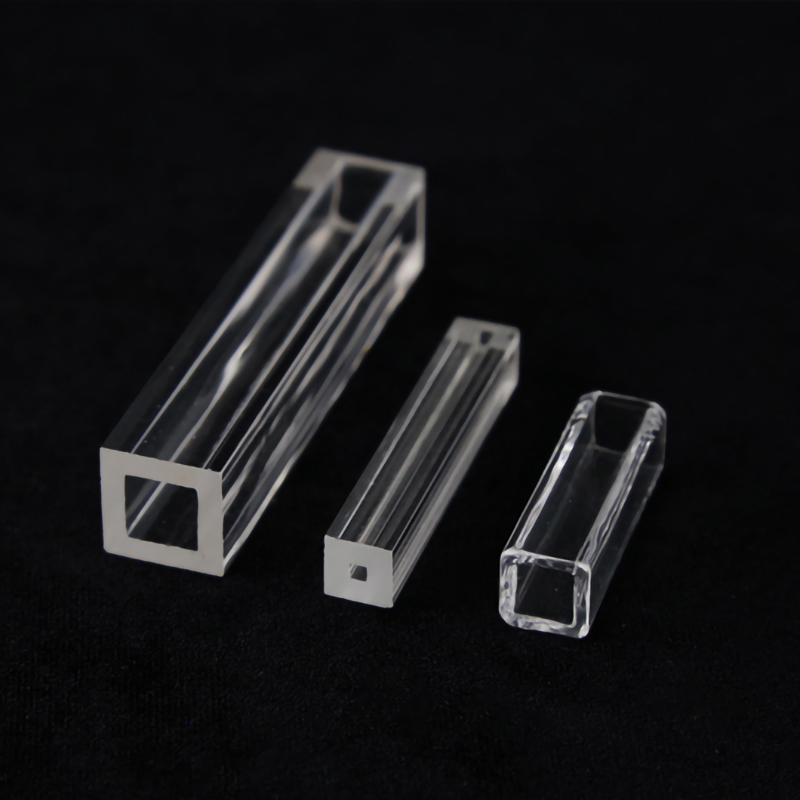
(MQC375) Quartz Capillary Tubes (Square), Outer Dim.: 1.8×1.8mm, Inner Dim.: 0.25×0.25mm, Length: 100mm
Original price was: $38.00.$33.00Current price is: $33.00.15%
(MQC362) Quartz Capillary Tubes (Square), Outer Dim.: 0.5×0.5mm, Inner Dim.: 0.3×0.3mm, Length: 50mm
Original price was: $28.00.$24.00Current price is: $24.00.14%
(MQC384) Quartz Capillary Tubes (Square), Outer Dim.: 1x1mm, Inner Dim.: 0.3×0.3mm, Length: 100mm
Original price was: $38.00.$33.00Current price is: $33.00.14%
Reviews
There are no reviews yet.