
Short 5 mL Quartz Vial: Making Room Below a Low Cover
Custom Design Guides · Short 5 mL Quartz Vial
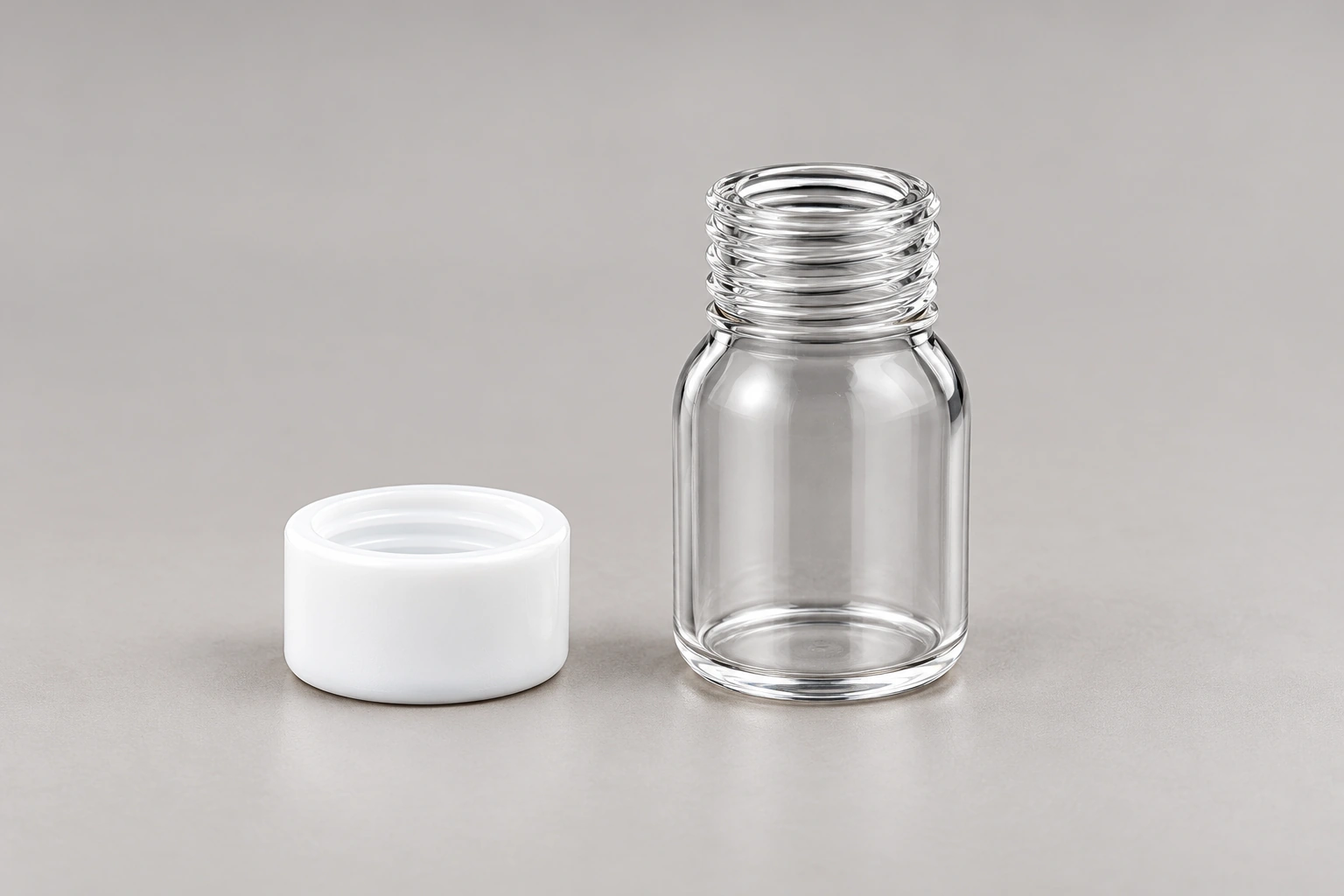
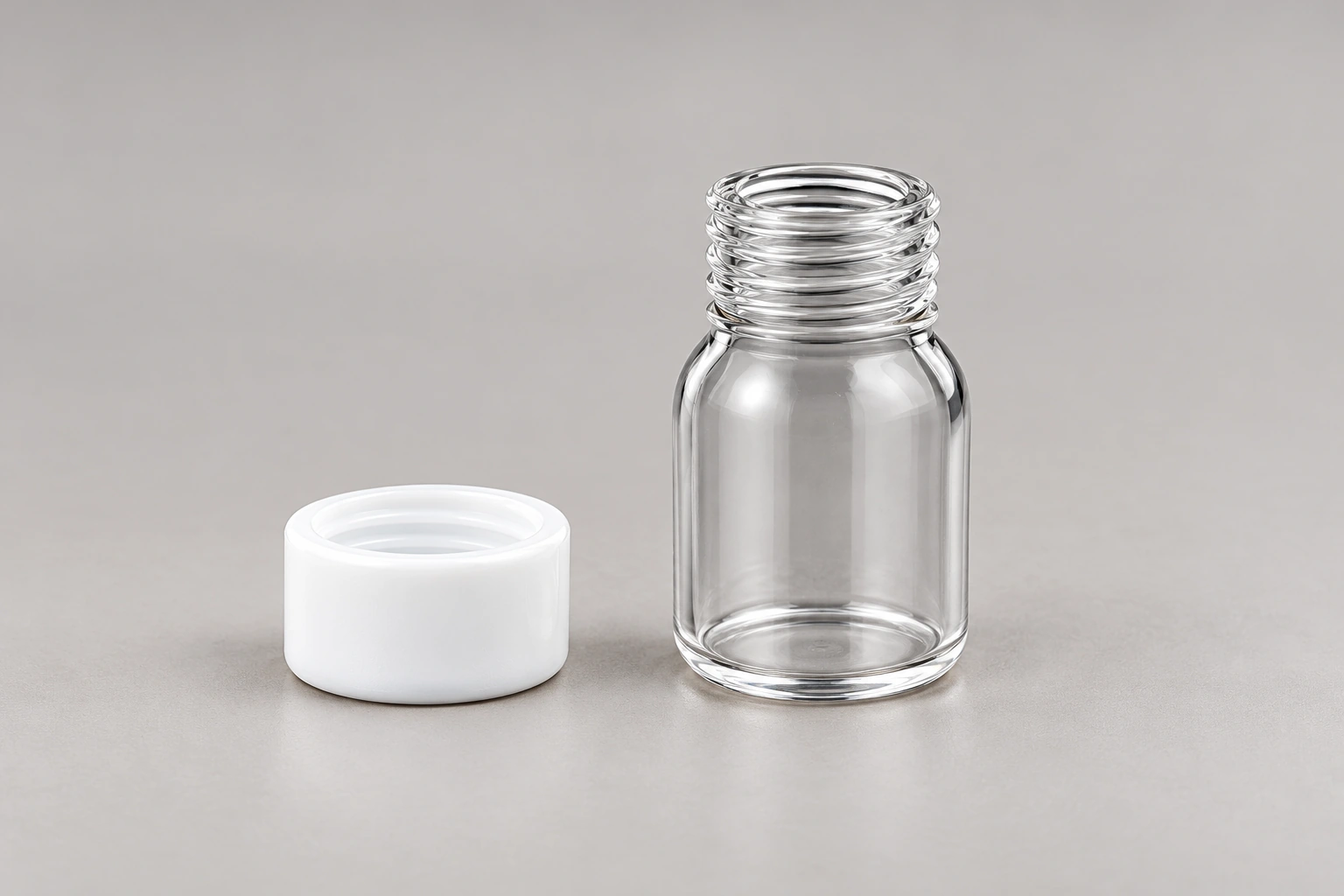
A small capacity does not guarantee a short bottle. This 5 mL quartz screw vial uses a short, relatively broad body; the reference marks approximately 20 mm diameter and 35 mm body height. It is a useful starting point when the available space above the sample is more restrictive than the space around it.
The comparison should include the cap and the sampling operation, not just the empty bottle. A vial that fits under a cover can still be awkward if there is no room to unscrew the cap or bring a tool to the mouth.
In this guide: Configuration · Design comparison · Start with the height above the support surface · Compare the two 5 mL shapes on the same basis · Retain the capacity, change the envelope · Make the fit check represent actual use · Enquiry
The configuration discussed here
What changes from the simpler form?
The short, broad vial keeps the screw-neck sampling concept but distributes the container envelope differently from a tall narrow vial. Lower body height can help a restricted space, while the wider body needs its own rack opening and access around the cap.
Start with the height above the support surface
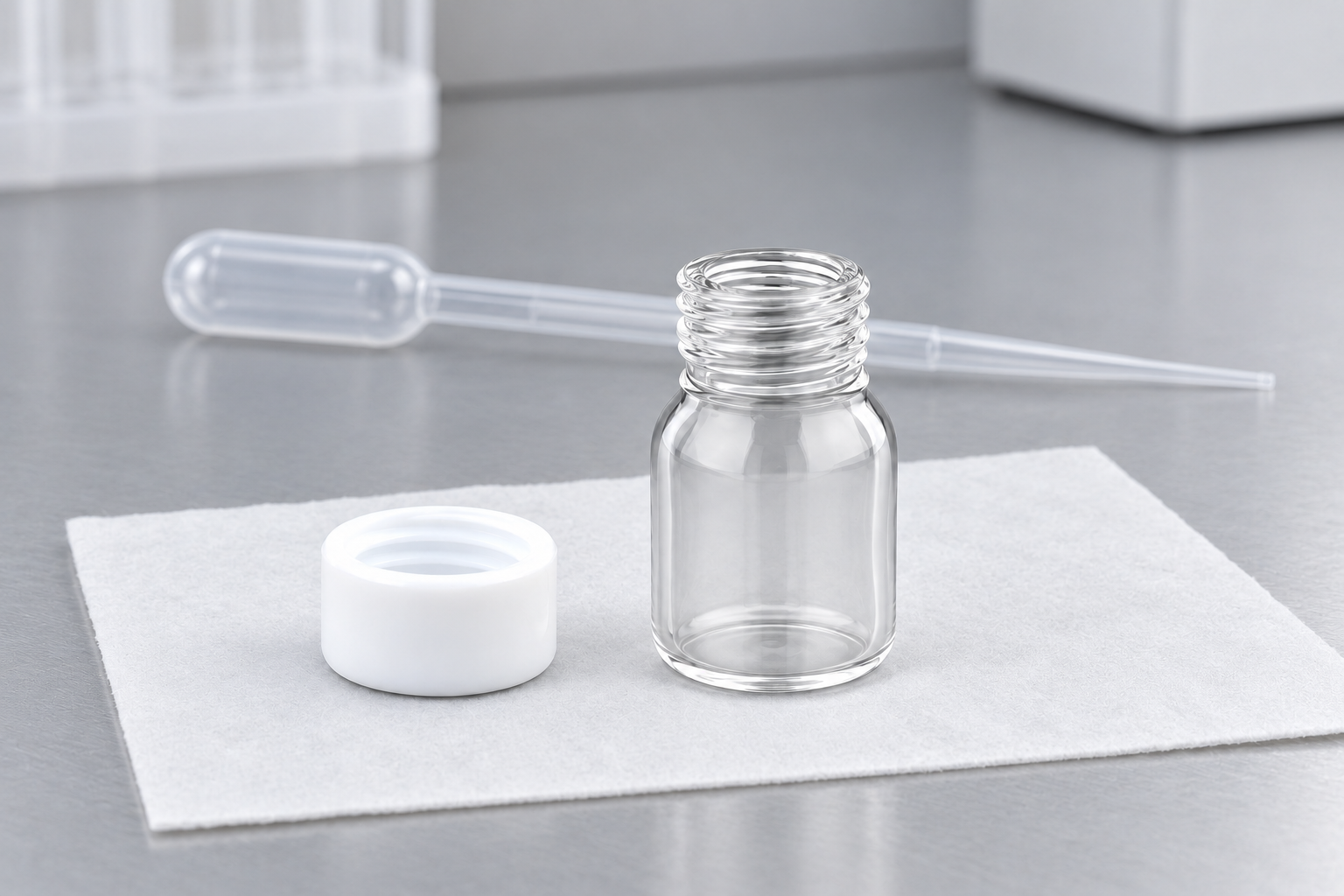
Consider a sample position beneath a low enclosure cover. The useful dimension is the available height from the support to the obstruction. Compare it with the complete closed vial, then allow for any lift or movement needed during removal. The marked body height alone does not answer that question.
If the cap can only be removed outside the enclosure, describe that sequence. The design may need enough side access to withdraw the whole vial before opening. Moving the vial and opening it in place are different requirements, even when both arrangements use the same nominal volume.
Compare the two 5 mL shapes on the same basis
The slender 5 mL reference in this series is marked approximately 12 mm diameter and 85 mm body height. Both are nominal 5 mL configurations, but their outside envelopes serve different space constraints. That comparison is more informative than treating capacity as the only selection variable.
The short body also changes how far a sampling tool must reach and how much surrounding rack space the bottle occupies. Its outside diameter does not specify the mouth opening or usable internal depth. Ask for those dimensions if tool access is critical.

Retain the capacity, change the envelope
If the vial needs to fit below a particular cover while retaining the nominal 5 mL class, give MQ both the maximum installed height and the allowed body diameter. Mark the cap clearance and required sampling access on the same sketch.
Reducing the body height affects the neck, shoulder, bottom and working fill together. A revised outline therefore needs a complete bottle drawing, with the closure and access requirements considered alongside the body dimensions.
Make the fit check represent actual use
A useful proposed fit check includes placing the closed vial in its support, removing it by the intended route and reaching the sample with the chosen tool. If repeated opening is important, include the actual cap in that discussion rather than a generic outline.
Agree the critical dimensions and what record is required. The reference dimensions describe this design example; they are not a general interchangeability statement for all 5 mL bottles.
Structure reference and specification points
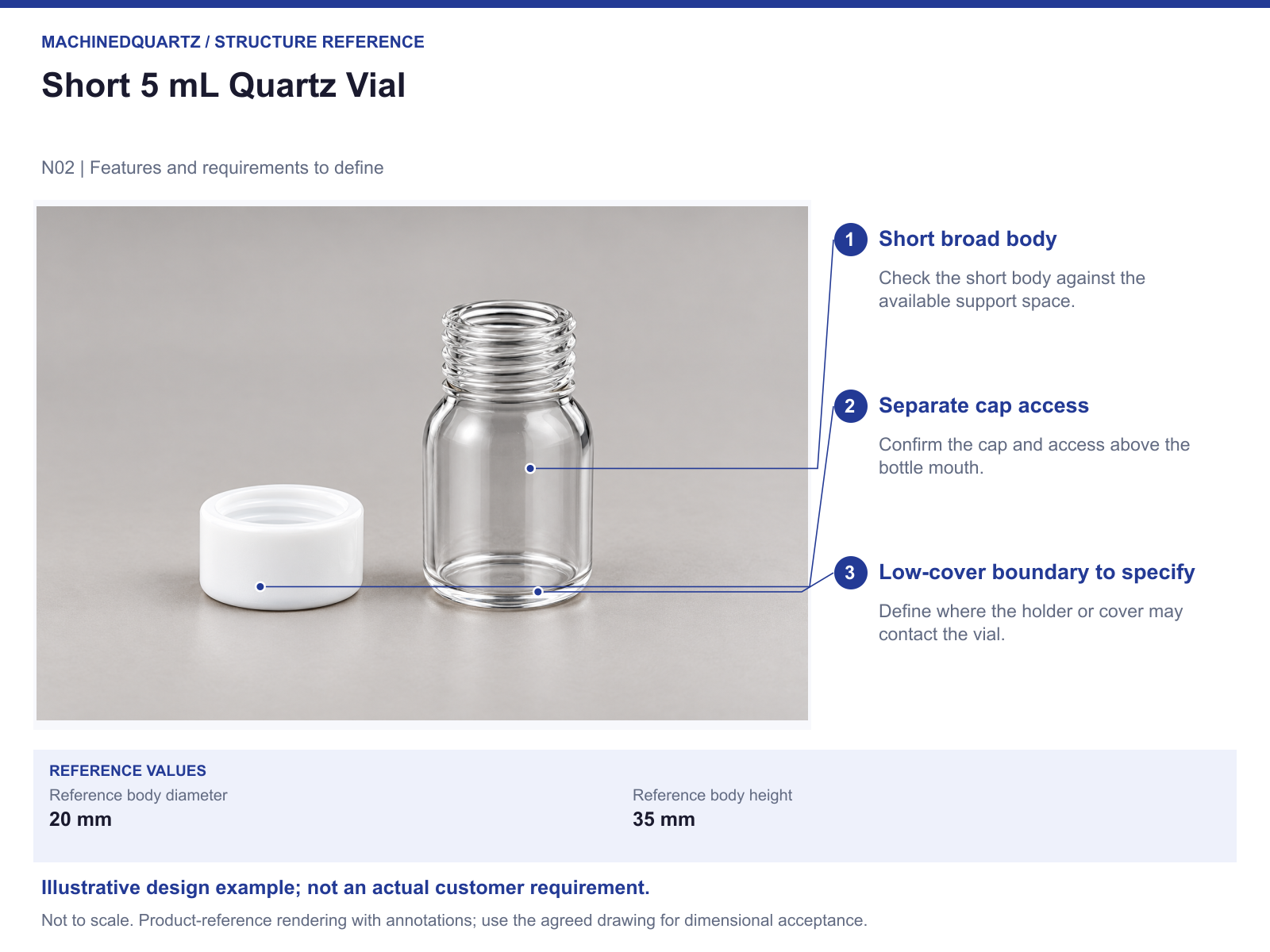
Download the structure reference (PDF)
Is the marked 35 mm height the height with the cap fitted?
The available reference is treated as a body-height mark. Do not use it as a guaranteed closed assembly height. Include a separate maximum installed height and cap-removal allowance in the enquiry.
Send a drawing or the mating-part details
Send a sketch of the restricted space with the support surface clearly marked. MQ can then discuss the short-body vial and closure together rather than adjusting height in isolation.
- Nominal capacity and intended working fill
- Maximum closed height measured from the support
- Maximum outside diameter and rack opening
- Cap removal route and sampling-tool dimensions
- Sample contact conditions, quantity and required checks
Modified designs are reviewed for the project. The drawing, supplied parts, quantity, inspection scope, price and preparation or production time are agreed in the quotation.
Details to settle for the ordered configuration
Final body dimensions, wall thickness, neck bore, supplied cap and working fill remain to be confirmed for the custom order.



Recent Comments