
Slender 5 mL Quartz Vial: Reaching a Small Sample in a Narrow Space
Custom Design Guides · Slender 5 mL Quartz Vial
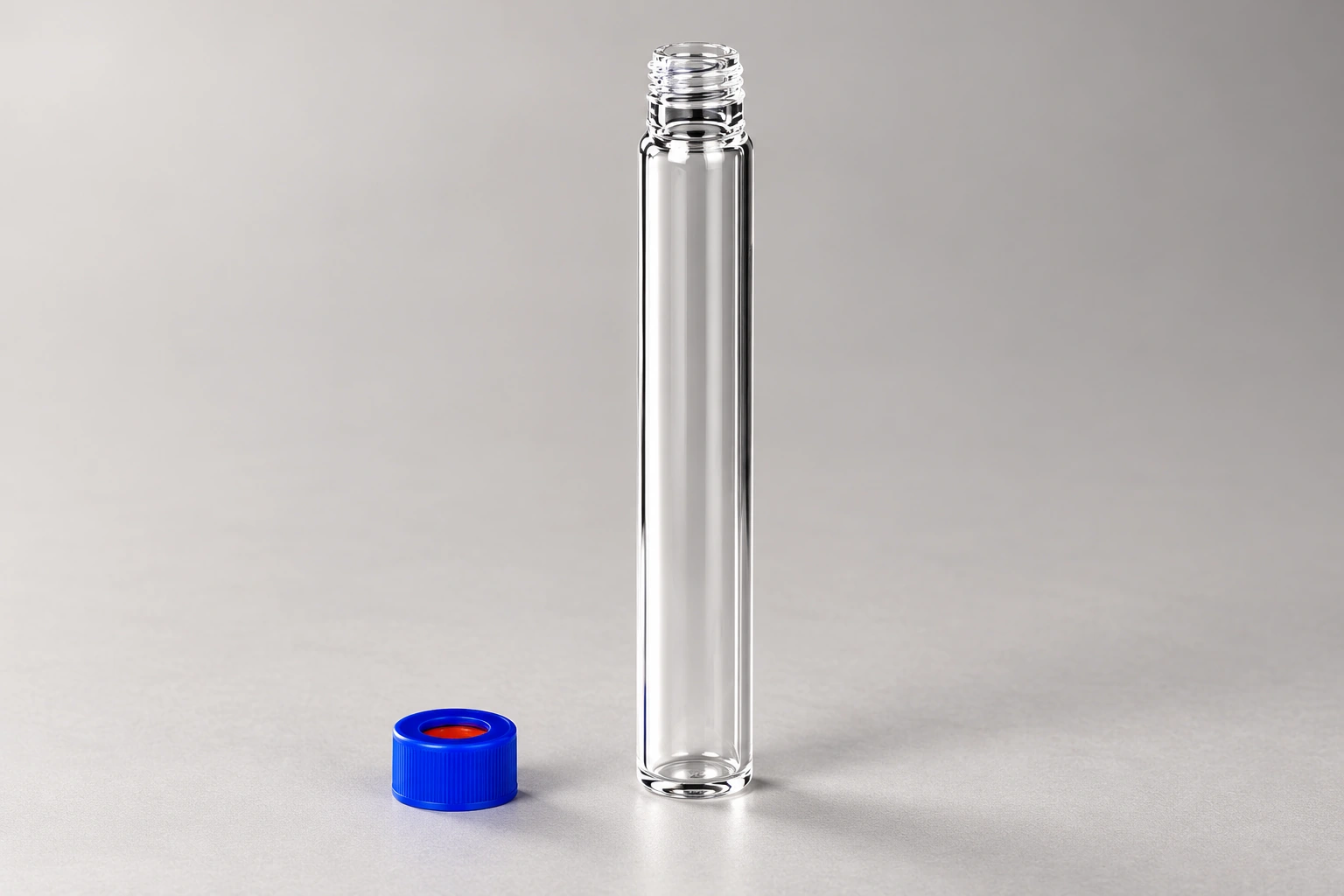
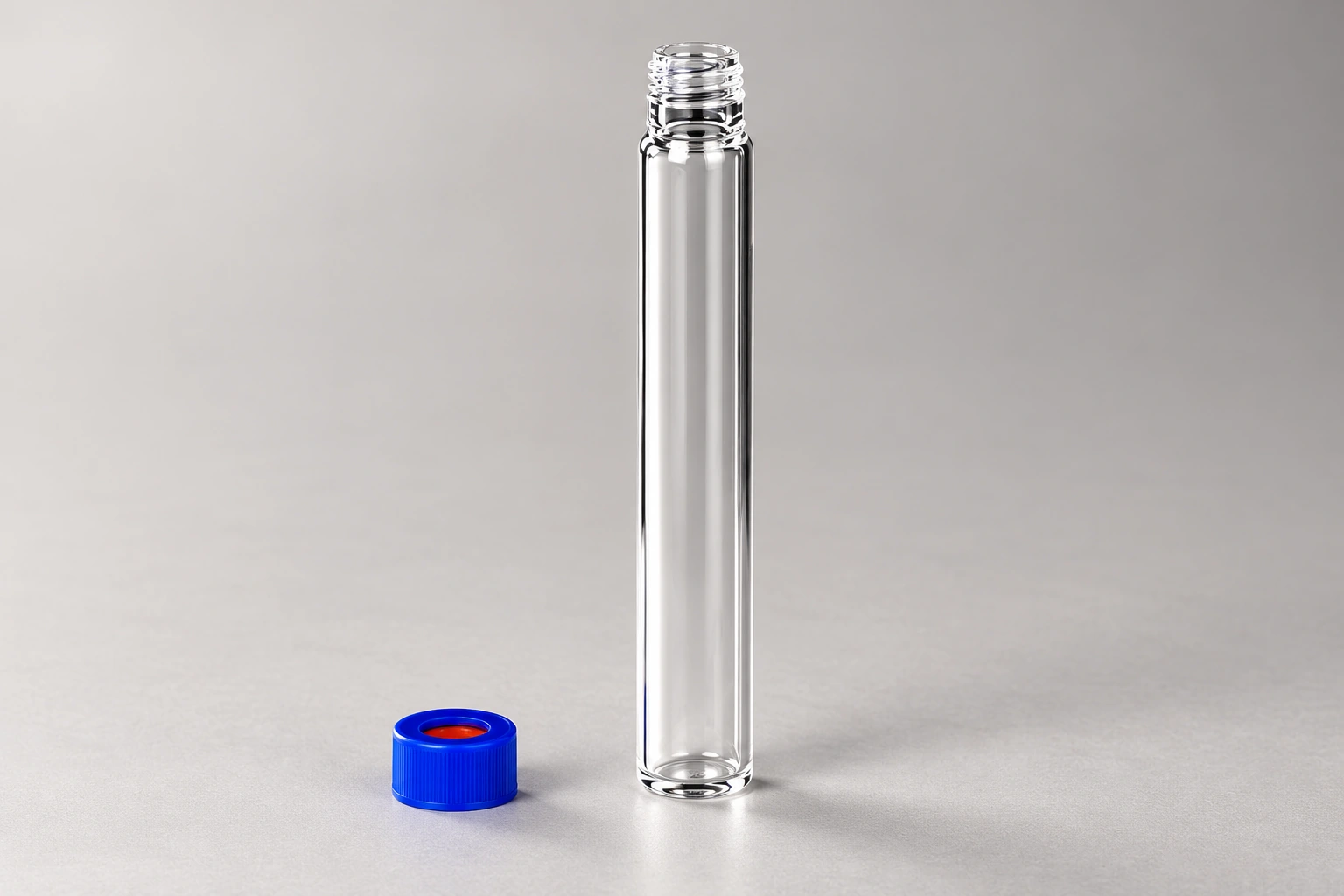
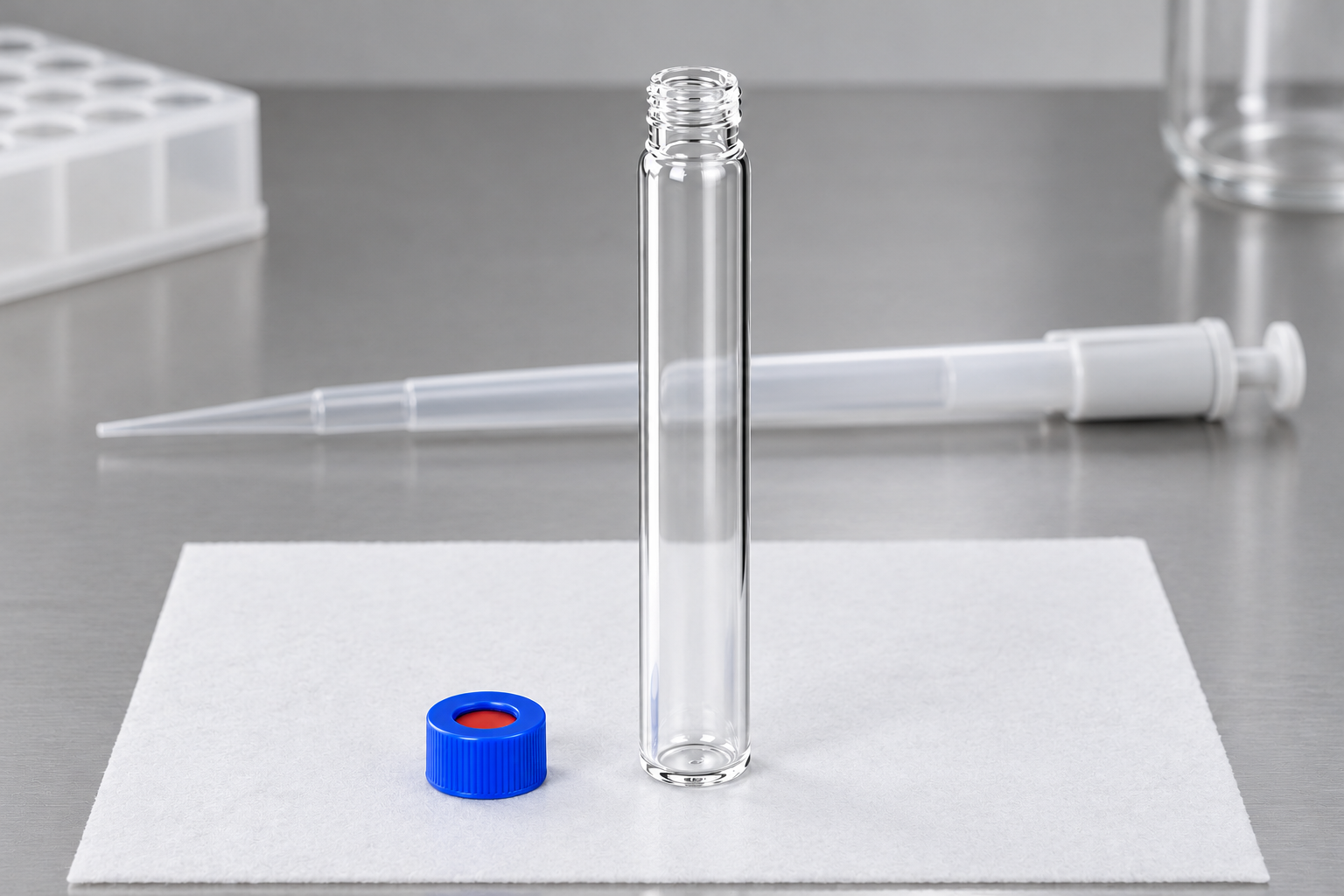
A narrow sample position may leave plenty of height but little room for a broad bottle. The slender 5 mL quartz screw-vial reference uses an approximately 12 mm diameter and 85 mm body height. Its long, narrow form makes the support position and sampling reach central to the selection.
Capacity, outside envelope and usable access are separate specifications. Before choosing this shape, describe how far the bottle enters the support and how the cap and sampling tool remain accessible above it.
In this guide: Configuration · Design comparison · Locate the vial from the part that supports it · Give the sampling tool its own dimensions · Why choose this over the short 5 mL form? · Changing the body while keeping the neck · Enquiry
The configuration discussed here
What changes from the simpler form?
Compared with a short vial, the slender form places the sample in a deeper body while retaining a screw-neck opening. The design discussion moves toward insertion depth, tool reach and exposed-neck access rather than selecting by 5 mL alone.
Locate the vial from the part that supports it
For example, a cylindrical support may surround much of the bottle. Mark the support bore, insertion depth and the surface that stops downward movement. A single maximum diameter is incomplete if the shoulder or neck meets the support before the body reaches its intended position.
Also show how the vial will be withdrawn. A narrow fit leaves less room for fingers or a tool around the body. The neck and cap should not become an unintended lifting arrangement simply because they are the only exposed parts.
Give the sampling tool its own dimensions
A long body can place the remaining sample well below the mouth. State the length, outside diameter and approach of the tool that must reach it. The bottle's nominal capacity does not establish the minimum recoverable amount for that tool.
If the method requires a particular residual volume or access near the bottom, make that a separate requirement. MQ would need the intended tool, fill range and operating sequence to review it; the reference picture is not evidence of a tested recovery result.

Why choose this over the short 5 mL form?
The short reference in this series is approximately 20 mm in diameter and 35 mm high. It addresses a low-height constraint, while this slender version addresses a narrow-body constraint. Choose between them by the support drawing and handling sequence, not by the shared 5 mL label.
Neither outside envelope defines the thread or clear opening. A cap or sampling accessory from another 5 mL vial should be checked at the mating interface rather than assumed to transfer with the capacity.
Changing the body while keeping the neck
A possible enquiry is to retain an existing cap interface while changing the bottle length for a narrow holder. Supply the cap or neck drawing and identify the dimensions that must remain fixed. Then specify the allowable body envelope and the sample-access requirement.
The project review should address the body support and closure together. Critical dimensions, contact materials and any proposed fit or closure check are agreed for the particular design rather than inferred from the slender appearance.
Structure reference and specification points
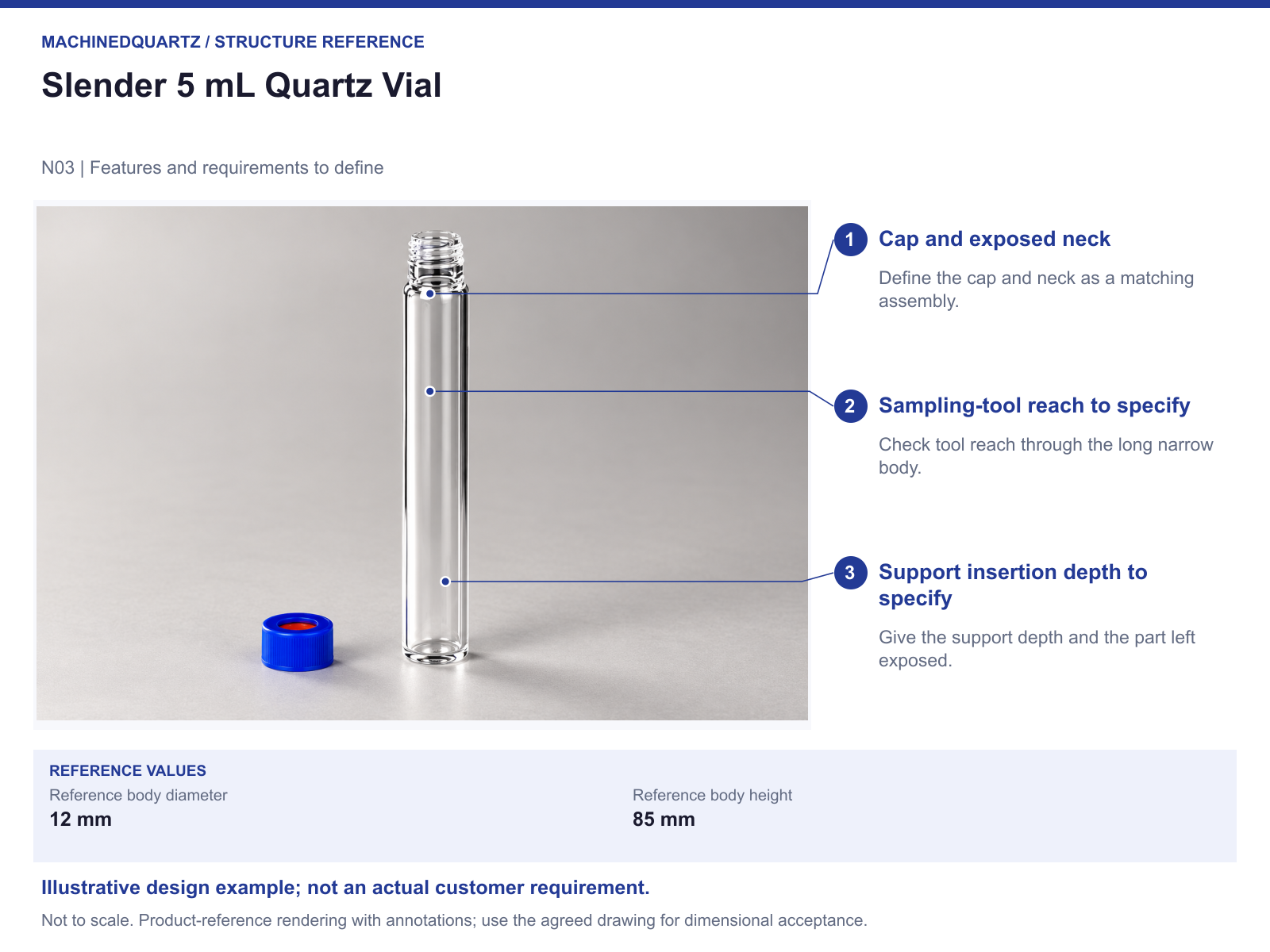
Download the structure reference (PDF)
Can I treat the full 85 mm body height as the sampling depth?
No. The reference height describes the outside body. The neck, shoulder, bottom and intended fill position affect the depth a tool must reach. Request the internal depth and mouth dimensions relevant to your method.
Send a drawing or the mating-part details
Send the support cross-section and sampling-tool outline with the vial request. They explain why a slender form is needed and make the required clearances easier to discuss.
- Support bore, insertion depth and stop surface
- Maximum installed height and exposed gripping area
- Sampling-tool diameter, usable reach and intended fill range
- Neck or cap interface to retain
- Contact conditions, quantity and requested inspection scope
Modified designs are reviewed for the project. The drawing, supplied parts, quantity, inspection scope, price and preparation or production time are agreed in the quotation.
Details to settle for the ordered configuration
Internal depth, neck thread, closure lining, working fill and tool compatibility are not established by the marked outside dimensions.



Recent Comments