
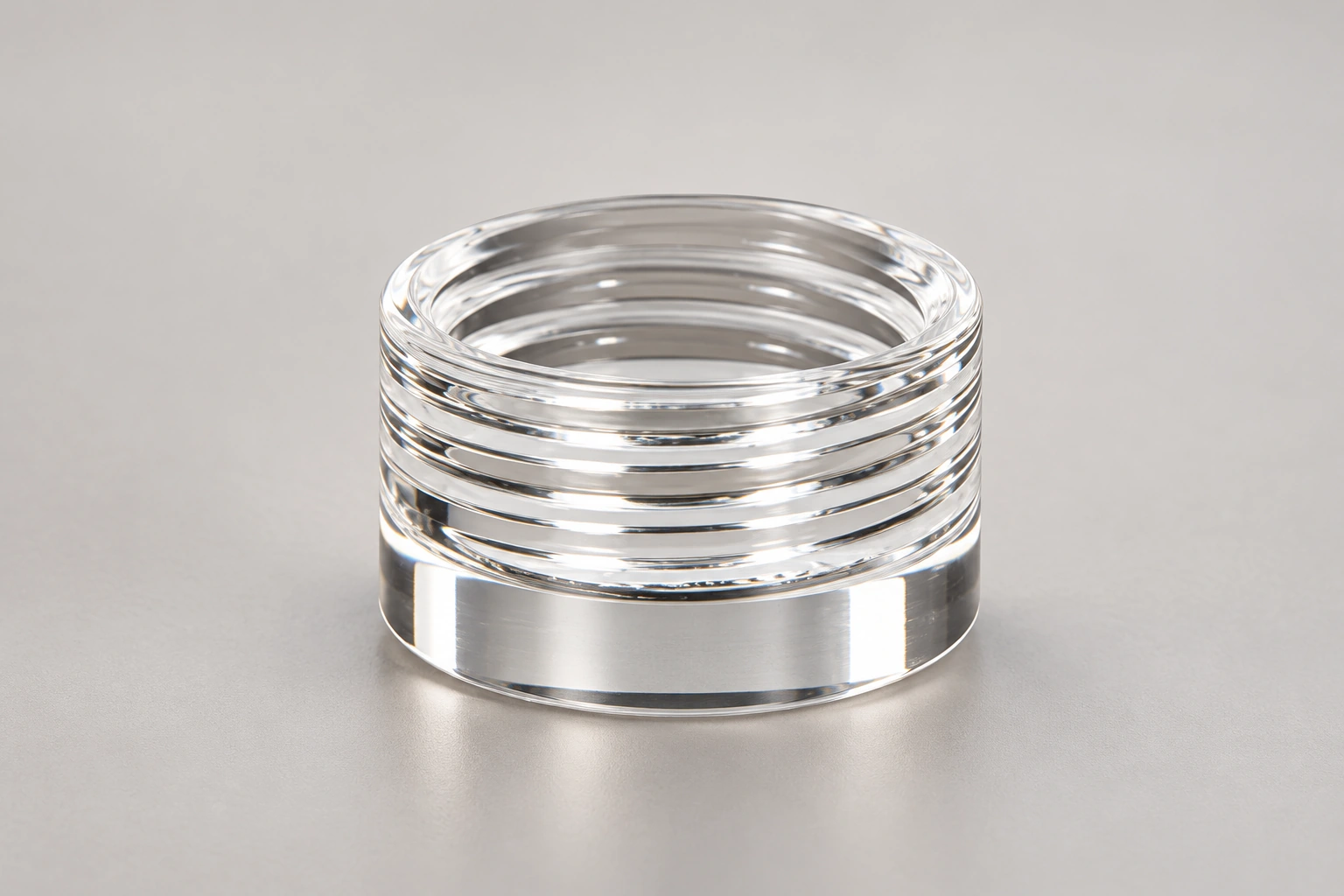
Quartz Screw Caps: Matching the Vial Neck and Contact Surfaces
Custom Design Guides · MQSV-20-QC
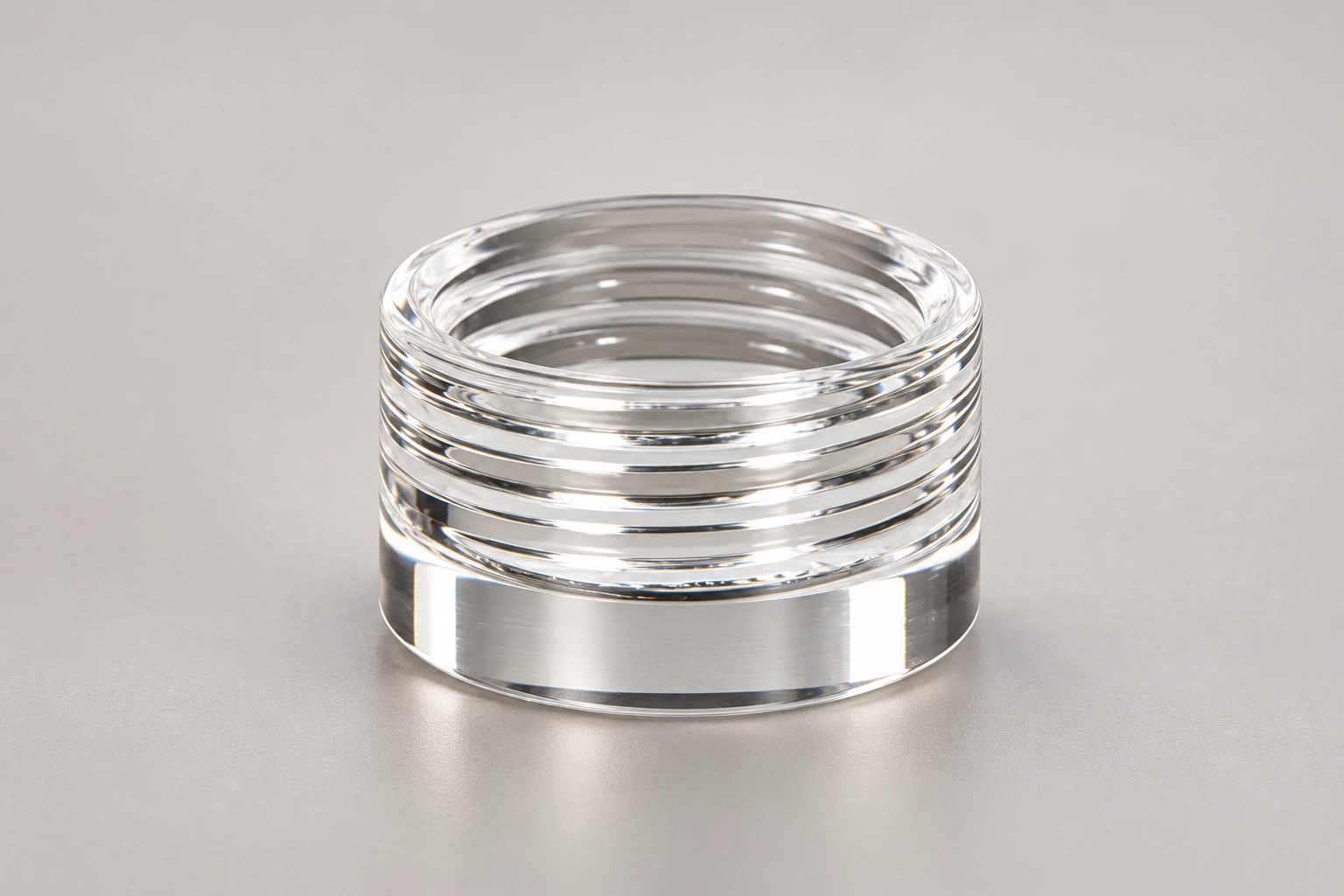
The quartz cap is more than a material choice. It must engage the vial neck and meet the intended closing surface. MQSV-20-QC is the separate cap option associated with the 20 mL-and-larger quartz vial family.
That family label is a starting point for identification, not a universal thread specification. If you are replacing a cap or changing a closure material, send the actual vial reference as well as the cap request.
In this guide: Configuration · Design comparison · Find the surface that actually closes the bottle · Why choose a quartz cap? · Replacing a cap without changing the bottle · Agree what a fit check should demonstrate · Enquiry
The configuration discussed here
What changes from the simpler form?
Changing from a different cap material to a quartz-cap option preserves the need for thread engagement and a defined closing contact. The material change does not remove those mechanical interfaces or make every other sample-contact part quartz.
Find the surface that actually closes the bottle
The thread brings the cap and neck together, but the intended contact may be at an end face, a liner or another defined seat. Show that contact in a section sketch. Without it, two parts can have apparently matching threads while leaving the closure behaviour undefined.
Include any existing liner as a separate component. Its material and dimensions should not disappear into a description such as all-quartz bottle. If the sample may reach the cap during handling, identify every potentially wetted part.
Why choose a quartz cap?
A customer may want the cap material to be consistent with the bottle or may have a process that rules out a particular polymer component. State the actual reason and operating conditions so MQ can review the complete closure, including any remaining non-quartz parts.
The material choice alone does not establish leakage, temperature or pressure capability. It also does not turn the bottle into a sealed reactor. Any such requirement needs its own design assessment and agreed acceptance conditions.

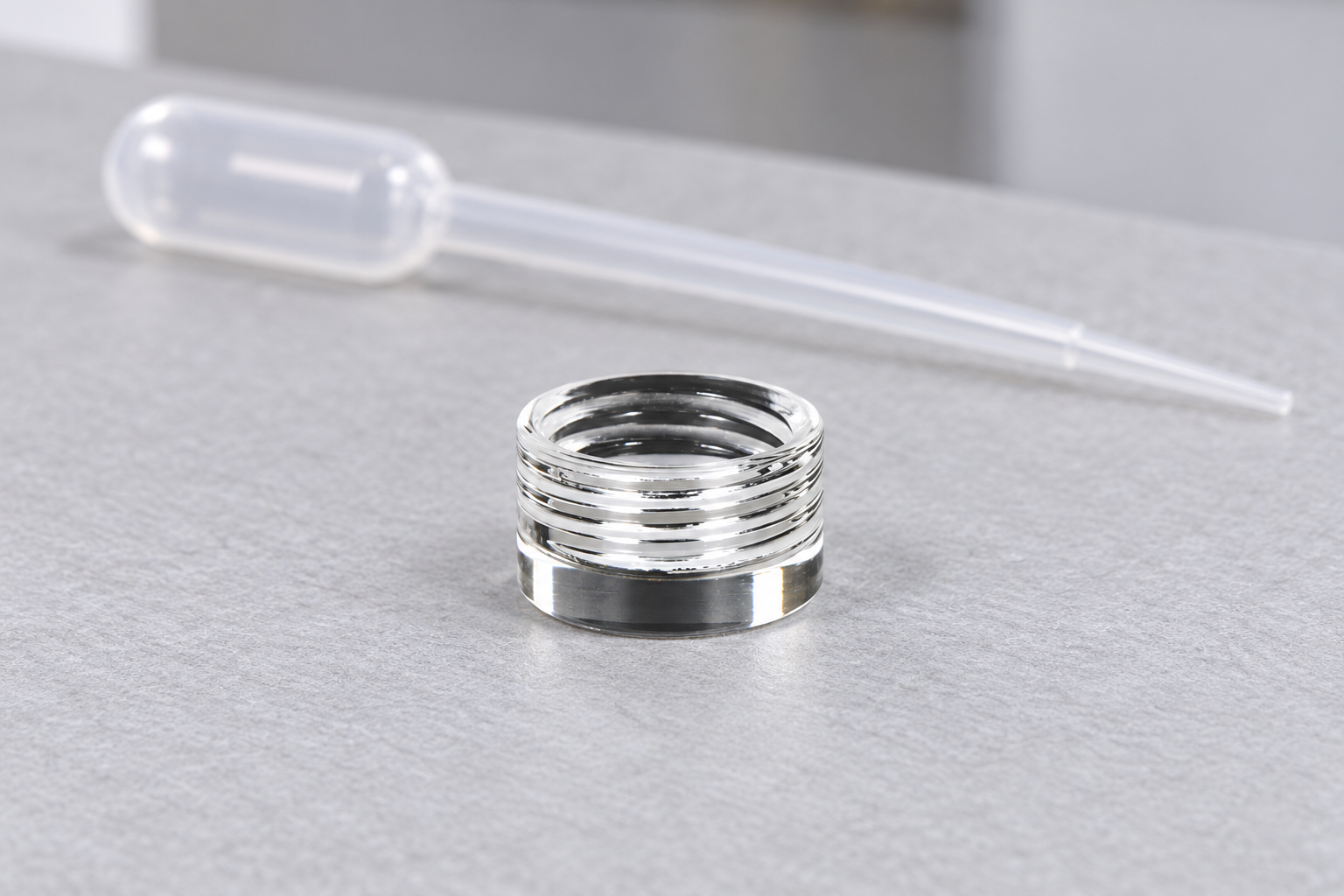
Replacing a cap without changing the bottle
For a replacement, provide the vial SKU, neck drawing or a mating sample. Mark the thread designation if known, the neck-end geometry and the dimensions that must remain fixed. Photographs help identify the part, but critical thread and seat dimensions should come from a drawing or measurement.
For example, retaining an existing bottle while asking for a different grip diameter is a cap-envelope request. Retaining the outside cap size while changing the contact arrangement is a different task. Describe which requirement is driving the change rather than asking only for a similar-looking cap.
Agree what a fit check should demonstrate
A proposed check can address engagement with the actual neck, contact at the specified surface and removal by the intended method. Give MQ the required observation or dimensional record. Do not substitute an arbitrary tightening instruction for an agreed assembly specification.
If leakage testing is required, define the contents or test medium, orientation, duration and other relevant conditions before ordering. This guide does not report such a test for the reference cap.
Structure reference and specification points
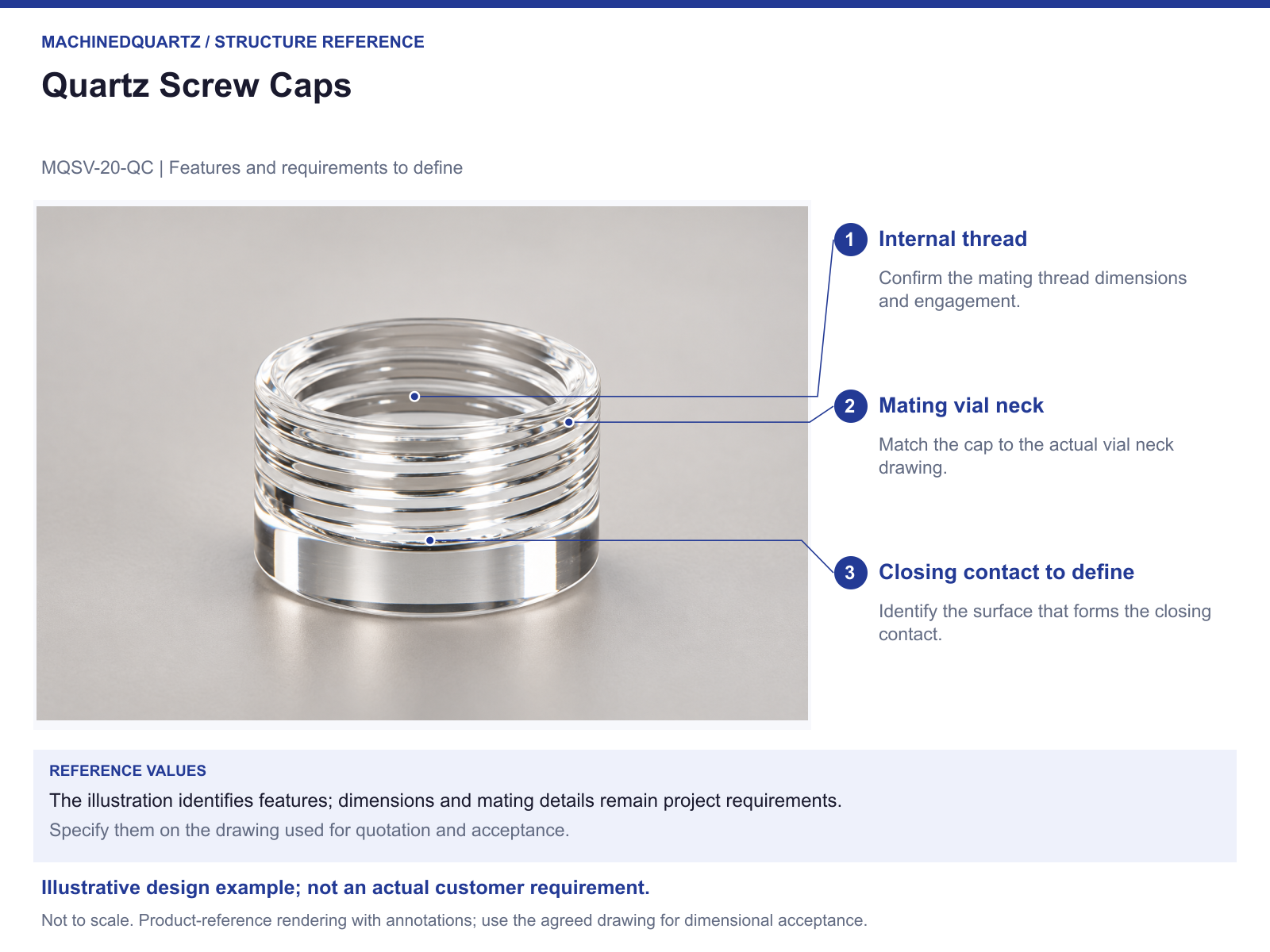
Download the structure reference (PDF)
Can this cap be ordered for any bottle above 20 mL?
No. The listed family pairing is not a general compatibility rule based on capacity. The actual neck and contact arrangement must match. Send the precise bottle reference or mating drawing with the cap enquiry.
Send a drawing or the mating-part details
Order the separate cap for its specified vial pairing, or ask MQ to review the mating bottle and cap together. Include the liner when it is part of the intended closure.
- Exact bottle reference and neck drawing or sample
- Thread designation and engagement requirements, if known
- Closing contact surface and liner arrangement
- Allowed cap envelope and opening method
- Operating conditions, quantity and required fit or closure checks
Modified designs are reviewed for the project. The drawing, supplied parts, quantity, inspection scope, price and preparation or production time are agreed in the quotation.
Details to settle for the ordered configuration
Detailed thread geometry, tolerances, contact finish, liner requirements and operating limits need confirmation for the assembly.


Recent Comments