
Quartz Distillation Flask: Planning the Side Arm and Supports
Custom Design Guides · MQQDF001
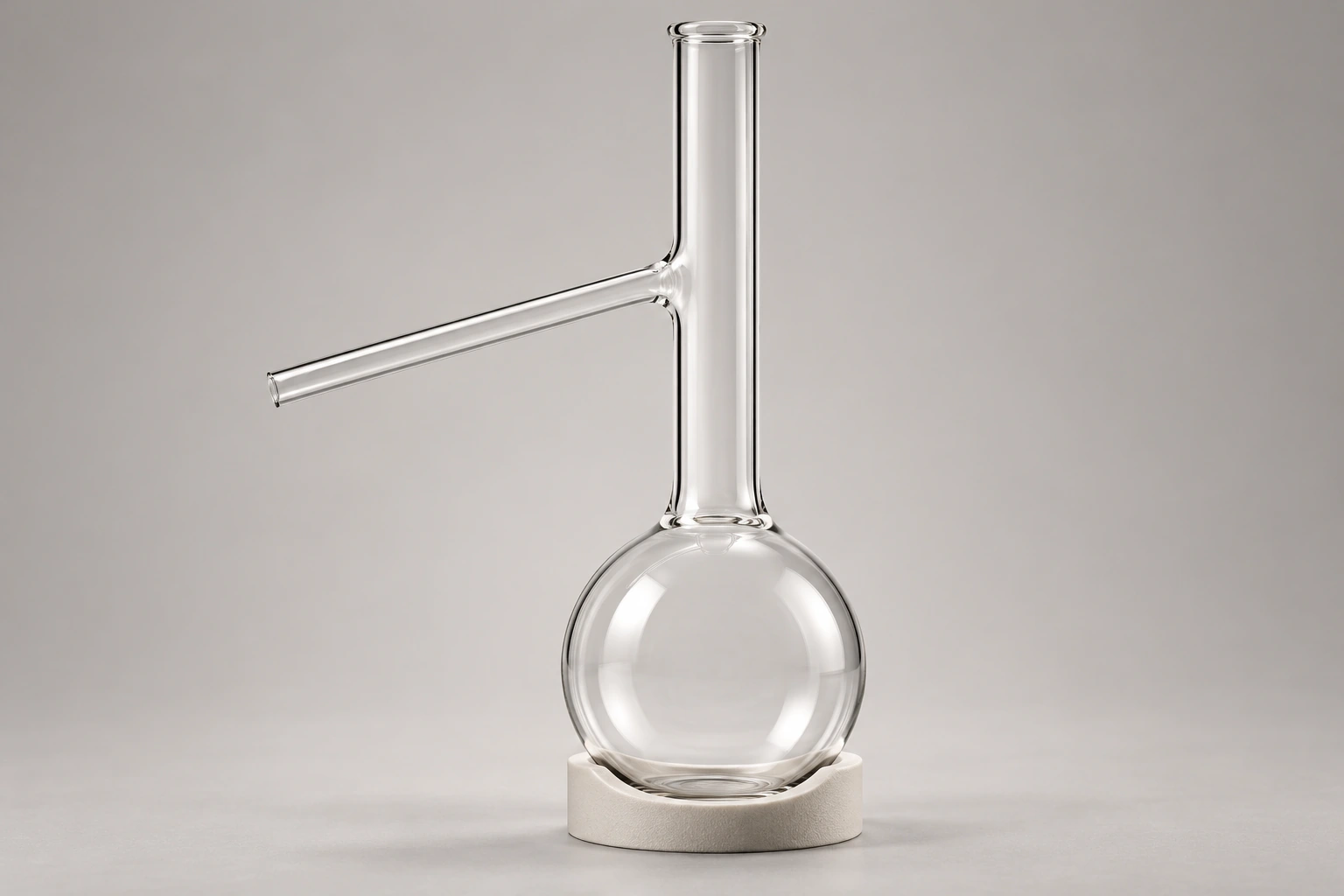
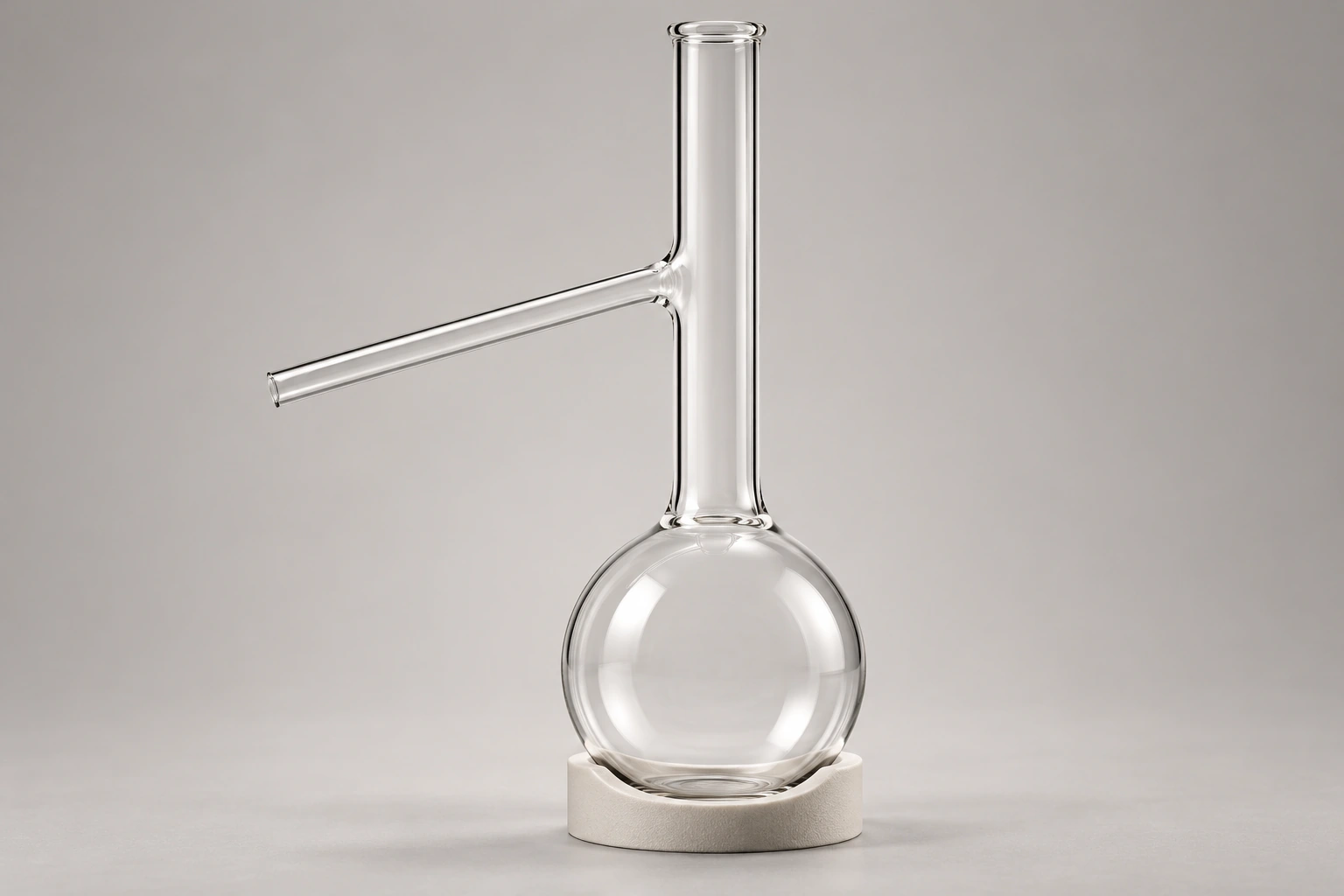
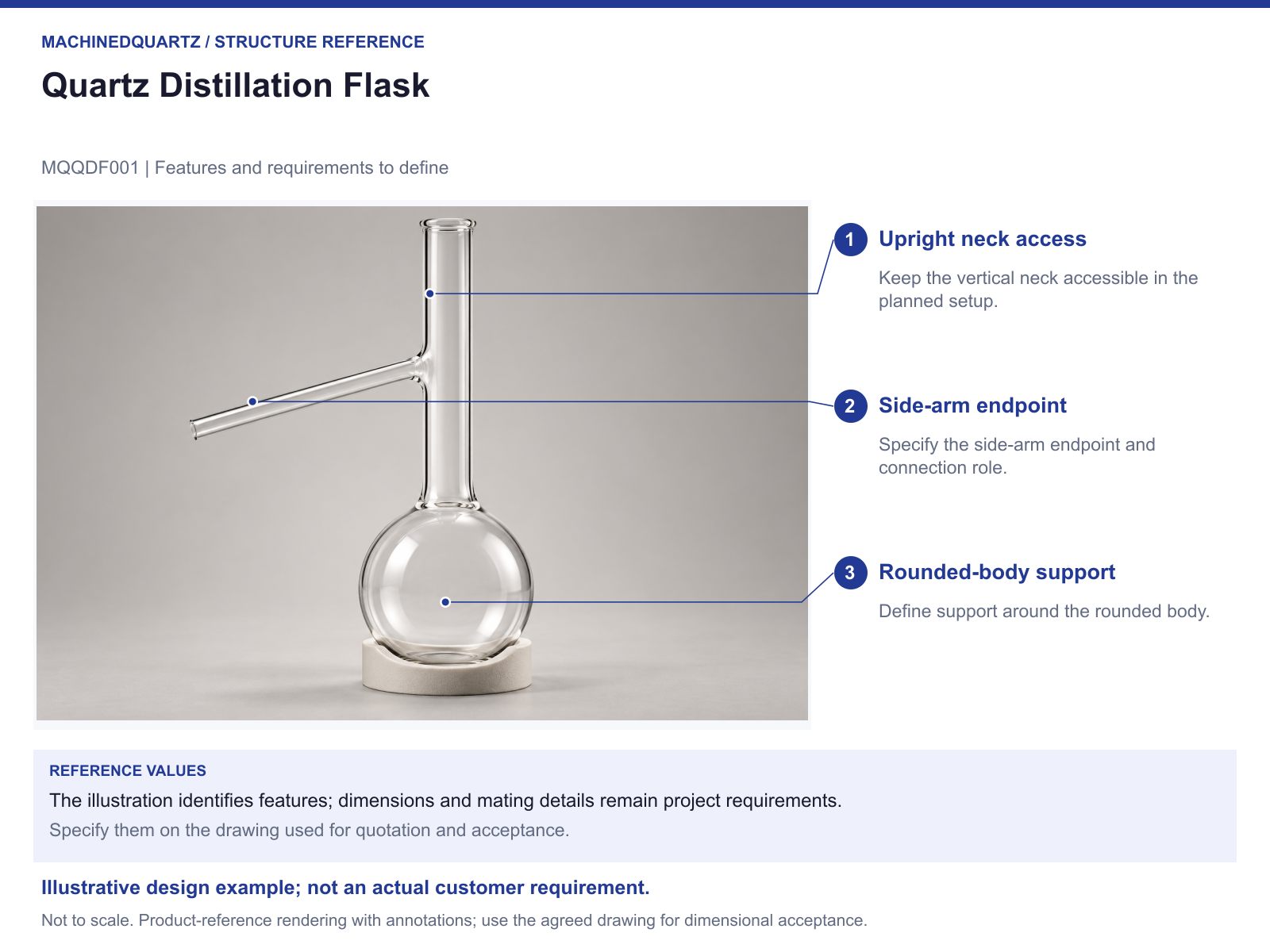
A side arm gives a flask an additional connection route that an ordinary sample bottle does not have. MQQDF001 is the nominal 125 mL quartz distillation-flask configuration, with a rounded body, upright neck and projecting side arm.
Its selection starts with the equipment around it. The side-arm direction, receiving connection and support position need to be described together so that one connection does not force the flask into an unsuitable position.
In this guide: Configuration · Design comparison · Locate the receiving connection first · Support the vessel and connection as an assembly · A custom arm is a geometric request first · State the process conditions separately · Enquiry
The configuration discussed here
What changes from the simpler form?
A side arm adds a second interface to the neck-and-body vessel form. It can be discussed around a particular connection task, but it also introduces an endpoint, line clearance and external support requirement.
Locate the receiving connection first
Show the position and angle of the component that meets the side arm. Include the connection's engagement length and the space needed to make and undo it. A side-arm length measured only to the glass tip may not describe the fully connected envelope.
If the mating component is already fixed in an apparatus, supply its drawing or a dimensioned photograph. MQ needs a reference for the required arm position rather than an instruction such as make the outlet longer.
Support the vessel and connection as an assembly
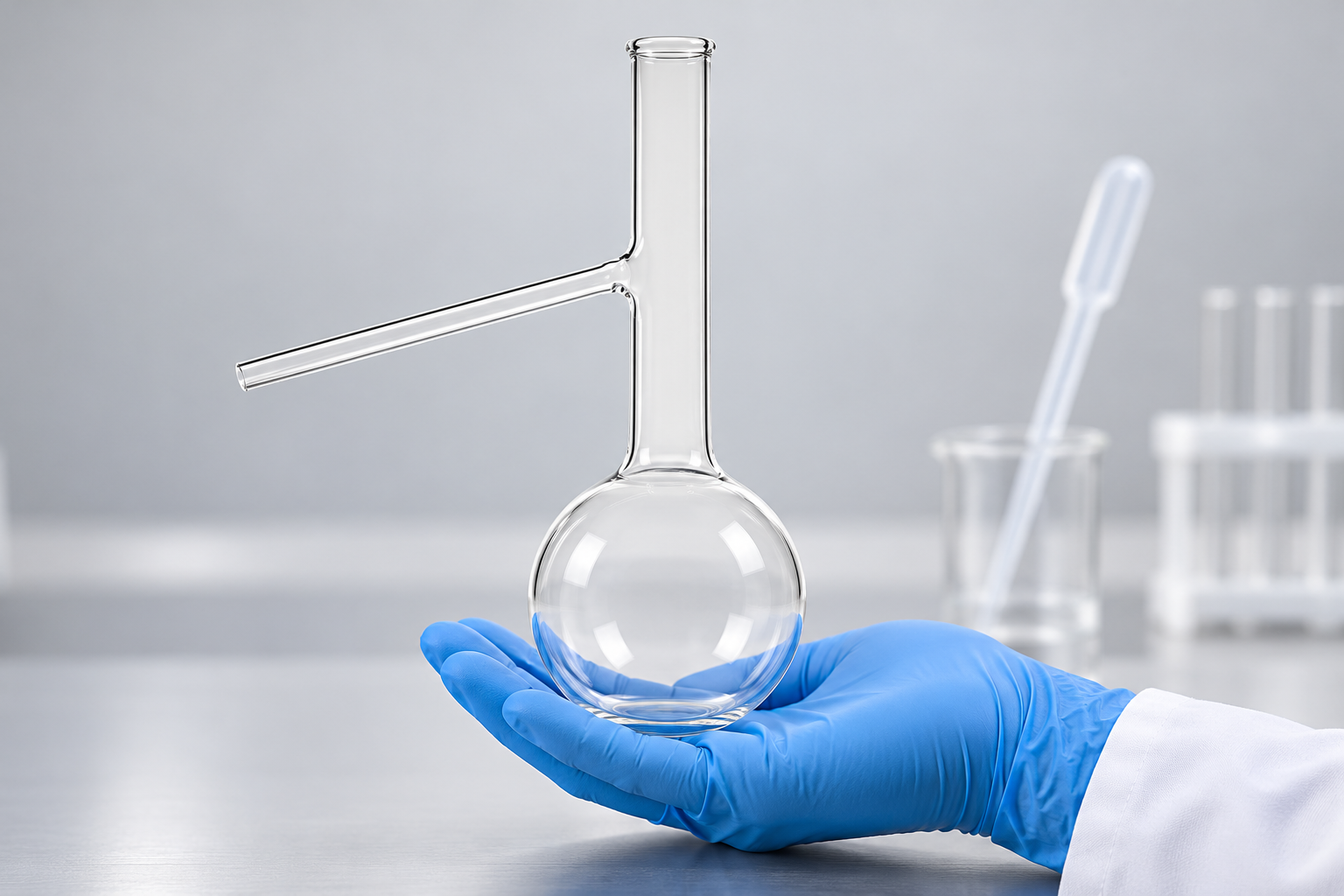
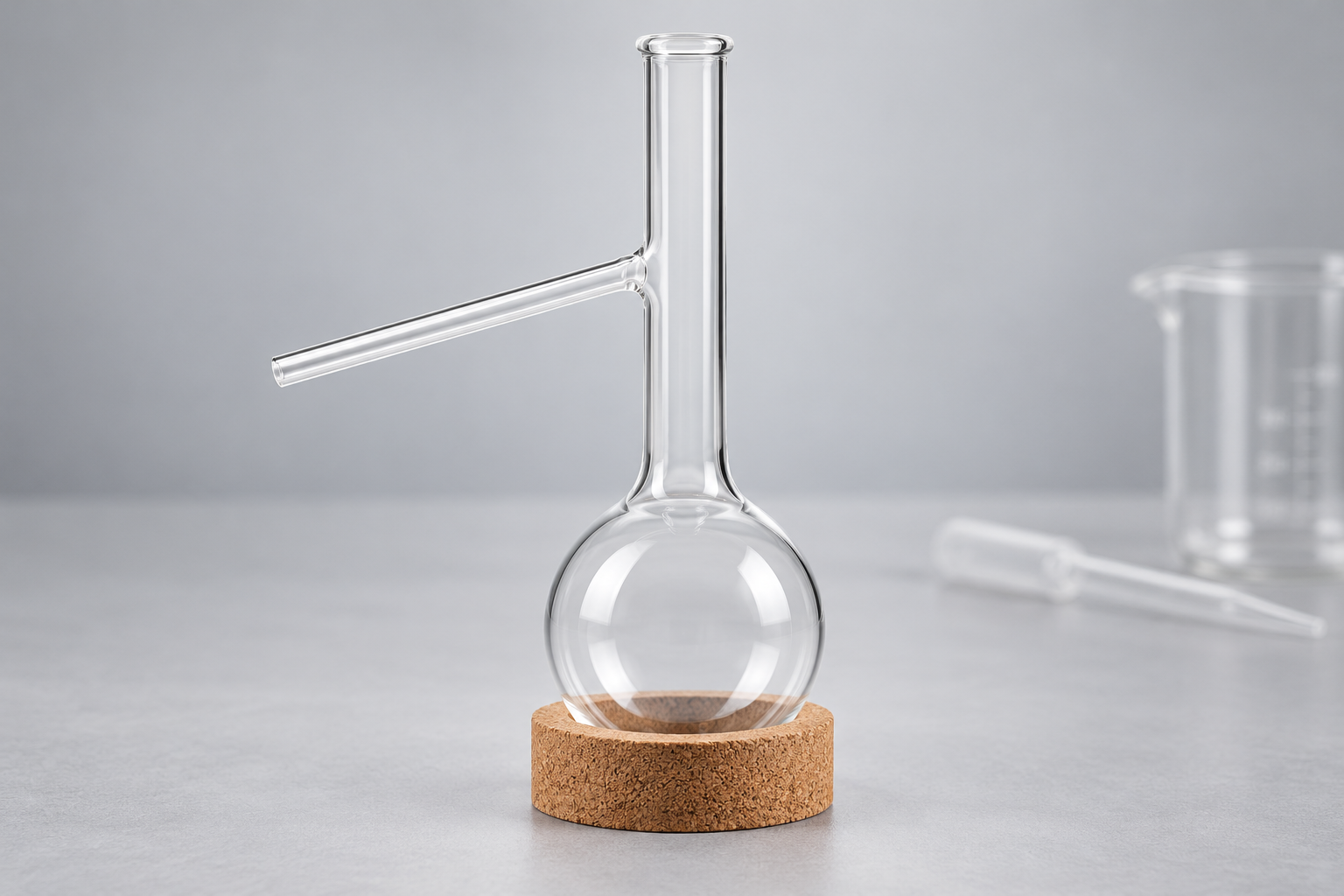
The rounded body needs a planned support arrangement. Describe where the flask is held and where the connected equipment is supported. A projecting side arm should not be treated as a general-purpose handle or an unqualified load-bearing member.
Leave the neck accessible for the intended operation. The clearances above it may differ from the space around the side connection, particularly if the flask is removed from the setup as a complete piece.
A custom arm is a geometric request first
A hypothetical modification might keep the nominal vessel size while moving the side-arm endpoint to meet an existing connection. Mark the body and neck features to retain, then give the required endpoint and orientation from a clear datum.
That sketch explains the task, but the final geometry and feasible connection arrangement still need review. A new joint, a closed system or a changed operating condition is not implied by altering the arm length.
State the process conditions separately
Nominal capacity is not the working charge for every process. Provide the intended fill, contents and relevant thermal or pressure conditions. The reference flask is not presented as a pressure-rated, vacuum-qualified or complete distillation apparatus.
Any required joint, dimensional or operating verification should be agreed before supply. If a document or test is essential, define its scope in the quotation rather than relying on a general quartzware description.
Structure reference and specification points
Download the structure reference (PDF)
Does the side arm establish a standard mating joint?
No standard joint or connection dimensions are established here. Provide the receiving part and specify the mating interface, engagement and available space so the arm can be reviewed for that assembly.
Send a drawing or the mating-part details
Send a sketch of the complete connection area, including the support and receiving part. MQ can then review the flask geometry with the rest of the proposed assembly.
- Vessel size and intended working fill
- Side-arm endpoint, orientation and mating connection
- Neck access and any required joint
- Body and connected-equipment support positions
- Process conditions, quantity and required checks
Modified designs are reviewed for the project. The drawing, supplied parts, quantity, inspection scope, price and preparation or production time are agreed in the quotation.
Details to settle for the ordered configuration
Joint details, arm dimensions, working fill, permissible conditions and apparatus compatibility remain to be confirmed.


Recent Comments