
Flanged Quartz Crucible: Defining the Rim and Support Contact
Custom Design Guides · MQQCR007
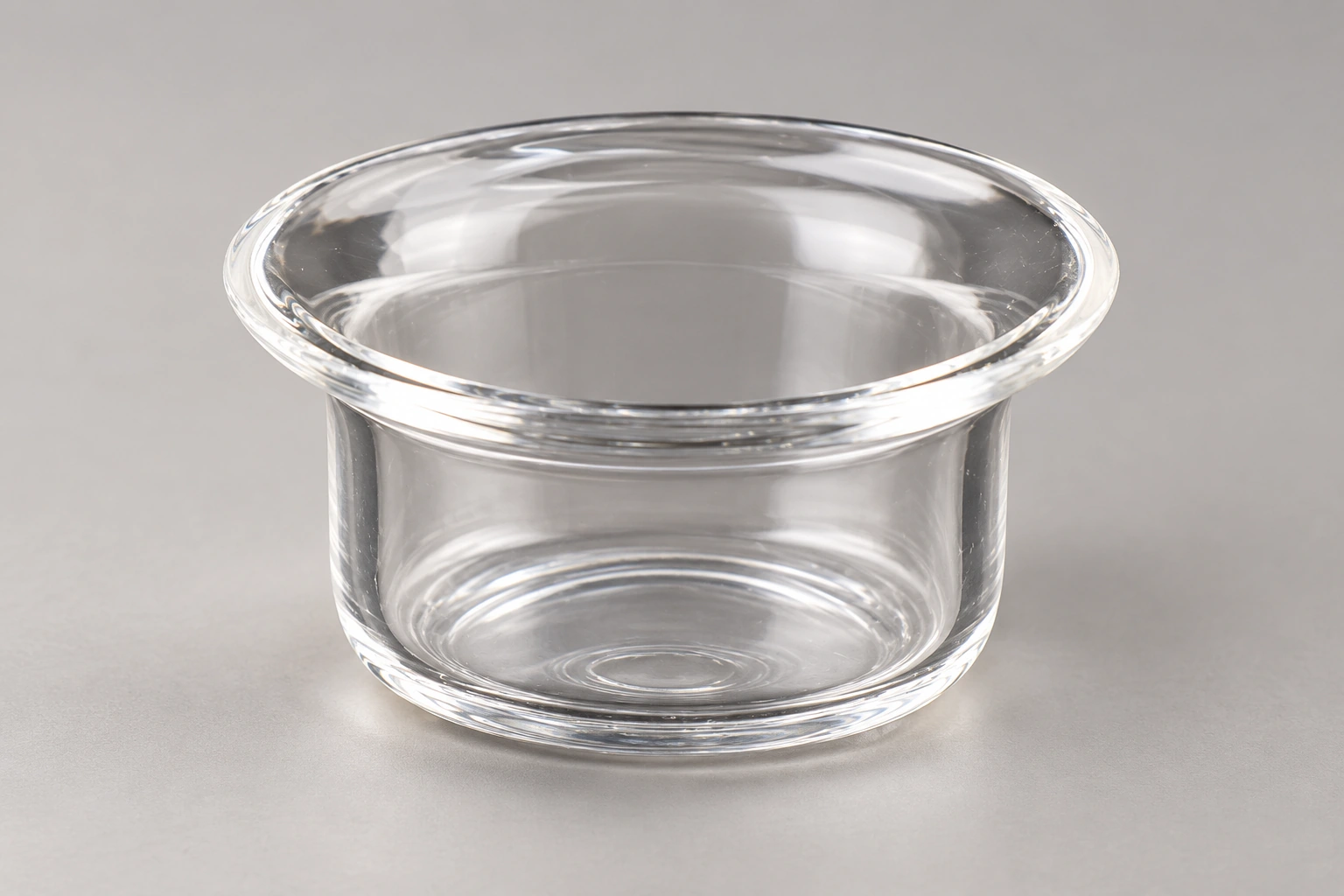
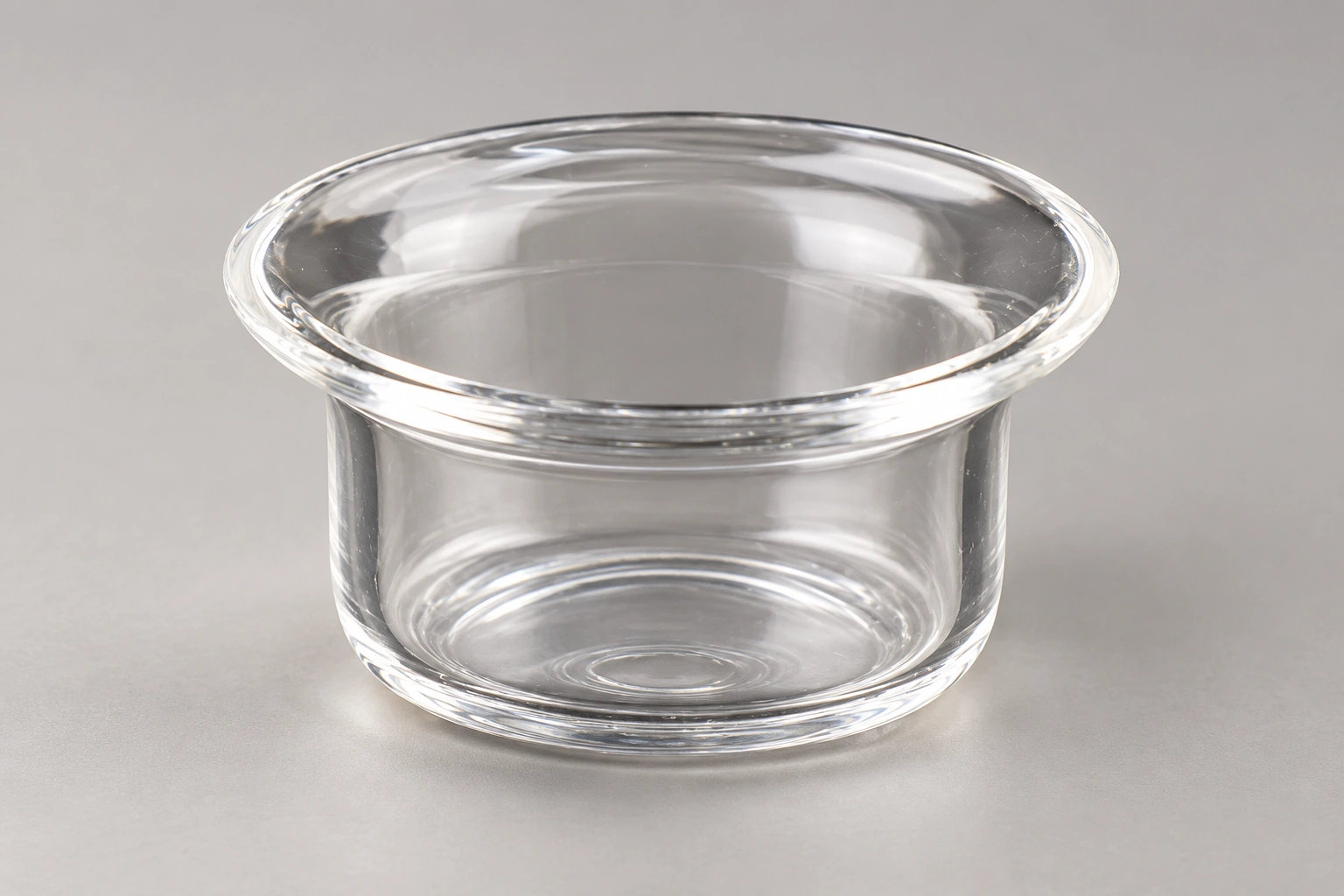
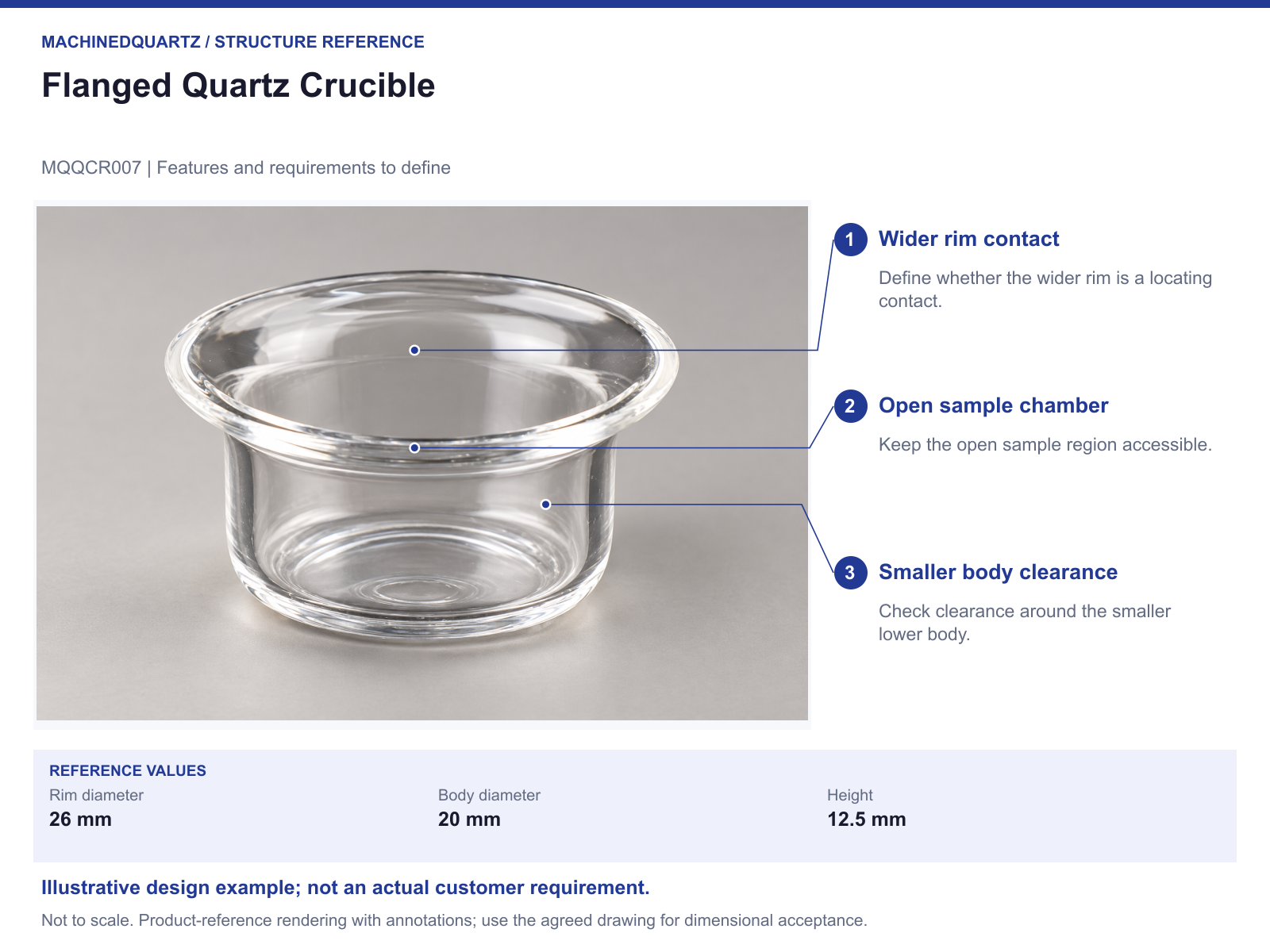
MQQCR007 has an outward-projecting rim above a shallow quartz body. That rim changes the available contact geometry compared with a straight-sided vessel. The reference marks a 26 mm rim diameter, a 20 mm body diameter and a 12.5 mm height.
When choosing this form, identify whether the rim is needed for location, handling access or another defined task. A visible flange is not an assigned load rating or a standard mating interface.
In this guide: Configuration · Design comparison · Choose the contact before choosing the hole size · Plan the operation around the open vessel · Change the rim without losing the chamber definition · Agree the fit evidence the order needs · Enquiry
The configuration discussed here
What changes from the simpler form?
The wider rim adds a possible locating interface around a smaller cup body. Compared with a straight-sided cup, the support can reference a different feature, but the rim and body clearances must both be defined.
Choose the contact before choosing the hole size
A holder that clears the body may still contact the rim. If the rim is intended to locate the vessel, show the holder opening and the actual annular contact area. If it is only needed for tool access, state where the vessel is supported instead.
The 26 mm rim and 20 mm body marks describe different boundaries. Keeping them separate avoids specifying a support opening from the wrong diameter. The required clearance and contact tolerances belong in the mating drawing.
Plan the operation around the open vessel
For example, a sample may be loaded while the crucible is already seated in a support. Include the loading tool, the intended sample level and the route used to remove the vessel. A narrow access space near the rim can matter even when the body fits.
If the process involves heat, describe the actual temperature conditions and handling arrangement. Quartz construction and the crucible name do not establish a permissible thermal cycle, direct-heating method or hot-handling qualification.


Change the rim without losing the chamber definition
A possible custom request is to retain the body and sample space while reviewing a different rim envelope for an existing holder. Supply the holder drawing and mark the body dimensions to keep. The rim contact, thickness and transition then need review as part of the vessel.
Do not describe the request as machining a finished rim unless that process has been agreed. The design example explains the required geometry, not a verified manufacturing route.
Agree the fit evidence the order needs
A proposed check can compare the rim and body with the agreed drawing or use the actual holder for a trial fit. Identify which surfaces and dimensions matter. Any requested material or process documentation should be specified before quotation.
No operating-temperature limit or specialised instrument compatibility is established by this dimensional reference. Those requirements stay separate from the basic vessel envelope.
Structure reference and specification points
Download the structure reference (PDF)
Can the flanged rim be treated as a standard support flange?
No standard flange or permissible load is established here. Define the actual mating contact and support requirement, then agree the geometry and any verification for the order.
Send a drawing or the mating-part details
Send the holder section with the crucible enquiry. MQ can then discuss the rim as a specific contact feature rather than an unspecified wider edge.
- Rim, body and holder-opening dimensions
- Intended support contact and tool access
- Sample space and working fill
- Actual process conditions and handling arrangement
- Quantity, drawing tolerances and requested checks
Modified designs are reviewed for the project. The drawing, supplied parts, quantity, inspection scope, price and preparation or production time are agreed in the quotation.
Details to settle for the ordered configuration
Contact tolerances, rim thickness, allowable loading and operating conditions require confirmation for the intended setup.



Recent Comments