
Rolled-Rim Quartz Test Tube: Planning Contact at the Open End
Custom Design Guides · MQQTT033
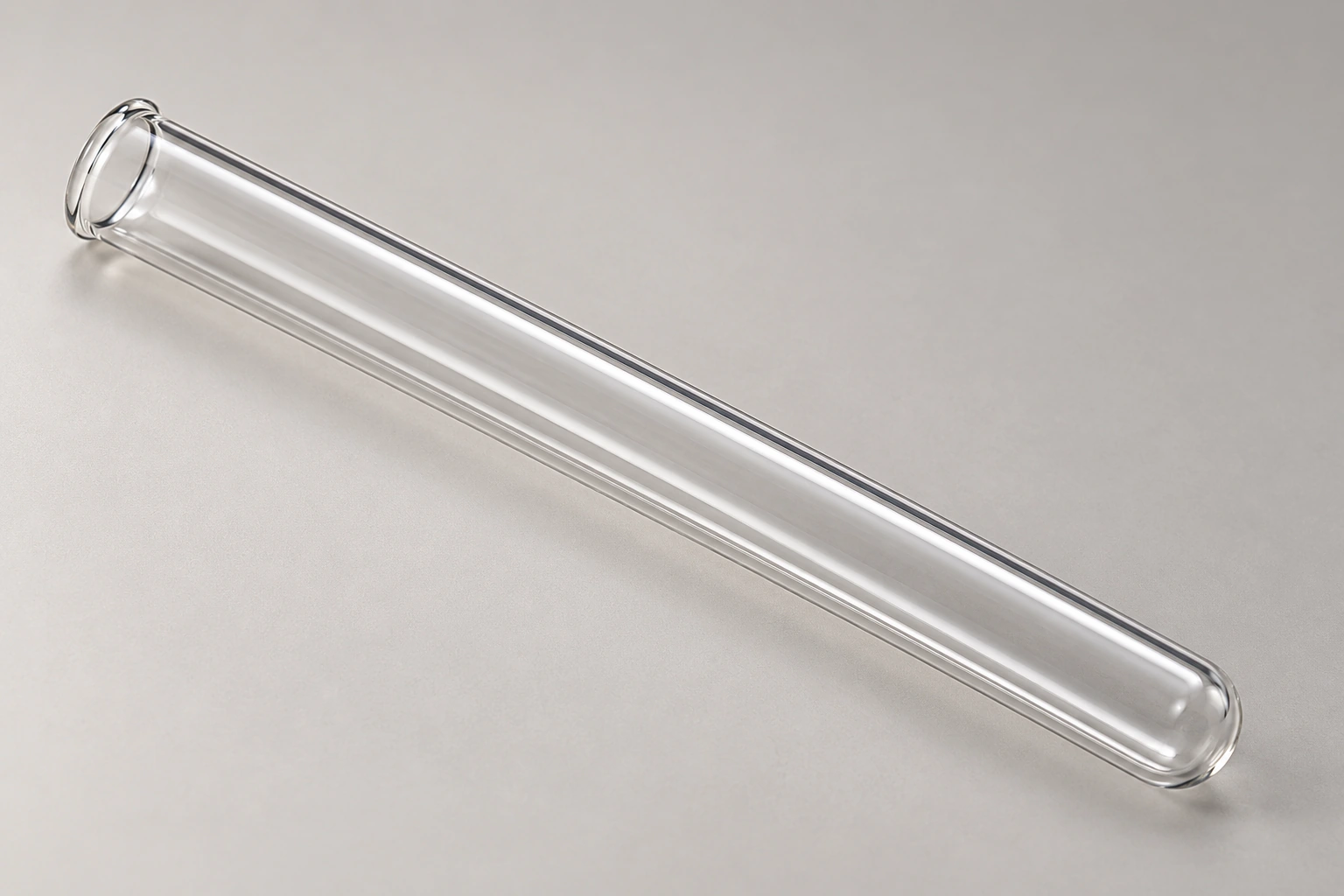
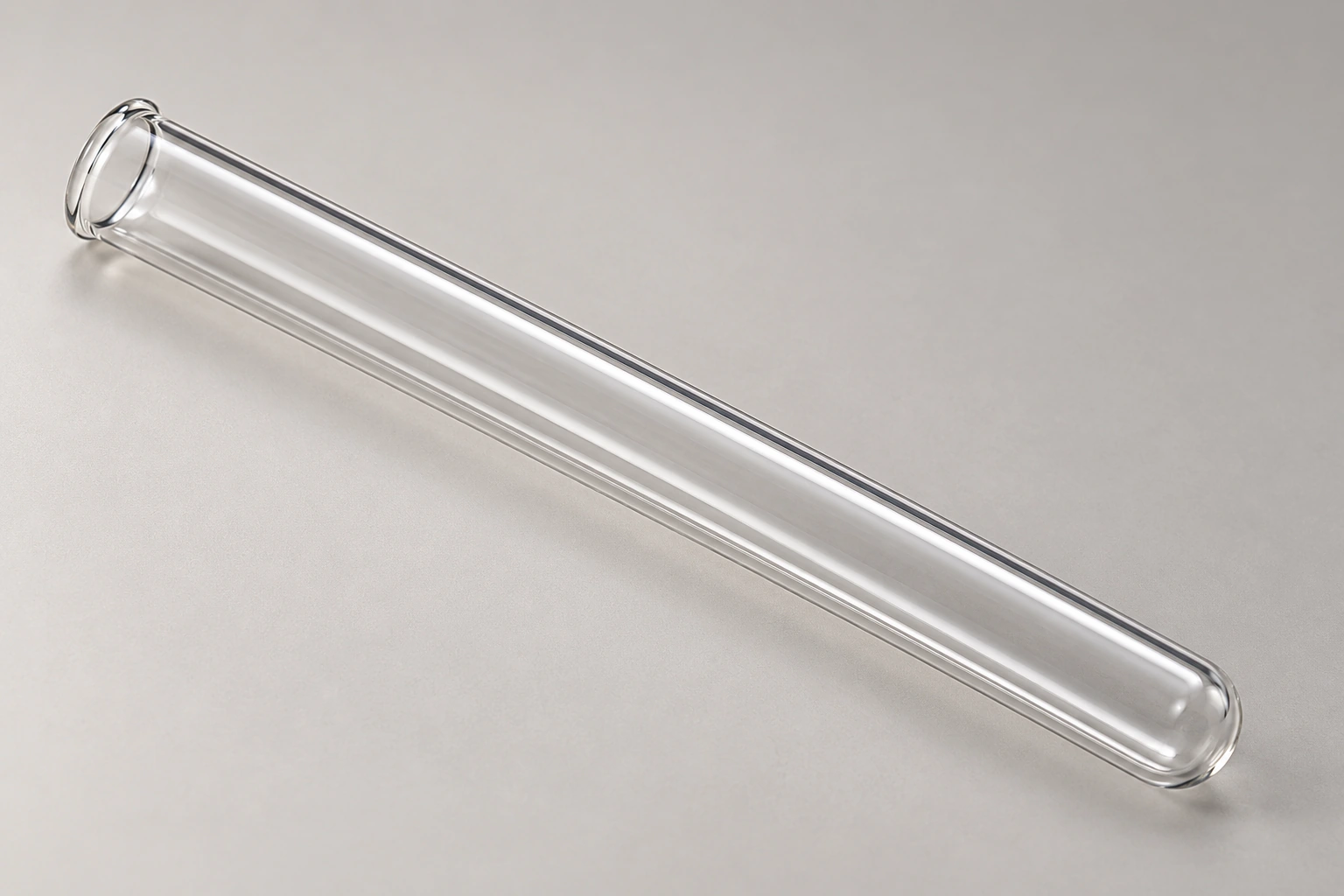
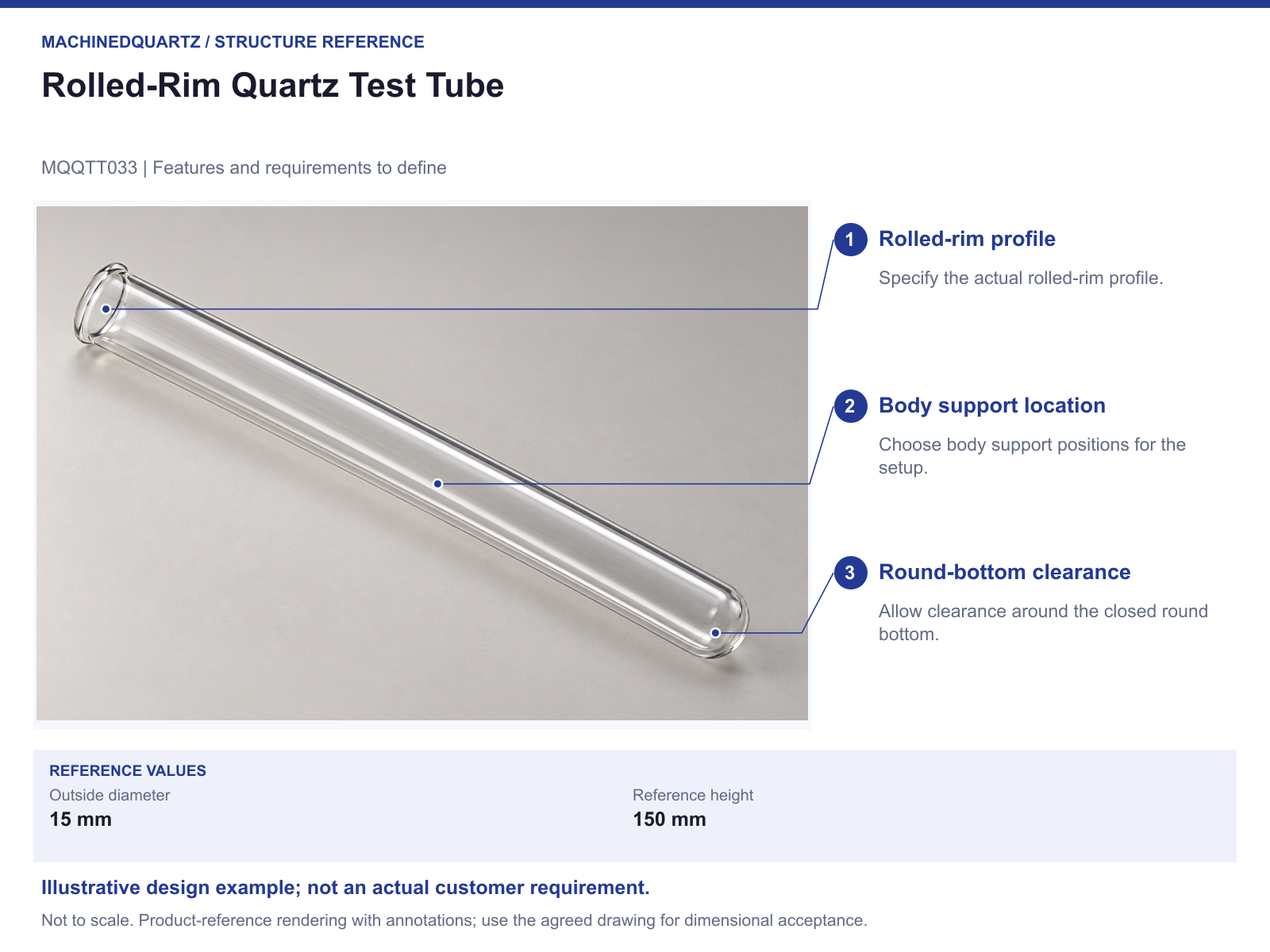
The small change at the mouth can matter more than the nominal tube capacity. MQQTT033 combines a round-bottom quartz tube with a rolled or flared rim; the reference marks a 15 mm outside diameter and 150 mm height.
The rim is useful to identify in a holder sketch, but its role must be stated. A rolled opening is not automatically a standard flange, a rated support shoulder or a sealed connection.
In this guide: Configuration · Design comparison · Decide whether the rim locates the tube · Allow for the round bottom · Changing the mouth while retaining the body · Define checks at the actual contact · Enquiry
The configuration discussed here
What changes from the simpler form?
A rounded base changes how a tube meets its support compared with a flat-bottom vessel. The rolled rim adds another local shape at the opening, so a nominal body diameter cannot describe every contact.
Decide whether the rim locates the tube
If a support is intended to meet the rim, give the support opening and the required contact region. The tube outside diameter is not enough to define that fit. The rolled edge has its own diameter and profile to confirm.
If the tube is supported lower on the body, show that contact instead. The rim may then serve mainly as a mouth feature, while the body support establishes the tube's position.
Allow for the round bottom
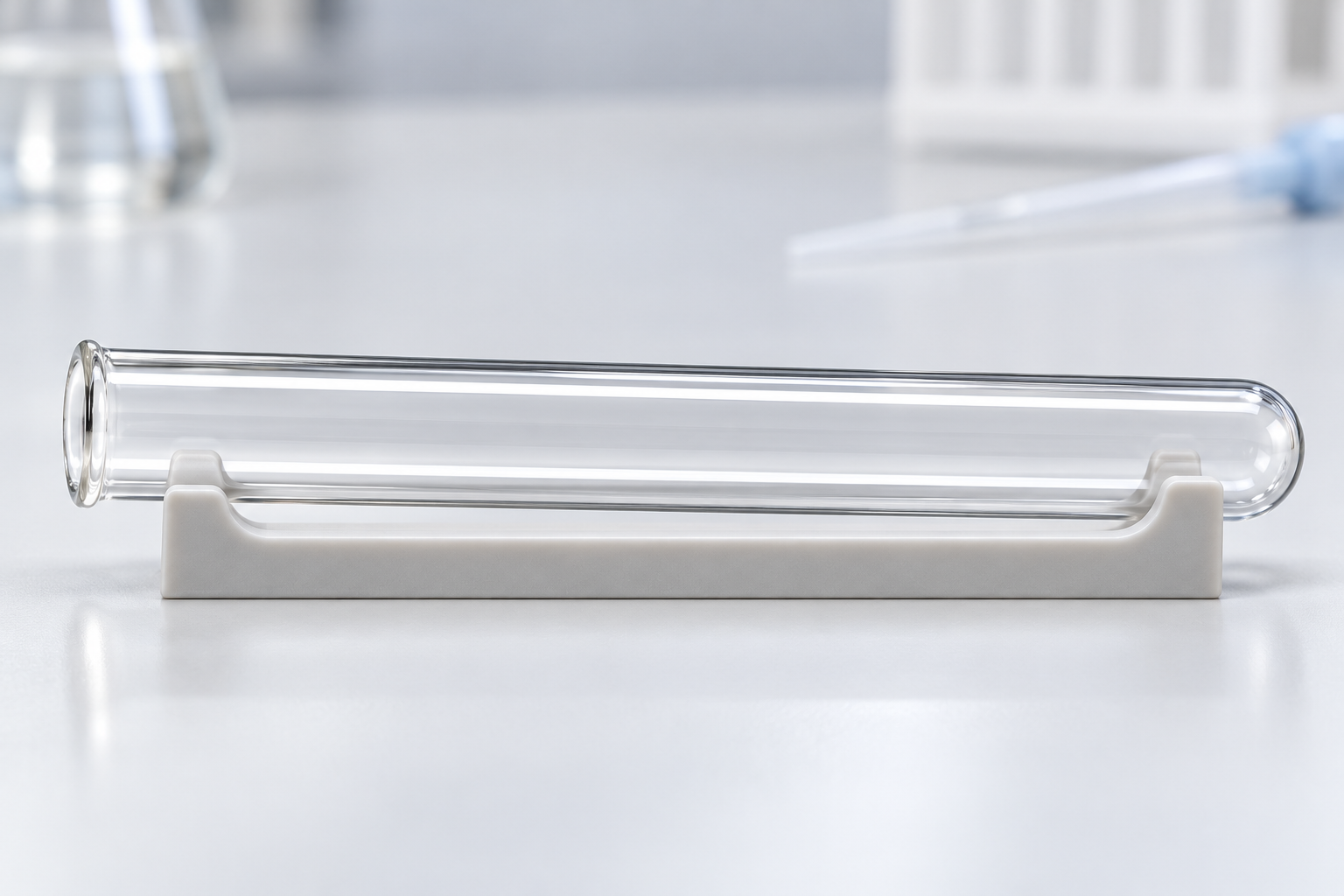
A rounded base needs a defined support or suspended arrangement. Do not assume that the tube can stand as a flat-bottom vial would. Describe the orientation, the location of the sample and the movement used to load or remove it.
For example, a narrow holder may leave the mouth exposed while surrounding the body. Show enough clearance for the loading tool and the route used to withdraw the whole tube without catching the rim.
Changing the mouth while retaining the body
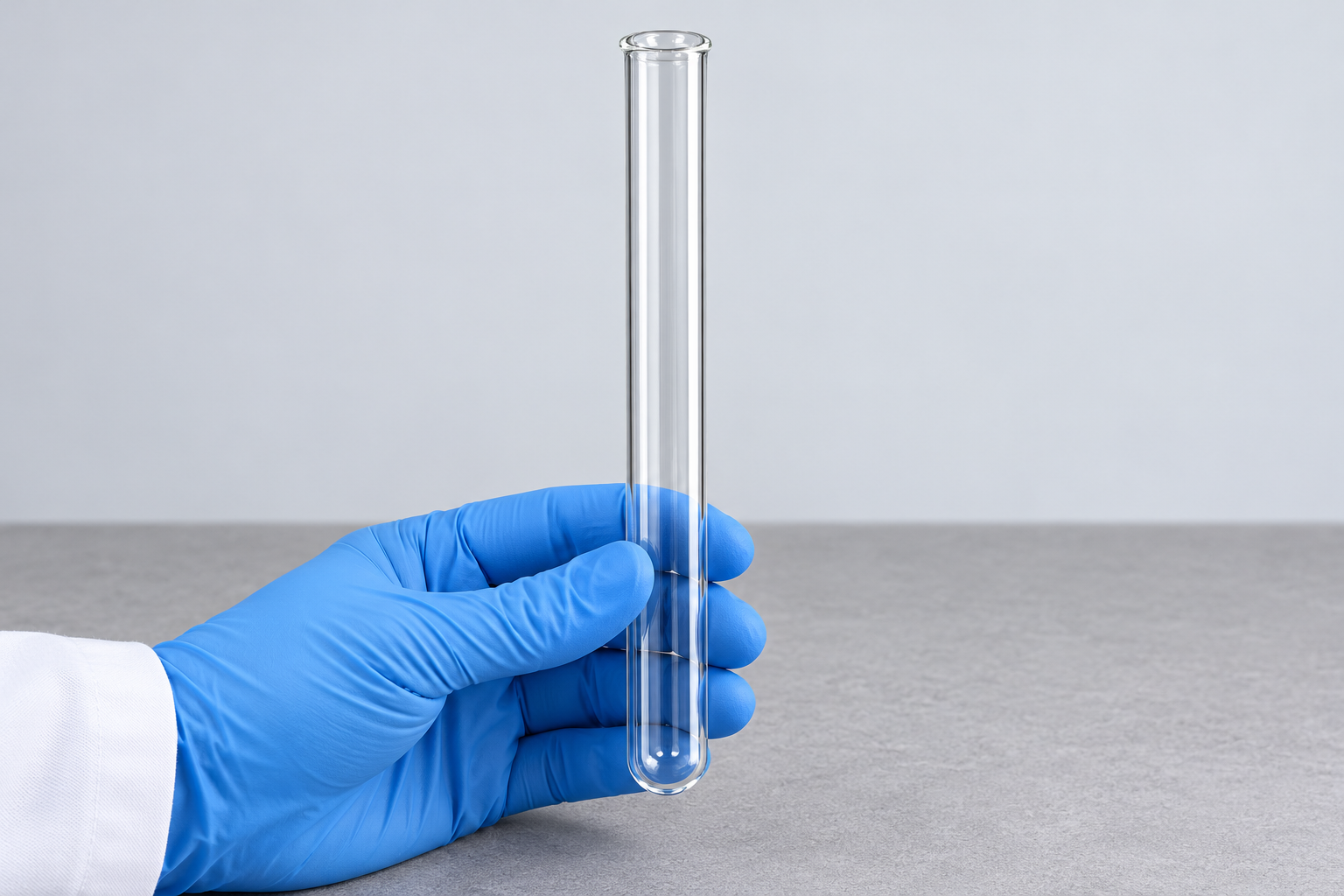
A possible custom request is to retain the body envelope while changing the rolled-mouth profile to suit an existing support. Provide the mating section and identify the required clear opening. The rim profile and permitted handling need a joint review.
A closure is a separate addition. The selected rolled-rim tube should not be assumed to accept a standard stopper or screw cap simply because another tube has the same nominal capacity.
Define checks at the actual contact
For dimensional acceptance, identify the rim, body and bottom regions relevant to the holder. A proposed trial fit should use the intended support and loading tool, with agreed observations.
Material, operating conditions and any requested inspection record belong in the order discussion. The reference dimensions do not establish a thermal-cycle limit, allowable contact load or instrument fit.
Structure reference and specification points
Download the structure reference (PDF)
Can I substitute it for a screw-top tube of the same capacity?
Not from capacity alone. The opening, closure arrangement, body envelope and support are different. Compare the complete parts and specify the task that the replacement must perform.
Send a drawing or the mating-part details
Send the support section and identify the rim's intended task. MQ can review the mouth feature without assuming a standard flange or closure.
- Tube envelope and required clear mouth
- Rolled-rim diameter, profile and intended contact
- Round-bottom support and orientation
- Loading-tool and withdrawal clearances
- Sample conditions, quantity and requested checks
Modified designs are reviewed for the project. The drawing, supplied parts, quantity, inspection scope, price and preparation or production time are agreed in the quotation.
Details to settle for the ordered configuration
Rim dimensions, allowable contact, closure compatibility and operating limits remain to be agreed.


Recent Comments