
Branched Quartz Connector: Mapping the Tube Ends Before Ordering
Custom Design Guides · MQQFT001
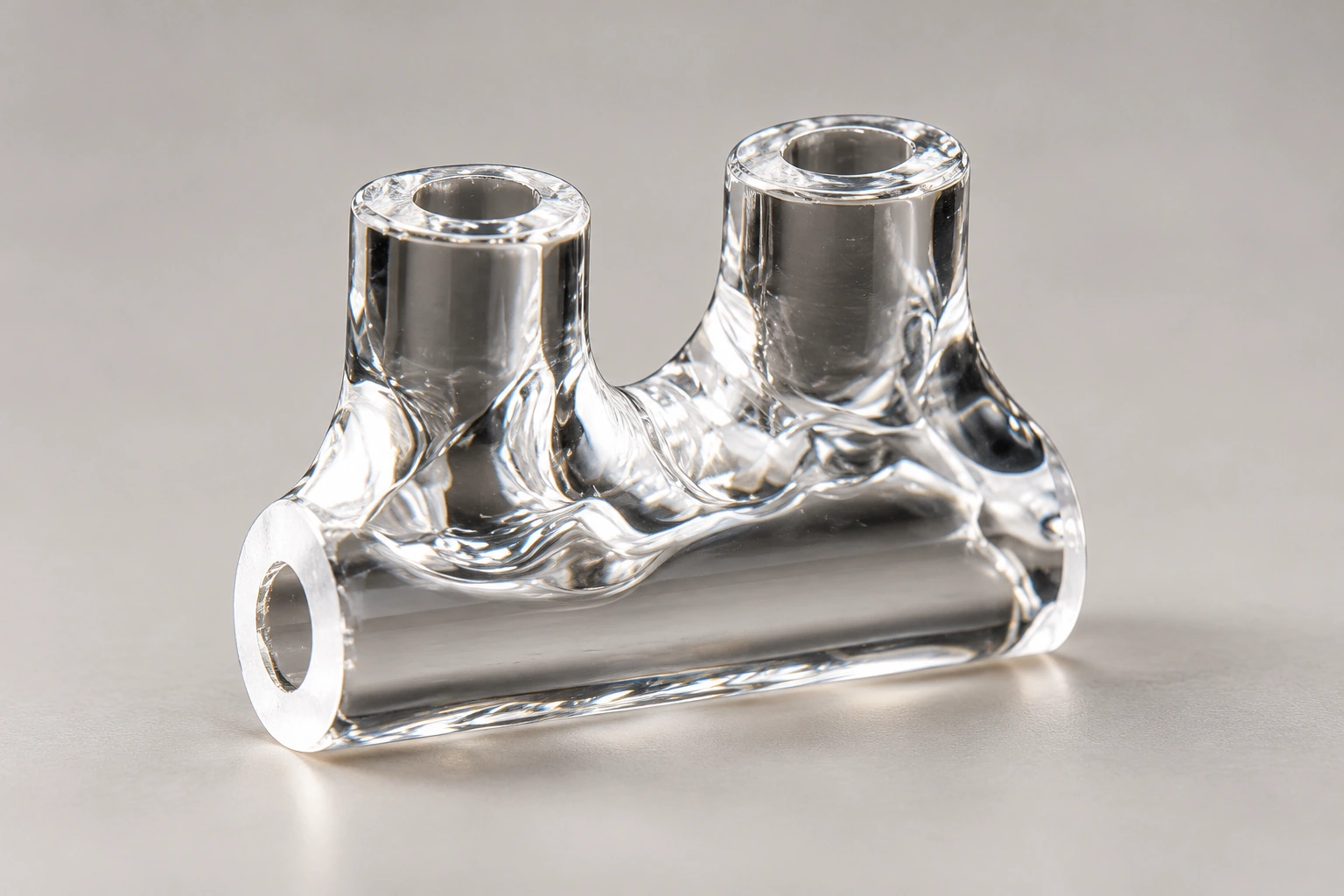
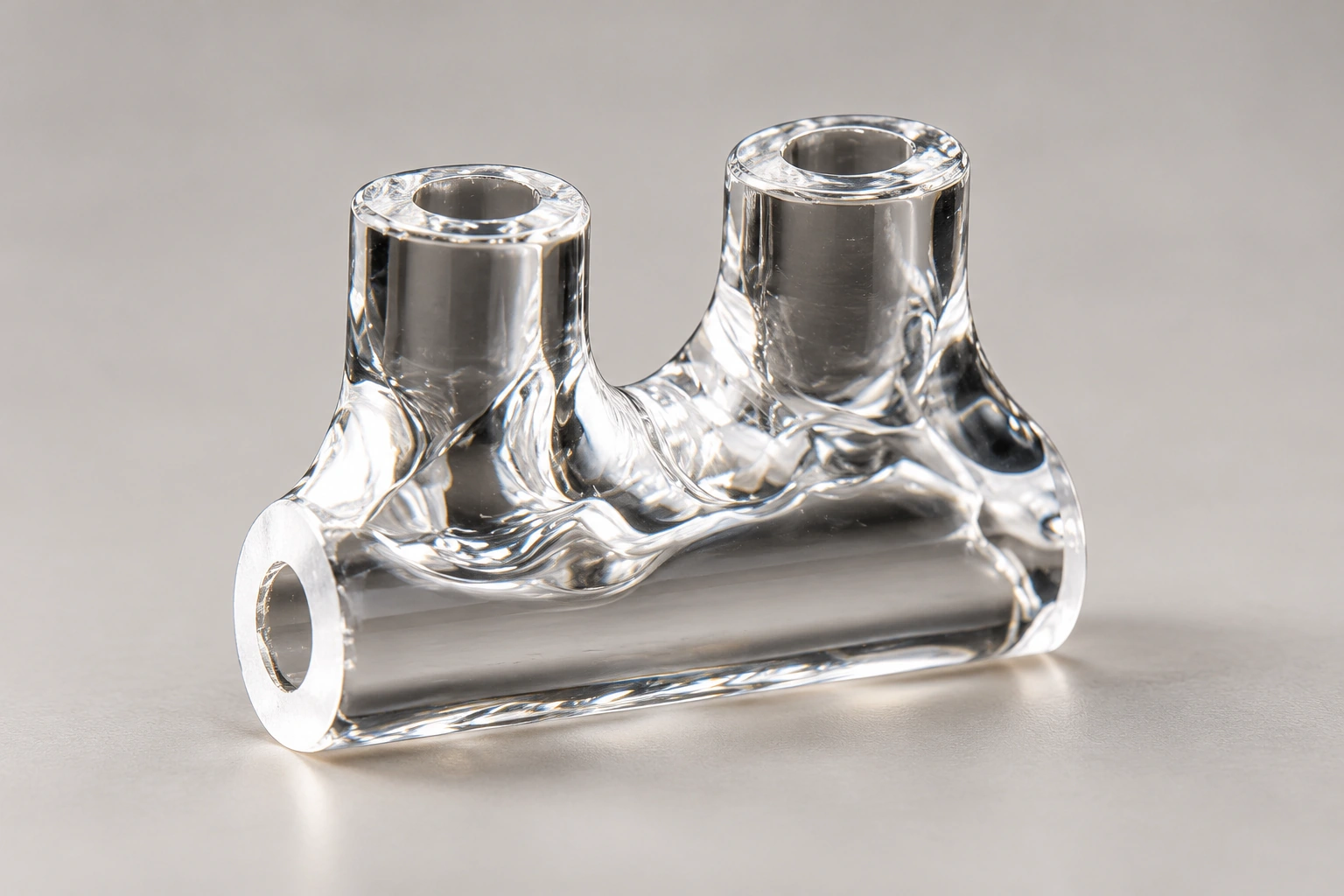
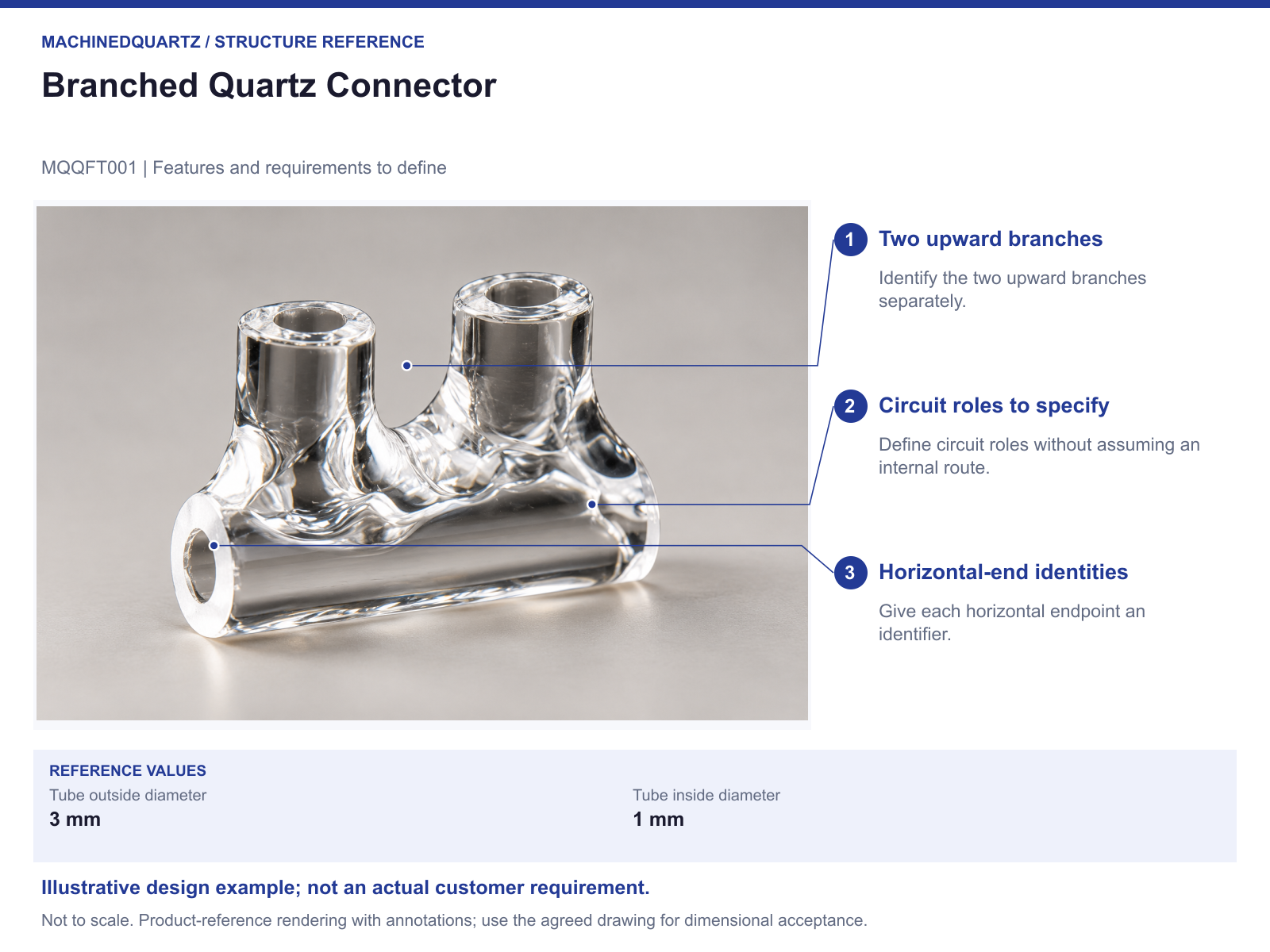
MQQFT001 is a quartz connection piece formed from a horizontal tube and two upward branches. The reference identifies nominal tube dimensions of 3 mm outside diameter and 1 mm inside diameter.
The construction is described as three tubes joined together. That describes the tube pieces, not necessarily three open ports. The horizontal ends and both branches need to be mapped explicitly before the part is assigned a role in a fluid circuit.
In this guide: Configuration · Design comparison · Label every physical opening · Define both the bore and the outside mating surface · Use the circuit layout to explain a custom branch · Keep external strain out of the assumed design · Enquiry
The configuration discussed here
What changes from the simpler form?
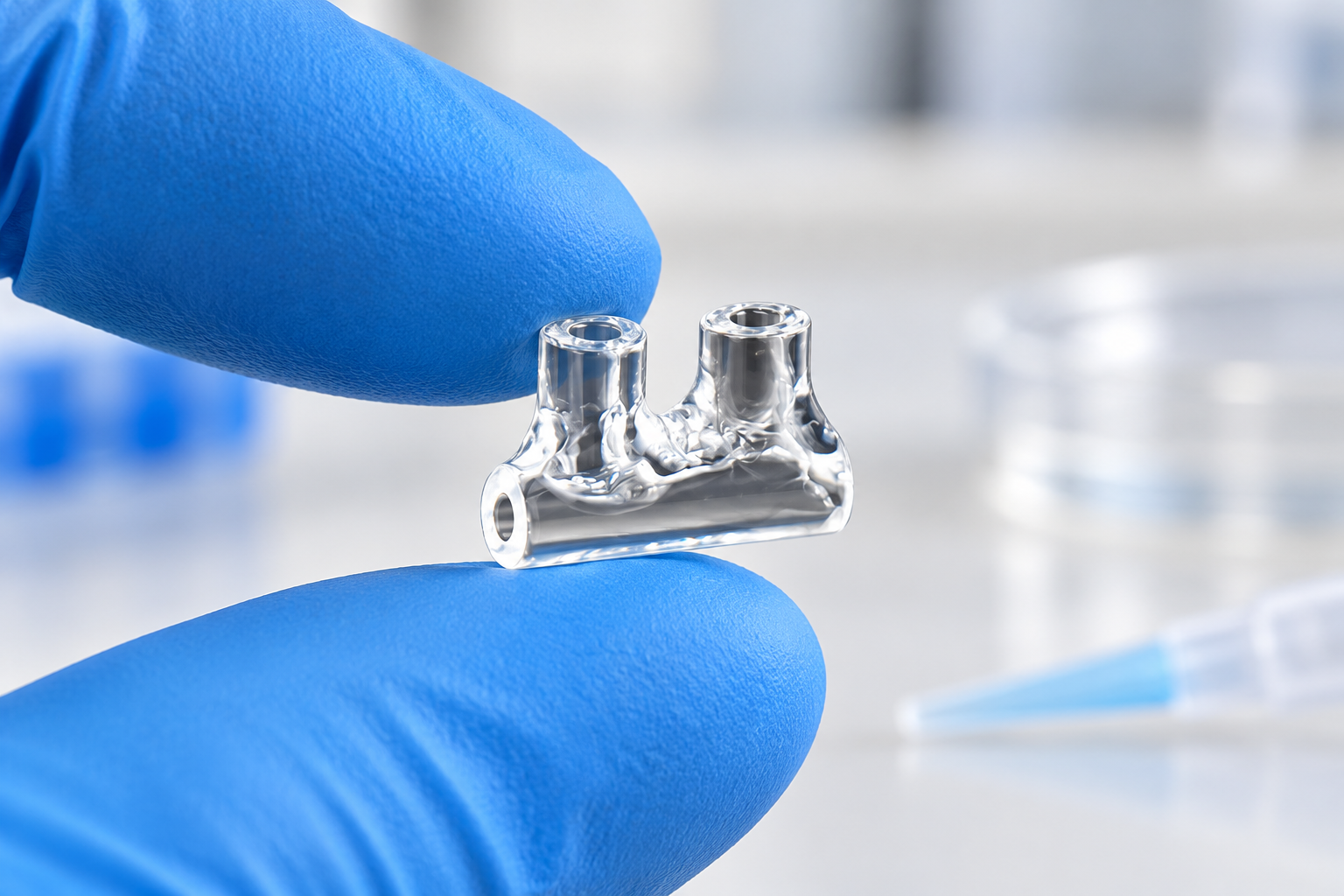
Two upward branches add access points to a horizontal tube. The change creates a routing problem as well as a geometry problem: each endpoint needs a purpose, while separate channels cannot be assumed from the outside form.
Label every physical opening
Start with a sketch of the visible ends and label them individually. Confirm which ends are open and how they connect internally. This avoids treating the number of pieces used to form the part as a circuit diagram.
A proposed inlet, outlet or spare branch is an application assignment. Tube diameter and direction do not establish those roles. Put the intended flow and any closure requirement on the sketch after the actual openings are identified.
Define both the bore and the outside mating surface
The 3 mm outside diameter is relevant to a surrounding connection, while the 1 mm bore describes a different boundary. State which dimension a mating part depends on and whether additional tube-end details or tolerances are required.
Include the clear lengths available around each end. Closely spaced branches can leave less room for attachment and removal than a single straight connection, even when the nominal tube diameter is suitable.
Use the circuit layout to explain a custom branch
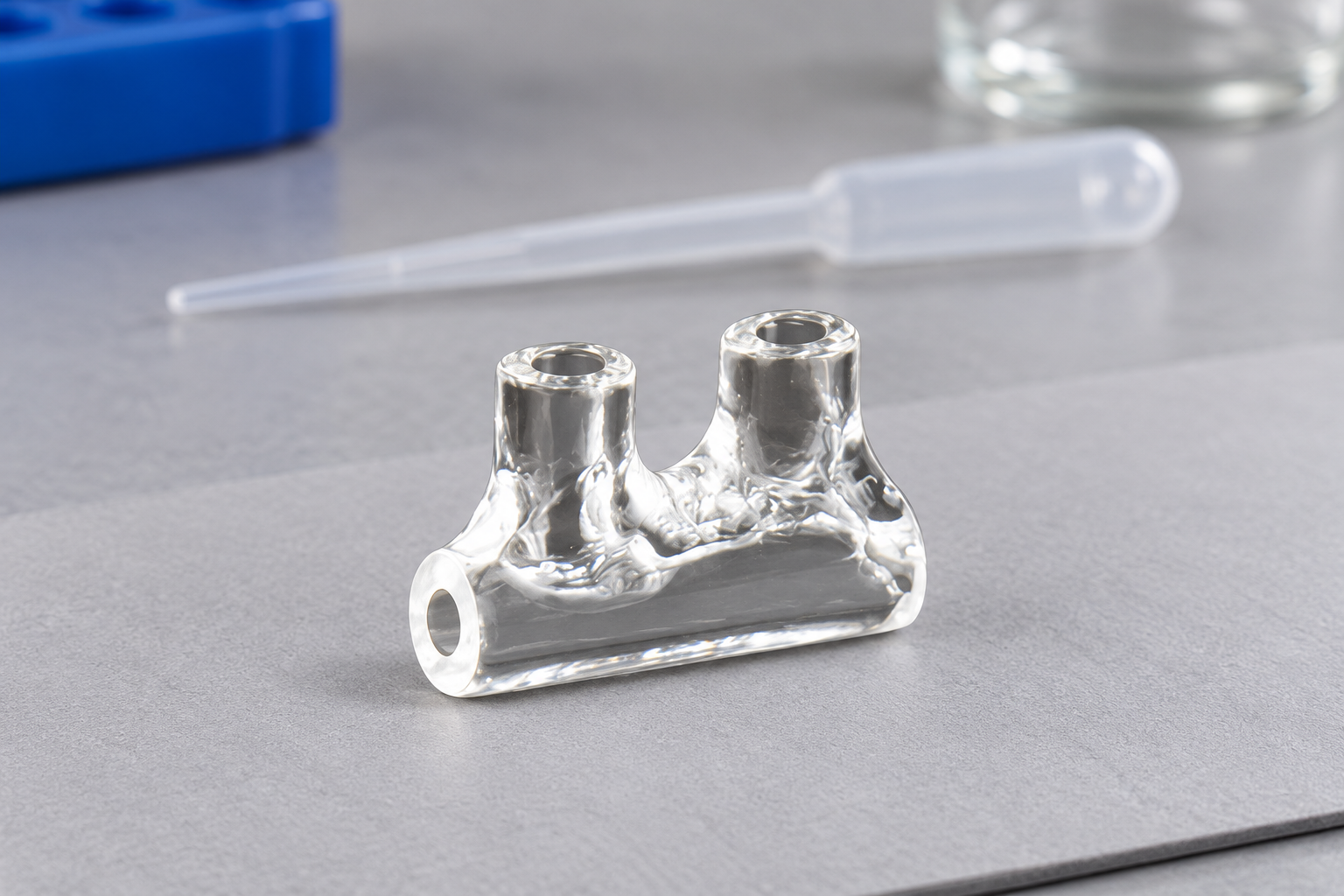
For example, a customer may need to retain the tube size but move a branch to clear a neighbouring component. Give the required branch direction and endpoint from a clear datum, together with the mating connections. The proposed change then has a defined geometric purpose.
Do not infer equal flow division, mixing performance or a particular internal dead volume from the external arrangement. Those are separate requirements that need appropriate information and, where necessary, agreed verification.
Keep external strain out of the assumed design
Describe how the adjoining lines and fittings are supported. A small joined quartz part should not be selected on the assumption that it can carry unspecified loads from a rigid circuit. The fit and operating conditions belong in the assembly review.
If pressure, flushing or leakage behaviour matters, provide the actual conditions and requested check. No rating or completed test is established by the nominal tube dimensions.
Structure reference and specification points
Download the structure reference (PDF)
Does three joined tubes mean exactly three connection ports?
Not necessarily. The reference shows a horizontal tube and two branches, so the end openings and internal connections must be counted and labelled explicitly. Use that map to assign circuit roles.
Send a drawing or the mating-part details
Send a labelled connection sketch, including all horizontal and branch ends. MQ can then review the connector and any proposed position change on an unambiguous basis.
- Opening map and confirmed internal connections
- Intended role of each end
- Mating parts, tube-end details and attachment clearance
- Required branch positions and circuit supports
- Medium, operating conditions and requested checks
Modified designs are reviewed for the project. The drawing, supplied parts, quantity, inspection scope, price and preparation or production time are agreed in the quotation.
Details to settle for the ordered configuration
Exact open-end count, internal route, end lengths, flow behaviour and operating limits remain to be confirmed.


Recent Comments