
Micro Polarimeter Tube: Defining the Sample Space and Filling Volume
Custom Design Guides · MQOPT022
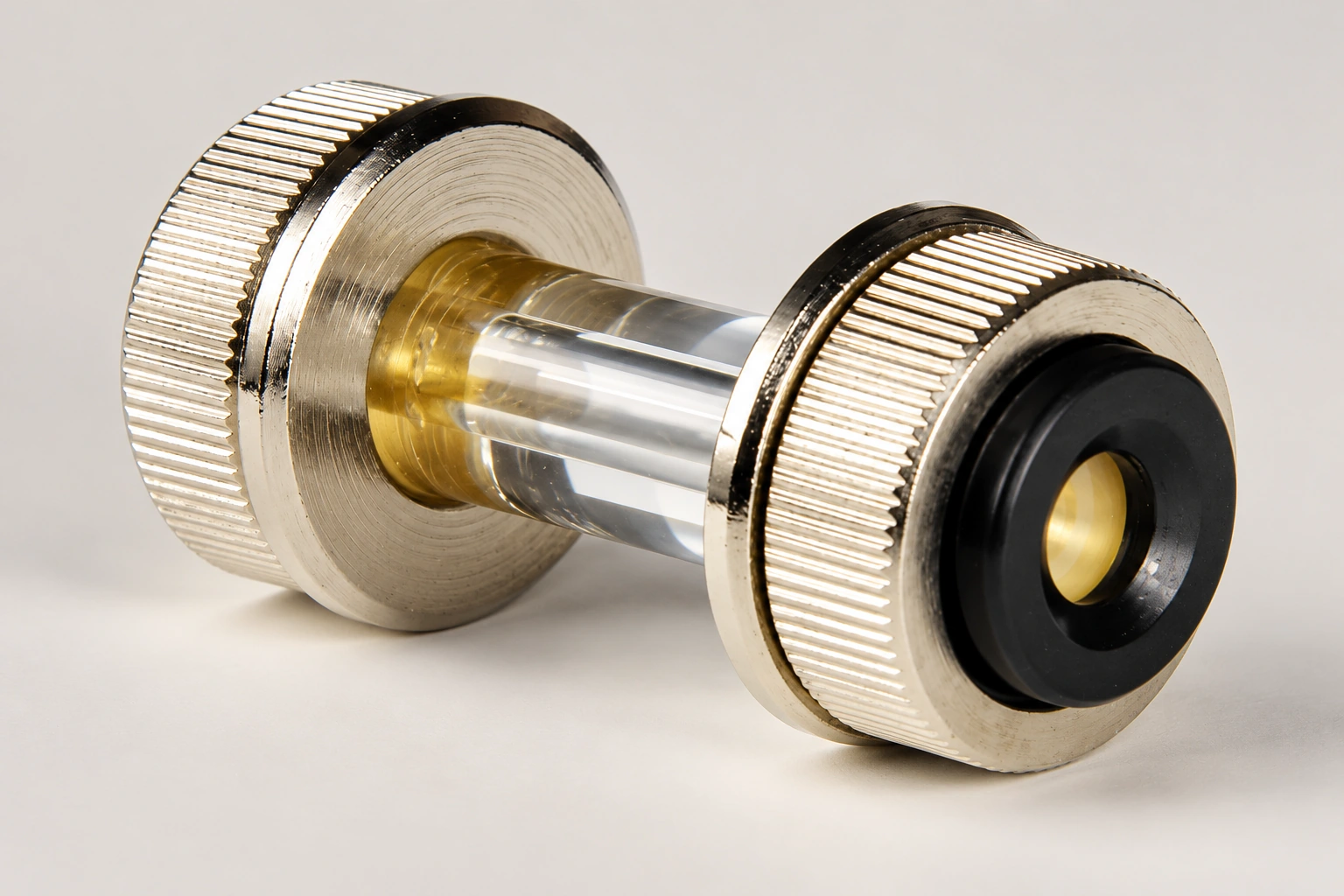
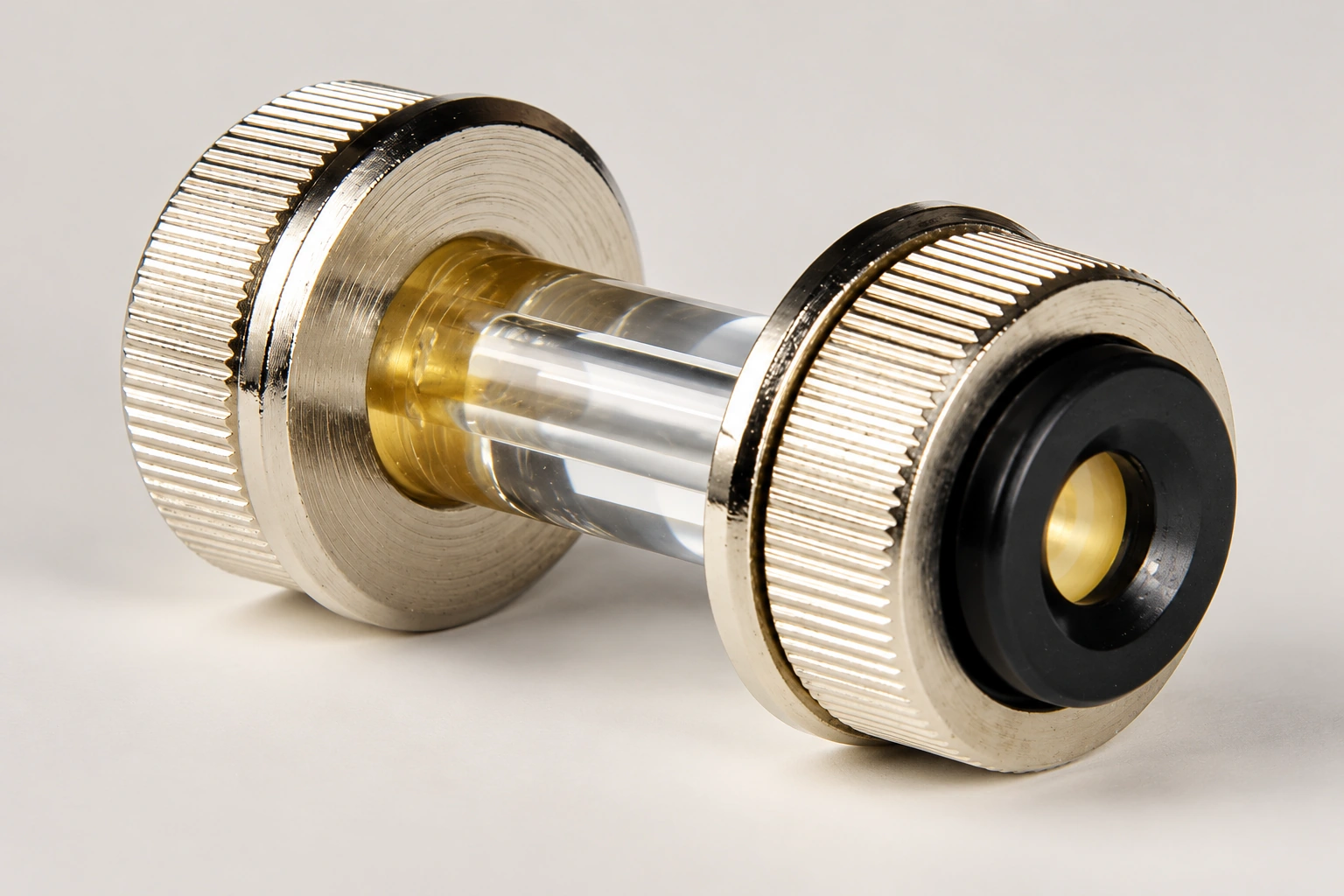
A small sample supply makes the tube's filling requirement important. MQOPT022 is the nominal 50 mm micro polarimeter-tube option. The reference image marks a 14 mm outside diameter, a 4 mm bore and approximately 620 µL.
Keep the marked volume separate from the minimum amount needed by a particular method. Loading losses, the end assembly and the way the sample occupies the tube still need to be considered in the proposed setup.
In this guide: Configuration · Design comparison · Describe the entire sample requirement · Separate small-bore access from outside fit · Use the method's path and conditions · Make the custom request about the limiting step · Enquiry
The configuration discussed here
What changes from the simpler form?
A small-bore polarimeter tube changes the sample-space geometry within the end assembly. Compared with a broader tube, tool access and the amount required by the preparation method deserve explicit review; the nominal bore alone is not a minimum-fill result.
Describe the entire sample requirement
The useful question is how much prepared sample the method needs to load, measure and recover from the tube. A geometric or marked chamber value does not automatically include every part of that operation.
Provide the intended filling tool, sample availability and any recovery requirement. MQ can discuss the tube configuration against those details; no recovery percentage or minimum working amount is reported here.
Separate small-bore access from outside fit
The 4 mm bore and 14 mm outside diameter describe different boundaries. The instrument support meets the outside assembly, while the sample and filling method depend on the interior and the ends. Specify both requirements rather than choosing by nominal path alone.
If a tool must enter the tube, give its diameter and usable length. If the sample is loaded through an end assembly, provide that assembly's actual arrangement and handling sequence.
Use the method's path and conditions
Polarimetric results depend on the defined sample path and concentration, with measurement conditions recorded for interpretation. IUPAC's definition describes that general relationship; it does not validate this tube's path or fit.
Changing from a larger tube to this small-bore form therefore needs a method and instrument review. The nominal 50 mm label is not evidence that the result can be transferred without that review.
IUPAC Gold Book: optical rotatory power
Make the custom request about the limiting step
For example, a customer may need to retain the instrument-end interfaces while reducing the sample-space requirement. Identify which parts must stay fixed and provide the loading sequence and target working sample amount.
The proposed bore, path and end assembly can then be discussed together. Any required dimensional, path or method check should have agreed conditions and records before quotation.
Structure reference and specification points
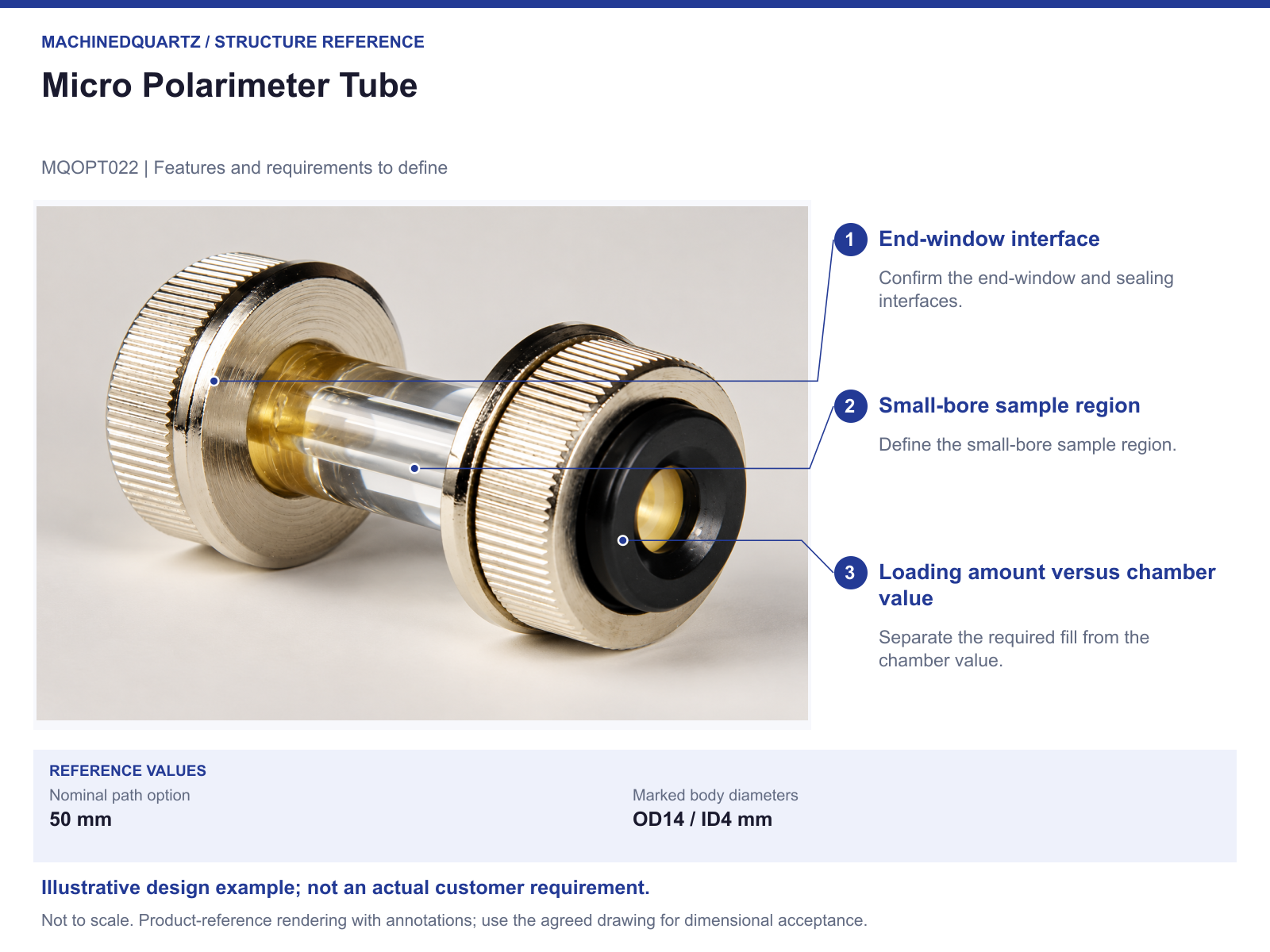
Download the structure reference (PDF)
Is 620 µL the minimum amount I need to prepare?
No. It is an approximate value marked on the reference, not a validated minimum for your filling and measurement procedure. State the actual loading and recovery method and agree the working requirement separately.
Send a drawing or the mating-part details
Send the method and loading details with the micro-tube reference. MQ can review the sample space without treating the marked approximate volume as a complete procedure requirement.
- Sample availability and target working requirement
- Method, wavelength, temperature and nominal path
- Instrument support and end-interface drawings
- Filling-tool dimensions and loading/recovery sequence
- Required path or dimensional records and quantity
Modified designs are reviewed for the project. The drawing, supplied parts, quantity, inspection scope, price and preparation or production time are agreed in the quotation.
Details to settle for the ordered configuration
Actual minimum working amount, path accuracy, end-window properties, seal materials and instrument compatibility remain to be confirmed.


Recent Comments