
Opaque Zeroing Cuvette: Distinguishing Light Blocking from a Blank Sample
Custom Design Guides · C100CS
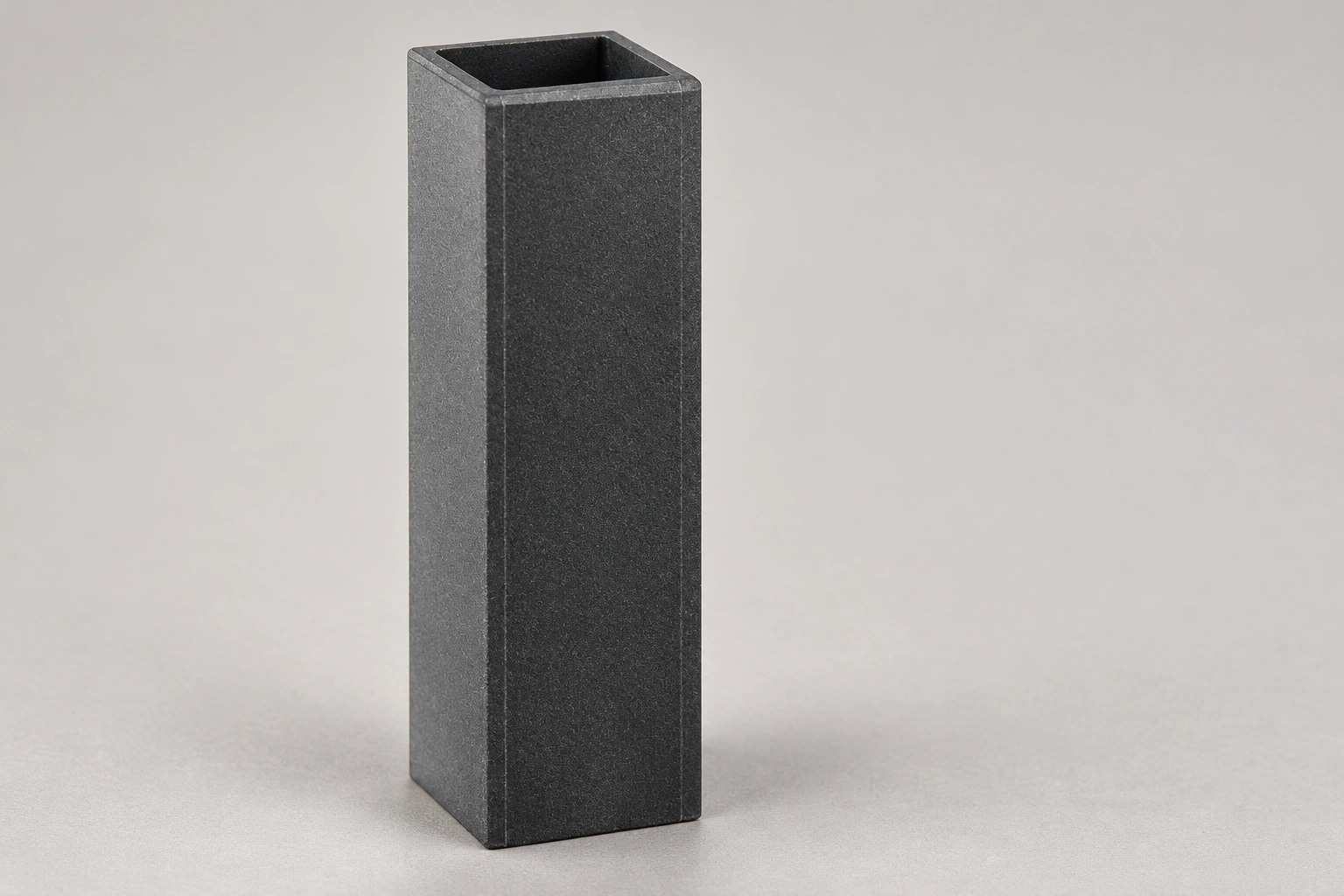
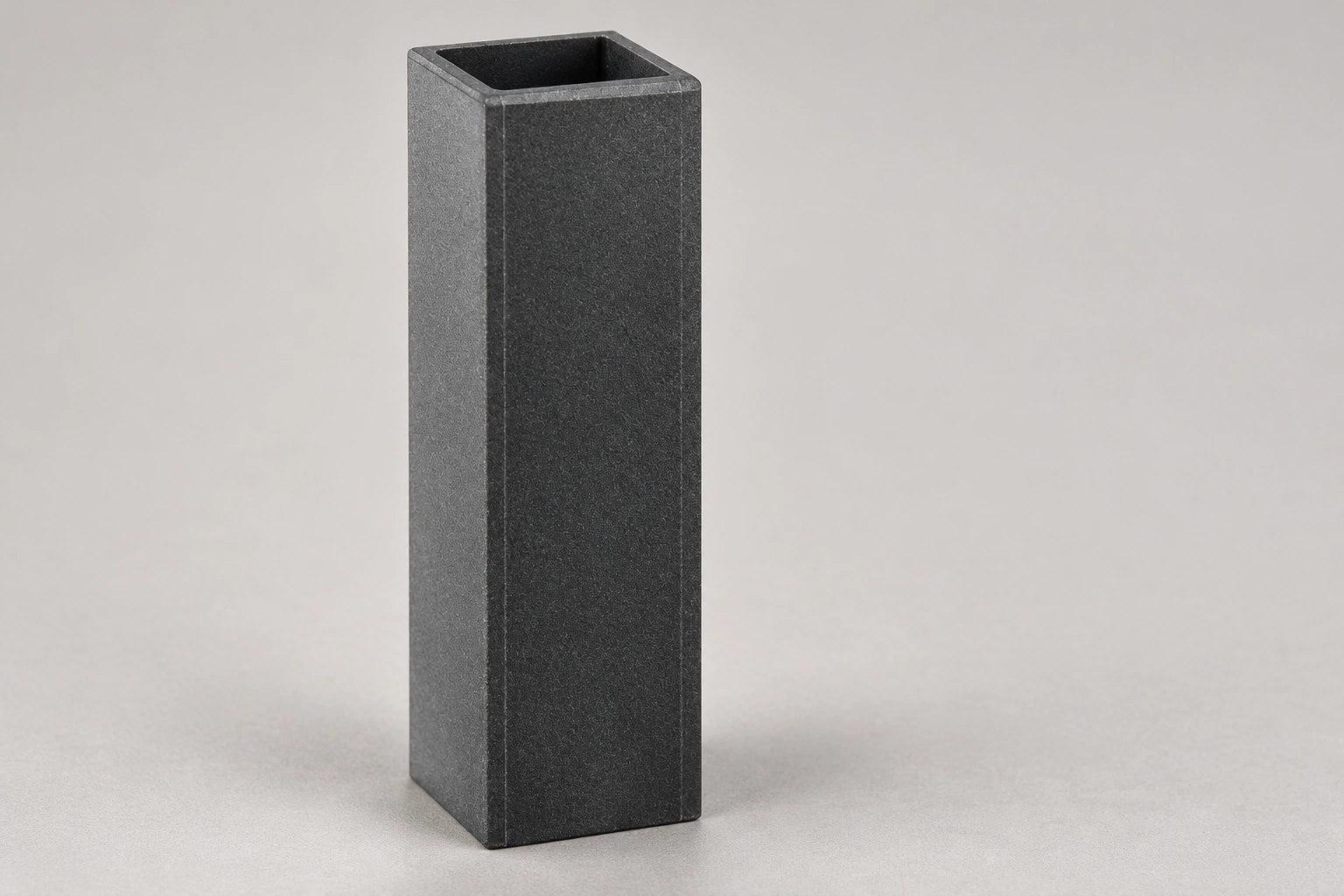
C100CS is an opaque cuvette-form part shown with an open cavity. Its reference identifies it for instrument zeroing, but it should not be confused with the separate solid-block option in the same product family.
The first selection question is what the instrument procedure requires. Blocking light with an opaque part is different from measuring a transparent cell containing a blank sample.
In this guide: Configuration · Design comparison · Follow the instrument's definition of zeroing · Keep opaque and transparent references separate · The open cavity is part of the identity · A custom envelope needs a defined reference position · Enquiry
The configuration discussed here
What changes from the simpler form?
The opaque open-cavity part changes the light-access task of a clear cuvette-form body. It is not the same as replacing the cavity with a solid block; the opening and its installed position remain relevant features.
Follow the instrument's definition of zeroing
Different instruments can use different references and sequences. Identify the specific step for which an opaque cuvette-form part is required and follow the instrument documentation. Do not introduce it into a blank-sample measurement simply because both operations are called zeroing.
Give MQ the instrument holder dimensions and the required part position. The physical cuvette form does not prove that it provides the reference condition required by a particular instrument.
Keep opaque and transparent references separate
A transparent cell with a blank solution presents the cell, solvent and method background to the measurement. An opaque part serves a different light-blocking purpose when the instrument method calls for it. Neither should be substituted for the other on appearance alone.
The reference image's absolute transmission claim is not adopted as a measured specification. If a defined optical density or blocking performance is required, state the wavelength, geometry and acceptance method.
The open cavity is part of the identity
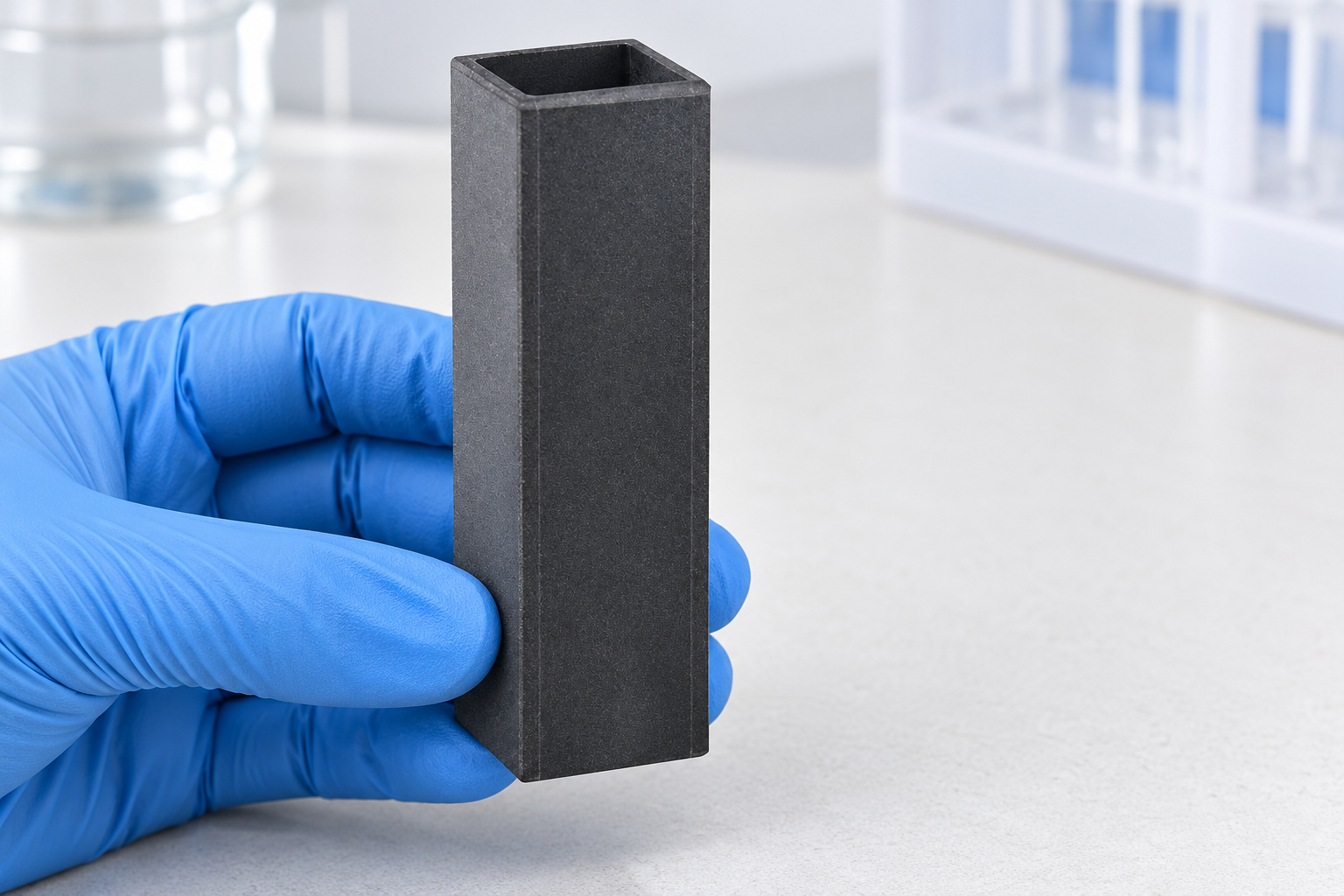
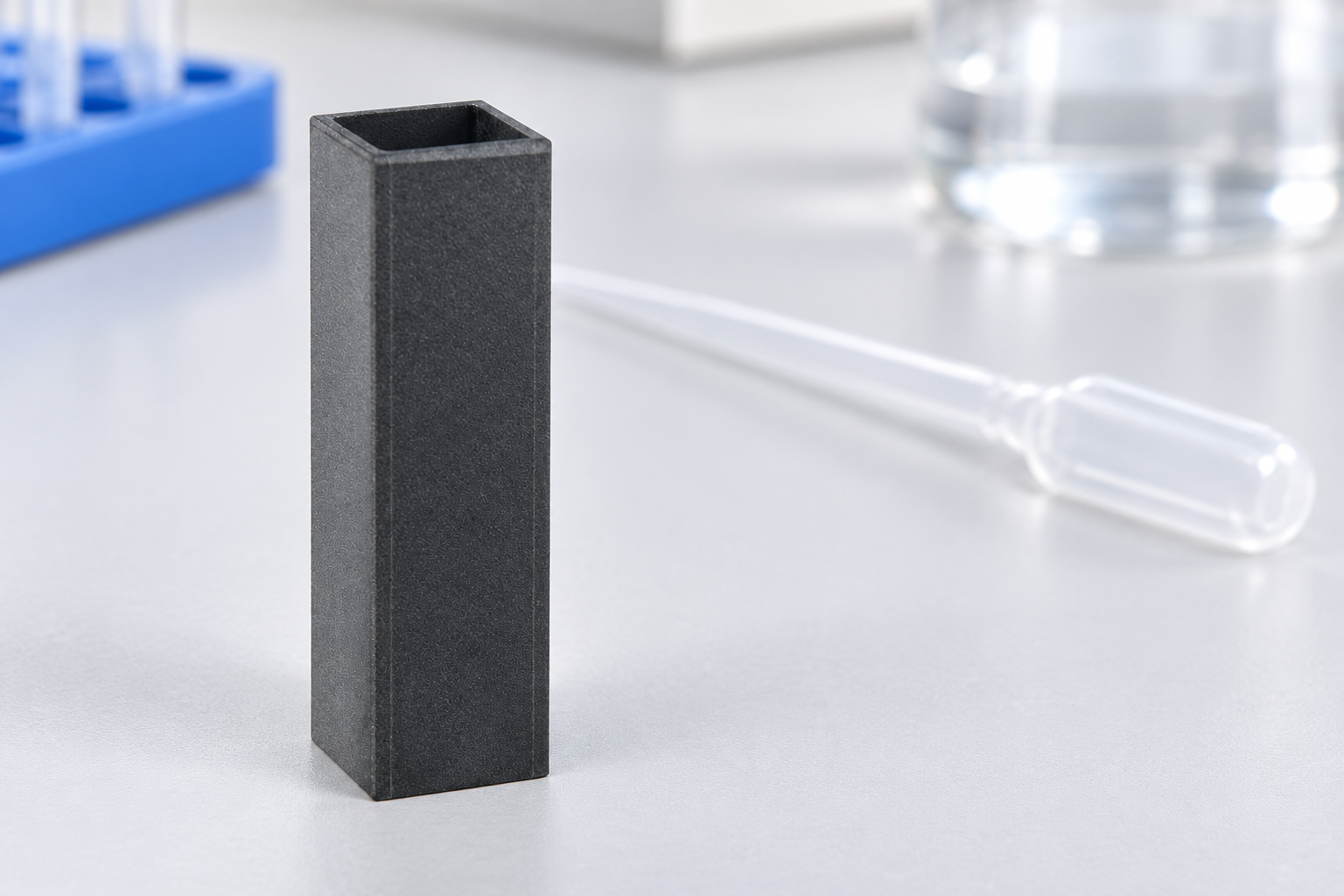
The selected option has a visible open cavity. Do not replace its drawing with a solid block simply because another option has that form. A replacement request should show the holder contacts, complete external envelope and any closure that is actually required.
The cavity does not establish a need to fill the part for the instrument task. That operation must come from the relevant method, not from the fact that the shape resembles a sample cuvette.
A custom envelope needs a defined reference position
For example, an instrument may require the opaque region to occupy a particular position while clearing a holder feature. Provide that location and the mating dimensions, with the material and blocking requirement separated from the outside shape.
Agree any fit or optical check before ordering. This guide does not assign a certified standard value, calibration accuracy or universal instrument compatibility to the part.
Structure reference and specification points
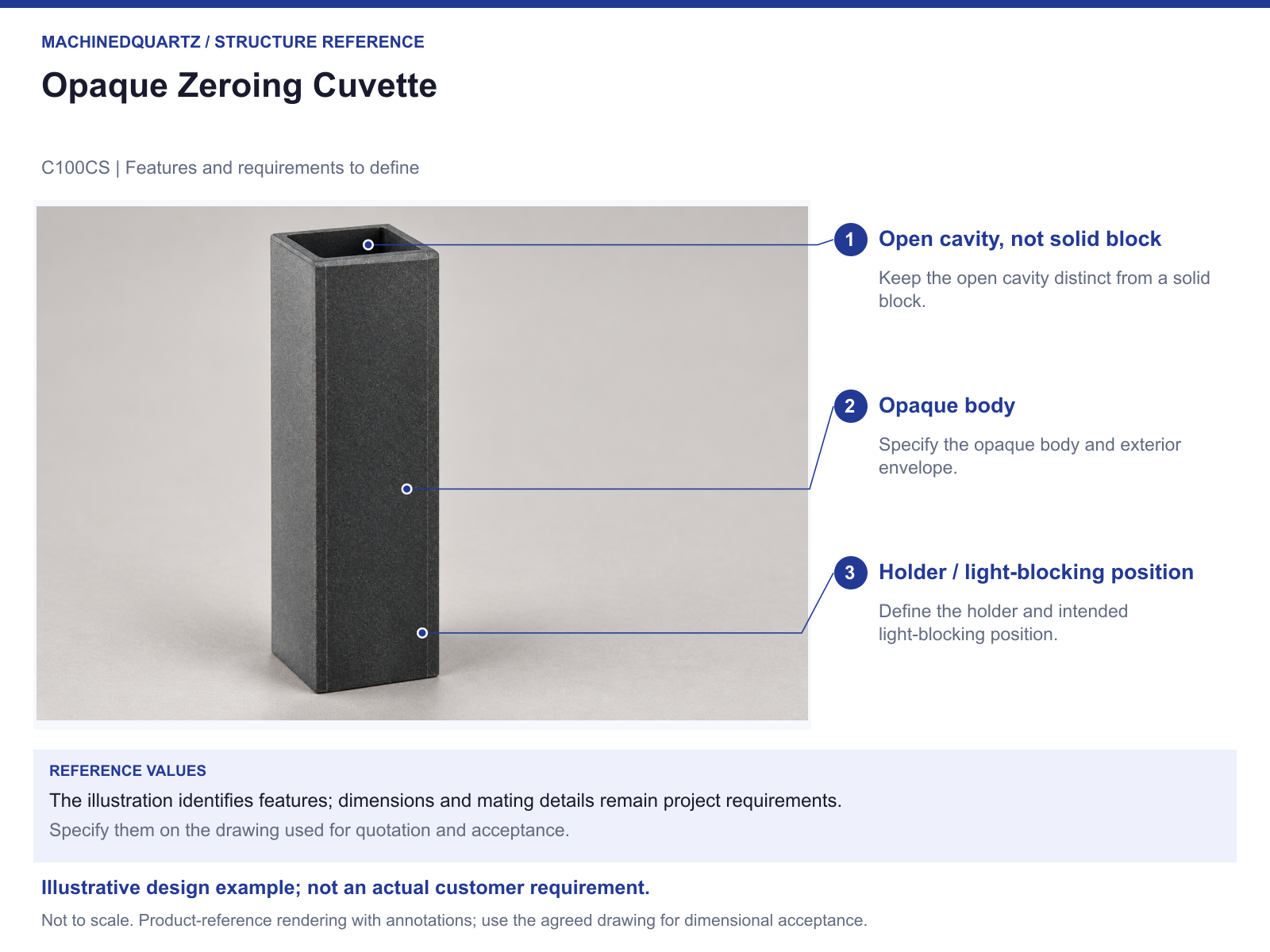
Download the structure reference (PDF)
Can this replace a certified photometric reference?
No certified reference value or traceability is established for this part. Identify the instrument method and the required standard or blocking condition, then confirm the suitable component and documentation.
Send a drawing or the mating-part details
Send the instrument reference requirement rather than only asking for a black cuvette. MQ can then review the physical part and the stated task without implying an unverified calibration function.
- Instrument procedure and exact reference task
- Holder dimensions and required opaque-region position
- External form and any closure requirement
- Wavelength and defined blocking acceptance, if needed
- Quantity and required documentation or fit checks
Modified designs are reviewed for the project. The drawing, supplied parts, quantity, inspection scope, price and preparation or production time are agreed in the quotation.
Details to settle for the ordered configuration
Optical density, measurement conditions, certified values and instrument compatibility require separate evidence.


Recent Comments