
Injectable Silicone Cuvette Cap: Matching the Sampling Access
Custom Design Guides · MQACC047
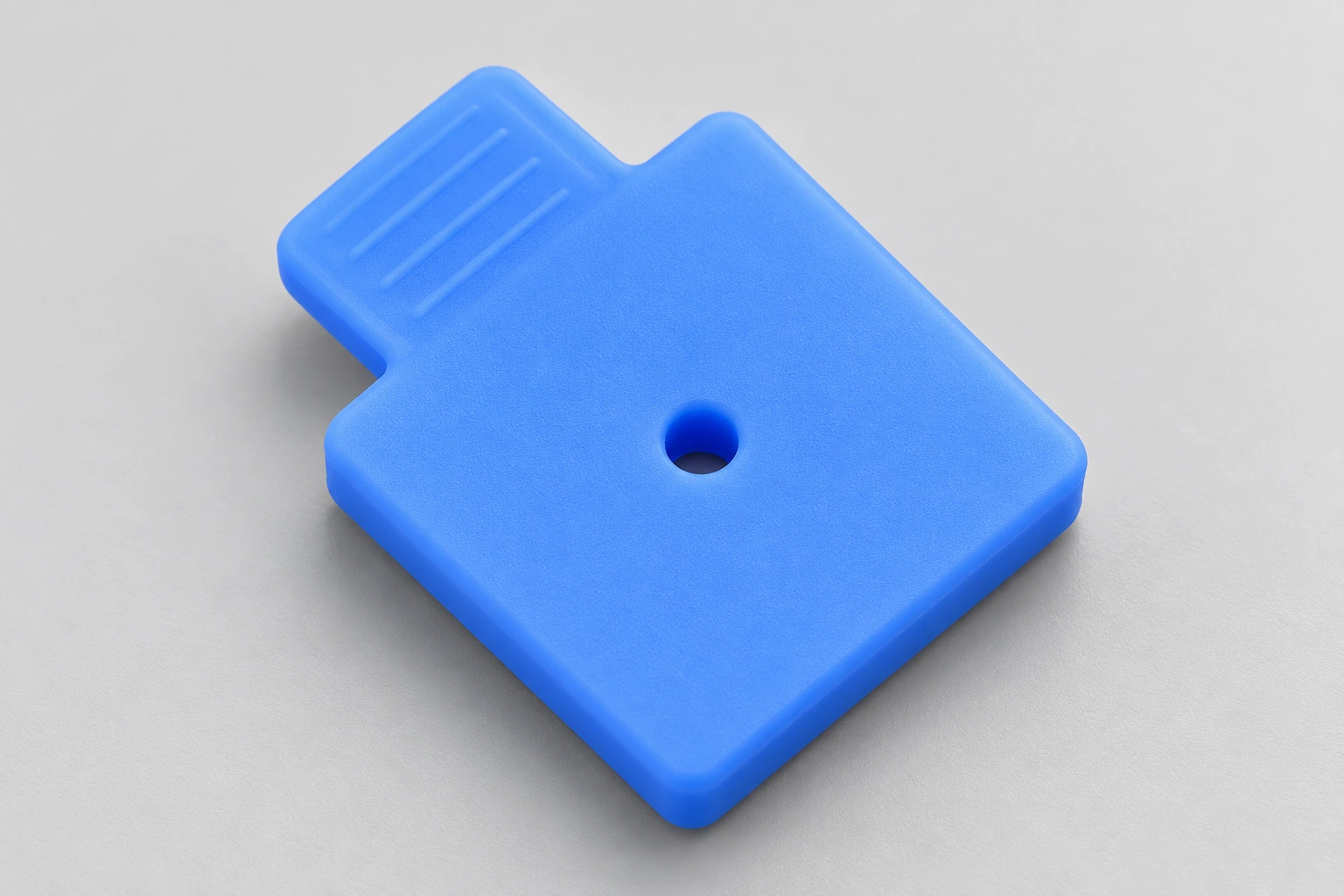
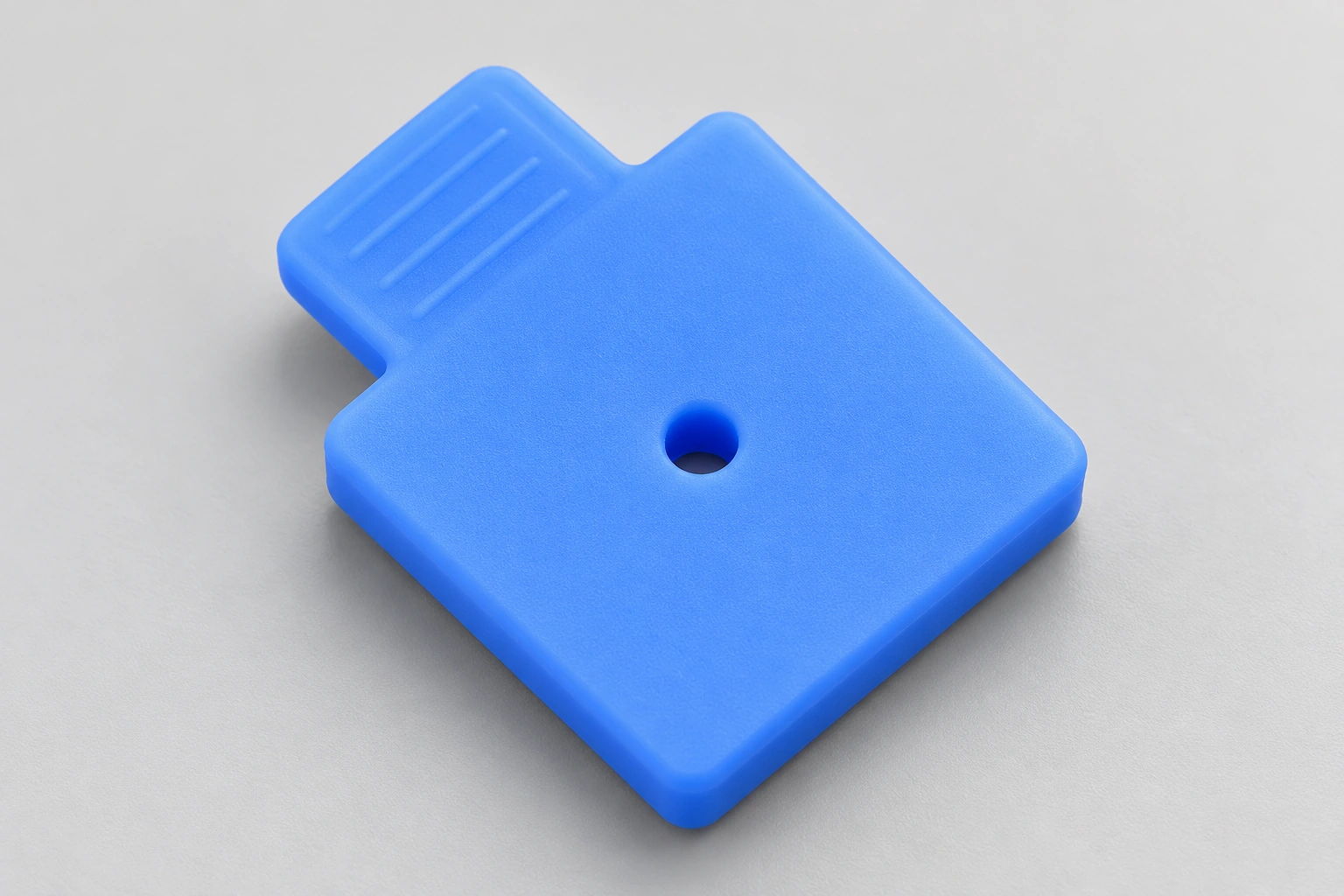
A sampling opening can reduce the need to remove a cuvette cap for a particular procedure. MQACC047 is the blue silicone cap option shown with an injection opening and identified for a 10 mm cuvette format.
The opening, cap-to-mouth fit and sampling tool need to be reviewed together. An injection feature is not evidence of a defined resealing cycle, sterile condition or compatibility with every sample.
In this guide: Configuration · Design comparison · Fit the cap to the actual cuvette mouth · Describe what passes through the opening · Do not turn an opening into an automatic sealing claim · A custom access feature starts with the method · Enquiry
The configuration discussed here
What changes from the simpler form?
An injection-access cap adds a tool interface to a cuvette mouth. The change affects the approach and contact arrangement; it does not by itself establish repeated puncture, sealing or compatibility with a particular needle.
Fit the cap to the actual cuvette mouth
A 10 mm optical path does not define every outside mouth dimension. Provide the cuvette reference, opening and contact arrangement. The cap should be identified as a mating part rather than selected from the path label alone.
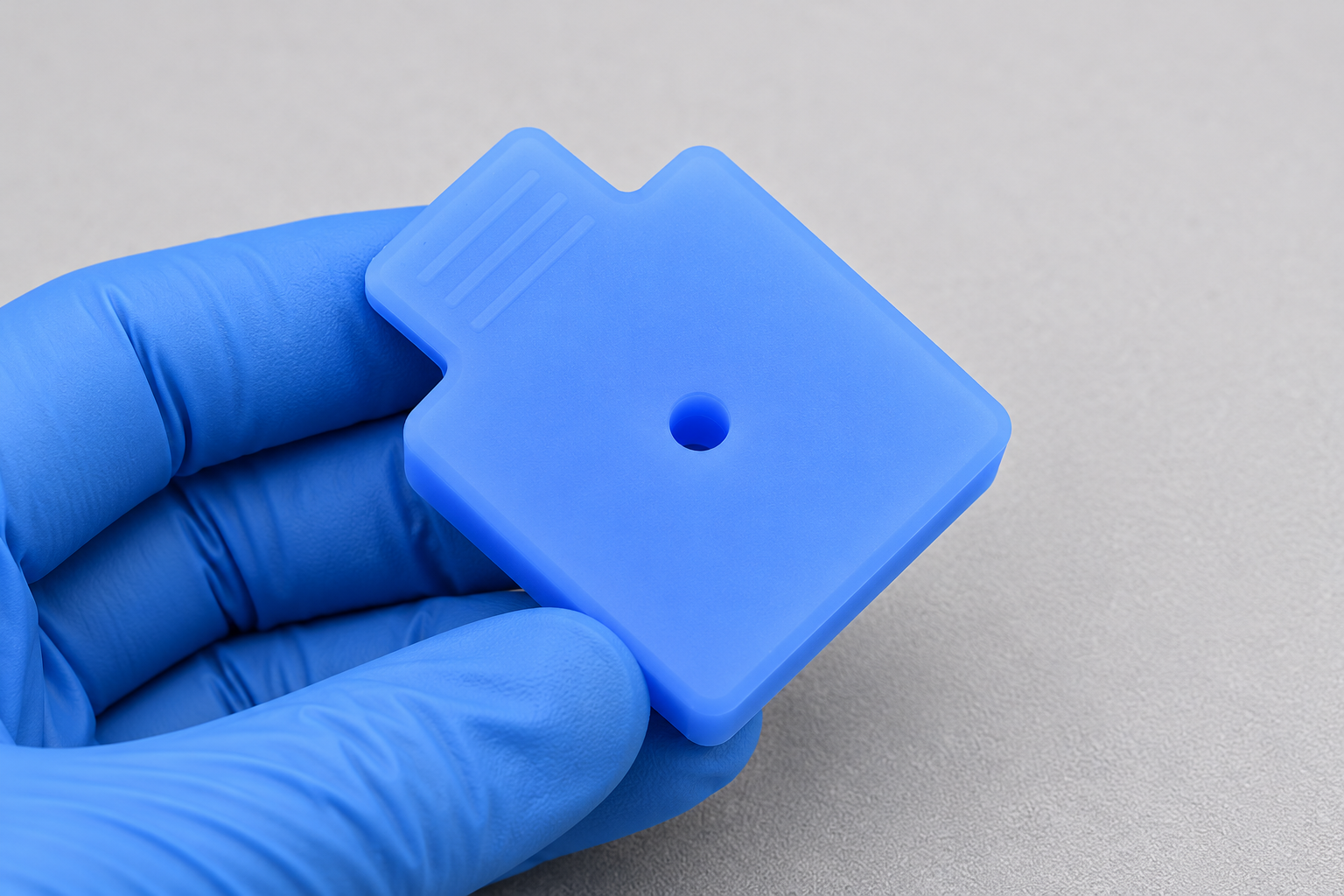
Include any orientation or grip feature that matters to removal. A cover may fit the opening while leaving too little accessible area to handle it within the instrument enclosure.
Describe what passes through the opening
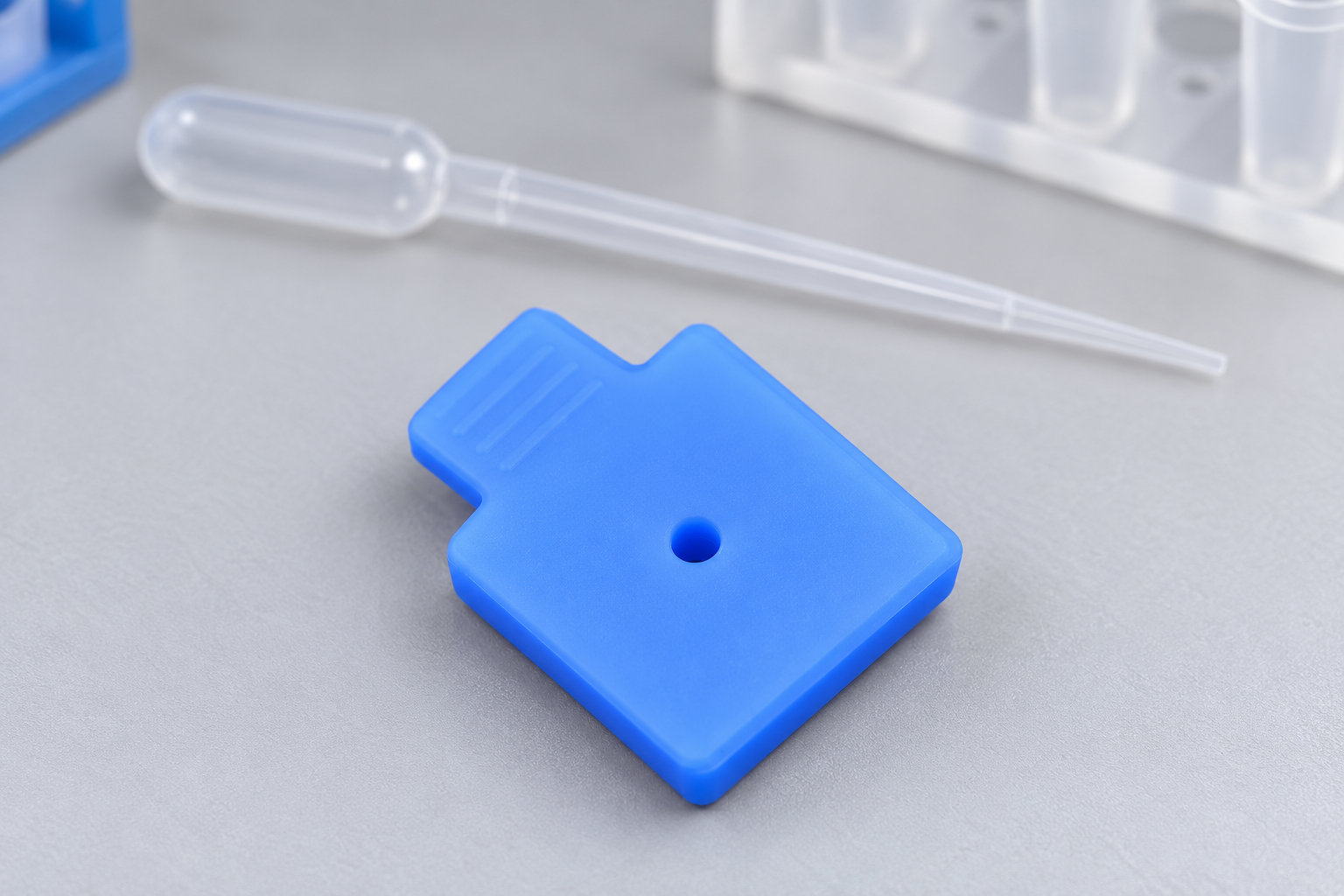
Give the sampling-tool type, dimensions and approach. State whether the operation needs a separate vent or another access route. The cap image does not define the complete sampling procedure or the allowable tool.
For a hypothetical setup under a low cover, the tool may need more height than the closed cap. Show that approach space and the intended depth relative to the sample, not only the cap's external envelope.
Do not turn an opening into an automatic sealing claim
A marked injection opening describes a feature. It does not establish puncture resistance, recovery after repeated use, leakage performance or a number of reuse cycles. If the procedure depends on those properties, define the conditions and required evidence.
Also identify the sample and cleaning conditions that reach the silicone. General material descriptions cannot qualify this exact cap for every solvent, temperature or sterilisation method.
A custom access feature starts with the method
A possible request is to retain the mouth contact while reviewing the access location for a fixed sampling tool. Send the tool and cuvette geometry, mark the features to keep and identify the proposed opening position.
MQ can discuss feasibility, supplied parts and any agreed fit or closure checks for that design. The illustration remains a preparation reference, not proof of an already validated sampling system.
Structure reference and specification points
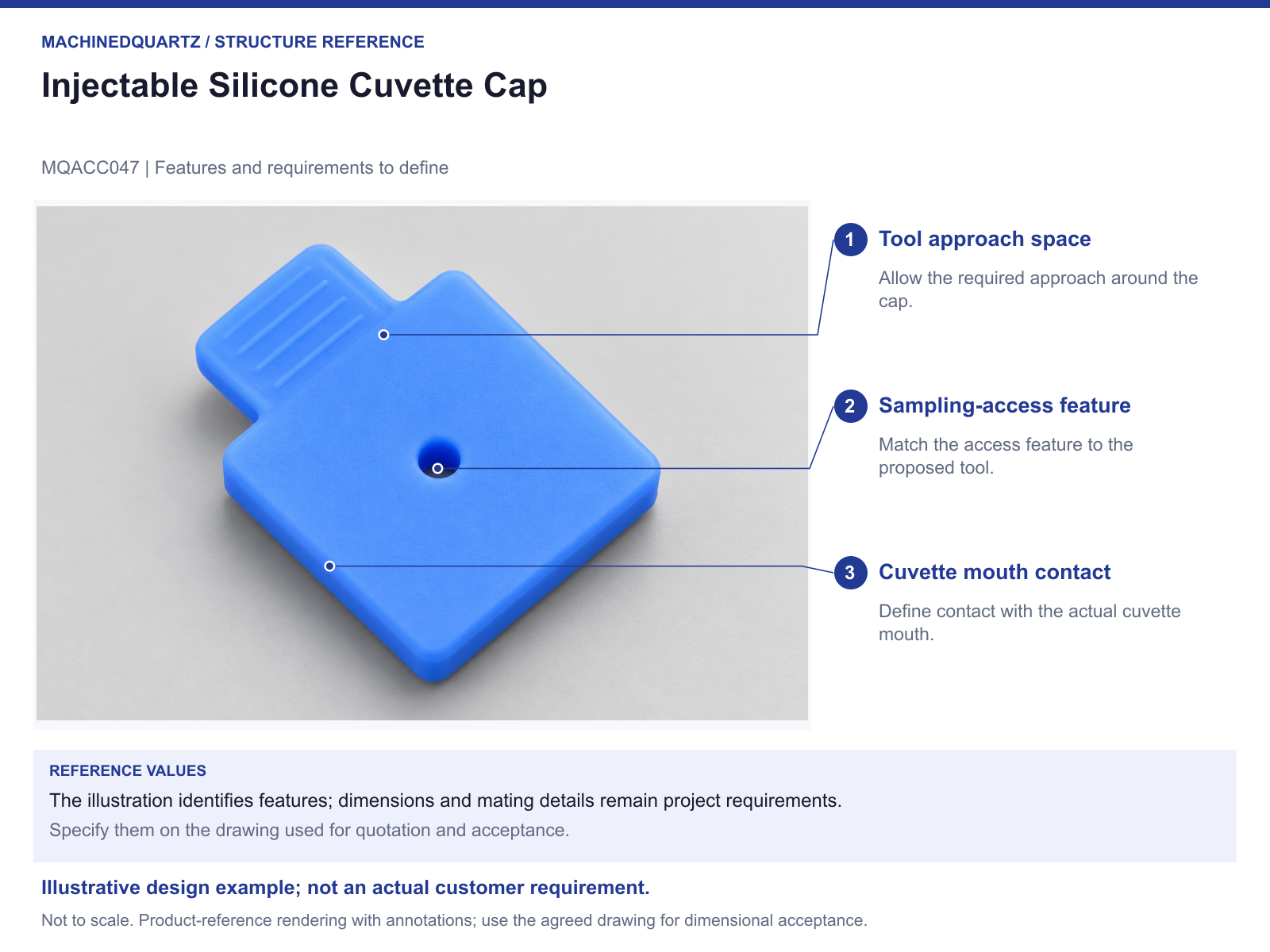
Download the structure reference (PDF)
Does injectable mean the cap is guaranteed to reseal repeatedly?
No cycle count or resealing qualification is established here. State the intended tool, number of uses and required closure behaviour, then agree what can be offered and checked.
Send a drawing or the mating-part details
Send the cuvette mouth and sampling arrangement with the cap request. MQ can review access and contact as parts of the same operation.
- Exact cuvette and mouth contact dimensions
- Sampling-tool type, size and approach
- Access location, sample depth and any vent requirement
- Sample, cleaning and use-cycle conditions
- Quantity and requested fit or closure evidence
Modified designs are reviewed for the project. The drawing, supplied parts, quantity, inspection scope, price and preparation or production time are agreed in the quotation.
Details to settle for the ordered configuration
Tool compatibility, leakage, resealing, chemical suitability and sterilisation or reuse qualification remain to be confirmed.


Recent Comments