
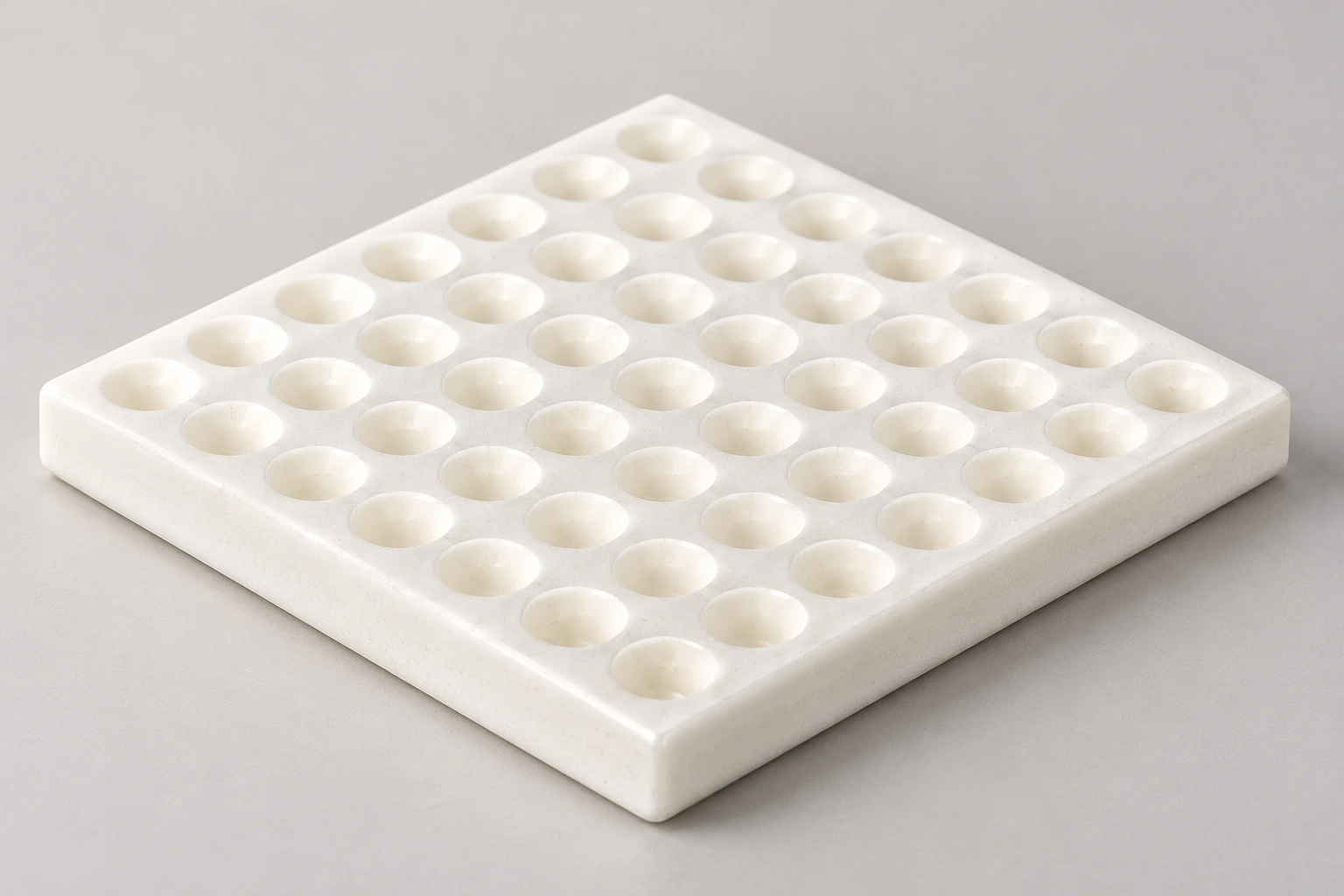
49-Well Alumina Spot Plate: Keeping Samples in Defined Positions
Custom Design Guides · MQAPS082
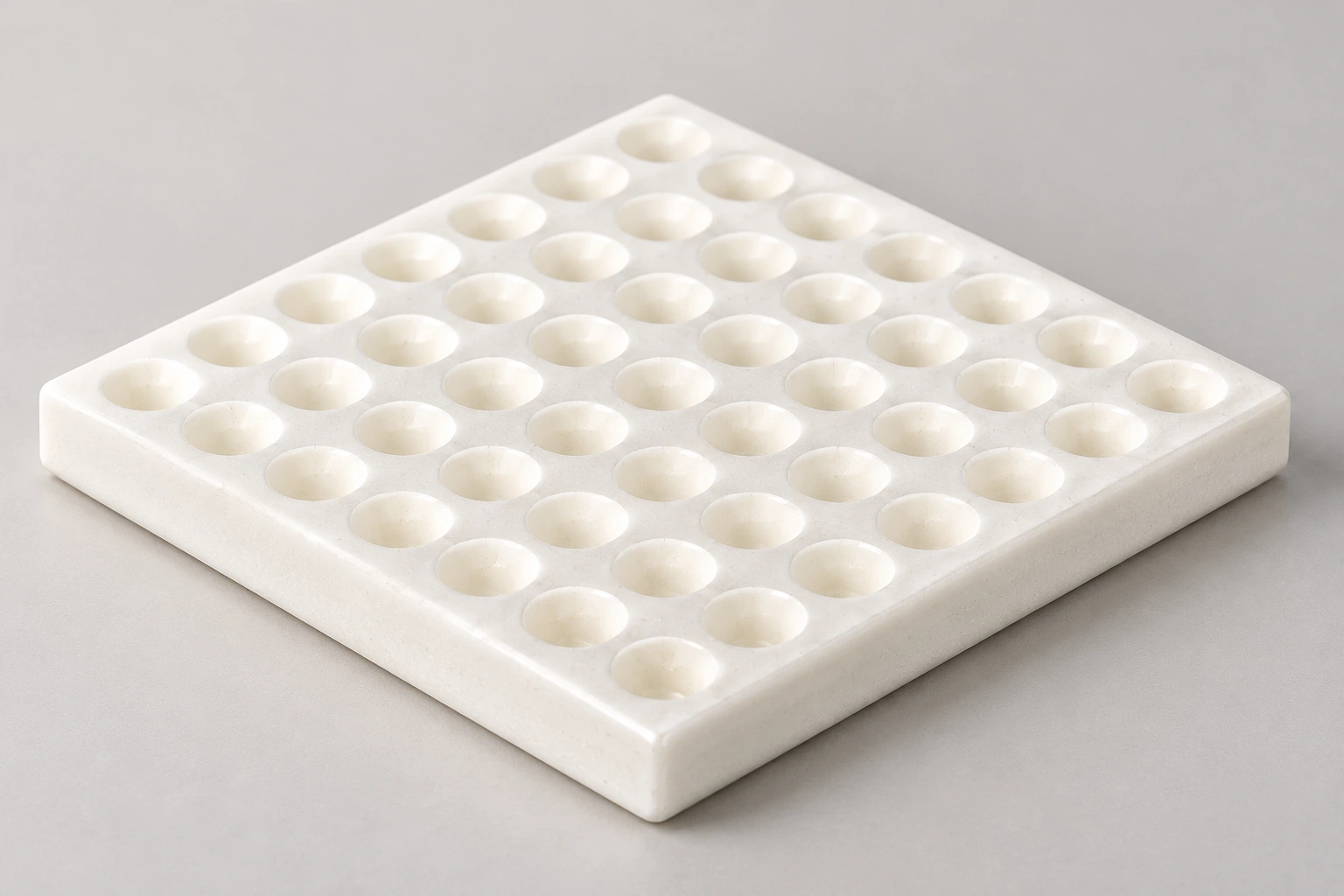
MQAPS082 is a 49-well sample or reaction-plate reference listed as 99% alumina. It is a ceramic container format for discussing multiple positioned samples, rather than a transparent quartz readout plate.
The present MQ page is an enquiry configuration. Start with the sample task and cavity layout, then define the dimensions and material evidence the intended process requires.
In this guide: Configuration · Design comparison · Make each well a defined sample space · Separate ceramic handling from optical readout · Well separation does not prove process isolation · A custom layout should retain the loading operation · Enquiry
The configuration discussed here
What changes from the simpler form?
A matrix of sample recesses changes a single-position holder into a multi-position preparation layout. The resulting requirements include cavity identity, position references and sample recovery at each location, rather than well count alone.
Make each well a defined sample space
State the amount and form of material placed in each position, how it is added and how it is removed. The number of wells does not define their volume, bottom shape or usable access for a tool.
Give the required row and column layout, cavity dimensions and identification scheme. If the plate must fit existing equipment, include the outside envelope and the locating references on the same drawing.
Separate ceramic handling from optical readout
The quartz 96-well plate in this series is a different type of component. This alumina plate should not be described as an optically transparent equivalent with fewer holes. Any observation or measurement route needs its own method requirement.
If a tool, sensor or viewing system must approach the samples, show that access explicitly. A multi-well appearance does not establish compatibility with a particular reader or automated handling system.

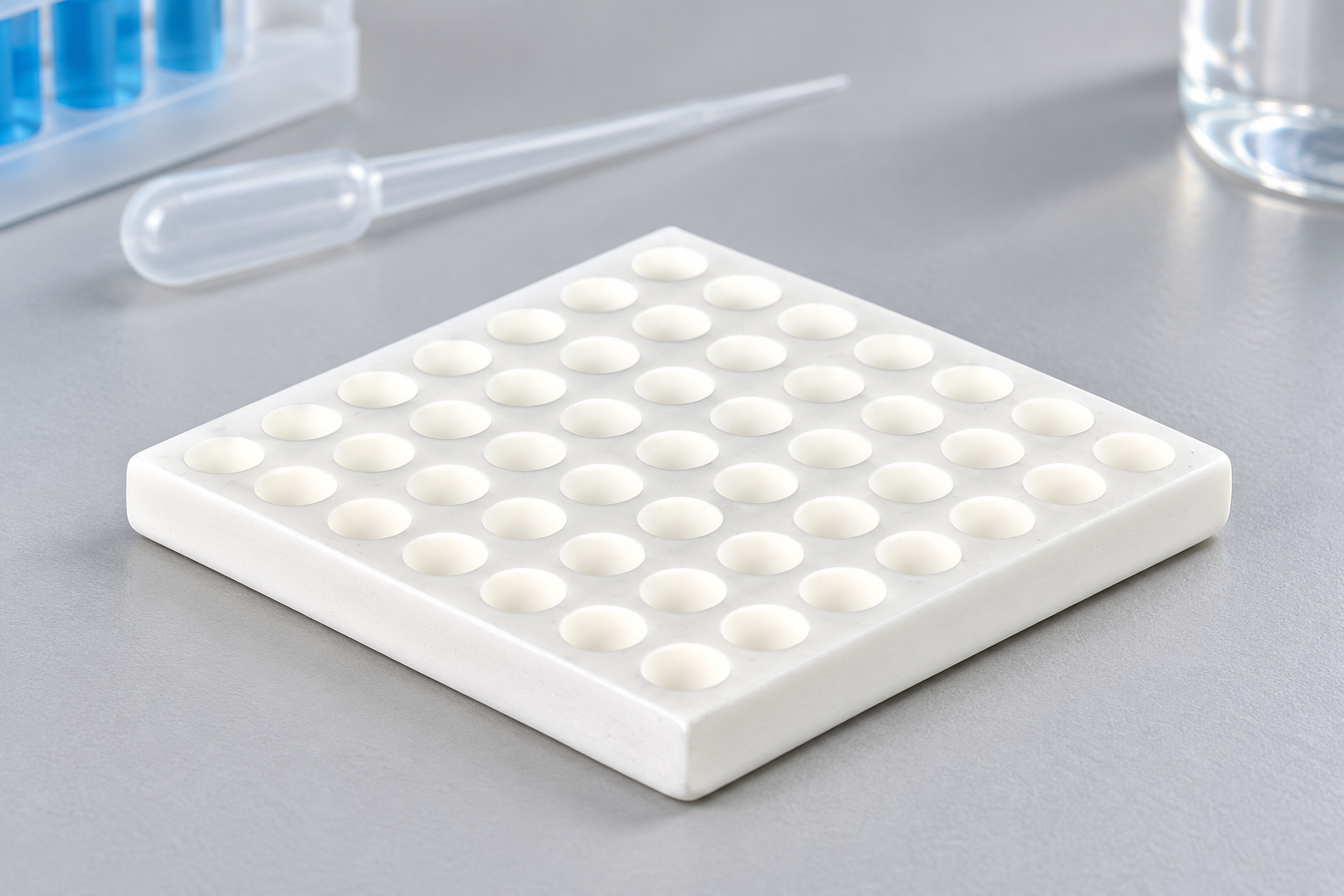
Well separation does not prove process isolation
Individual recesses help define positions, but the intended process determines whether additional separation or covering is needed. Describe possible contact, transfer or shared-atmosphere issues rather than assuming that the well count proves isolation.
The material listing does not establish resistance to every reaction, a contamination limit or a maximum operating temperature. Provide the actual contents and conditions, with any required material or process evidence.
A custom layout should retain the loading operation
For example, a customer might need a different pitch while keeping the outside plate footprint. Include the loading-tool envelope and the sample amount as well as the proposed cavity centres. The remaining material and support requirements need review with the layout.
Agree critical dimensions, supplied parts and any requested inspection record in the quotation. A layout drawing is not a report of completed reactions or a guaranteed analytical result.
Structure reference and specification points
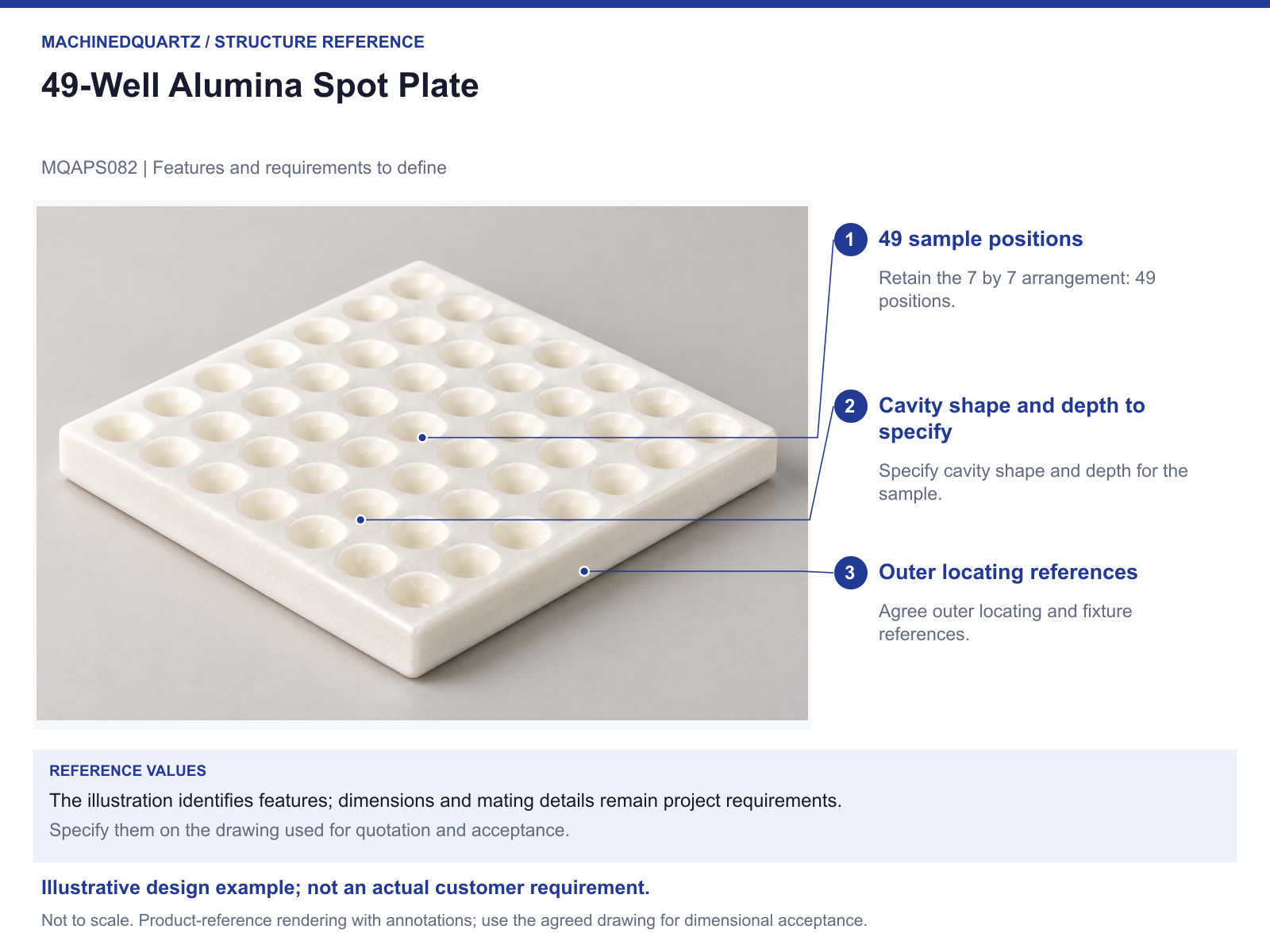
Download the structure reference (PDF)
Can this replace a transparent quartz microplate in an optical reader?
That is not established. The listed alumina plate has a different material and intended format. The measurement route, optical requirement, dimensions and reader compatibility would need a separate review.
Send a drawing or the mating-part details
Send the well-layout drawing and loading requirements to MQ for a quotation review. Keep the ceramic process requirements separate from any optical-microplate comparison.
- Sample form, amount and process at each position
- Well geometry, layout and identification
- Plate envelope and equipment-location references
- Loading, removal and observation access
- Conditions, material evidence, quantity and inspection scope
Modified designs are reviewed for the project. The drawing, supplied parts, quantity, inspection scope, price and preparation or production time are agreed in the quotation.
Details to settle for the ordered configuration
Well volume and geometry, chemical or thermal suitability, isolation and equipment compatibility require confirmation.


Recent Comments