
Three-Compartment Alumina Boat: Planning Separate Sample Loads
Custom Design Guides · MQABO260
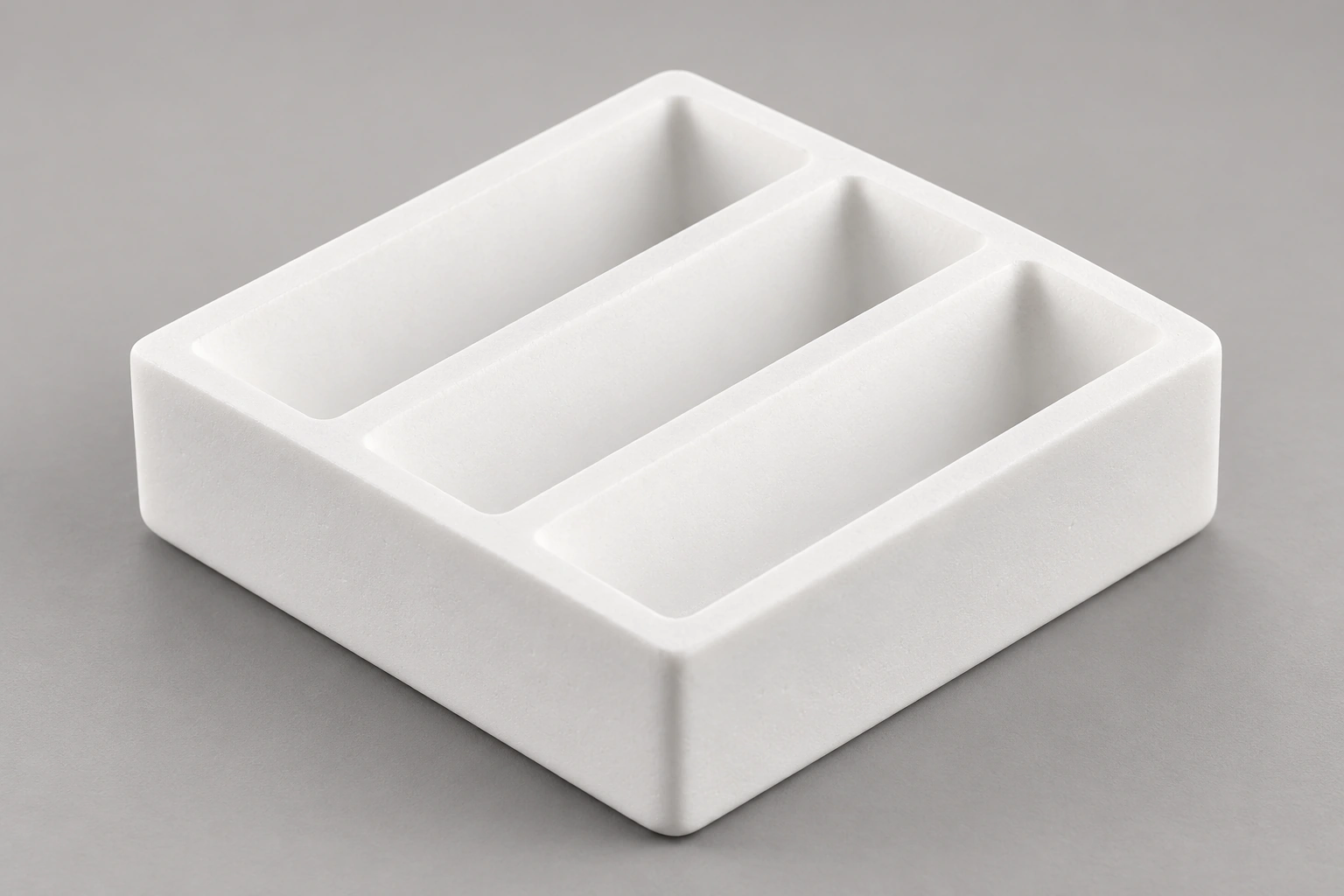
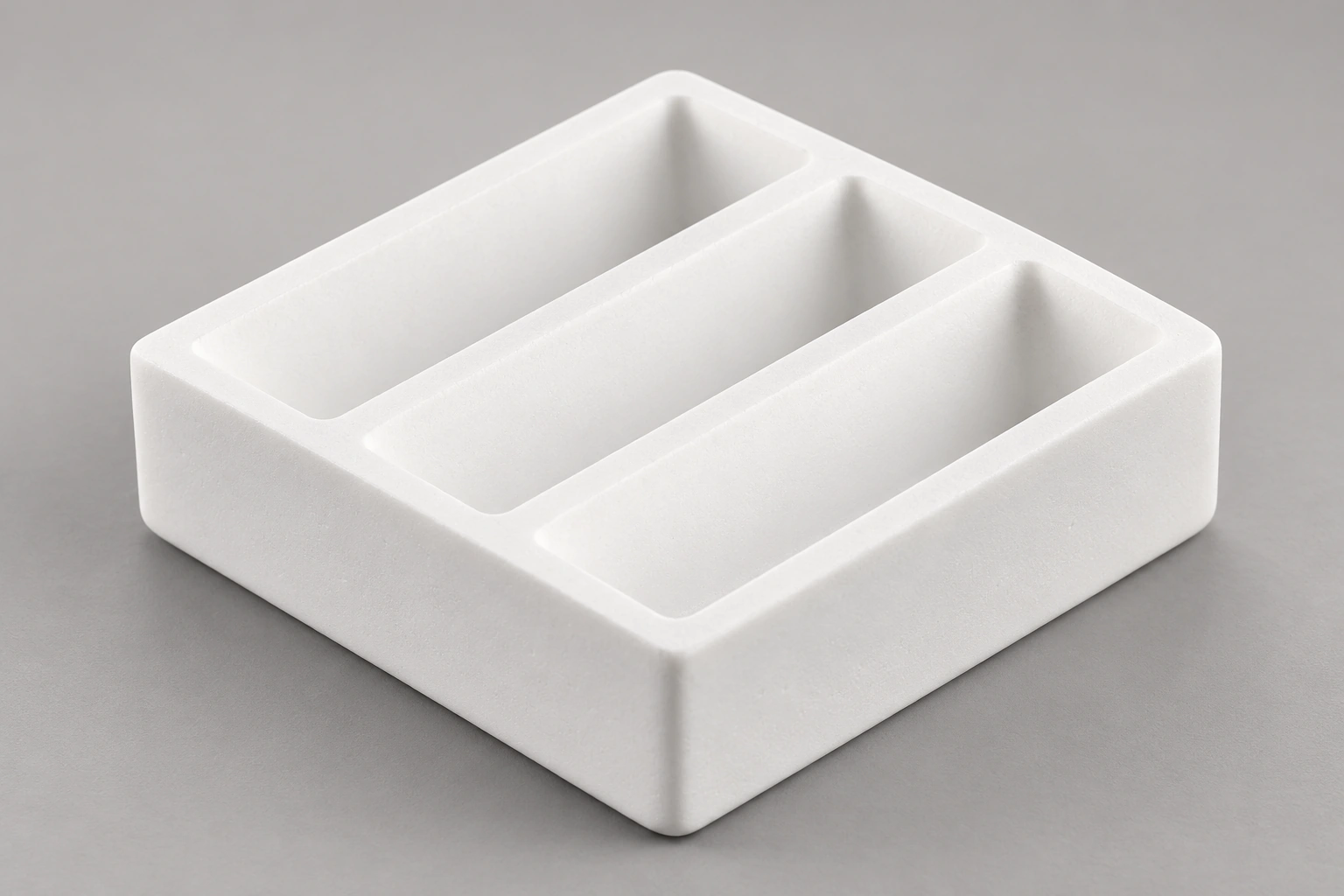
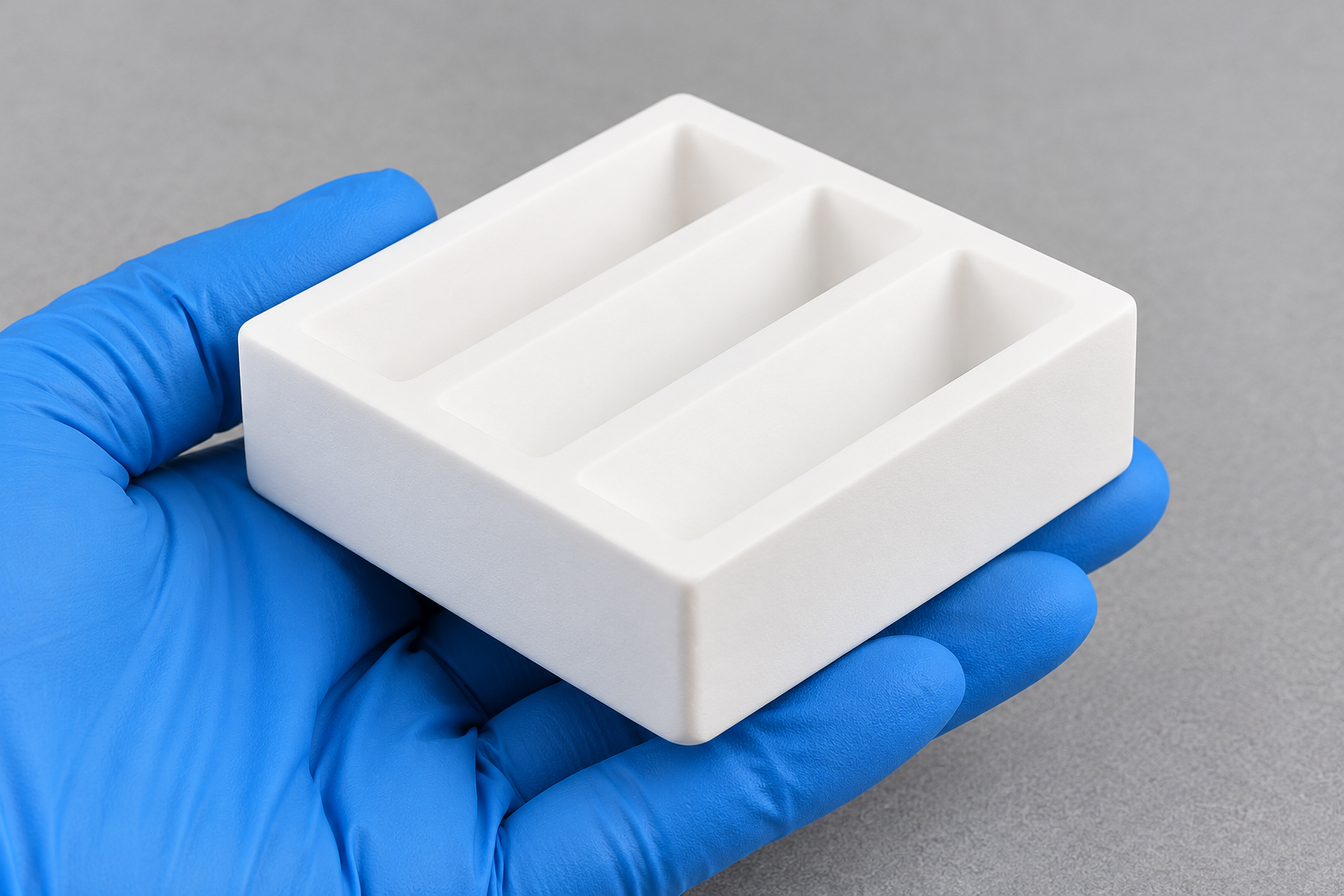
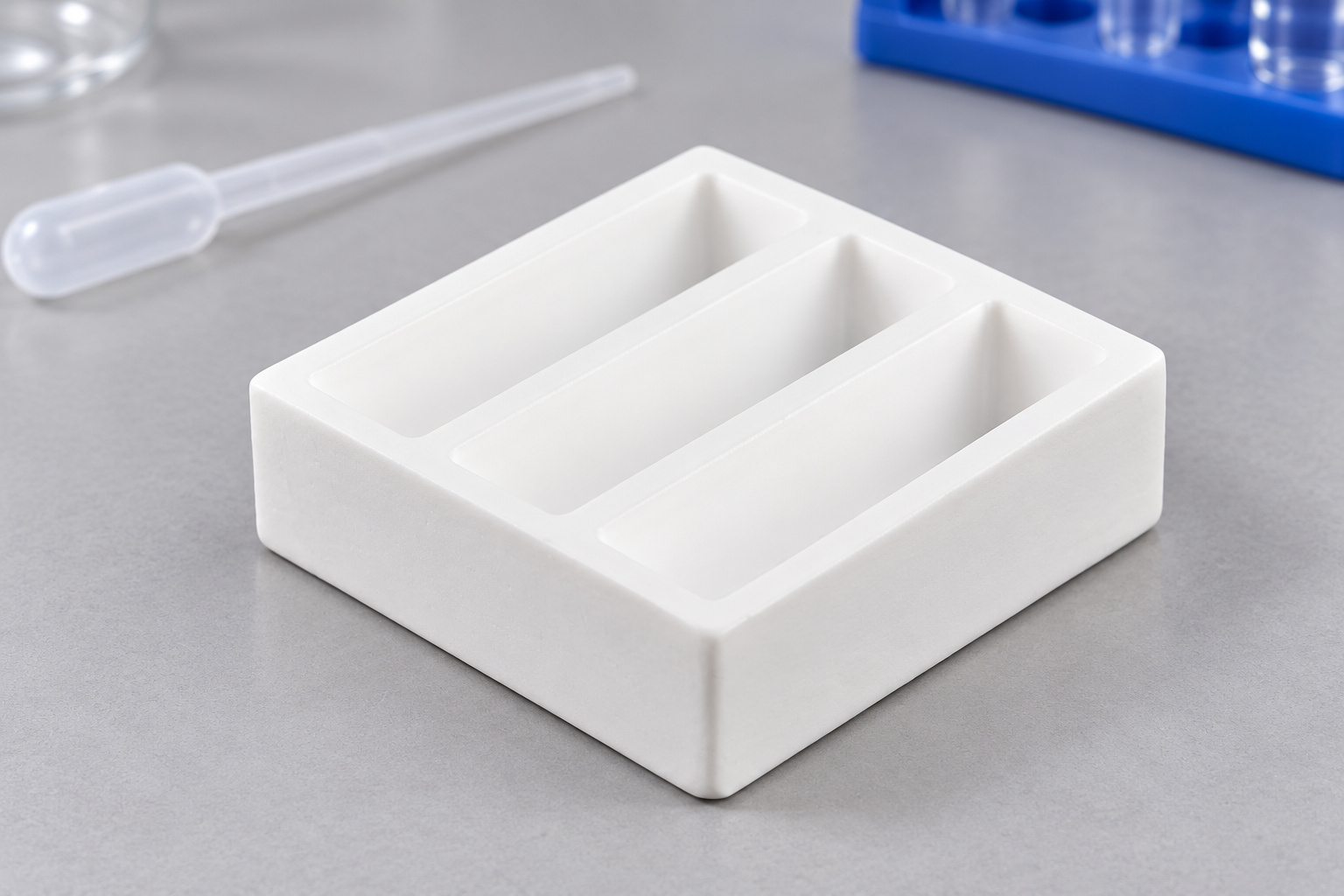
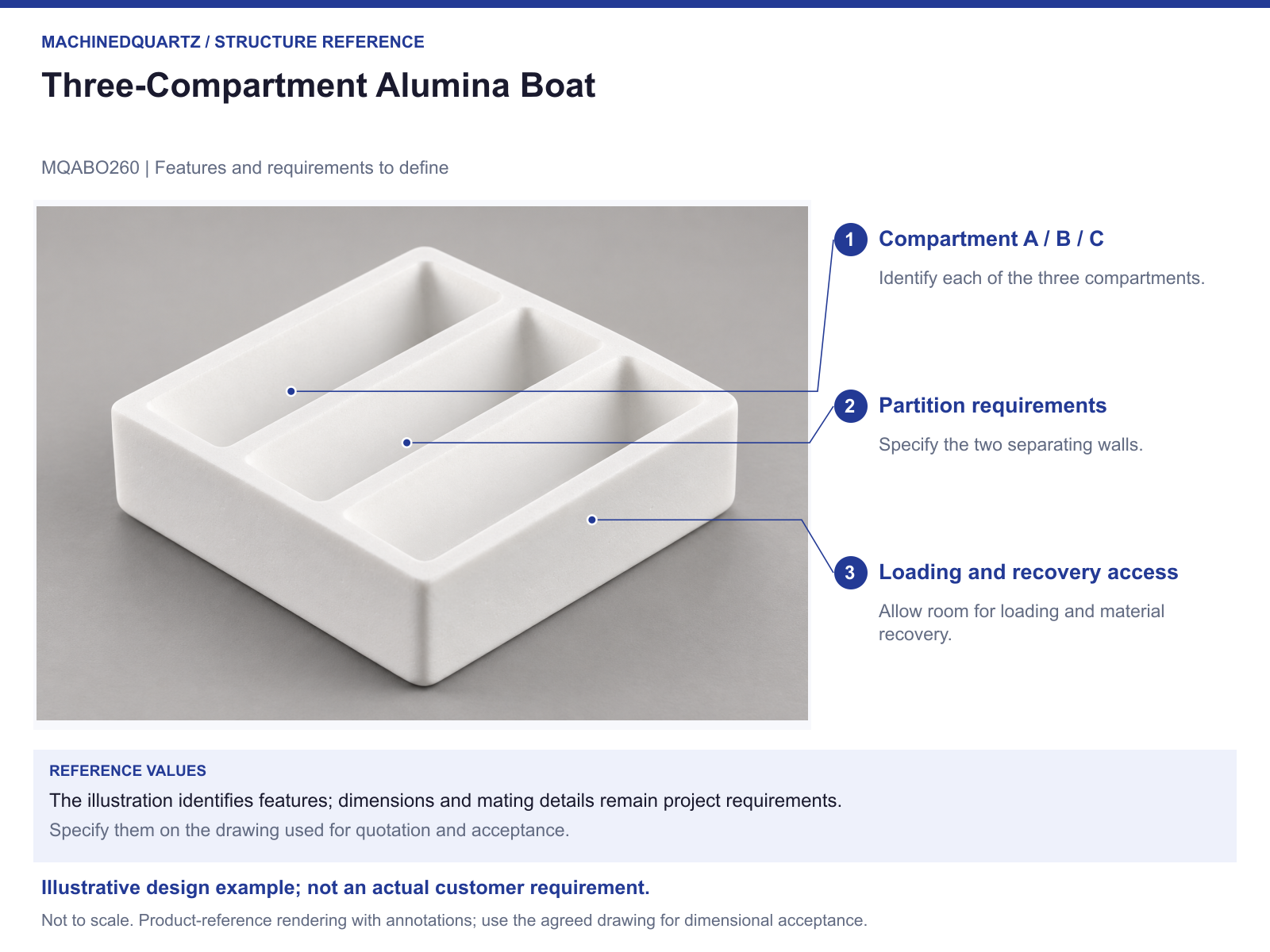
MQABO260 is a sample-boat reference listed as 99% alumina, with three visible compartments. It brings several sample positions into one vessel while retaining physical partitions between them.
The useful starting point is the intended loading sequence and sample amount in each section. The three compartments do not establish chemical isolation, independent atmospheres or a proven absence of cross-contamination.
In this guide: Configuration · Design comparison · Give each compartment its own requirement · Think about removal before choosing a partition · A shared vessel is not three independent process cells · Change the layout around the loading task · Enquiry
The configuration discussed here
What changes from the simpler form?
Partitions turn a single boat-shaped space into separate loading regions. Their positions and interfaces become part of the specification; a visible division is not a demonstrated barrier against transfer between samples.
Give each compartment its own requirement
Specify what occupies each position, including the sample amount, layer depth and the access needed by the loading tool. Equal-looking sections should not be assumed to have a particular usable volume or identical dimensional tolerance.
Identify the partition height and whether the proposed process needs any route between the compartments. The external photograph cannot establish hidden base details or the complete internal contact arrangement.
Think about removal before choosing a partition
A divider can help keep loads in their assigned positions while also restricting access by a spatula or other tool. Show how each sample is recovered and where material must not be left behind. Those requirements give the partition a defined purpose.
If the boat sits inside a tube or other support, include insertion and withdrawal clearance. The complete vessel and its handling tools must fit, not just the width of one compartment.
A shared vessel is not three independent process cells
The sections share an overall ceramic body and may share the surrounding atmosphere. If the method needs controlled isolation, describe that requirement directly. Do not infer it from the presence of partitions.
Likewise, the alumina listing does not establish compatibility with a particular sample or thermal programme. State the contents and actual conditions, and request any necessary material or verification evidence before quotation.
Change the layout around the loading task
A possible custom brief is to retain an existing outside envelope while changing the compartment proportions. Give the sample amount and tool access for each section, then mark the partitions and contact surfaces to review.
MQ can discuss the proposed layout, critical dimensions and any trial fit or inspection record. The example describes a design conversation, not a completed customer process or an accepted production drawing.
Structure reference and specification points
Download the structure reference (PDF)
Do the dividers guarantee that the samples cannot affect one another?
No isolation or cross-contamination result is established by the partitions. Describe the process and required separation, including any atmosphere or contact conditions, so the arrangement can be reviewed.
Send a drawing or the mating-part details
Send a labelled compartment layout and the handling sequence to MQ. That provides a clear basis for reviewing a partitioned boat rather than simply requesting three equal spaces.
- Contents and working sample amount in each compartment
- Compartment and partition geometry
- Loading and recovery-tool access
- Outer support, insertion and withdrawal envelope
- Process conditions, quantity and required checks
Modified designs are reviewed for the project. The drawing, supplied parts, quantity, inspection scope, price and preparation or production time are agreed in the quotation.
Details to settle for the ordered configuration
Internal connectivity, compartment dimensions, process suitability, isolation and operating limits require confirmation.


Recent Comments