
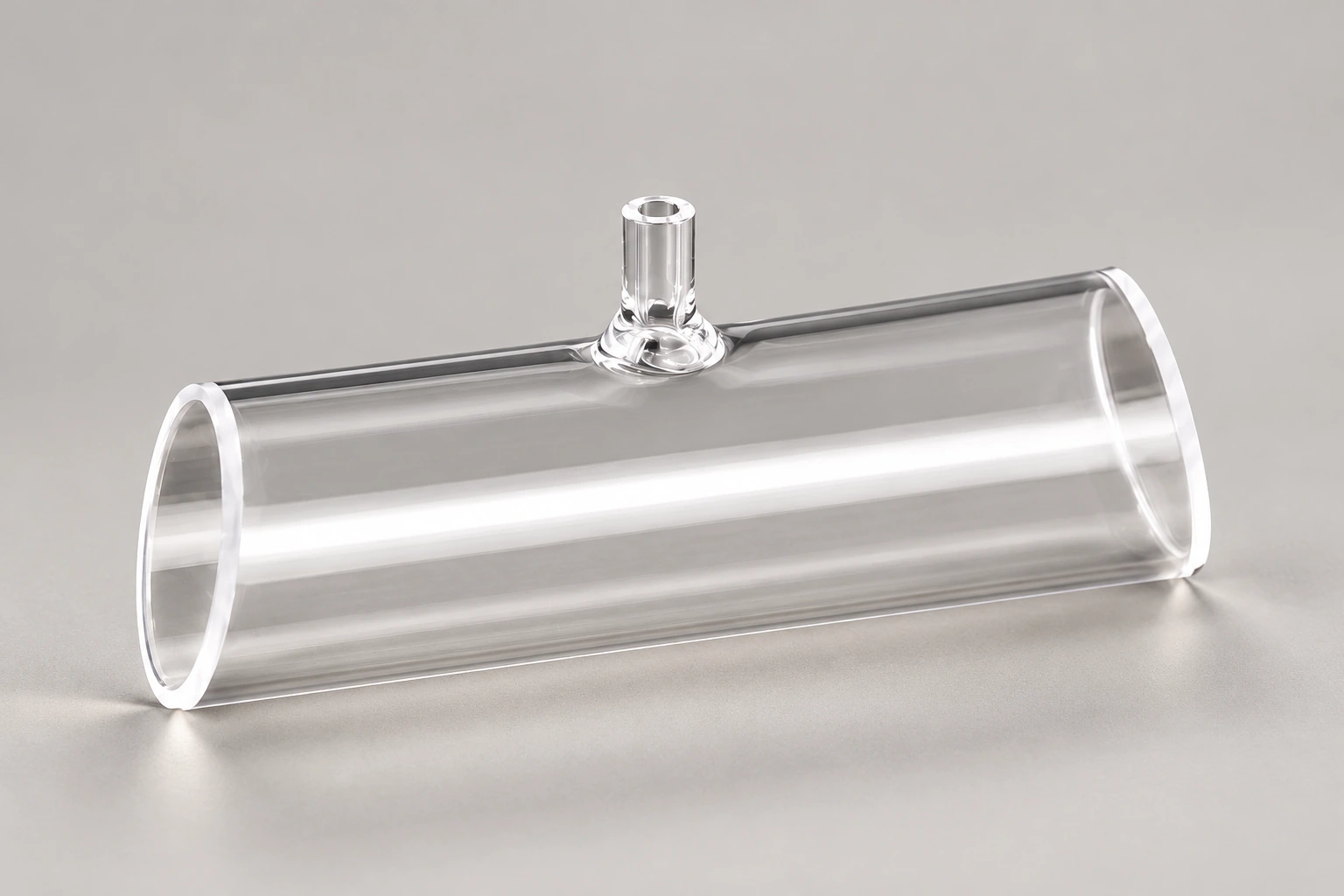
Angled-End Quartz Gas Cell: Defining the Windows and Fill Stem
Custom Design Guides · MQAVC001
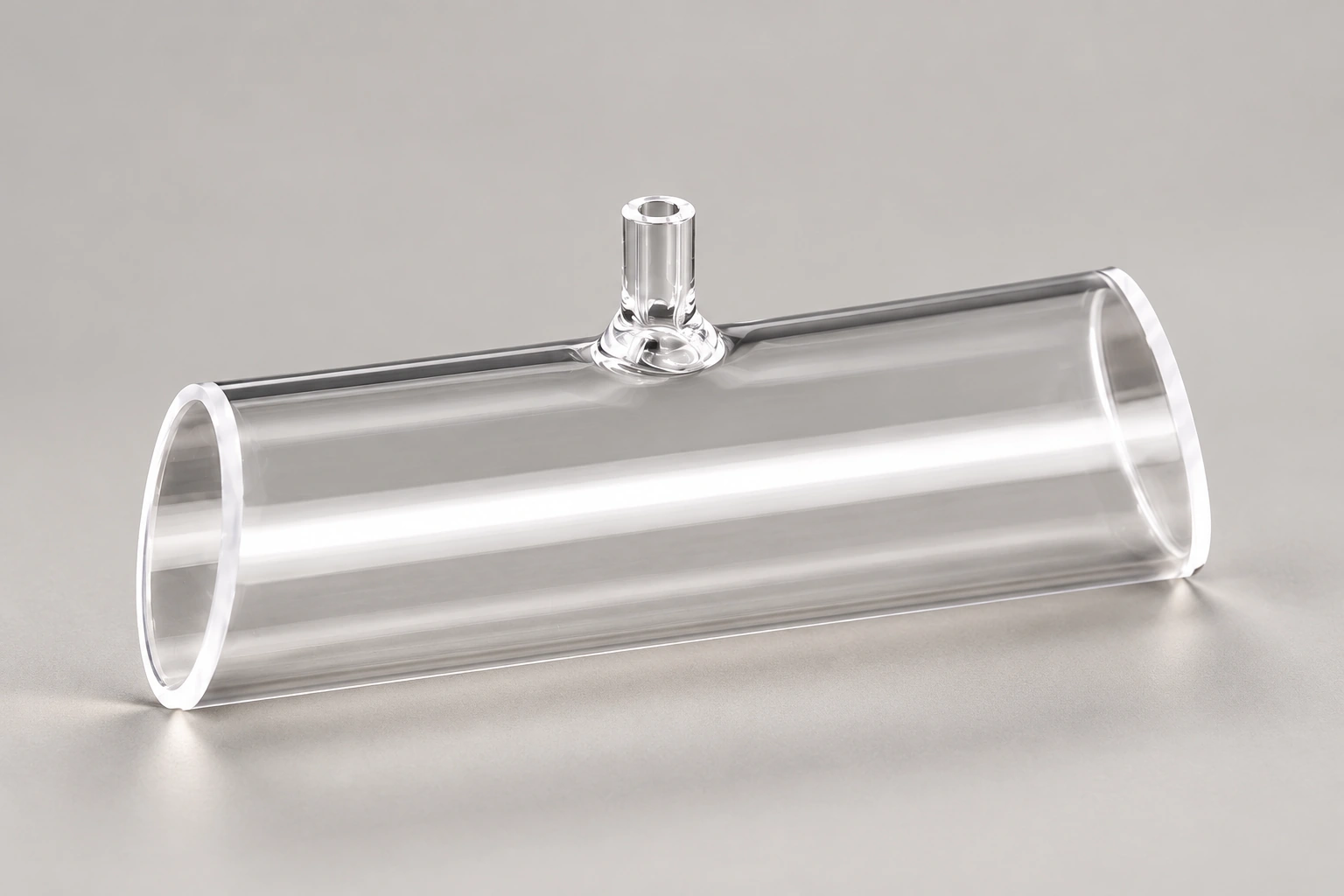
MQAVC001 combines a cylindrical quartz body, angled end geometry and a single projecting stem. The listed nominal optical path is 60 mm; the reference view marks a separate overall body length of 62 mm.
This form is different from a liquid flow cell with two assigned fluid connections. The stem's role, the window requirements and the supply state must be discussed explicitly rather than inferred from a clear tubular appearance.
In this guide: Configuration · Design comparison · Describe the optical ends as interfaces · Give the stem a stated preparation task · Keep nominal path and outside length separate · If the stem conflicts with the apparatus · Enquiry
The configuration discussed here
What changes from the simpler form?
Angled optical ends and a fill stem add distinct interfaces to a tubular gas-cell form. The end geometry, body support and preparation connection need separate acceptance references.
Describe the optical ends as interfaces
Show the intended optical direction and the regions that must remain clear. The angled appearance does not establish a measured window angle, parallelism, surface quality or optical loss. Specify any critical optical requirement on the drawing.
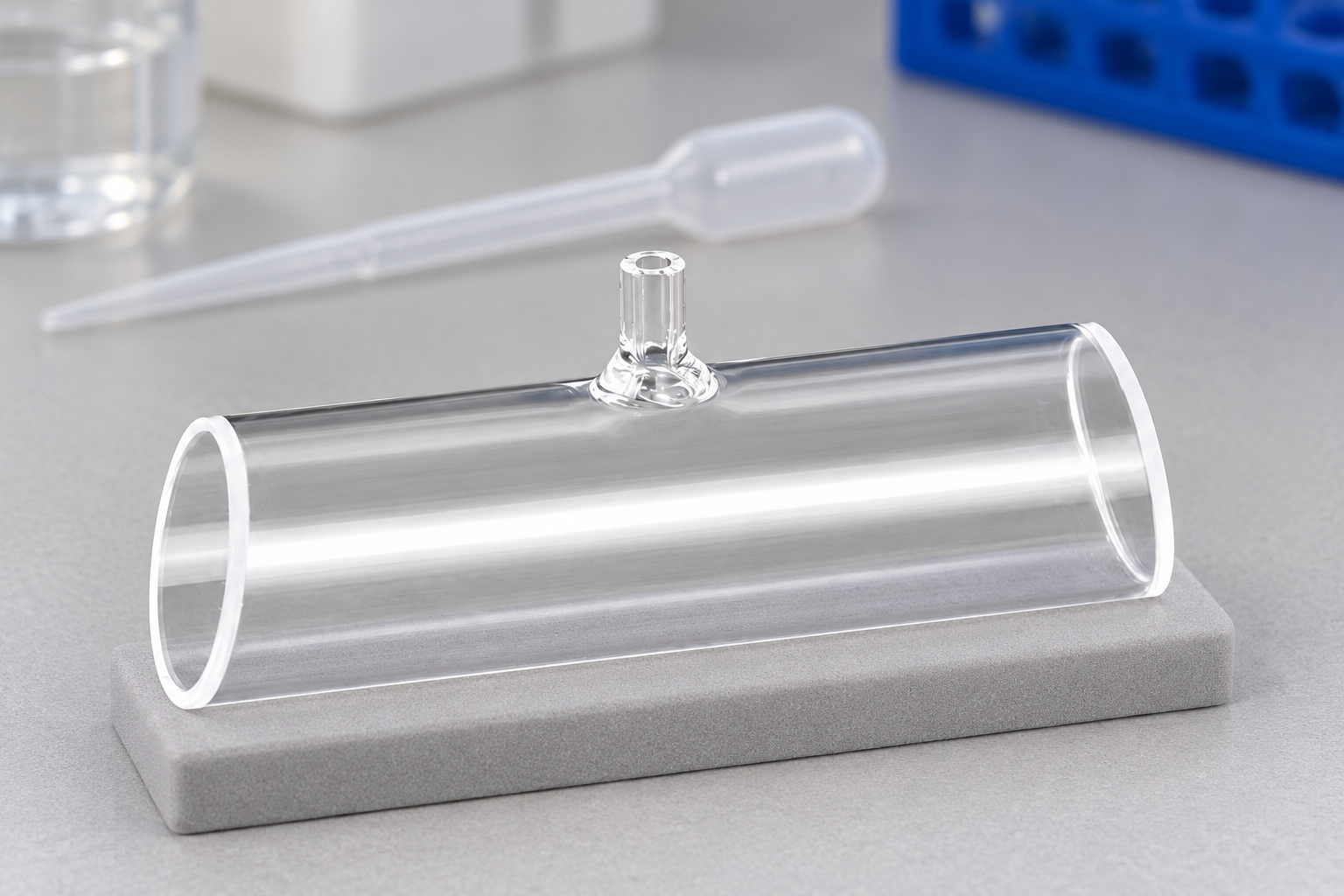
The support also needs a defined contact region. Include the body and stem envelope so the holder does not block an optical face or place an unintended load on the projecting stem.
Give the stem a stated preparation task
Identify whether the stem is needed for a preparation connection, a particular fill operation or another defined process. Its visible presence does not establish a supplied valve, removable seal or completed permanent closure.
State the required contents and supporting evidence. The reference does not identify a gas fill, alkali metal, purity, internal pressure or leakage qualification.
Keep nominal path and outside length separate
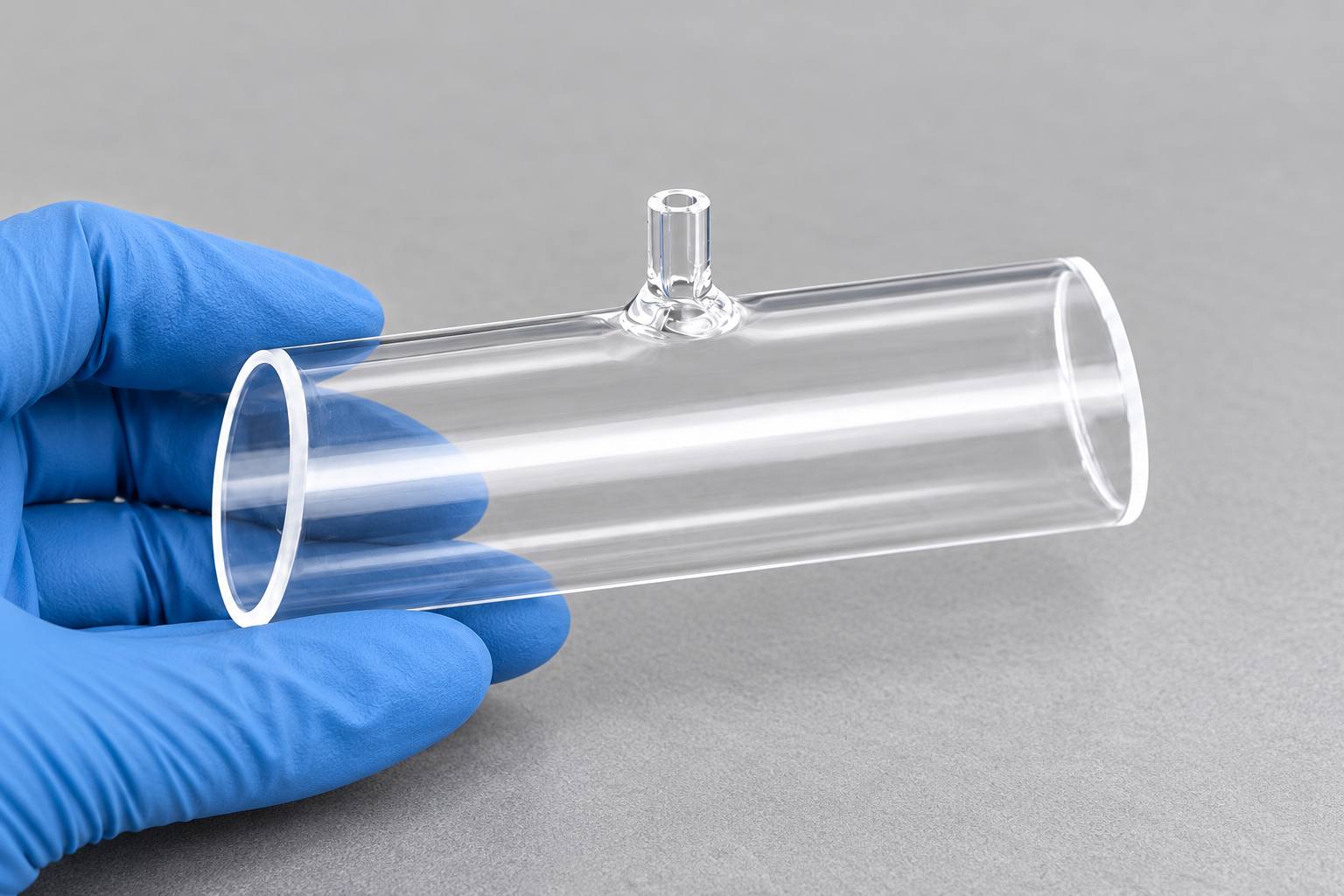
The 60 mm nominal path and 62 mm body-length mark are not interchangeable. One describes the listed optical requirement, while the other is a physical envelope reference. The angled geometry makes it especially important to identify the endpoints of dimensions.
For a replacement, provide the existing cell and support drawings if possible. A matching outside length does not prove that the optical faces meet the same conditions.
If the stem conflicts with the apparatus
A possible custom request is to retain the optical-end arrangement while reviewing the stem position for a restricted enclosure. Mark the end geometry to keep, the available stem space and the proposed support contacts.
MQ can review the proposed design with the filling, closure and operating requirements. Any optical or containment check needs agreed conditions and records; the drawing is not itself a qualification.
Structure reference and specification points
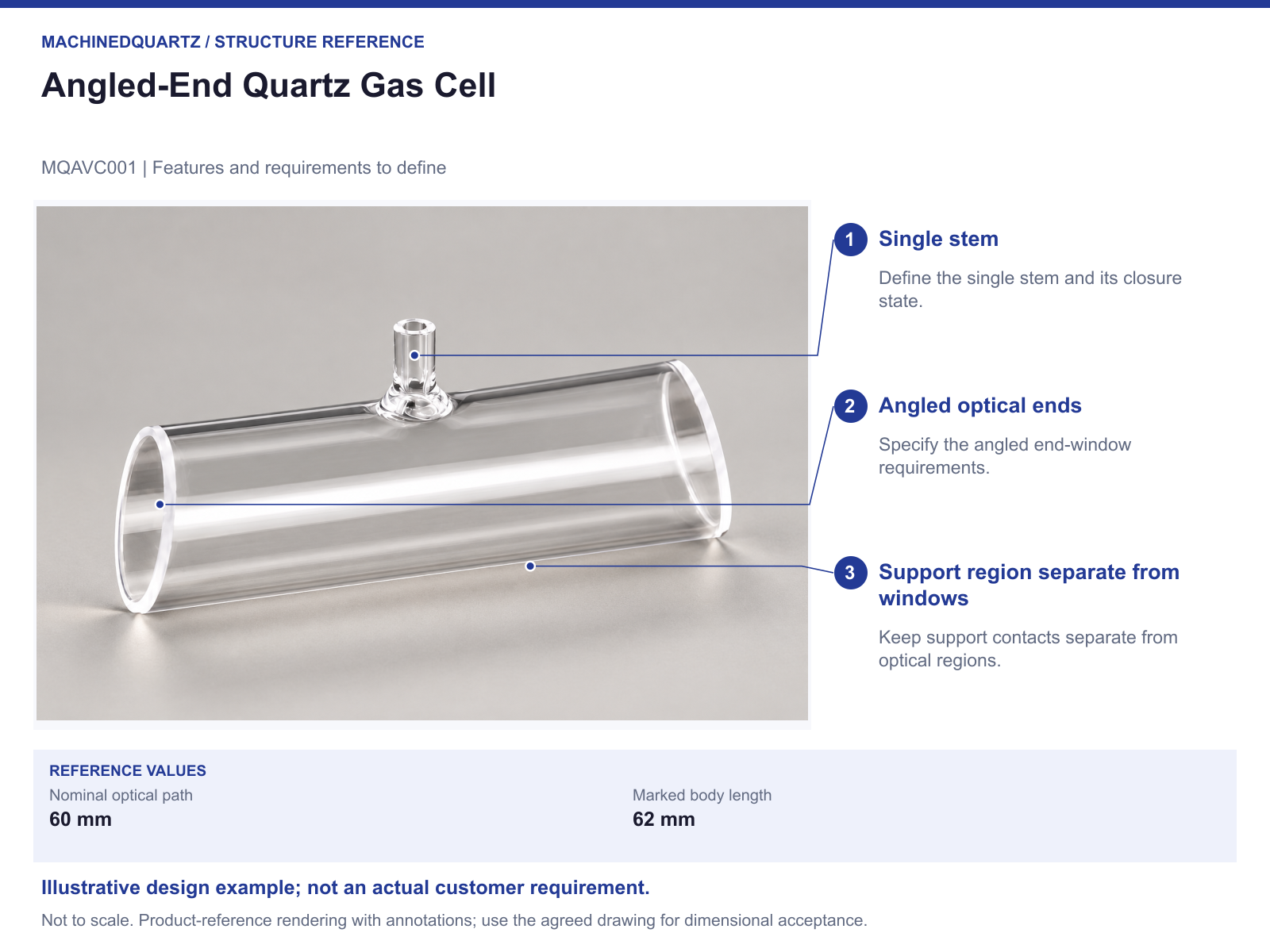
Download the structure reference (PDF)
Is the gas cell supplied filled with a particular material?
No fill state or contents are established here. Specify the required preparation, contents, closure and documents, and confirm the offered supply state before ordering.
Send a drawing or the mating-part details
Send an optical-layout and support sketch with the stem requirement. MQ can then review the gas-cell geometry without assuming an unconfirmed fill or seal.
- Optical directions and window requirements
- Dimension endpoints and complete support envelope
- Stem role, position and preparation interface
- Required contents, closure and operating conditions
- Optical or containment evidence, quantity and date
Modified designs are reviewed for the project. The drawing, supplied parts, quantity, inspection scope, price and preparation or production time are agreed in the quotation.
Details to settle for the ordered configuration
Exact window geometry, fill state, sealing, leakage, operating pressure and optical performance require confirmation.


Recent Comments