
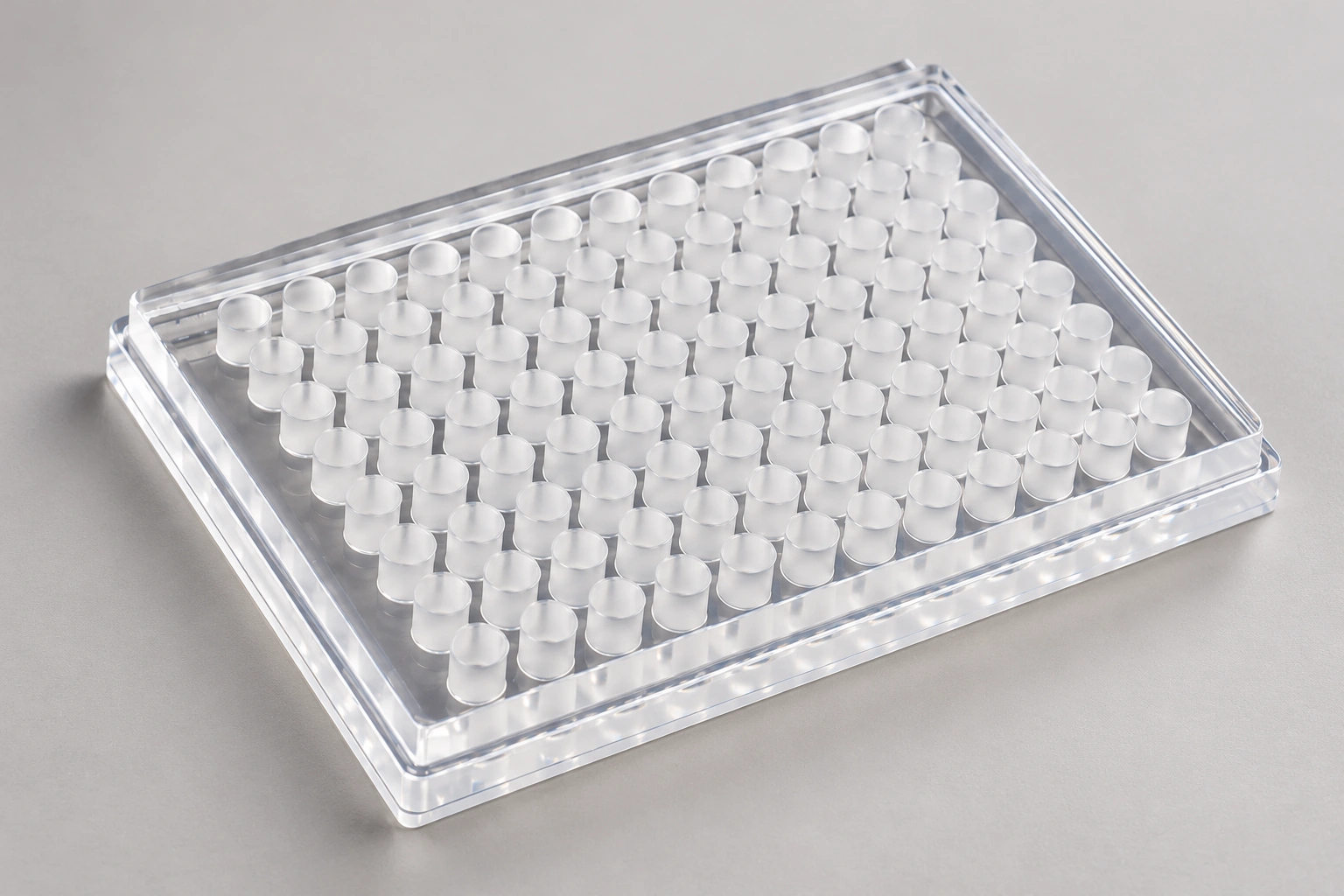
96-Well Quartz Microplate: Planning Wells, Base Thickness and Reader Fit
Custom Design Guides · MQQMP002
MQQMP002 is the 96-open-well JGS2 quartz-plate reference. Moving from a single cuvette to a well matrix changes the preparation and positioning task as much as the number of sample locations.
The well count does not establish a standard microplate footprint, well pitch or reader compatibility. Those interfaces need a drawing alongside the proposed loading and measurement method.
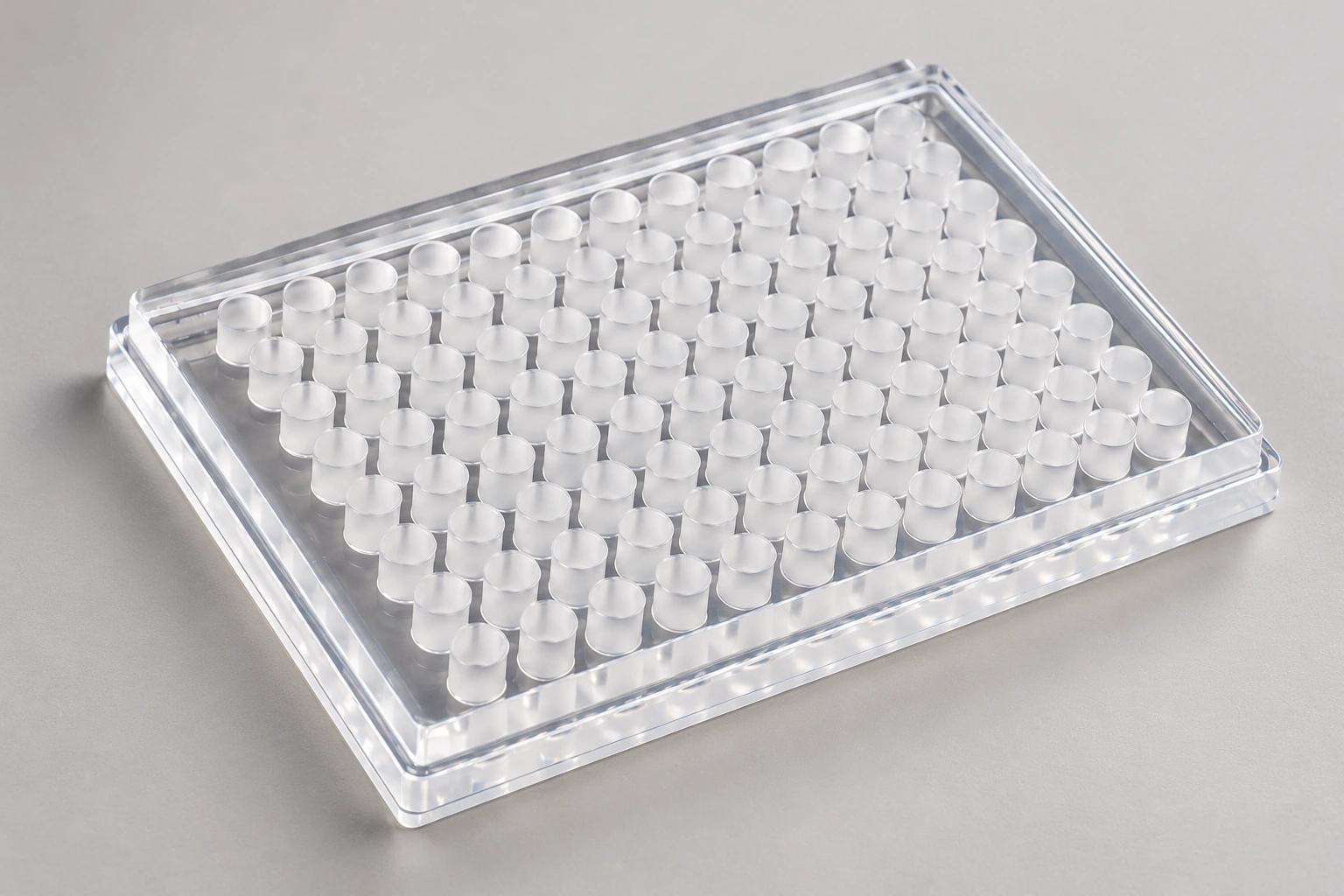
In this guide: Configuration · Design comparison · Give every well a repeatable position · Match the loading tool to the well openings · Describe the optical bottom and the support separately · A custom matrix needs a loading and inspection plan · Enquiry
The configuration discussed here
What changes from the simpler form?
Replacing a single sample position with an open-well matrix adds repeated loading and positioning interfaces. The well count is only the start; pitch, bottom optics and fixture location define how the plate can be used.
Give every well a repeatable position
Specify the matrix layout, pitch and the datum from which positions are located. The plate outside boundary and its orientation reference need to match the intended fixture.
If a reader or automated stage is involved, supply its relevant interface information. A familiar number of wells is not proof that the plate will load, locate or be read correctly.
Match the loading tool to the well openings
Give the tool spacing, tip access and working amount per well. A proposed multi-position loading sequence needs clearance at each opening and room to move between positions.
Nominal well count does not define well capacity, minimum fill or sample recovery. Those details require the selected well geometry and the laboratory method.

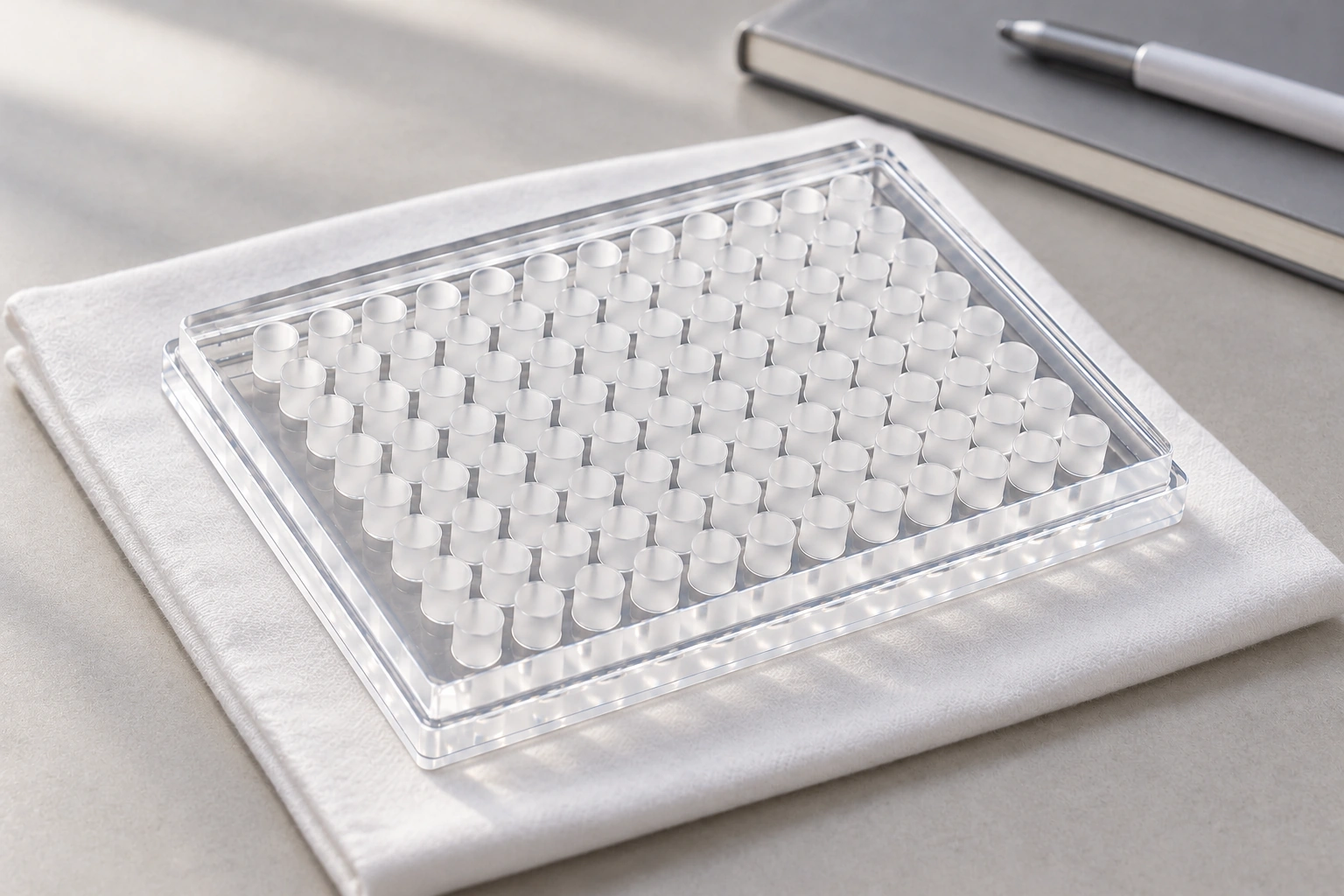
Describe the optical bottom and the support separately
Show the direction of observation and the clear region required under or around each well. State any critical bottom thickness, surface or transmission requirement with the measurement conditions.
The support must leave the active regions accessible while locating the plate. Material designation and a clear appearance do not establish reader performance or optical uniformity across the matrix.
A custom matrix needs a loading and inspection plan
For example, a customer may want multiple open sample positions in quartz while retaining a particular stage footprint. Provide that footprint, the desired matrix and the loading arrangement before choosing the well geometry.
MQ can review the configuration with dimensional checks and any requested optical or well-specific inspection. Cleaning, reuse and cross-well control requirements should be stated for the actual sample and method.
Structure reference and specification points
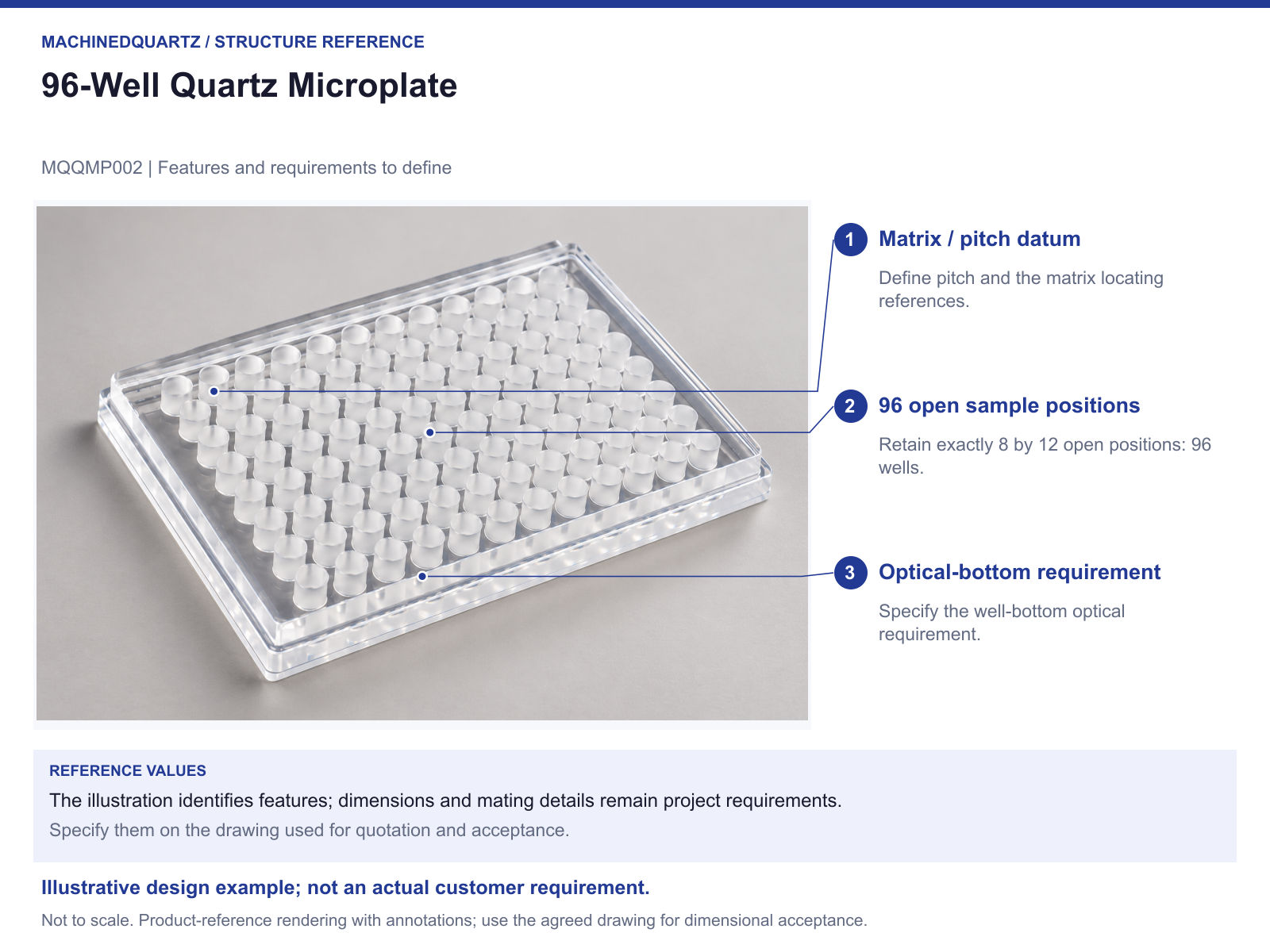
Download the structure reference (PDF)
Does 96 wells mean it fits a standard microplate reader?
No compatibility is established here. Confirm the footprint, pitch, height, well geometry and optical interfaces against the intended reader or fixture.
Send a drawing or the mating-part details
Send the plate-to-fixture interface with the well matrix. MQ can review a quartz multi-sample format around the actual preparation and reading arrangement.
- Matrix, pitch and orientation datum
- Fixture or reader interface drawing
- Well opening, depth and working sample amount
- Optical direction and bottom requirements
- Loading, cleaning and inspection scope
Modified designs are reviewed for the project. The drawing, supplied parts, quantity, inspection scope, price and preparation or production time are agreed in the quotation.
Details to settle for the ordered configuration
No standard footprint, well capacity, reader fit or measured optical uniformity is established by this reference.



Recent Comments