
Open-Top Quartz Flow Cell: Planning Direct Access beside the Tube Connections
Custom Design Guides · MQQFC134
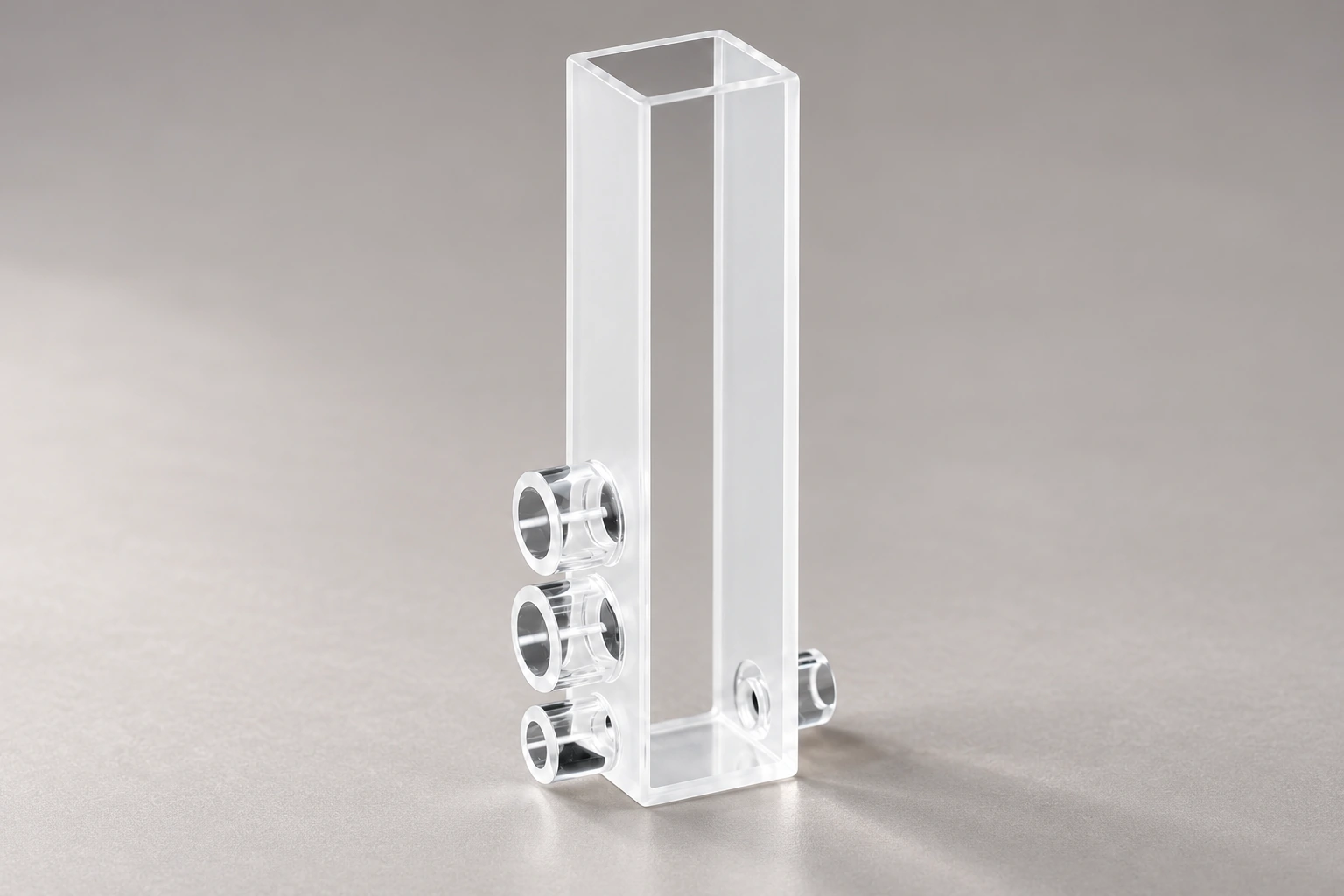
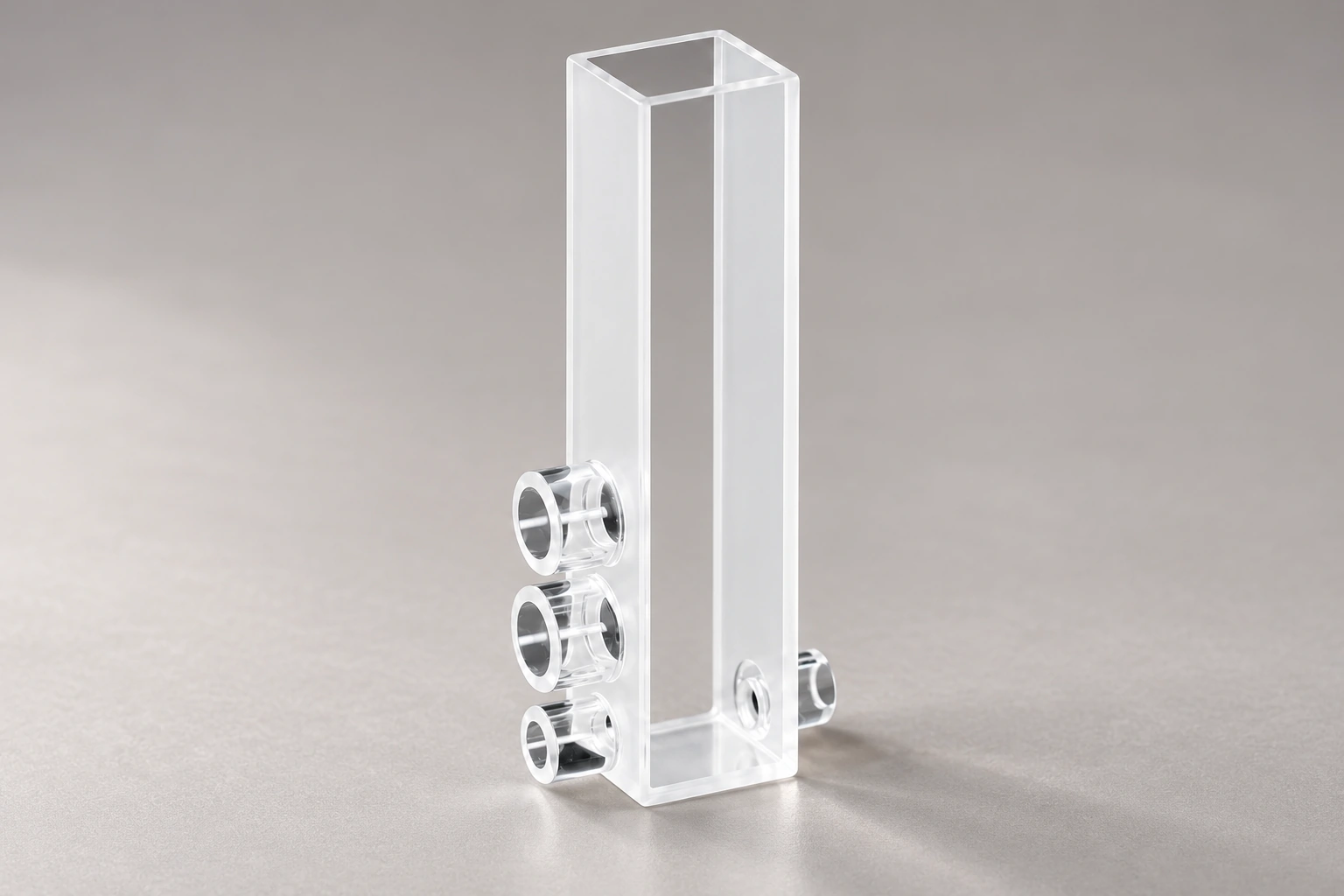
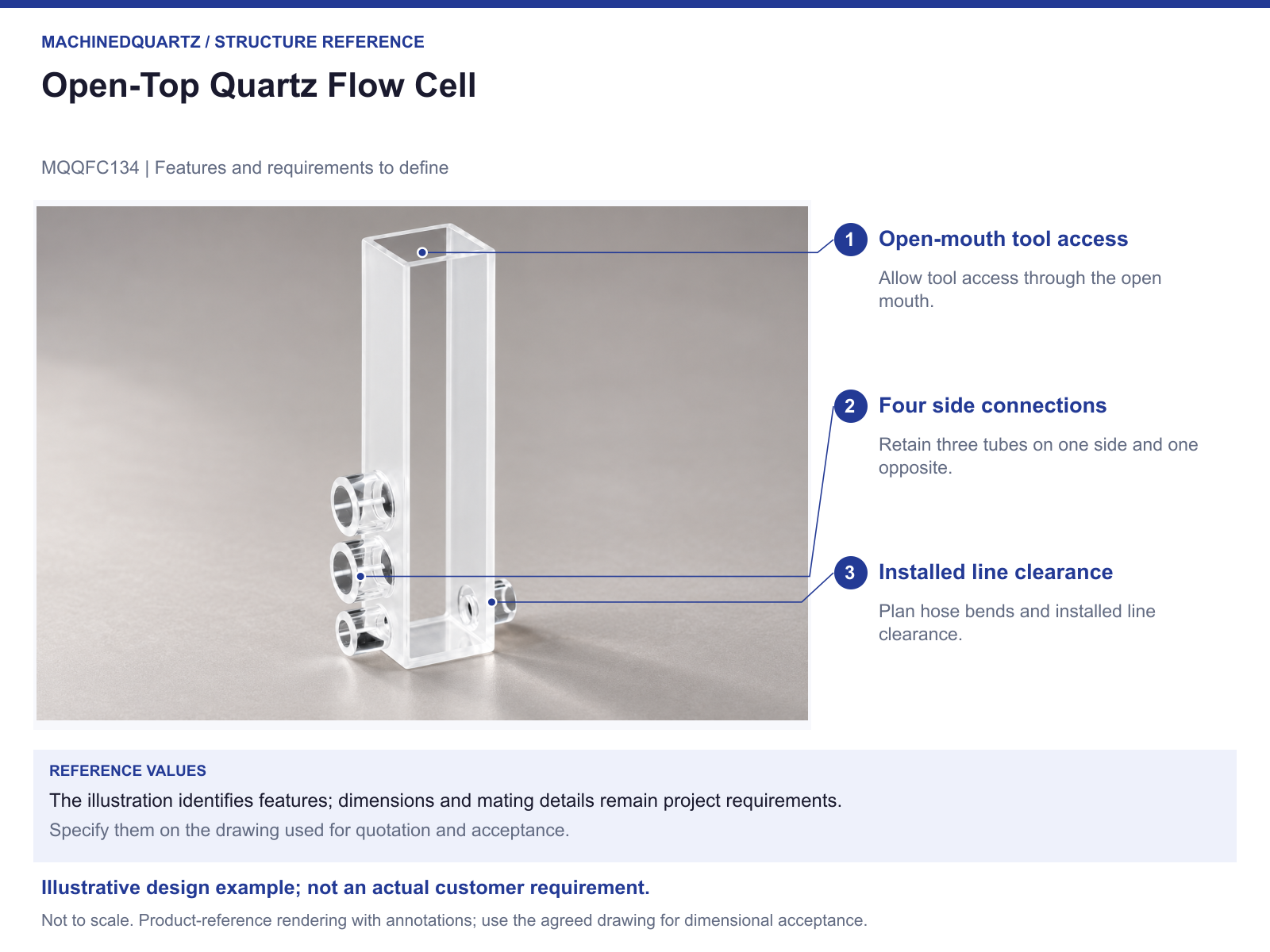
MQQFC134 is the open-top quartz-cell reference with four visible side connections: three on one side and one on the opposite side. The top opening remains a separate sample-access feature.
This layout needs a clearer brief than a port count. The loading or probe task above the cell and the external lines beside it have to fit around the same sample region.
In this guide: Configuration · Design comparison · Keep the top opening out of the tube count · Assign tube roles from the circuit · Draw the tool and lines in place · Define the working level and proposed checks · Enquiry
The configuration discussed here
What changes from the simpler form?
Side connections add line access to an open-top sample body. That leaves loading available above the sample, but the inserted tool and connected lines now share the same installed space.
Keep the top opening out of the tube count
Mark the mouth and the four side tubes separately. Describe what enters through the top and whether it remains there during the proposed use.
An open top does not establish a closed sample environment. Give any exposure or containment requirement so it can be reviewed with the actual access arrangement.
Assign tube roles from the circuit
Number the side tubes and draw their external connections. If lines have different purposes, show where they go and what result the arrangement must achieve.
The asymmetric tube layout does not establish four isolated channels or a particular mixing route. Those features require a section or route drawing rather than an interpretation of the photograph.
Draw the tool and lines in place
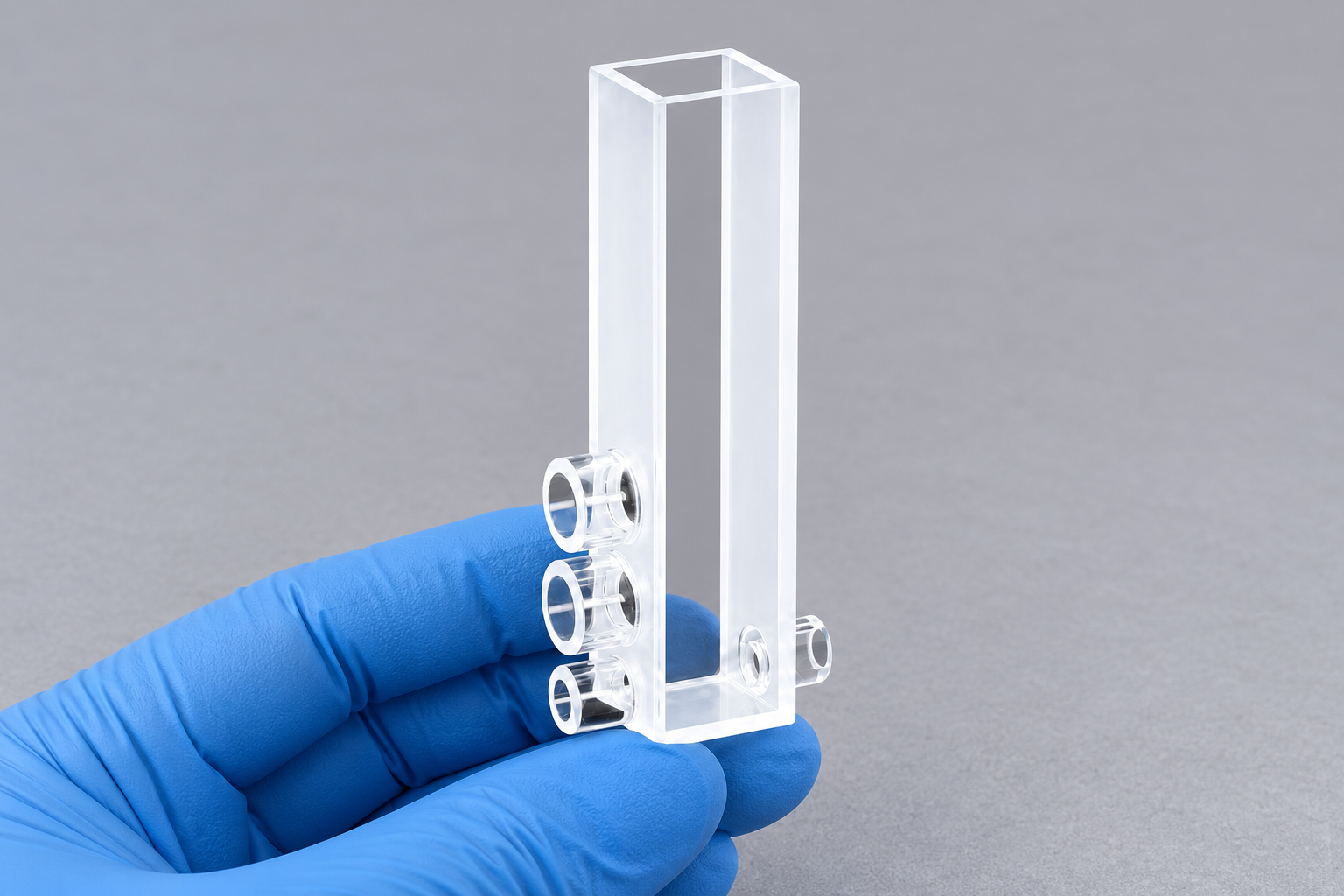
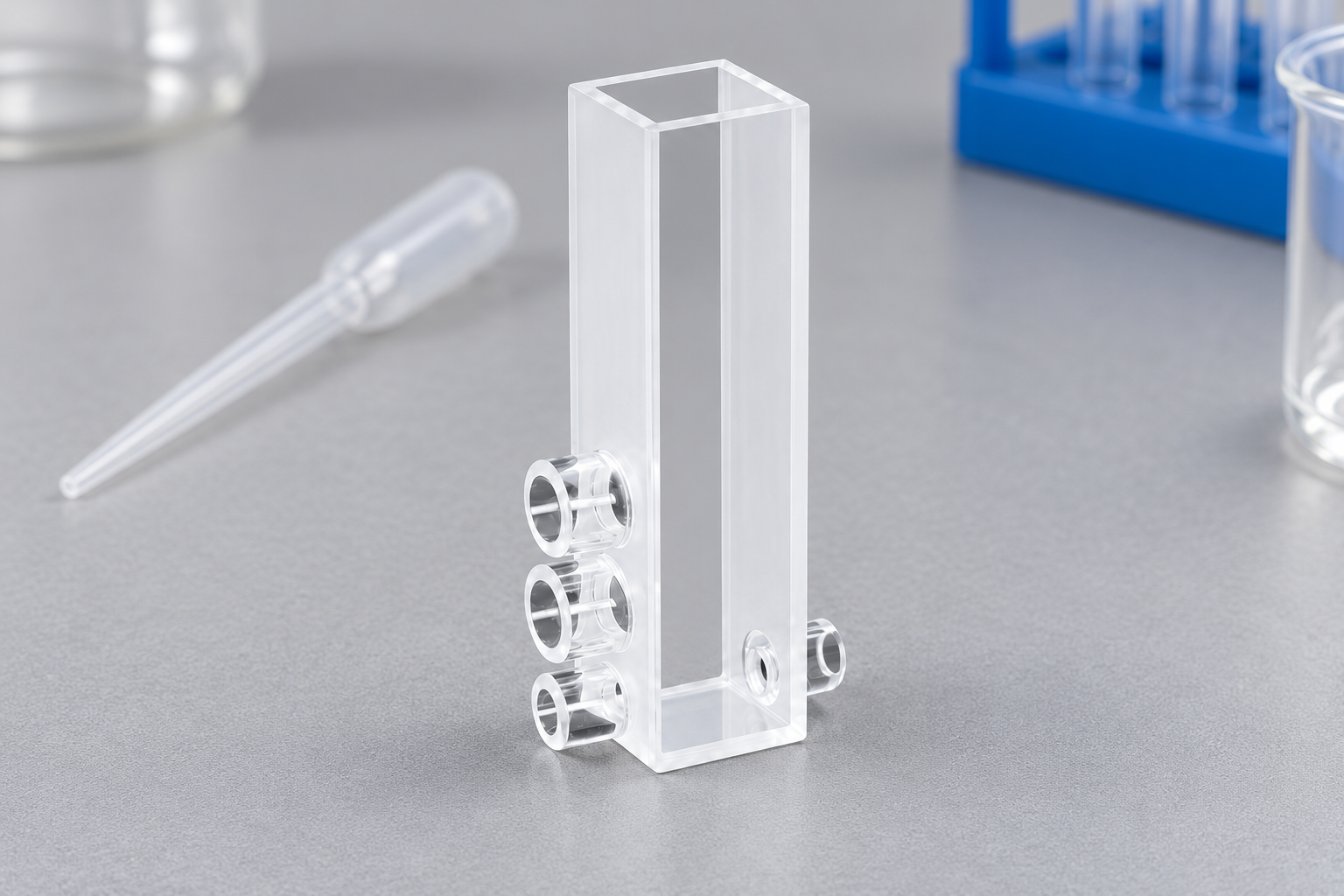
A probe entering through the mouth can compete with a nearby line or fixture. Include the tool body, its support and the line approach spaces in the installed envelope.
For a custom version, moving a side connection might free access above the sample. That change should be considered alongside the required window region and the support faces that need to remain available.
Define the working level and proposed checks
State the sample level needed by the method and the positions of any immersed items. A body size alone does not establish the operating fill once tools and connections are involved.
MQ can review the open access and labelled circuit with dimensional and fluid-handling requirements. Any flow, leakage or optical acceptance should be specified under agreed conditions.
Structure reference and specification points
Download the structure reference (PDF)
Can the four tubes be treated as four independent flow channels?
The reference establishes four visible side connections, not isolated channels. Define the internal route and the proposed circuit before assigning that function.
Send a drawing or the mating-part details
Send the top-access tool and all four connections in one installed view. MQ can then review a layout that leaves room for both loading and routing.
- Top-access task and inserted tool envelope
- Numbered tube roles and complete circuit
- Working level and active optical region
- Holder contacts and connected-line space
- Sample conditions and acceptance requirements
Modified designs are reviewed for the project. The drawing, supplied parts, quantity, inspection scope, price and preparation or production time are agreed in the quotation.
Details to settle for the ordered configuration
Internal routing, working fill, containment and fluid or optical performance require configuration-specific agreement.


Recent Comments