
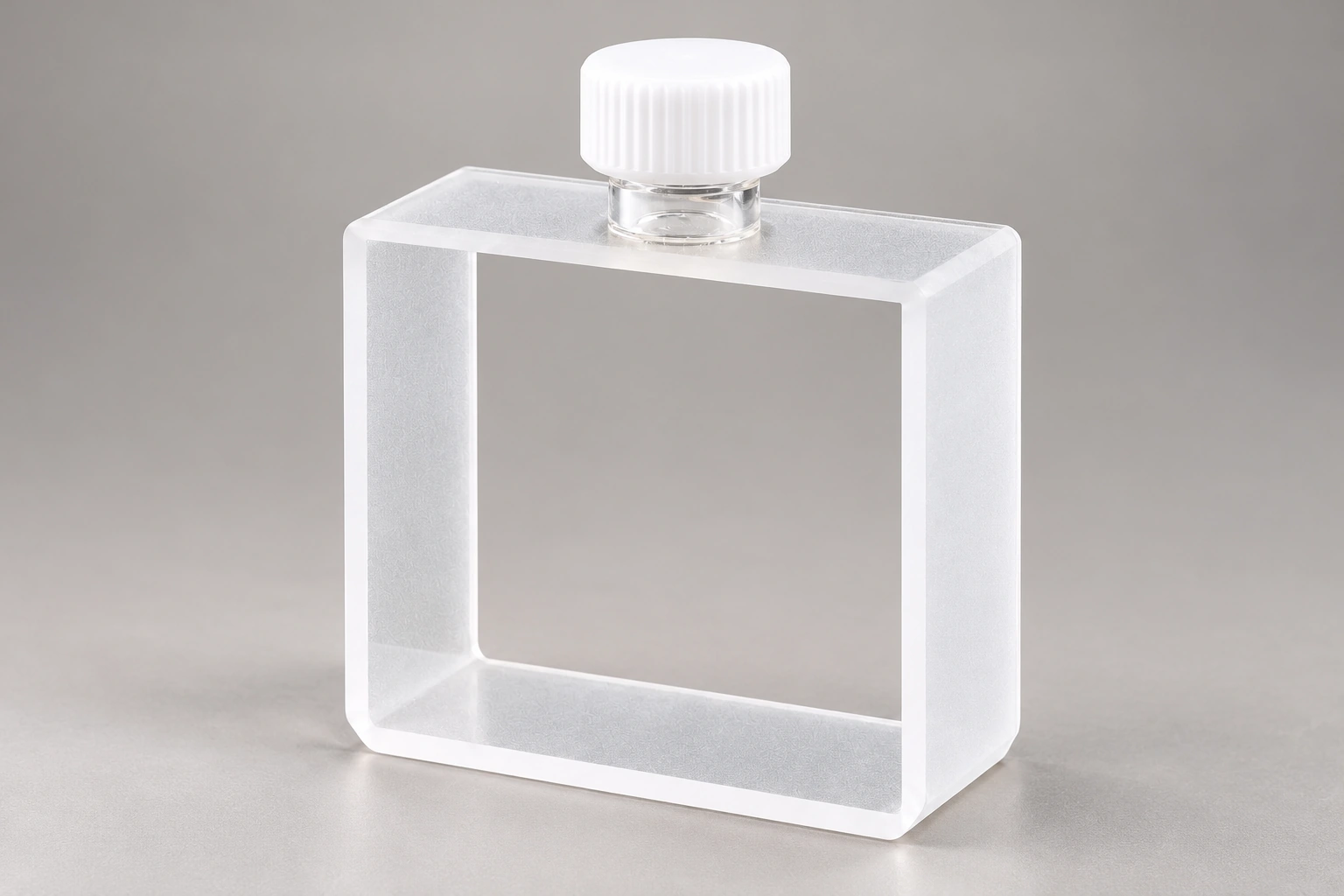
Large Quartz Screw-Top Cell: Reaching the Chamber through the Neck
Custom Design Guides · MQQSC015
MQQSC015 is the nominal 26 mm path, 80 mL quartz screw-top cell reference. Its wider sample body meets a narrower neck, so the opening is an important part of the selection.
A larger container does not automatically offer broad tool access. The loading, cleaning and sample-recovery tasks need to be reviewed through the actual mouth and around the body shoulders.
In this guide: Configuration · Design comparison · Check the narrowest part of the access route · Separate body, neck and capped height · State the working amount and recovery task · Define the closure and cleaning requirements · Enquiry
The configuration discussed here
What changes from the simpler form?
A screw neck adds closure access above a wider sample body. Compared with an open vessel, the mouth becomes a constraint on loading, cleaning and recovery even when the container capacity is larger.
Check the narrowest part of the access route
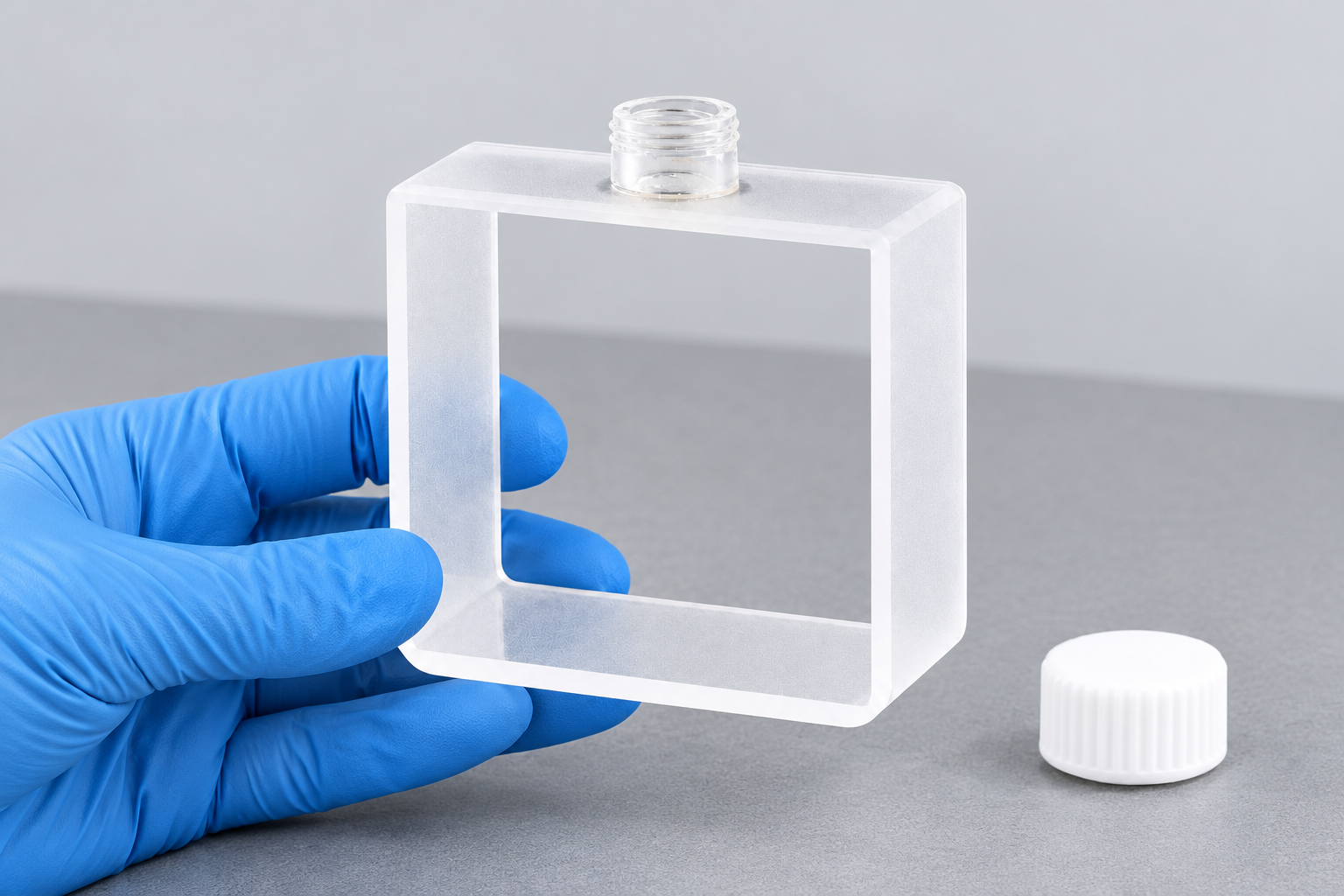
Give the mouth opening and the outside dimensions of the proposed tool. Show how far it needs to reach and which part of the sample space it must access.
The shoulder geometry can matter for recovery even when a tool fits through the neck. A neck view and body section are more useful than capacity alone for this question.
Separate body, neck and capped height
The optical holder locates the measuring body, while the neck and cap need space above it. Include the full capped assembly and the cap-removal route in the envelope drawing.
Do not use a body-height dimension as the complete installed height. Matching a nominal path also does not establish holder or cap interchangeability.
State the working amount and recovery task
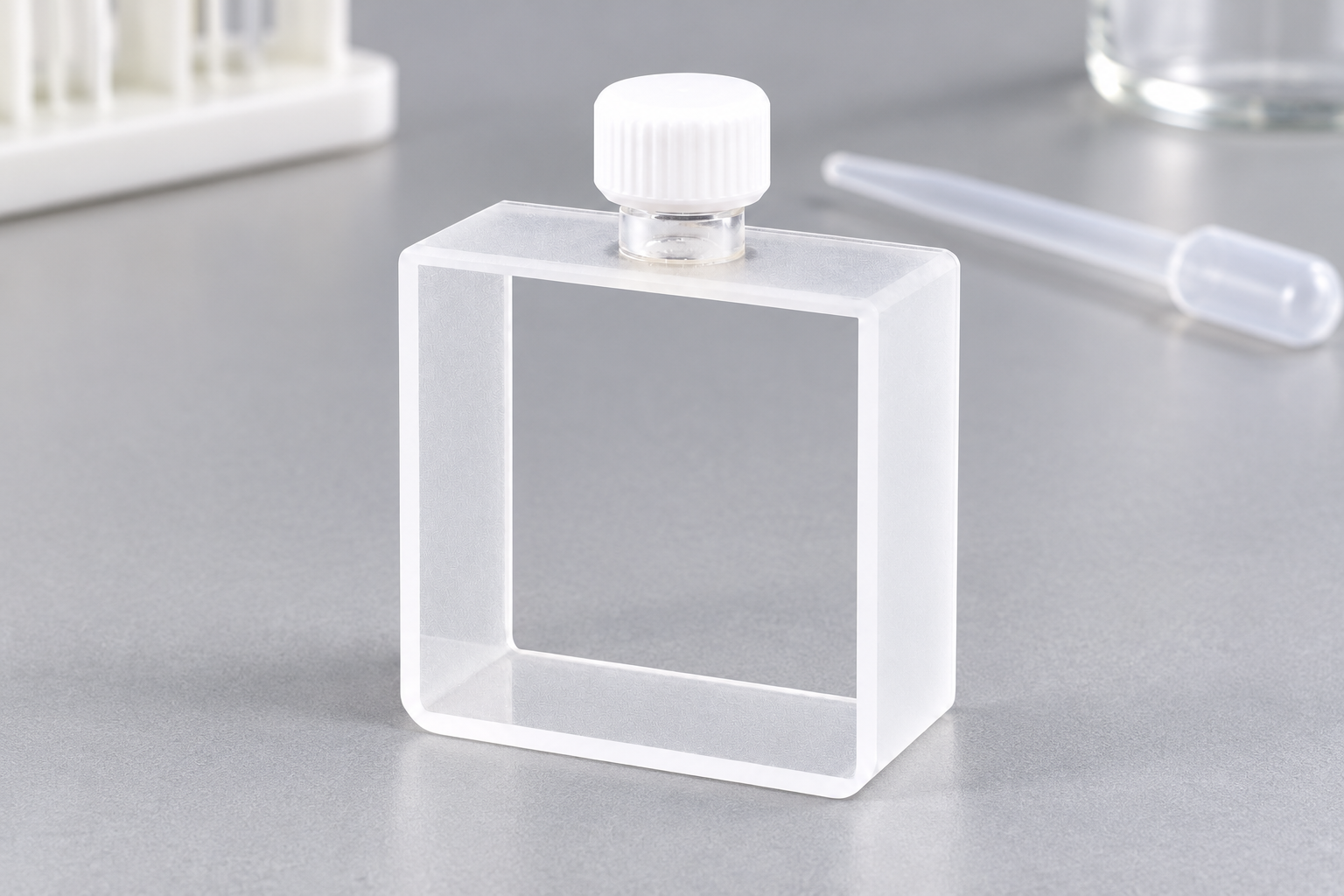
The 80 mL designation is a nominal capacity. Give the level needed to cover the active window and any requirement to recover sample from the bottom or shoulder region.
For example, a wider opening could be proposed where an existing body suits the optical arrangement but access is restrictive. MQ would need the tool and closure requirements before reviewing that change.
Define the closure and cleaning requirements
Identify the cap, seal and sample-contact materials in the supplied set. A screw top does not establish an airtight, solvent-compatible or pressure-rated result under unspecified conditions.
Describe the cleaning method or delivered-condition requirement relevant to the sample. Agree the required fit, optical and closure checks for the complete configuration.
Structure reference and specification points
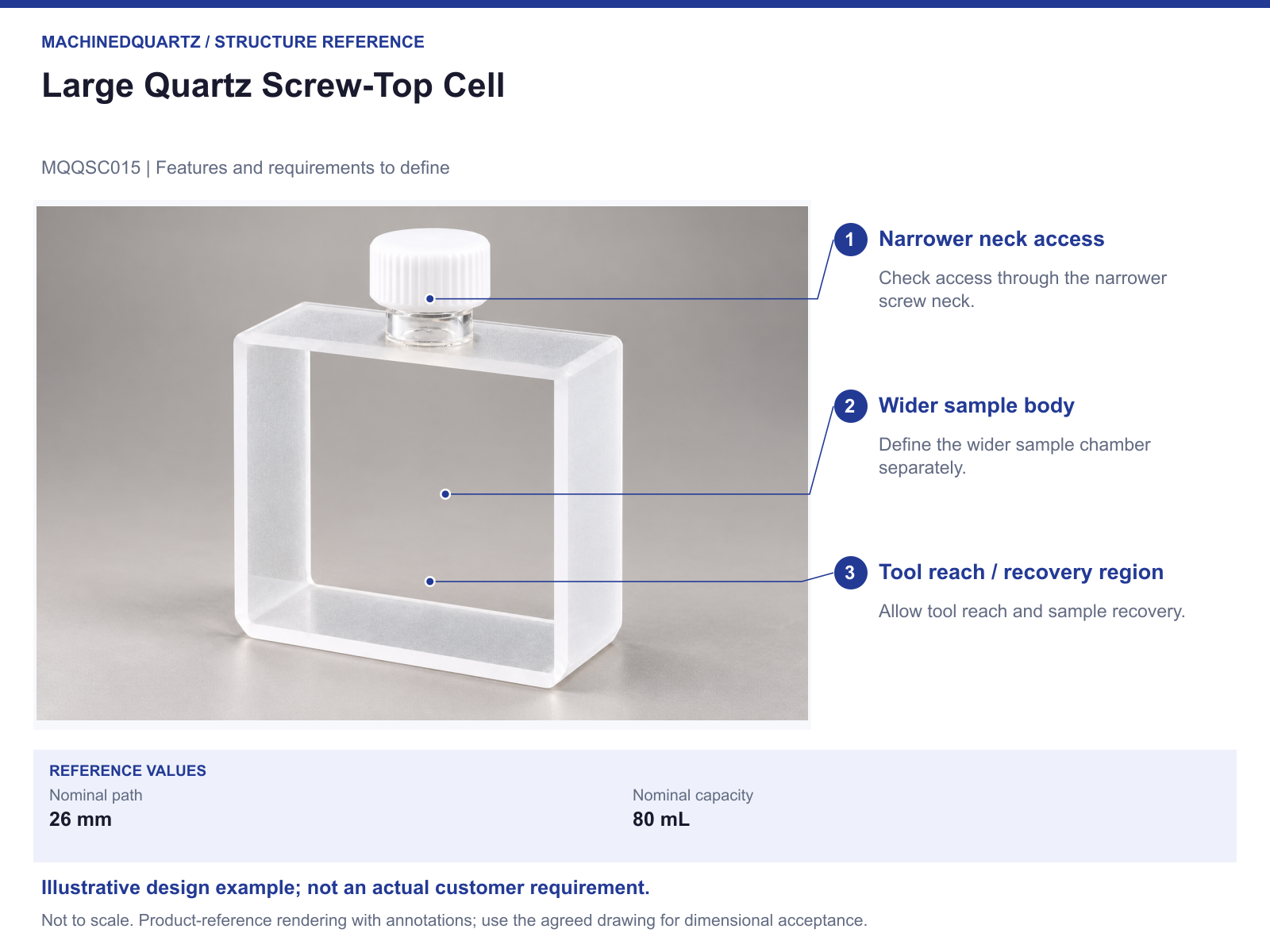
Download the structure reference (PDF)
Does the larger capacity mean a tool can reach the whole sample space?
Not necessarily. Mouth size, tool geometry, reach and the body shoulders determine access. Provide the actual tool and the region it needs to reach.
Send a drawing or the mating-part details
Send the loading or recovery tool through a section of the neck and body. MQ can then review whether an opening change is more useful than a capacity change.
- Mouth, shoulder and sample-body section
- Loading, recovery and cleaning-tool dimensions
- Working level and active optical window
- Cap, seal and complete installed height
- Sample conditions and acceptance requirements
Modified designs are reviewed for the project. The drawing, supplied parts, quantity, inspection scope, price and preparation or production time are agreed in the quotation.
Details to settle for the ordered configuration
Neck interfaces, working volume, recovery, closure performance and exact holder fit require agreement.


Recent Comments