
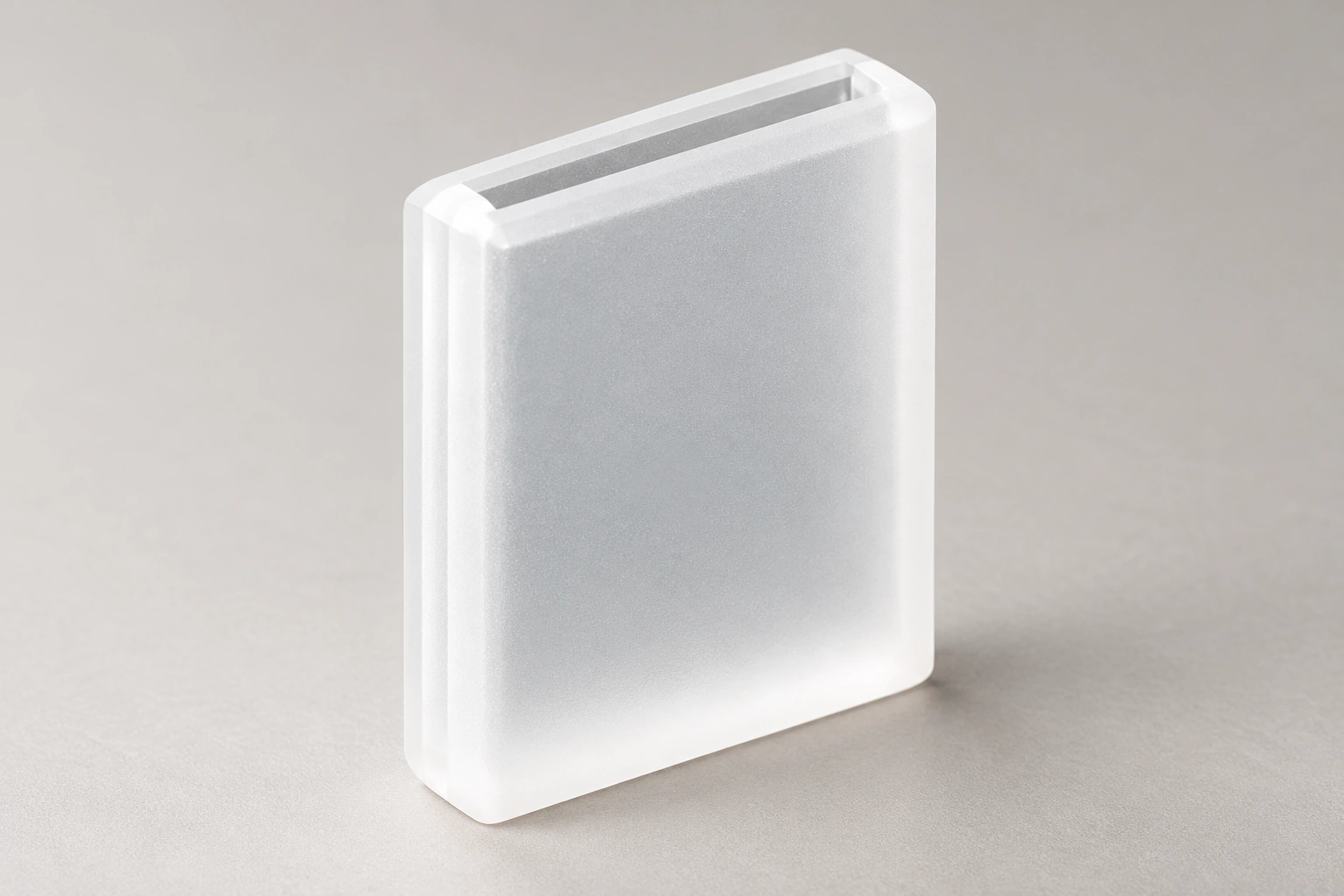
Small Frosted Quartz Sample Cell: Identifying the Handling and Viewing Surfaces
Custom Design Guides · MQQCU005
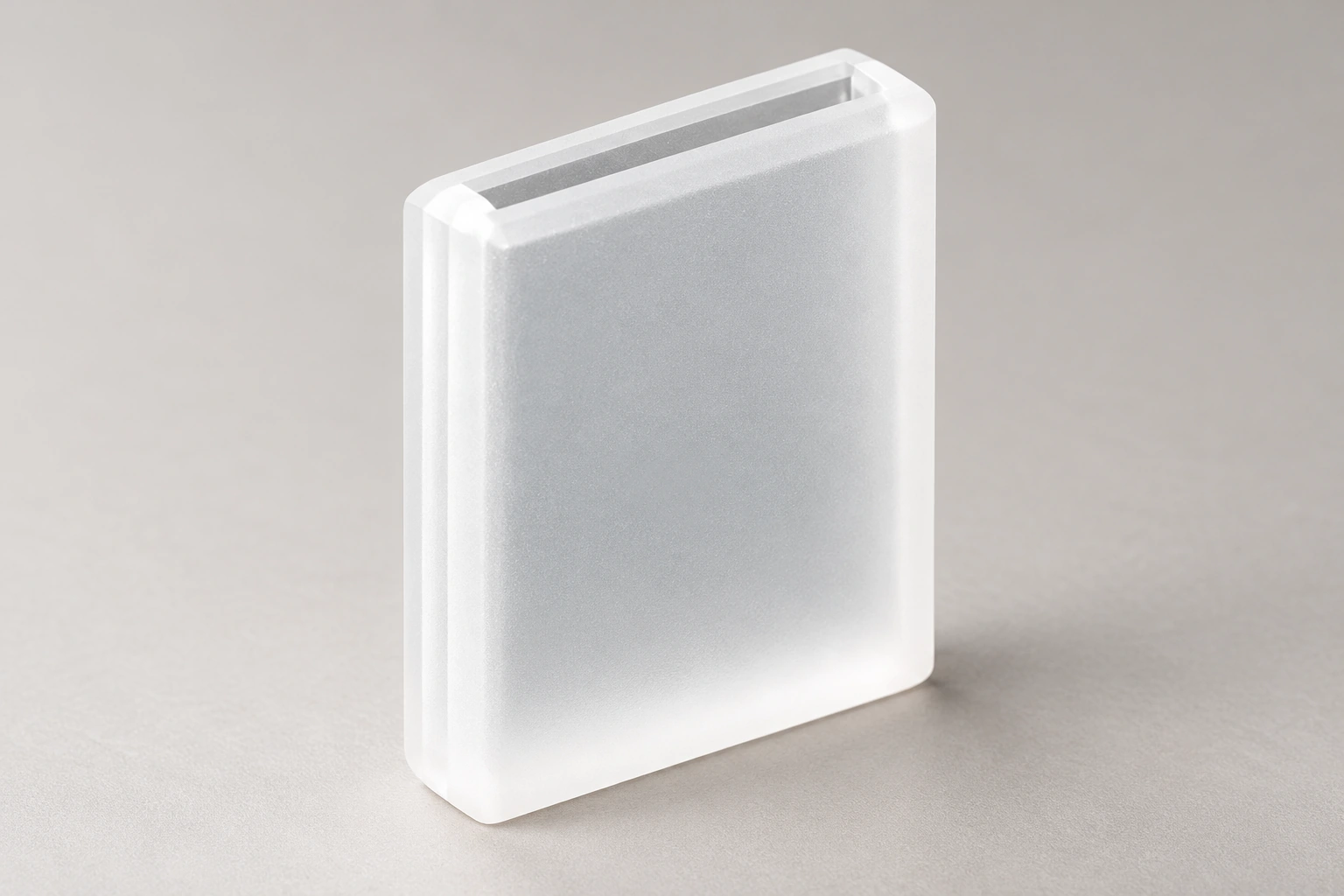
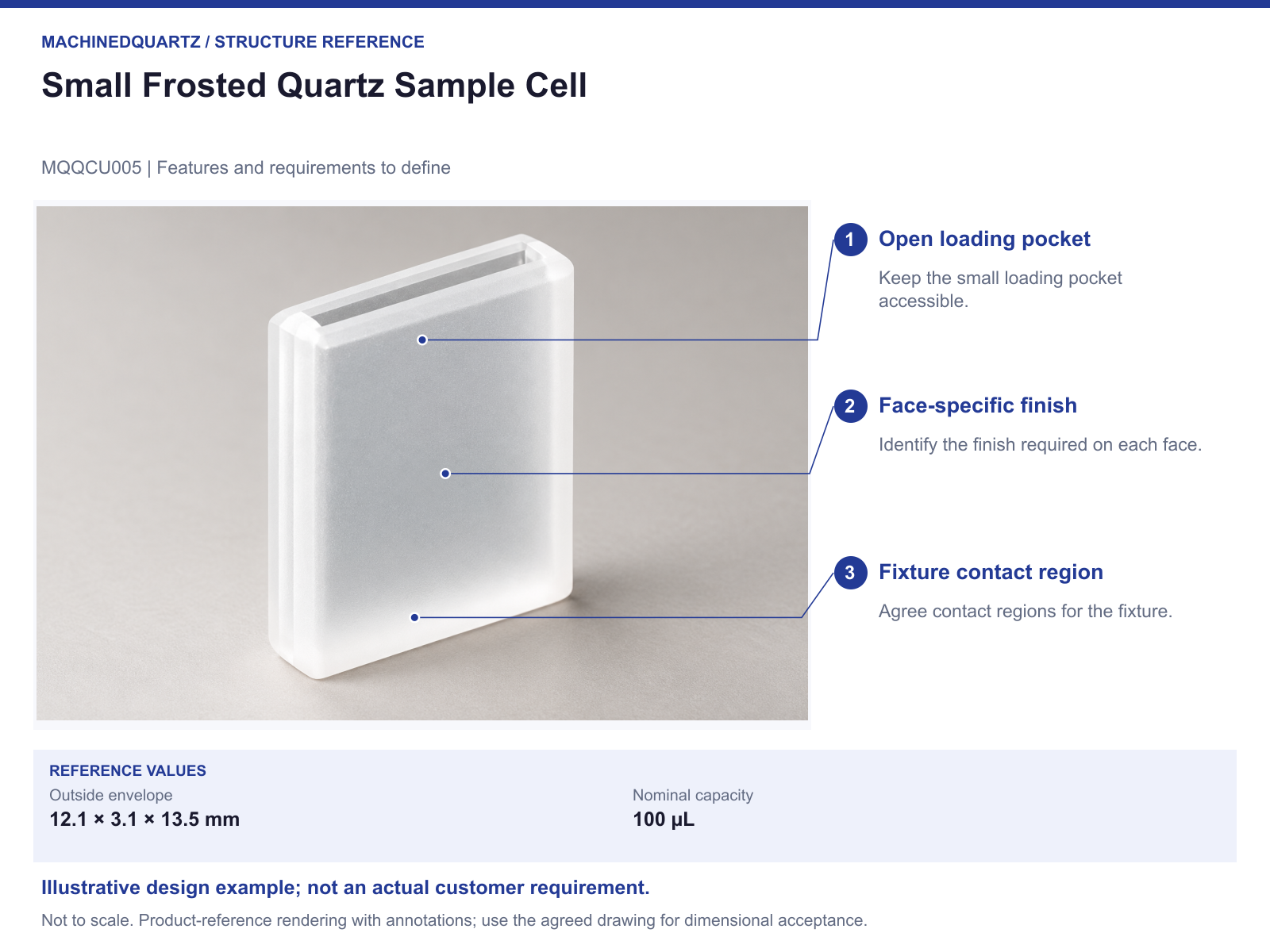
MQQCU005 is the small open quartz-pocket reference with a nominal 100 µL capacity and five frosted faces. The listed outside envelope is 12.1 × 3.1 × 13.5 mm, with a 1 mm wall designation.
Frosted surfaces are different from black-coated walls and clear optical windows. The intended observation method needs to identify which region, if any, is used for viewing.
In this guide: Configuration · Design comparison · Choose the viewing region before the holder · Give the small body a handling interface · Match loading to the open pocket · Specify the surface condition as part of acceptance · Enquiry
The configuration discussed here
What changes from the simpler form?
Frosted faces change the surface condition of the small pocket relative to a clear-window cell. They need to be specified by face and method, rather than treated as equivalent to black masking.
Choose the viewing region before the holder
State the method and the area that needs optical access. A frosted face should not be relabelled as a high-transmission window or assumed to provide a specific light-blocking result.
If a clear region is required, identify it explicitly and confirm that requirement against the ordered configuration. The product's small capacity does not establish suitability for a particular micro-volume instrument.
Give the small body a handling interface
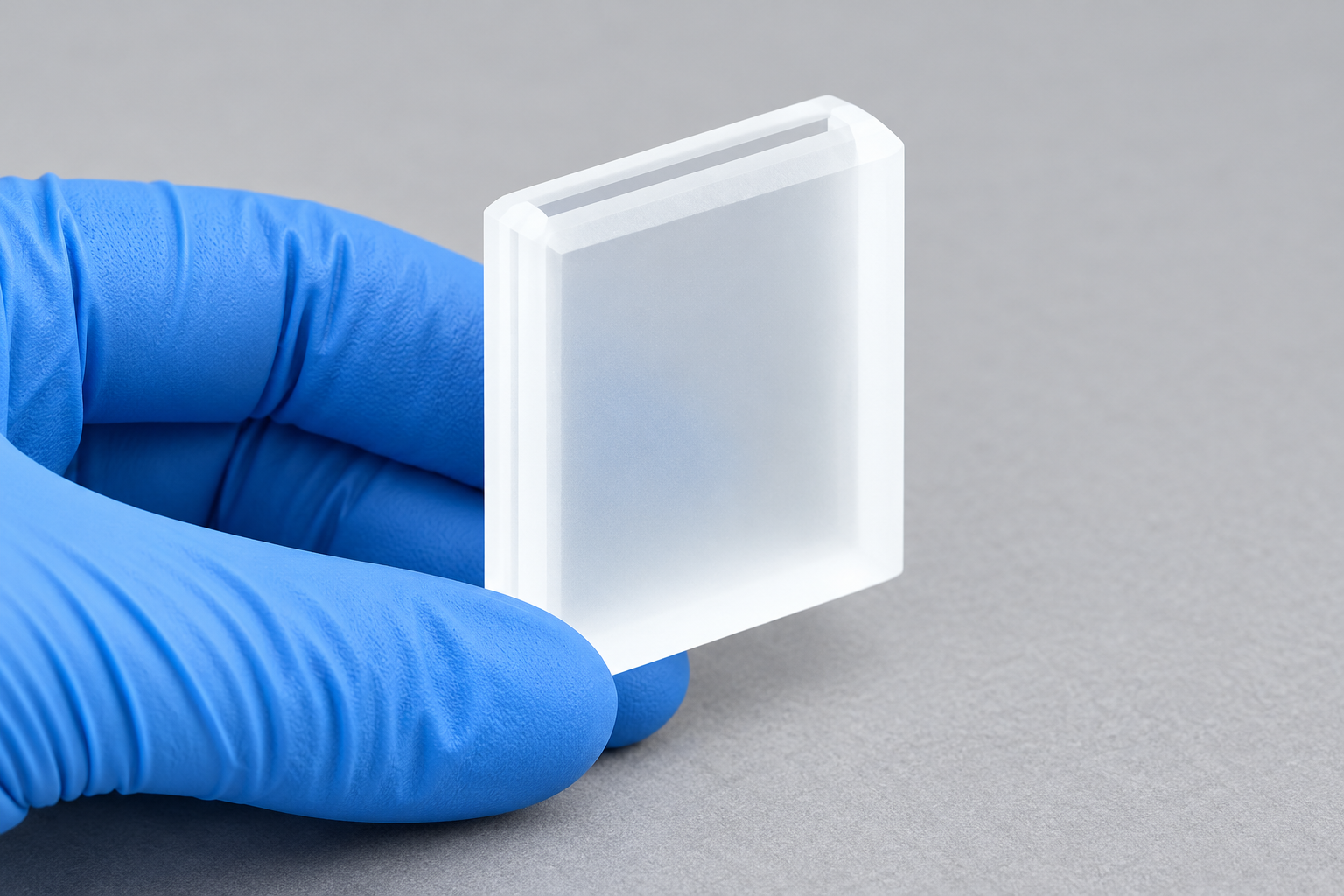
Show how the pocket sits in a fixture and which outside faces may be contacted. Include the insertion and retrieval route; a small part can be difficult to remove from a flush recess.
The fixture needs the outside dimensions, not a liquid-path assumption derived from the narrow body. Clearance and seating should be referenced to the actual part.
Match loading to the open pocket
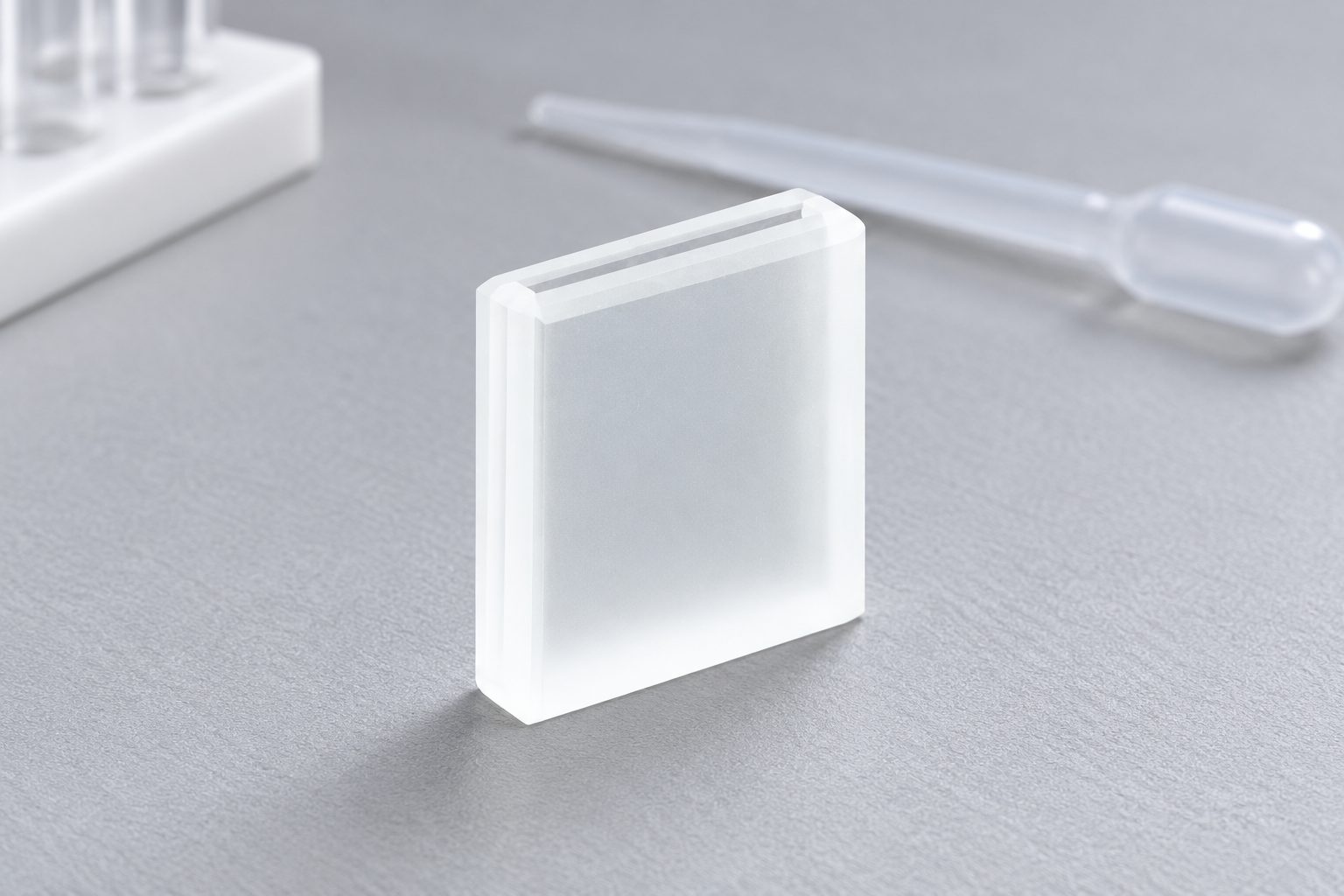
Give the transfer-tool dimensions and the working amount. Nominal 100 µL capacity does not establish a minimum operating sample or complete sample recovery.
For example, a modified support recess could be discussed where the pocket suits a preparation task but is awkward to locate. That mechanical change can be reviewed separately from any surface or optical change.
Specify the surface condition as part of acceptance
Identify which faces are to be frosted and any face that needs a different finish. State delivered-condition and inspection requirements relevant to the sample and method.
MQ can review those details with the outside envelope and proposed fixture. No measured scattering, masking or transmission performance is established by the finish description alone.
Structure reference and specification points
Download the structure reference (PDF)
Are the frosted faces equivalent to black optical masking?
No. The reference identifies frosted surfaces, not black-coated masking or a measured optical effect. Specify the actual surface and viewing requirements.
Send a drawing or the mating-part details
Send a face-labelled sketch with the fixture section. MQ can review the small pocket without confusing its frosted finish with a different optical construction.
- Method and intended viewing region
- Face-by-face finish requirements
- Fixture seat, contact faces and retrieval route
- Loading tool and working sample amount
- Dimensional, delivered-condition and optical acceptance
Modified designs are reviewed for the project. The drawing, supplied parts, quantity, inspection scope, price and preparation or production time are agreed in the quotation.
Details to settle for the ordered configuration
Usable viewing region, minimum fill, optical effects and instrument compatibility require confirmation.



Recent Comments