
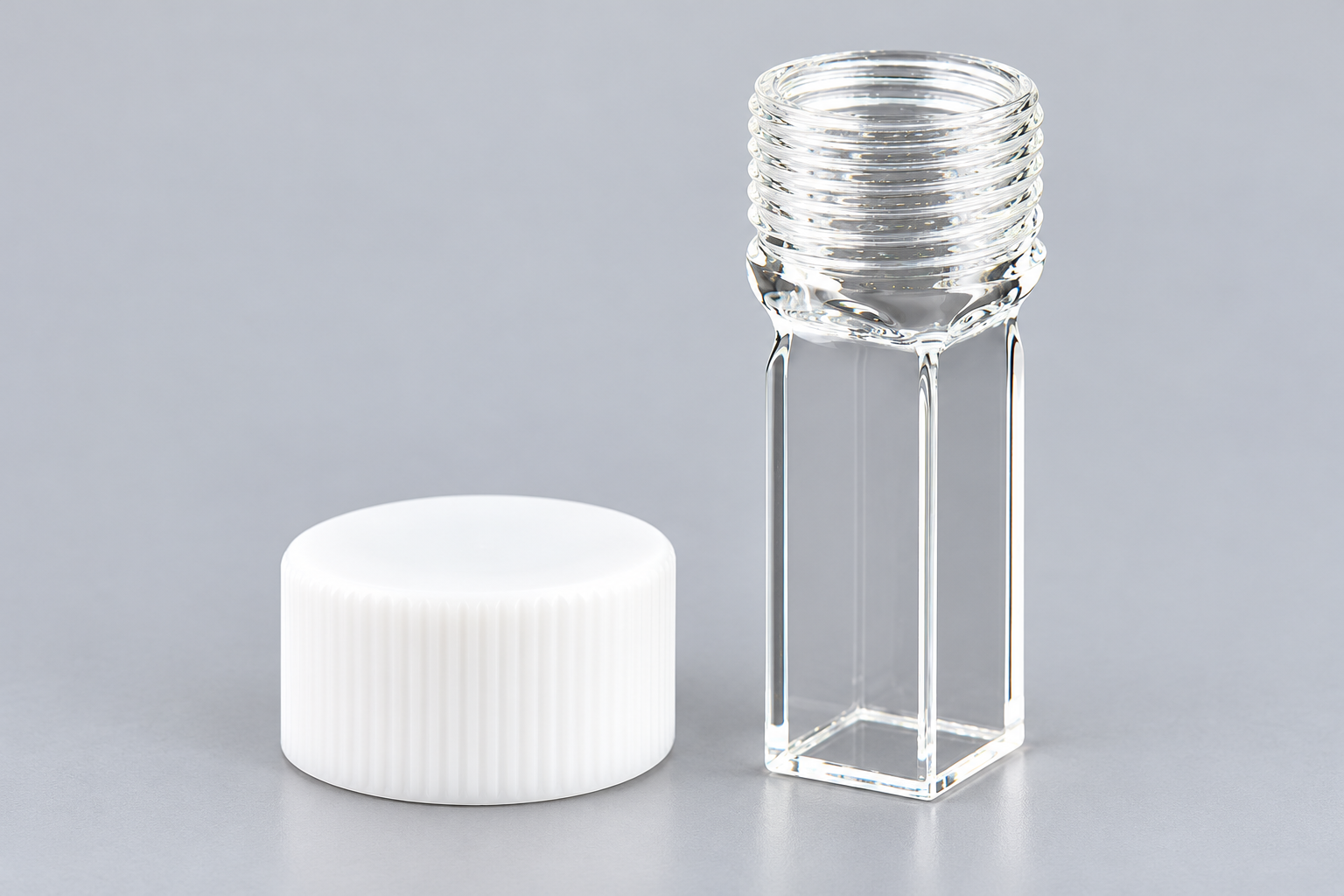
Wide-Neck Quartz Cuvette: Access for Specimens and Accessories
CUSTOM DESIGN GUIDE · C105TE
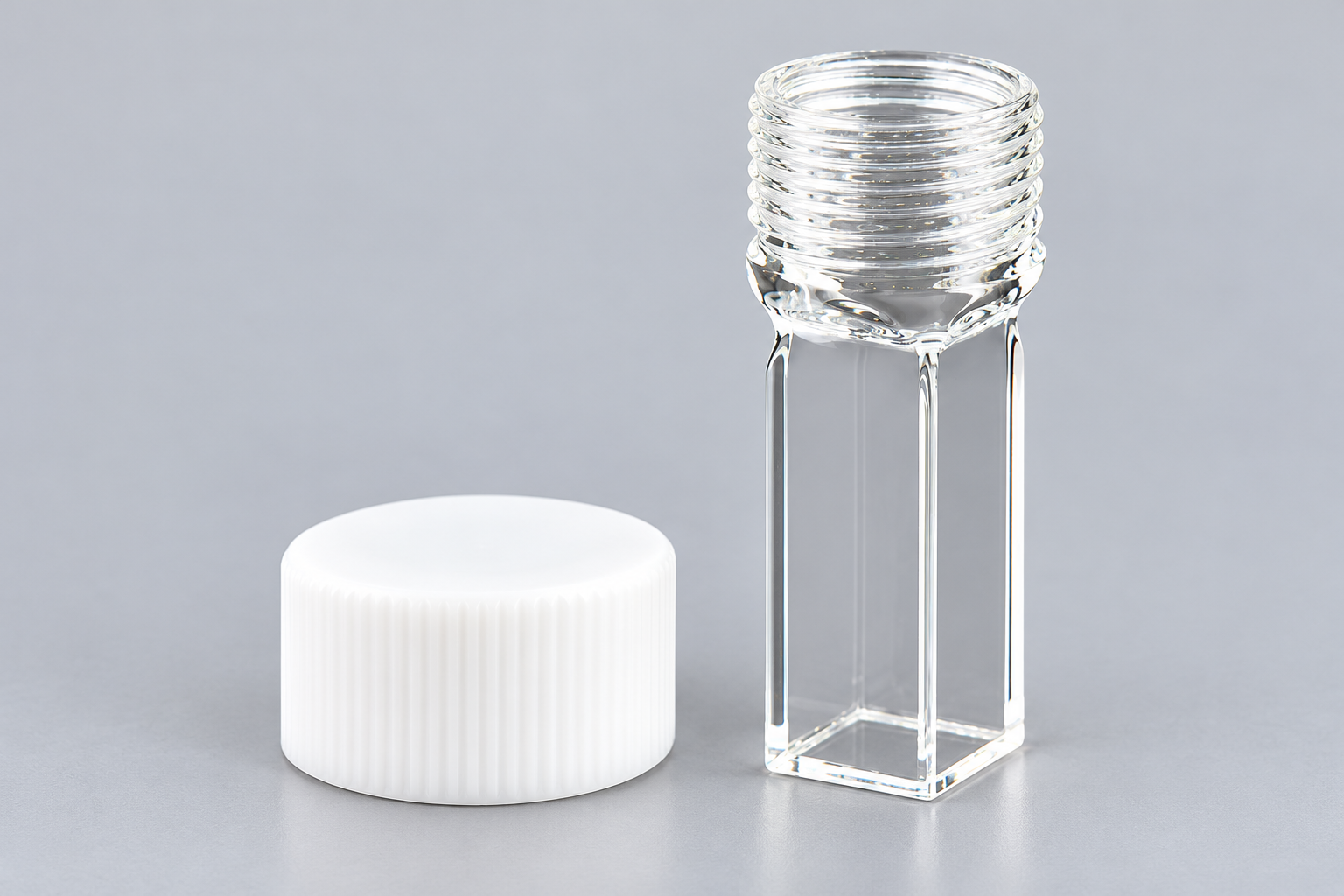
C105TE combines a 10 mm quartz optical body with an M20 screw neck and recorded 16 mm bore. The broad opening is the reason to look beyond a narrow-neck cell when a specimen or accessory must enter from above. Five-face optical access adds a separate choice around the sample.
Use and purpose · Specifications · In practice · Custom example · Buy or enquire
The opening is an access dimension
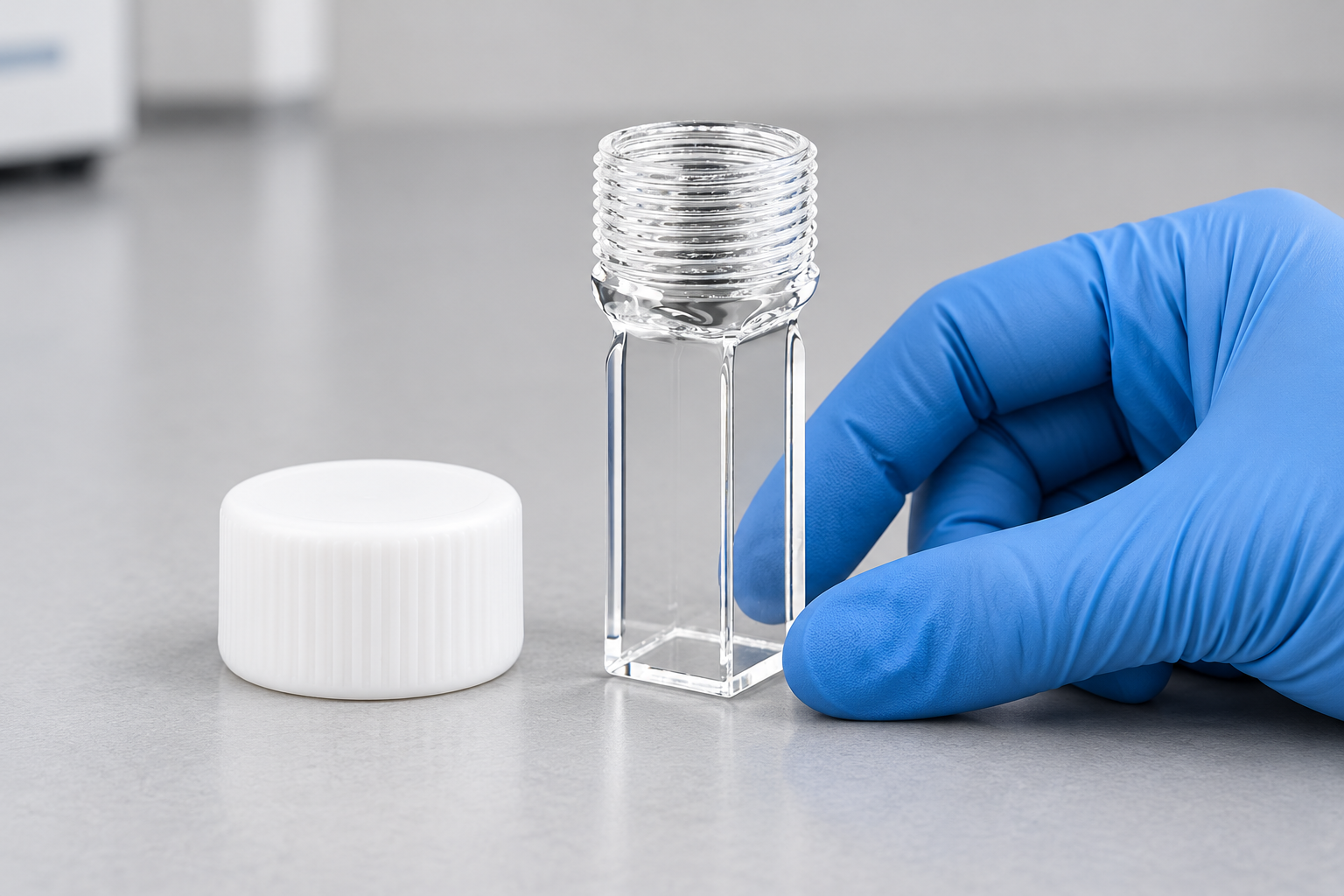
A tool or specimen passes through the neck bore, not through the thread designation. For this reference, 16 mm describes that opening, while M20 identifies the outside thread family. Keeping the two separate avoids choosing a neck from a cap label alone.
The approach matters as well as the size. An accessory inserted at an angle occupies a different space from one lowered vertically. If it stays in the sample during observation, its depth and position become part of the optical layout.
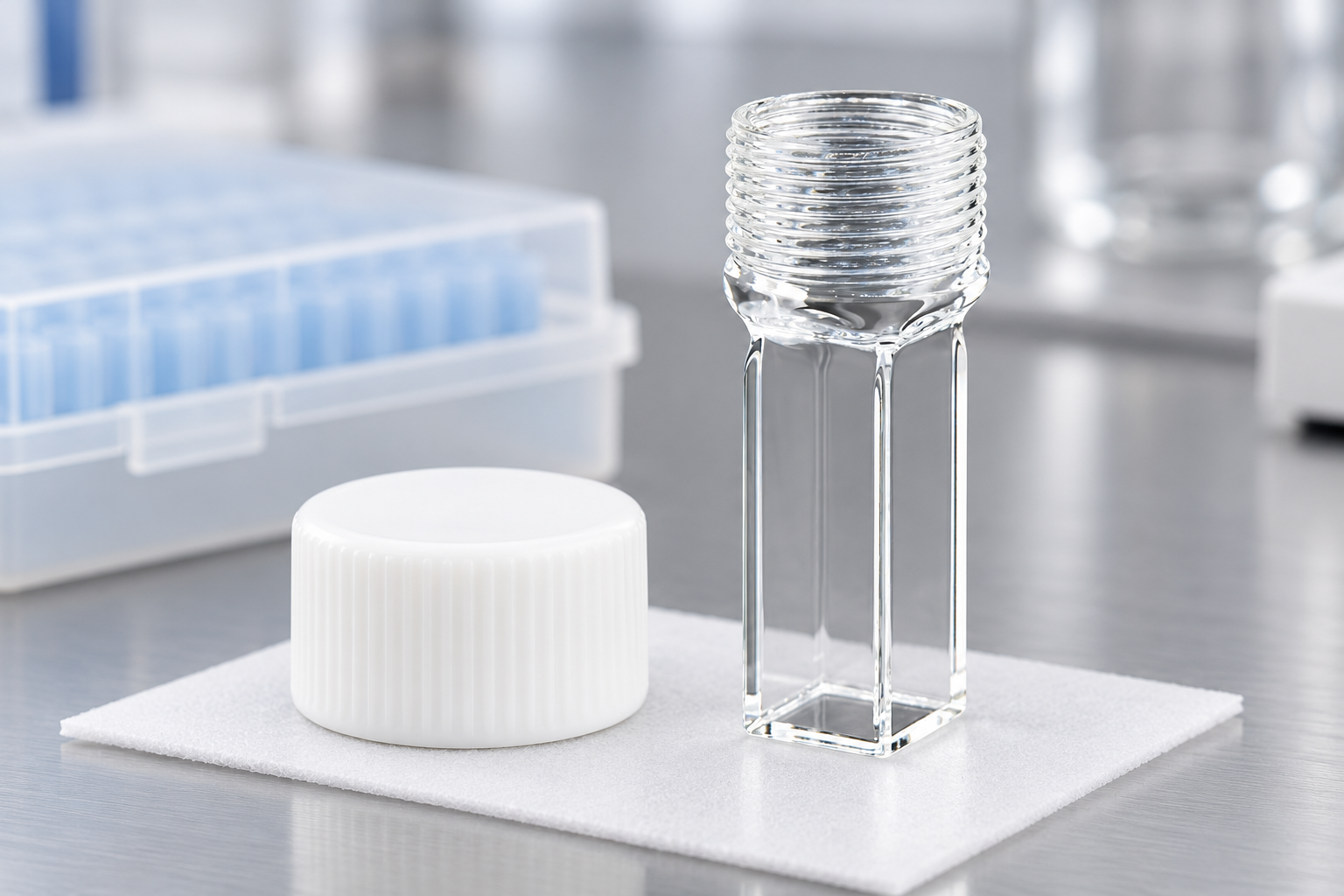
C105TE configuration
Plan the closure around what stays inside
The capped reference is 57 mm high and has nominal 3.5 mL capacity. A closure that covers an empty opening is a different design task from one accommodating an inserted accessory. The latter needs a defined relationship between the accessory, cap and sample.
The M20 designation is a starting interface, not the complete thread and seal specification. For a modified closure, the mating geometry and sample-contact parts describe how the assembly comes together. A wide neck by itself does not establish a sealed accessory feedthrough.
Use the viewing faces independently of the neck
Five-face access creates possible routes around and beneath the sample chamber. The intended illumination or observation direction determines which of those faces is useful. A support under the cell may occupy a face that is optically available in the bare product.
The design therefore has two linked jobs: admit and position the specimen or accessory, then leave the required optical routes exposed. A larger opening is valuable when it helps the first job; it need not make the holder larger everywhere else.
A custom example: an accessory remains above the sample
ILLUSTRATIVE DESIGN EXAMPLE
Suppose a probe enters through the neck and stays in position while the cell is observed. A proposed version can retain the optical body and define the probe envelope, immersion position and cap arrangement. The support sketch then shows how the probe is carried without using the cuvette neck as an unspecified mounting fixture.
Order the listed configuration or discuss a change
View C105TE and current pricing. For a custom version, send a labelled sketch that separates the features to retain from the changes you want.
For C105TE, send the specimen or accessory envelope, insertion direction and working position. Include the intended closure and required optical faces, then add sample conditions, quantity, destination and requested date.


Recent Comments