
Hellma Cuvette Alternative: Same Quality, Lower Cost
This post is also available in:
A Hellma cuvette alternative is a JGS1 quartz cuvette built to Hellma 100-QS, 110-QS, or 117-QS dimensional and optical specifications at 30–50% lower cost, sourced direct from MachinedQuartz instead of through Hellma’s German distribution network. Identical JGS1 grade, ±0.005 mm parallelism, matched-pair USP <851> certificates, and US-warehoused stock for 5–8 day delivery rather than 4–8 week imports.
Cuvette Comparison Guide
Hellma Cuvette Alternative: Same Quality, Lower Cost
A complete comparison of Hellma Analytics cuvettes versus precision-machined quartz alternatives — specifications, UV performance, pricing, and compatibility.
By MachinedQuartz Technical Team · Building optical-grade quartz cuvettes since 2026
Quick Answer
The best Hellma cuvette alternative is a precision-machined JGS1 UV quartz cuvette from a specialty manufacturer. These match Hellma’s ±0.01 mm dimensional tolerance, 185–2700 nm UV transmission, and NIST-traceable calibration — typically at 40–70% lower cost with no minimum order.
📋 In This Guide
Why Look for a Hellma Alternative?
Hellma Analytics has been a gold standard in cuvette manufacturing since 1922. Their QS (quartz suprasil) and GS (quartz Infrasil) series are widely specified in peer-reviewed methods, pharmacopeial procedures, and instrument manufacturer documentation. But there are several practical reasons why researchers, QC labs, and procurement teams look for alternatives:
40–70%
Typical cost savings vs. Hellma list price
6–8 wk
Hellma lead time for non-stock items
MOQ 1
Single-piece order accepted by specialty manufacturers
±0.01 mm
Dimensional tolerance matched by precision alternatives
The most common scenarios for switching include:
- Budget constraints — lab equipment budgets increasingly favor alternatives when optical specs are equivalent
- Long lead times — Hellma specialty cells can take 6–10 weeks; custom alternatives ship faster
- Discontinued models — some older Hellma catalog numbers have been discontinued
- High-breakage applications — teaching labs, field work, or high-throughput screening where cost-per-measurement matters
- Custom dimensions — non-standard path lengths or apertures not in Hellma’s standard catalog
⚠️ Critical Note: For regulated GxP/pharmacopeial methods that reference Hellma by name or catalog number, consult your quality team before substituting. For research and non-regulated QC applications, equivalent-specification alternatives are generally acceptable.
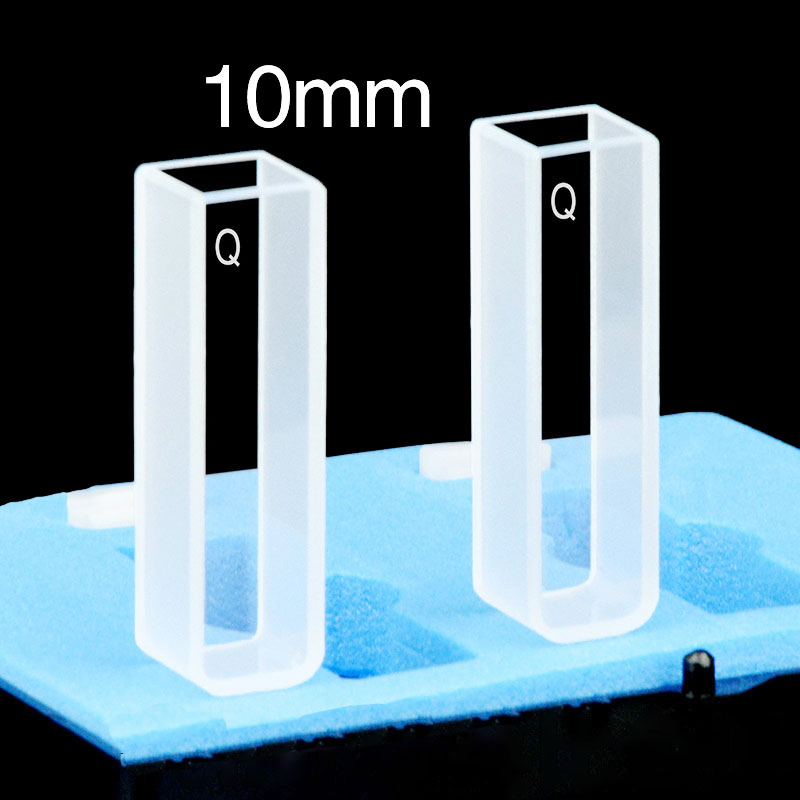
Standard 10mm · JGS1 · UV-Vis
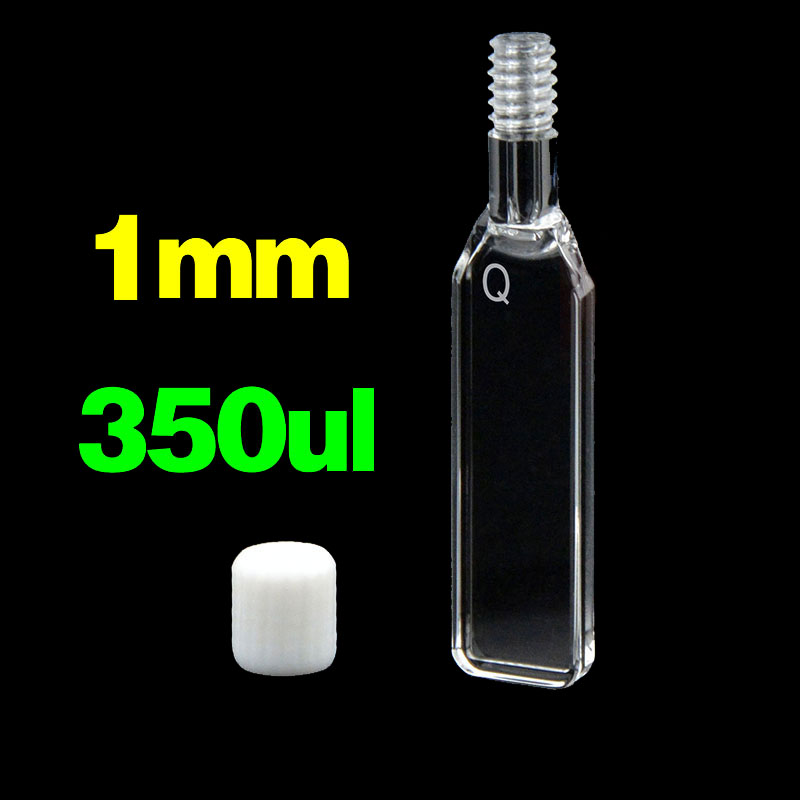
4-window fluorescence · 10mm · JGS1
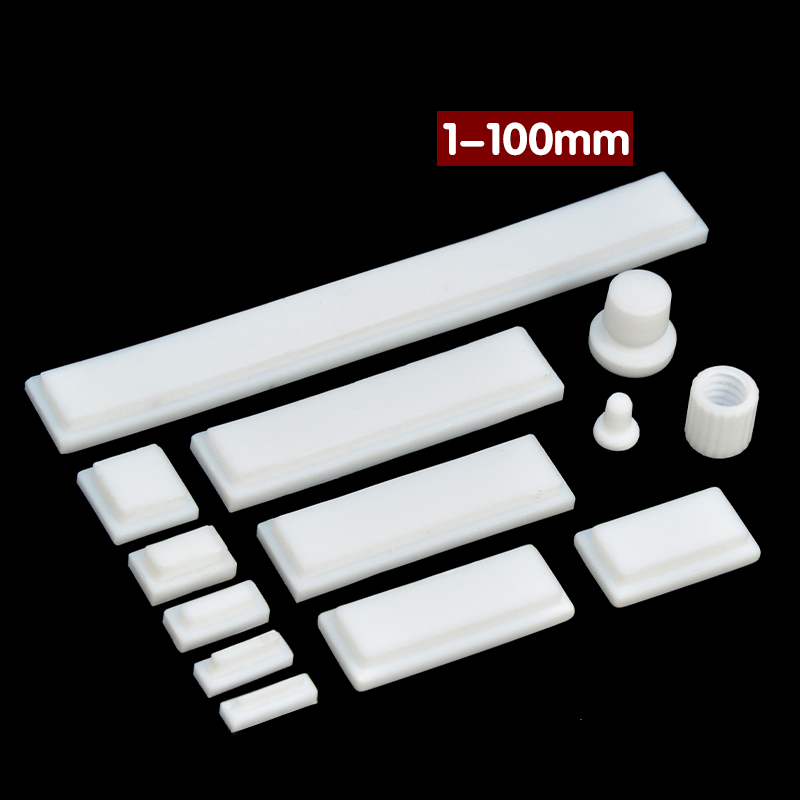
Standard quartz · PTFE stopper · UV-Vis
Specification Comparison: Hellma vs. Alternatives
The following table compares key specifications of Hellma QS series cuvettes against precision-machined JGS1 quartz alternatives. These specs cover the parameters that determine whether a cuvette is truly equivalent for spectrophotometric use.
| Specification | Hellma QS Series | MQ JGS1 Alternative | Notes |
|---|---|---|---|
| Quartz material | Suprasil® (Heraeus) | JGS1 synthetic fused silica | Both are synthetic fused quartz; equivalent purity |
| UV cutoff | 185 nm | 185 nm | Both suitable for deep UV applications |
| NIR upper limit | 2700 nm | 2700 nm | Full UV-VIS-NIR coverage |
| Path length tolerance | ±0.01 mm | ±0.01 mm | Critical for Beer-Lambert accuracy |
| Dimensional tolerance (external) | ±0.1 mm | ±0.05–0.1 mm | Important for instrument holder fit |
| Parallelism of optical faces | <0.02° | <0.02° | Prevents beam deflection artifacts |
| Surface flatness | λ/4 per inch | λ/4 per inch | Ensures stray light <0.1% |
| Volume range | 0.01 mL – 35 mL | 0.01 mL – 35 mL | Full range available |
| PTFE cap included | Optional / extra cost | ✔ Included | Prevents evaporation, contamination |
| Certificate of compliance | ✔ | ✔ | Batch traceability |
| Individual test report | Available (extra cost) | Available on request | Per-piece path length verification |
| Minimum order quantity | 1 (standard); higher for custom | 1 piece | No volume commitment required |
| Lead time (standard) | 3–5 business days (stock) | 3–7 business days | Specialty cells may take 2–4 weeks each |
| Typical price (10mm std) | $180–$280 | $60–$120 | List price; institutional discounts vary |
✔ Bottom Line on Specs: For the properties that actually determine measurement accuracy — path length tolerance, optical flatness, and UV transmission — precision-machined JGS1 alternatives match Hellma QS specifications point for point. The differences are in brand name, distributor network, and catalog breadth.
UV Transmission & Quartz Grade
Hellma uses the trade name “Suprasil®” (made by Heraeus) for their highest-grade material. The generic industry equivalent is JGS1 (China GB/T standard) or UV-grade synthetic fused silica. For spectroscopy applications that demand consistent optical quality across batches, understanding these material grades is essential to specifying the right alternative.
JGS1 / Suprasil®-equivalent
185–2700 nm
- Synthetic fused silica
- Lowest OH content variant
- Best for deep UV (190–220 nm)
- Fluorescence-grade available
- Equivalent to Hellma QS series
JGS2 / Standard UV Quartz
220–2500 nm
- Synthetic fused silica
- Higher OH content
- Suitable for 220 nm+ work
- Common protein/DNA assays
- Equivalent to Hellma QX series
JGS3 / Infrared Quartz
260–3500 nm
- Natural fused quartz
- High NIR transmission
- Not for UV below 260 nm
- NIR spectroscopy applications
- Lower cost option
For the most common research applications — DNA/RNA quantification at 260 nm, protein at 280 nm, NADH at 340 nm, and general UV spectrophotometry — JGS1 is the correct substitute for Hellma QS. If your method only operates above 220 nm, JGS2 provides an even more economical alternative without sacrificing relevant performance.
⚠️ Avoid “UV quartz” without grade specification: Some low-cost suppliers label cells as “UV quartz” without specifying JGS1 vs. JGS2. If your work involves wavelengths below 200 nm or fluorescence measurements requiring minimal autofluorescence, always request a JGS1 grade certificate.
Hellma Series Cross-Reference
Hellma organizes their cuvette catalog into series codes. Here is a cross-reference to help you identify the right alternative specification when your Hellma catalog number is unavailable or discontinued.
| Hellma Series | Material | UV Range | Typical Use | Alternative Spec |
|---|---|---|---|---|
| 100-QS | Suprasil® quartz | 185–2700 nm | Standard UV/VIS, 10mm, 2-window | JGS1, 10mm, 2-window, ±0.01mm |
| 104-QS | Suprasil® quartz | 185–2700 nm | Fluorescence, 10mm, 4-window | JGS1, 10mm, 4-window fluorescence |
| 105-QS | Suprasil® quartz | 185–2700 nm | Standard 10mm, larger volume (3.5mL) | JGS1, 10mm, 3.5mL, 2-window |
| 110-QS | Suprasil® quartz | 185–2700 nm | Semi-micro 10mm, 1.4mL | JGS1, semi-micro, 10mm, 1.4mL |
| 105.250-QS | Suprasil® quartz | 185–2700 nm | Ultra-micro, 250µL, 10mm | JGS1, ultra-micro, 250µL, 10mm |
| 109-QS | Suprasil® quartz | 185–2700 nm | Flow-through cell | JGS1, flow-through, specify port size |
| 100-G-10 / GS | Infrasil® quartz | 250–3500 nm | NIR applications, 10mm | JGS3 grade, 10mm |
| 110-OS | Optical glass | 340–2500 nm | VIS-only, low cost | Borosilicate glass, 10mm |
| 180-QS | Suprasil® quartz | 185–2700 nm | 5mm path length | JGS1, 5mm path length |
| 238-QS | Suprasil® quartz | 185–2700 nm | 20mm path length | JGS1, 20mm path length |
💡 Tip: The “-QS” suffix on Hellma catalog numbers indicates Suprasil® (highest UV grade). The “-GS” suffix indicates Infrasil® (NIR grade). When sourcing alternatives, match the grade first — then match path length and volume.
Price Comparison
The most significant practical difference between Hellma cuvettes and alternatives is price. Below are representative retail list prices for equivalent configurations (institutional or volume pricing may differ significantly).
Hellma 100-QS
$180–$280
per piece, list price
10mm standard, 2-window, Suprasil, ~1.8mL
MQ JGS1 Equivalent
$60–$120
per piece, with PTFE cap
10mm standard, 2-window, JGS1, 3.5mL, cap included
Hellma 104-QS
$280–$420
per piece, 4-window
10mm fluorescence, Suprasil, 4-window
MQ JGS1 Fluorescence
$90–$160
per piece, 4-window
10mm fluorescence, JGS1, 4-window, PTFE cap
Hellma Ultra-Micro
$380–$580
per piece
100–250µL ultra-micro, 4-window
MQ Ultra-Micro
$140–$220
per piece
100µL ultra-micro, 4-window, JGS1
On a per-cuvette basis, switching from Hellma to a precision alternative typically saves $120–$360 per cuvette. For a lab that purchases 10–20 cuvettes per year — common in core facilities or multi-instrument labs — annual savings can reach $1,200–$7,200 with equivalent optical performance.
Instrument Compatibility
One practical concern when switching from Hellma cuvettes is whether the alternative will physically fit your instrument’s cuvette holder and meet the optical quality requirements of your spectroscopy workflow. Hellma cuvettes follow the NIST/ISO standard external dimensions (12.5 mm × 12.5 mm footprint, 45 mm height for standard cells), and all quality alternatives follow the same standard.
| Instrument Brand | Standard Compatibility | Notes |
|---|---|---|
| Agilent / HP (Cary series) | ✔ Compatible | Standard 12.5×12.5mm cuvettes fit all Cary holders |
| Shimadzu (UV-1800, UV-2600, UV-3600) | ✔ Compatible | All standard holders accept ISO-dimension cuvettes |
| PerkinElmer (Lambda series) | ✔ Compatible | Lambda 25/35/45/650/750/1050 all accept standard cuvettes |
| Thermo Fisher (Evolution, NanoDrop) | ✔ Compatible | NanoDrop 2000c cuvette mode: 10mm standard, 70µL minimum |
| Jasco (V series) | ✔ Compatible | Standard 1cm cells fit V-550 through V-770 |
| Hitachi (U series) | ✔ Compatible | U-2000 through U-5100 accept standard cuvettes |
| Mettler-Toledo (UV5/UV7) | ✔ Compatible | Standard holder fits ISO-dimension cuvettes |
| Tecan / BioTek plate readers | Depends on accessory | Requires cuvette accessory module — confirm Z dimension |
The one compatibility variable that sometimes causes issues is the Z dimension — the height from the cuvette bottom to the center of the light beam. Standard macro cuvette holders most commonly use a 15 mm Z height (Agilent, Cary, PerkinElmer, Jasco); Beckman DU, Eppendorf, and various clinical instruments use 8.5 mm. Both are standard, instrument-dependent values. If you are switching instrument types or using a micro-volume adapter, verify the Z dimension matches before ordering.
Who Switches — and Why
Based on purchasing patterns in academic, industrial, and clinical laboratory settings, the following groups most commonly evaluate Hellma alternatives:
| Lab Type | Primary Reason to Switch | Key Requirement |
|---|---|---|
| University research labs | Budget pressure, grant-funded purchasing | UV performance ≥ 190 nm, path length ±0.01 mm |
| Pharmaceutical R&D (non-GMP) | Faster availability for discovery-phase work | JGS1, individual test report available |
| Environmental / food testing labs | High-throughput, high-breakage rate | Low cost-per-cuvette, bulk availability |
| Industrial QC (non-pharma) | Cost reduction without re-validation | Equivalent path length tolerance, CoC included |
| Core facilities / shared labs | Multiple instruments, diverse cuvette types | Broad SKU range, single-vendor simplicity |
| Teaching labs | High breakage, budget-conscious | Affordable replacement units |
Decision Guide: Should You Switch?
5-Step Decision Framework
1
Check your method requirements
Does your SOP, pharmacopeial method, or validation document specify Hellma by catalog number? If yes, consult your quality team before switching. If no, proceed.
2
Identify your UV wavelength requirement
Working below 200 nm? Require JGS1 (Suprasil-equivalent). Working 220–340 nm only? JGS2 is sufficient and more economical. NIR only (>700 nm)? Standard quartz or borosilicate glass may work.
3
Verify path length tolerance
For quantitative work using Beer-Lambert law, path length tolerance should be ±0.01 mm or better. Confirm the supplier can provide individual test reports if your method requires verification.
4
Check external dimensions
Standard Hellma cuvettes are 12.5 × 12.5 mm footprint, 45 mm height. Confirm the alternative matches. For Z-dimension-sensitive instruments, verify the required Z height (commonly 15 mm, or 8.5 mm on Beckman DU, Eppendorf and some clinical instruments).
5
Request a sample or certificate before bulk ordering
Reputable manufacturers will provide a sample cuvette and Certificate of Compliance before a large order. Test it on your instrument against your current Hellma cell with a known standard.
Custom & Special-Purpose Cuvettes
One area where alternatives can actually exceed Hellma’s standard catalog is custom fabrication. Hellma offers custom cells but with long lead times (8–12 weeks) and minimum order quantities. Precision-machined alternatives can often produce custom specifications faster and at lower cost.
0.1–100mm
Custom path lengths available
1–35mL
Volume range for custom cells
2–3 wk
Typical custom lead time
MOQ 1
One-piece custom orders accepted
Common custom configurations that researchers switch to alternatives for include:
- Non-standard path lengths — 1mm, 2mm, 5mm, 20mm, 50mm, or 100mm for high/low concentration work
- Reduced aperture cells — smaller light beam entrance for micro-volume samples without ultra-micro cell volume
- Demountable / Disassembly cells — for viscous samples or cleaning difficult analytes
- Stoppered cells — for volatile solvents or air-sensitive samples
- Flow-through cells — for HPLC detectors or continuous-flow analysis
- Temperature-jacketed cells — for kinetics studies requiring temperature control
Need a Hellma-Compatible Quartz Cuvette?
MachinedQuartz manufactures precision JGS1 UV quartz cuvettes to the same dimensional and optical specifications as Hellma QS series — with certificates of compliance and no minimum order.
Explore Custom Cuvettes Browse Cuvette Catalog Request a Custom QuoteFrequently Asked Questions
Is JGS1 quartz the same as Hellma Suprasil®?
Functionally equivalent for spectrophotometric use. Suprasil® is a trade name for Heraeus-stocked synthetic fused silica; JGS1 is the Chinese national standard designation for the equivalent grade of synthetic fused quartz. Both offer >90% transmission from 185 to 2700 nm, <1 ppm OH content variants, and comparable fluorescence characteristics. For regulated methods that specifically cite Suprasil® by name, consult your quality team — for research applications, JGS1 is a valid equivalent.
Will a Hellma alternative fit my Shimadzu or Agilent spectrophotometer?
Yes, in virtually all cases. Standard Hellma cuvettes follow ISO/DIN 58966 external dimensions: 12.5 mm × 12.5 mm footprint and 45 mm total height. All reputable alternative manufacturers use the same standard. The main exception is if you are using a non-standard Z-dimension adapter for micro-volume measurements — in that case, confirm the Z height (distance from cuvette bottom to beam center — commonly 15 mm, or 8.5 mm on Beckman DU, Eppendorf and some clinical instruments) matches your adapter’s requirement.
Can I use a Hellma alternative for DNA/RNA quantification at 260 nm?
Yes. DNA and RNA quantification at 260/280 nm requires a cuvette with >80% transmission at 260 nm — a threshold easily met by any JGS1 or JGS2 UV quartz cuvette. The path length tolerance (±0.01 mm) is more critical for accuracy than the specific brand of quartz. A JGS1 alternative with a verified ±0.01 mm path length performs identically to a Hellma QS cell for OD260 measurements.
What documentation comes with a Hellma alternative?
A reputable supplier should provide: (1) a Certificate of Compliance (CoC) with material grade, path length, and batch number; (2) a material data sheet confirming quartz grade; and (3) individual path length test reports upon request. For GMP or ISO 17025-accredited labs, confirm whether the supplier can provide NIST-traceable calibration certificates — these are available from specialty manufacturers at additional cost.
Are there Hellma alternatives for fluorescence cuvettes (4-window)?
Yes. Four-window fluorescence cuvettes (also called fluorometer cells) are available from multiple alternative manufacturers in JGS1 quartz. For fluorescence applications, the key spec beyond path length is autofluorescence — JGS1 synthetic fused silica has negligible autofluorescence above 300 nm. If your fluorescence excitation is below 280 nm, request a low-fluorescence grade certificate from the supplier.
How do I clean a quartz cuvette to maintain UV performance?
The cleaning protocol is the same regardless of brand: rinse immediately after use with the same solvent, then wash with 10% HNO₃ or IPA/water mixture. Avoid abrasive materials — clean only with lens paper or cotton swabs. Do not use chromic acid or hydrofluoric acid solutions, which etch quartz. For protein contamination, 0.1 M NaOH with a 5-minute soak, followed by thorough rinsing, is effective. Store cuvettes dry in individual holders to prevent scratching.
Related Guides
- Complete Cuvette Selection Guide — How to choose the right cuvette type, path length, and volume for any application
- Quartz vs. Glass Cuvette — When to use quartz vs. borosilicate glass for UV/VIS spectroscopy
- Custom Quartz Cuvettes — Precision-machined UV quartz cuvettes with non-standard path lengths and volumes
Why You Can Trust This Page
AuthorMachinedQuartz Technical Team
Reviewed byBryan Wright (Founder, 13+ yrs at MQ)
Production base1,300+ catalog SKUs · 40+ countries shipped
Last updatedApril 27, 2026 · Next review Oct 2026
Background: Specification benchmarks, UV-transmission comparisons, and cross-reference tables in this guide are based on MQ’s customer-quote history with Hellma-displaced accounts. This guide is published by MachinedQuartz, a specialty UV quartz cuvette manufacturer producing 1,300+ catalog SKUs since 2026. Where third-party standards apply, we cite ISO 17025 calibration, NIST SRM, and Hellma’s published catalogs directly.
References & Standards
Further reading


Recent Comments