
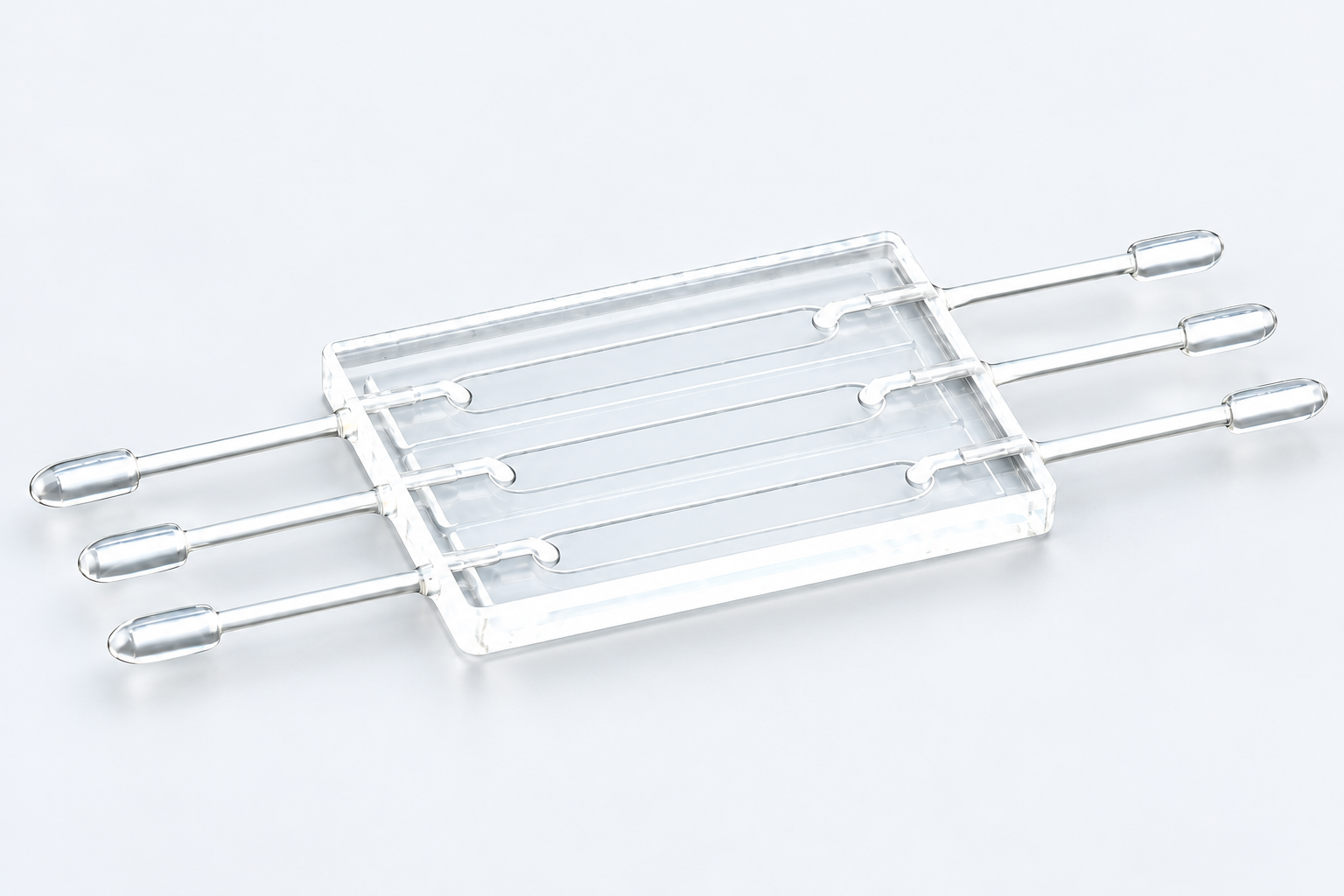
Three-Channel Quartz Flow Cell: Three Observation Rows in One Plate
CUSTOM DESIGN GUIDE · MQQFC006
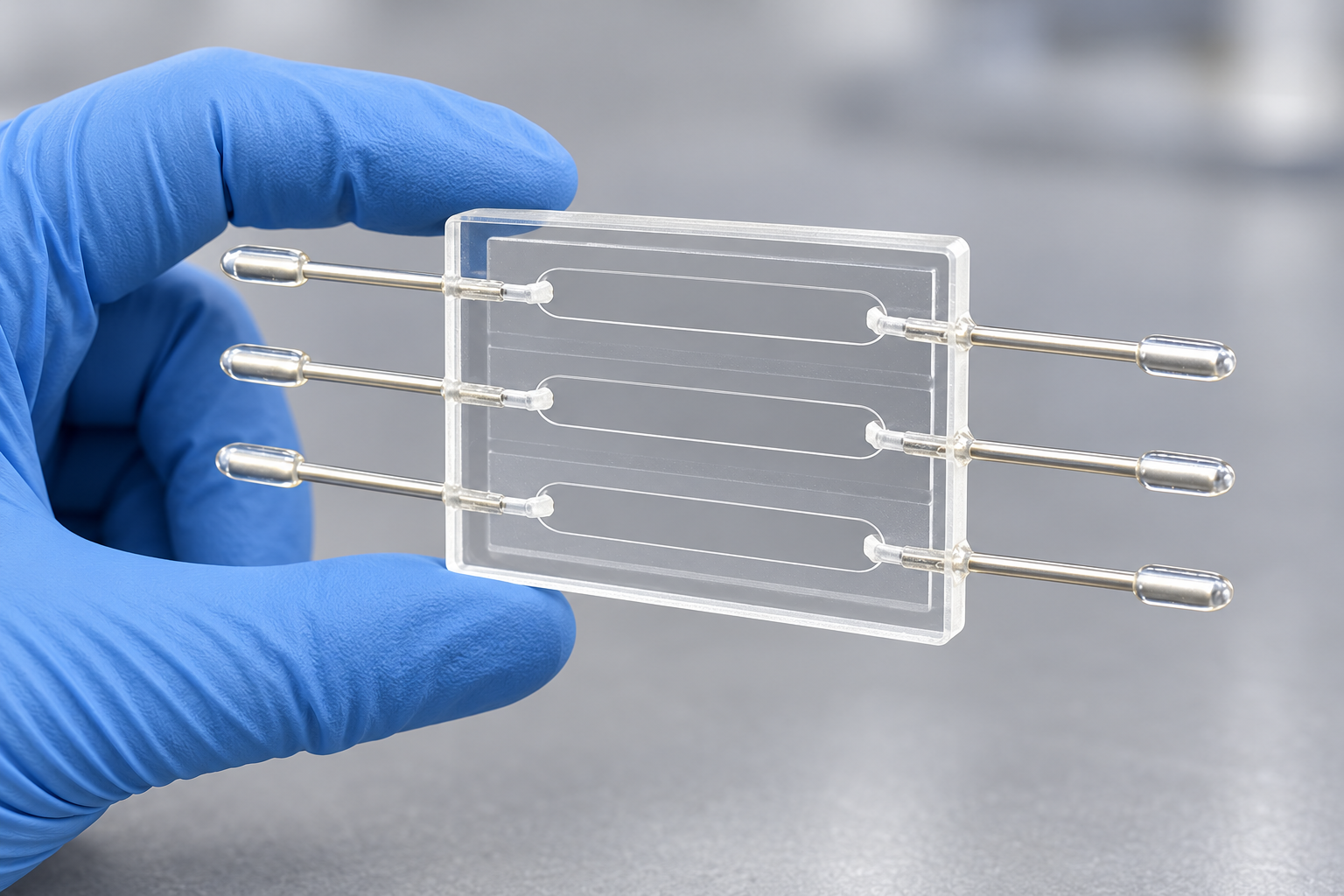
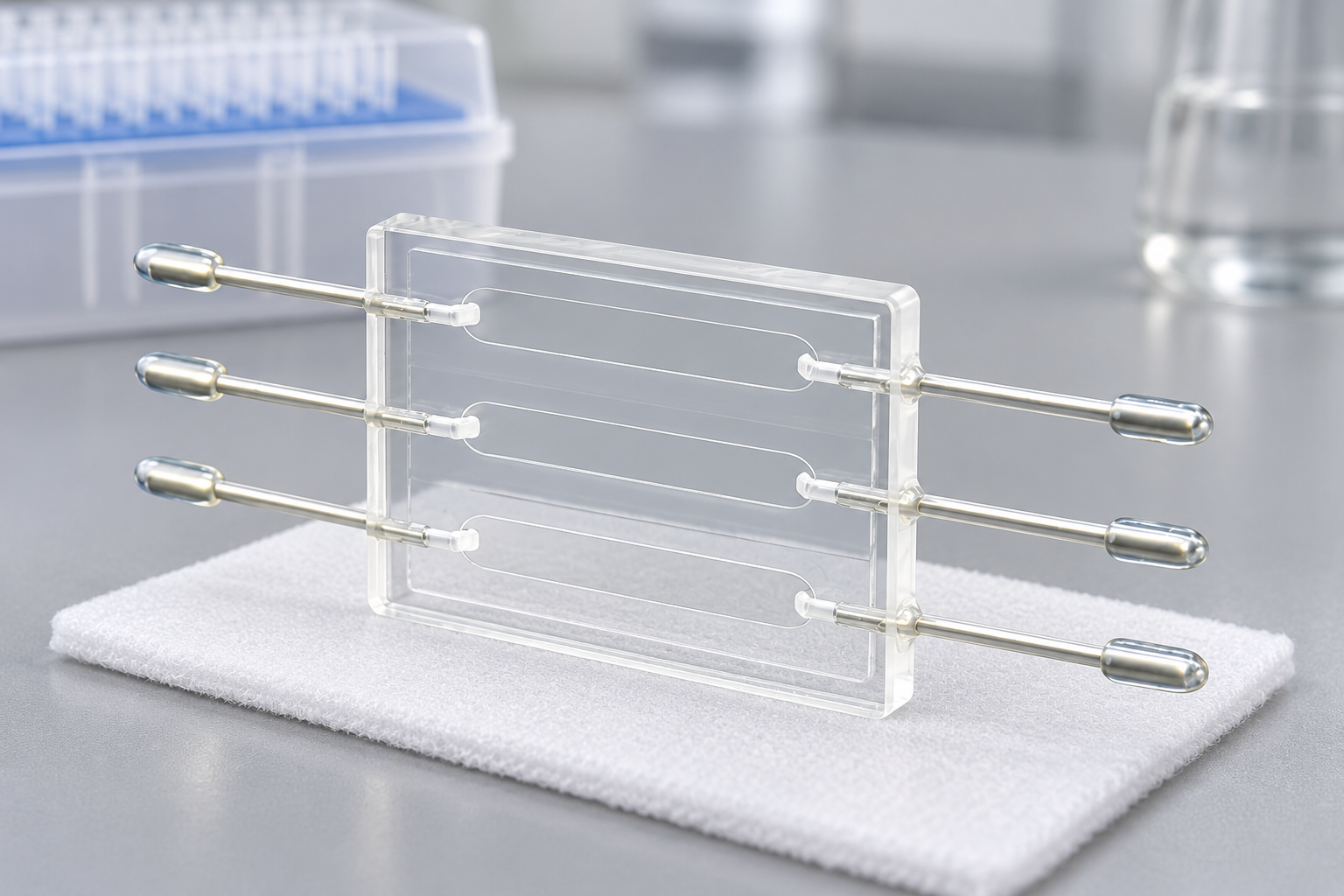
MQQFC006 brings three channel rows into one flat quartz body. Each row has a tube at either side, giving six external tube ends around a nominal 0.2 mm optical path. Its useful feature is the relationship between the observation rows and their individual connections.
Use and purpose · Specifications · In practice · Custom example · Buy or enquire
Three rows need a readable sample map
The reference shows upper, middle and lower elongated routes. Row labels can follow each route from its connection, through the observation region and out to the other side. This is a useful starting point for a proposed multi-position or multi-sample observation arrangement.
The three-route geometry does not prescribe how the samples are used. It describes the layout; tested isolation, a particular comparison method or simultaneous measurements are separate claims. The practical design task is to make the intended route and viewing position unambiguous for each row.
MQQFC006 configuration
A shallow channel within a larger plate
Each labelled channel is 28 × 4 × 0.2 mm. The outside body is 42 × 31.5 × 4.2 mm, excluding the projecting tubes. The shallow sample dimension, long observation region and plate envelope therefore serve different jobs.
An observation system may address one row at a time or use a wider field in a proposed setup. The holder should be described around that choice. Plate edges can provide support, while the required rows remain visible through the optical faces.
Six connections belong in the bench layout
The tubes are listed as 1.6 mm outside and 1.3 mm inside diameter. The outside size relates to mating connections; the bore describes the passage. Attached connectors and line bends occupy space on both sides of the plate.
A useful route map keeps the row names on those external lines. It also describes loading and flushing for the proposed use, so exchanging a sample in one route is not confused with merely changing a line at the plate edge. This is where the multi-row form becomes an operating layout rather than just a compact object.
A custom example: match the rows to an observation system
ILLUSTRATIVE DESIGN EXAMPLE
Suppose an imaging fixture addresses three positions at a different spacing from the reference. A proposed plate can retain the shallow path and define each row from the fixture's observation positions. The six connection approaches are then arranged around those rows, rather than added after the optical layout is fixed.
Order the listed configuration or discuss a change
View MQQFC006 and current pricing. For a custom version, send a labelled sketch that separates the features to retain from the changes you want.
Reference MQQFC006 with the three observation positions and a labelled six-line map. Include holder contacts, sample loading and flushing, operating conditions, quantity, destination and requested date.


Recent Comments