
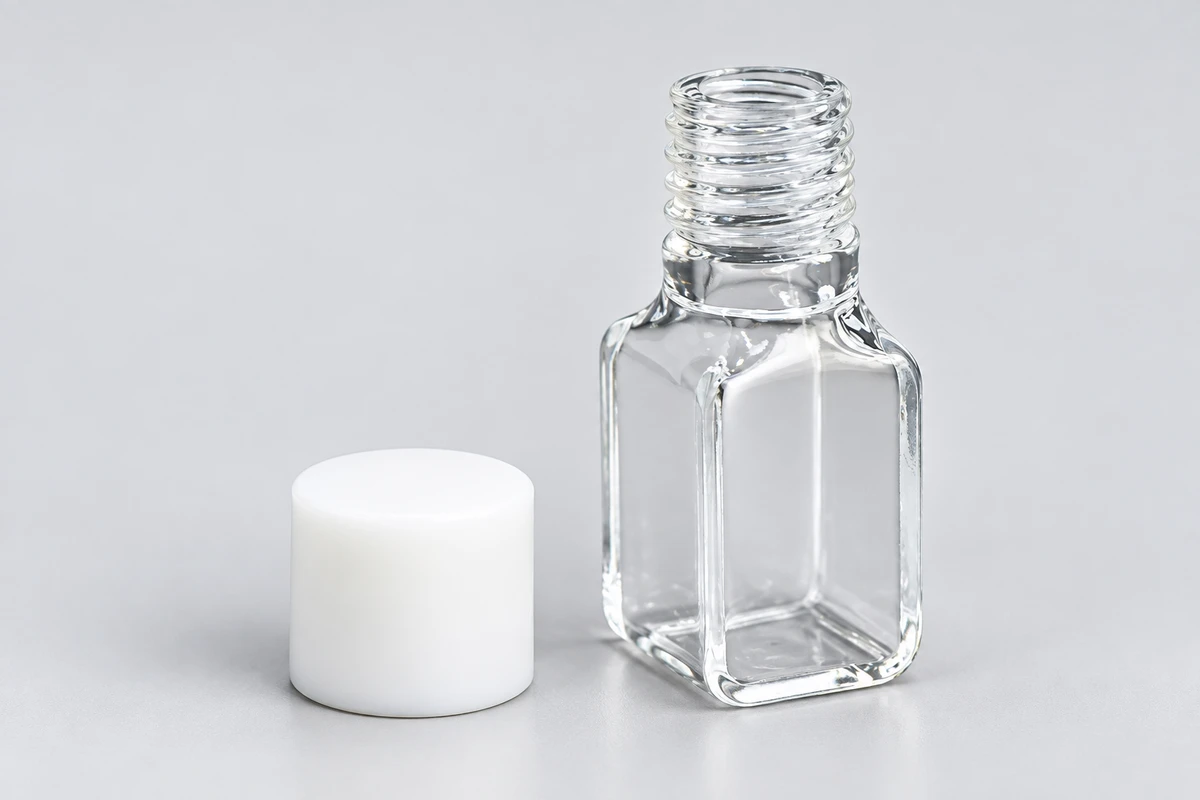
Short-Body 10 mm Quartz Cuvette: Checking the Beam Position (C104TS9)
Custom design guide · C104TS9
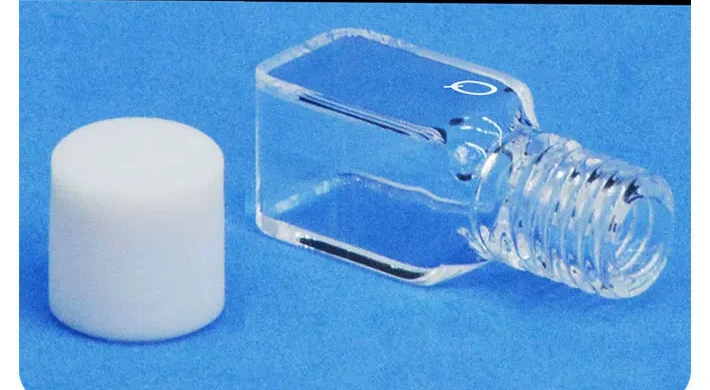
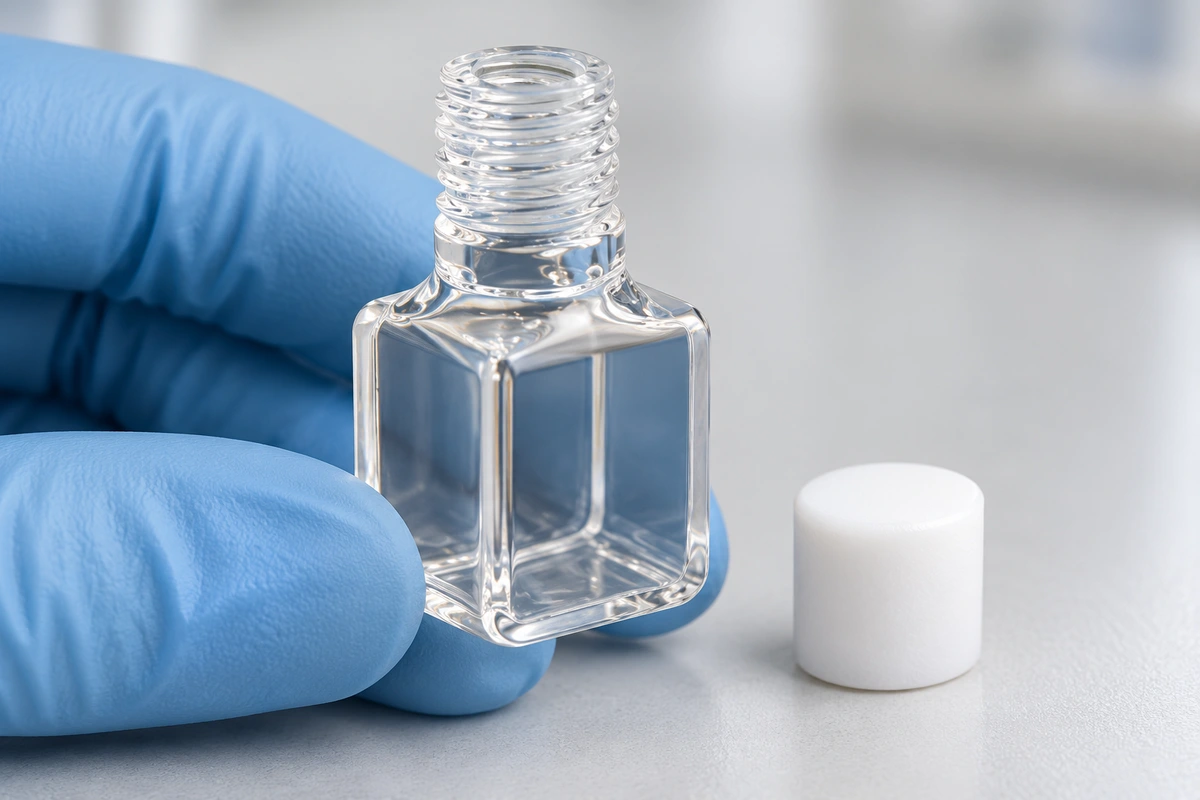
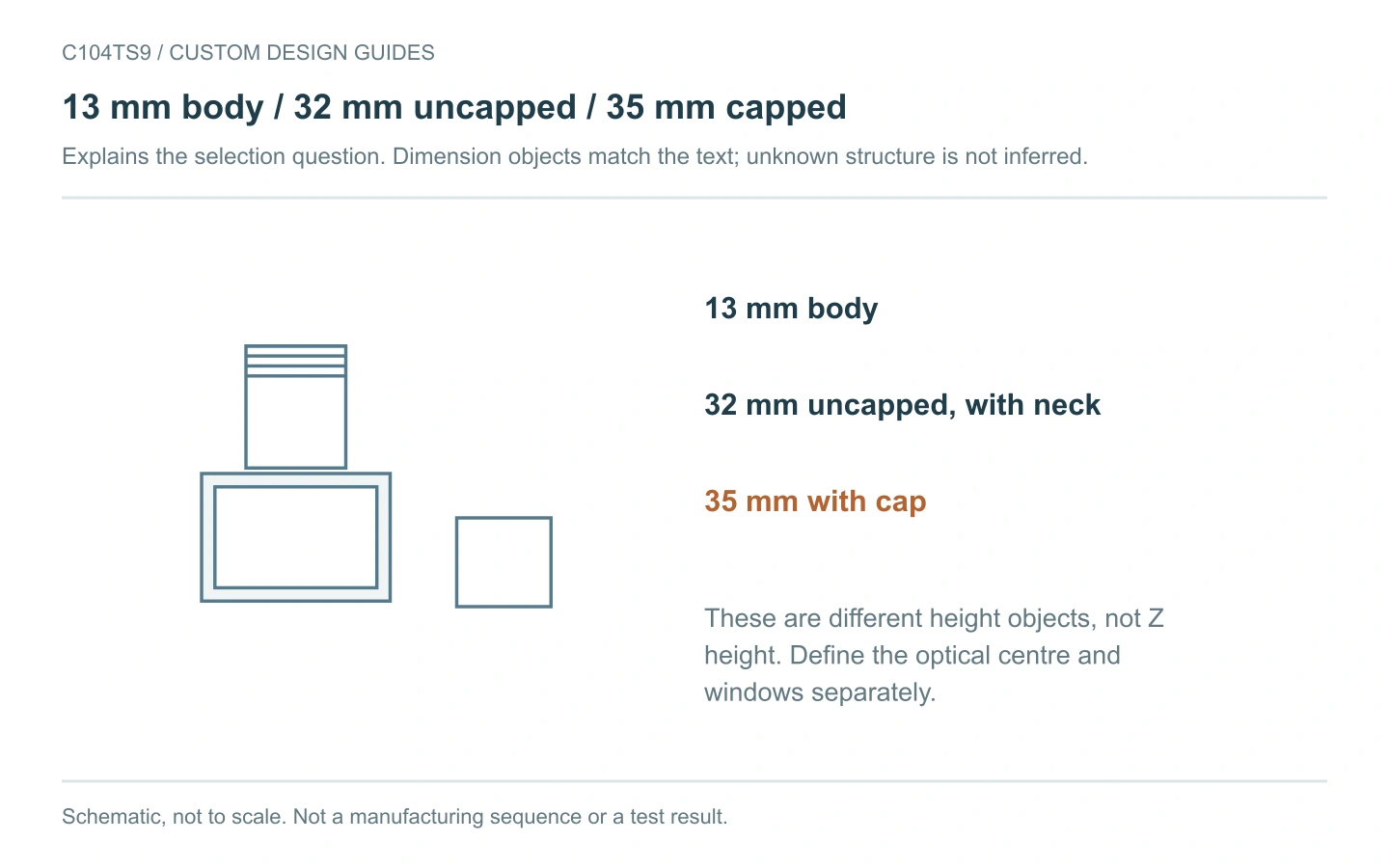
C104TS9 has a short optical body while retaining a nominal 10 mm path and 1.7 mL capacity. The body is 13 mm high; the complete cell reaches 32 mm without the cap and 35 mm with it. Those different heights matter when judging a restricted sample position.
The situations and proposed changes below are planning examples, not completed customer projects.
Structure and use · Current specifications · Selection details · Proposed changes · Before ordering · Buy or enquire
Start with the beam and the complete height limit
A low compartment lid and a low beam position are different reasons to request a short cell. C104TS9 makes the distinction visible: the optical body is 13 mm high, but the neck and cap bring the complete height to 35 mm. A shorter measurement body alone will not solve a lid-clearance problem.
The cell retains a nominal 10 mm sample path across that short body. For a low beam position, draw the support surface, beam and shoulder together. For a restricted lid, use the capped outline and include the movement needed to insert and remove the cell.
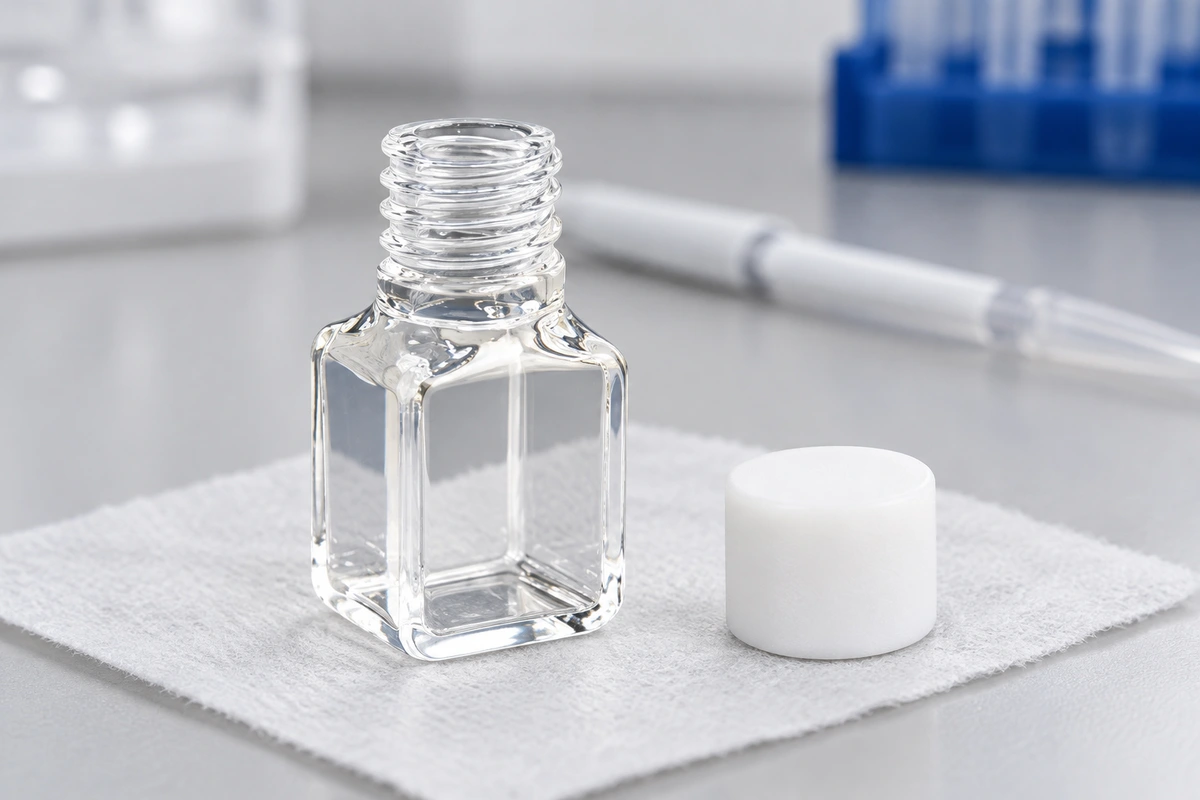
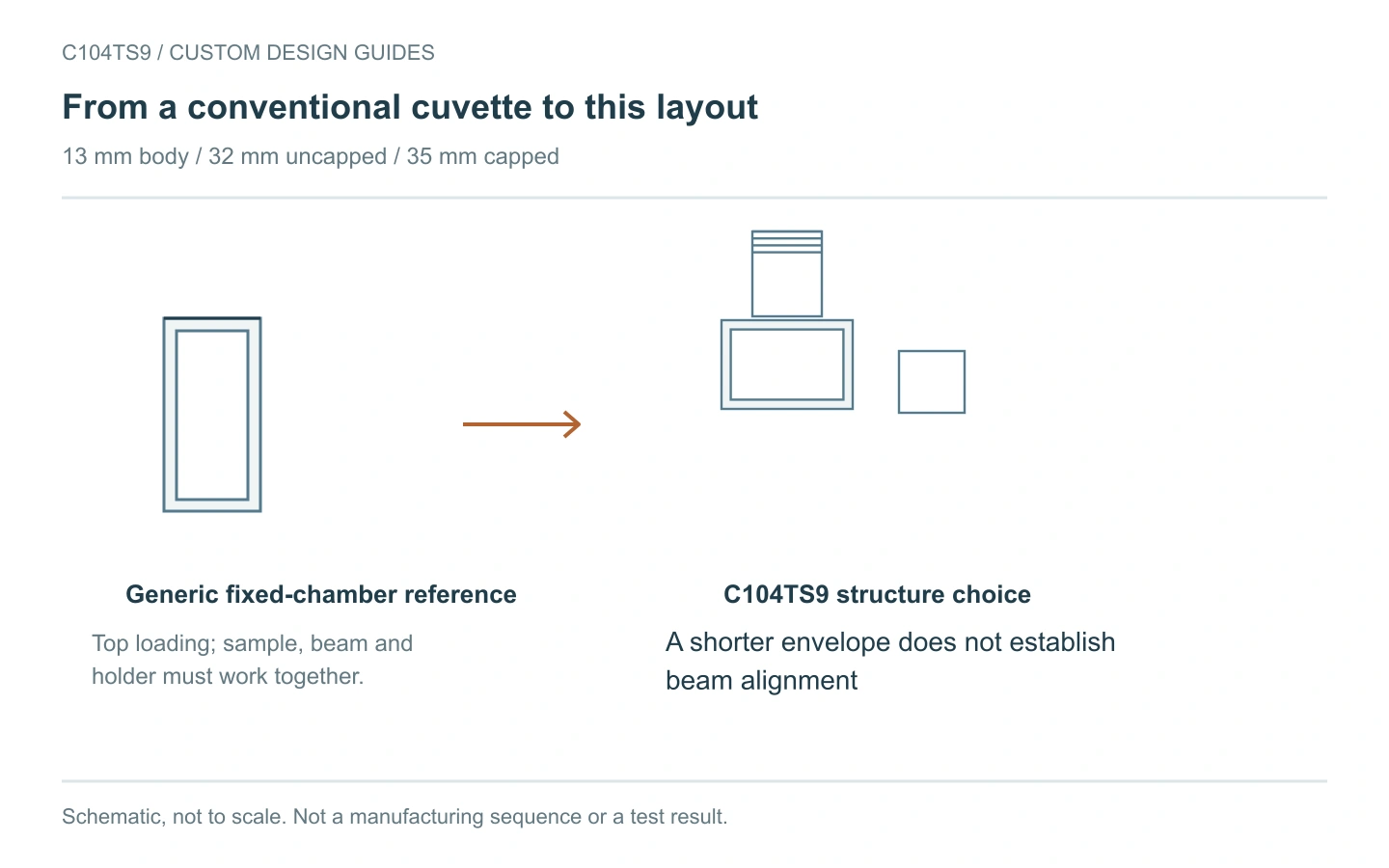
Current C104TS9 configuration
Open engineering reference R01 and PDF
Source-based dimensions and configuration for discussion. Unconfirmed geometry and tolerances remain to be agreed; this is not a manufacturing-release drawing.
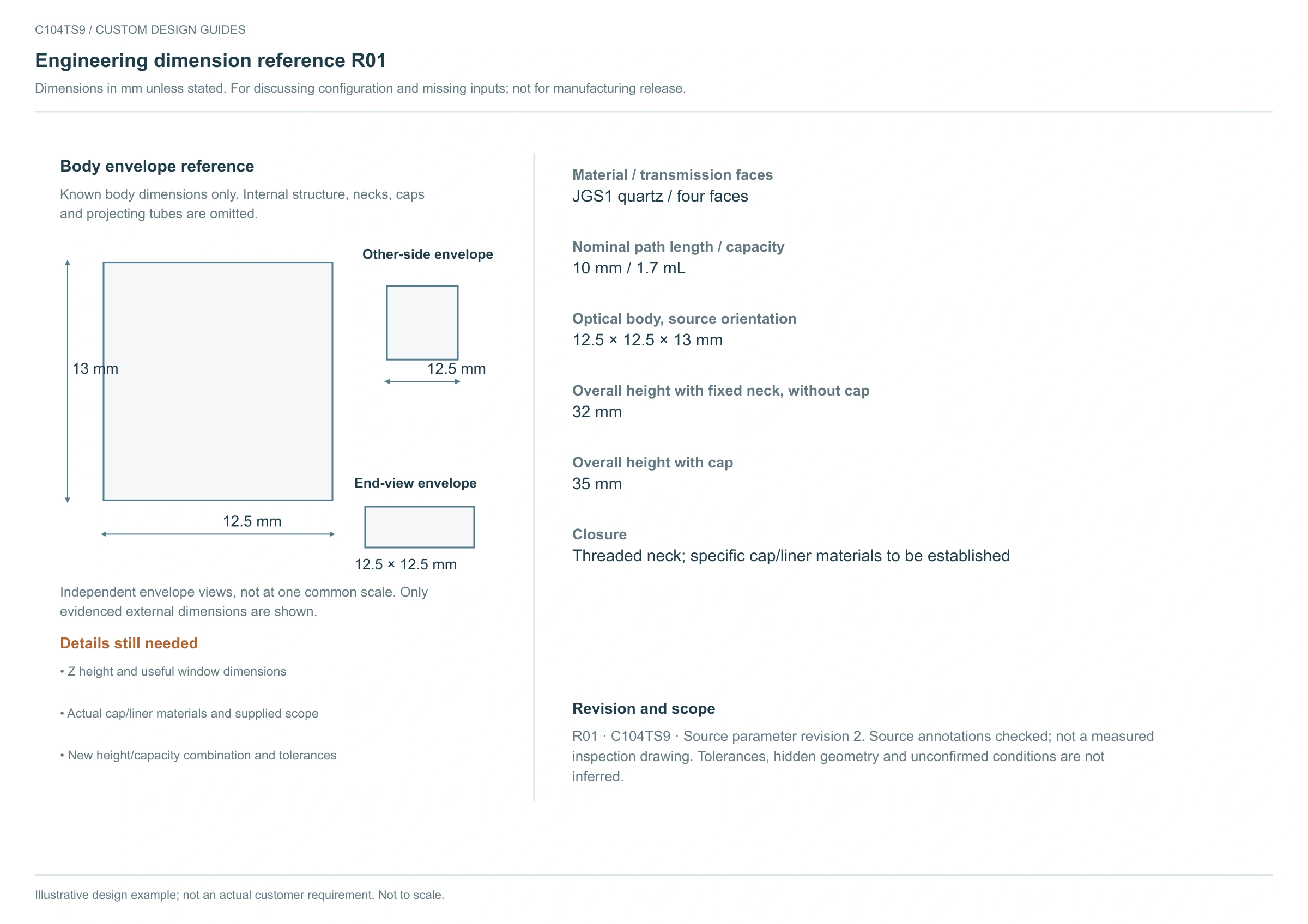
View full-size engineering reference · Download the complete English engineering reference PDF
Use 13, 32 and 35 mm for their own objects
The 13 mm body height describes the measurement body, while 32 mm includes the uncapped neck and 35 mm includes the cap. A lid-clearance check needs the complete assembly rather than the shortest number on the drawing.
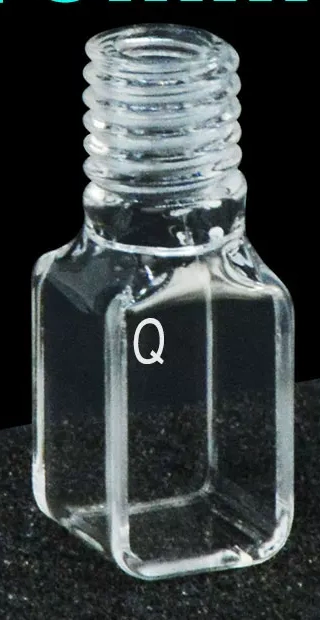
The source gives four transmission faces, but the useful window positions and Z height still need to be established for the setup. Check the required illumination and collection directions against the holder and shoulder.
Keep the sample over the real measurement region
The stated 1.7 mL is nominal capacity, rather than a minimum filling instruction. Choose a working level that covers the relevant optical region under the actual method, and include cap operation and sample handling in the fit check. Confirm the specific cap and liner materials before agreeing chemical conditions.
Decide which optical requirements survive a tighter height limit
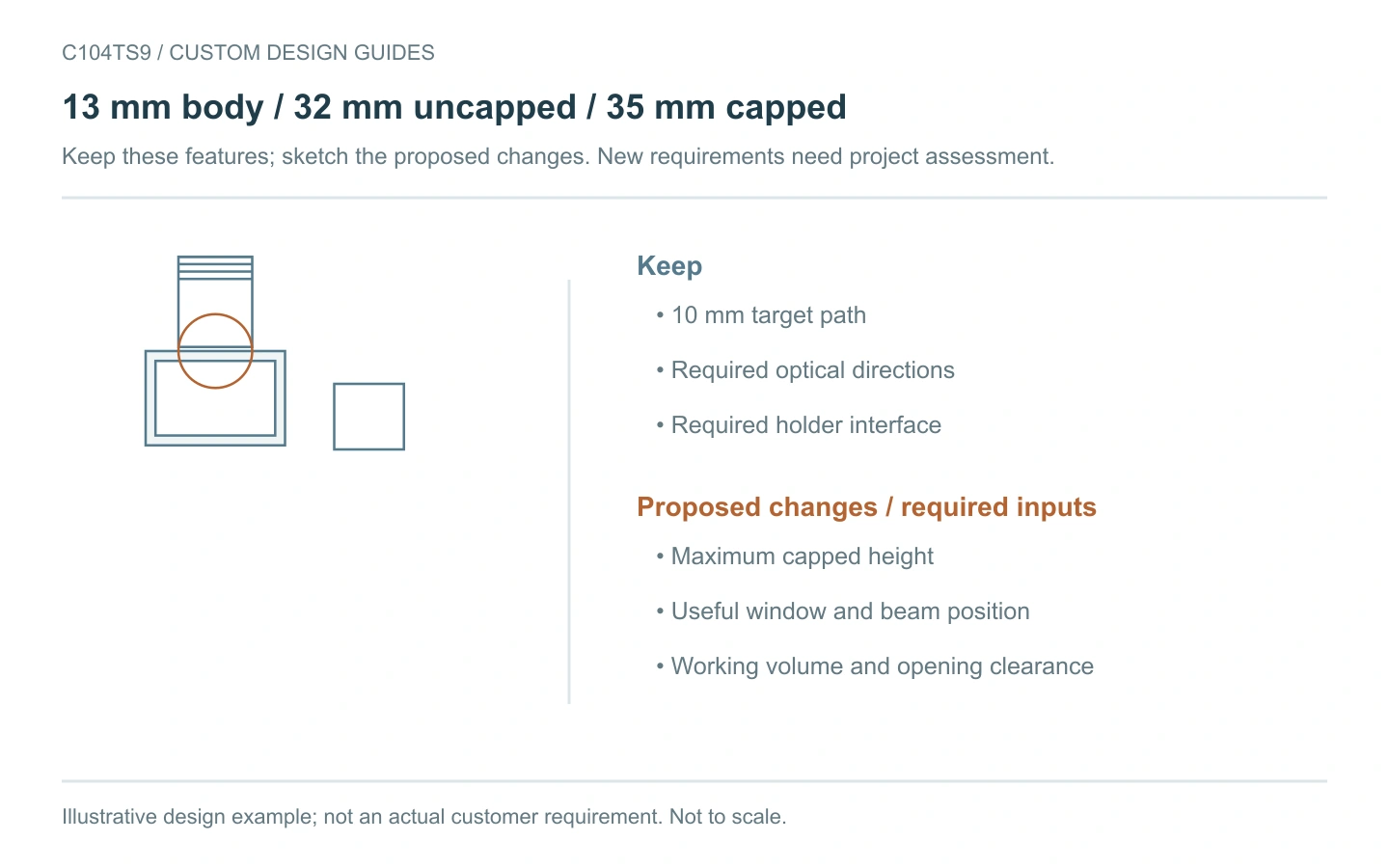
If 35 mm capped height is still too much, provide the available envelope, beam position and necessary working volume. Identify the 10 mm target path and window directions you want to retain.
If only overhead space is restricted, the enquiry can focus on the neck and closure while identifying the optical body to retain. If the beam also moves, include a new window-position requirement. Naming these priorities helps us assess the trade-off between capacity, loading access and capped height.
Checks to agree before ordering
- Height: Compare each body, uncapped and capped dimension with its own clearance requirement.
- Beam: Check holder and shoulder obstruction at the actual beam height.
- Filling and closure: Agree the working liquid level, cap operation and wetted materials.
Sample and cleaning conditions
Agree sample and cleaning conditions for the complete item, including wetted caps, seals and fittings. Give chemical identity, concentration, temperature and contact time. Avoid hydrofluoric acid; strong alkalis, heat and prolonged exposure also need review. A JGS1 material label alone does not establish suitable operating conditions.
Order this configuration or discuss a change
View C104TS9 specifications and current pricing. If you need a delivery date, ask about availability and preparation or production time before ordering.
For a modified version, send the brief below with a dimensioned drawing or labelled sketch. We review the proposed configuration and confirm feasibility, quantity, inspection scope, pricing and production time in the quotation.
Copy this custom-enquiry checklist
Reference SKU: C104TS9
Keep: 10 mm target path; maximum complete capped height: ____
Beam centre/size, window directions, holder and lid drawing: ____
Required working volume, loading access and closure requirements: ____
Sample and cleaning liquids, concentrations, temperature and contact time: ____
Wavelength, critical tolerances and required inspection/documents: ____
Quantity, required date and destination: ____
Send your sketch and requirements. Mark the features to keep and the changes to assess.
For a contrasting height layout, see the tall MQQSC074 configuration. Compare its complete dimensions and optical requirements separately.
Configuration reference
Configuration reference: C104TS9 product specifications. Specifications checked 26 October 2026. General principles guide selection; they do not establish measured performance of this cell.


Recent Comments