
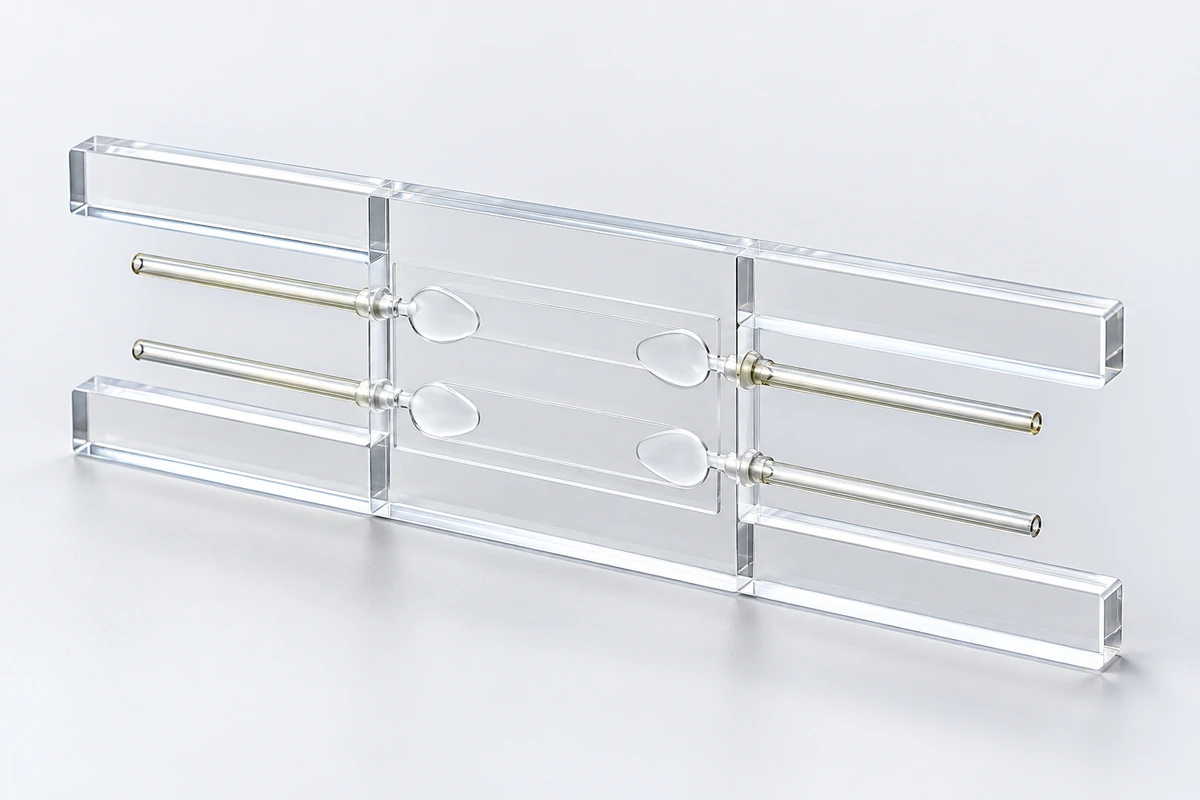
Dual-Channel Quartz Counting Cell: Planning Two Fluid Routes (MQQFC107)
Custom design guide · MQQFC107
Two shallow fluid routes share one quartz plate and four end tubes. The layout gives two observation regions a common mechanical support, while each route still needs its own connection and optical plan.
The situations and proposed changes below are planning examples, not completed customer projects.
Selection · Configuration · Structure · Custom version · Fit and use · Drawing · Enquiry
Plan two observation regions on one support
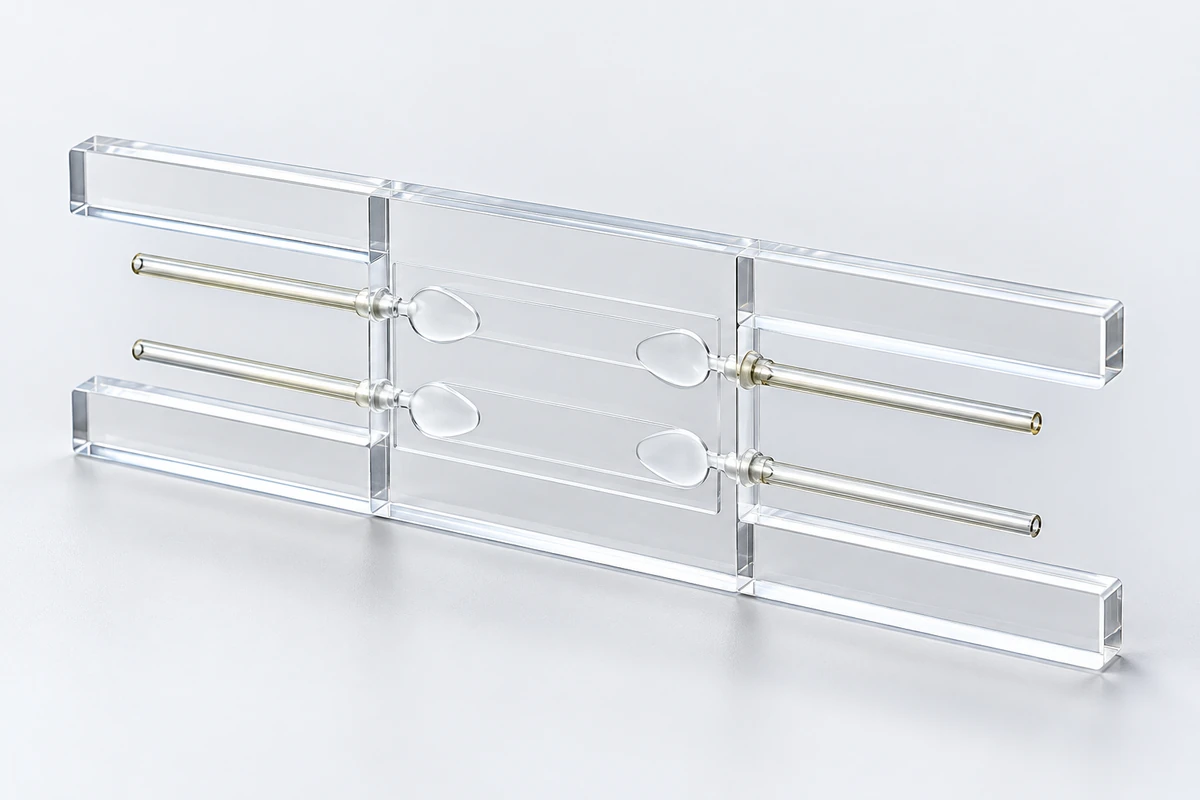
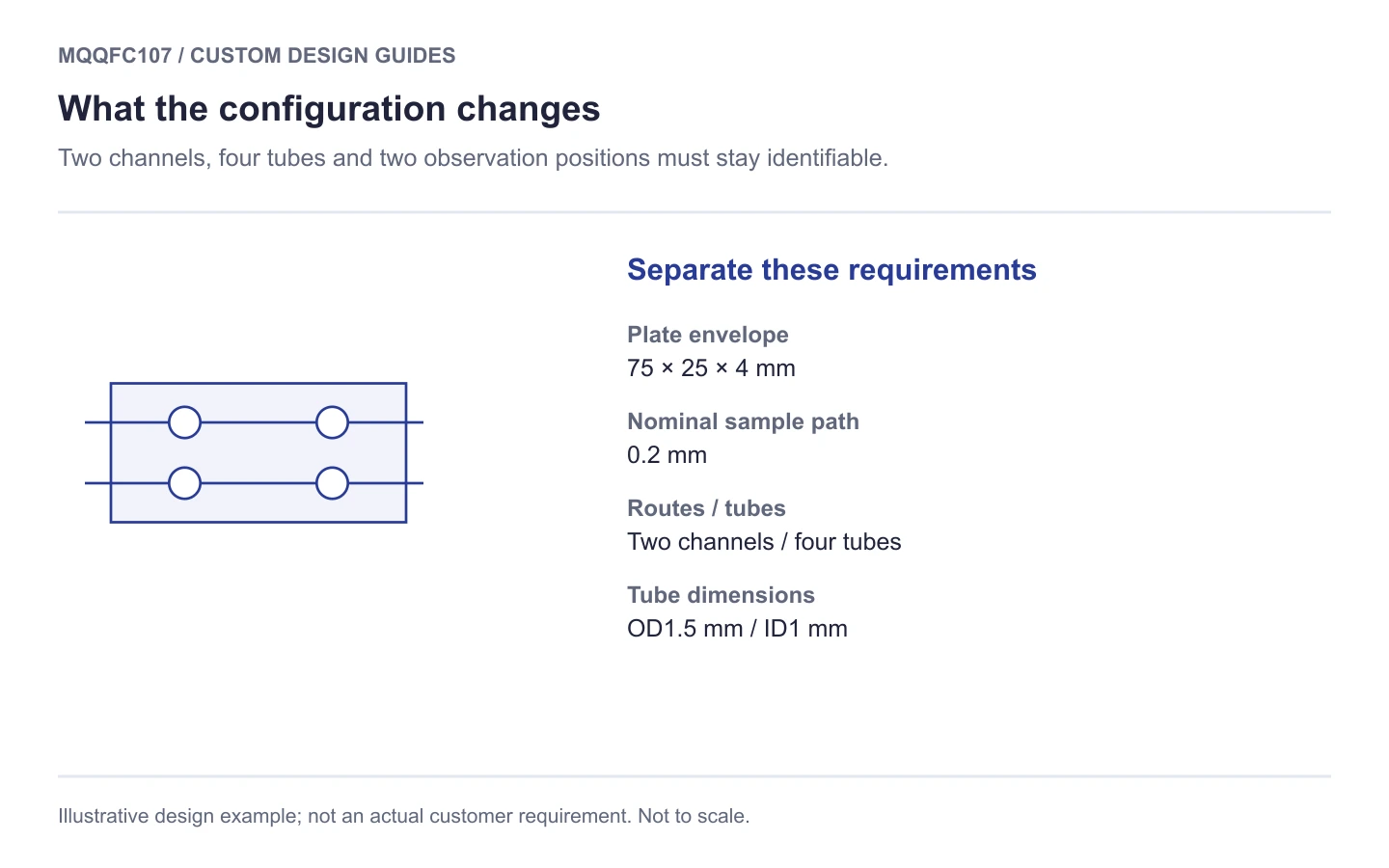
MQQFC107 places two counting-channel regions on a 75 × 25 × 4 mm quartz plate. Each route has a tube at either end, giving four connections in total. The shared plate is a useful layout to discuss when two sample routes need to be positioned within one mechanical support.
Start by labelling routes A and B, their ports and the areas to be observed. That makes it clear whether a requested change concerns channel spacing, optical position or tubing. The layout alone does not establish simultaneous measurement or independent operation; those are requirements for the complete system.
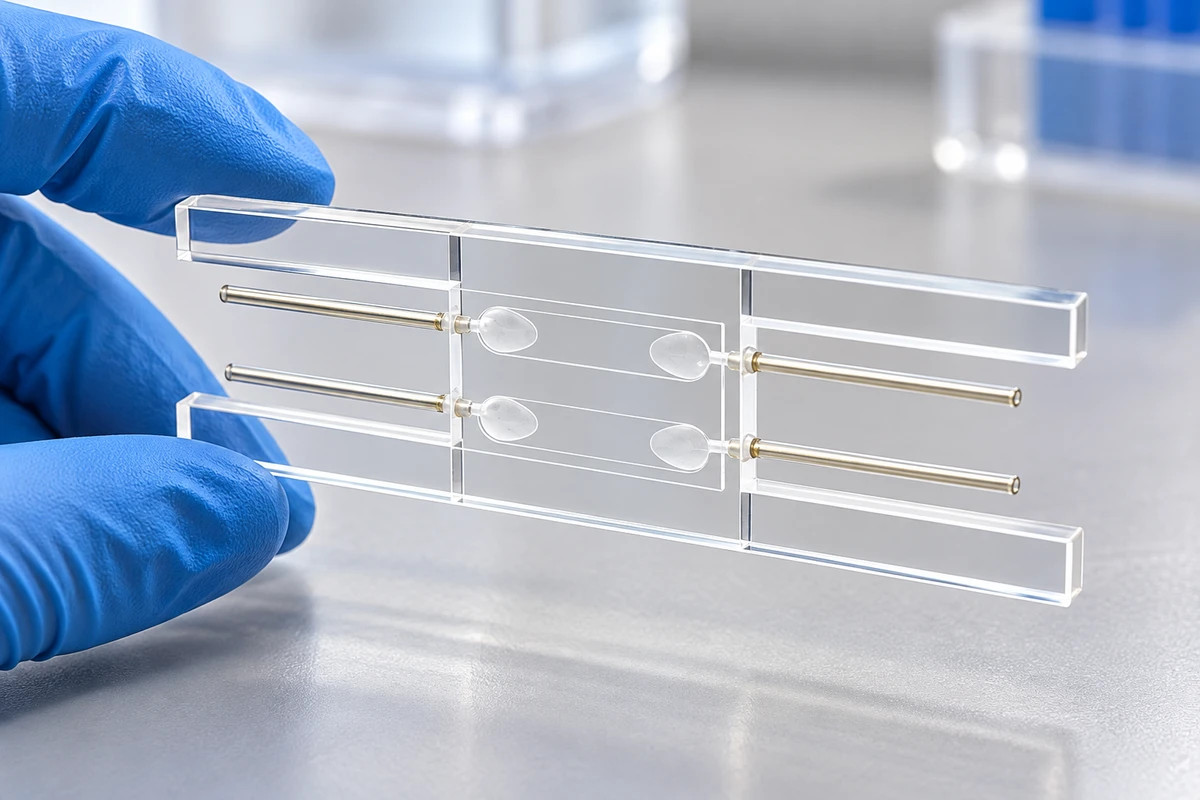
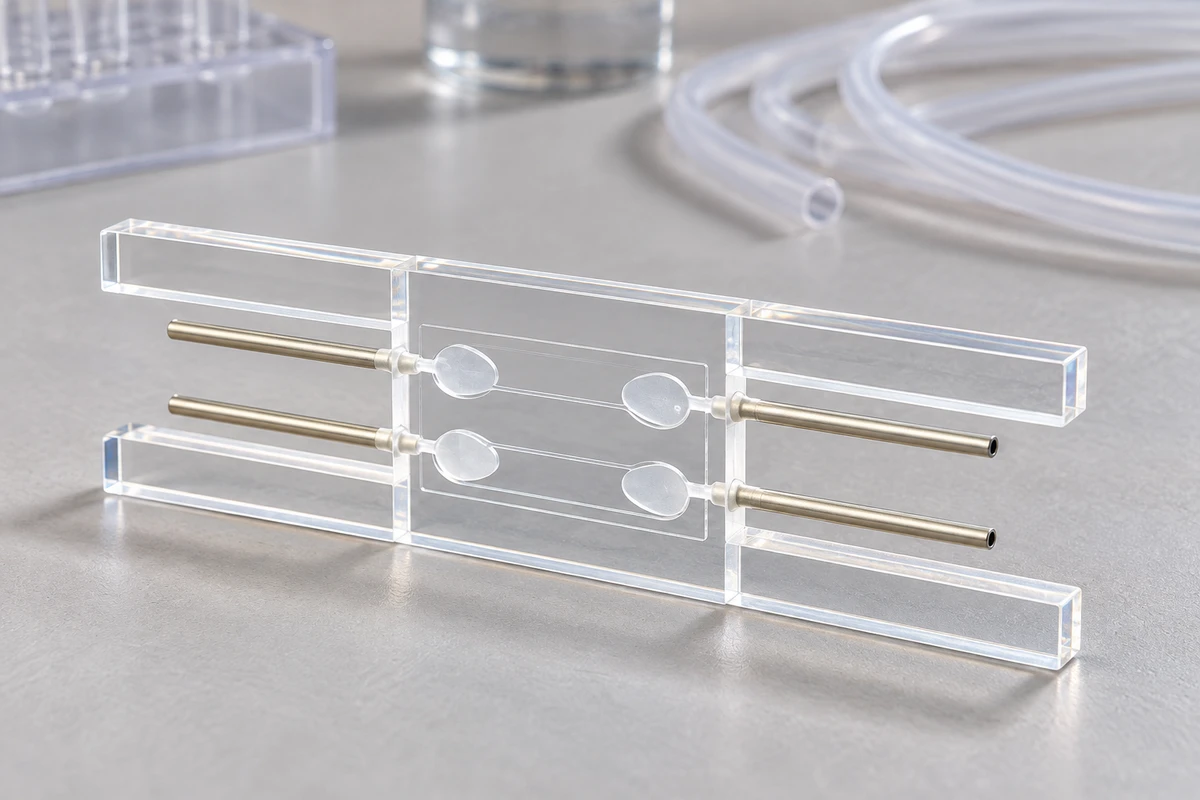
The listed configuration
View the selection schematic
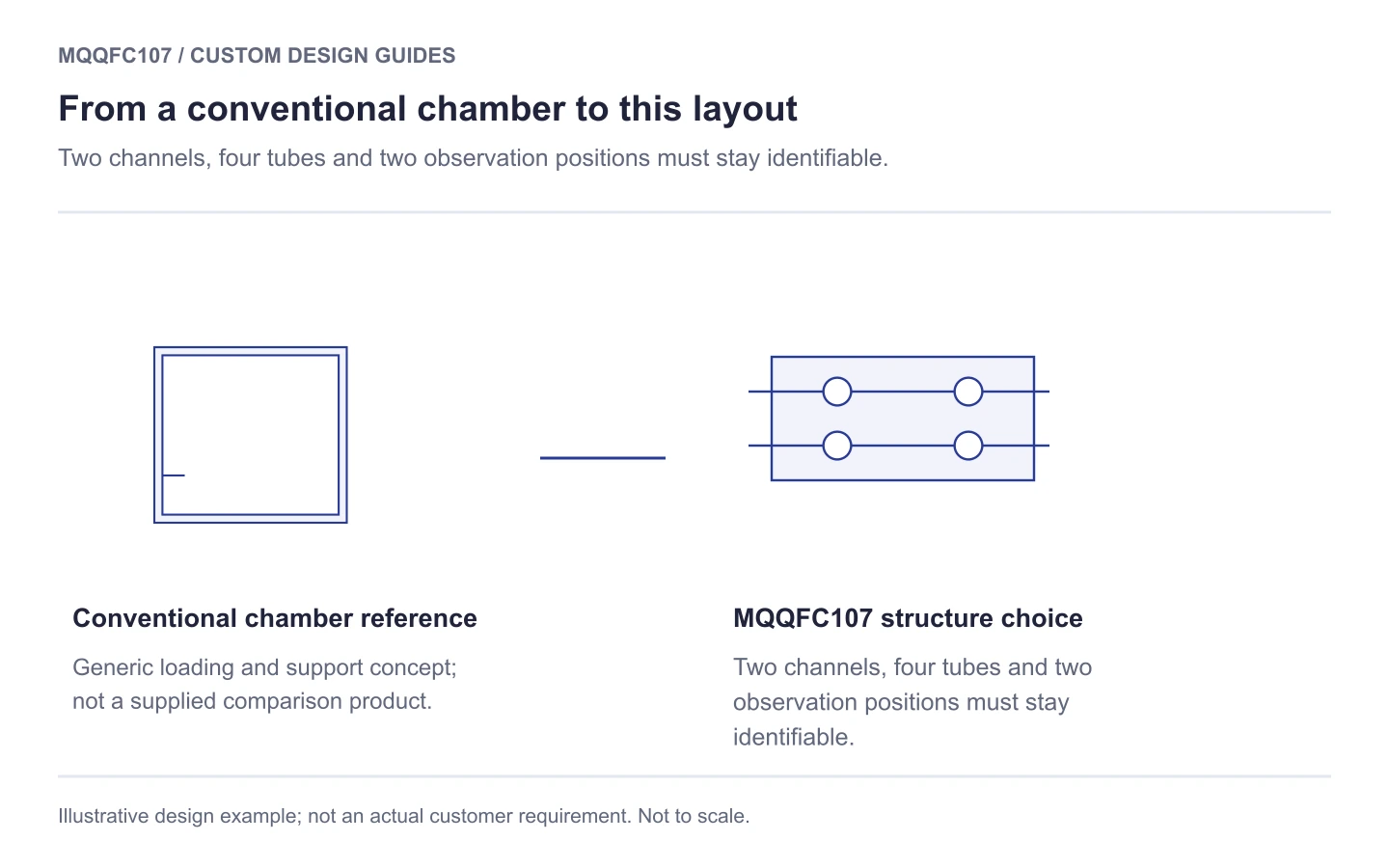
How the structure differs from a conventional cell
The bulk chamber becomes two thin observation routes accessed from the ends. The nominal 0.2 mm sample path is separate from the 4 mm plate thickness. Sharing a plate gives the routes a common mechanical reference, but the optics and fluid circuit must still address each region in the required way.
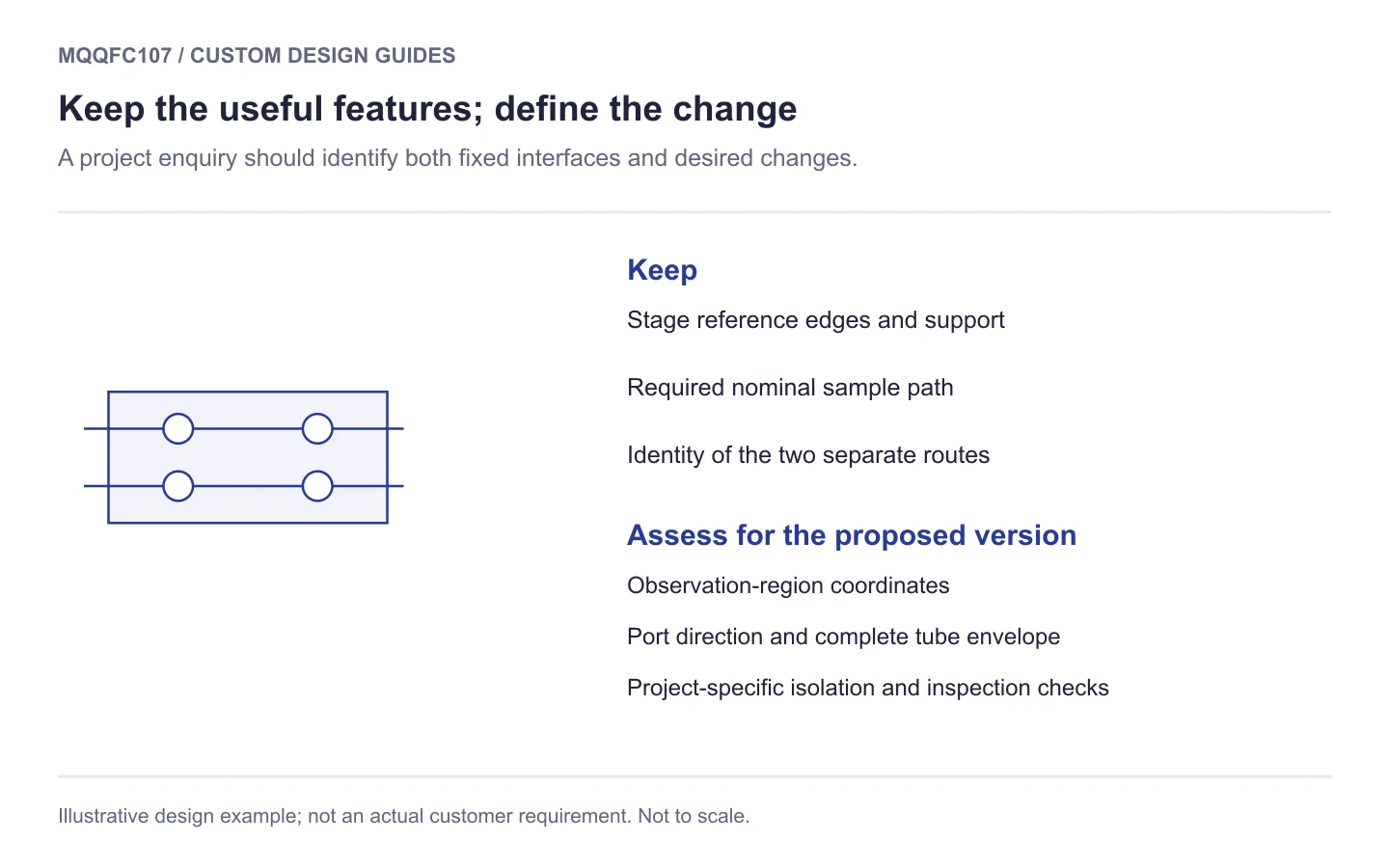
Keep the observation coordinates and port map together
If the plate fits a stage but the observation positions do not match the optics, keep the stage contacts fixed and supply the required coordinates. Show the viewed area and illumination direction for each route. We can review those positions with the channels and the solid margins needed for support.
For a tubing change, mark the permitted direction at every port and show hose support. Four connections can occupy more installed space than the plate itself. If the routes must operate independently, include the required isolation check and conditions rather than assuming that two visible channels establish it.
View a custom-design discussion sketch
Three checks for the proposed setup
- Route identity. Label A/B, map each port and identify the observation region.
- Stage clearance. Keep support parts and fittings outside the required optical view.
- Fluid requirements. Provide medium, particle characteristics, flow conditions and any isolation criterion.
Check each route before comparing optical results
Plan filling, bubble and residue checks for each route. Where independent operation is required, agree how isolation will be tested with the actual media and conditions. Support the plate and hoses without loading the fine tubes, and choose cleaning for the adhesive-bonded construction and sample residue.
What should a drawing show for a two-route setup?
Show the observation coordinates, route labels, port-to-route map, holder contacts and fitted tubing. Also state whether the instrument observes the routes sequentially or together, and whether isolation is required. These are system requirements to review, not functions established by the plate alone.
Engineering dimension reference
The reference records known external dimensions and configuration notes. Internal geometry, tolerances and operating limits still require a project-specific specification.
Open the engineering reference image
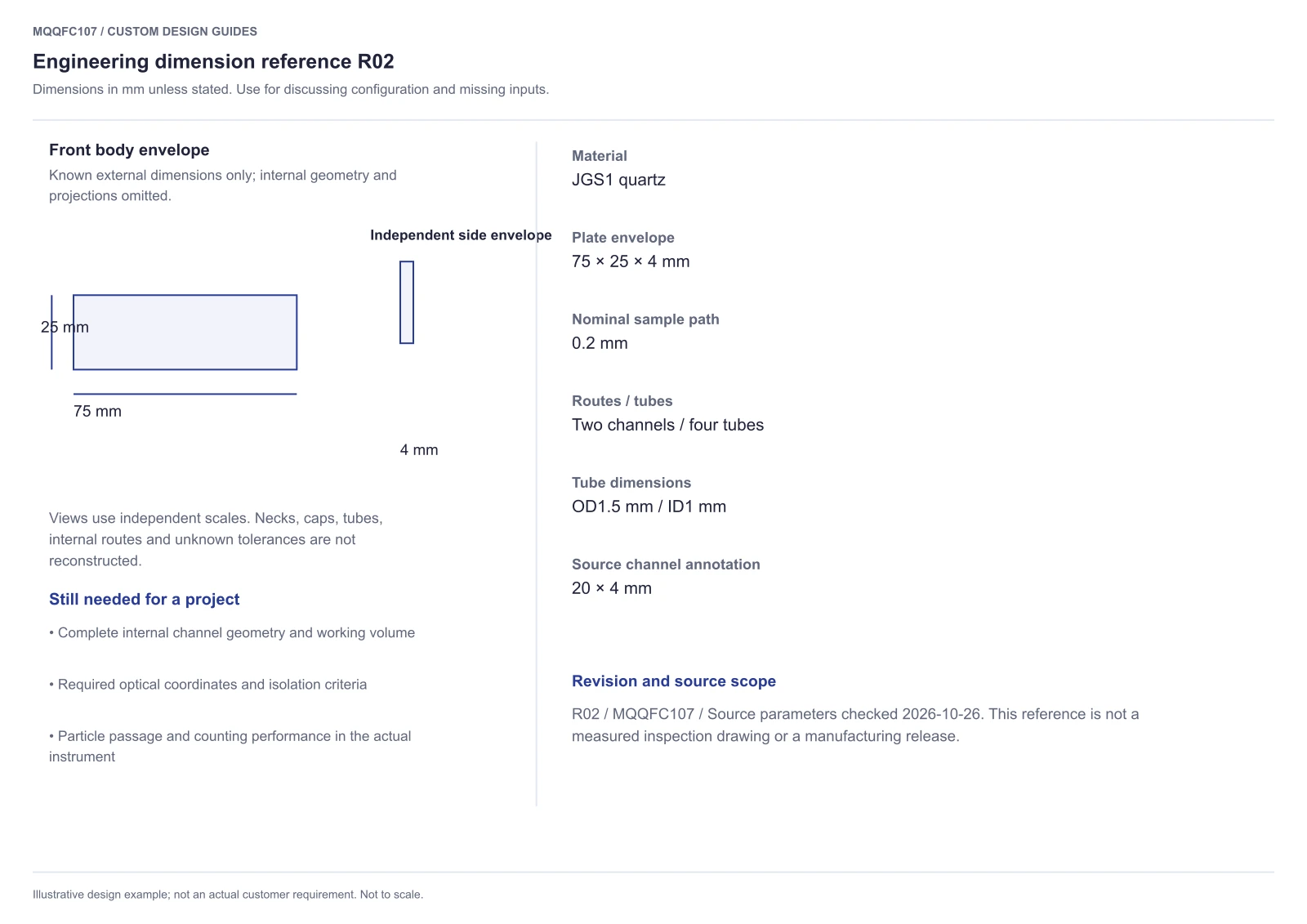
Download MQQFC107 engineering reference R02 (PDF). Illustrative design example; not an actual customer requirement.
Order this configuration or discuss a change
View MQQFC107 specifications and current pricing. Ask about availability and preparation or production time if you have a required delivery date.
For a modified version, attach a dimensioned drawing or labelled sketch. Contact MQ to review feasibility, quantity, inspection scope, price and timing for the proposed design.
Copy a starting brief for your enquiry
Reference SKU: MQQFC107
Routes A/B labelled on drawing; observation coordinates ___; support datums ___; required path ___; hose directions ___; isolation and optical checks ___; quantity ___.
Attach your marked drawing and note any required inspection or documentation. Include the destination and target date so preparation, transport and customs can be discussed separately.
Send your sketch and requirements. Identify fixed interfaces and proposed changes.
Configuration and technical references
Configuration source: MQQFC107 configuration information. Listed parameters reviewed 26 October 2026.
Prepared for MachinedQuartz product selection and custom enquiries. MachinedQuartz is a US-based supplier established in New Mexico, USA, in 2026. Contact MQ. Custom cuvette enquiries · More design guides.


Recent Comments