
Flat Four-Tube Quartz Cell: Keeping the Windows and Connections Accessible
Custom Design Guides · MQQFC003
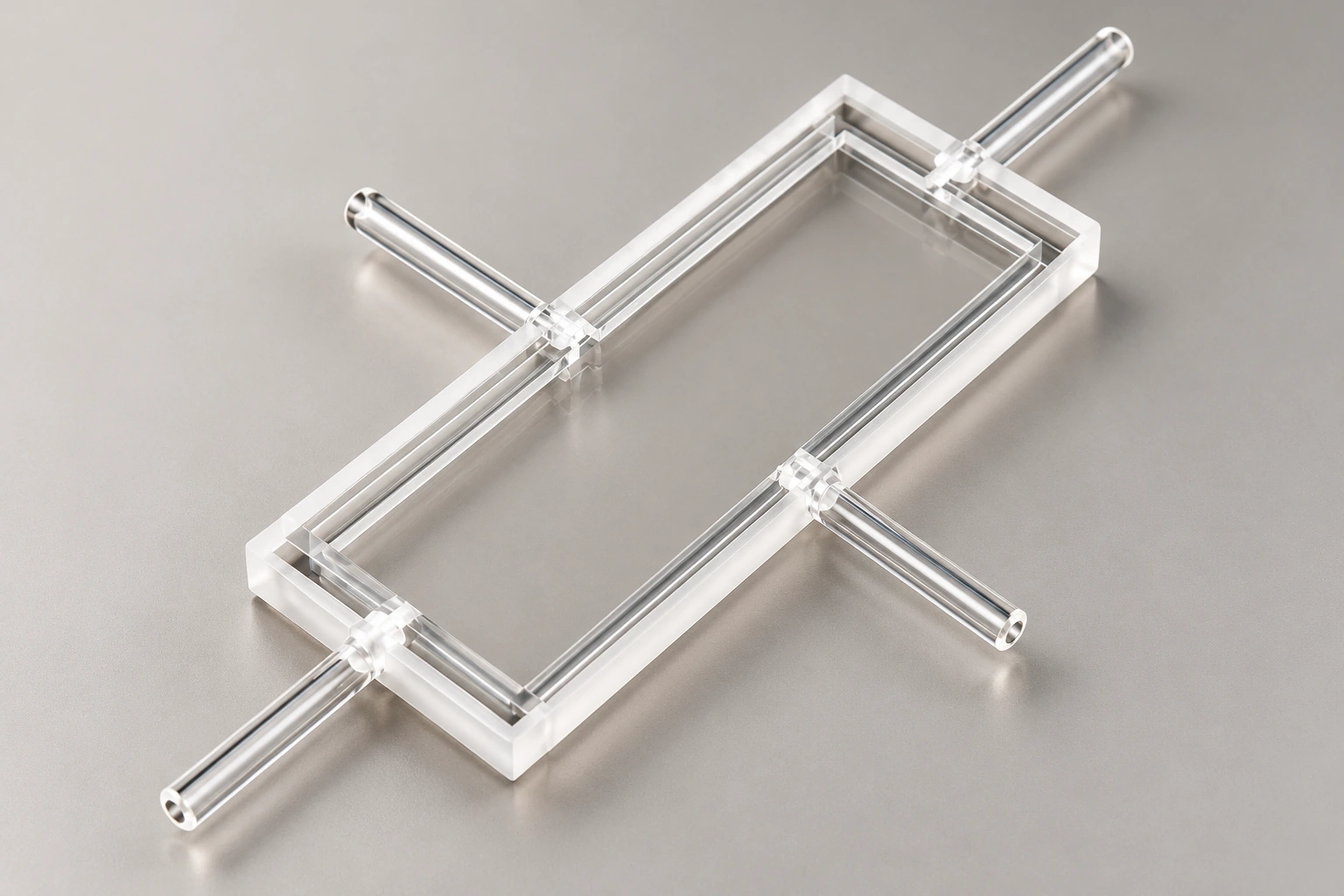
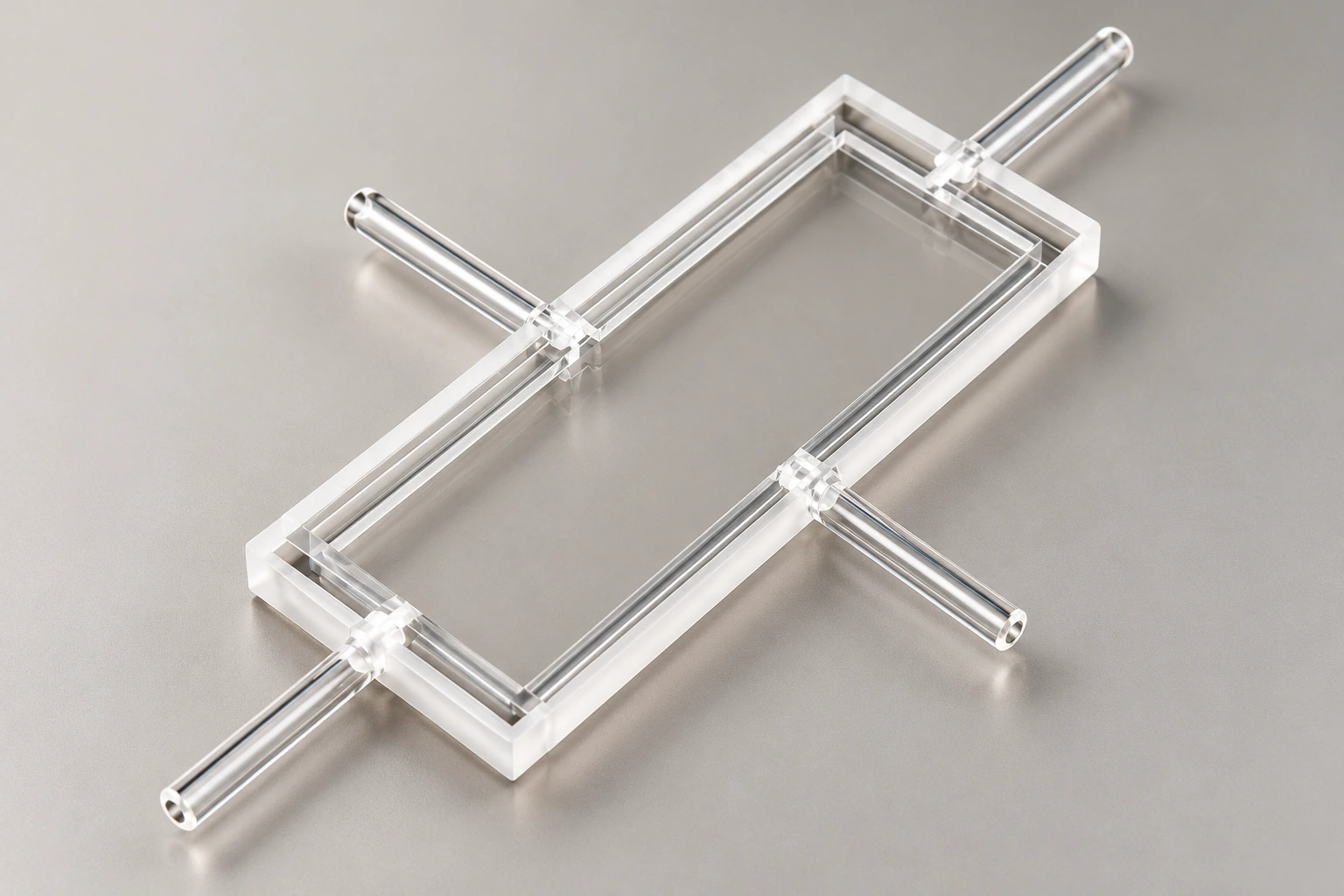
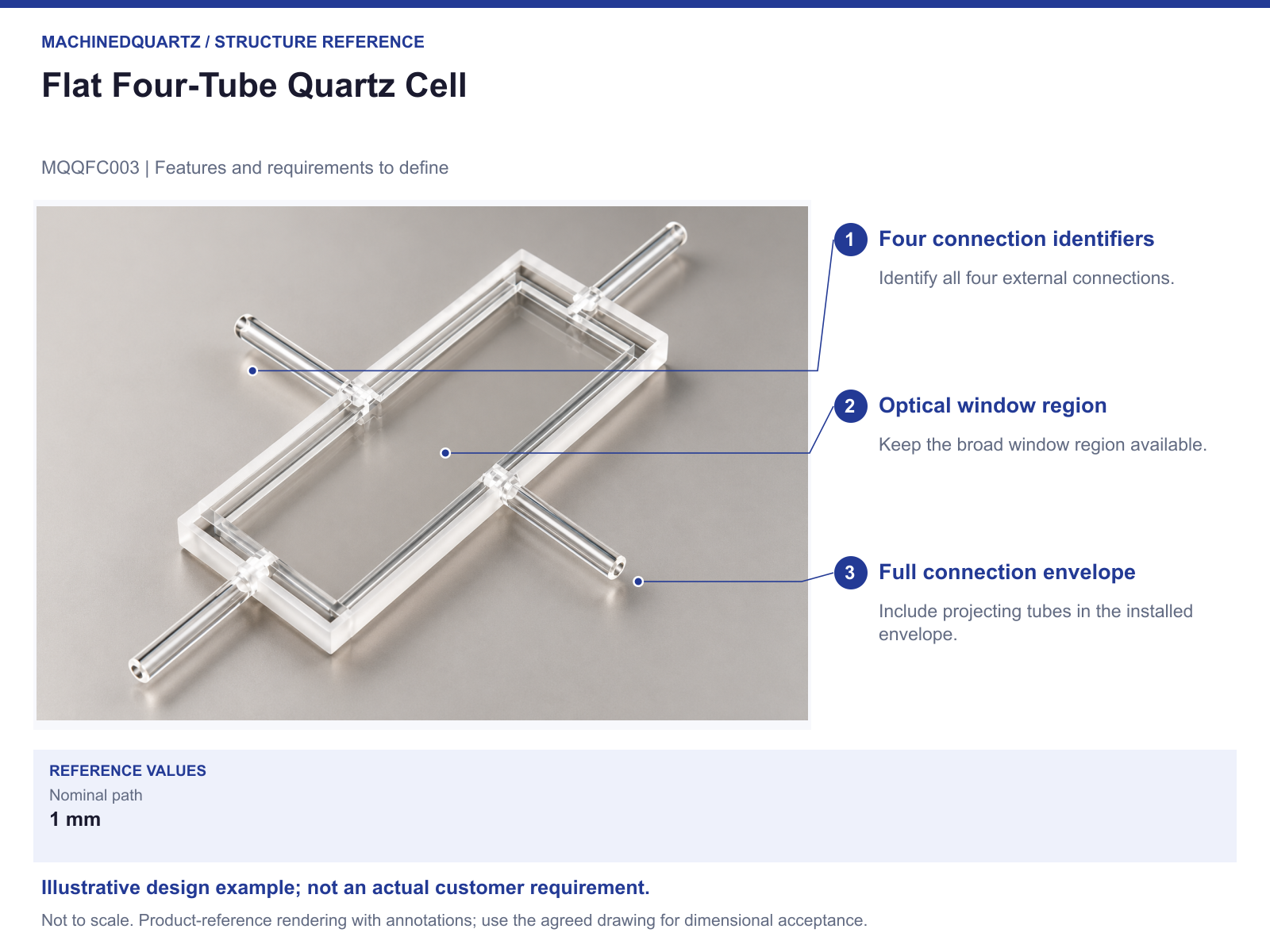
MQQFC003 is the flat quartz-cell reference with a nominal 1 mm path and four visible connection tubes around its body.
Four tubes do not establish four independent channels. The internal route and the role of each opening need to be defined for the proposed circuit.
In this guide: Configuration · Design comparison · Number the tubes before assigning directions · Keep the window region separate from the tube envelope · A flat body changes the support task · Ask for the circuit result that matters · Enquiry
The configuration discussed here
What changes from the simpler form?
Four external connections add routing and service interfaces around a flat thin-path body. The optical gap remains separate from the outside connection envelope, and the added tubes do not define isolated channels.
Number the tubes before assigning directions
Label the four visible tubes on the reference view and identify the proposed role of each. Supply the complete external circuit if more than a simple exchange path is intended.
Do not turn a tube count into a channel count. Hidden routes, isolated chambers and specific inlet or outlet assignments require an agreed diagram.
Keep the window region separate from the tube envelope
Show the optical direction, required clear region and the holder datum. Then add the full tube projections and connected-line space around that body.
Dimensions spanning the outer connections should not be relabelled as bare-body dimensions. For a restricted enclosure, both the measuring body and the connected envelope need to be checked.
A flat body changes the support task
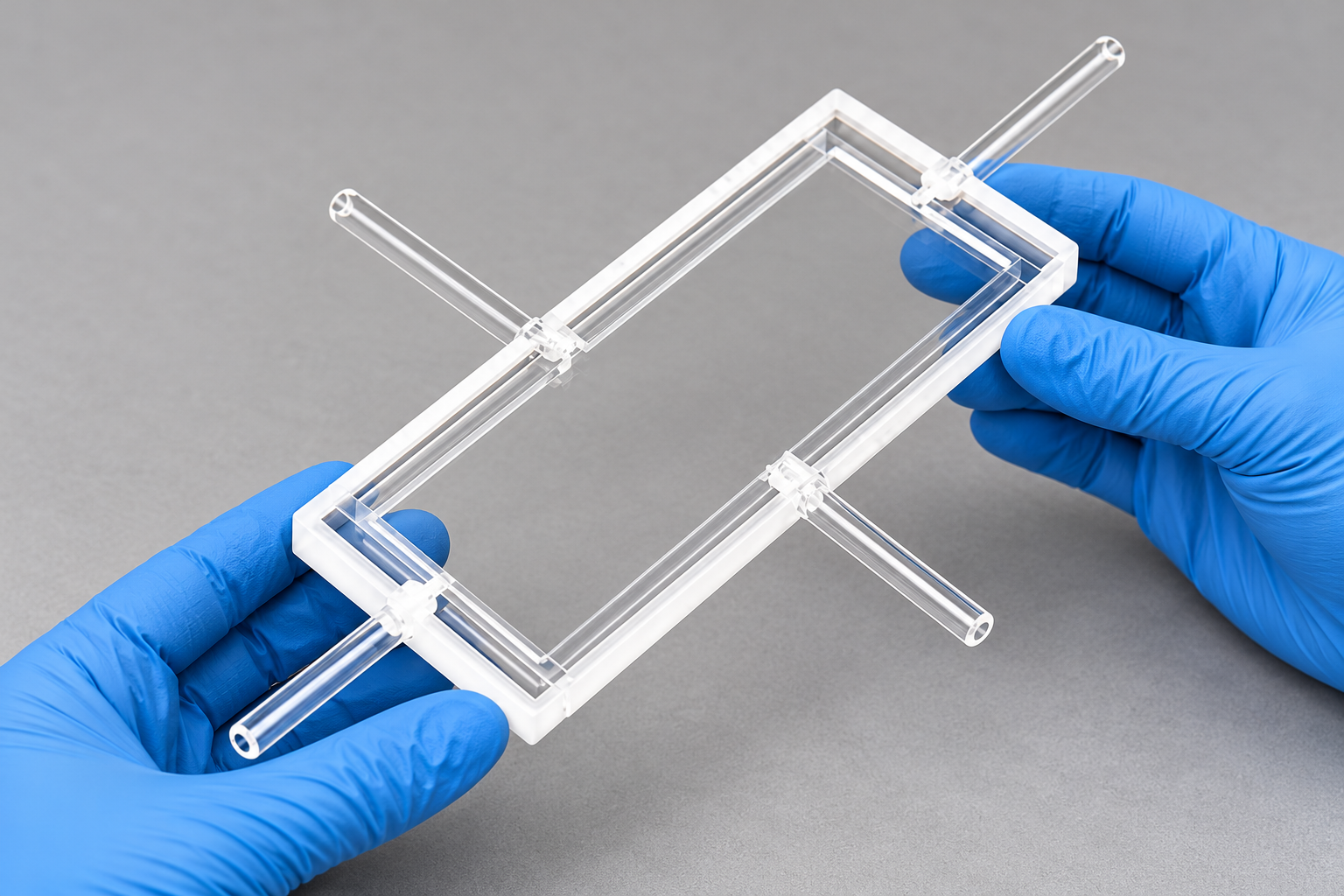
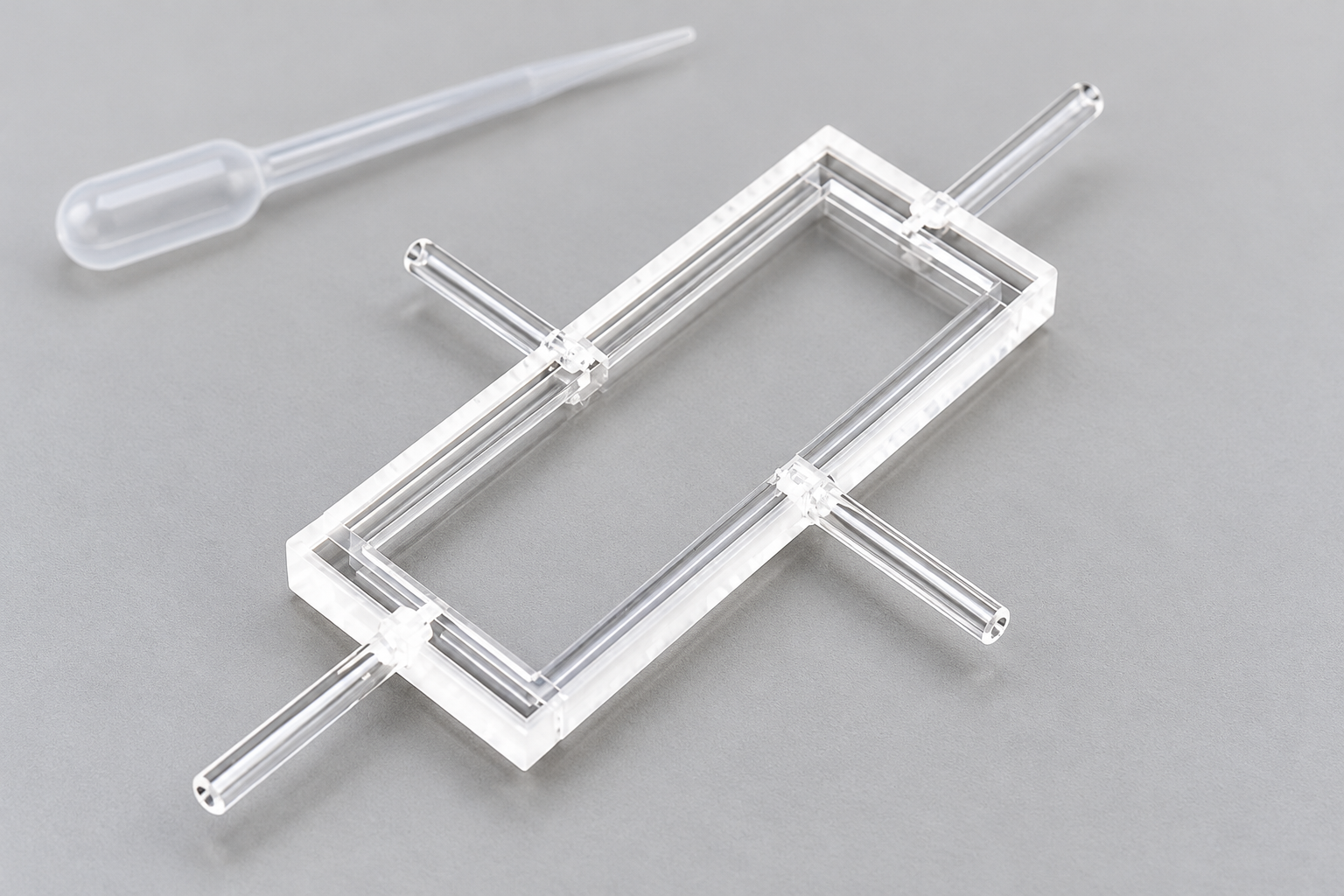
Identify the surfaces available for support without pressing on the tube connections or obstructing the windows. Include the insertion route and the space needed to attach the lines.
For example, a revised tube spacing could be discussed to clear an existing fixture while retaining the flat sample-gap concept. The window and path requirements still need their own specification.
Ask for the circuit result that matters
If exchange, leakage or another fluid-handling result matters, provide the sample conditions and an acceptance method. The reference does not report a flow rate, pressure rating or dead volume.
MQ can review the labelled geometry and proposed checks. Keeping the route, outside dimensions and optical acceptance separate makes the resulting enquiry much less ambiguous.
Structure reference and specification points
Download the structure reference (PDF)
Do four tubes mean four independent sample channels?
No. Four visible connections are established, while the internal route and chamber arrangement require confirmation on a flow and section drawing.
Send a drawing or the mating-part details
Send a numbered connection view with the optical and holder references. MQ can then review the four-tube arrangement without inventing an internal circuit.
- Four labelled openings and proposed external circuit
- Tube dimensions, line connections and service space
- Body versus connection-envelope dimensions
- Optical window region and holder contacts
- Sample conditions and required acceptance checks
Modified designs are reviewed for the project. The drawing, supplied parts, quantity, inspection scope, price and preparation or production time are agreed in the quotation.
Details to settle for the ordered configuration
Internal routes, body dimension endpoints, operating limits and fluid or optical performance require confirmation.


Recent Comments