
Quartz Cuvette with an Offset Hole: Locating the Opening from a Datum
Custom Design Guides · MQQCU003
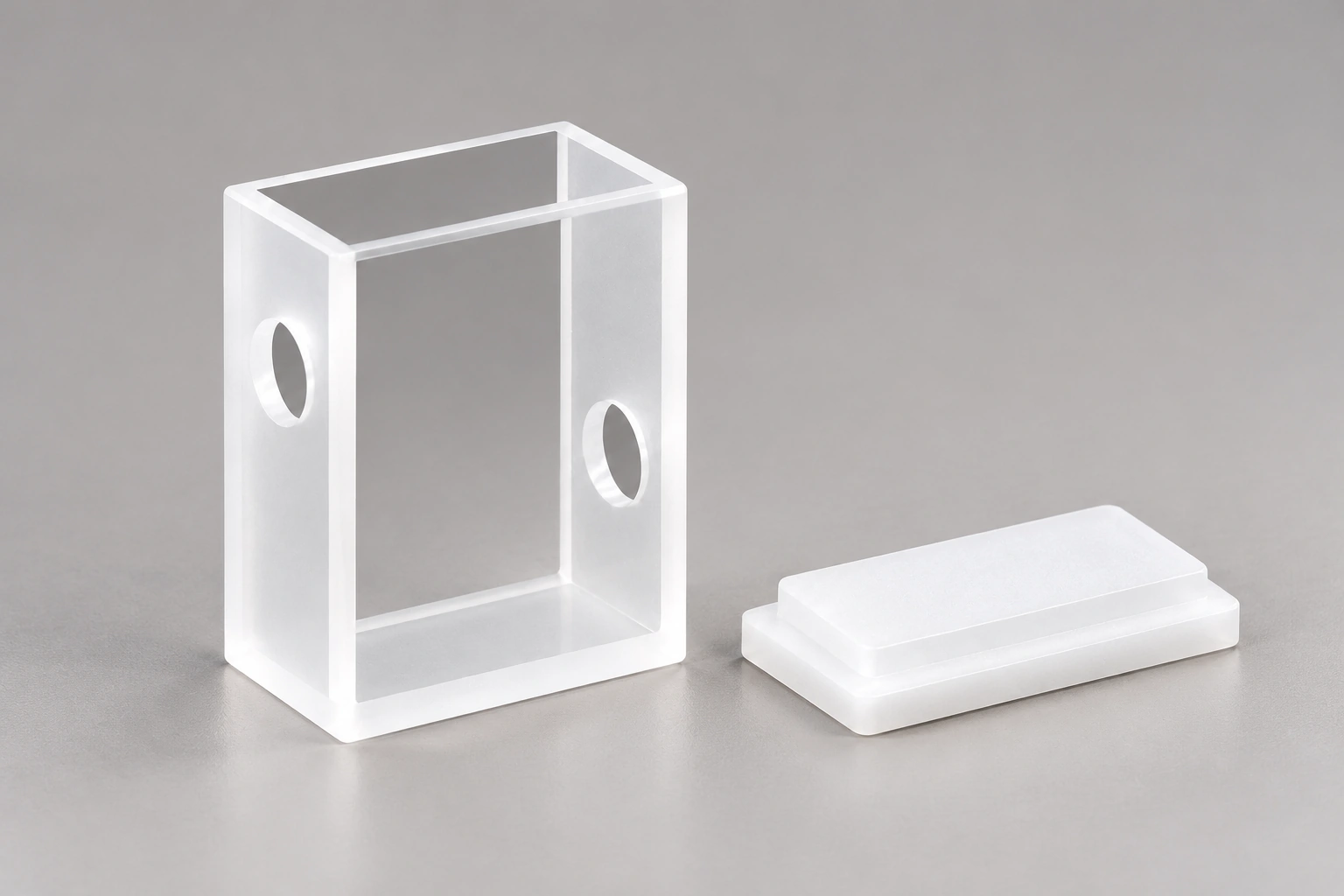
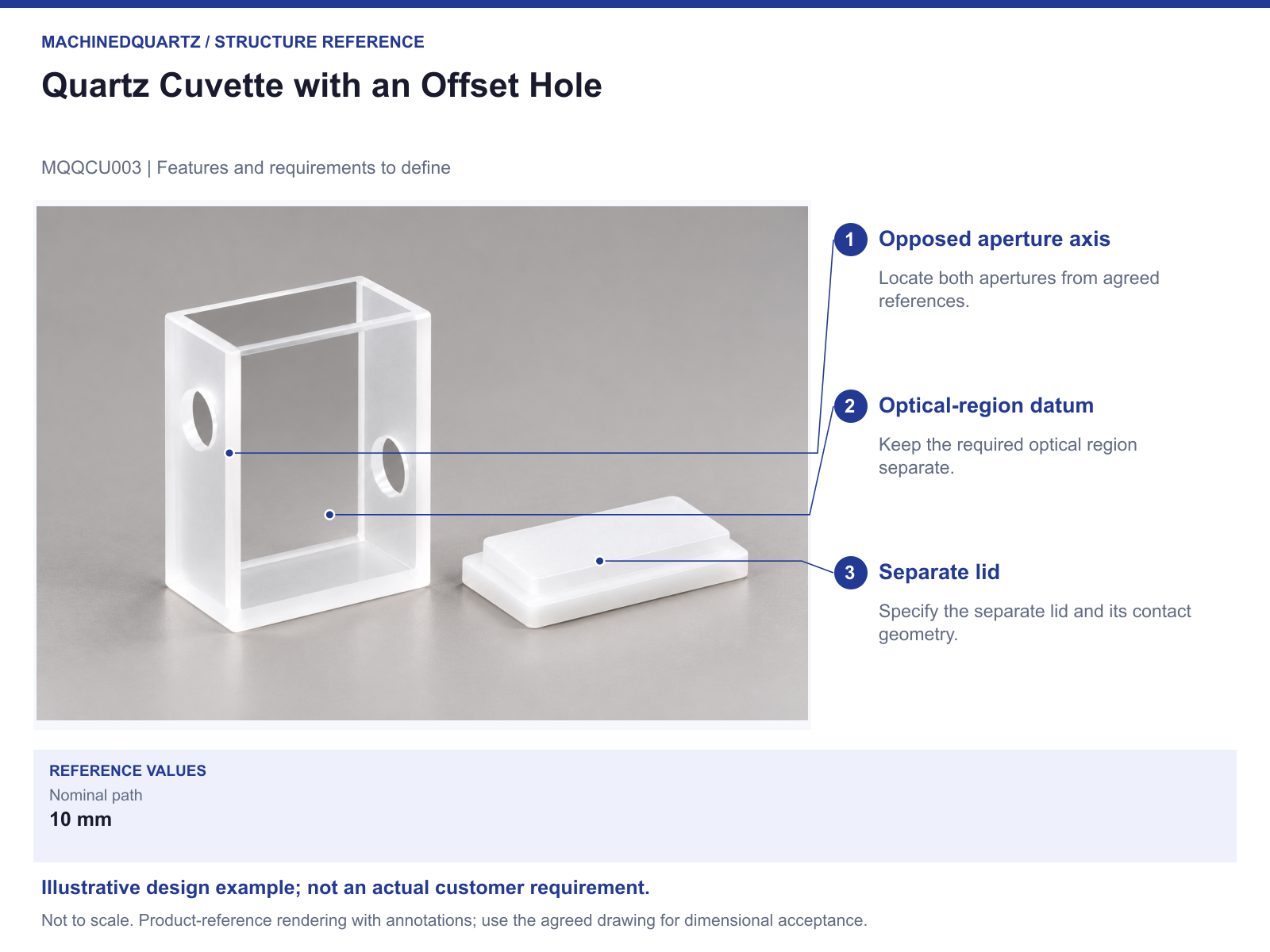
MQQCU003 is the nominal 10 mm path quartz-cell reference with opposed wall apertures and a separate lid. The openings introduce a positional interface in addition to the usual cell envelope.
A hole diameter is not a complete access specification. The axis, surrounding wall and relationship to the sample region need to be shown on the same drawing.
In this guide: Configuration · Design comparison · Locate the aperture axis from a useful datum · Describe what the openings need to do · Treat the lid as a separate part · A custom aperture needs positional acceptance · Enquiry
The configuration discussed here
What changes from the simpler form?
Wall apertures introduce a positional access axis into a covered cuvette form. The change links hole location to tool reach and the optical region, rather than simply adding a diameter to the specification.
Locate the aperture axis from a useful datum
Mark the hole centre or axis relative to the base and the required optical region. Give the mating item's approach direction and its permitted offset or clearance.
An outside height alone does not locate the aperture for an instrument. If the cell sits in a holder, show how that holder locates the base and clears both openings.
Describe what the openings need to do
Identify whether the proposed task is tool access, a defined connection or another requirement. The visible apertures do not establish an electrode arrangement or a supplied seal.
Show any inserted item through the wall and its position in the sample region. That section can reveal conflicts between access and the optical direction before an outside dimension is changed.
Treat the lid as a separate part
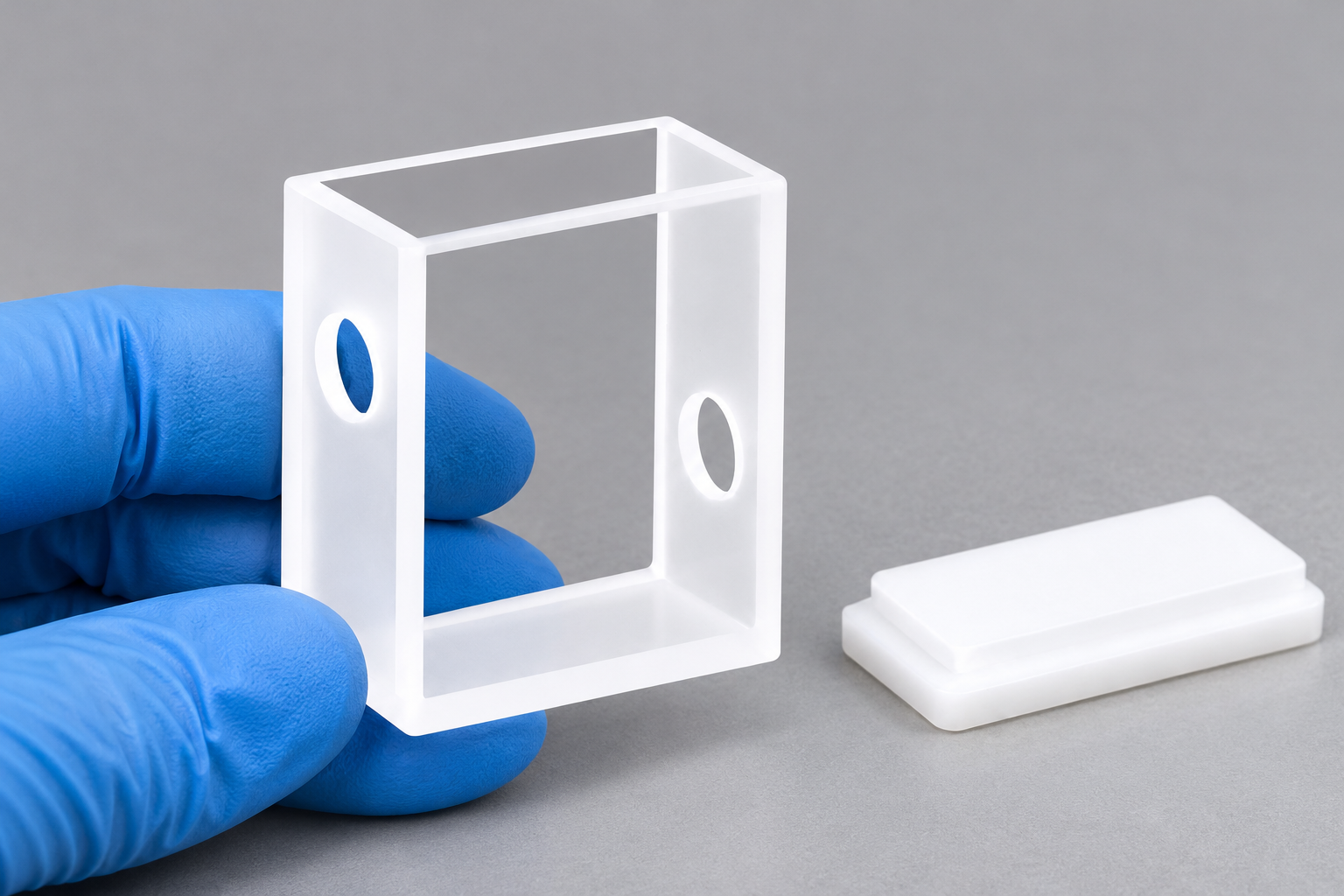
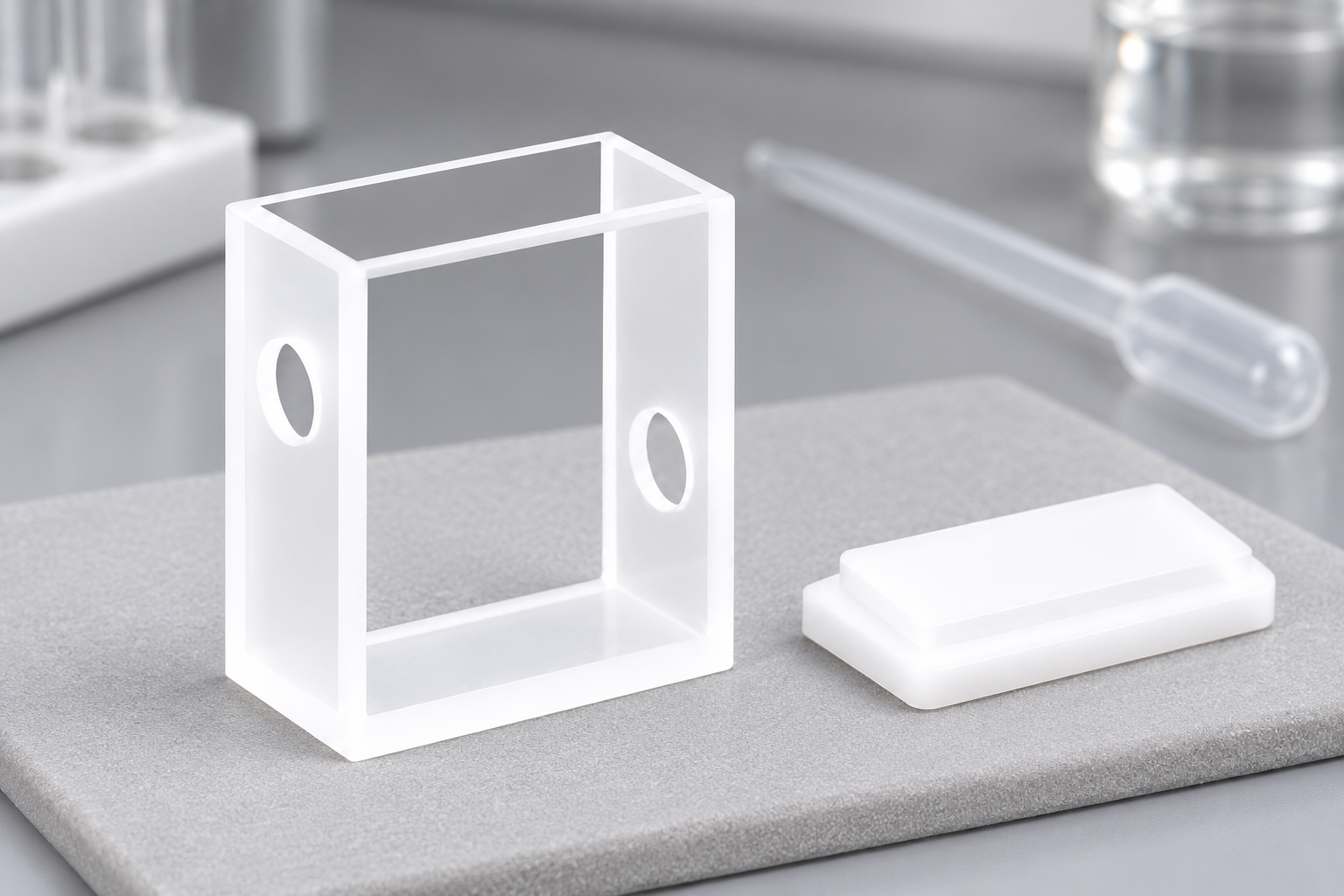
Give the lid overlap, contact and removal requirements, together with any accessory that approaches the wall openings. The lid needs its own access route.
If containment is required, define every opening and closure in the proposed assembly. The presence of a cover does not close the wall apertures by itself.
A custom aperture needs positional acceptance
For example, retaining the nominal path while moving an access axis could suit an existing fixture. MQ would need the fixture datums, mating dimensions and required clear window to review that change.
Agree aperture size and position, wall geometry and any closure or optical checks for the ordered part. The drawing should make the critical axis easy to inspect.
Structure reference and specification points
Download the structure reference (PDF)
Can the wall holes be described as electrode ports?
Only if that function is defined and the mating arrangement is reviewed. The reference establishes apertures, not a qualified electrode or sealing assembly.
Send a drawing or the mating-part details
Send the hole axes and mating items on a section through the cell. MQ can review access without reducing the requirement to a hole diameter.
- Aperture axes from base and optical datums
- Opening roles and mating-item sections
- Holder clearance on both sides
- Lid fit, removal and any closure requirements
- Positional, optical and assembly acceptance
Modified designs are reviewed for the project. The drawing, supplied parts, quantity, inspection scope, price and preparation or production time are agreed in the quotation.
Details to settle for the ordered configuration
Aperture dimensional references, mating function, sealing and instrument compatibility require agreement.


Recent Comments