
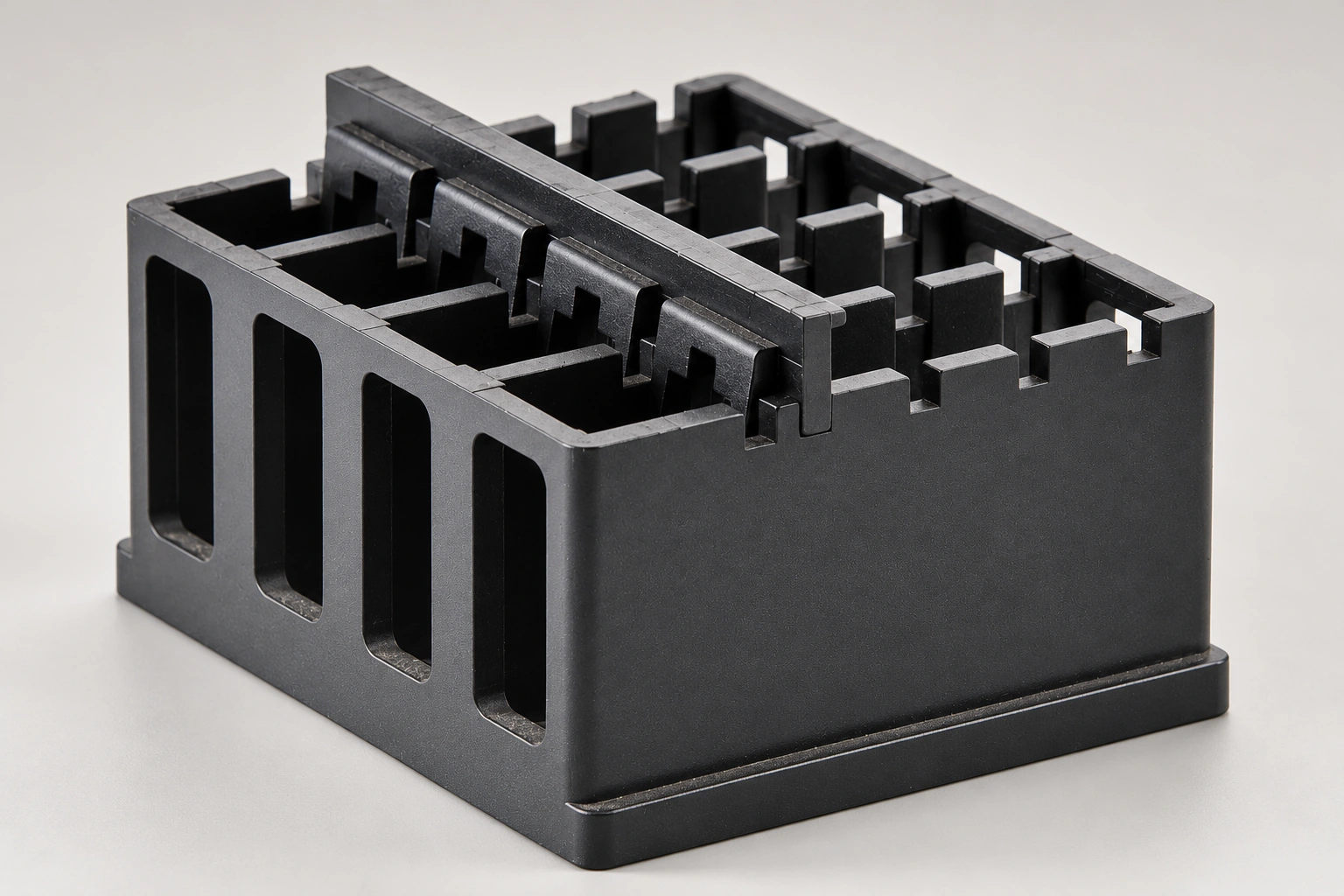
Adjustable Cuvette Rack: Setting Slots for Different Cell Bodies
Custom Design Guides · MQACC001
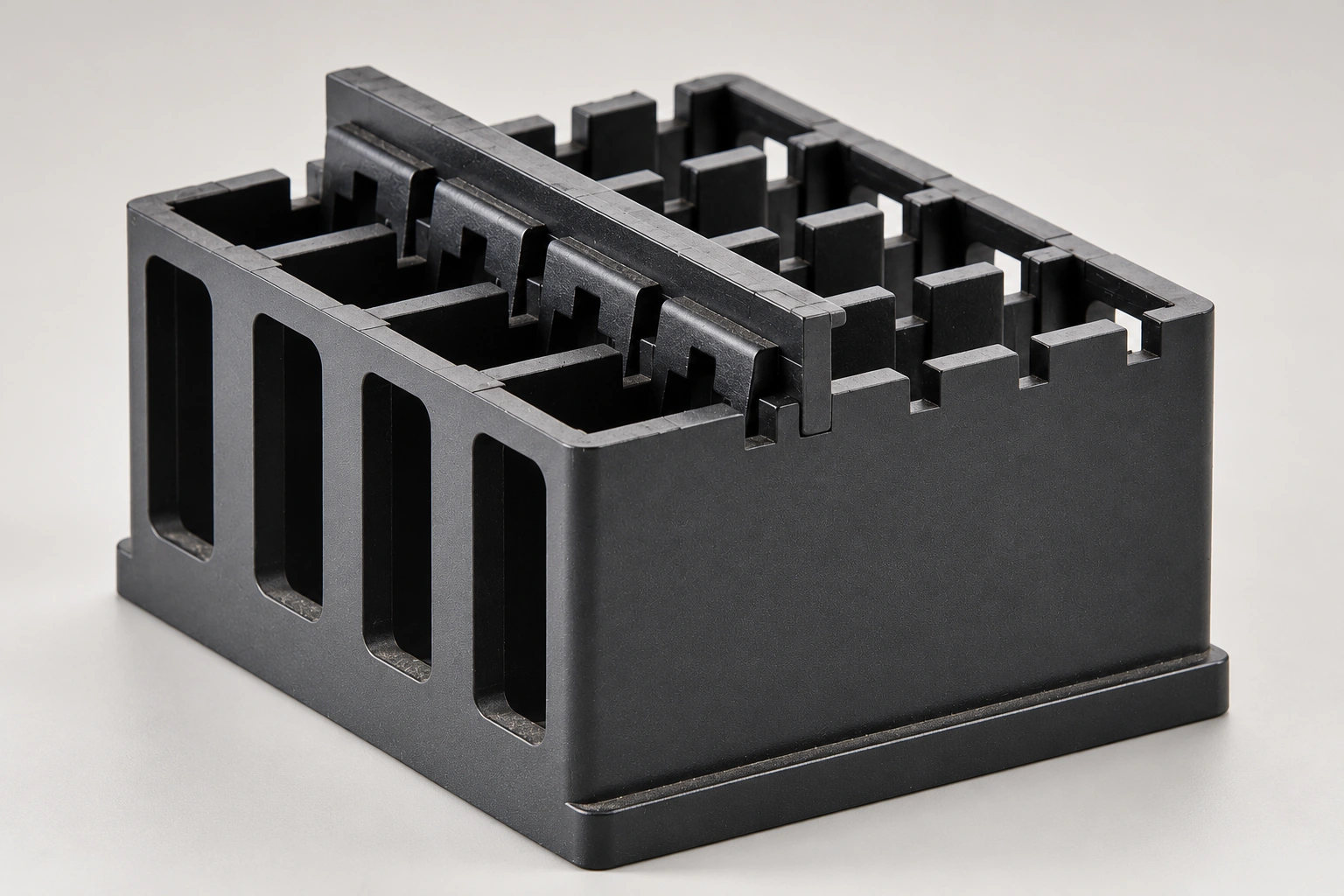
A rack can make a set of cuvettes easier to organise without becoming part of the optical measurement. MQACC001 uses an adjustable four-slot arrangement for discussing bench storage and preparation.
The useful question is how each cell sits between the dividers and how it can be removed. An optical-path designation does not specify the outside width that a rack must accept.
In this guide: Configuration · Design comparison · Measure the cell where the rack supports it · Leave room to take one cell out · A custom rack starts with the bench workflow · Keep the optical holder as a separate interface · Enquiry
The configuration discussed here
What changes from the simpler form?
Adjustable dividers change a fixed bench-storage arrangement into one that can be laid out around the actual cells. That flexibility adds a spacing and retrieval decision; it does not turn the rack into an optical holder.
Measure the cell where the rack supports it
Send the outside section at the proposed contact height, including any shoulders, caps or projecting tubes. A divider that clears the body may still interfere with a fitting when the cell is lowered into position.
Show which faces can touch the rack. Leave the windows and any delicate connections out of the support arrangement where the method requires them to remain untouched.
Leave room to take one cell out
Maximum packing density is not always the most useful spacing. An operator needs access to lift the selected cell without catching its neighbour or pulling on a cap or tube.
For a mixed set, give the actual cell sequence and indicate the larger components. A plan view of the loaded rack is often clearer than a request to accommodate several path lengths.
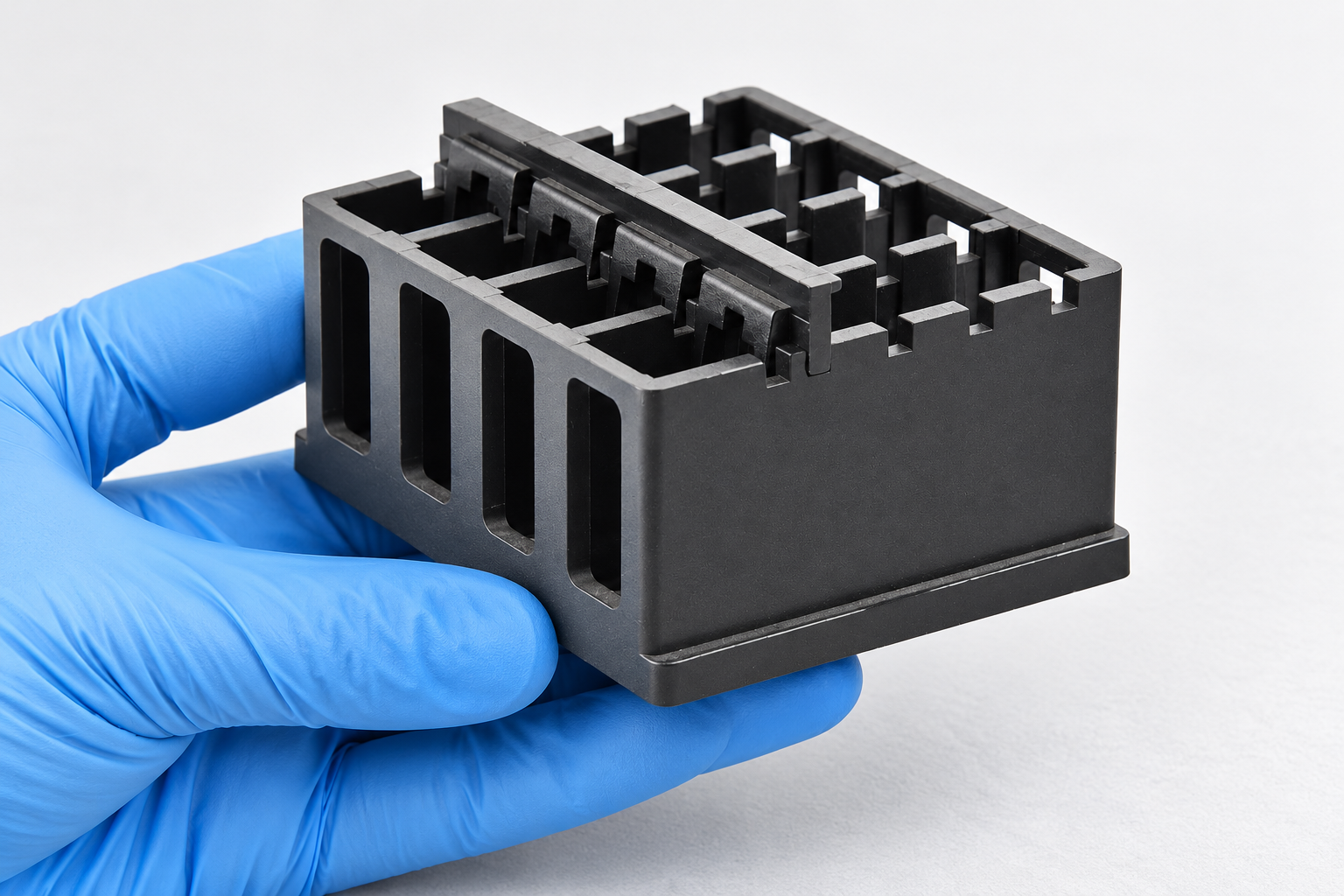
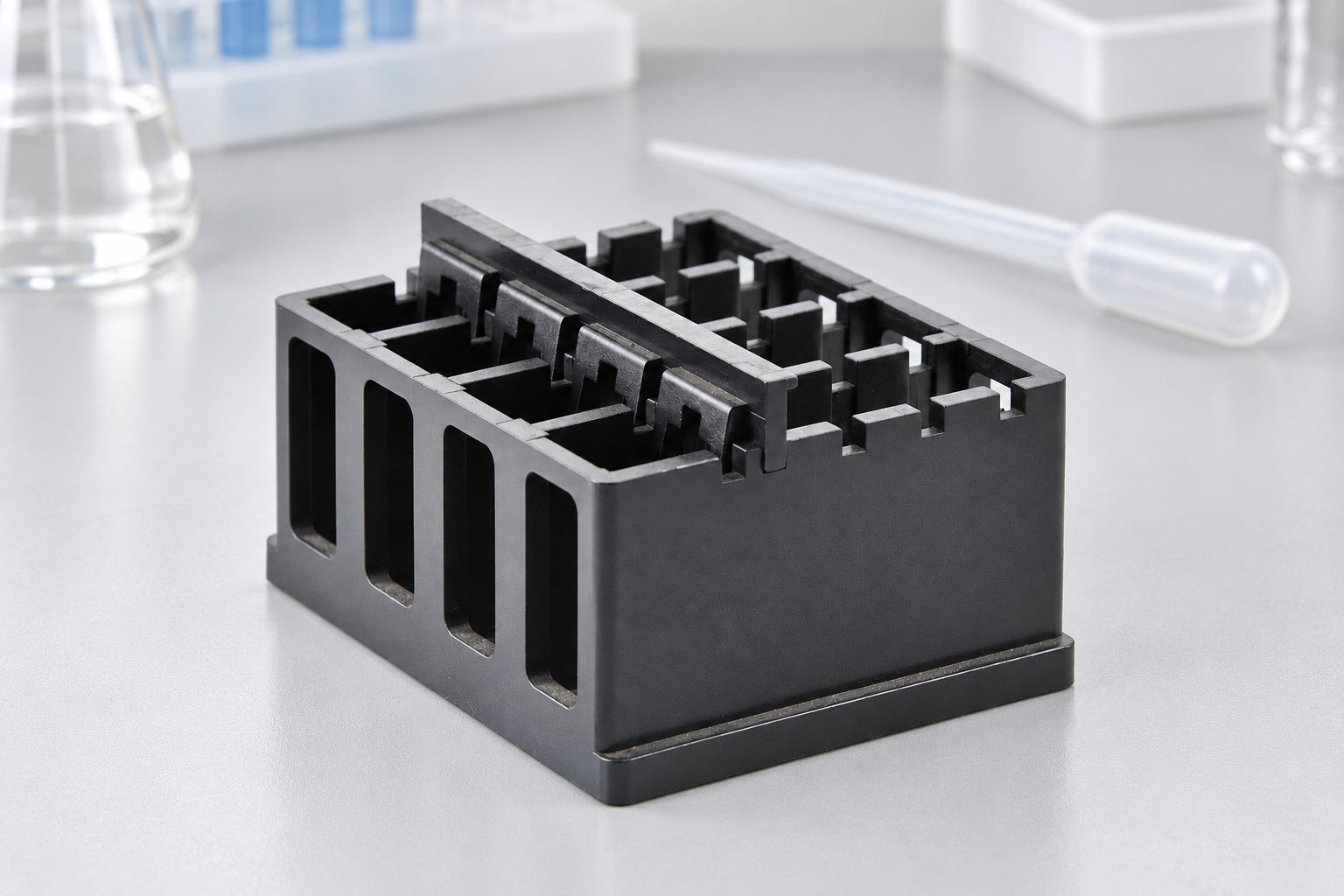
A custom rack starts with the bench workflow
For example, a laboratory may want four positions to separate prepared samples from cells awaiting cleaning. Position labels, divider spacing and the preferred loading direction can be reviewed around that sequence.
Describe whether the rack stays on a bench or is moved while loaded. Those are different support tasks; the reference does not establish a carrying or restraint rating.
Keep the optical holder as a separate interface
A bench rack does not establish beam alignment, instrument seating or measurement height. If the need is to locate a thin cell in a spectrometer, supply the instrument-holder drawing and discuss a purpose-designed adapter instead.
For this rack, a relevant acceptance check is a trial arrangement with the intended cells: seating, clearance, adjustment and retrieval. Agree any material, cleaning or dimensional requirements with that use in mind.
Structure reference and specification points
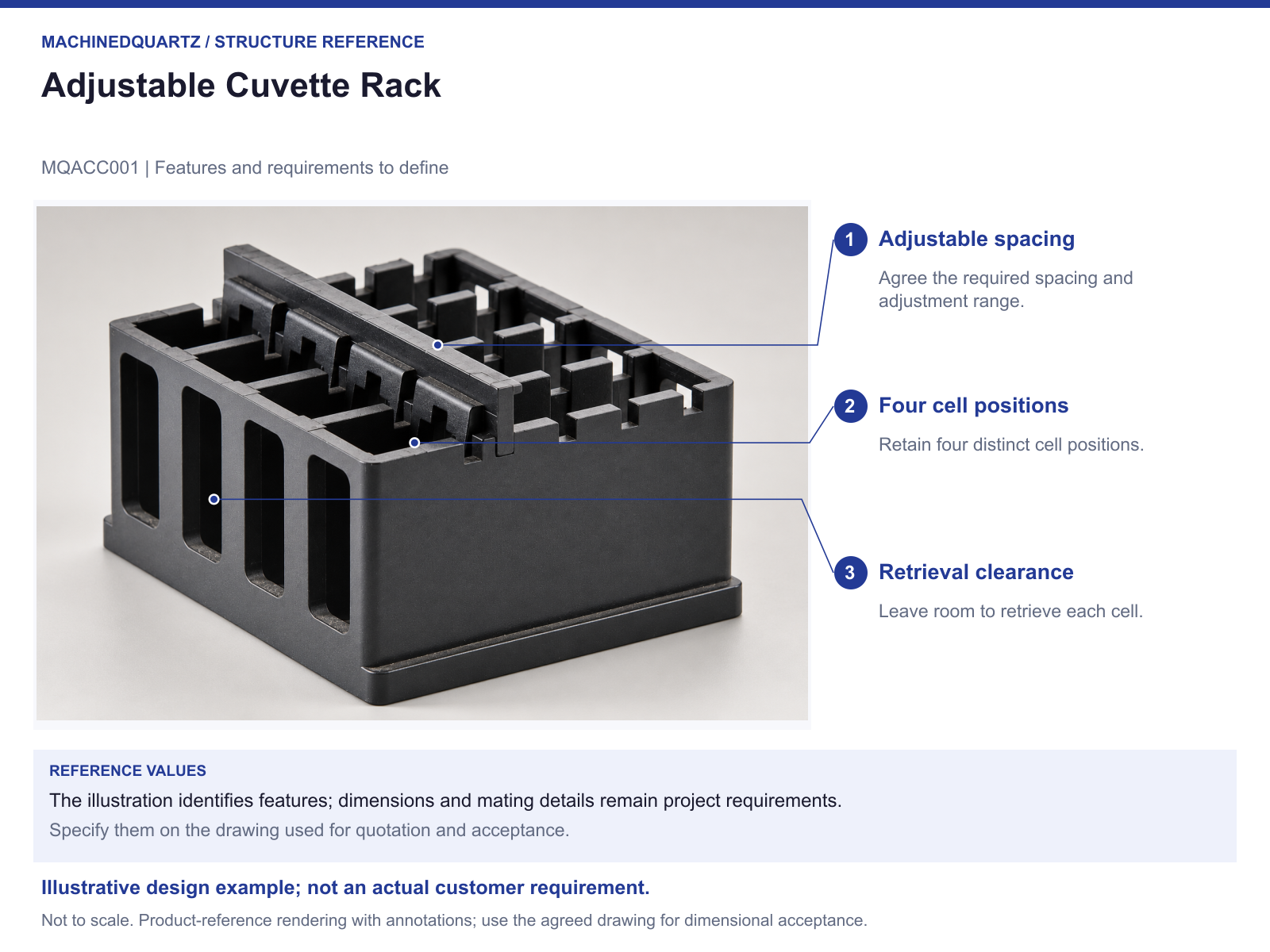
Download the structure reference (PDF)
Can I select the rack from the cuvettes' path lengths alone?
No. Provide the outside dimensions and projections at the support position. The internal optical path and the rack's mechanical opening describe different features.
Send a drawing or the mating-part details
Send a simple layout of the loaded rack with one cell section. MQ can then review divider spacing and access around the actual set.
- Outside sections and projections of all four cells
- Allowed contact faces and support height
- Required slot spacing and adjustment
- Loading, retrieval and bench arrangement
- Material, cleaning and trial-fit requirements
Modified designs are reviewed for the project. The drawing, supplied parts, quantity, inspection scope, price and preparation or production time are agreed in the quotation.
Details to settle for the ordered configuration
Exact adjustment range, material, restraint and dimensional acceptance require agreement. This is a bench-rack discussion, not an instrument-fit claim.



Recent Comments