
Bulb-Style Polarimeter Tube: Specifying Filling Orientation and End Windows
Custom Design Guides · MQOPT001
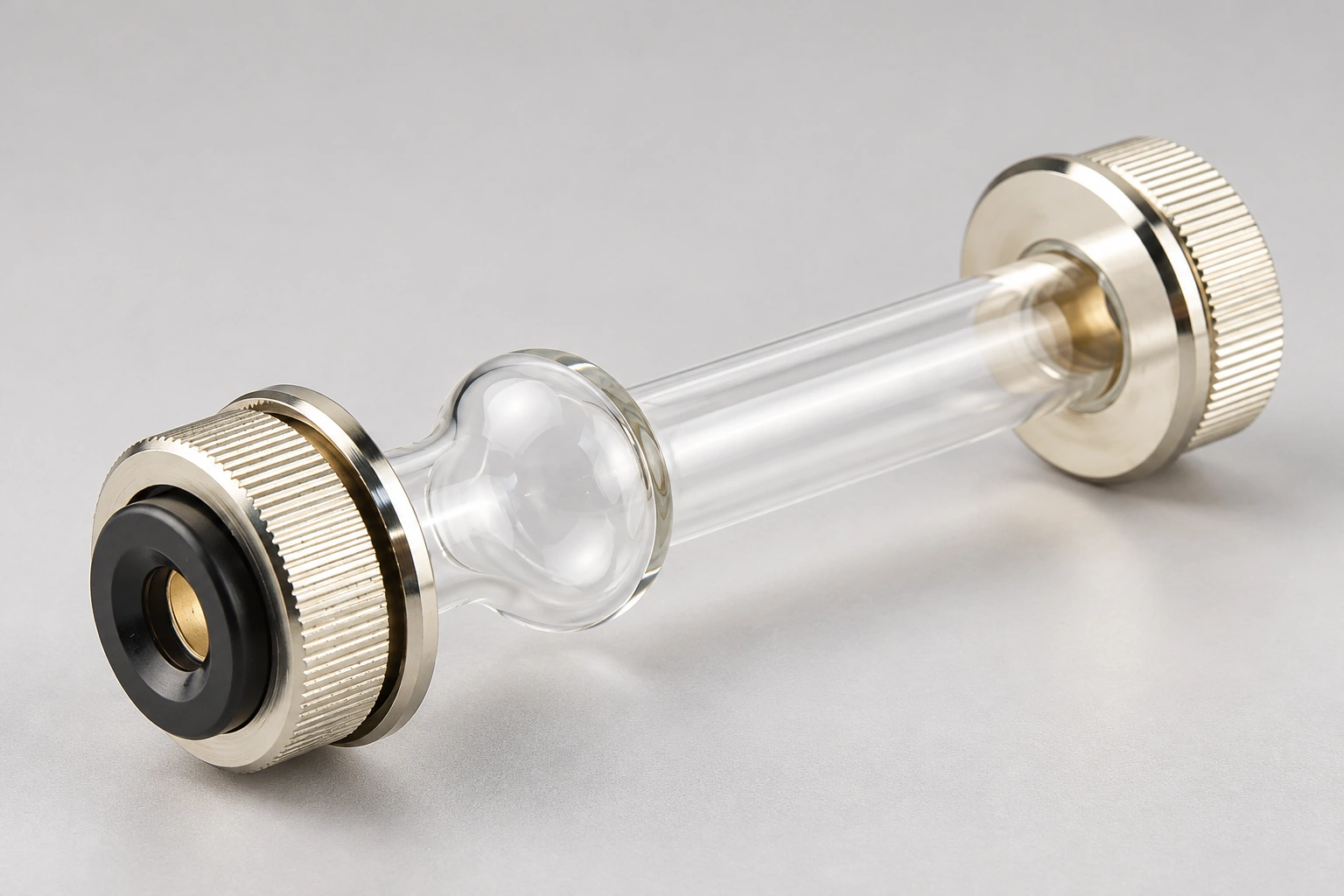
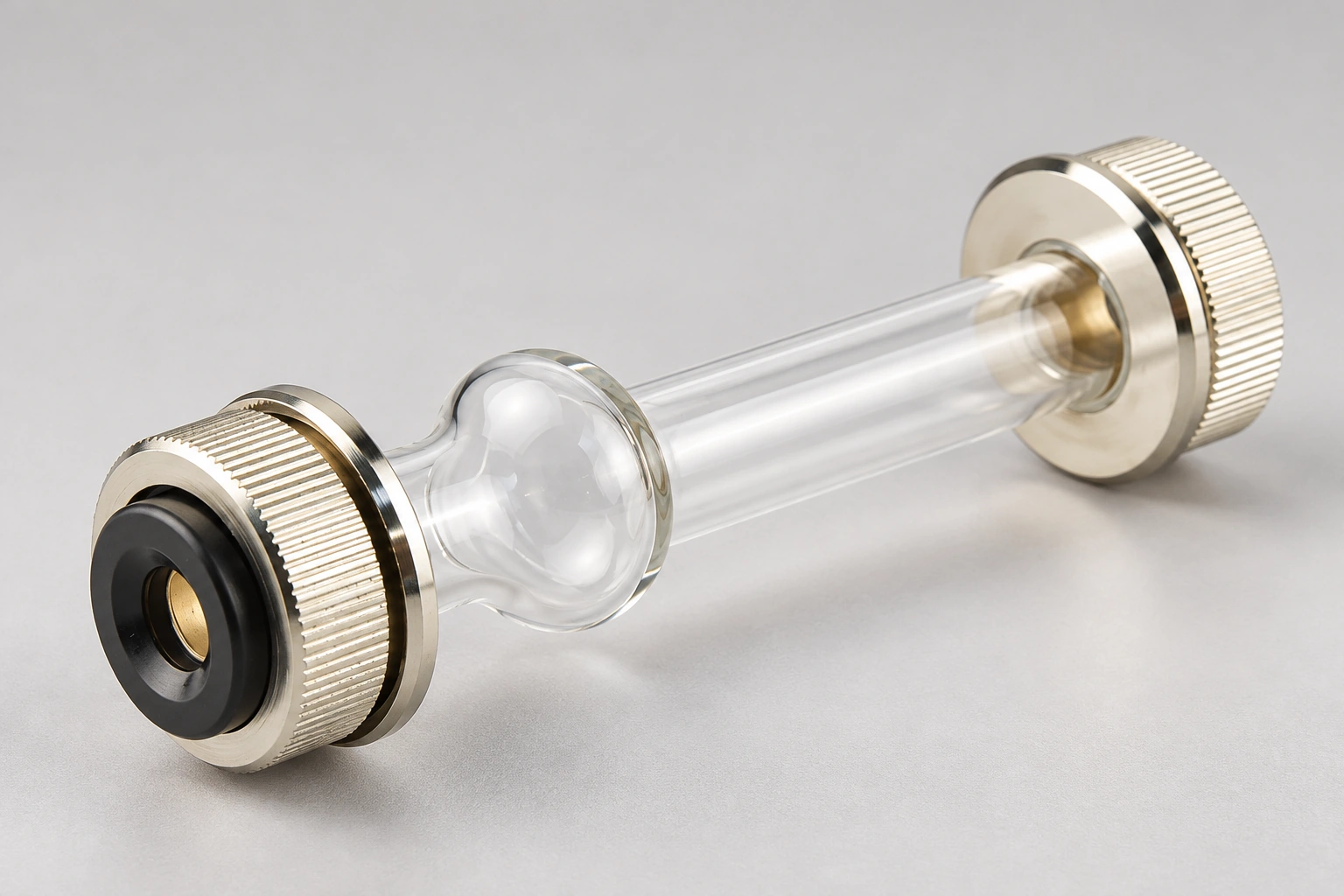
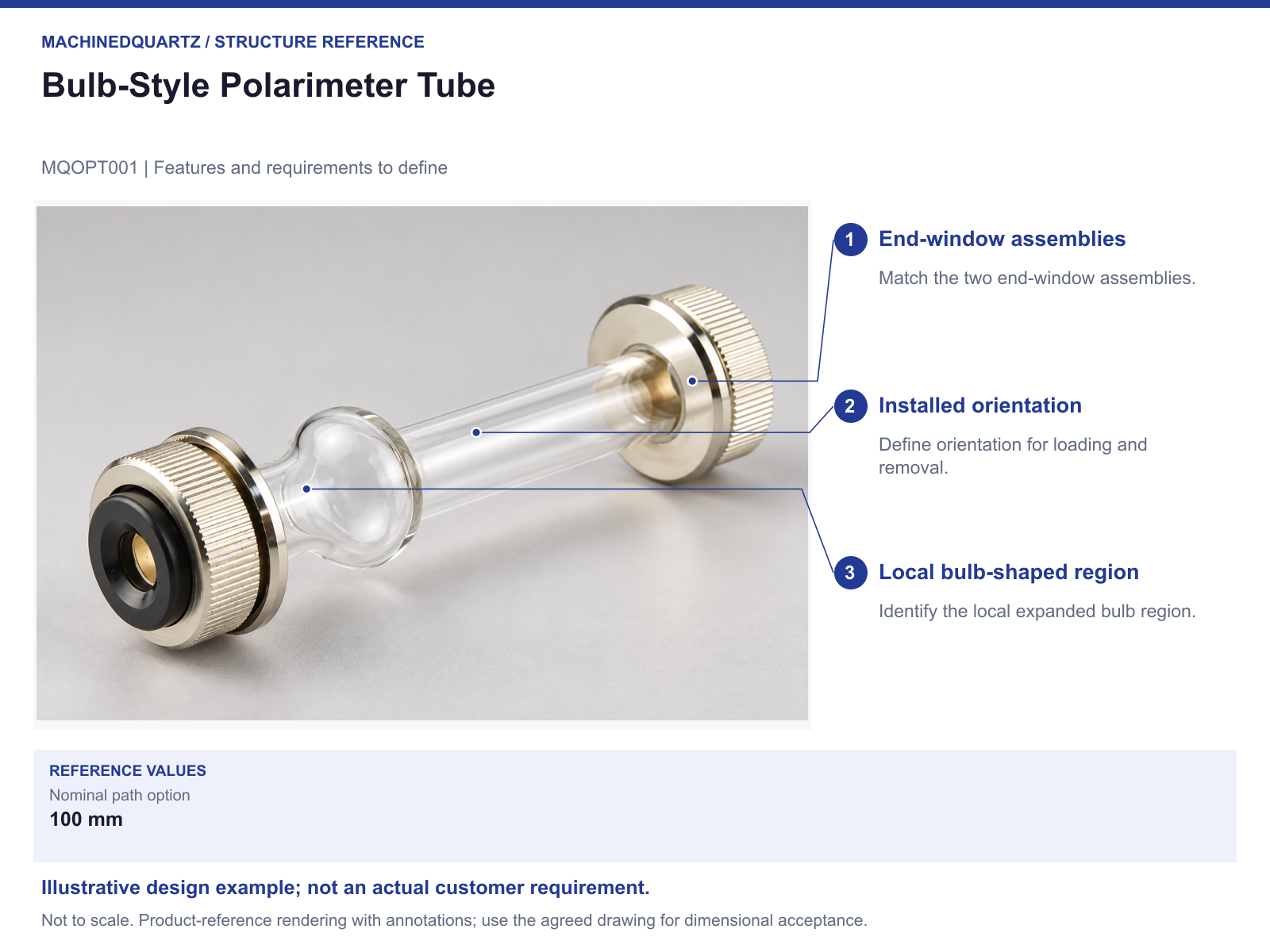
MQOPT001 is the nominal 100 mm bulb-style polarimeter-tube option. A locally expanded chamber near one end distinguishes it from a plain narrow tube and from the circulation style elsewhere in this series.
The expanded section needs a stated role in the actual loading method. Its shape alone does not establish automatic bubble removal, a minimum working sample amount or a temperature-control function.
In this guide: Configuration · Design comparison · Mark the bulb's orientation in the installed setup · Describe the liquid path before assigning a benefit · Retain the ends while reviewing the expanded region · Keep the window and seal components identifiable · Enquiry
The configuration discussed here
What changes from the simpler form?
A local bulb changes the tube's outside envelope near an end assembly. The nominal optical path remains a separate reference; the bulb's purpose and its clearance should be defined rather than inferred from its shape.
Mark the bulb's orientation in the installed setup
Show how the tube sits in the instrument and which end and side remain accessible during filling. A local expansion can be presented differently when the whole tube is rotated, so the intended orientation belongs in the drawing.
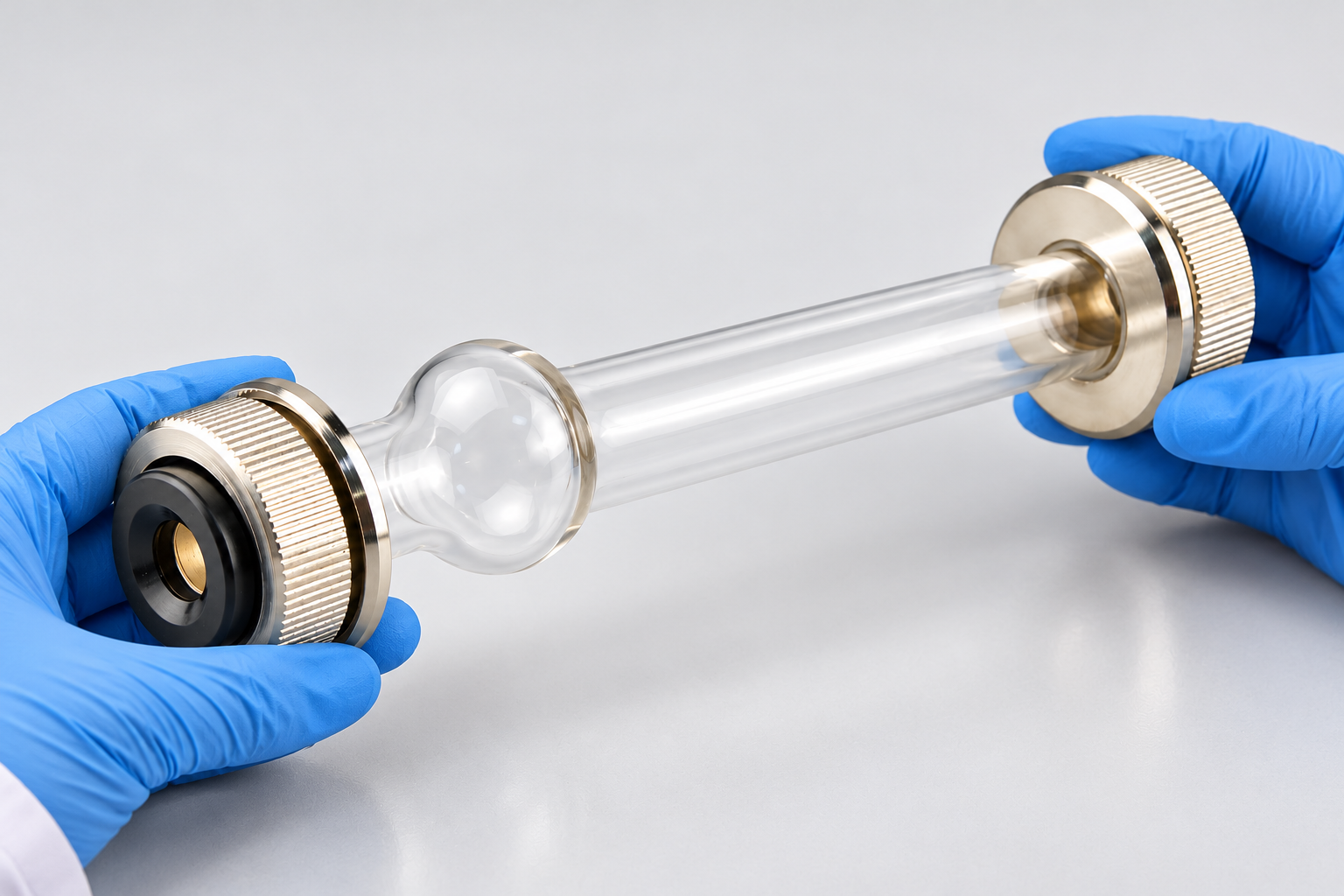
If loading happens outside the instrument, describe how the filled tube is moved to its support. The complete sequence helps define the needed access without assigning an unverified function to the bulb.
Describe the liquid path before assigning a benefit
Give MQ the actual filling route and the region that needs to remain occupied by sample for the method. State any bubble-related acceptance requirement directly. Do not treat a bulb outline as evidence that the requirement has been met.
The nominal path is also distinct from the amount prepared for loading. For interpreting optical rotation, path and concentration are method quantities; IUPAC's definition does not establish the loading volume or calibration of this tube.
IUPAC Gold Book: optical rotatory power
Retain the ends while reviewing the expanded region
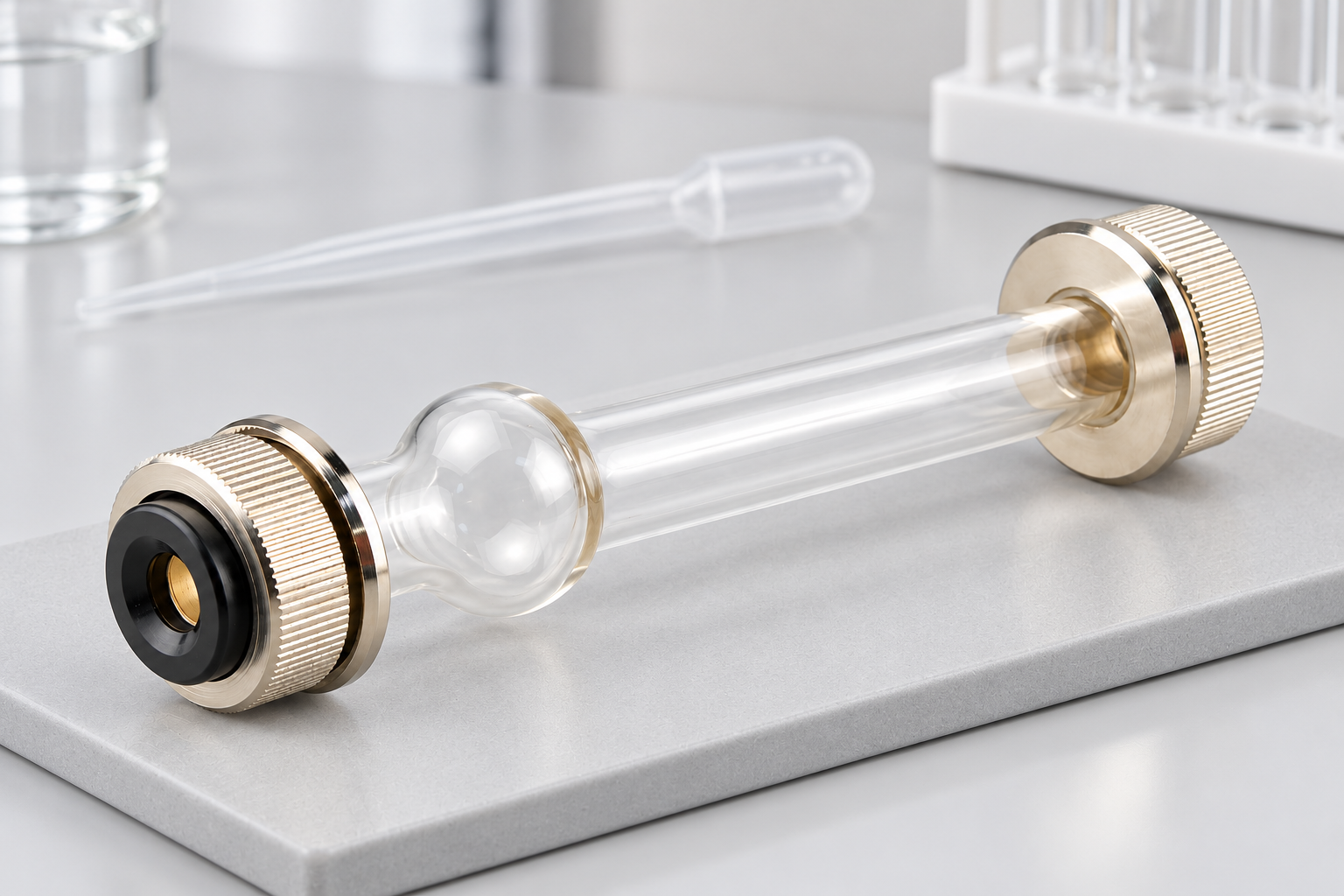
For a hypothetical custom version, a customer might need the same instrument-end interfaces but a different available space around the expansion. Supply the seating references, bulb envelope restriction and filling-tool approach together.
MQ can review the proposed chamber and tube arrangement. A shape change is not an automatic substitute for verifying the filling behaviour and the optical path required by the method.
Keep the window and seal components identifiable
Record the window, seal and closure parts in the proposed set. A shared nominal length does not prove that they can be transferred from another tube. Provide the existing components or drawings where interchangeability is needed.
Any required path, fit, leakage or loading check should identify the actual conditions and record. The style label does not supply a general accuracy or performance qualification.
Structure reference and specification points
Download the structure reference (PDF)
Does the bulb guarantee that bubbles leave the optical region?
No such result is established by the reference shape. State the loading procedure and required optical-region condition, then agree how the proposed arrangement should be assessed.
Send a drawing or the mating-part details
Send the installed orientation and filling sequence with the tube request. MQ can discuss the local expansion as part of that procedure rather than a guaranteed result on its own.
- Method and nominal path requirement
- Instrument seating and tube orientation
- Filling route, sample availability and bubble-related criterion
- Expanded-region envelope and end-assembly references
- Conditions, quantity and required checks
Modified designs are reviewed for the project. The drawing, supplied parts, quantity, inspection scope, price and preparation or production time are agreed in the quotation.
Details to settle for the ordered configuration
Bulb function under the actual method, minimum working amount, path accuracy, seal materials and instrument fit require confirmation.


Recent Comments