
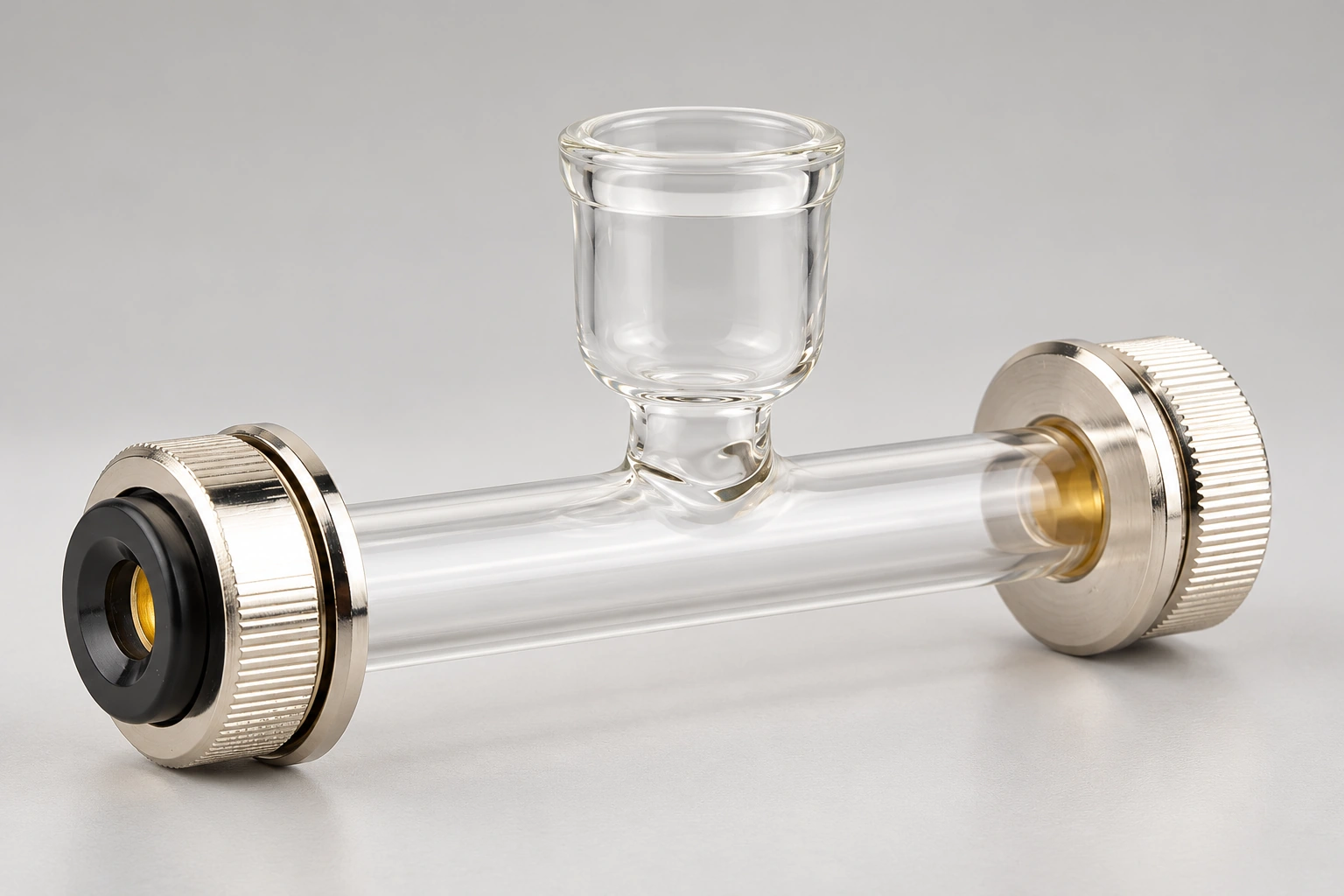
Funnel-Style Polarimeter Tube: Planning Top Filling and End Windows
Custom Design Guides · MQOPT011
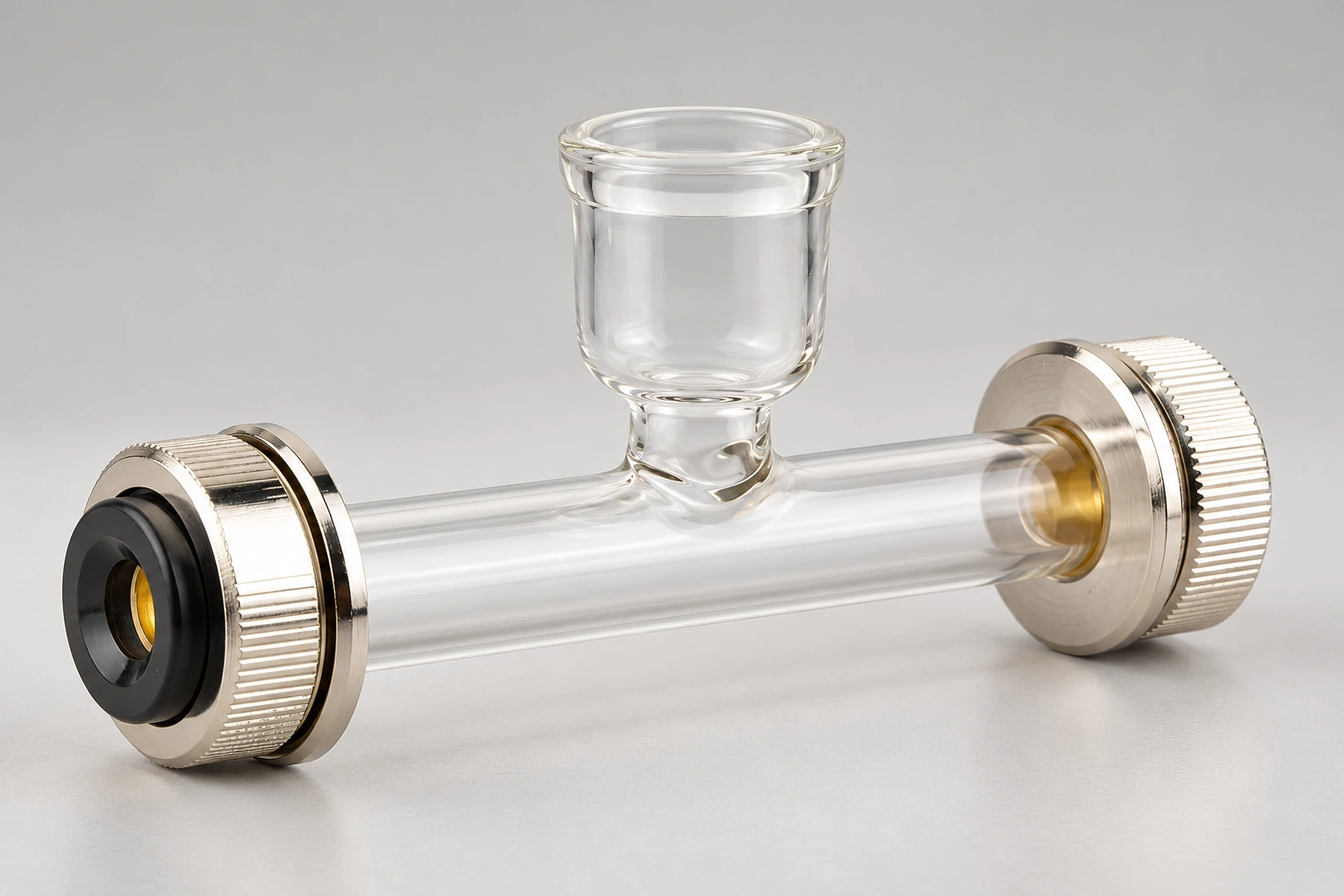
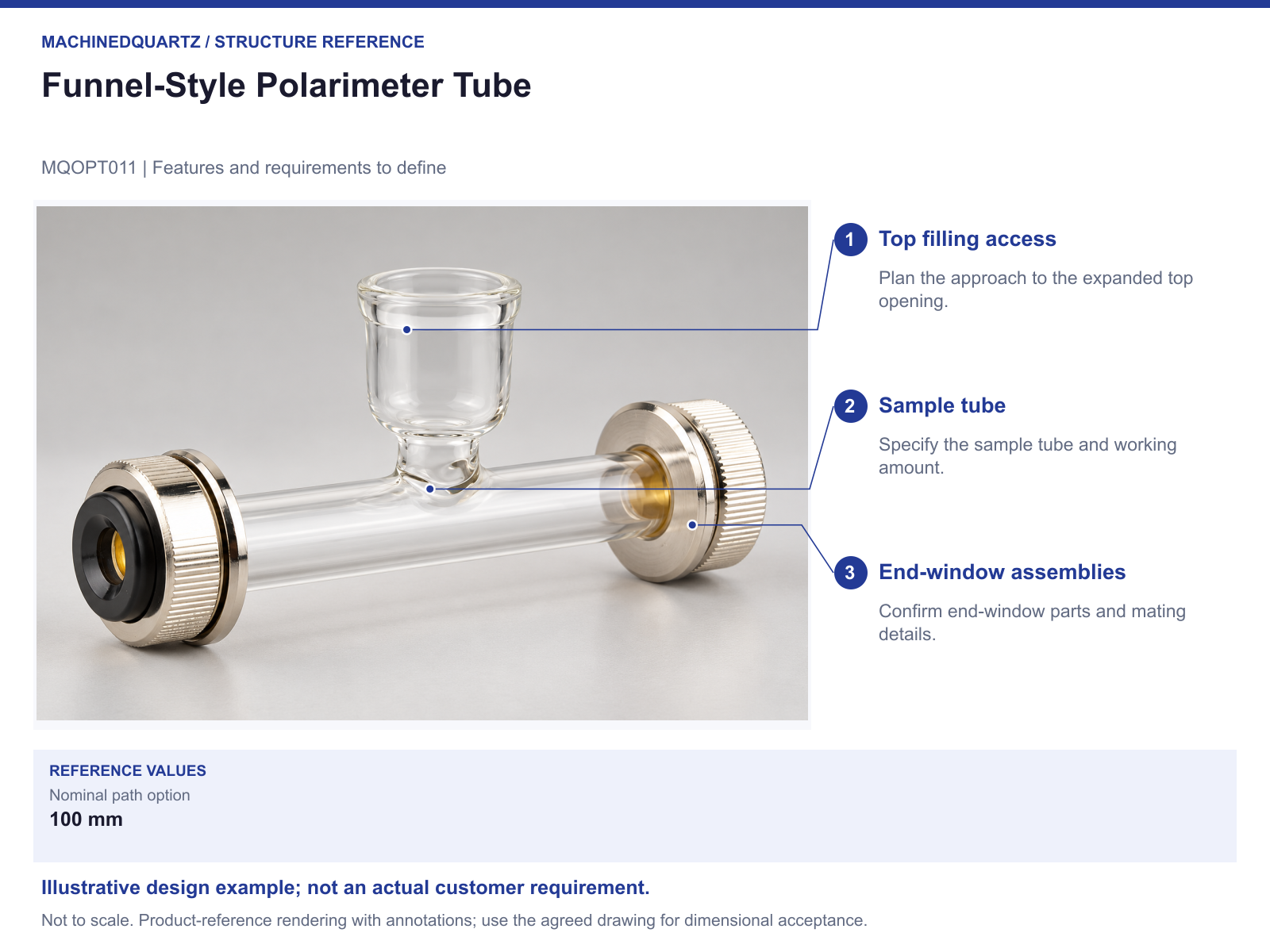
MQOPT011 adds an upward funnel-style filling opening to a polarimeter sample tube. The selected option is identified by a nominal 100 mm measurement path. The top opening is the feature that distinguishes its loading arrangement.
A filling funnel does not by itself make the tube a continuous-flow cell, an automatic bubble-removal device or a temperature-controlled assembly. Describe the loading procedure and instrument space that the opening needs to serve.
In this guide: Configuration · Design comparison · Leave space above the filling opening · The nominal path is only one method condition · Keep the end-window assembly in the request · A different filling opening needs a stated reason · Enquiry
The configuration discussed here
What changes from the simpler form?
The funnel-style opening adds a loading feature above the polarimeter tube while retaining end-window assemblies. Loading access, installed height and end fit therefore need to be reviewed independently of the nominal path.
Leave space above the filling opening
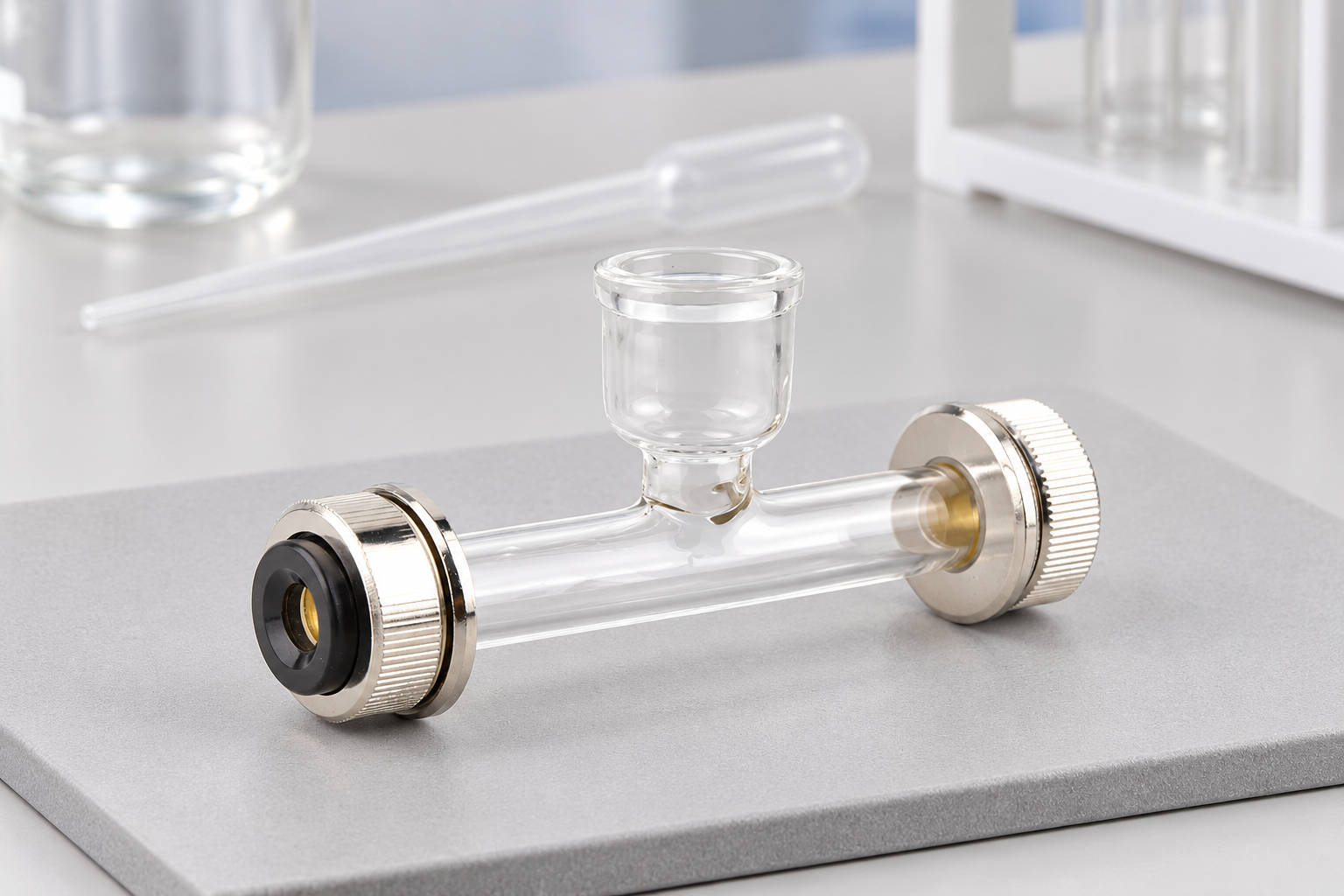
Show the tube in its instrument position and the approach used to add sample. The funnel may be accessible on an open bench but restricted by a lid or nearby optical component after installation. Include the cover and tool envelope in the sketch.
If filling is performed outside the instrument, describe how the filled tube is moved into position. That sequence raises a different access question from filling while the tube is already seated.
The nominal path is only one method condition
Optical rotation is interpreted with the sample path and concentration; the measurement conditions also need to be stated. The IUPAC definition provides the general relationship, not a path-calibration or performance result for this tube.
Give MQ the actual method, wavelength, temperature requirement and instrument references. The 100 mm option label does not establish the complete fit, optical acceptance or minimum sample amount.
IUPAC Gold Book: optical rotatory power
Keep the end-window assembly in the request
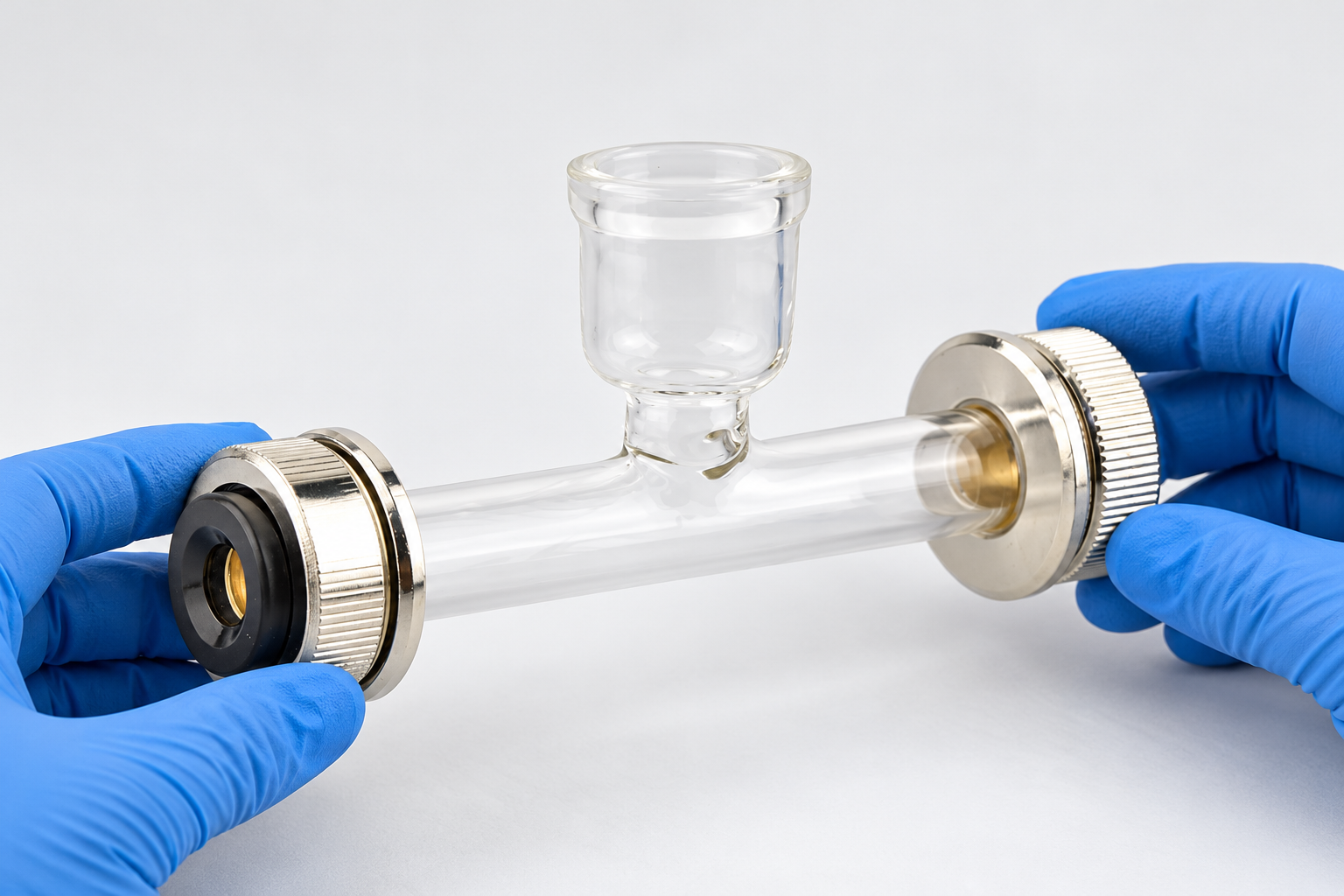
The sample meets windows and seals as well as the tube body. Identify the end-window dimensions, closure parts and materials that the method requires. A shared tube length does not establish that parts from another polarimeter tube are interchangeable.
For a replacement, send the existing end assembly or its drawing. Note any required window orientation, clear aperture or documentation rather than inferring it from the visible cap.
A different filling opening needs a stated reason
For example, a customer might need to retain the nominal sample path while reducing the height of the filling feature to clear a cover. Mark the available space and the filling tool, and identify the end interfaces that must stay unchanged.
MQ can discuss the proposed opening and assembly before a drawing and quotation are agreed. Filling volume, bubble behaviour, leakage and operating limits remain requirements to review rather than results established by the funnel shape.
Structure reference and specification points
Download the structure reference (PDF)
Can the funnel opening be used as an online flow connection?
That function is not established by the reference configuration. If continuous delivery and removal are required, specify both connections, the intended route and operating conditions for a separate review.
Send a drawing or the mating-part details
Send the instrument and filling-area sketch with the tube reference. MQ can then review the top opening without treating it as an unspecified flow or temperature-control feature.
- Method, nominal path and required measurement conditions
- Instrument seating and cover clearance
- Filling-tool approach and loading sequence
- End-window, seal and closure interfaces
- Working sample requirement, quantity and documentation
Modified designs are reviewed for the project. The drawing, supplied parts, quantity, inspection scope, price and preparation or production time are agreed in the quotation.
Details to settle for the ordered configuration
Actual path verification, minimum working amount, window and seal materials, instrument fit and operating limits need confirmation.


Recent Comments