
(MQQCU017) JGS1 Quartz Dual-Path Sample Cell, 5 / 1 mm, 80 µL

$239.00
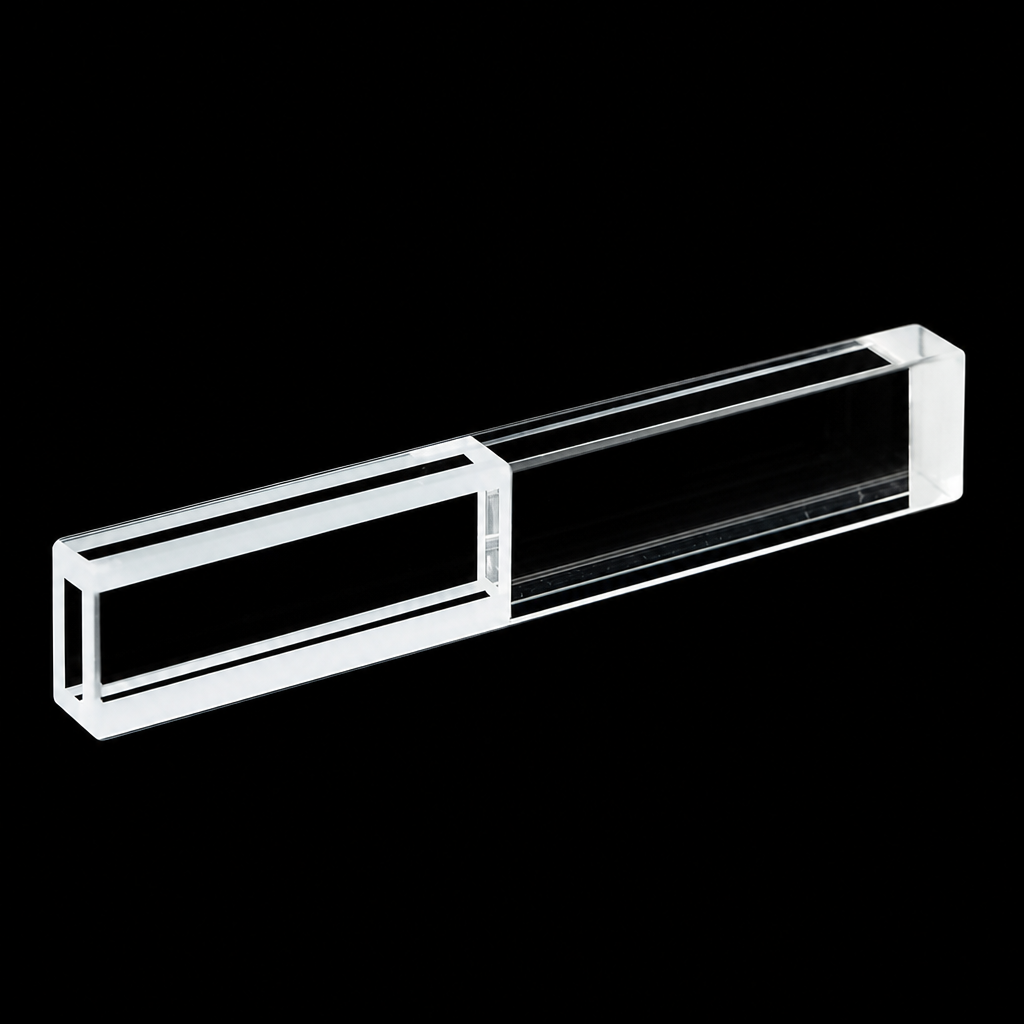
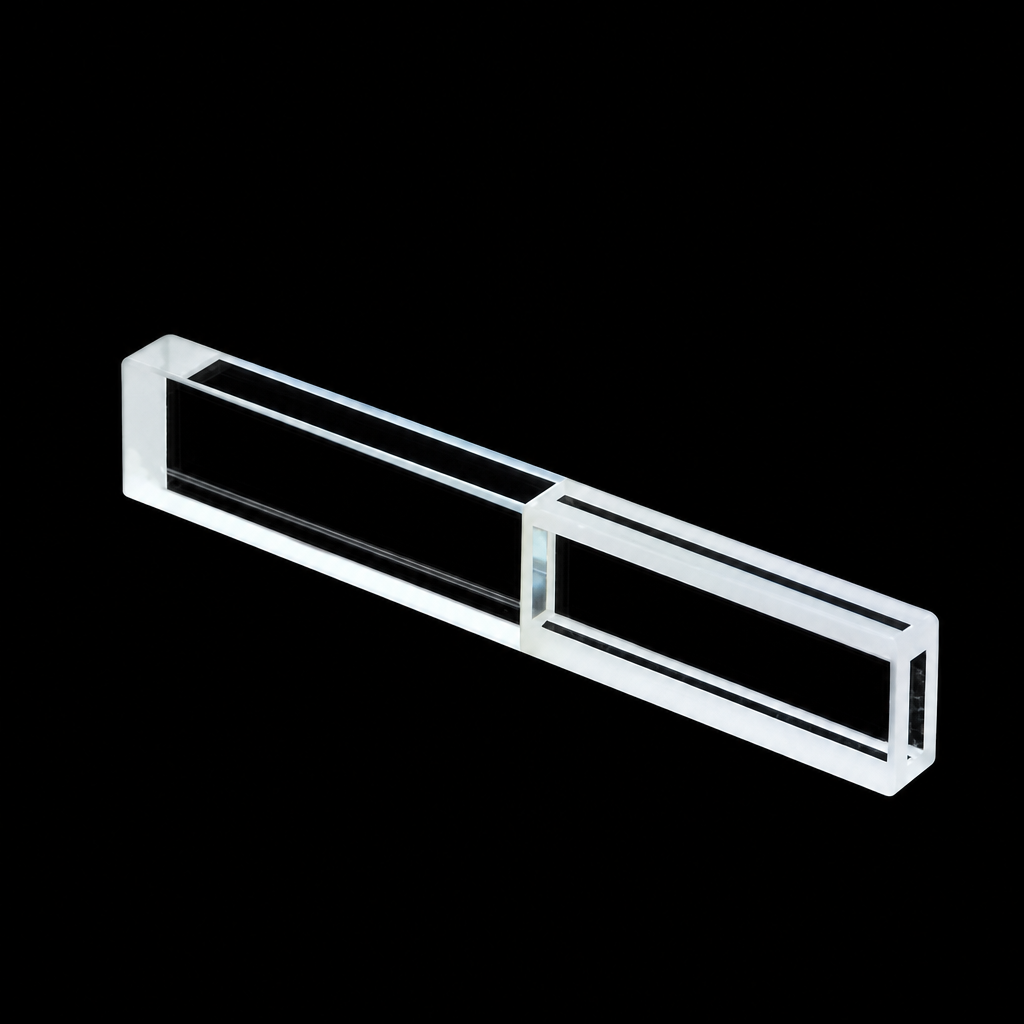
JGS1 quartz rectangular sample cell with two stated optical path directions, 5 mm and 1 mm, in one Four-Way Light body for UV/Vis work. Its open-top access and 80 µL nominal capacity suit direct filling where the same slim cell may be turned to use either path. Sold as 1 piece.
In Stock
Description
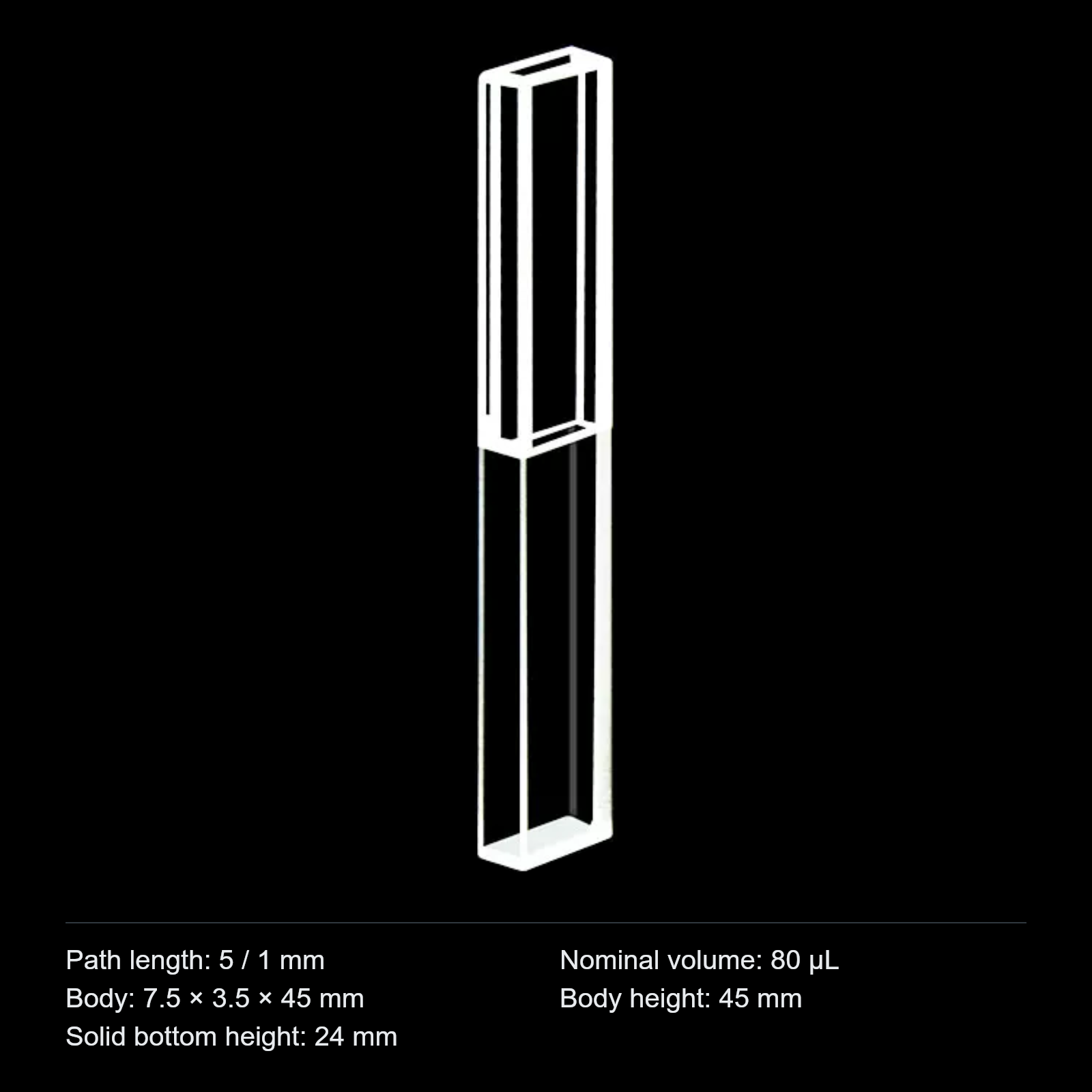
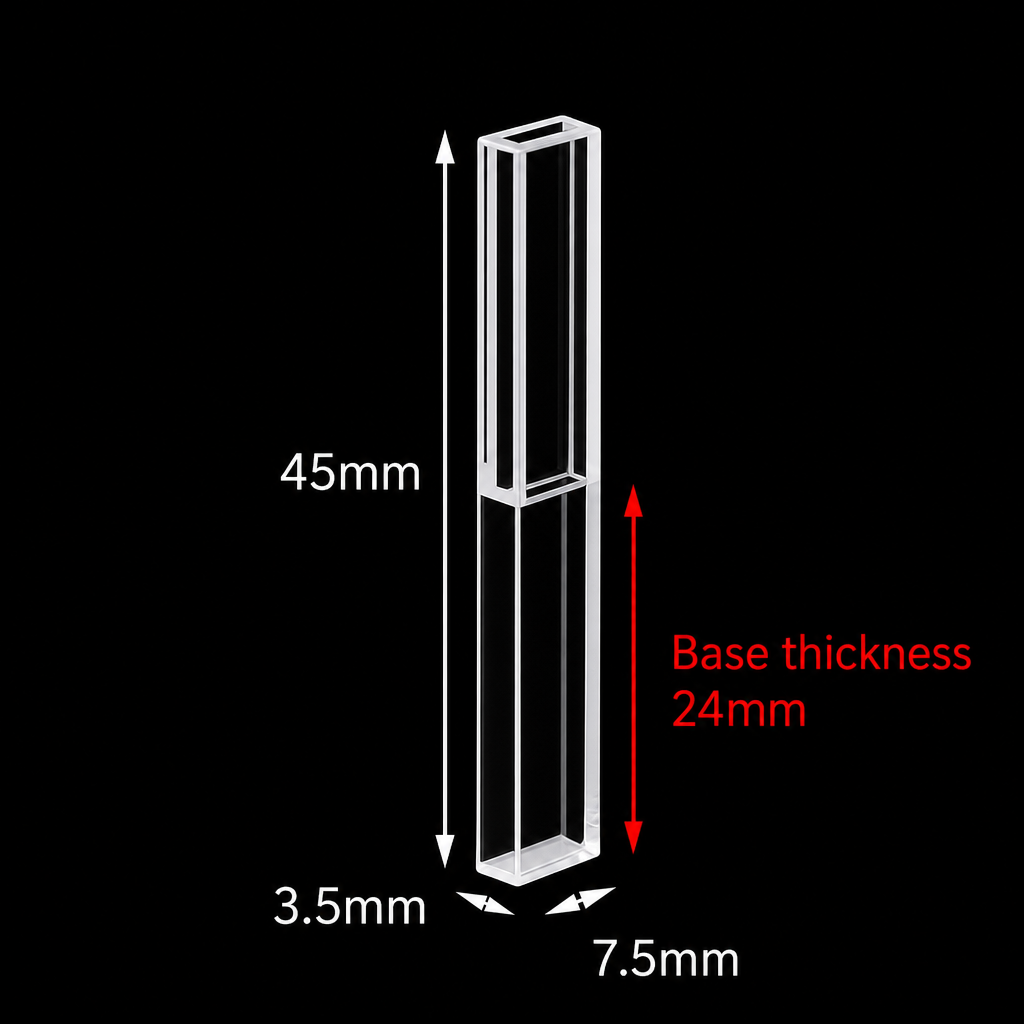
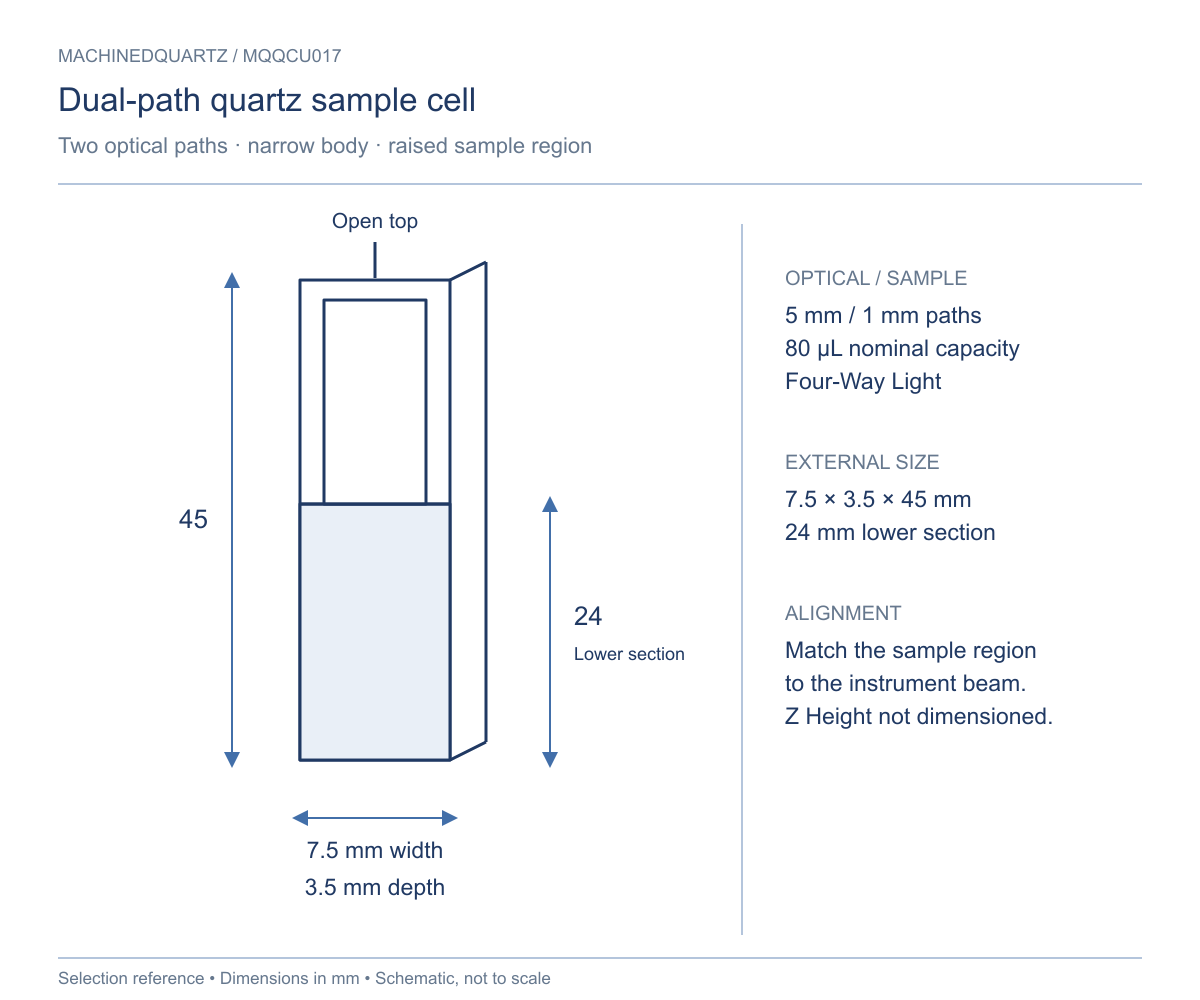
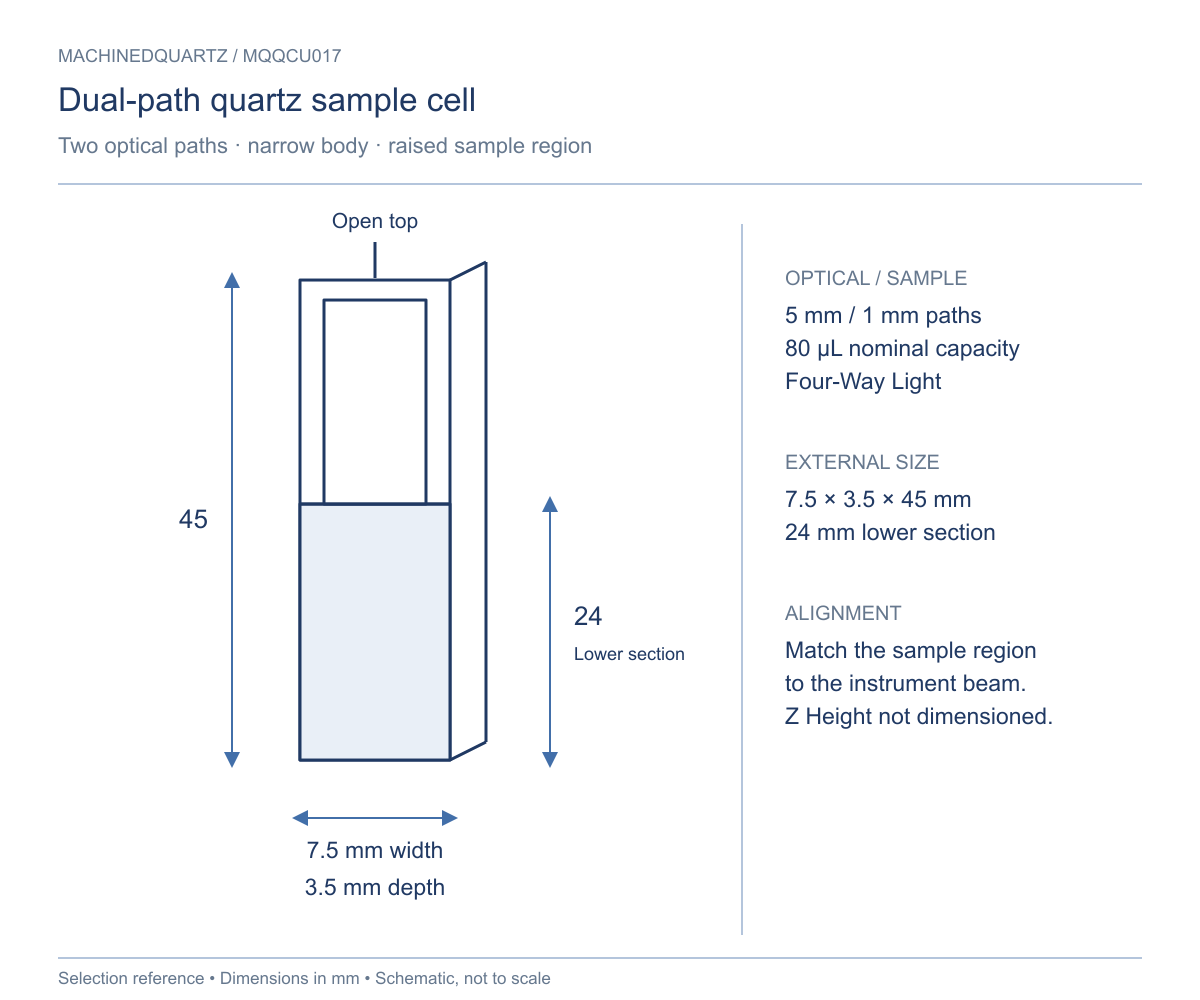
MQQCU017 is a JGS1 quartz rectangular sample cell for UV/Vis spectroscopy with two stated optical path directions in one body: 5 mm and 1 mm. Its open-top format gives direct access to a small sample region, while the slim 7.5 × 3.5 mm base and marked 24 mm lower section matter when you need to check holder clearance and beam position before use.
- Path Length
- 5 mm / 1 mm (dual path)
- Sample Volume (Nominal)
- 80 µL
- Opening Configuration
- Open Top
Selection Specifications
| Product Kind | Cuvette |
|---|---|
| Cell Type | Rectangular Sample Cell |
| Measurement Mode | UV/Vis Spectroscopy |
| Path Length | 5 mm / 1 mm (dual path) |
| Light Transmission Configuration | Four-Way Light |
| Wavelength Range — Lower Limit | 200 nm |
| Wavelength Range — Upper Limit | 2500 nm |
| Sample Volume (Nominal) | 80 µL |
| External Dimensions | 7.5 × 3.5 × 45 mm |
| Body Height | 45 mm |
| Base Dimensions | 7.5 × 3.5 mm |
| Material | Quartz |
| Material Grade | JGS1 |
| MQ Grade | Molded 83 |
| Opening Configuration | Open Top |
| Bottom Thickness | 24 mm |
| Pack Quantity | 1 Piece |
Choose this option
Choose MQQCU017 when your method needs two defined transmission directions in the same small open-top cell. The 5 mm and 1 mm stated paths let you select the orientation that matches your measurement, and the 80 µL nominal capacity suits work where only a small amount of sample is prepared. The supplier describes this body as fused-integrated construction, which is useful here because the compact dual-path cell is supplied as one fixed open-top body rather than an assembled plate set.
View the English selection reference. Also available in the product gallery.
What makes this option different
- Two stated path lengths in one cell: rotate the cell to use either the 5 mm or 1 mm transmission direction, instead of changing to a different body.
- Four-Way Light layout: optical access from four sides supports orientation-based UV/Vis use in fixtures that can present the beam through either stated path.
- Open-top sample access: fill directly from above and inspect the liquid level and bubbles without tubing or a built-in closure.
- 80 µL nominal capacity: this compact sample region is suited to small prepared volumes, but it is still important to confirm that the illuminated area is fully covered in your chosen orientation.
- Fused-integrated construction: the supplier describes the cell body with this joining term, which fits a compact fixed-body design rather than a removable-cover assembly.
- 24 mm lower section shown on the drawing: this body feature helps you assess how the cell will sit in a holder, but it is not a stated beam-centre height.
Using this cell
Fill the cell from the top and place it in the holder in the orientation that gives the path length your method requires. Keep the same orientation for blank and sample measurements, because turning the cell changes which stated path is in use.
With a small nominal volume, filling technique matters. Load the sample carefully, check that the beam passes through a fully liquid-covered region, and remove visible bubbles before measurement. The 80 µL figure is the nominal cell volume, not a stated minimum working volume.
First-use check
- Inspect the optical faces and top rim for chips, residue or handling marks.
- Place the cell in the holder and confirm that it sits securely without twisting or force.
- Run a blank in the intended orientation and verify beam alignment before loading the sample.
Fit and optical alignment
Check your holder opening and support points against the full 7.5 × 3.5 × 45 mm body before ordering. This is a slim rectangular cell, so clamp width, slot width and side clearance can all matter in tight fixtures.
The drawing also marks a 24 mm lower section. Use that feature to assess how the body sits in your support, but do not treat it as Z Height. If your instrument has a fixed beam position or a tight optical aperture, verify beam-centre alignment separately.
Solvents and cleaning
Quartz is used here for UV/Vis measurement, but the chemical limits of this exact assembly are not established. If your sample or cleaning routine involves aggressive chemicals, elevated temperature or long contact time, check suitability for the complete wetted construction before use.
Keep hydrofluoric acid away from quartz. Avoid hot strong alkalis and abrasive cleaning methods, and clean the optical faces gently with non-abrasive optical tissue.
Compare fabrication options if your application needs a different construction approach.
Included with this option
Sold as 1 piece.
Availability and ordering
Order this specification directly, or contact us to check current availability and dispatch timing. If temporarily unavailable, additional preparation or production time may be needed. For a required delivery date, contact us before checkout; preparation or production is separate from carrier transit and customs clearance.
Discuss a custom version
For a different design, send a drawing or describe the change you need. Custom JGS1 quartz enquiries are assessed separately from this listed specification; feasibility, quantity, price and timing are confirmed in the project quotation.
Additional information
| Weight | 120 g |
|---|
You must be logged in to post a review.
You may also like…
Related products
11%
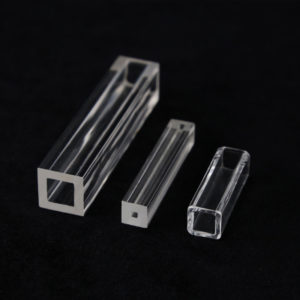
(MQC376) Quartz Capillary Tubes (Square), Outer Dim.: 1x1mm, Inner Dim.: 0.2×0.2mm, Length: 25mm
Original price was: $19.00.$17.00Current price is: $17.00.15%
(MQC380) Quartz Capillary Tubes (Square), Outer Dim.: 1x1mm, Inner Dim.: 0.6×0.6mm, Length: 50mm
Original price was: $28.00.$24.00Current price is: $24.00.15%
(MQC368) Quartz Capillary Tubes (Square), Outer Dim.: 0.9×0.9mm, Inner Dim.: 0.7×0.7mm, Length: 50mm
Original price was: $28.00.$24.00Current price is: $24.00.14%
Reviews
There are no reviews yet.