
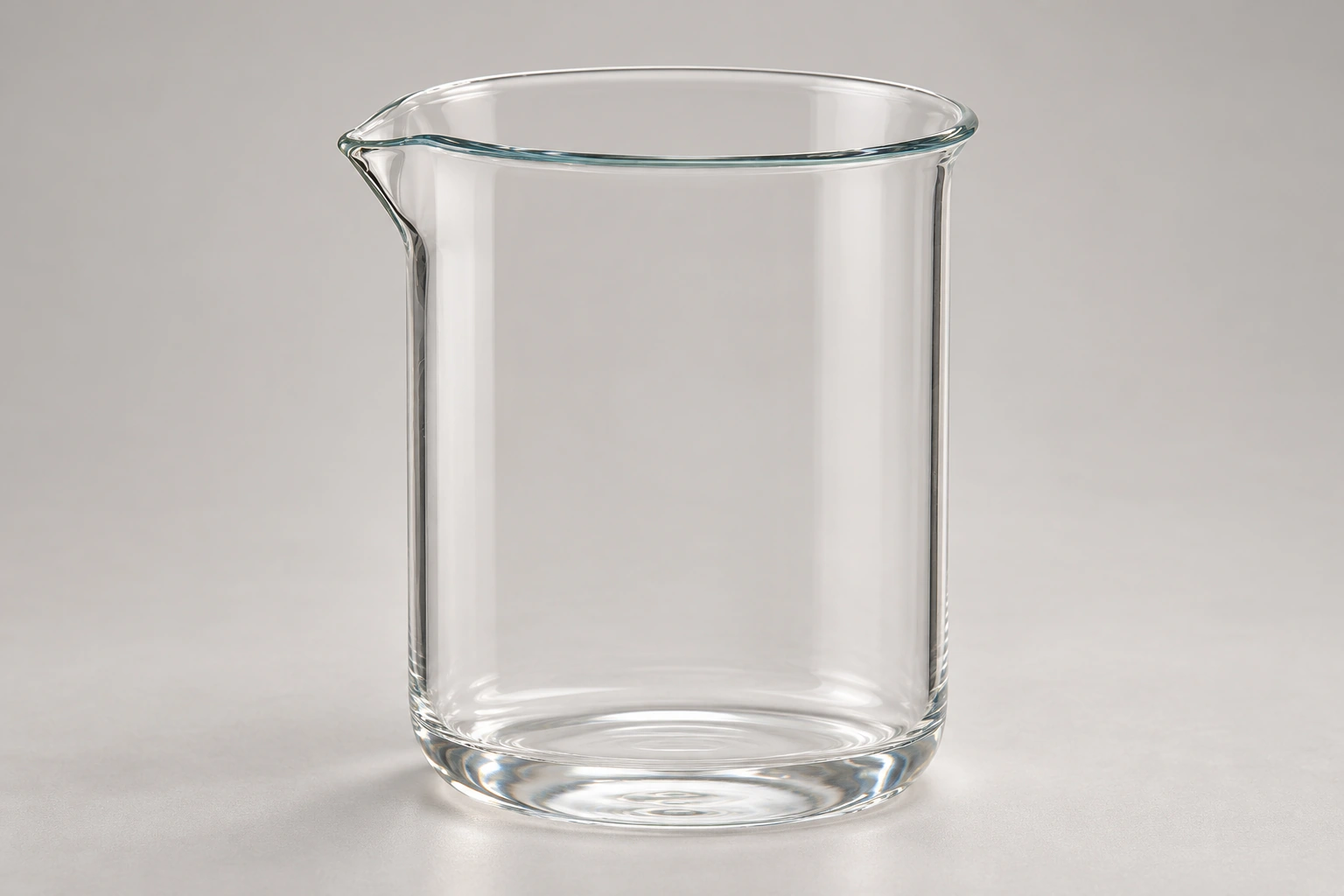
Quartz Beaker: Planning Filling, Mixing and Pouring
Custom Design Guides · MQQBK002
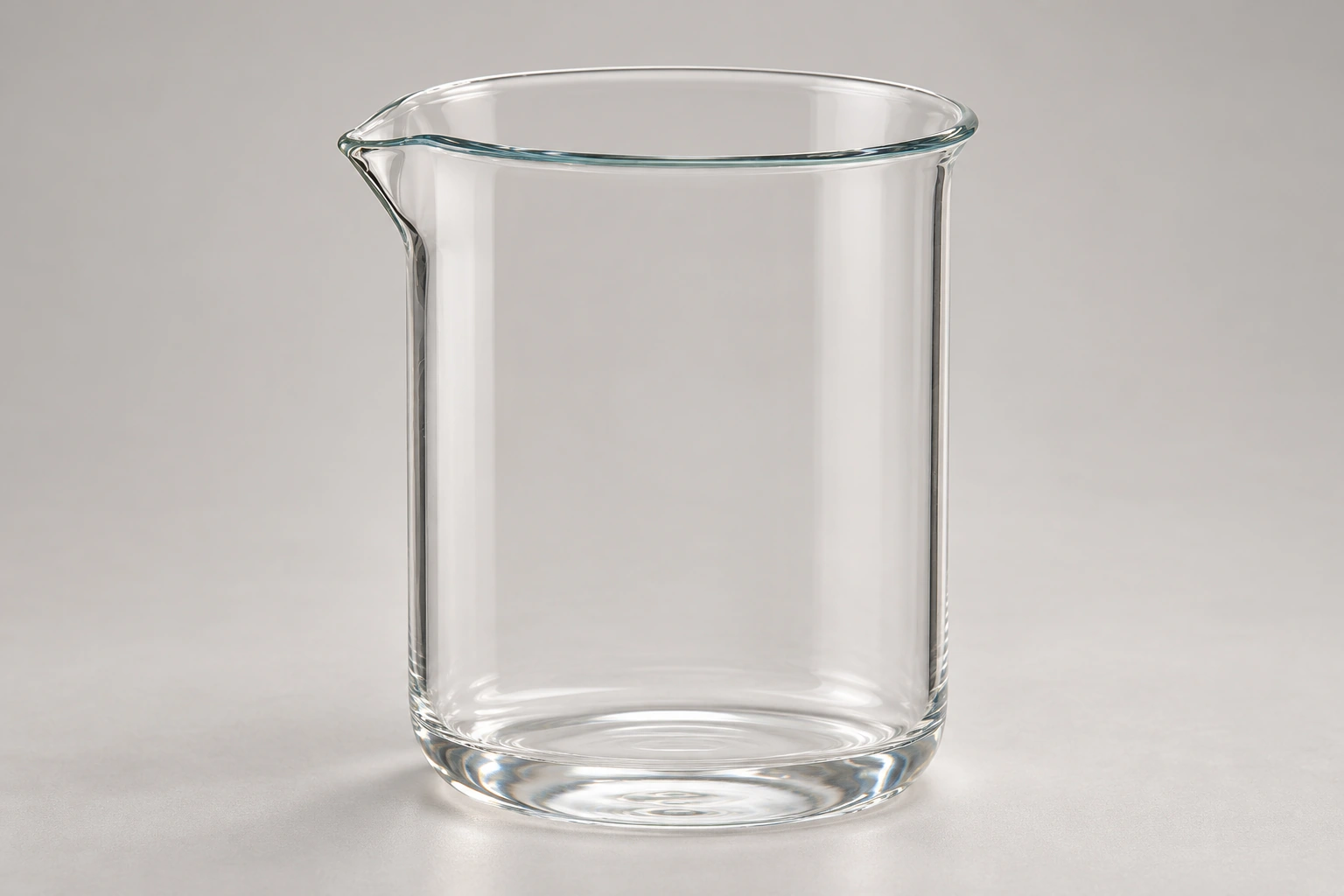
A wide opening and pouring lip make a beaker useful to discuss when a sample must be filled, combined and transferred before measurement. MQQBK002 is the 100 mL quartz option, shown with an open cylindrical body and approximate volume markings.
The useful working arrangement depends on the tool access, fill level and receiving container. The nominal size is only one part of that choice.
In this guide: Configuration · Design comparison · Work from the filling and transfer sequence · Make the mouth large enough for the actual tool · Approximate graduations are not a calibration claim · A custom lip or height needs the receiving setup · Enquiry
The configuration discussed here
What changes from the simpler form?
The open beaker keeps broad access to the sample while adding a directional pouring lip. Compared with a narrow-neck vessel, tool access is less confined, while exposure and the pouring route need to be considered in the method.
Work from the filling and transfer sequence
For example, a sample may be mixed in the beaker and then divided among several cuvettes. Show the filling tool, the intended working level and the containers receiving the sample. Leave enough room for the beaker to approach them in the intended orientation.
A pouring lip changes the local rim shape, but it does not establish a metered delivery result. If a particular transferred amount or recovery is important, describe the laboratory method and acceptance requirement separately.
Make the mouth large enough for the actual tool
Specify the opening needed for the tool or sample rather than copying an outside body diameter. A probe, spatula or cleaning tool can impose different access requirements from a simple liquid fill.
If the beaker sits in a holder, identify the support and the exposed rim. The same outside shape may fit a support while leaving the pouring lip facing an obstruction. Mark orientation when it matters to the operation.
Approximate graduations are not a calibration claim
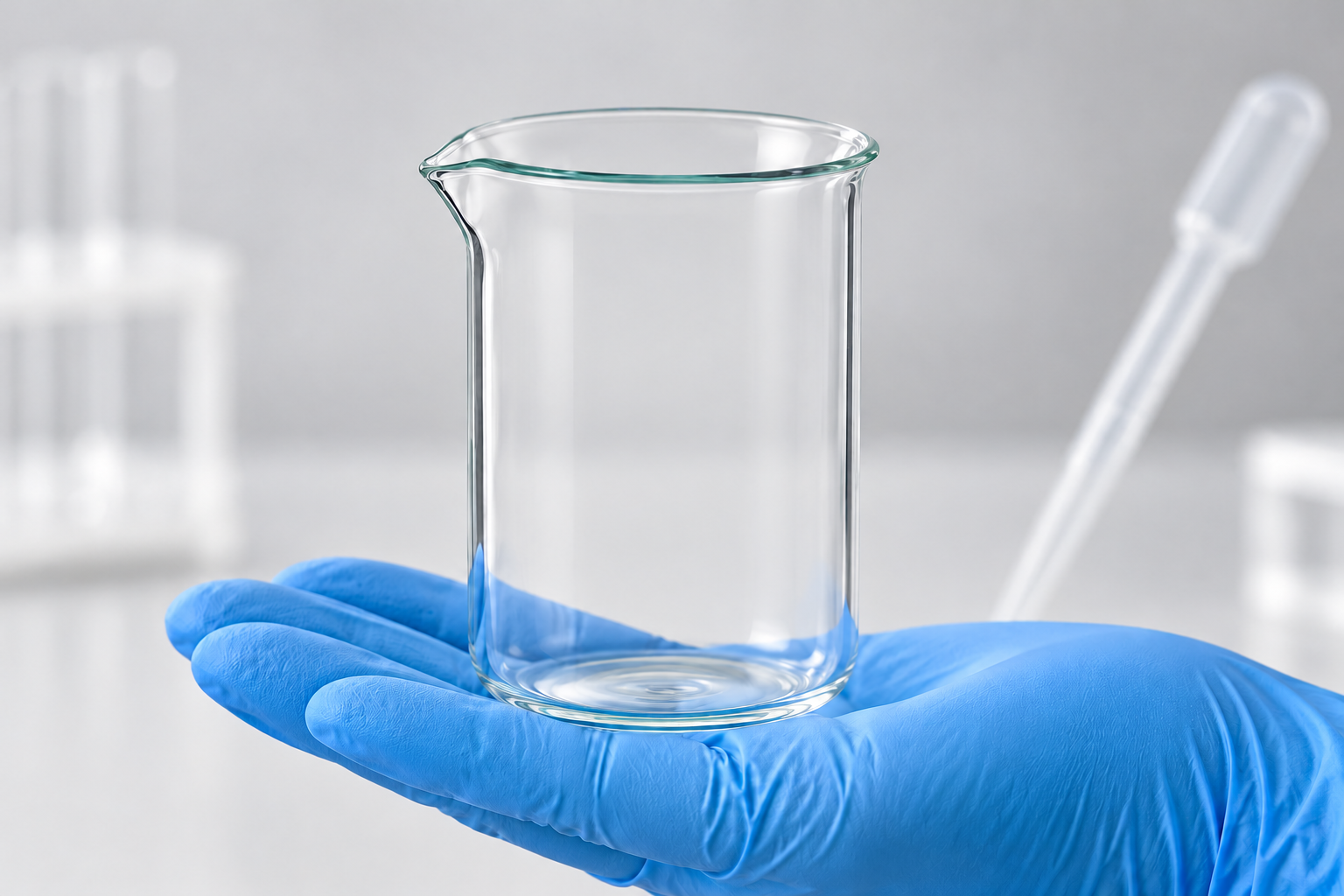
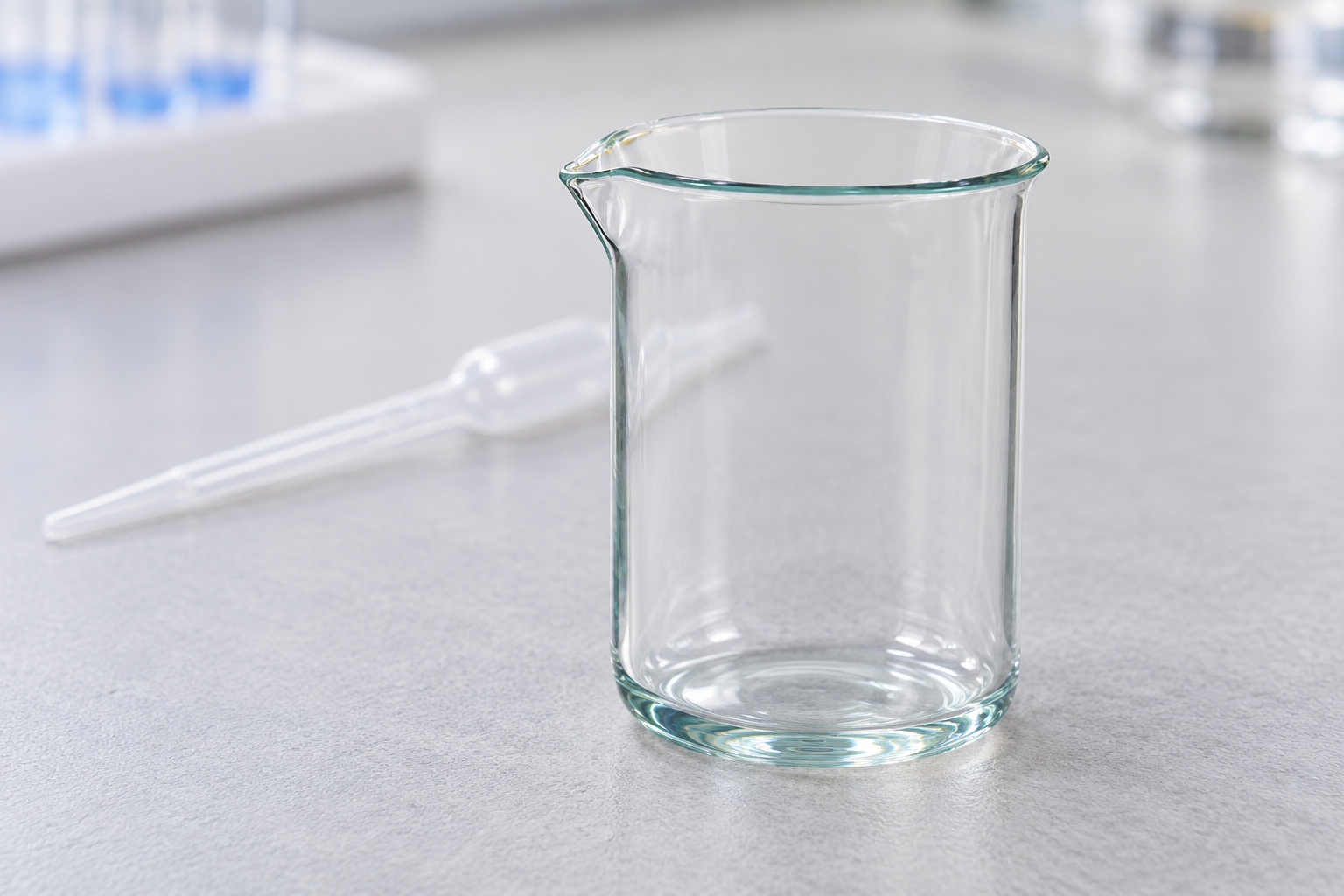
The reference image labels the scale as approximate. Treat it as an indication of fill rather than evidence of a calibrated final volume. A method requiring a defined solution volume should specify suitable volumetric apparatus and its calibration requirement.
Likewise, quartz construction does not assign a universal heating method or thermal-shock allowance. Give MQ the intended contact and temperature conditions if they are part of the selection.
A custom lip or height needs the receiving setup
A possible modification is to retain the body capacity class while adjusting the height or rim arrangement to clear a nearby component. Include the required mouth access and pouring direction in the sketch so the change can be reviewed as an operation.
Agree the important body, rim and support dimensions before quotation. Any proposed fit or transfer check should identify the actual receiving setup and what is to be observed.
Structure reference and specification points
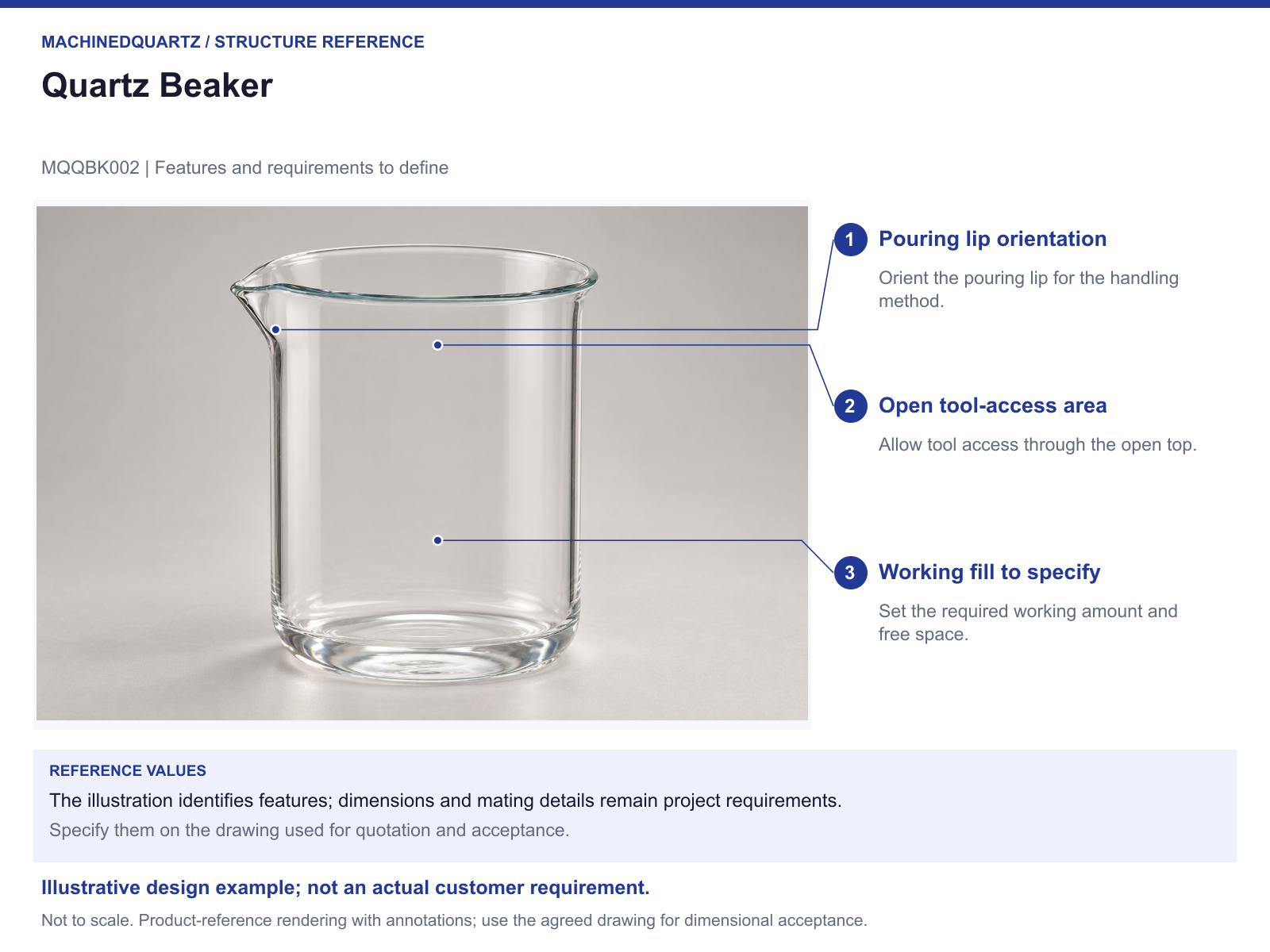
Download the structure reference (PDF)
Can the marked 100 mL be used as a certified preparation volume?
The selected beaker's scale is shown as approximate. No calibration certificate or tolerance is established by that marking. State a separate volumetric requirement if the method needs one.
Send a drawing or the mating-part details
Choose the listed beaker for its stated configuration, or send the tool and transfer arrangement for a custom review. The rim and body should be considered together.
- Nominal size and working fill range
- Filling, mixing and transfer tools
- Clear opening and pouring direction
- Support envelope and receiving-container access
- Sample conditions, quantity and documentation needs
Modified designs are reviewed for the project. The drawing, supplied parts, quantity, inspection scope, price and preparation or production time are agreed in the quotation.
Details to settle for the ordered configuration
Exact dimensions, calibration status and operating limits require product-specific confirmation.


Recent Comments