
Quartz Petri Dish: Choosing a Shallow Sample Area and Cover
Custom Design Guides · MQQPD003
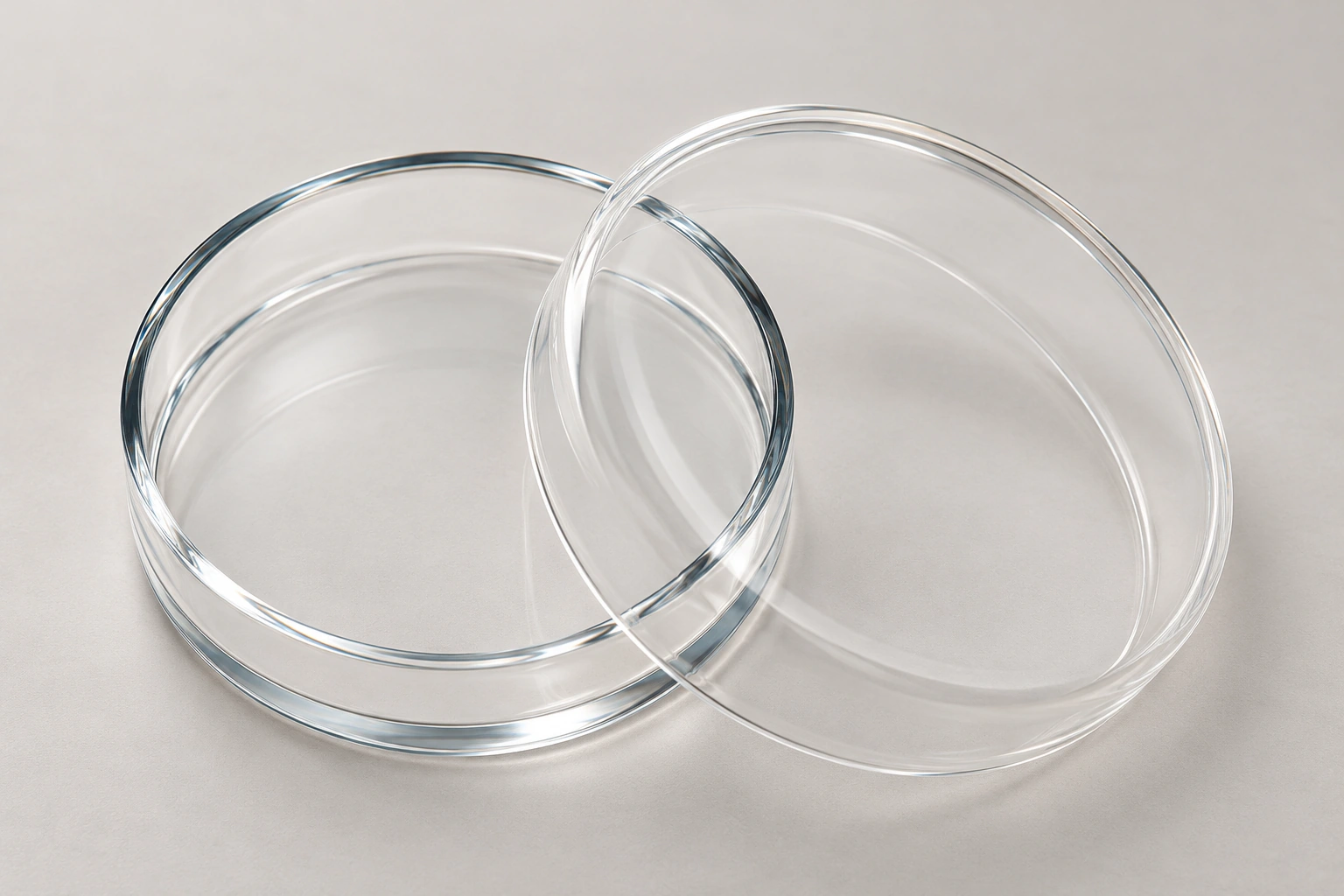
A shallow dish gives access across the top of a sample rather than through a narrow bottle mouth. MQQPD003 is the 90 mm quartz Petri-dish option, currently listed as a dish-and-lid set.
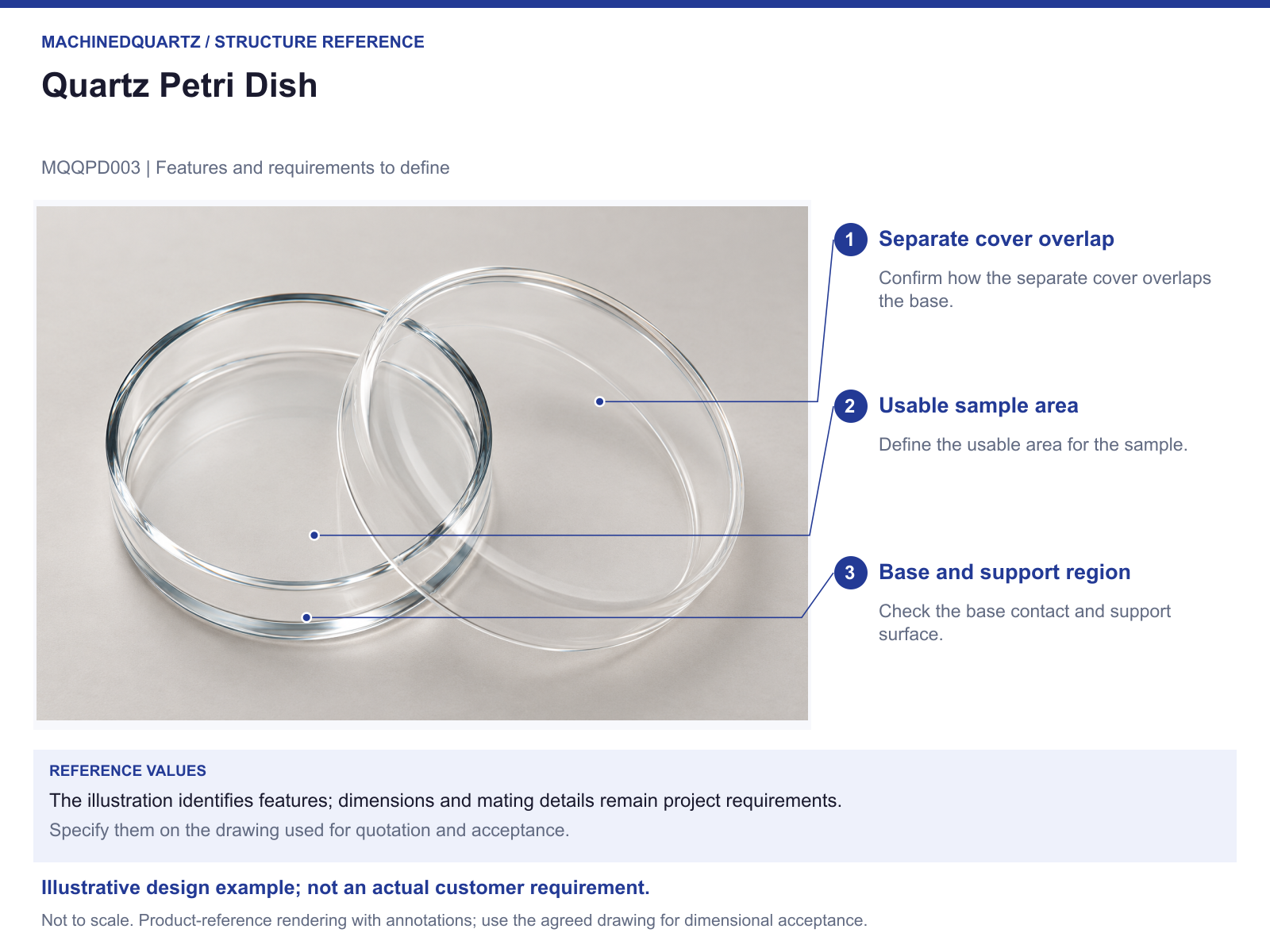
For sample observation or preparation, define the usable sample area and the base as well as the nominal diameter. The size label alone does not establish the inside diameter, depth or optical quality of the bottom.
In this guide: Configuration · Design comparison · Describe the sample layer and its access · The cover needs space to move · Change the sample area without losing the support definition · Keep culture and sterility requirements explicit · Enquiry
The configuration discussed here
What changes from the simpler form?
A shallow dish spreads the sample area rather than providing a deep vessel. Adding a separate cover introduces overlap and removal requirements without establishing a seal or changing the dish into a closed chamber.
Describe the sample layer and its access
A possible use is arranging a specimen over a shallow area while keeping it easy to reach from above. Give the sample footprint, layer depth and the tool used to position or remove it. Those details make the required inside area more useful than an outside diameter alone.
If the dish is to be viewed through its base, specify that requirement explicitly. A clear-looking quartz bottom is not a measured flatness, transmission or imaging specification for the selected dish.
The cover needs space to move
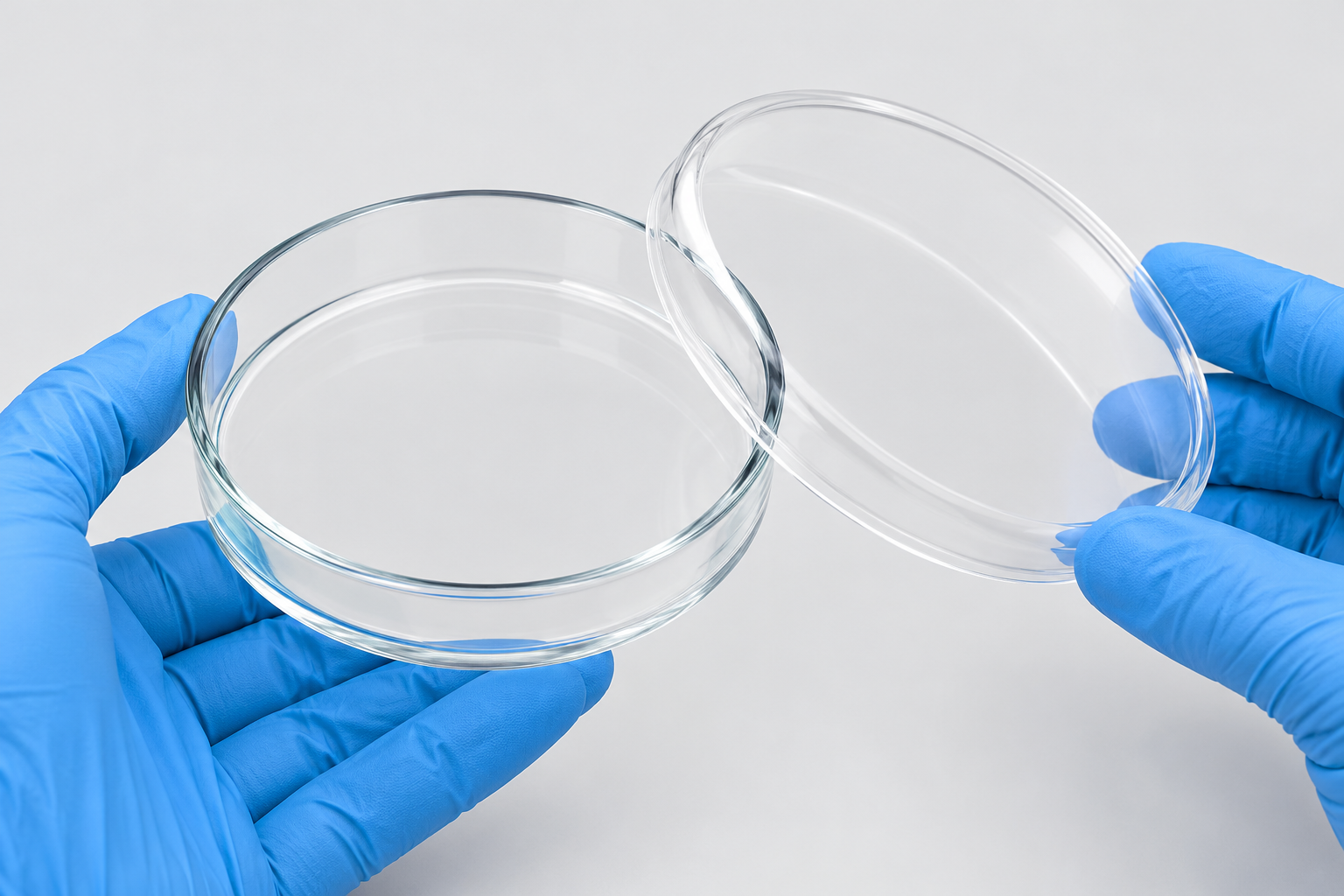
A cover overlaps the dish differently from a threaded cap. Identify whether it must be lifted vertically, moved sideways or handled within an enclosure. Include the available clearance above the dish and where the cover is placed during loading.
The covered arrangement is not automatically an airtight chamber. If evaporation, atmosphere or contamination control is essential, describe the required behaviour and seek a design review rather than relying on the word lid.
Change the sample area without losing the support definition
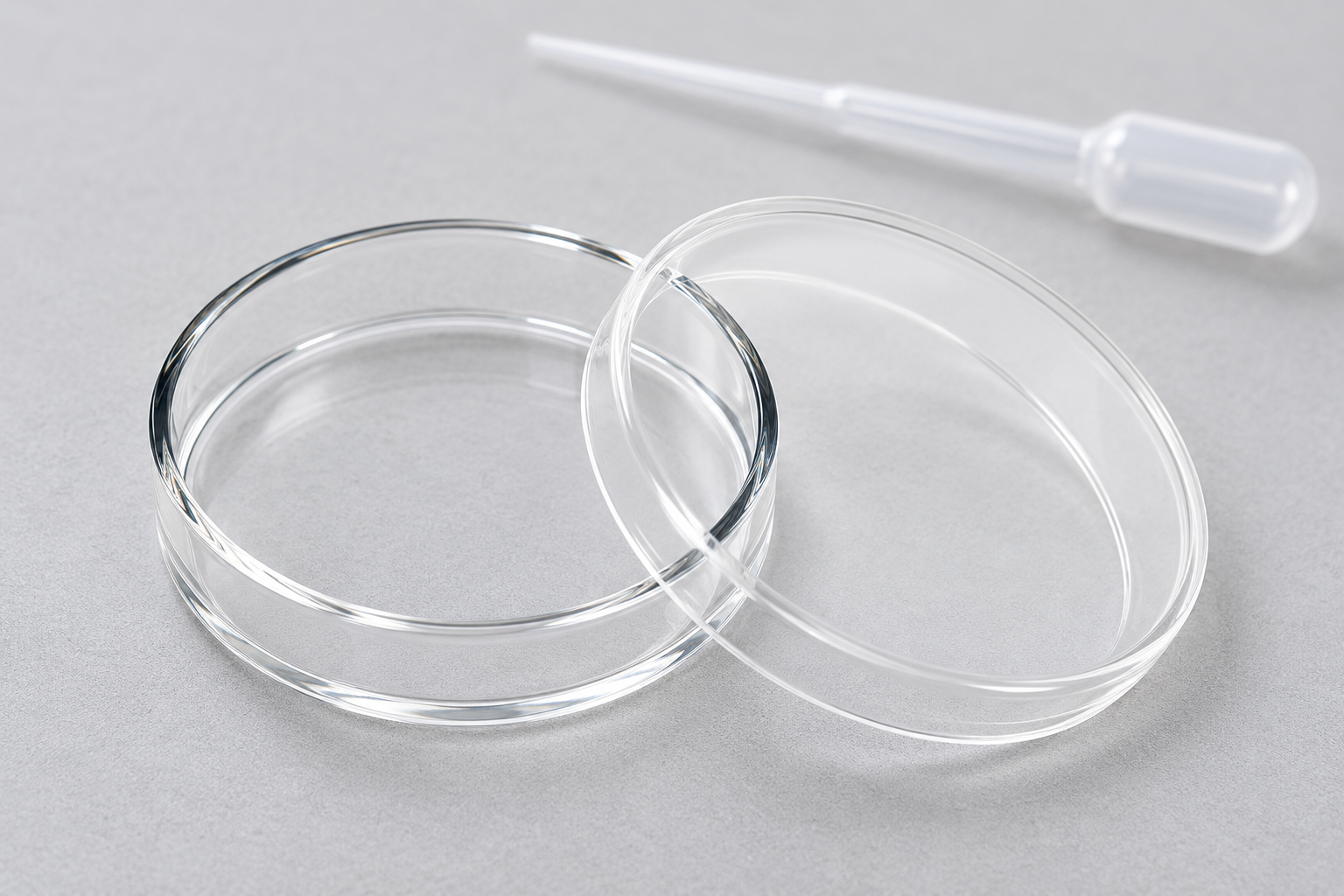
For a custom version, a customer might retain an existing stage footprint while asking for a different internal depth. Provide the stage drawing, the sample footprint and the base requirements together. A deeper dish or thicker bottom can affect more than the nominal capacity.
Mark which contact areas may be used by the support and which must remain available for observation. Any proposed fit or optical check should refer to those regions and the actual method.
Keep culture and sterility requirements explicit
Petri dish describes the vessel format here. It does not establish sterile supply, a validated sterilisation cycle or suitability for a particular biological culture. Include those requirements if the intended method depends on them.
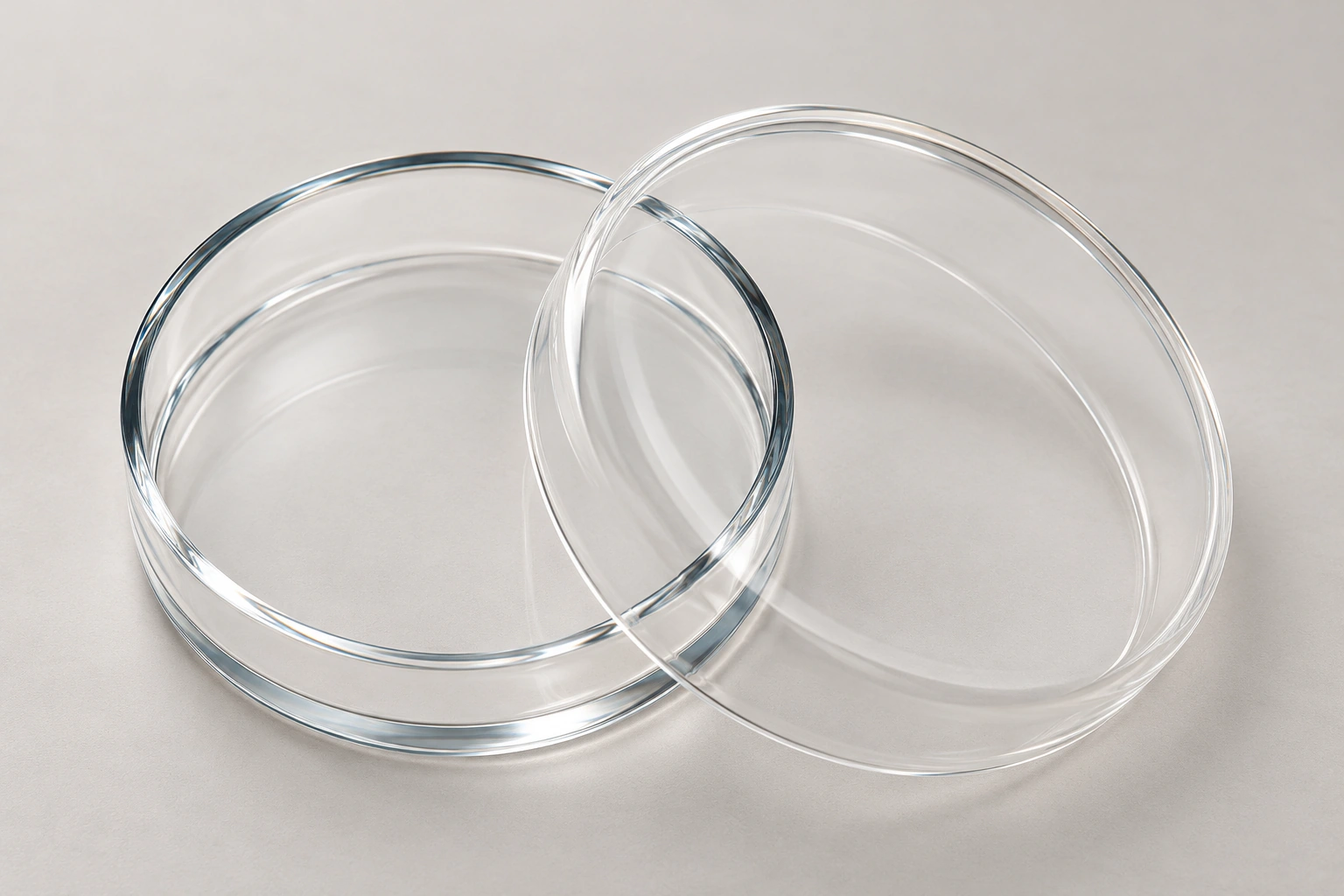
The quotation should state the ordered size, supplied cover and any required documentation. A shared family photograph is useful for the form but should not be used to measure the 90 mm option.
Structure reference and specification points
Download the structure reference (PDF)
Is 90 mm the clear sample diameter?
It is the nominal size of the selected option. Confirm the inside diameter and usable sample area separately, together with the depth, base and cover fit needed by the method.
Send a drawing or the mating-part details
Send the sample layout and stage outline when requesting a custom dish. MQ can review the base, wall and cover as a set rather than changing the nominal diameter alone.
- Required usable sample area and layer depth
- Inside and outside dimensional limits
- Base thickness, viewing direction and any optical requirement
- Cover movement, overlap and stage clearance
- Sample conditions, supplied-set and documentation requirements
Modified designs are reviewed for the project. The drawing, supplied parts, quantity, inspection scope, price and preparation or production time are agreed in the quotation.
Details to settle for the ordered configuration
Exact internal dimensions, base quality, closure behaviour, sterile status and method compatibility require confirmation.


Recent Comments